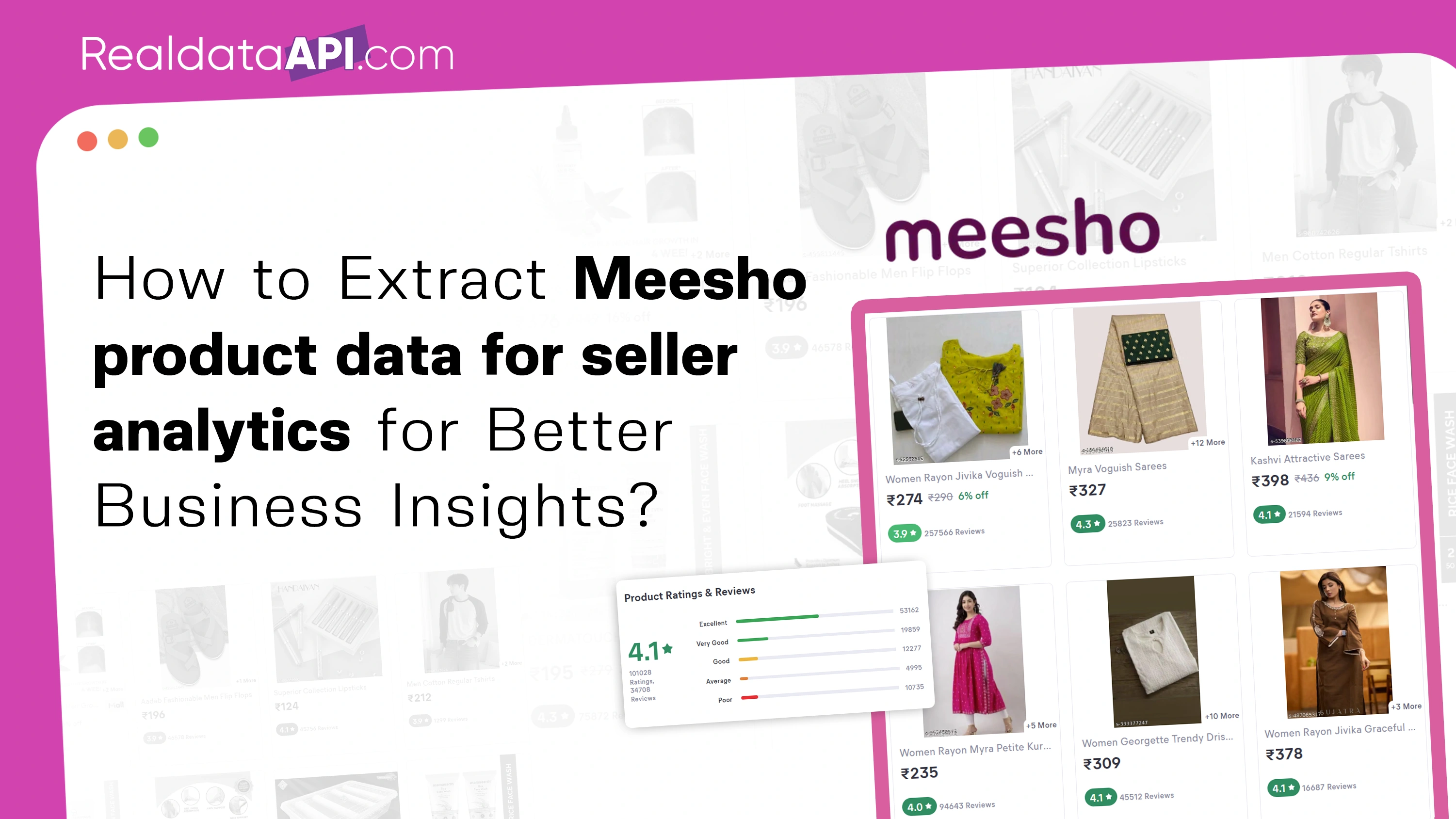
Introduction
Sellers can improve pricing, product selection, competitor monitoring, and marketplace decisions by collecting structured product information and turning it into repeatable analytics. Extract Meesho product data for seller analytics gives businesses a practical way to track product prices, ratings, reviews, discounts, categories, and availability at scale. Meesho Scraping API workflows can make that process faster and more consistent.
India's e-commerce market has expanded sharply. Statista estimates the market grew from about $30 billion in 2020 to $125 billion in 2024 and forecasts $145 billion for 2025 and $163 billion for 2026. Meesho also reported strong marketplace activity, with FY2025 annual transacting sellers reaching 513,757 and placed orders reaching 18.34 crore.
| Year | India E-commerce Market Size | Seller Analytics Opportunity |
|---|---|---|
| 2020 | $30B | Establish product and price benchmarks |
| 2021 | $67B | Track fast-growing categories |
| 2022 | $84B | Compare price and assortment changes |
| 2023 | $102B | Monitor competitive positioning |
| 2024 | $125B | Expand product intelligence |
| 2025 | $145B* | Automate frequent monitoring |
| 2026 | $163B* | Build near-real-time insights |
*2025-2026 are Statista estimates.
For Meesho sellers, the key challenge is not simply collecting data. The real challenge is converting changing marketplace information into useful decisions.
How Can Product Reviews Reveal What Customers Want?
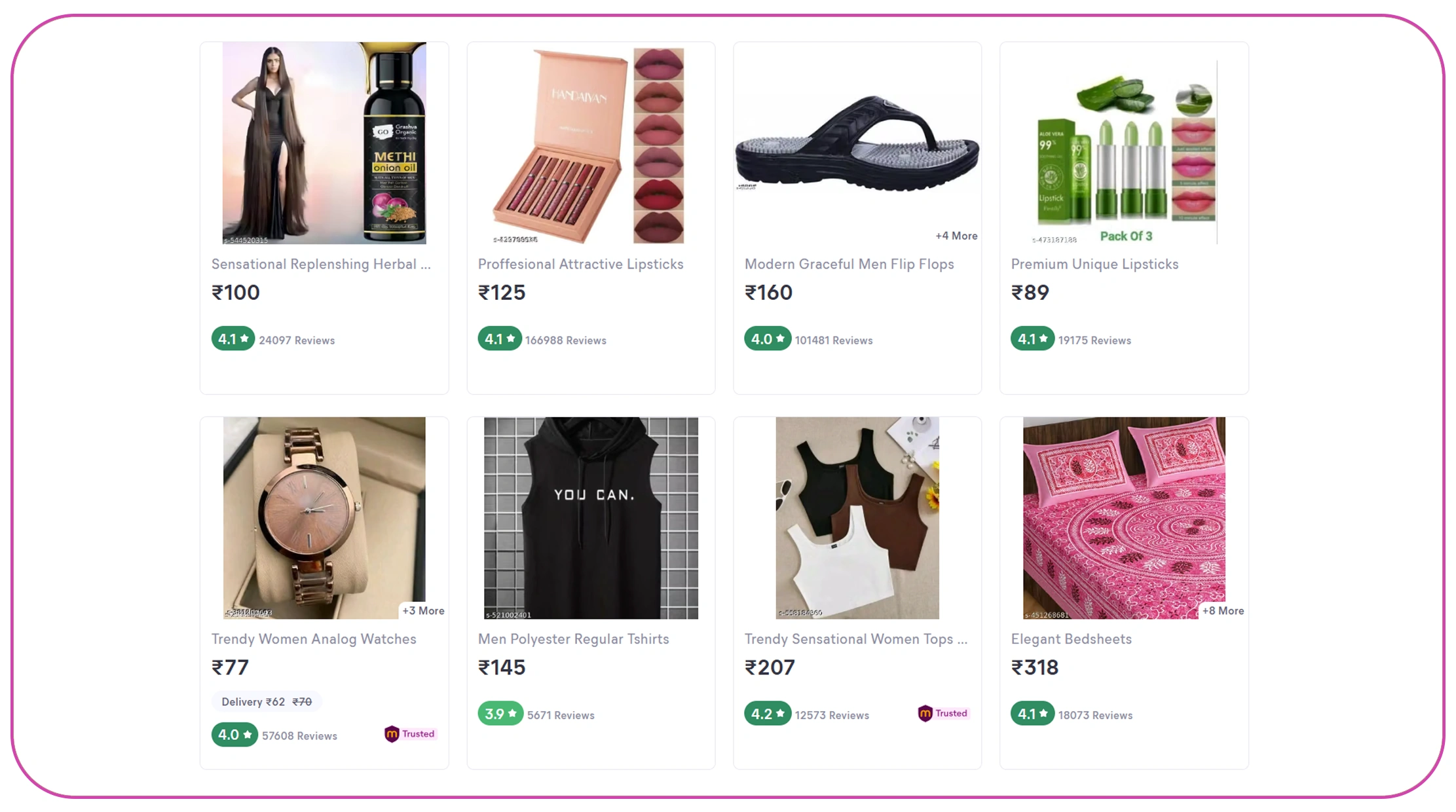
Scrape Meesho product ratings and reviews for seller insights to understand customer expectations, product weaknesses, and quality signals. Ratings provide a quick performance indicator. Reviews provide the details behind that score.
A seller can collect product names, ratings, review counts, review text, prices, categories, and product attributes. This data can then support sentiment analysis and product improvement. For example, repeated complaints about sizing may suggest a listing needs a better size chart. Repeated comments about packaging may point to an operational issue.
Review volume also adds context. A 4.8-star product with 15 reviews does not provide the same confidence as a 4.5-star product with thousands of reviews. Seller analytics should therefore combine rating, review volume, price, and category position rather than using one metric alone.
The broader marketplace is also becoming more active. Meesho's annual transacting users increased from 13.64 crore in FY2023 to 19.87 crore in FY2025, while placed orders rose from 10.24 crore to 18.34 crore.
| Year | Meesho Annual Transacting Users | Placed Orders |
|---|---|---|
| 2020 | --- | --- |
| 2021 | --- | --- |
| 2022 | --- | --- |
| 2023 | 13.64 Cr | 10.24 Cr |
| 2024 | 15.56 Cr | 13.42 Cr |
| 2025 | 19.87 Cr | 18.34 Cr |
| 2026 | Ongoing | Ongoing |
Publicly reported Meesho figures are shown where available; 2020-2022 and 2026 are not presented as invented company figures.
For sellers, review analytics can highlight product gaps, recurring complaints, customer preferences, and opportunities to improve listings.
How Can Sellers Monitor Competitor Prices More Effectively?
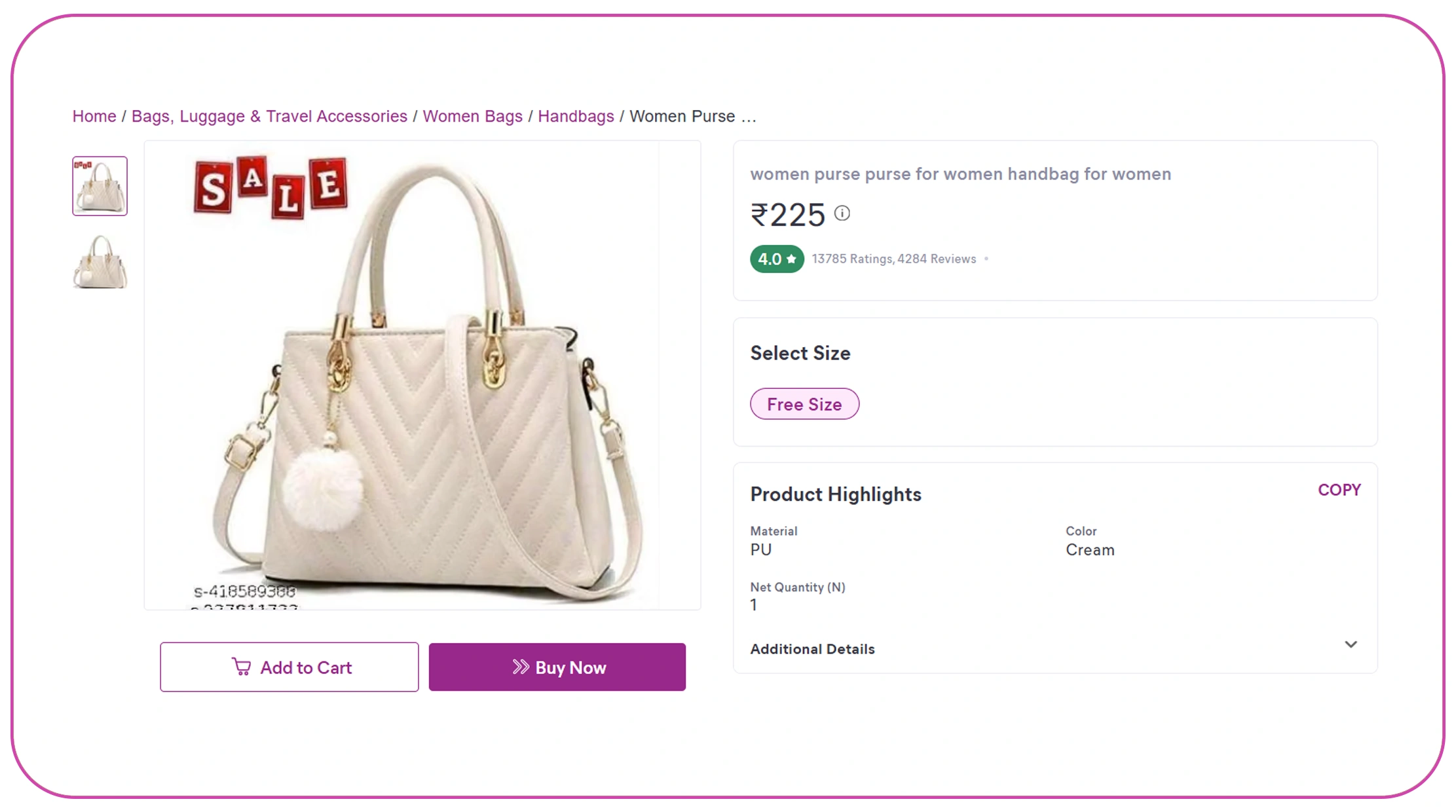
Web Scraping competitor pricing using Meesho product data can help sellers understand how competing products are positioned. Price changes happen frequently. Manual tracking makes it difficult to identify meaningful movements across hundreds of products.
A structured dataset can record product price, discounted price, MRP, seller information, ratings, reviews, availability, and promotional signals. Sellers can compare these fields across similar products and identify pricing ranges.
The goal should not be to copy every competitor price. Instead, sellers can create pricing benchmarks. A product priced far above the category median may need stronger differentiation. A product priced far below competitors may require a margin review.
India's e-commerce revenue growth was estimated at 50.1% in 2020, 24.6% in 2021, 6% in 2022, 9% in 2023, 15.2% in 2024, 18% in 2025, and 14.2% in 2026. Such expansion increases the value of continuous marketplace monitoring.
| Year | India E-commerce Revenue Growth |
|---|---|
| 2020 | 50.1% |
| 2021 | 24.6% |
| 2022 | 6.0% |
| 2023 | 9.0% |
| 2024 | 15.2% |
| 2025 | 18.0% |
| 2026 | 14.2% |
Figures are market-level estimates from Statista, not Meesho-specific growth rates.
A seller analytics system can turn these marketplace conditions into daily or weekly price benchmarks. It can also flag large price changes and help teams decide when to review their own pricing.
What Marketplace Trends Can Sellers Discover From Product Data?
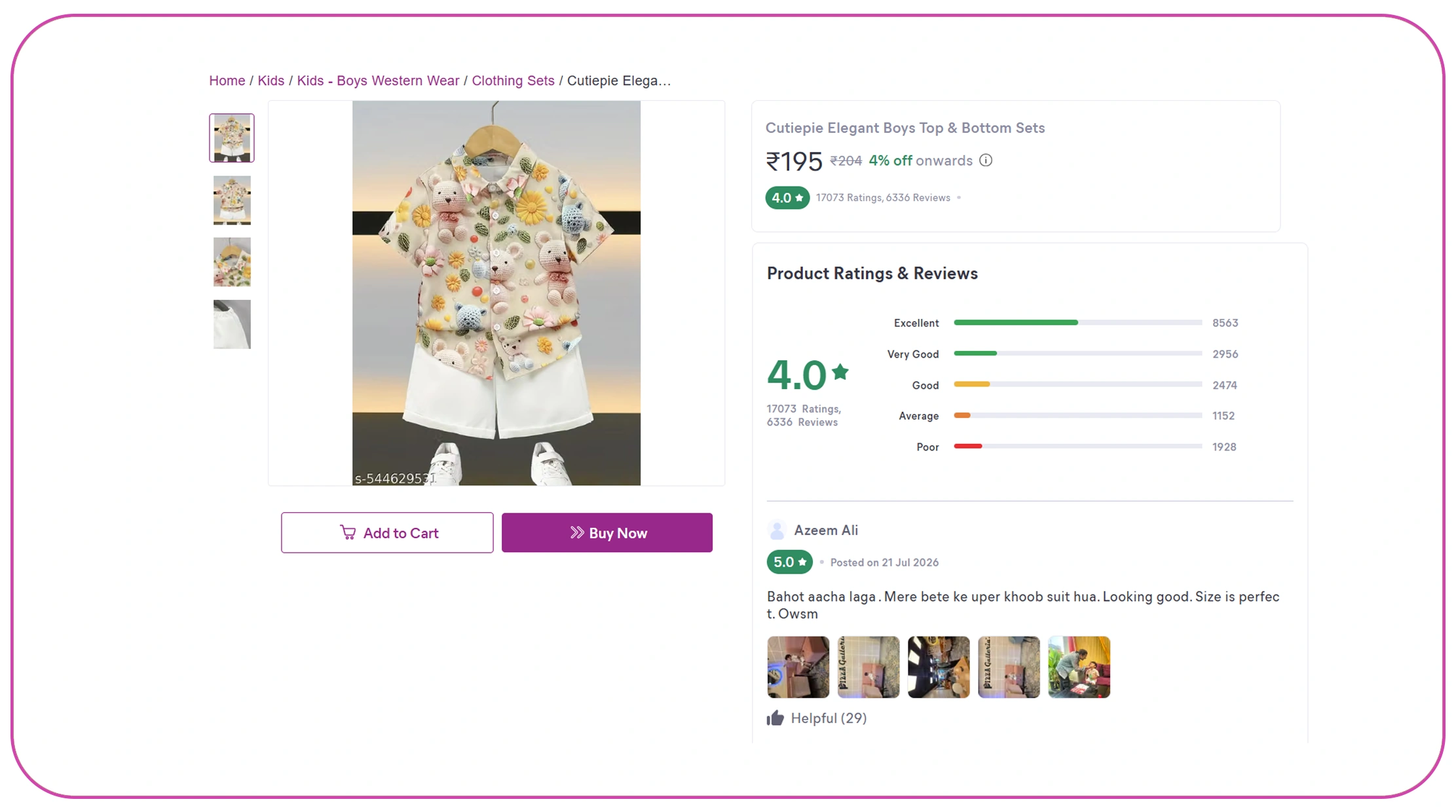
Analyze Meesho marketplace trends using scraped product data to identify category movement, pricing patterns, product availability, and changes in customer interest.
Trend analysis works best when sellers collect data consistently over time. A single snapshot can show what is available today. A historical dataset can show what is changing.
For example, sellers can compare the number of products in a category, median prices, average ratings, review growth, discount levels, and product availability. They can then identify categories where competition is increasing or where customer interest appears to be growing.
Meesho's FY2025 marketplace GMV reached ₹50,312 crore, up from ₹34,491 crore in FY2023. Its annual transacting seller count reached 513,757 in FY2025.
| Year | Meesho Marketplace GMV | Annual Transacting Sellers |
|---|---|---|
| 2020 | --- | --- |
| 2021 | --- | --- |
| 2022 | --- | --- |
| 2023 | ₹34,491 Cr | 449,966 |
| 2024 | ₹40,038 Cr | 423,749 |
| 2025 | ₹50,312 Cr | 513,757 |
| 2026 | Ongoing | Ongoing |
Company-reported figures are shown where publicly available. 2026 is ongoing and therefore excluded from invented estimates.
Trend analysis can support several decisions:
- Which categories deserve closer research?
- Which products are becoming highly competitive?
- Which price bands have strong assortment?
- Which products are gaining reviews?
- Where are discounts becoming more aggressive?
This approach helps sellers move from reactive decisions to evidence-based marketplace planning.
What Can a Dedicated Data Collection System Do for Sellers?
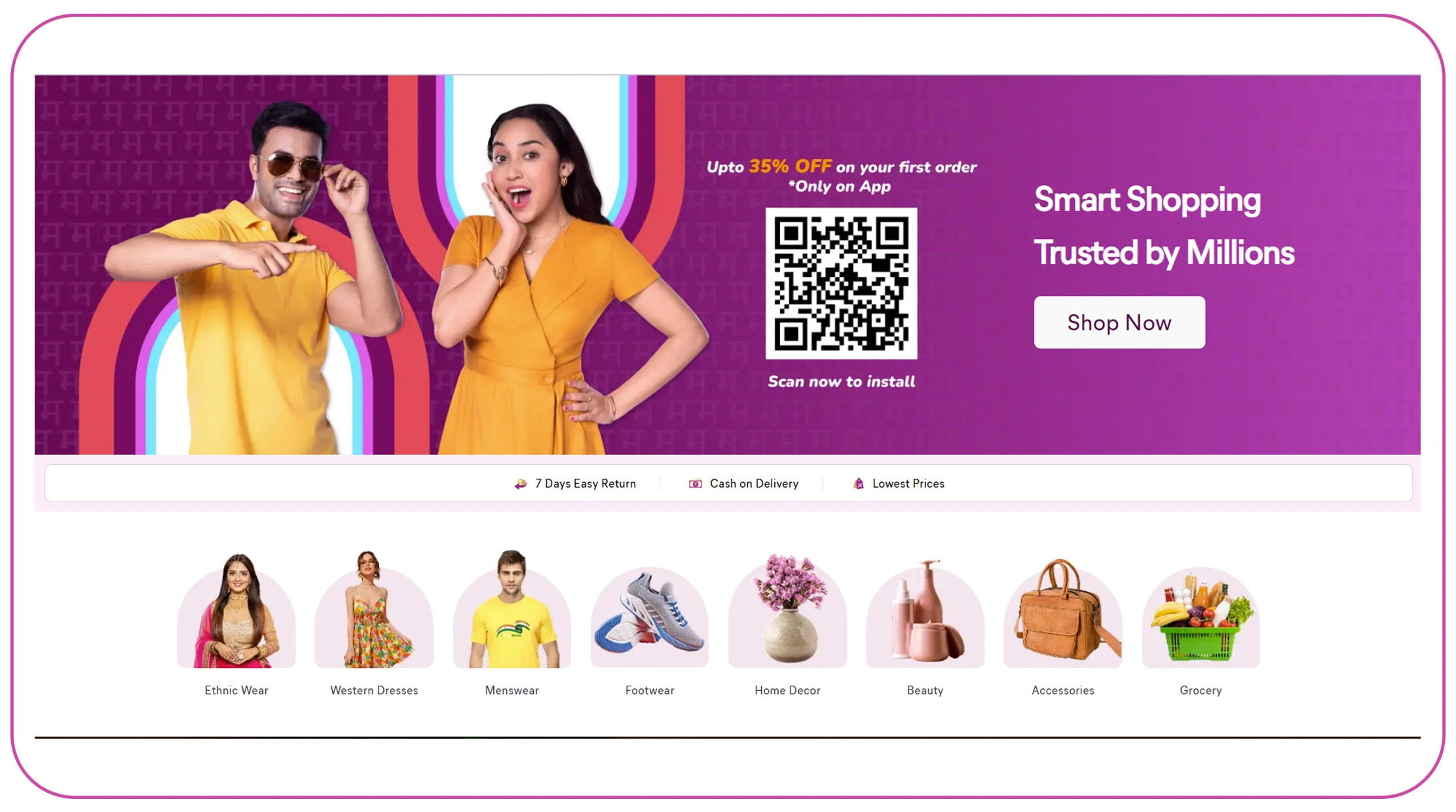
A Meesho Scraper can help collect structured marketplace information at scale. Instead of manually opening product pages, teams can build a consistent dataset for analysis.
A useful collection workflow can capture product titles, URLs, prices, discounts, ratings, review counts, seller information, categories, product attributes, and availability. The exact fields depend on the business objective and permitted data access.
Automation also improves consistency. Manual research often creates gaps because different employees record information in different formats. A standardized extraction workflow produces cleaner datasets that analysts can compare over time.
The growth of seller activity makes scale important. Meesho's annual transacting seller base increased from 423,749 in FY2024 to 513,757 in FY2025, according to company filing data.
| Year | Annual Transacting Sellers | Practical Data Need |
|---|---|---|
| 2020 | --- | Basic product research |
| 2021 | --- | Category monitoring |
| 2022 | --- | Competitive tracking |
| 2023 | 449,966 | Broader seller intelligence |
| 2024 | 423,749 | Better historical analysis |
| 2025 | 513,757 | Larger-scale monitoring |
| 2026 | Ongoing | Automated intelligence |
A scalable collection system can support dashboards, alerts, spreadsheets, databases, and business intelligence tools. Sellers can use those outputs to monitor pricing, discover new products, evaluate competitors, and improve their marketplace strategy.
The biggest advantage is repeatability. A dataset collected once has limited value. A dataset collected regularly can reveal patterns.
How Can an API Make Marketplace Data Easier to Use?
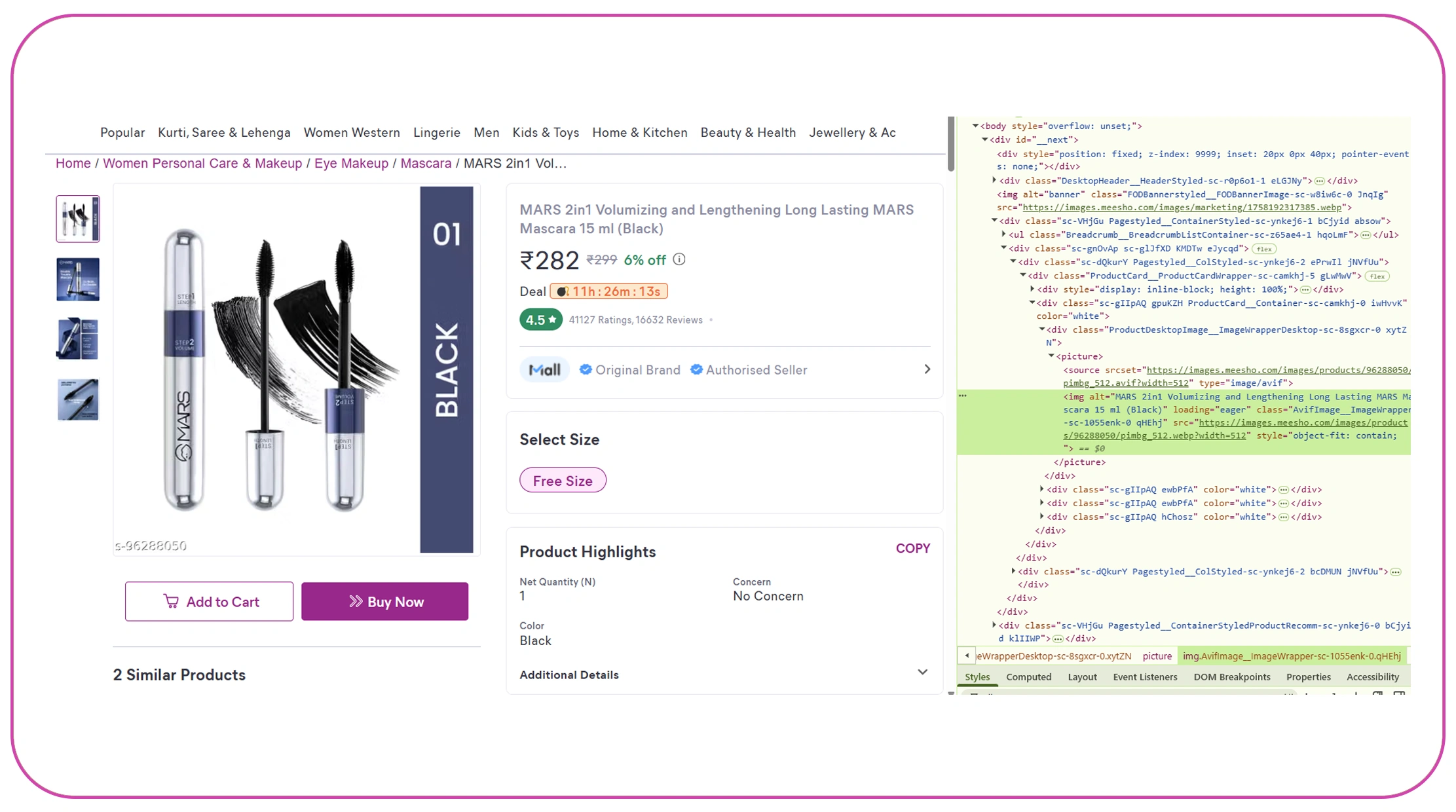
A Meesho API can provide a structured approach for integrating collected product information into seller analytics workflows. Instead of repeatedly performing manual exports, businesses can connect data collection with databases, dashboards, reporting systems, or internal analytics tools.
For example, a business could collect product information on a defined schedule. The system could then compare new records with historical records. If a product price changes, the database can record the movement. If review counts increase, the system can flag the product for further analysis.
This approach is useful for businesses that manage large product catalogs or monitor multiple categories.
Meesho's reported placed orders increased from 10.24 crore in FY2023 to 18.34 crore in FY2025. The scale of marketplace activity creates more data points for businesses to evaluate.
| Year | Placed Orders | Analytics Focus |
|---|---|---|
| 2020 | --- | Marketplace baseline |
| 2021 | --- | Demand discovery |
| 2022 | --- | Category analysis |
| 2023 | 10.24 Cr | Product performance |
| 2024 | 13.42 Cr | Competitive monitoring |
| 2025 | 18.34 Cr | Large-scale analytics |
| 2026 | Ongoing | Continuous monitoring |
Meesho figures are reported company metrics where available.
The phrase Extract Meesho product data for seller analytics represents the larger business objective: creating reliable product intelligence that supports better decisions.
Real Data API can fit into this workflow by helping businesses organize data collection and turn marketplace information into usable datasets.
How Can Sellers Reduce Manual Product Research?
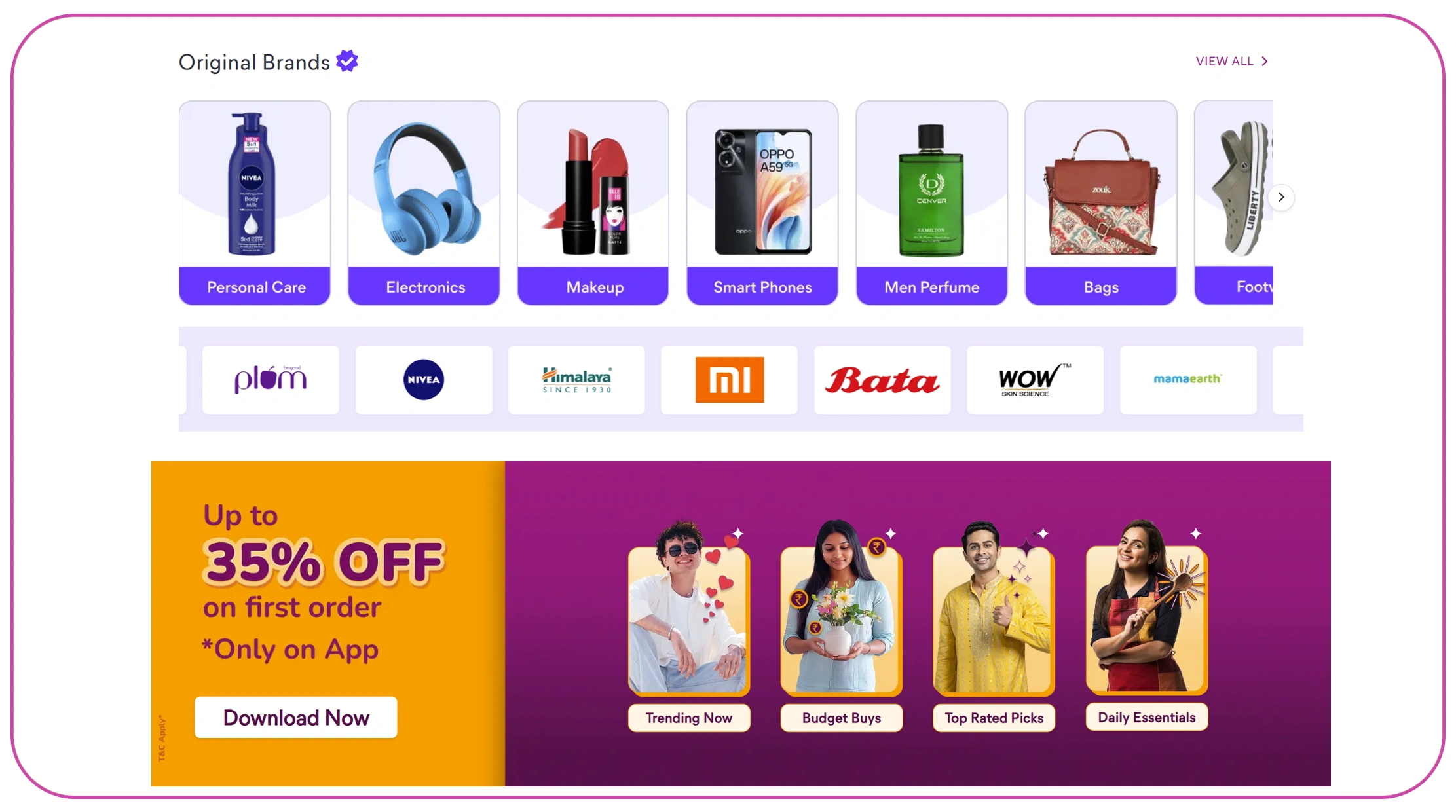
Automate Product Data Extraction from Meesho to reduce repetitive research and improve the speed of seller analytics. Automation can help teams collect the same fields on a regular schedule and maintain a historical record.
A practical workflow can follow five steps:
- Define the fields. Select price, rating, reviews, category, seller, availability, and other relevant attributes.
- Collect the data. Build a structured extraction workflow that follows applicable platform rules.
- Normalize the records. Standardize product names, prices, categories, and other fields.
- Store historical data. Keep previous snapshots for comparison.
- Create alerts and reports. Highlight major price, rating, availability, or assortment changes.
Automation becomes more valuable as the marketplace expands. GlobalData forecasts India's e-commerce market to grow 12.4% in 2026 to ₹19.7 trillion.
| Year | India E-commerce Market Size | Automation Opportunity |
|---|---|---|
| 2020 | $30B | Build basic datasets |
| 2021 | $67B | Increase monitoring coverage |
| 2022 | $84B | Track category changes |
| 2023 | $102B | Build historical benchmarks |
| 2024 | $125B | Expand automated collection |
| 2025 | $145B* | Improve monitoring frequency |
| 2026 | $163B* | Scale analytics workflows |
*2025-2026 figures are Statista estimates.
Automation does not replace business judgment. It improves the availability and consistency of information. Sellers can then spend more time interpreting trends, improving products, and planning growth.
Why Should Sellers Choose Real Data API?
Real Data API can help businesses build structured data workflows for marketplace research, competitive intelligence, and seller analytics. The focus should be on turning scattered product information into organized datasets that teams can analyze.
Businesses can benefit from:
- Scalable data workflows: Support larger product research requirements.
- Structured outputs: Make collected information easier to store and analyze.
- Historical tracking: Compare current marketplace conditions with previous snapshots.
- Competitive intelligence: Monitor product prices, ratings, reviews, and availability.
- Faster research: Reduce repetitive manual data collection.
- Analytics integration: Feed datasets into dashboards, databases, and reporting workflows.
For businesses looking to Extract Meesho product data for seller analytics, the most valuable outcome is not simply a large dataset. It is reliable information that answers business questions.
A strong workflow can help identify pricing opportunities, product gaps, competitive movements, and emerging categories. It can also support recurring reports for sales, marketing, product, and strategy teams.
As India's e-commerce market continues to grow, data-driven seller operations become increasingly important. Statista estimates India's e-commerce market at $163 billion in 2026.
Conclusion
Seller competition is becoming more data-driven. Product prices change. Reviews grow. New sellers enter categories. Product availability shifts. Customer preferences evolve.
The solution is to create a consistent process for collecting and analyzing marketplace information.
Extract Meesho product data for seller analytics to monitor product performance, compare competitors, identify market trends, and improve business decisions. A structured workflow can help sellers move beyond occasional manual research and build a repeatable intelligence system.
The opportunity is significant. Meesho's reported FY2025 marketplace GMV reached ₹50,312 crore, while annual transacting sellers reached 513,757. At the same time, India's wider e-commerce market continues to expand.
The most effective strategy is to combine product-level data with historical analysis. Sellers can then identify patterns instead of reacting to isolated changes.
Start using Real Data API to Extract Meesho product data for seller analytics and turn marketplace data into actionable insights for smarter pricing, product research, and competitive growth!
Latest posts

How to Scrape OpenRent property data for UK rental market trends for Better Market Insights?

How to Scrape Land.com data scraping for rural property market intelligence for Smarter Investment Decisions?

How to Scrape food delivery trends in Turkey via Yemeksepeti API to Overcome Market Intelligence Gaps?
Extract Flipkart Product Review Data For Brand Analysis - How To Track Customer Sentiment, Ratings, And Product Performance?

How To Track Prices, Products, And Consumer Demand When Scrape China's Social Commerce Market Using Pinduoduo Data?







.png)