

Introduction
Property professionals can improve UK rental market analysis by collecting structured listing data, tracking rent changes, comparing locations, and studying supply patterns over time. Scrape OpenRent property data for UK rental market trends to turn listing-level information into useful insights for pricing, investment, portfolio planning, and market research.
The UK rental market has changed significantly since 2020. ONS data shows that private rental prices increased by 1.4% in the year to December 2020. By December 2024, annual UK rent growth had reached 9.0%. By June 2026, the average UK private rent reached £1,388, with annual growth of 3.3%.
| Year | UK Rental Market Indicator | Annual Change / Level |
|---|---|---|
| 2020 | Private rental price growth | 1.4% |
| 2021 | Rental market recovery | Rising demand |
| 2022 | Rental growth strengthened | Above pre-pandemic trend |
| 2023 | Strong rental inflation | 8%+ range |
| 2024 | UK rent growth | 9.0% |
| 2025 | Average rent in December | £1,368 |
| 2026 | Average rent in June | £1,388 |
ONS measures and market indicators vary by methodology and reference month. 2021-2023 are summarized qualitatively here rather than presenting unsupported point estimates.
This blog targets property investors, landlords, letting agencies, property managers, real estate analysts, housing researchers, and proptech businesses. The key pain point is simple: rental listings change quickly, while manual research is slow and difficult to repeat.
A structured data workflow can help answer questions such as:
- Which locations have the highest rents?
- Which property types have the strongest supply?
- How quickly do rental prices change?
- Where are new listings increasing?
- Which areas show attractive rental opportunities?
- How do advertised properties compare with historical trends?
What Property Details Should Rental Analysts Collect?
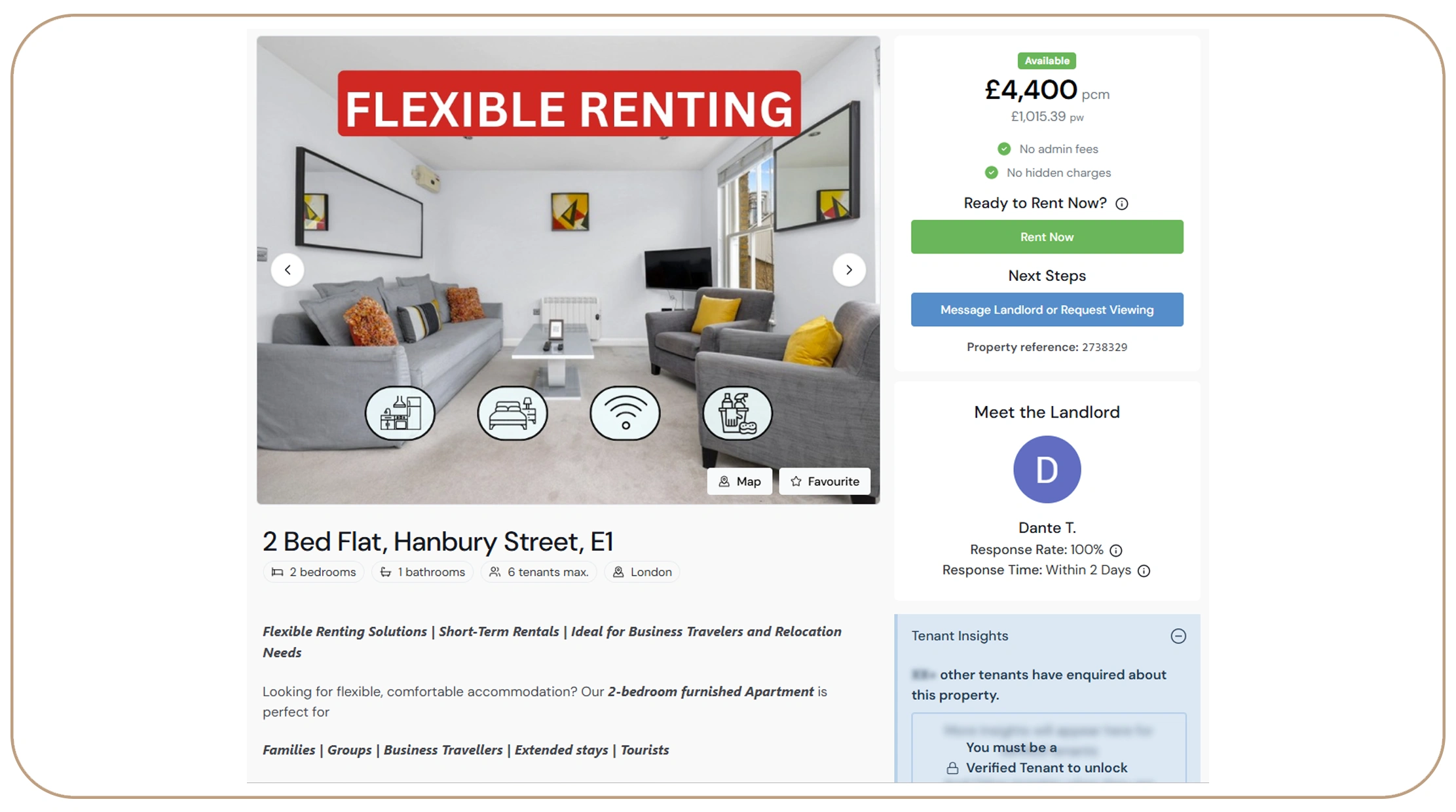
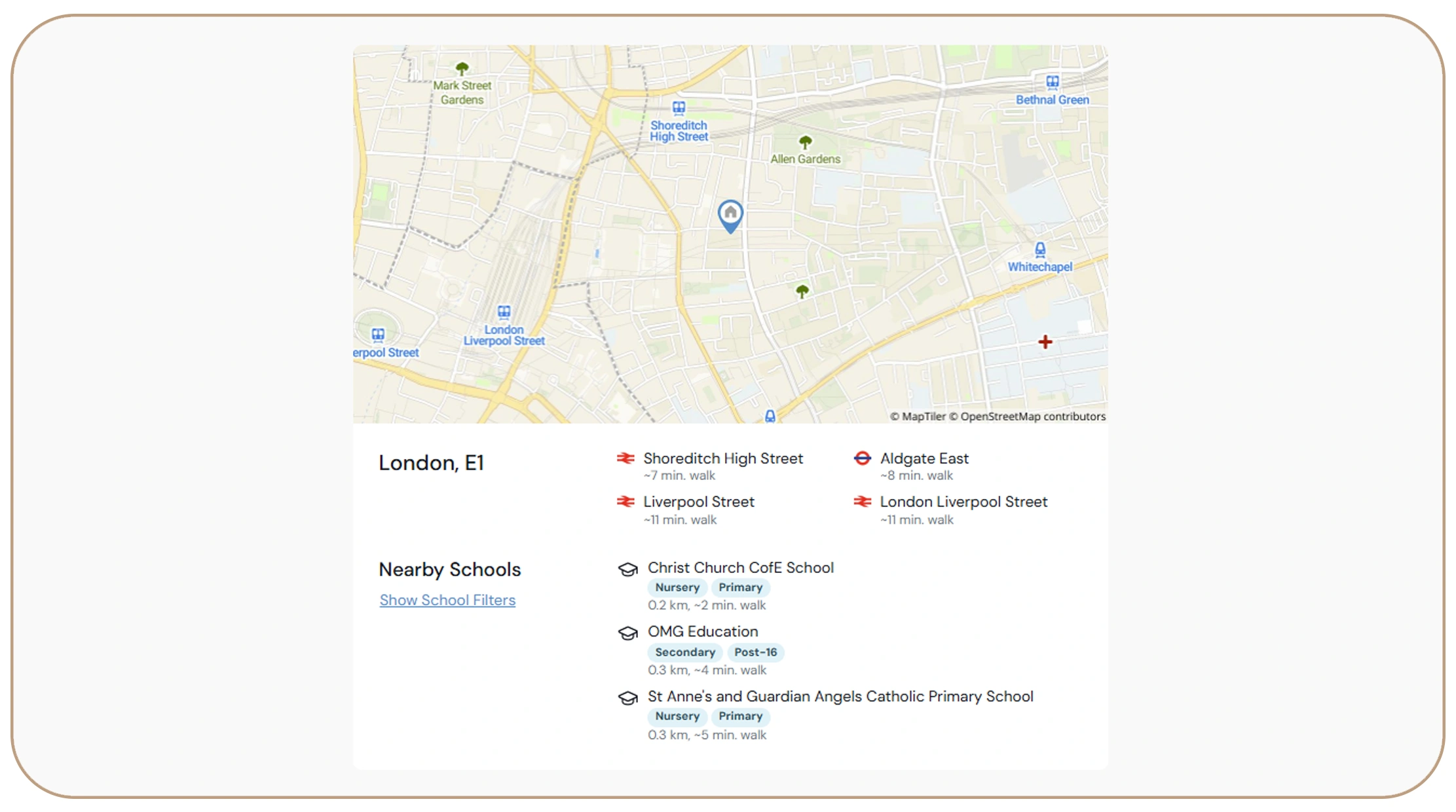
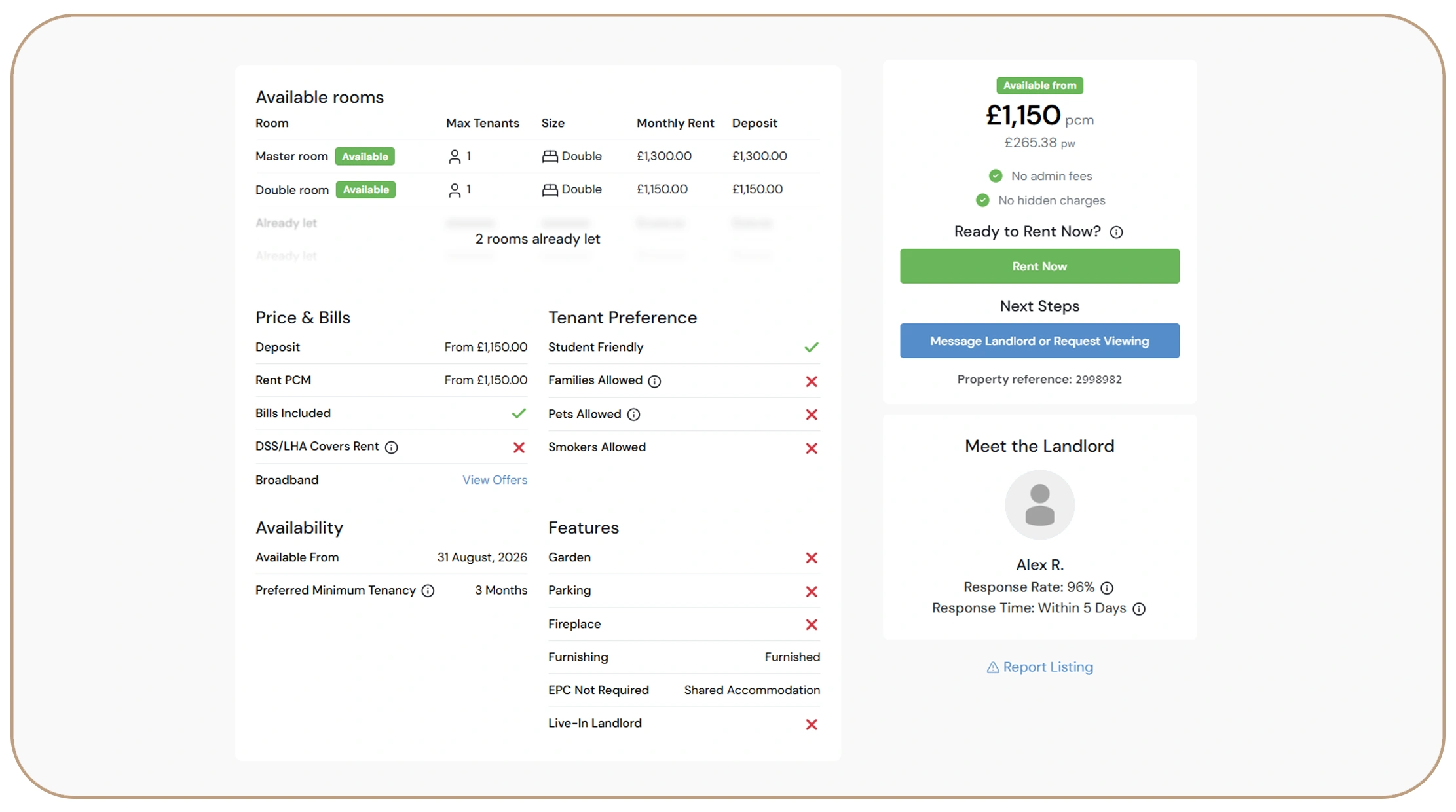
Extract OpenRent rental property listings to create a structured view of the UK rental market. A useful dataset can contain listing title, monthly rent, location, postcode area, number of bedrooms, property type, furnishing status, available date, deposit, description, amenities, and listing URL.
These fields create a foundation for market comparison. Analysts can calculate median rent by location. They can compare one-bedroom and two-bedroom properties. They can also measure how rental prices differ between flats, houses, studios, and larger properties.
Property-level data is especially useful because national averages can hide local differences. ONS reported that the average UK private rent was £1,388 in June 2026. But property size creates large differences. Four-or-more-bedroom properties averaged £2,061, while one-bedroom properties averaged £1,127. Detached properties averaged £1,577, compared with £1,355 for flats and maisonettes.
| Year | Market Context | Useful Listing Fields |
|---|---|---|
| 2020 | Low rental growth | Rent, location, property type |
| 2021 | Demand recovery | Bedrooms, availability |
| 2022 | Stronger rental pressure | Rent, deposit, location |
| 2023 | High rental inflation | Price and property attributes |
| 2024 | 9.0% annual growth by December | Regional and property comparisons |
| 2025 | Growth began slowing | Listing frequency and price changes |
| 2026 | £1,388 UK average in June | Current pricing and supply |
A well-designed dataset lets analysts move beyond simple listing counts. It can reveal relationships between property characteristics and rental prices.
For example, a property manager can calculate the median rent for two-bedroom flats in a specific area. An investor can compare that figure with other locations. A letting agency can identify where rents are moving fastest.
The result is a more detailed picture of local rental conditions.
Can Historical Data Help Forecast Rental Market Movements?
Forecast rental market trends using OpenRent data scraping by combining current listing information with historical observations. Forecasting becomes more useful when data is collected consistently rather than as a one-time snapshot.
A historical dataset can show whether rents are rising, falling, or remaining stable. It can also show seasonal patterns. For example, analysts may compare monthly listing counts and median rents across several years. They can then identify recurring periods of stronger demand or tighter supply.
The wider UK market shows why historical tracking matters. ONS recorded annual private rent growth of just 1.4% in December 2020. By February 2024, UK private rents were rising 9.0% annually, the highest annual increase in that series at that time.
| Year | Rental Trend | Forecasting Use |
|---|---|---|
| 2020 | 1.4% annual growth | Establish baseline |
| 2021 | Recovery period | Detect demand normalization |
| 2022 | Faster growth | Identify pressure points |
| 2023 | Strong rent increases | Model affordability pressure |
| 2024 | 9.0% annual growth in February | Identify peak inflation period |
| 2025 | Growth slowed during year | Detect market normalization |
| 2026 | 3.3% annual growth in June | Assess current direction |
Forecasting should not rely on one marketplace alone. OpenRent data can provide listing-level signals, while ONS, government statistics, mortgage data, employment data, and local economic indicators can add context.
Useful forecasting variables include:
- Median advertised rent.
- New listing volume.
- Listing duration.
- Bedroom count.
- Property type.
- Location.
- Availability date.
- Rent changes over time.
These signals can help analysts build scenarios. They can estimate how a location may respond to changing supply and demand.
The goal is not to predict the market perfectly. The goal is to make decisions using better evidence.
How Can Automation Make Property Research Faster?
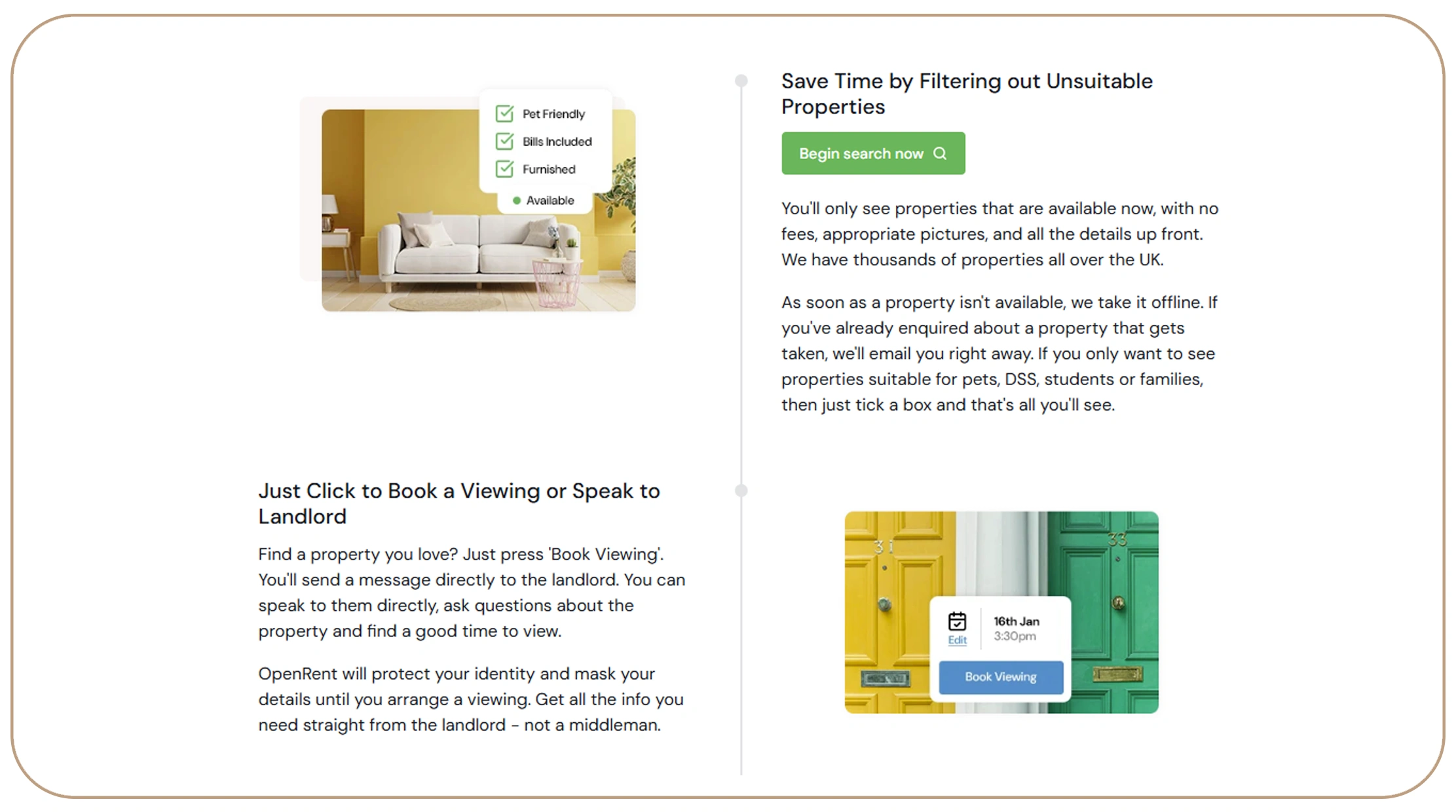
Automated OpenRent property data collection can reduce repetitive research and create a consistent flow of market information. Manual collection can work for a small sample. It becomes difficult when analysts need to monitor hundreds or thousands of listings.
Automation can collect defined fields on a schedule. The resulting data can then move into a database, spreadsheet, dashboard, or analytics platform.
A basic workflow can follow these steps:
- Define the market. Select cities, regions, postcodes, or property categories.
- Select data fields. Choose rent, bedrooms, property type, availability, and other attributes.
- Collect listing information. Use a compliant data extraction workflow.
- Normalize records. Standardize prices, locations, and property attributes.
- Store historical snapshots. Keep previous observations.
- Analyze changes. Calculate price and supply movements.
- Create alerts. Flag unusual rental changes or new opportunities.
ONS data highlights the value of regular monitoring. Average UK monthly private rent rose from £1,335 in April 2025 to £1,388 in June 2026. Annual growth also slowed from 7.4% in April 2025 to 3.3% in June 2026.
| Period | Average UK Private Rent | Annual Growth |
|---|---|---|
| 2020 | Official index used | 1.4% |
| 2021 | Market recovery | --- |
| 2022 | Growth accelerated | --- |
| 2023 | High-growth period | --- |
| Apr 2024 | £1,254 in Great Britain | 8.9% |
| Apr 2025 | £1,335 | 7.4% |
| Jun 2026 | £1,388 | 3.3% |
Figures use the specific ONS reference periods available in each release. Great Britain and UK measures should not be treated as identical series.
Automation makes this type of monitoring easier. It creates repeatable datasets instead of isolated research notes.
For property businesses, that means analysts can focus more on interpretation and less on repetitive collection.
What Should a UK Rental Dataset Contain?
A Real Estate Dataset can bring property listings into one structured format. This helps analysts compare properties across locations and time periods.
A useful rental dataset can include:
- Property title.
- Monthly rent.
- Property type.
- Bedroom count.
- Bathroom count.
- Location.
- Postcode or postcode area.
- Furnishing status.
- Availability date.
- Deposit information.
- Amenities.
- Listing date.
- Listing URL.
- Historical price.
- Listing status.
The dataset can support different business cases. Investors can compare potential rental markets. Landlords can benchmark asking rents. Agencies can study supply. Researchers can examine regional trends. Proptech businesses can build rental intelligence products.
Property size remains a major pricing factor. In June 2026, ONS reported average UK private rents of £1,127 for one-bedroom properties and £2,061 for properties with four or more bedrooms.
| Year | Dataset Focus | Example Analysis |
|---|---|---|
| 2020 | Baseline listings | Regional rental comparison |
| 2021 | Market recovery | Demand changes |
| 2022 | Rental growth | Price movement |
| 2023 | Supply pressure | Listing availability |
| 2024 | High inflation | Rental affordability |
| 2025 | Slowing growth | Market normalization |
| 2026 | Current conditions | Investment screening |
Historical records are important. They allow analysts to compare today's listings with previous observations.
For example, an investor can track the median rent for a two-bedroom flat in Manchester over multiple quarters. A letting agency can measure the change in asking rents across Birmingham. A property manager can identify areas where rental prices are moving faster than the wider market.
Data quality also matters. Analysts should remove duplicate records, normalize locations, handle missing values, and preserve collection dates.
A clean dataset produces stronger analysis.
How Can an API Support Real Estate Data Workflows?
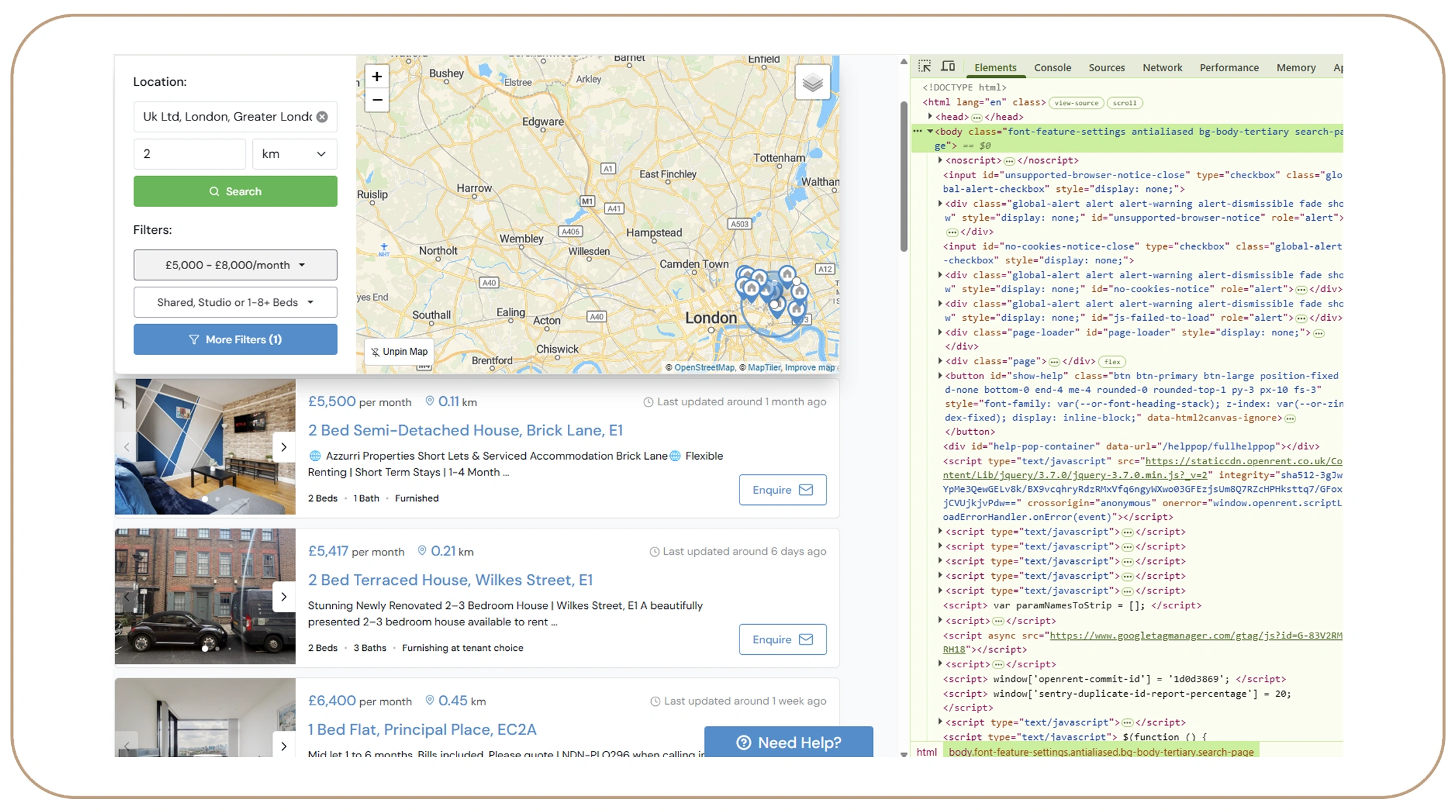
A Web Scraping Real Estate Data API can simplify the connection between property data collection and business analytics. APIs can help deliver structured information into applications, databases, dashboards, and internal systems.
A typical architecture has four stages:
Collection → Processing → Storage → Analysis
The collection layer gathers listing information. The processing layer cleans and standardizes it. The storage layer preserves current and historical records. The analysis layer turns those records into business insights.
This structure can support automated reporting. A property company could receive a weekly regional rent report. An investment team could compare several cities. A proptech platform could feed property information into its own analytics interface.
The wider rental market supports the need for timely data. ONS reported that UK average private rent increased 3.3% in the year to June 2026, reaching £1,388. England averaged £1,446, Wales £843, Scotland £1,012, and Northern Ireland £877 based on the latest available reference periods.
| Year | UK Rental Market Signal | API Use Case |
|---|---|---|
| 2020 | 1.4% rental growth | Baseline datasets |
| 2021 | Recovery | Regular collection |
| 2022 | Stronger demand | Price monitoring |
| 2023 | High rental pressure | Regional analysis |
| 2024 | 9.0% growth in February | Market alerts |
| 2025 | 4.0% growth in December | Trend monitoring |
| 2026 | 3.3% growth in June | Current market intelligence |
An API-based approach also supports scalability. A team can start with a few locations and expand coverage as requirements grow.
The key benefit is consistency. Data enters the same workflow repeatedly. Analysts can then compare observations without rebuilding the process each time.
How Can Property Professionals Turn Listing Data Into Decisions?

Market Research becomes more effective when property professionals use detailed listing data alongside broader market indicators.
A property investor may want to identify areas with rising rents but limited supply. A landlord may want to benchmark a property's asking rent. A letting agency may want to understand which property types attract the most listings. A researcher may want to compare regional rental patterns.
OpenRent listing information can contribute to these analyses when collected responsibly and combined with appropriate external data.
A practical research framework can compare:
- Median advertised rent.
- Rent per bedroom.
- Listing volume.
- Property type mix.
- Bedroom distribution.
- Regional price differences.
- New listing frequency.
- Price changes.
- Availability patterns.
- Historical market movement.
The market has moved through distinct phases since 2020. ONS recorded only 1.4% annual private rent growth in December 2020. Annual growth later reached 9.0% in February 2024. By December 2025, annual growth had slowed to 4.0%. By June 2026, it stood at 3.3%.
| Year | Annual Rental Growth Indicator | Research Question |
|---|---|---|
| 2020 | 1.4% | What was the baseline? |
| 2021 | Recovery | Where did demand return? |
| 2022 | Accelerating | Which areas tightened? |
| 2023 | High growth | Where did affordability weaken? |
| 2024 | 9.0% in February | Which markets peaked? |
| 2025 | 4.0% in December | Where did growth slow? |
| 2026 | 3.3% in June | What is changing now? |
Market research should combine historical context with current listing data. That combination helps users distinguish short-term movements from longer-term trends.
It also helps reduce decisions based on anecdotal evidence.
Why Should Real Estate Businesses Choose Real Data API?
Real Data API can help businesses create scalable data workflows for property research, market monitoring, competitive analysis, and real estate intelligence.
A strong property data workflow should provide:
- Structured information: Keep rental listings in consistent fields.
- Scalable collection: Support growing geographic and property coverage.
- Historical analysis: Compare current listings with previous observations.
- Market monitoring: Track rental prices and supply changes.
- Faster research: Reduce repetitive manual collection.
- Analytics-ready outputs: Connect datasets with business intelligence systems.
- Custom workflows: Adapt data collection to specific business requirements.
For investors, the main benefit is better screening. For landlords, it is stronger rental benchmarking. For agencies, it is faster market reporting. For proptech companies, it is a reliable foundation for property intelligence products.
The UK rental market is not uniform. London, the North East, Wales, Scotland, and other regions can show very different rental conditions. ONS reported annual rent growth of 7.9% in the North East and 2.1% in London in December 2025.
That difference demonstrates why local-level data matters.
Businesses that Scrape OpenRent property data for UK rental market trends can combine listing-level information with official market statistics to build a more complete view of rental conditions.
The strongest approach is not simply to collect more data. It is to collect relevant data consistently and turn it into clear decisions.
Conclusion
The UK rental market has experienced major changes since 2020. Rental growth moved from 1.4% in December 2020 to exceptionally high levels by 2024 before slowing during 2025 and 2026. ONS reported an average UK private rent of £1,388 in June 2026, up 3.3% year over year.
This changing environment creates a clear need for timely property intelligence.
Scrape OpenRent property data for UK rental market trends to build structured datasets that reveal rental prices, property supply, location differences, property types, and market movements.
The real value comes from historical tracking. A single listing snapshot shows the market at one moment. A structured time series can show direction.
For investors, this can improve opportunity screening. For landlords, it can support rental pricing. For agencies, it can strengthen market reports. For researchers, it can provide detailed evidence for regional comparisons. For proptech companies, it can support data-driven products.
A responsible data strategy should also respect applicable laws, website terms, privacy requirements, and access restrictions. Businesses should collect only the information they are permitted to use and maintain clear data governance.
The UK rental market will continue to change. Better data can help businesses respond faster.
Start with Real Data API to Scrape OpenRent property data for UK rental market trends and turn rental listings into actionable insights for smarter pricing, investment, and market research decisions!
Latest posts

How to Use a Meesho ecommerce scraper 2026 to Analyze Product Listings, Pricing, and Market Opportunities

How a Blinkit scraper for retail market research Helps Brands Track Competitor Pricing and Product Trends

Why Businesses Need a Flipkart India daily ecommerce dataset for market research for Smarter Retail Decisions

Grocery Data Scraping for Competitive Benchmarking - Key Strategies for Retail Success in 2027






.png)