.gif)
.jpg)

Introduction
A leading e-commerce brand wanted to understand customer expectations, identify recurring product complaints, and improve its competitive positioning on Flipkart. A Flipkart reviews scraper for product intelligence helped establish a structured approach to collecting customer feedback, ratings, and product review information. Through Flipkart Product Data Scraping, the business could organize publicly accessible product information and customer opinions for deeper analysis. The objective was to move beyond manually reading individual reviews and develop a consistent process for understanding customer sentiment across product categories. By examining review patterns, rating distributions, recurring complaints, and positive product attributes, the brand could identify areas requiring attention. This approach also helped product and merchandising teams develop a clearer understanding of customer expectations and competing product performance. The project focused on creating reliable review datasets that could support product improvement, customer experience planning, and informed business decisions.
The Client
The client was an established e-commerce business offering products across multiple consumer categories. Its product management and research teams wanted better visibility into customer feedback appearing on Flipkart. Although customer reviews contained useful information about product quality, usability, packaging, delivery experiences, and overall satisfaction, analyzing this information manually across numerous listings was time-consuming.
The business needed a structured way to examine customer opinions and understand why certain products received positive feedback while others attracted repeated complaints. Its existing research process made it difficult to compare feedback across competing products and identify recurring customer concerns.
The client therefore required a scalable review intelligence workflow that could organize product-level feedback, ratings, review dates, and relevant product attributes. The proposed Flipkart reviews API for customer sentiment analytics would help transform scattered customer opinions into organized information for research and reporting. The Flipkart Scraper approach was designed around the client's product research requirements, supported data fields, and permitted collection methods.
The primary objective was to make customer feedback easier to analyze and more useful for product development, category management, and competitive research.
Key Challenges
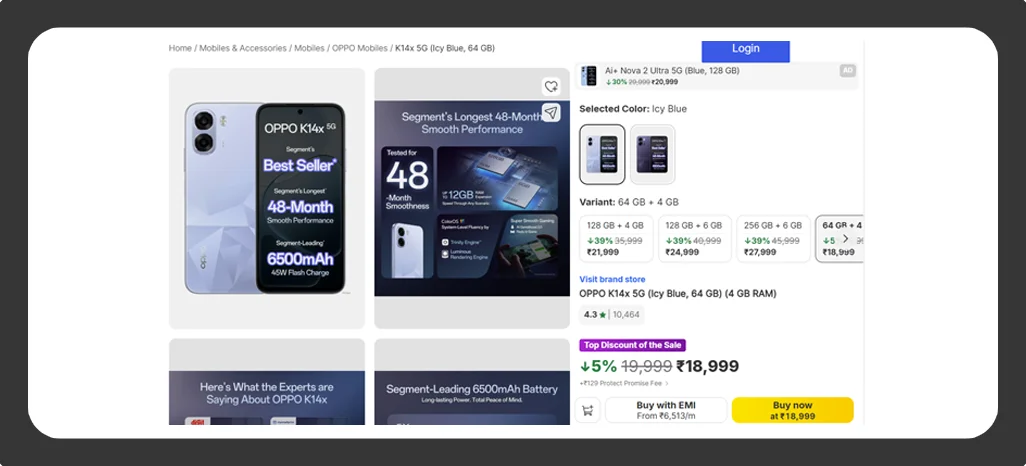
The client faced several difficulties when attempting to analyze customer feedback across multiple Flipkart product listings. The first challenge was the volume of review information. Manually examining individual product pages required considerable effort and made it difficult to maintain consistent research coverage.
Another challenge involved inconsistent review formats. Customers expressed similar concerns using different words, making it difficult to identify common complaints and positive product attributes. The business also needed to distinguish between product-related feedback and comments concerning delivery, packaging, or seller service.
Competitive benchmarking presented another difficulty. The client wanted to understand how competing products performed from the customer's perspective, but differences in review counts, product specifications, and listing structures complicated comparisons. Flipkart competitor review data scraping for product benchmarking therefore needed consistent product identification and standardized review fields. The client also needed a dependable Flipkart API workflow that could support structured collection without assuming that every review or field would always be accessible.
Historical analysis was another requirement. Without reliable timestamps and source references, identifying changes in customer feedback over time became difficult. Finally, the company needed quality checks to detect duplicate reviews, missing information, inconsistent ratings, and incomplete product records.
These challenges highlighted the need for a more organized data collection and validation process.
Key Solutions
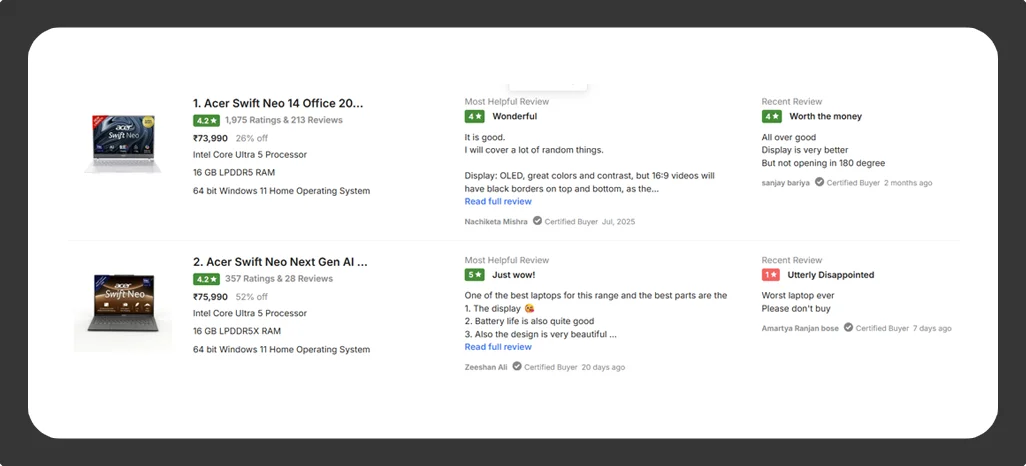
The solution focused on building a structured product review collection and analysis workflow aligned with the client's research requirements. The process combined product identification, review extraction, data normalization, quality validation, and customer feedback classification.
The first step involved defining the required product information. The collection structure included product titles, product identifiers where available, brand names, category details, displayed ratings, review text, review dates, and source references. Relevant fields depended on source accessibility and permitted collection conditions. Establishing a consistent schema helped the research team organize information from different product listings.
The next step involved collecting customer feedback from selected Flipkart product pages. The workflow was designed to scrape Flipkart ratings for competitor analysis, enabling the business to compare customer feedback and rating patterns across selected products. Review text and associated product details were organized into structured records to make further analysis easier.
Product matching was another important part of the solution. Different sellers or listings could use variations of product names, abbreviations, and descriptions. The workflow used available product identifiers, brand information, model details, and product attributes to reduce incorrect matches. This helped ensure that comparisons were made between relevant products rather than unrelated listings.
The collected reviews were then prepared for sentiment and topic analysis. Positive, negative, and neutral feedback could be grouped according to the language and context of customer comments. Repeated themes such as product durability, material quality, ease of use, packaging, design, and functionality could be identified for further investigation. Delivery-related and seller-related comments were considered separately wherever the review context allowed reliable classification.
The Flipkart reviews scraper for product intelligence also supported a more organized approach to competitor feedback analysis. The business could examine rating distributions alongside review themes instead of relying exclusively on average ratings. This distinction was important because two products with similar average ratings could receive very different types of customer feedback.
Data validation formed another major component. Duplicate records, incomplete fields, inconsistent date formats, and unexpected rating values were flagged for review. Source references and collection timestamps helped researchers trace observations back to their origins. The workflow also accounted for changes in product listings and differences in available review information.
The final stage focused on making the collected information useful for business teams. Structured datasets could be prepared for dashboards, spreadsheets, and analytical reporting. Product managers could examine recurring customer concerns, merchandising teams could compare competing product feedback, and research teams could identify areas requiring additional investigation.
Rather than treating every negative review as proof of a product defect, the analysis encouraged teams to evaluate repeated themes, review context, and available product information together. Similarly, positive feedback could reveal product attributes that customers consistently appreciated.
This solution established a repeatable foundation for customer feedback research, product benchmarking, and product improvement planning without relying on unsupported assumptions about sales performance or customer behavior.
Client Testimonial

"Our product research team needed a more organized way to understand customer feedback across competing products. The structured review intelligence approach helped us examine ratings, recurring customer concerns, and product-level feedback in a consistent format. It also made it easier to identify areas that required further investigation and share useful insights with our merchandising and product teams. Having organized review information improved the way we approached customer feedback analysis and competitive research."
— Head of E-Commerce Product Research
The Flipkart review data API for business analytics supported the broader objective of making customer feedback more accessible for research and business reporting.
Conclusion
Customer reviews provide valuable information about product experiences, expectations, and recurring concerns. However, businesses need structured information and consistent analysis methods to turn individual opinions into useful product intelligence.
This case study demonstrates how a Flipkart Reviews Scraper workflow can organize customer ratings, review text, product information, and competitor feedback for systematic research. A Flipkart reviews scraper for product intelligence can help e-commerce businesses examine customer sentiment, identify recurring product issues, compare competing listings, and discover opportunities for product improvement.
The most useful insights come from combining review patterns with product specifications, source validation, historical observations, and appropriate analytical methods. Businesses should also recognize that online reviews represent the opinions of reviewers rather than the complete customer population.
Real Data API helps businesses explore structured e-commerce data collection approaches for product intelligence and competitive research.
Want to transform marketplace feedback into actionable product insights? Connect with Real Data API to explore review data collection solutions tailored to your e-commerce research requirements!
Frequently Asked Questions
1. How does review scraping support product research?
A Flipkart reviews scraper for product intelligence organizes customer opinions and ratings, helping businesses identify recurring product complaints, positive attributes, customer expectations, and potential improvement opportunities.
2. What information can businesses collect from Flipkart products?
Flipkart Product Data Scraping can collect accessible product titles, identifiers, prices, ratings, descriptions, review information, and category attributes, depending on source availability and permitted access.
3. How can businesses understand customer sentiment?
Flipkart reviews API for customer sentiment analytics helps organize customer feedback for sentiment classification, recurring-topic identification, and analysis of positive, negative, and neutral opinions.
4. Why is competitor review benchmarking important?
Flipkart competitor review data scraping for product benchmarking helps businesses compare ratings, customer feedback patterns, product strengths, and recurring complaints across relevant competing listings.
5. Can product ratings help businesses evaluate competitors?
Yes. Businesses can scrape Flipkart ratings for competitor analysis to compare rating distributions and review patterns, helping product teams evaluate customer feedback across competing products.
Latest posts
Can a McDonald’s Scraper for Menu Price Monitoring Solve the Challenge of Tracking Frequent Menu Price Changes Across Multiple Locations
How Blinkit API for authorized product data access Helps Retailers Track Product Prices and Improve Competitive Intelligence
How Nykaa API Integration for Beauty E-commerce Analytics Helps Fix Inaccurate Product and Pricing Data
How Zepto Grocery Data Scraping by Pincode Helps Retailers Identify Local Price Differences & Pricing Gaps?



.png)


