.gif)
.jpg)
Quick Summary
- Automated menu monitoring can help analysts identify price differences, promotions, and listing changes across selected restaurant locations.
- McDonald’s scraper for menu price monitoring supports structured price comparisons when the relevant data is accessible and collection is authorized.
- McDonalds food data scraping can help businesses organize menu observations, validate changes, and build location-level reports for restaurant market research.
Introduction
Tracking menu prices across multiple restaurant locations is challenging because prices, offers, availability, and product combinations may differ by outlet. A McDonald’s scraper for menu price monitoring can help organize permitted menu information into structured records, making it easier to compare listed prices, identify changes over time, and investigate regional differences. It cannot guarantee access to every menu or provide information that the source does not expose.
For restaurant market researchers, food brands, pricing analysts, and data teams, the key challenge is maintaining consistent comparisons across locations and observation dates. Manual checking can make it difficult to distinguish a genuine price change from a temporary promotion, a missing item, or a difference in the selected restaurant. A repeatable data workflow can reduce these inconsistencies when it includes reliable timestamps, product matching, and validation.
McDonalds food data scraping can be used to structure publicly accessible or otherwise authorized menu information for analysis. Collection must follow the relevant website or application terms, technical restrictions, and applicable laws. The objective is not to assume that every McDonald’s restaurant uses the same prices. It is to create a dependable record of what was displayed, where it was displayed, and when it was observed.
For businesses evaluating price intelligence solutions, the practical question is whether structured monitoring can improve coverage, traceability, and the speed of analysis without confusing listed prices with final transaction prices.
How can location-level comparisons reveal pricing differences?
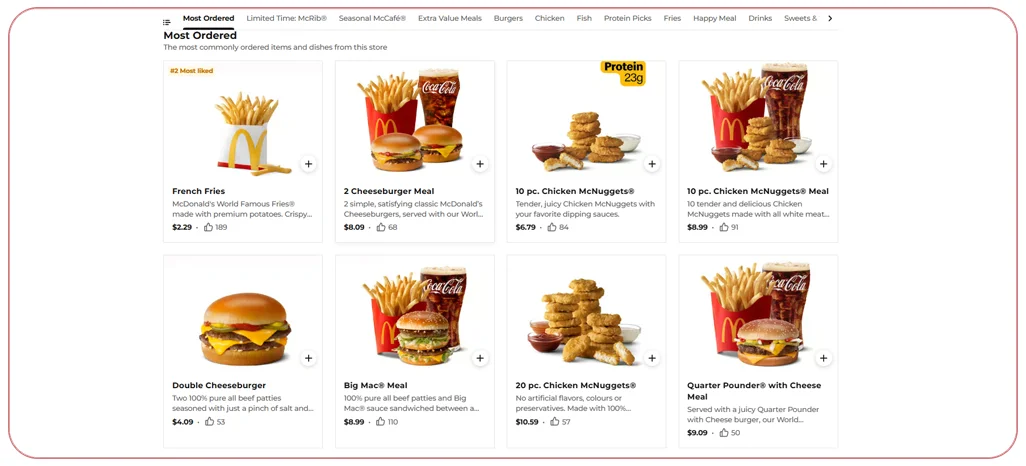
Menu prices are most useful when each observation is tied to a specific restaurant, product, channel, and date. A price displayed for pickup may not match a delivery listing, and an advertised promotion may apply only to participating outlets. Analysts should therefore compare like with like instead of treating every listing as equivalent.
McDonald’s web scraping for restaurant market intelligence can help organize accessible menu observations by location, item name, displayed price, promotion, availability, and collection timestamp. A location-aware dataset enables analysts to identify differences that warrant further investigation. Product names and meal combinations should be normalized carefully, because similarly named items can have different sizes, ingredients, or included sides.
McDonald’s official online-service terms explain that restaurants independently determine their prices and that offers and pricing may not be available at every location. This makes location-level comparison commercially relevant, while also showing why a single national price list may be insufficient. Read the official McDonald’s online-services terms.
A McDonald’s scraper for menu price monitoring can record price observations over time, allowing researchers to compare a current listing with a previous observation. To avoid false alerts, the process should account for taxes, fees, promotions, currency, order channel, and changes in item configuration.
The following measures can support a useful report:
- Price difference between comparable listings.
- Percentage change from the previous recorded price.
- Number of locations with a verified change.
- Share of monitored items with missing or unavailable prices.
- Time elapsed since the latest successful observation.
These indicators describe what the available data shows. They do not explain why a price changed or establish whether a particular change is profitable. Those conclusions require additional business context.
What should a reliable collection workflow capture?
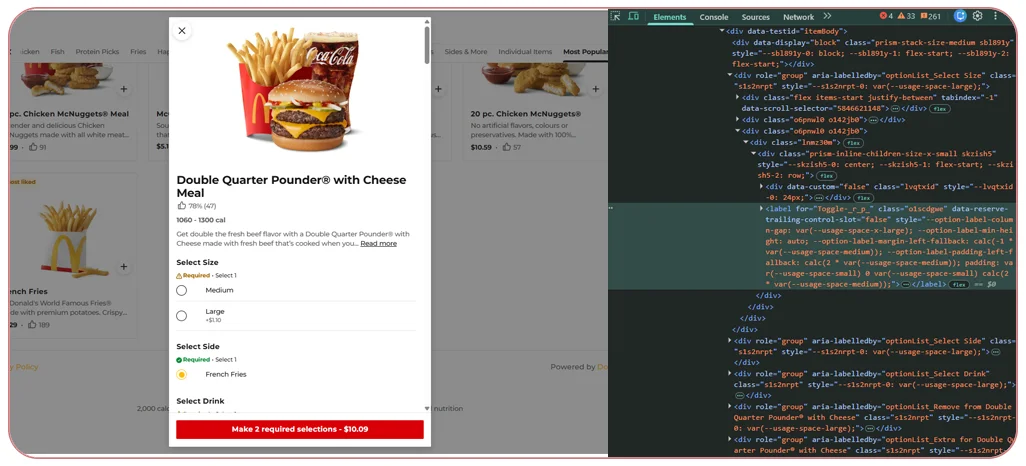
A dependable workflow begins with a clear definition of the items and locations being monitored. Analysts should identify the relevant source, establish permitted access, choose an appropriate collection frequency, and document which menu fields can actually be retrieved. Data quality depends on these decisions as much as on the collection technology.
A McDonald’s scraper API for menu data extraction may support structured collection where an authorized API or other permitted integration is available. Before implementation, buyers should verify documentation, geographic coverage, update frequency, usage limits, and whether prices, promotions, and availability are included. No particular endpoint or field should be assumed to exist without technical confirmation.
A useful record can contain the restaurant identifier, location, product name, category, displayed price, currency, order channel, promotion details where available, availability status where available, timestamp, and source reference. Keeping the original observation alongside the normalized record improves traceability when product matching or price interpretation needs review.
| Workflow stage | Required check | Intended outcome |
|---|---|---|
| Source selection | Confirm permitted access and field availability | Defined coverage |
| Data collection | Record source and observation time | Traceable records |
| Normalization | Standardize names, currencies, and units | Comparable items |
| Validation | Detect duplicates, missing values, and outliers | Fewer data errors |
| Reporting | Compare matched records by location and date | Actionable analysis |
Automation should also include failure handling. A page layout change, blocked request, or missing product must not be interpreted automatically as a price change. Analysts should distinguish collection failures from genuine changes in the source.
The final output should be designed around the buyer's decision: pricing teams may need change alerts, researchers may need historical comparisons, and operations teams may need location-specific exceptions. A structured workflow makes these use cases easier to support without overstating data coverage.
How quickly can analysts identify menu changes?
The speed of detection depends on how often a source can be checked, whether collection succeeds, and how quickly records can be validated and compared. A system that runs frequently but produces unreliable matches may be less useful than a less frequent workflow with strong validation. “Real time” should therefore describe a verified technical capability, not an assumed benefit.
Real-time McDonald’s data scraping for food industry insights can be a relevant approach when the source permits sufficiently frequent collection and the data is available at the required intervals. Buyers should confirm actual refresh schedules, access restrictions, and service-level commitments before describing a solution as real-time. A page that is checked every few hours, for example, cannot establish the exact moment a price changed between checks.
A useful monitoring process compares the latest valid observation with the previous valid record for the same product, location, and ordering channel. It can then flag price increases, price decreases, newly listed promotions, and missing products for review. Each alert should retain the original and new values, timestamps, source references, and matching confidence.
McDonald’s scale makes consistent location identification important. Its 2025 annual report filed with the U.S. Securities and Exchange Commission reports 45,356 systemwide restaurants at year-end 2025, compared with 43,477 at year-end 2024. Those figures demonstrate the size of the network, but they do not imply that every restaurant is covered by a third-party data source.
A McDonald’s scraper for menu price monitoring can help prioritize verified changes for review rather than asking analysts to inspect every listing manually. Teams should measure successful collection rates, false alerts, missing records, and time to verification to assess whether the workflow is actually improving monitoring performance.
Explore structured menu data collection options to support more consistent location-level price research.
Get Insights Now!How can historical records support stronger food industry analysis?
A single menu observation captures only one point in time. Historical records provide context for distinguishing a lasting price adjustment from a short-lived offer or an isolated data issue. For meaningful analysis, businesses need consistent collection dates, comparable products, and clearly documented definitions.
A McDonald’s pricing web data scraper for food industry analytics can support this process by organizing permitted observations into a historical dataset. Analysts can compare displayed prices by product, outlet, region, and ordering channel, then investigate changes alongside relevant market events. The records alone cannot prove that inflation, supply costs, or a particular business decision caused a menu-price change.
Broader food-price indicators provide useful context, but they should not be confused with McDonald’s own menu-price history. The U.S. Department of Agriculture's Economic Research Service reported the following annual changes in U.S. food-away-from-home prices, a category covering restaurant and other foodservice purchases.
| Year | Annual change | Data status |
|---|---|---|
| 2020 | 3.4% | Historical |
| 2021 | 4.5% | Historical |
| 2022 | 7.7% | Historical |
| 2023 | 7.1% | Historical |
| 2024 | 4.1% | Historical |
| 2025 | 3.8% | Historical |
| 2026 | 3.5% | Forecast |
Source: USDA ERS Food Price Outlook. The 2026 figure is a forecast, not a completed full-year result. These U.S. figures are broad inflation indicators, not measured changes in McDonald’s menu prices.
Historical menu observations can help analysts identify whether a displayed price has changed repeatedly, whether an offer has reappeared, or whether a location has a different price pattern from comparable outlets. Reports should clearly separate observed data from external economic context.
For robust reporting, retain collection timestamps, record the applicable market and currency, and flag gaps in coverage. If a product name or serving size changes, mark the break in comparability instead of treating the records as a continuous series. This helps ensure that the resulting analysis supports evidence-based interpretation rather than misleading conclusions.
What can a structured monitoring system deliver to pricing teams?
The value of menu monitoring depends on how easily teams can turn records into useful decisions. A dataset should not merely list prices; it should help analysts locate changes, verify source information, and prioritize which observations need attention. Reports are more useful when they distinguish confirmed price movements from uncertain matches and collection errors.
A McDonald’s Scraper workflow can be designed around a defined set of locations and products, with consistent identifiers and documented collection intervals. Its output may support price comparison dashboards, historical reports, exception lists, and research datasets, subject to the source's permitted access and the fields available.
For effective monitoring, teams should define a small number of operational rules:
- Match the same item, size, and meal configuration before comparing prices.
- Keep delivery, pickup, and other channels separate when their prices or fees differ.
- Store original price values and standardized values for auditing.
- Exclude or separately label promotional prices when comparing standard menu prices.
- Flag missing observations instead of assuming that a product has been removed.
- Require review before using an observed change to inform a pricing decision.
A McDonald’s scraper for menu price monitoring can make it easier to detect changes across multiple locations, but the accuracy of the result depends on source coverage, product matching, collection reliability, and validation. Teams should measure these factors rather than assuming that automation guarantees complete or error-free data.
It is also important to distinguish displayed menu prices from total customer spend. Taxes, delivery charges, service fees, and discounts can affect the final amount paid. A comparison should state whether it covers the displayed item price, a basket subtotal, or a final checkout total.
Pricing analysts can then use validated observations to guide further research, while finance and operations teams bring in ingredient costs, sales data, and other internal measures. This division keeps market intelligence useful without treating external menu data as a complete profitability model.
How should restaurant locations be matched and monitored?
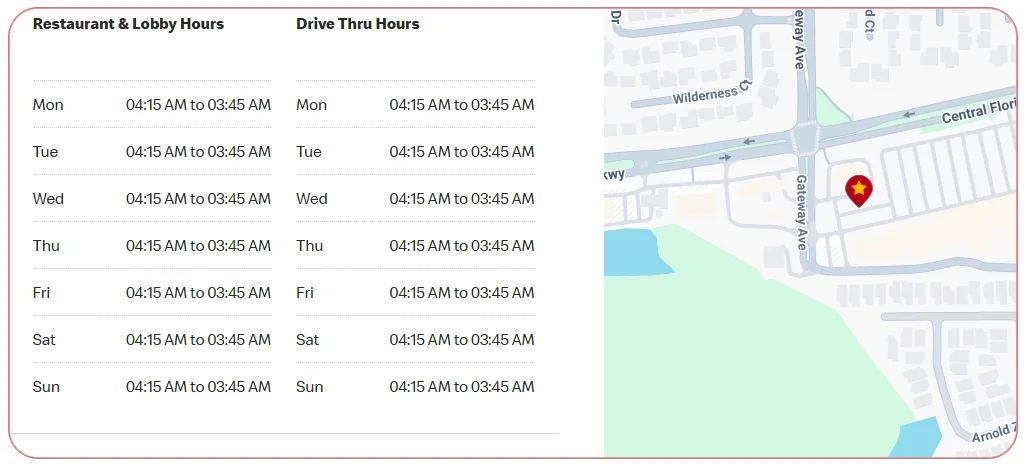
Location matching is a foundational part of multi-outlet research. A restaurant name alone may not be sufficient to distinguish nearby branches, and an online menu may reflect the outlet selected for a particular order rather than a brand-wide listing. Analysts need stable location identifiers wherever the source makes them available.
A Guide to McDonald's Restaurant Location workflow should begin by defining the target geography and documenting the source used to identify each outlet. Depending on permitted data availability, useful fields may include the restaurant name, address, city, region, location identifier, and source reference. Not every source provides all these fields, so coverage must be verified rather than assumed.
The workflow should then connect menu observations to the appropriate outlet. If a location's address changes or an identifier is missing, the record should be flagged for review instead of being automatically merged with a nearby restaurant. Duplicate outlet records can distort counts, while incorrect matching can create false price differences.
A practical location-level monitoring report can include:
| Report field | Purpose |
|---|---|
| Outlet identifier | Links observations to the intended restaurant |
| Market and region | Enables geographic grouping |
| Product identifier | Supports consistent item matching |
| Observation timestamp | Establishes when the listing was recorded |
| Displayed price and currency | Enables like-for-like comparisons |
| Validation status | Shows whether the record passed quality checks |
| Source reference | Supports audit and verification |
Location-based reports can help research teams compare equivalent menu items across selected markets and identify where additional verification is needed. However, the absence of a product in one observation should not be treated as proof that the restaurant does not sell it. The item could be unavailable temporarily, excluded from that channel, or missing because collection failed.
The strongest location workflow combines source verification, consistent identifiers, timestamped observations, and documented coverage limits. These controls make multi-location analysis easier to maintain and reduce the risk of drawing conclusions from mismatched restaurants or incomplete records.
Why Choose Real Data API?
Choosing a data provider requires more than checking whether a solution can collect menu information. Businesses should assess source coverage, permitted access, output structure, update frequency, technical documentation, and the quality controls available to keep records consistent.
A Food Scraping API may help teams integrate authorized food-related data into reporting and analytics workflows. Before implementation, confirm the relevant source availability and the exact fields supported by the service. Do not assume that a provider has a dedicated McDonald’s endpoint, can retrieve every location, or guarantees live updates without reviewing its current documentation.
When evaluating a solution, look for:
- Documented coverage: Clear information about supported sources, markets, and data fields.
- Structured output: Consistent records suitable for matching, comparison, and reporting.
- Validation options: Ways to identify missing values, duplicates, and unexpected changes.
- Traceability: Source references and timestamps for auditing observations.
- Integration fit: Output formats that suit existing analytics and reporting systems.
- Responsible access: Collection that follows applicable source terms, technical controls, and laws.
For pricing teams, a useful implementation should make the monitoring process more reliable and easier to audit. It should also be transparent about gaps and limitations so that analysts know when a record needs additional verification.
Real Data API can be considered as part of this evaluation. Confirm the required use case, access conditions, source availability, and technical requirements with the provider before relying on a particular capability.
Conclusion
Tracking menu prices across multiple locations is achievable when collection is consistent, products are matched correctly, and every observation includes its source and timestamp. Automated monitoring can help analysts find regional differences, review promotions, and identify changes that deserve further investigation. Its effectiveness still depends on authorized data access, reliable coverage, and validation.
A McDonald’s scraper for menu price monitoring can support this work by turning permitted menu observations into structured, comparable records. When combined with internal business data and clear reporting rules, those records can help pricing teams make better-informed decisions without assuming that every observed difference represents a permanent price change.
Ready to streamline your restaurant market research? Contact Real Data API to discuss your data collection needs, assess suitable integration options, and build a reliable approach to multi-location menu price monitoring!
FAQs
1. How does a McDonald’s scraper for menu price monitoring help businesses?
It organizes permitted menu observations by location and date, helping analysts compare prices, flag changes, and review promotions while accounting for source limitations and data quality.
2. Is McDonalds food data scraping useful for competitive research?
Yes. McDonalds food data scraping can structure accessible menu information for comparisons across selected locations, provided collection follows applicable source terms, technical restrictions, and laws.
3. What is McDonald’s web scraping for restaurant market intelligence?
McDonald’s web scraping for restaurant market intelligence organizes permitted menu observations to help researchers examine regional price differences, product availability, and historical listing changes with traceable records.
4. What does a McDonald’s scraper API for menu data extraction provide?
A McDonald’s scraper API for menu data extraction may return structured menu fields where supported. Buyers should verify documentation, source coverage, refresh frequency, and authorized access before implementation.
5. Can real-time McDonald’s data scraping for food industry insights guarantee instant updates?
No. Real-time McDonald’s data scraping for food industry insights depends on source availability, collection frequency, validation, and technical limits; verify actual update intervals before relying on alerts.
Latest posts
Can a McDonald’s Scraper for Menu Price Monitoring Solve the Challenge of Tracking Frequent Menu Price Changes Across Multiple Locations
How Blinkit API for authorized product data access Helps Retailers Track Product Prices and Improve Competitive Intelligence
How Nykaa API Integration for Beauty E-commerce Analytics Helps Fix Inaccurate Product and Pricing Data
How Zepto Grocery Data Scraping by Pincode Helps Retailers Identify Local Price Differences & Pricing Gaps?



.png)


