Introduction
FMCG brands use pricing intelligence to track competitor prices, monitor promotions, and improve retail positioning. By analyzing online grocery platforms, companies can make faster pricing decisions and improve profit margins. Businesses today rely on automated data collection tools to understand changing consumer demand and optimize pricing strategies across markets.
According to industry estimates, the global FMCG analytics market is expected to exceed $18 billion by 2026 due to rising demand for AI-driven retail intelligence and eCommerce monitoring. Brands such as Nestlé, Maggi, and Pepsi continuously adjust pricing based on retailer trends, seasonal promotions, and regional demand fluctuations.
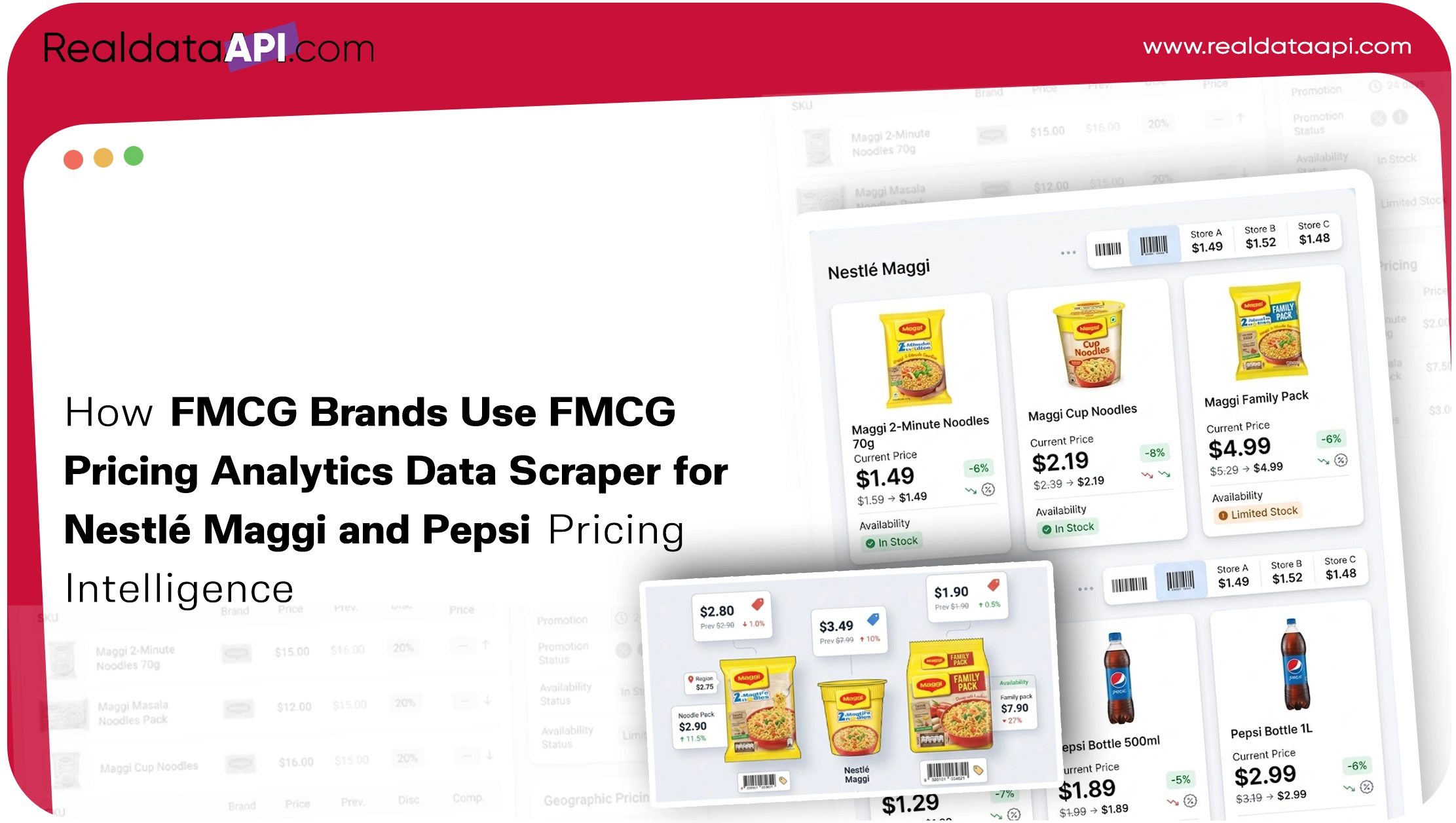
Modern businesses now depend on FMCG pricing analytics data scraper for Nestlé Maggi and Pepsi solutions to capture real-time product pricing, stock availability, discounts, and competitor insights across multiple grocery platforms. Additionally, advanced Food Data Scraping API systems help businesses automate retail intelligence collection at scale.
Why Is Pricing Intelligence Critical for FMCG Growth?
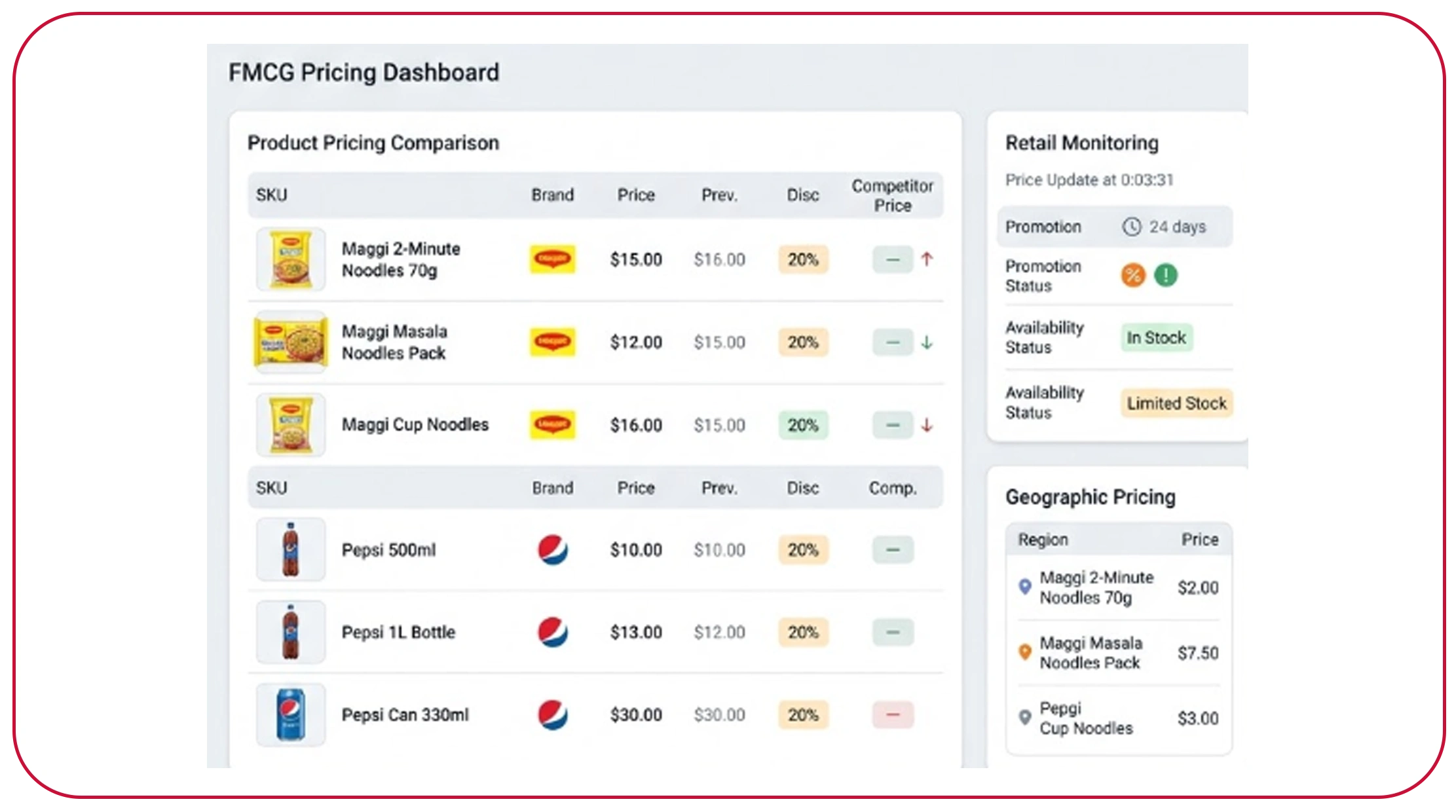
The FMCG industry operates in a highly competitive environment where pricing changes happen daily. Brands need fast access to retailer pricing trends to remain competitive.
Companies increasingly use automated tools to Scrape Nestlé Maggi Pepsi pricing intelligence data from grocery websites and delivery platforms. This helps them analyze:
- Product pricing fluctuations
- Promotional discounts
- Retailer-specific pricing
- Stock availability trends
- Consumer demand shifts
Between 2020 and 2026, online grocery sales are projected to grow by more than 120%, increasing the importance of digital pricing intelligence.
| Year | Global Online Grocery Market Size |
|---|---|
| 2020 | $285 Billion |
| 2021 | $340 Billion |
| 2022 | $410 Billion |
| 2023 | $495 Billion |
| 2024 | $590 Billion |
| 2025 | $680 Billion |
| 2026 | $760 Billion |
Brands monitoring pricing intelligence gain several advantages:
- Faster pricing optimization
- Better promotional planning
- Stronger retailer negotiations
- Improved regional competitiveness
Nestlé and Pepsi frequently launch retailer-specific offers across online grocery platforms. Monitoring these changes manually becomes difficult for large product catalogs. Automated scraping solutions simplify this process and provide real-time insights.
Companies can also identify high-performing product categories by analyzing regional grocery pricing trends. This enables better inventory forecasting and demand planning.
How Do Grocery Platforms Help FMCG Brands Understand Market Trends?
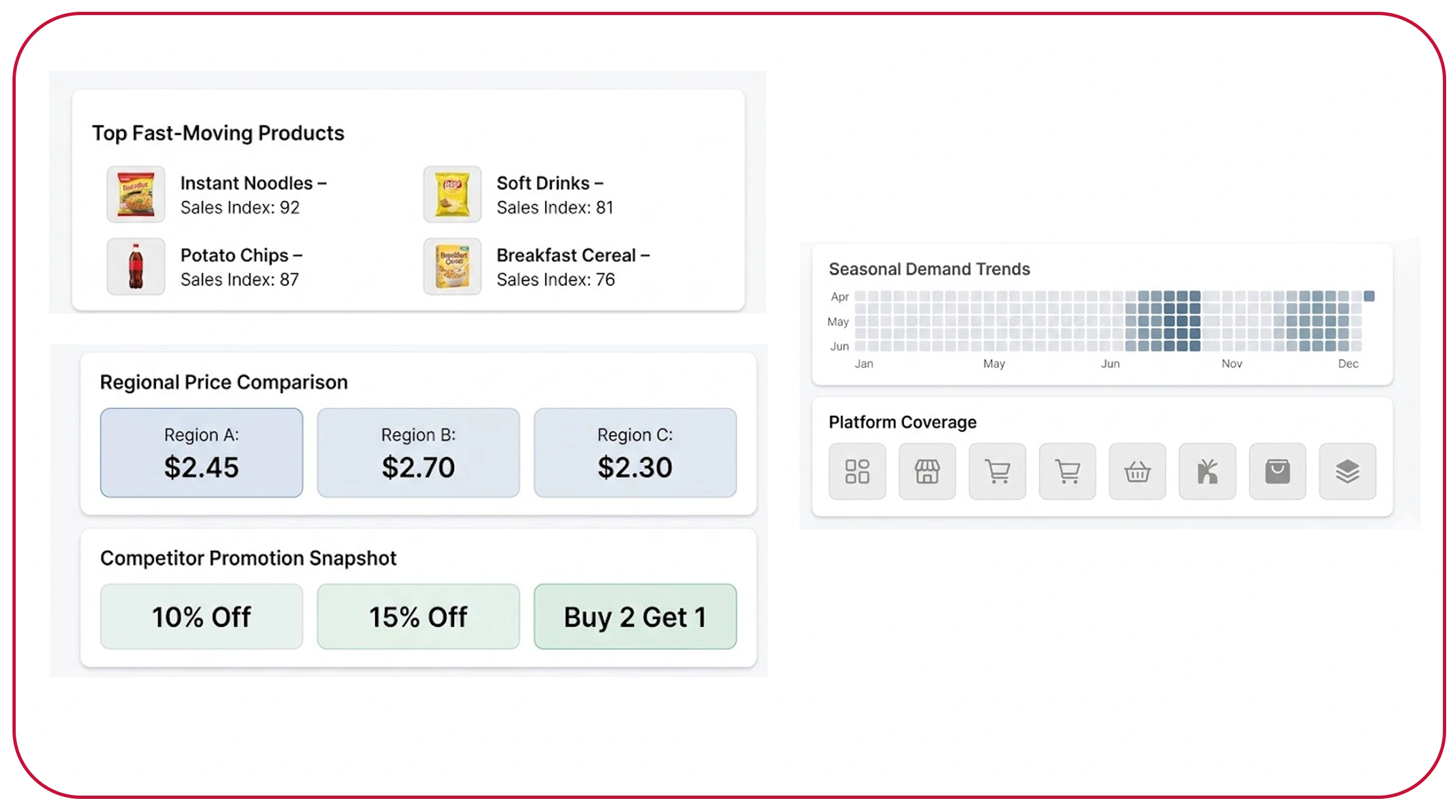
Online grocery platforms generate massive amounts of pricing and product performance data daily. FMCG brands analyze this information to improve market positioning.
Businesses now depend on FMCG market data intelligence through grocery platform scraping to collect structured datasets from:
- Instacart
- Walmart Grocery
- BigBasket
- Blinkit
- Amazon Fresh
- Carrefour
- Tesco
This data helps brands identify:
- Fast-moving products
- Regional pricing variations
- Competitor discount patterns
- Seasonal demand shifts
A 2025 industry survey revealed that 71% of FMCG companies increased investments in retail pricing analytics to improve profitability.
| Analytics Focus Area | FMCG Usage Rate 2020 | FMCG Usage Rate 2026 |
|---|---|---|
| Price Monitoring | 45% | 83% |
| Promotion Tracking | 39% | 78% |
| Inventory Analytics | 32% | 72% |
| Consumer Demand Analysis | 40% | 81% |
Retail intelligence allows companies to respond quickly to:
- Competitor discounts
- New product launches
- Seasonal demand spikes
- Retailer-specific pricing wars
Brands also gain visibility into customer buying behavior. This supports more accurate pricing strategies and product positioning decisions.
For Nestlé, Maggi, and Pepsi products, grocery platform data provides insights into:
- Instant noodles pricing trends
- Beverage promotional campaigns
- Pack-size pricing differences
- Regional availability patterns
This improves pricing precision across digital retail channels.
What Insights Can Brands Gain from Comparative Retail Pricing?
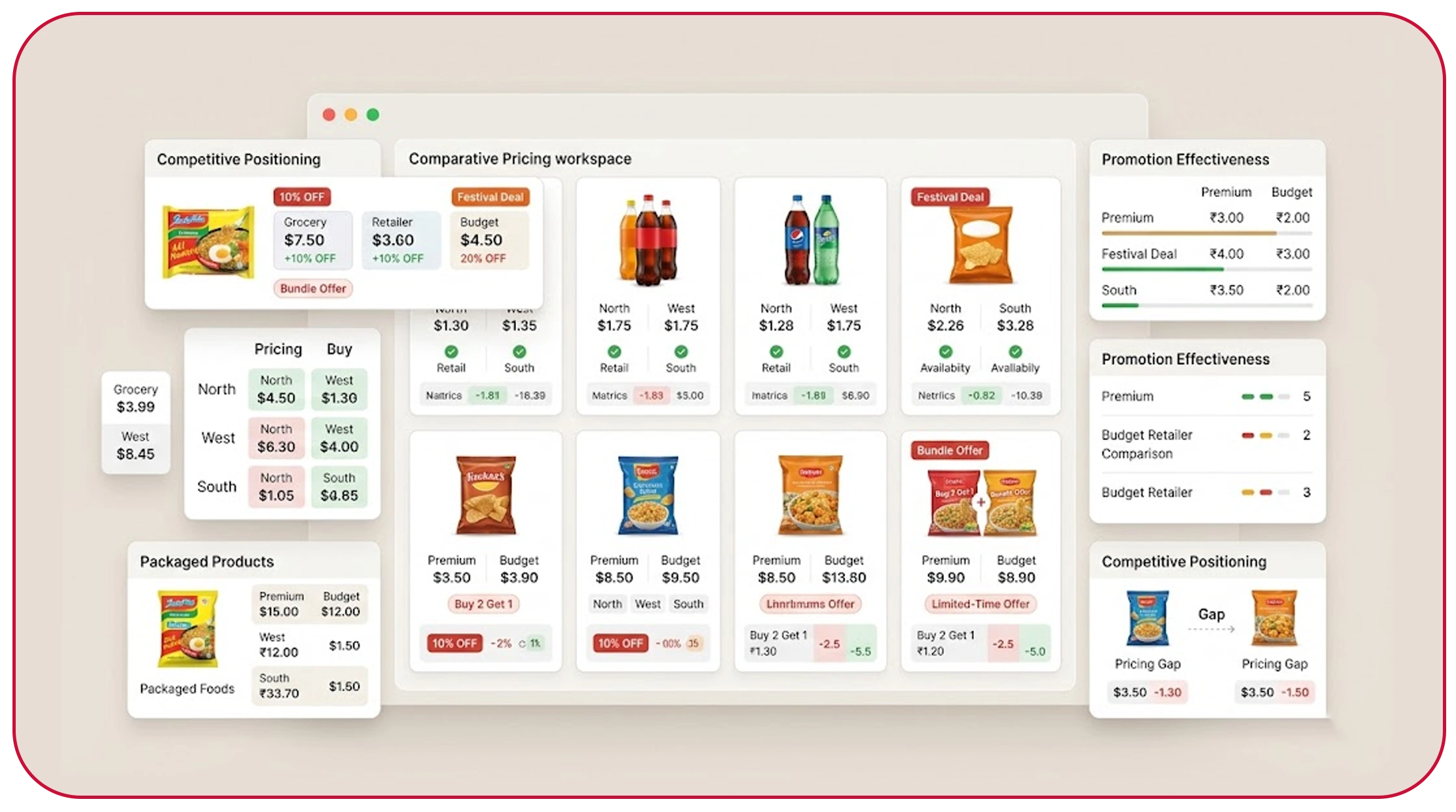
Comparative pricing analysis helps FMCG brands evaluate their market position against competitors. Companies compare product pricing across multiple retailers to identify gaps and opportunities.
Many businesses now rely on Nestlé vs Maggi vs Pepsi grocery pricing data extraction to benchmark:
- Product price ranges
- Discount percentages
- Bundle offers
- Geographic price differences
- Retail channel performance
The beverage and packaged food sectors experienced significant online pricing volatility between 2020 and 2025.
| Product Category | Average Online Price Change (2020-2025) |
|---|---|
| Instant Noodles | 18% |
| Carbonated Drinks | 22% |
| Packaged Snacks | 16% |
| Ready-to-Eat Foods | 25% |
Comparative pricing analysis provides:
- Competitive positioning insights
- Retail performance tracking
- Promotion effectiveness measurement
- Regional demand analysis
For example:
- Maggi products may receive aggressive discounting during festive seasons.
- Pepsi beverages often show price variations based on regional competition.
- Nestlé packaged foods may differ in pricing across premium and budget grocery retailers.
By analyzing extracted pricing data, companies can optimize:
- Product launch pricing
- Promotional campaigns
- Retail partnerships
- Dynamic pricing strategies
Retail pricing intelligence also supports predictive analytics for future market movements.
How Can Brands Monitor Competitor Pricing in Real Time?
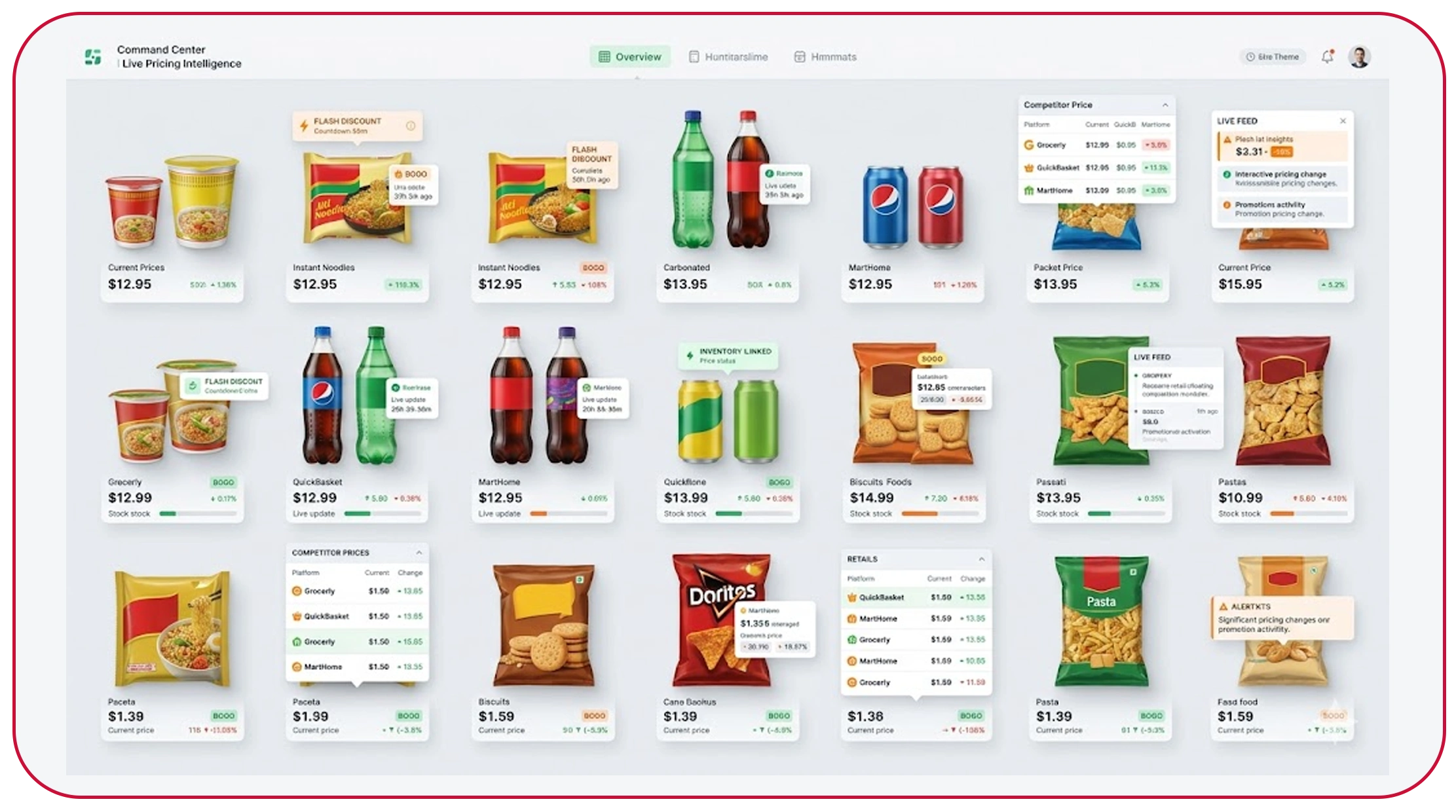
Real-time pricing visibility is essential in the FMCG industry. Retail prices can change several times a day based on demand, competition, and promotions.
Businesses use automated systems for competitor price monitoring for Nestlé Maggi Pepsi products to maintain pricing competitiveness across grocery platforms.
Real-time monitoring captures:
- Flash discounts
- Buy-one-get-one offers
- Dynamic pricing updates
- Inventory-linked price changes
Industry data suggests that FMCG companies using automated competitor monitoring tools improve pricing response times by nearly 60%.
| Monitoring Metric | Manual Tracking | Automated Scraping |
|---|---|---|
| Update Frequency | Weekly | Real-Time |
| Accuracy Rate | 72% | 96% |
| Data Collection Speed | Slow | Instant |
| Retail Coverage | Limited | Large Scale |
Automated competitor tracking enables:
- Faster decision-making
- Improved retailer negotiations
- Better promotion planning
- Accurate market forecasting
Brands can identify:
- Which retailer offers the lowest pricing
- Which products receive the highest discounts
- Which markets experience rapid price shifts
For Nestlé, Maggi, and Pepsi products, this intelligence supports:
- Promotional strategy optimization
- Pricing consistency
- Margin protection
- Retail channel expansion
Advanced analytics dashboards convert raw grocery data into actionable pricing insights for decision-makers.
Why Are Structured Food Datasets Important for Retail Analytics?
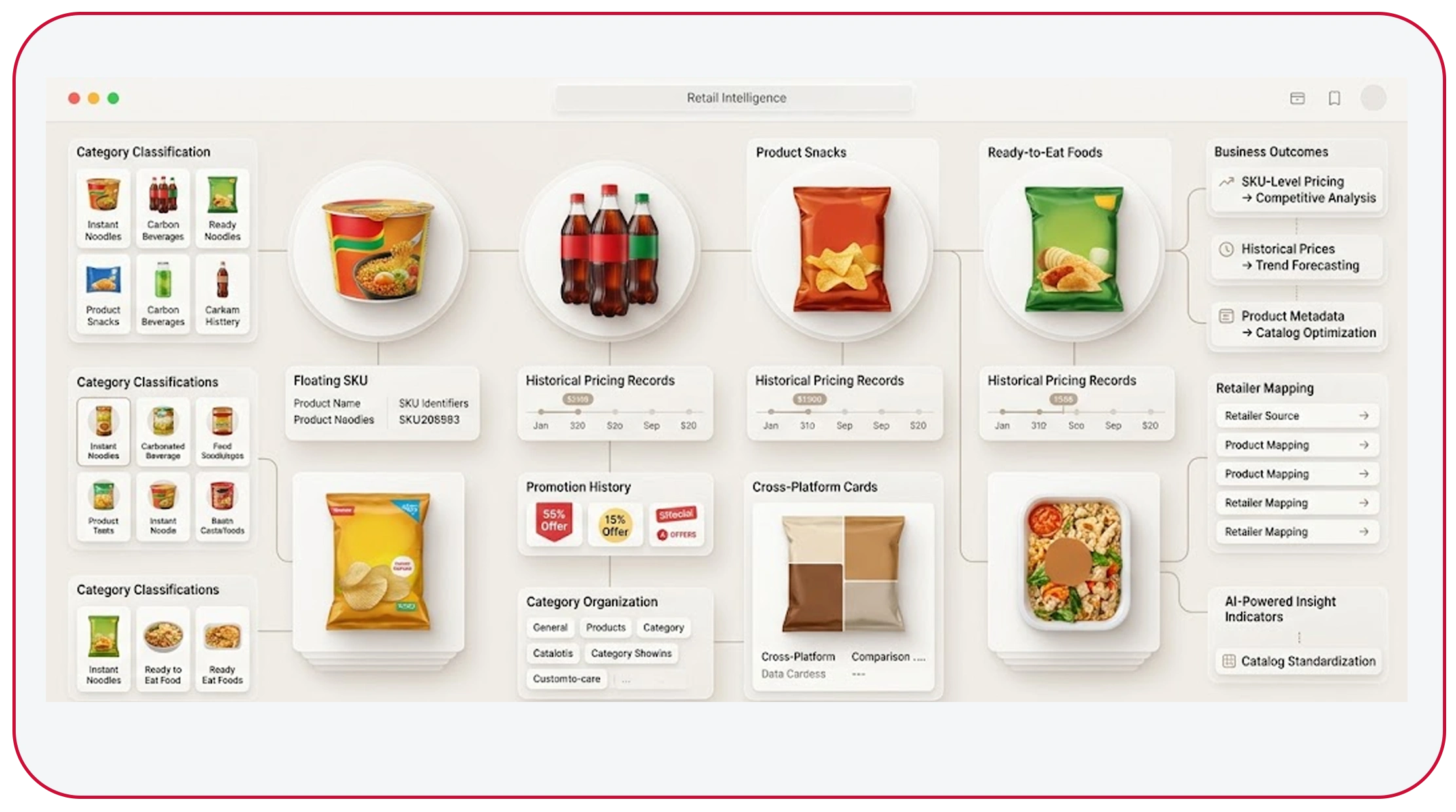
Retail analytics requires accurate and standardized datasets for reliable decision-making. Structured grocery data improves analysis quality and reporting accuracy.
Modern FMCG companies increasingly rely on Food Dataset solutions to organize:
- Product names
- SKU information
- Pricing history
- Category classifications
- Promotion details
- Availability data
By 2026, structured food retail datasets are expected to support over 80% of AI-powered retail intelligence systems.
| Dataset Attribute | Business Value |
|---|---|
| SKU-Level Pricing | Competitive Analysis |
| Historical Prices | Trend Forecasting |
| Product Metadata | Catalog Optimization |
| Retailer Mapping | Market Comparison |
Structured datasets help brands:
- Improve demand forecasting
- Analyze pricing trends
- Optimize promotions
- Enhance product placement strategies
Data standardization also reduces reporting inconsistencies across multiple grocery platforms.
For Nestlé, Maggi, and Pepsi product analysis, structured datasets allow:
- Cross-platform comparisons
- Regional pricing analysis
- Historical trend tracking
- Promotion effectiveness evaluation
Businesses using structured retail datasets can improve pricing efficiency while reducing manual analysis time.
How Do APIs Simplify Large-Scale Grocery Intelligence Collection?
Modern retail analytics depends heavily on automation. APIs simplify the collection of pricing and product intelligence from multiple grocery platforms.
Companies now integrate Grocery Data Scraping API systems into analytics workflows to automate:
- Price tracking
- Product monitoring
- Inventory collection
- Promotion analysis
- Retail catalog updates
API-based scraping systems reduce operational costs and improve data accuracy.
| API Benefit | Business Impact |
|---|---|
| Automated Data Collection | Faster Insights |
| Real-Time Updates | Better Pricing Decisions |
| Large-Scale Monitoring | Wider Retail Coverage |
| Structured Output | Easier Analytics |
Between 2020 and 2026, API-driven retail intelligence adoption is projected to increase by nearly 140%.
Benefits of grocery scraping APIs include:
- Scalability
- Real-time synchronization
- Multi-platform integration
- Reduced manual workload
Brands tracking Nestlé, Maggi, and Pepsi products can automate daily pricing intelligence across hundreds of retailers simultaneously.
This allows analysts to focus on:
- Market strategy
- Competitive analysis
- Demand forecasting
- Consumer trend identification
API-driven analytics also improve reporting speed for enterprise FMCG operations.
Why Choose Real Data API?
Real Data API delivers scalable grocery and FMCG intelligence solutions for businesses seeking accurate retail insights.
Our platform supports:
- Real-time pricing analytics
- Retail product monitoring
- Competitor intelligence
- Automated grocery data collection
- Historical pricing analysis
We provide highly structured Grocery Dataset solutions for enterprise analytics workflows.
Businesses trust Real Data API because we help brands understand How FMCG Brands Use Grocery Data Scraping for Competitive Analysis while delivering reliable, scalable, and actionable retail intelligence.
Key Benefits:
- High-frequency data updates
- Global grocery platform coverage
- Structured datasets
- API-ready integrations
- Custom analytics support
Our solutions help FMCG companies improve:
- Pricing strategies
- Promotion effectiveness
- Market positioning
- Retail visibility
Conclusion
Pricing intelligence is transforming the FMCG industry. Brands now rely on automated grocery data collection to monitor competitor pricing, track promotions, and improve market responsiveness.
Businesses increasingly understand How FMCG Brands Use Grocery Data Scraping for Competitive Analysis to strengthen pricing strategies and optimize retail performance across online grocery platforms.
Real-time analytics for Nestlé, Maggi, and Pepsi products enable companies to:
- Improve pricing decisions
- Increase profitability
- Track competitor movements
- Enhance retail intelligence
Ready to unlock smarter FMCG pricing intelligence? Contact Real Data API today for scalable grocery scraping and retail analytics solutions tailored to your business needs!
Latest posts
How Scrape Xiaohongshu Product Trends in Real Time Solves Product Discovery and Competitor Monitoring Challenges?
How to Scrape Taobao Product Data to Solve Pricing, Inventory, and Competitor Monitoring Challenges?
How to Extract grocery product listings Data from SPAR to Build Accurate Grocery Intelligence and Competitive Market Insights?
Scrape Douyin follower growth and engagement data to track influencer performance and trends






.png)