
Introduction
Retailers, furniture brands, and interior design businesses use home decor trend analysis using Wayfair scraped product data to track pricing trends, inventory changes, customer demand, and emerging décor styles. Real-time product intelligence helps businesses improve forecasting, optimize pricing, and identify fast-growing furniture and home furnishing categories before competitors.
According to industry estimates, the global online home décor market is expected to grow at over 15% annually through 2026. Businesses increasingly depend on automation tools such as the Wayfair Scraping API to collect structured product datasets, monitor competitor catalogs, and improve digital merchandising strategies.
For retail analysts, category managers, eCommerce brands, and interior design companies, the biggest challenge is understanding rapidly changing customer preferences and seasonal product demand. Automated home décor analytics solves this challenge by delivering real-time market visibility and actionable insights.
This report explores major market trends, consumer purchasing behavior, digital retail growth, and data intelligence strategies shaping the future of the online home décor ecosystem from 2020 to 2026.
What Home Décor Trends Are Driving Online Furniture Sales?
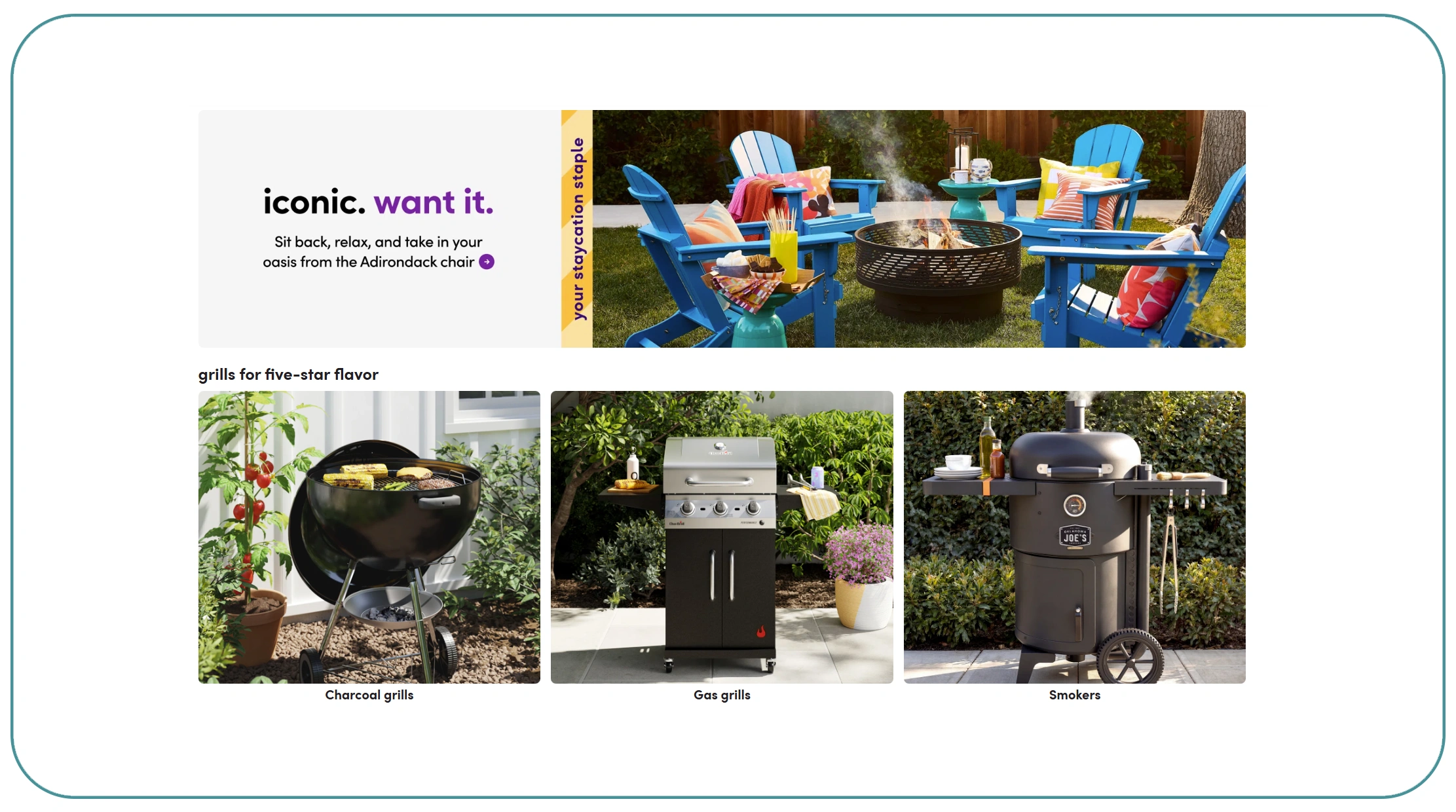
The online furniture and home décor industry has changed rapidly since 2020. Consumers now prefer personalized interiors, sustainable materials, multifunctional furniture, and modern minimalist designs. Businesses increasingly rely on Wayfair product home decor trends 2026 insights to understand evolving customer demand patterns.
Online shoppers also compare pricing, delivery speed, product ratings, and visual styling before purchasing furniture products. Retailers therefore need real-time visibility into category-level market changes and seasonal demand fluctuations.
Online Home Décor Market Growth Trends (2020–2026)
| Year | Online Furniture Sales Growth | Mobile Home Décor Purchases | Personalized Interior Shopping |
|---|---|---|---|
| 2020 | 18% | 34% | 21% |
| 2021 | 24% | 42% | 29% |
| 2022 | 31% | 50% | 37% |
| 2023 | 38% | 58% | 45% |
| 2024 | 45% | 65% | 53% |
| 2025 | 52% | 71% | 60% |
| 2026 | 59% | 77% | 67% |
Key Consumer Insights
- Customers prefer multifunctional furniture solutions
- Sustainable décor products are growing rapidly
- Mobile commerce drives higher furniture purchases
- Seasonal collections influence buying decisions
- Product reviews strongly impact conversion rates
Retailers using real-time analytics gain stronger market visibility and improved forecasting capabilities.
How Can Businesses Understand Interior Design Preferences Faster?
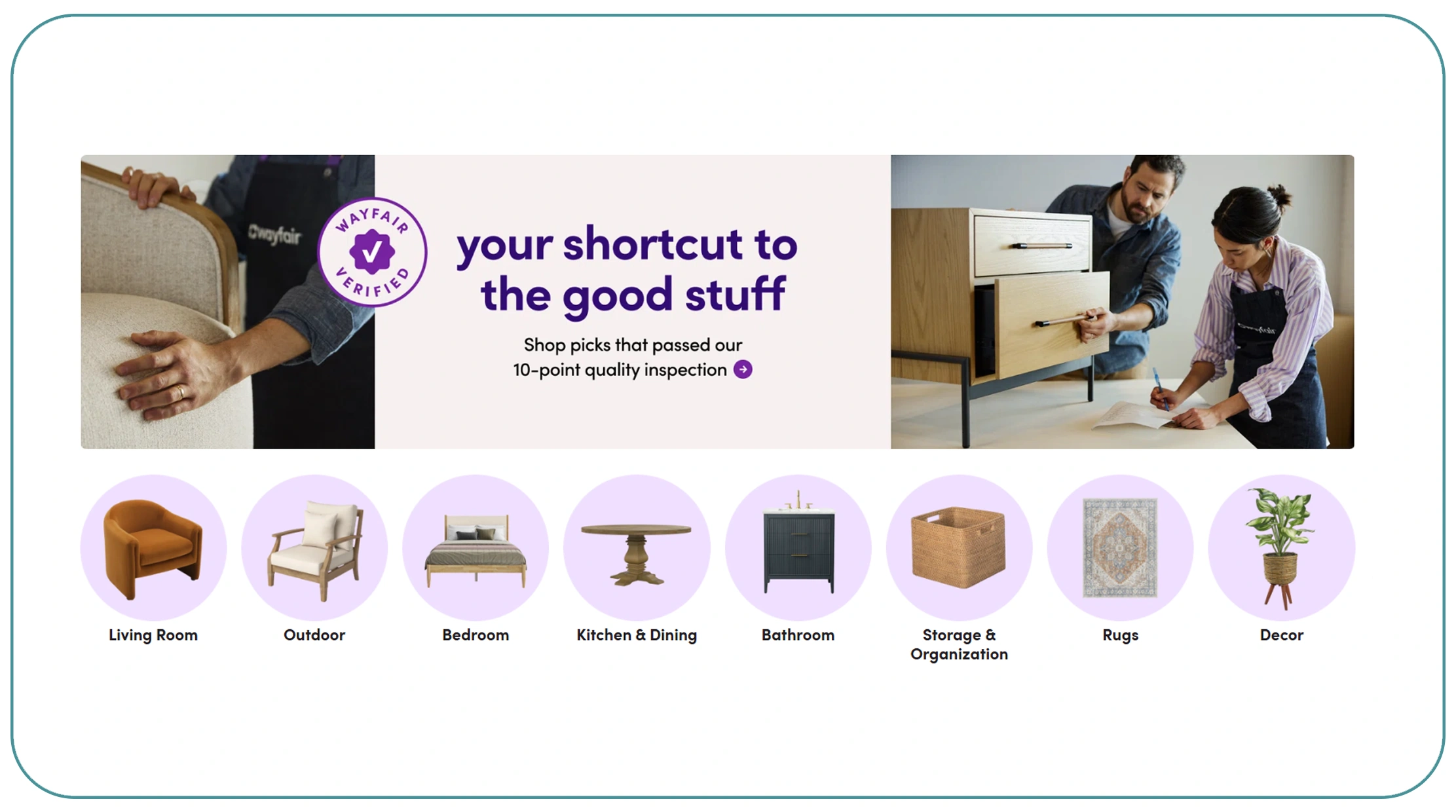
Modern interior design trends evolve quickly across digital marketplaces. Businesses increasingly analyze interior design trends via Wayfair data scraping to identify popular materials, color palettes, furniture styles, and customer preferences in real time.
Automated analytics helps retailers monitor category performance, bestselling products, and design themes across multiple product collections. Businesses can also identify emerging consumer interests before trends become saturated.
Interior Design Trend Analytics Statistics (2020–2026)
| Year | Trend Analytics Adoption | Personalized Décor Recommendations | Seasonal Collection Growth |
|---|---|---|---|
| 2020 | 22% | 19% | 16% |
| 2021 | 29% | 26% | 23% |
| 2022 | 37% | 34% | 31% |
| 2023 | 45% | 42% | 39% |
| 2024 | 53% | 50% | 47% |
| 2025 | 61% | 58% | 55% |
| 2026 | 69% | 66% | 63% |
Why Interior Analytics Matters
- Helps predict upcoming décor trends
- Improves product assortment planning
- Enhances customer personalization strategies
- Supports seasonal merchandising decisions
- Strengthens digital shelf performance
Businesses using automated trend intelligence can respond faster to evolving customer expectations and improve retail competitiveness.
Why Is Real-Time Market Intelligence Important for Retailers?
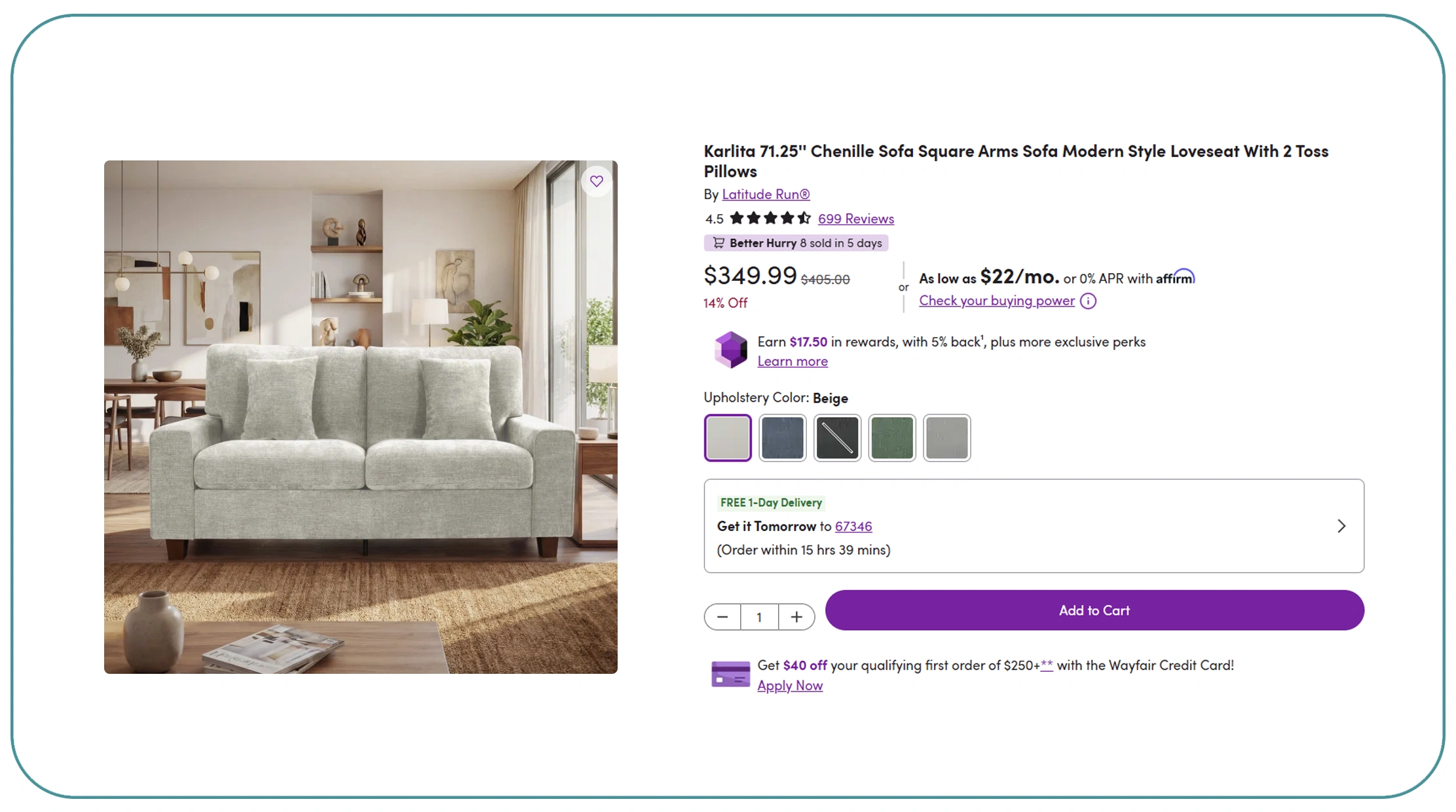
Furniture and home décor retailers face constant changes in pricing, inventory, and consumer demand. Businesses therefore increasingly Scrape home furnishing market intelligence using Wayfair data to improve pricing strategies and strengthen competitive positioning.
Real-time market intelligence enables brands to monitor competitor catalogs, promotional campaigns, and assortment changes continuously. These insights improve category management and inventory forecasting significantly.
Home Furnishing Intelligence Growth Trends (2020–2026)
| Year | Real-Time Analytics Adoption | Competitive Monitoring Usage | Automated Pricing Intelligence |
|---|---|---|---|
| 2020 | 21% | 24% | 17% |
| 2021 | 28% | 31% | 24% |
| 2022 | 36% | 39% | 32% |
| 2023 | 44% | 47% | 40% |
| 2024 | 52% | 55% | 48% |
| 2025 | 60% | 63% | 56% |
| 2026 | 68% | 71% | 64% |
Benefits of Market Intelligence
- Faster pricing optimization
- Better inventory forecasting
- Improved promotional planning
- Stronger competitor benchmarking
- Enhanced customer targeting
Retailers that automate market intelligence workflows improve operational efficiency and decision-making speed.
How Does Product Data Improve Home Décor Research?
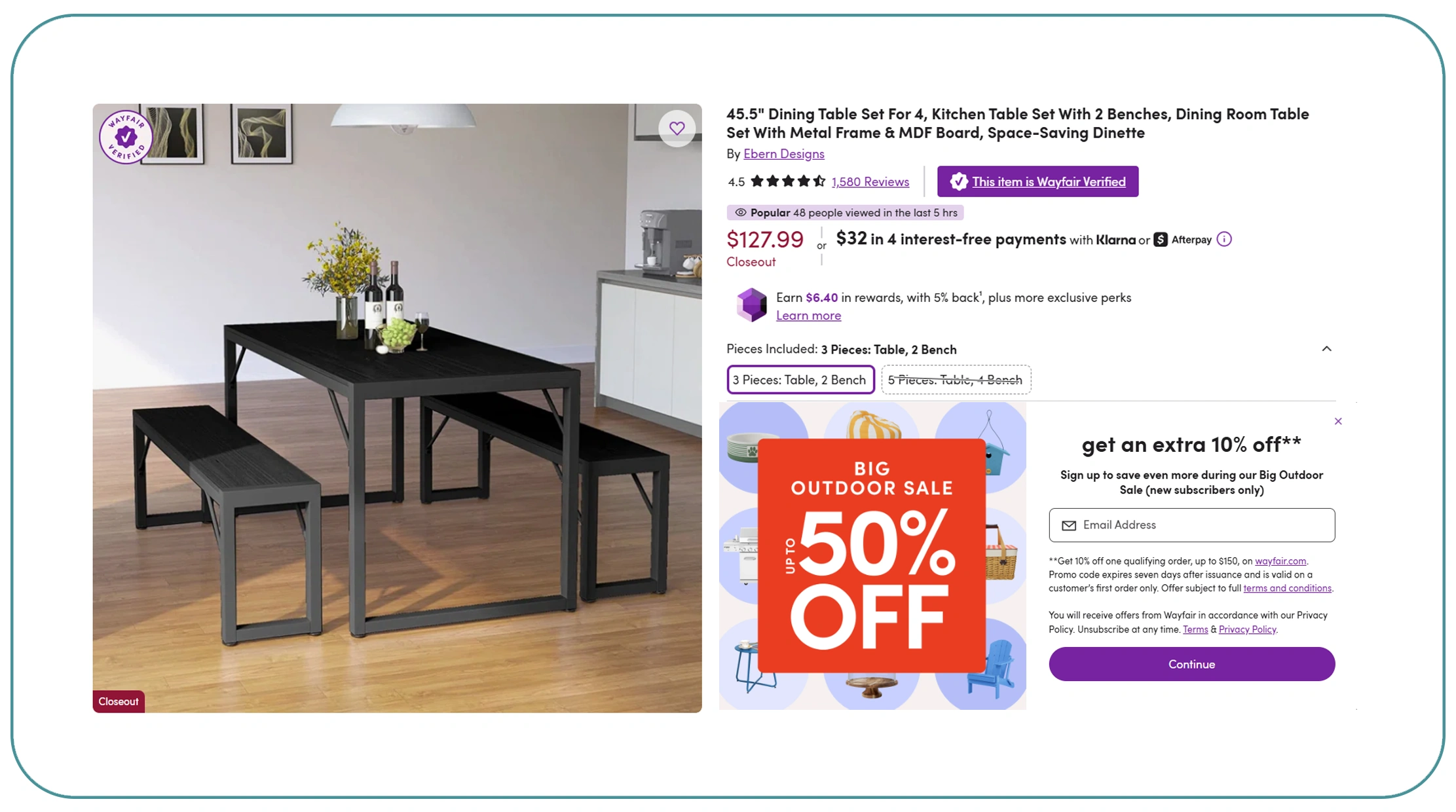
Accurate product datasets play a critical role in modern retail analytics. Businesses increasingly conduct Home decor market research using Wayfair product data intelligence to monitor category growth, pricing fluctuations, and customer engagement trends.
Structured product data helps retailers analyze customer behavior, identify fast-selling products, and improve assortment planning. It also supports predictive analytics for future product demand and seasonal inventory management.
Product Intelligence and Research Statistics (2020–2026)
| Year | Product Intelligence Adoption | Predictive Analytics Usage | Retail Forecasting Accuracy |
|---|---|---|---|
| 2020 | 19% | 14% | 22% |
| 2021 | 27% | 22% | 30% |
| 2022 | 35% | 30% | 38% |
| 2023 | 43% | 38% | 46% |
| 2024 | 51% | 46% | 54% |
| 2025 | 59% | 54% | 62% |
| 2026 | 67% | 62% | 70% |
Product Research Advantages
- Identifies high-performing furniture categories
- Improves seasonal inventory management
- Enhances promotional effectiveness
- Supports demand forecasting accuracy
- Strengthens pricing intelligence strategies
Retailers leveraging structured product intelligence gain stronger market positioning and improved customer engagement.
Why Are Structured Data Systems Essential for eCommerce Analytics?

Modern analytics platforms depend on high-quality structured data for accurate reporting and forecasting. Businesses increasingly use an E-Commerce Dataset to analyze product catalogs, inventory changes, pricing updates, and category performance efficiently.
Structured datasets improve automation workflows and reduce manual processing efforts. Businesses can integrate product intelligence directly into analytics dashboards and forecasting systems for faster decision-making.
Structured Data Adoption Trends (2020–2026)
| Year | Structured Dataset Usage | Dashboard Automation Growth | Inventory Synchronization Adoption |
|---|---|---|---|
| 2020 | 24% | 21% | 18% |
| 2021 | 31% | 28% | 25% |
| 2022 | 39% | 36% | 33% |
| 2023 | 47% | 44% | 41% |
| 2024 | 55% | 52% | 49% |
| 2025 | 63% | 60% | 57% |
| 2026 | 71% | 68% | 65% |
Benefits of Structured Retail Data
- Faster analytics dashboard integration
- Improved reporting consistency
- Better inventory synchronization
- Scalable retail intelligence workflows
- Stronger forecasting performance
Structured datasets allow businesses to scale home décor analytics operations more effectively.
How Will Automation Transform Future Home Décor Analytics?

Automation and AI-driven systems will continue transforming the online furniture industry through 2026. Businesses increasingly depend on scalable technologies such as a Web Scraping API to automate product monitoring, inventory tracking, pricing intelligence, and customer behavior analysis.
AI-powered analytics platforms will improve predictive forecasting, dynamic pricing strategies, and personalized shopping experiences across digital marketplaces. Businesses investing early in automation will gain stronger long-term competitive advantages.
Future Retail Automation Statistics (2020–2026)
| Year | AI Retail Analytics Adoption | Automated Merchandising Usage | Predictive Pricing Growth |
|---|---|---|---|
| 2020 | 15% | 18% | 12% |
| 2021 | 22% | 25% | 19% |
| 2022 | 30% | 33% | 27% |
| 2023 | 38% | 41% | 35% |
| 2024 | 46% | 49% | 43% |
| 2025 | 55% | 58% | 52% |
| 2026 | 64% | 67% | 61% |
Future Opportunities
- AI-powered décor recommendations
- Predictive inventory management
- Real-time pricing optimization
- Automated customer segmentation
- Advanced digital merchandising analytics
Businesses adopting automation technologies early will improve scalability and long-term operational performance.
Why Choose Real Data API?
Real Data API provides scalable retail intelligence solutions for modern eCommerce ecosystems. Our advanced infrastructure helps businesses automate product monitoring, pricing intelligence, inventory tracking, and category analytics across online marketplaces.
We specialize in Market Research solutions powered by home decor trend analysis using Wayfair scraped product data to help retailers, furniture brands, and analytics companies gain real-time market visibility.
Benefits of Choosing Real Data API
- Real-time furniture pricing intelligence
- Automated product catalog monitoring
- Scalable cloud-based infrastructure
- API-ready structured datasets
- Advanced retail analytics support
- Faster trend forecasting capabilities
- Improved digital shelf visibility
Our automated data extraction frameworks help businesses transform raw eCommerce information into actionable market intelligence for smarter retail growth.
Conclusion
The online home décor industry continues evolving rapidly as customer preferences, digital retail trends, and personalized shopping experiences reshape the furniture marketplace. Businesses increasingly rely on home decor trend analysis using Wayfair scraped product data to improve pricing optimization, inventory forecasting, customer targeting, and digital merchandising strategies.
Retailers, analytics firms, and furniture brands that invest in scalable automation and real-time market intelligence solutions will gain stronger competitive advantages between 2024 and 2026. Data-driven retail analytics will remain essential for improving operational efficiency and customer engagement in the fast-growing home décor ecosystem.
Ready to unlock smarter retail intelligence and future-ready furniture analytics? Contact Real Data API today to transform Wayfair product data into actionable market insights and scalable business growth opportunities!
Latest posts

How Louis Vuitton Fashion Dataset Enables Better Analysis of Luxury Products, Prices, Brands, and Fashion Trends?

How Blinkit Grocery Dataset Enables Smarter Analysis of Products, Prices, Availability, and Quick-Commerce Trends?

How Chanel Fashion Dataset Enables Smarter Analysis of Luxury Products, Prices, Categories, and Fashion Trends?

How Foodpanda Food Dataset Helps Businesses Track Restaurants, Menus, Prices, Ratings, and Food Delivery Trends?







.png)



