.gif)
.png)

TL;DR
- Musafir scraper technology can help travel businesses collect structured flight, hotel, pricing, availability, destination, and offer information at scale for market intelligence.
- Musafir Data Scraping can reduce repetitive manual research by organizing changing travel information into datasets suitable for price monitoring, competitor analysis, and travel analytics.
- From 2020 to 2026, digital travel booking has become increasingly data-driven, making timely and structured information valuable for OTAs, travel agencies, researchers, and pricing teams.
Introduction
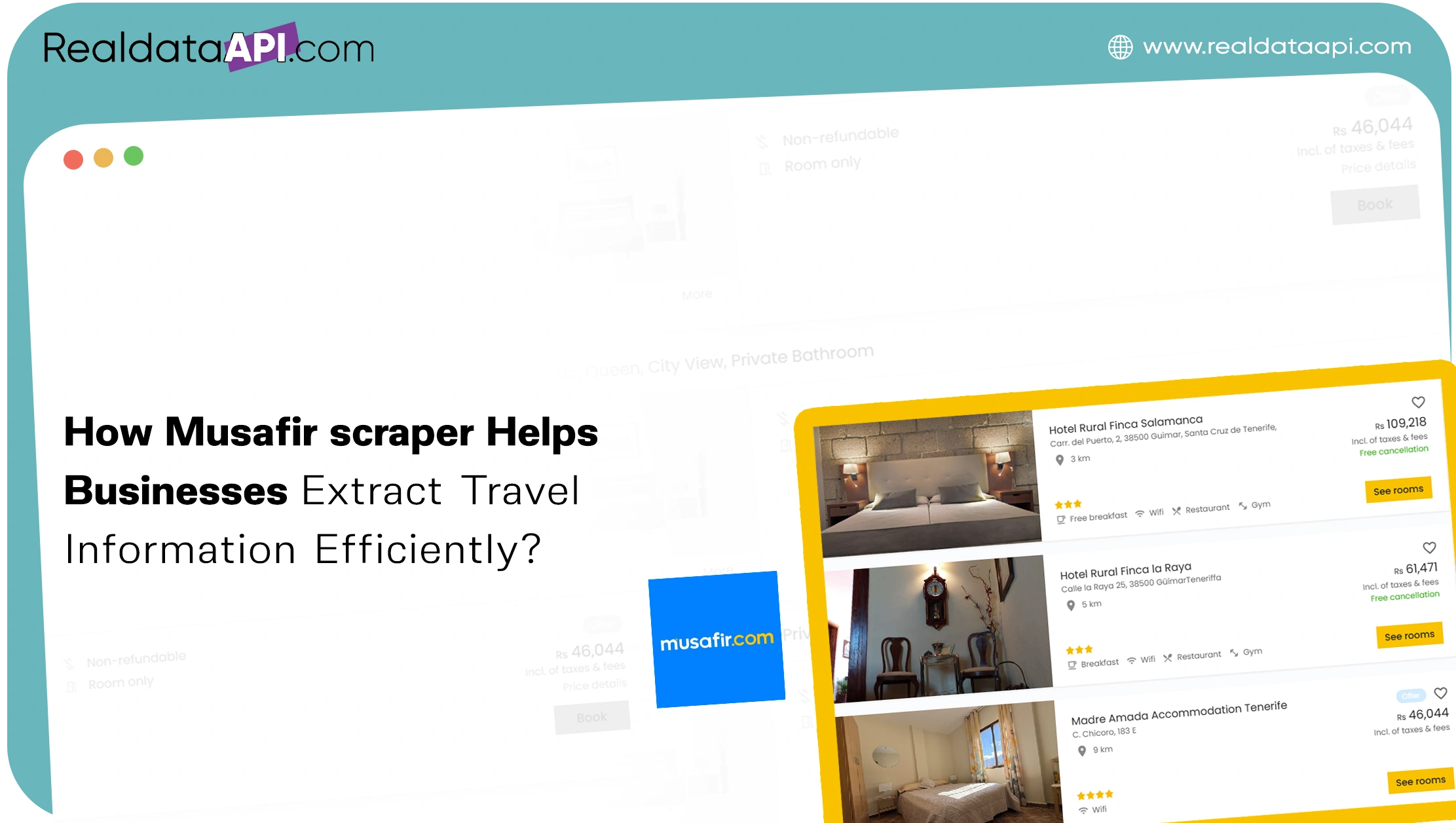
Travel businesses operate in a highly dynamic environment where flight fares, hotel prices, room availability, schedules, promotions, and destination demand can change frequently. A Musafir scraper can help businesses collect publicly available travel information and convert it into structured datasets for analysis and decision-making.
The value is particularly relevant to travel agencies, online travel companies, market researchers, hotel groups, and pricing teams that need to compare large numbers of travel options. Manual collection can become inefficient when teams must repeatedly check routes, hotels, prices, dates, and availability.
Musafir Data Scraping can provide a repeatable approach for collecting relevant travel information. Depending on the business requirement, datasets can include flight details, hotel information, prices, availability indicators, destinations, travel dates, offers, and other publicly available attributes.
The 2020-2026 period has also transformed travel-data requirements. The pandemic sharply disrupted global travel in 2020, followed by a substantial recovery in international tourism. According to UN Tourism, international tourist arrivals recovered to approximately 99% of pre-pandemic levels in 2024, while 2025 continued the recovery trajectory.
For data buyers, the central question is no longer simply how to collect travel information. It is how to collect, normalize, timestamp, compare, and deliver it in a format that supports commercial decisions.
How did travel-data requirements change between 2020 and 2026?

The travel industry experienced one of its most significant disruptions in 2020. International tourism collapsed as borders closed and travel restrictions were introduced. UN Tourism reported a 74% decline in international tourist arrivals in 2020 compared with 2019.
Recovery began gradually. By 2023, international tourism had recovered to approximately 89% of 2019 levels. In 2024, international arrivals reached around 99% of pre-pandemic levels, demonstrating how rapidly travel demand returned.
This recovery changed the role of travel intelligence. During the downturn, businesses focused heavily on cancellations, route availability, restrictions, and demand recovery. As markets reopened, pricing, capacity, hotel availability, destination trends, and competitive monitoring became increasingly important.
2020-2026 travel-market indicators
| Year | Travel-market development | Data requirement |
|---|---|---|
| 2020 | International arrivals fell 74% | Monitor cancellations and availability |
| 2021 | Recovery remained uneven | Track reopening and route changes |
| 2022 | Strong recovery accelerated | Compare prices and capacity |
| 2023 | Tourism reached ~89% of 2019 level | Increase competitive monitoring |
| 2024 | Arrivals reached ~99% of 2019 level | Real-time pricing intelligence |
| 2025 | International tourism continued expanding | Monitor demand and supply |
| 2026 | Mature recovery and digital booking environment | Continuous travel intelligence |
Figures above use UN Tourism's global international-tourism indicators. They are not Musafir-specific platform statistics.
For travel companies, the implication is straightforward. A static spreadsheet may provide historical information, but it cannot easily explain current pricing or availability. A continuously refreshed dataset can provide a stronger basis for identifying changes.
The ideal workflow therefore captures information at defined intervals and preserves timestamps. This makes it possible to compare today's price with yesterday's, identify availability changes, and measure how travel options evolve over time.
What pricing information can businesses collect for travel intelligence?
Musafir travel price data scraping can help businesses build structured price datasets for flights and hotels. The objective is to compare prices consistently across dates, destinations, room types, airlines, travel classes, and other relevant attributes.
Price monitoring becomes more useful when contextual information is captured alongside the price itself. A flight fare without departure date, route, cabin class, baggage conditions, or collection timestamp may be difficult to compare accurately.
Similarly, a hotel price should ideally be associated with property identity, room type, stay dates, occupancy, cancellation conditions, and other applicable attributes.
Travel pricing dataset
| Data attribute | Business purpose |
|---|---|
| Origin | Route analysis |
| Destination | Market comparison |
| Travel date | Demand segmentation |
| Airline | Competitor benchmarking |
| Cabin class | Fare comparison |
| Hotel | Property benchmarking |
| Room type | Like-for-like comparison |
| Price | Core pricing metric |
| Currency | Cross-market normalization |
| Availability | Supply monitoring |
| Timestamp | Historical tracking |
| Offer/discount | Promotion intelligence |
From 2020 through 2026, price intelligence became more important as travel markets moved from severe disruption toward recovery. When demand changes quickly, pricing teams need to distinguish temporary fluctuations from sustained trends.
A travel company can use structured pricing observations to calculate median fares, identify price ranges, compare destinations, monitor hotel rates, and evaluate promotional activity.
For example, a pricing manager could discover that a particular route consistently experiences price increases within a certain booking window. A hotel analyst might identify properties whose rates change sharply around weekends or major events.
These insights are much harder to obtain through occasional manual checks.
The key is consistency. Every observation should be collected using the same logic and accompanied by a timestamp. Historical snapshots then become the foundation for trend analysis.
How can businesses build structured travel datasets?
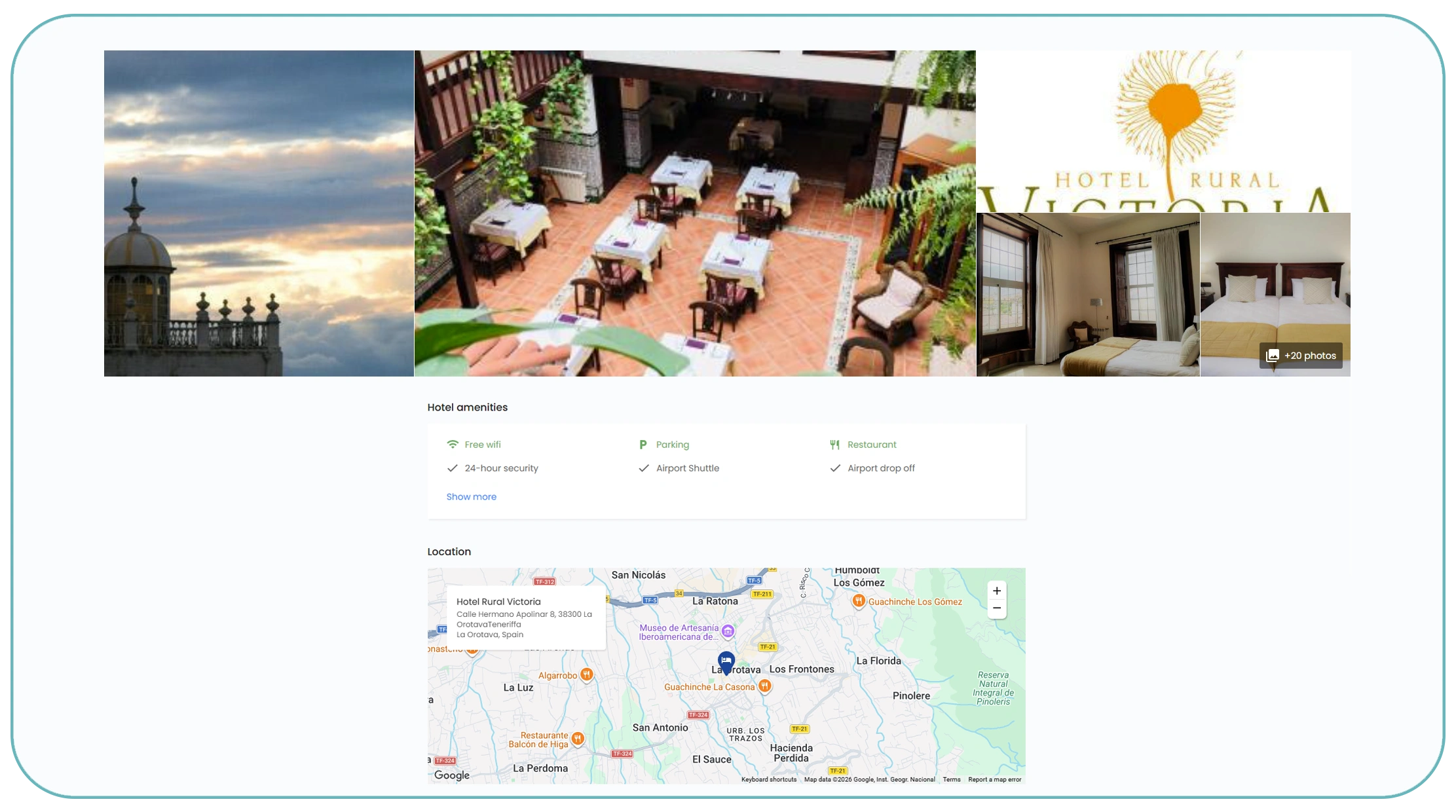
Businesses that extract Musafir travel data can transform changing travel information into structured records for research and analytics.
The exact fields depend on the use case. A flight intelligence dataset may emphasize route, airline, schedule, fare, cabin, baggage, and availability. A hotel dataset may prioritize property name, location, room type, rate, stay dates, amenities, cancellation policy, and availability.
The objective should be to collect information that directly supports a business question.
Example data architecture
| Dataset layer | Example information |
|---|---|
| Identification | Flight/hotel name, ID, URL |
| Geography | Origin, destination, location |
| Scheduling | Departure, arrival, check-in/out |
| Pricing | Base price, total price, discount |
| Availability | Seats/rooms or availability signals |
| Product | Cabin, room type, amenities |
| Conditions | Cancellation or fare conditions |
| Timestamp | Collection date and time |
The 2020-2022 period demonstrated how quickly travel conditions could change. Routes could disappear, hotel inventories could fluctuate, and prices could behave differently as borders reopened.
During the recovery years from 2023 onward, businesses increasingly needed comparative information to understand renewed demand. UN Tourism reported that 2024 international arrivals reached 99% of 2019 levels, confirming that global tourism had essentially returned to its pre-pandemic volume.
A structured dataset allows companies to analyze this changing environment at a granular level.
For data buyers, the important consideration is normalization. Similar flights should be represented consistently. Hotel names should be standardized. Currency values should be handled consistently. Dates and timestamps should use a defined format.
This creates a dataset that can be used repeatedly rather than a collection of disconnected records.
How can flight and hotel monitoring improve travel decisions?
Businesses that Scrape Musafir Flight and Hotel Data can combine airfare and accommodation intelligence to build a more complete picture of travel-market conditions.
Flight and hotel data should not necessarily be analyzed independently. A destination experiencing increased flight availability alongside rising hotel prices may indicate stronger demand. Conversely, declining hotel prices combined with increased accommodation availability could suggest softer demand.
Combined travel intelligence
| Signal | Flight interpretation | Hotel interpretation |
|---|---|---|
| Price increase | Higher fare pressure | Higher room-rate pressure |
| Availability decline | Potential capacity constraint | Potential inventory constraint |
| New listing | New route/product | New property/room option |
| Discount | Fare promotion | Hotel promotion |
| Location | Route market | Destination market |
| Date | Travel-demand timing | Stay-demand timing |
| Historical change | Fare trend | Rate trend |
The 2020-2026 recovery period makes these relationships especially useful. During the initial disruption, aviation and accommodation capacity contracted sharply. As tourism recovered, businesses needed better visibility into renewed supply and demand.
By 2024, global tourism had effectively returned to pre-pandemic arrival levels.
Travel agencies can use combined datasets to benchmark packages. OTAs can compare competing offers. Hotels can monitor their positioning against comparable properties. Airlines and travel researchers can analyze route-level price movements.
The most useful system preserves historical observations so that analysts can distinguish seasonal patterns from exceptional events.
Turn changing flight and hotel information into structured intelligence with Real Data API and build a scalable travel-data workflow for pricing and market research.
Get Insights Now!Why does real-time information matter for travel pricing?
Real-Time Travel Data Supports Price Monitoring because travel prices are highly time-sensitive. A fare or room rate observed at one moment may not remain available later, making timestamps and refresh frequency important parts of any pricing dataset.
A travel pricing team should determine its refresh frequency based on the business objective. A strategic market study may need daily or weekly snapshots, while a dynamic pricing application may require substantially more frequent updates.
Monitoring frequency by use case
| Use case | Suggested priority |
|---|---|
| Historical market research | Long-term snapshots |
| Competitor benchmarking | Daily/regular refresh |
| Hotel rate monitoring | Frequent refresh |
| Flight price intelligence | Frequent refresh |
| Promotional tracking | Event-driven monitoring |
| Dynamic pricing analysis | High-frequency data |
Travel recovery also reinforces the importance of monitoring. The industry moved from unprecedented disruption in 2020 to near-complete international-arrival recovery by 2024.
A price-monitoring system should therefore capture more than the current price. It should preserve the time at which the price was observed, the itinerary or hotel configuration, the applicable dates, and relevant conditions.
This makes historical comparison possible.
For example, an analyst could determine whether a fare increase is part of a recurring seasonal pattern or an unusual short-term change. A hotel operator could evaluate whether competitors consistently discount during specific periods.
Real-time data is valuable because it shortens the gap between market change and business response.
However, "real time" should be defined according to the actual commercial requirement. Not every use case requires second-by-second updates. The best architecture balances freshness, cost, data quality, and analytical value.
How can API technology scale travel-data operations?
A Musafir API can provide a structured integration point for travel-data workflows, while a Musafir scraper can support automated collection where permitted public information needs to be transformed into structured records.
The combination is useful when businesses want to move away from manual research and build repeatable data pipelines.
Scalable travel-data workflow
| Stage | Function | Output |
|---|---|---|
| Discovery | Identify relevant travel pages | Target records |
| Collection | Retrieve permitted data | Raw information |
| Parsing | Extract fields | Structured records |
| Normalization | Standardize values | Comparable data |
| Validation | Check quality | Clean dataset |
| Storage | Preserve history | Time series |
| Delivery | Send to applications | API/JSON/CSV |
| Analytics | Generate insights | Pricing intelligence |
A scalable system should also handle changing page structures, missing fields, duplicate records, and temporary collection failures.
For a data buyer, reliability is often more important than raw extraction volume. A smaller dataset with accurate product identities and consistent timestamps can be more useful than a larger dataset containing duplicates or inconsistent values.
The travel sector's recovery illustrates the value of historical data. The sharp decline in 2020 and subsequent recovery through 2024 created a unique period of changing travel behavior.
Businesses that preserve these observations can analyze not only current prices but also how travel markets respond to major changes.
Responsible collection is equally important. Automated data workflows should comply with applicable laws, platform terms, access controls, privacy obligations, and reasonable technical limits.
What makes automated travel collection useful for businesses?
A Musafir Scraper can become part of a broader travel-intelligence infrastructure when collection is designed around clearly defined business requirements.
Travel companies may want to monitor:
- Flight prices
- Hotel rates
- Destination availability
- Travel dates
- Promotions
- Airline options
- Hotel properties
- Room types
- Route changes
- Product availability
- Historical price movements
Business intelligence applications
| Business team | Potential application |
|---|---|
| Pricing | Competitor price benchmarking |
| Product | Travel assortment analysis |
| Marketing | Offer and promotion monitoring |
| Research | Destination trend analysis |
| Revenue management | Rate intelligence |
| Strategy | Market expansion research |
| Analytics | Historical trend modeling |
The 2020-2026 timeline shows why these applications matter. The travel sector experienced an extreme decline followed by rapid recovery, making historical and current information valuable for understanding market behavior.
UN Tourism reported that international tourist arrivals in 2024 were approximately 99% of 2019 levels, while the Middle East, Africa, Europe, and the Americas all recorded different recovery patterns.
A travel-data pipeline can segment these changes by destination, route, hotel market, travel period, and product type.
The practical benefit is faster decision-making. Instead of asking an analyst to manually collect prices every morning, an automated workflow can deliver structured observations according to a defined schedule.
That allows analysts to spend more time interpreting trends and less time gathering raw information.
How should businesses design a travel intelligence dataset?
A strong Musafir Travel Dataset should be designed around the questions the business wants to answer.
For pricing, price and timestamp fields are essential. For route research, origin, destination, airline, schedule, and fare conditions become more important. For hotel intelligence, property, location, room type, rate, availability, and stay dates are central.
Recommended dataset structure
| Category | Core fields |
|---|---|
| Flight | Airline, route, date, cabin |
| Hotel | Property, location, room |
| Pricing | Price, currency, discount |
| Availability | Status, inventory signal |
| Travel dates | Departure/stay dates |
| Conditions | Fare/cancellation rules |
| Product metadata | Category, URL |
| Historical layer | Timestamp, previous value |
The 2020-2026 period should ideally be retained as a historical context rather than treated as one uniform market. The pandemic caused an extraordinary disruption in 2020, while 2024 represented a near-complete recovery of international tourism.
Historical data can reveal seasonality, recurring pricing patterns, changing destination popularity, and competitive movements.
For data buyers, quality controls should be built into the pipeline. Duplicate records should be identified, missing values flagged, and price changes validated before they are used for business decisions.
The final dataset should also be easy to consume. Depending on the organization, outputs may feed databases, spreadsheets, BI platforms, data warehouses, or internal applications.
Why Choose Real Data API?
Real Data API can help businesses create scalable workflows for travel-data collection, processing, and delivery.
For organizations building a Musafir Travel Dataset, a structured API-oriented approach can simplify the transition from raw marketplace information to usable business intelligence.
The solution can support workflows around travel-price monitoring, flight and hotel research, competitive analysis, product intelligence, and historical market analysis.
A strong travel-data architecture should allow businesses to define the markets, routes, destinations, products, fields, and refresh schedules that matter most. This prevents unnecessary collection and keeps the resulting dataset aligned with commercial objectives.
Real Data API can also help businesses integrate structured information into their existing data stack. API-ready outputs can be connected to dashboards, analytics systems, internal applications, and automated reporting workflows.
For travel businesses, the main advantage is operational scalability. Analysts can work with structured datasets instead of repeatedly collecting information manually.
The result is a more repeatable process for monitoring changing travel-market conditions and converting raw observations into actionable insights.
What should buyers check before implementing travel scraping?
Before investing in a travel-data workflow, buyers should evaluate five practical areas: coverage, freshness, accuracy, scalability, and compliance.
Buyer checklist
| Requirement | Key question |
|---|---|
| Coverage | Does the workflow cover required travel categories? |
| Freshness | How frequently can data be refreshed? |
| Accuracy | Are prices and product details validated? |
| Historical data | Can previous observations be retained? |
| Scalability | Can collection volume increase? |
| Integration | Can data enter existing systems? |
| Governance | Are collection practices compliant? |
The most appropriate solution depends on the intended application. A market research team may prioritize historical depth, while a pricing team may prioritize freshness. A travel agency may need broad destination coverage, while a hotel group may require detailed property-level monitoring.
The 2020-2026 travel cycle demonstrates why flexibility matters. Market conditions changed dramatically within a few years, and the data requirements during disruption were different from those during recovery.
A scalable architecture allows organizations to adjust collection frequency and fields as their business needs evolve.
Data quality should also be treated as a continuous process. Changes to page structures, product naming, availability indicators, or pricing formats can affect downstream analytics.
Regular validation helps prevent inaccurate data from becoming embedded in reports or pricing models.
Conclusion
A Musafir scraper can help travel businesses transform changing flight, hotel, pricing, availability, and destination information into structured datasets for competitive intelligence and decision-making.
The 2020-2026 travel cycle demonstrates why this capability matters. Global international tourism fell dramatically in 2020, then recovered steadily until 2024 reached approximately 99% of 2019 international-arrival levels.
For travel agencies, OTAs, hotels, researchers, and pricing teams, the objective should be more than collecting raw information. The strongest approach combines structured extraction, normalization, timestamping, historical storage, validation, and API-based delivery.
This allows businesses to monitor prices, compare competitors, understand destination trends, evaluate offers, and identify market changes faster.
Build a scalable travel-data intelligence workflow with Real Data API and transform changing flight, hotel, and pricing information into actionable business insights!
FAQs
What is a Musafir scraper used for?
A Musafir scraper can help collect publicly available flight, hotel, pricing, availability, and destination information for structured travel-market research and competitive intelligence.
How does Musafir Data Scraping help travel businesses?
Musafir Data Scraping can automate repetitive data collection, helping travel teams monitor prices, hotel rates, availability, destinations, offers, and competitive market movements.
Can a Musafir API support automated travel intelligence?
A Musafir API can provide a structured integration approach for travel-data workflows, allowing businesses to connect collected information with analytics platforms, databases, dashboards, and applications.
What can a Musafir Scraper monitor?
A Musafir Scraper can monitor relevant flight and hotel information, including prices, availability, travel dates, destinations, product attributes, and promotional signals for market analysis.
Why create a Musafir Travel Dataset?
A Musafir Travel Dataset can preserve structured historical observations, enabling businesses to analyze pricing patterns, destination trends, availability changes, competitor movements, and travel-market opportunities over time.
Latest posts
Keeta scraper for monitoring food marketplace trends - Identify Discount Changes and Emerging Customer Demand
How to build a structured Nike product dataset for Product Intelligence and Retail Analytics

Allegro scraper for competitor price monitoring – How to Track Product Prices and Stay Ahead of Competitors

Ocado API data collection services for retailers - Track Competitor Prices and Deals






.png)