Quick Summary
- Retailers can use structured grocery data to compare product prices, track promotions, monitor availability, and identify assortment changes.
- Historical UK statistics show that online grocery shopping expanded during the pandemic and remained an important retail channel afterward, making consistent product monitoring useful for competitive analysis.
- Authorized data collection, accurate product matching, and timestamped records help retailers distinguish genuine price changes from temporary offers, unavailable items, and differences in product size.
Introduction
Ocado API data collection services for retailers can help grocery businesses organize product information, compare visible prices, and monitor promotions and availability changes through authorized data access. For retailers competing in online grocery, structured product records make it easier to benchmark comparable items, investigate discount movements, and support merchandising decisions.
Ocado is a UK online grocery retailer, while Ocado Group also develops technology and automation solutions for grocery fulfilment. Its published reports provide useful context about online grocery operations and business performance. However, public financial reports are not a substitute for product-level marketplace data, and access to live listings depends on the available interface, permissions, and collection method.
An Ocado Scraper is a term used for a data collection tool or workflow designed to organize permitted information from product listings. For competitor research, useful fields may include product name, brand, pack size, displayed price, unit price, offer wording, availability, and observation time. Collecting these fields consistently can help retailers assess price positioning and promotional activity without assuming that a displayed offer proves higher sales or stronger customer demand.
This guide explains how retailers can use grocery data for price benchmarking, promotion analysis, category research, and assortment monitoring, with verified UK retail statistics covering 2020–2026 where available.
How can retailers identify changes in product listings?
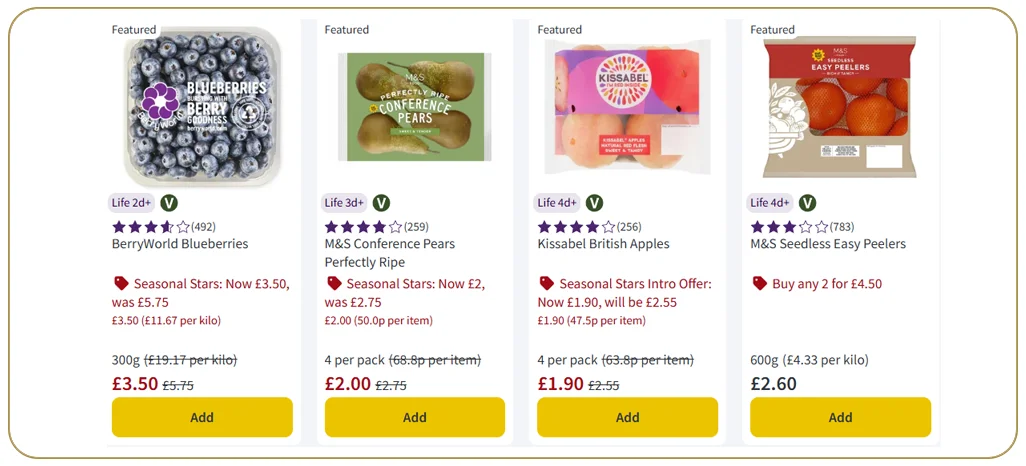
Retailers need comparable product records to understand whether a competitor has changed a price, launched an offer, or altered its assortment. A structured collection workflow should capture product details alongside the conditions under which the information was observed.
The objective behind scrape Ocado grocery product data is to create a consistent record of permitted product information rather than simply collecting isolated product pages. Retail analysts can use these records to compare prices over time, investigate promotional patterns, and identify changes that may require commercial attention.
Which fields should a retailer collect?
| Data field | Purpose in competitor analysis |
|---|---|
| Product name and brand | Helps identify the matching item |
| Pack size or weight | Prevents comparisons between different quantities |
| Displayed price | Establishes the observed selling price |
| Unit price | Supports comparisons per kilogram, litre, or unit |
| Promotion wording | Preserves the conditions attached to an offer |
| Availability status | Records whether the product appeared available |
| Timestamp | Shows when the information was observed |
| Product category | Supports category-level comparisons |
Product matching is particularly important for grocery retail. A 500 g pack and a 750 g pack may have different displayed prices even when the products are otherwise similar. Analysts should normalize units before comparing costs and retain the original values for auditing.
What does the 2020-2026 market context show?
The UK Government's United Kingdom Food Security Report 2024 reports that online food shopping accounted for 5.4% of food shopping in February 2020, peaked at 12.4% in January 2021, and stood at 9.2% in September 2024. These are national food-shopping figures, not Ocado-specific market shares. Source: UK Government Food Security Report 2024.
| Period | Online food-shopping share | Interpretation |
|---|---|---|
| February 2020 | 5.4% | Pre-pandemic reference point |
| January 2021 | 12.4% | Reported peak during the pandemic |
| September 2024 | 9.2% | Below the peak but above February 2020 |
| 2025 | No equivalent figure cited here | Avoid assuming an unchanged share |
| 2026 | Full-year result not available as of October | Use published period-specific data |
This shift makes consistent online assortment and pricing analysis relevant to retailers. It does not, by itself, establish which products sold best or which promotions were most effective.
How can product information be transformed into useful datasets?
Product information becomes more useful when it is stored in a consistent format that supports filtering, comparison, and historical analysis. A structured dataset should distinguish directly observed values from calculated metrics and inferred conclusions.
The purpose of Extract Ocado grocery data for structured datasets is to organize authorized observations so they can be used in dashboards, spreadsheets, pricing systems, and category reports. Before collecting data, retailers should define the products and categories they need to analyze and confirm that the source and collection method permit the intended use.
What makes a grocery dataset reliable?
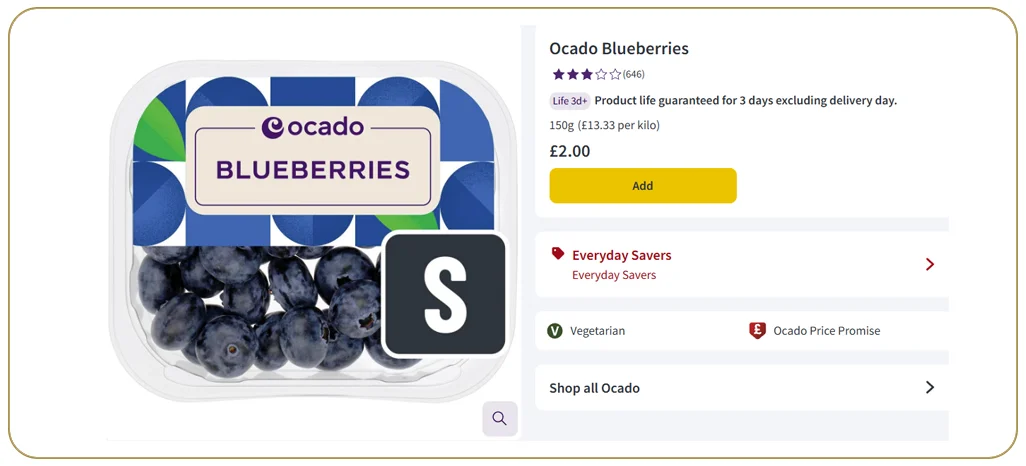
A dependable dataset should include stable product identifiers where available, standardized units, a consistent currency, timestamps, and clear treatment of missing values. Records should also preserve promotional conditions. For example, a multi-buy offer is not directly equivalent to a simple reduction in the price of one item.
Retailers can use these data-quality checks:
- Deduplication: Identify repeated records without removing legitimate observations from different dates.
- Unit normalization: Convert weights and volumes to comparable measurement units.
- Offer validation: Keep the original promotional wording and any stated eligibility conditions.
- Availability checks: Treat missing listings as unobserved until their status is verified.
- Timestamp validation: Store the time zone and observation time consistently.
- Audit trails: Retain source references and transformation rules where permitted.
What published figures help frame the opportunity?
Ocado Retail's FY2025 annual report provides a real-world example of the scale and operational detail available in company reporting. Its reported 52-week FY2025 figures include revenue of £2,826.8 million, 1.177 million closing active customers, and average orders of 478,700 per week. The report also records an average basket value of £119.8. These are company-reported business metrics, not figures derived from product scraping. Source: Ocado Retail FY2025 Annual Report.
| FY2025 metric | Reported figure |
|---|---|
| Revenue | £2,826.8 million |
| Closing active customers | 1.177 million |
| Average orders per week | 478,700 |
| Average basket value | £119.8 |
| Average selling price per item | £2.77 |
These figures help establish business context, but they do not reveal the price history of individual products. A retailer should combine company-level context with authorized, product-level observations when building a more detailed competitive view.
How can price monitoring reveal competitive opportunities?
Grocery prices can change because of promotions, supplier costs, seasonal events, product substitutions, or changes in pack size. Retailers therefore need to compare like-for-like products and preserve the context of every observation before drawing conclusions about competitor pricing.
Ocado grocery price monitoring for competitor analysis focuses on identifying verifiable differences between comparable product records. A useful report should show the previous observed price, the latest observed price, the percentage difference, and whether a promotion or pack-size change explains the movement.
Which metrics should price teams calculate?
| Metric | Calculation or method | Business use |
|---|---|---|
| Absolute price change | Latest price minus previous price | Shows the monetary difference |
| Percentage change | Price difference divided by previous price × 100 | Compares changes across products |
| Unit-price difference | Difference between normalized prices per standard unit | Supports fair comparisons |
| Promotion status | Compare recorded offer wording and validity | Separates standard pricing from visible deals |
| Availability change | Compare timestamped status records | Identifies products requiring a stock check |
| Price-match coverage | Share of selected products with valid comparable matches | Shows the limits of the analysis |
The UK Government's food-security report documents the sharp rise and subsequent stabilization in online food shopping between 2020 and 2024. That history provides context for the continuing importance of online retail, but it does not establish that a particular pricing strategy caused a change in demand. Source: UK Government.
Retailers should also distinguish an advertised discount from a genuine saving for a specific basket. Minimum-spend requirements, loyalty eligibility, delivery charges, and multi-buy conditions may affect what a customer actually pays. When those details are visible and authorized for collection, they should be retained with the offer record.
How can teams turn observations into action?
- Identify a priority category, such as dairy, fresh produce, or household essentials.
- Select comparable products and confirm pack sizes.
- Capture permitted price and promotion observations at defined intervals.
- Flag material differences for validation.
- Compare the findings with the retailer's own pricing, margin, and stock information.
- Document the evidence before changing prices or promotional plans.
This workflow helps merchandising teams prioritize investigation instead of automatically matching every competitor price. A price reduction may matter for a highly comparable product but be less relevant when the competitor's pack size, brand tier, or offer conditions differ.
Need a clearer view of online grocery prices and offers? Build your monitoring plan around comparable products, verified observations, and decisions your team can act on.
How can category-level analysis support merchandising decisions?
Category-level analysis helps retailers understand how product availability, pricing, and promotions differ across parts of the grocery assortment. Rather than reviewing individual listings in isolation, analysts can group products into meaningful categories and compare patterns across time periods.
An Ocado API for grocery category analysis can refer to a planned integration or collection workflow for permitted product information. It should not be interpreted as confirmation that Ocado offers a public API for every product field or that all catalogue information is available for unrestricted collection. Businesses should confirm the actual access route, scope, and terms before implementing an integration.
Which category indicators are useful?
| Indicator | What it can help answer | Important qualification |
|---|---|---|
| Number of observed listings | How broad is the captured assortment? | Depends on collection coverage |
| Median displayed price | What is the typical observed price in the selected group? | Compare equivalent units and products |
| Share of observed items on promotion | How much of the captured assortment displays offers? | Not the same as sales share |
| Availability rate | What proportion of tracked items appeared available? | Reflects observation times, not warehouse inventory |
| Brand distribution | Which brands appear in the captured category? | Does not measure market share |
| New or missing listings | Which records appeared or disappeared? | May reflect listing changes or incomplete capture |
Retailers can use category reports to identify where price positioning differs from their own assortment and which products deserve further review. For instance, a higher observed median price in one category may justify checking pack-size mix, premium brands, and promotional coverage before making a pricing decision.
What do company reports add to category research?
Ocado Group's FY2024 results reported total group revenue of £3,155.9 million, including £2,685.8 million from its Retail segment. These figures show the scale of the wider group, but they are not a breakdown of category-level product sales. Source: Ocado Group FY2024 results.
For 2026 analysis, use published period-specific reports and clearly label their reporting periods. Do not extrapolate an incomplete year into a verified full-year result. Where product-level historical observations are unavailable, mark the gap rather than inventing a backdated price or promotion.
Category insights are strongest when they combine consistent marketplace observations with the retailer's own sales, stock, and margin data. The combined view can help teams prioritize assortment reviews and promotional tests while keeping observed facts separate from hypotheses.
What should retailers know before using an integration?
An Ocado API project should begin with a clear definition of the data needed, how it will be used, and whether the intended source permits that access. The term “API” describes a software interface, but it does not establish that a particular retailer offers an open, unrestricted product-data endpoint.
Ocado publishes terms and conditions for consumers and business customers using its website and apps. Retailers and data providers should review the current applicable terms and seek permission or a licensed access method when required before automating collection. Source: Ocado terms and conditions.
What should an implementation plan include?
Access and permissions: Confirm the permitted source, collection method, and intended use. Do not assume that information visible in a browser can be collected automatically without restrictions.
Field definitions: Specify the required product attributes, price fields, promotional details, location scope, and update schedule.
Data quality: Validate units, currencies, product matches, timestamps, and missing values before producing comparisons.
Monitoring rules: Define which changes trigger an alert. A small rounding difference or a change in pack size should not automatically be classified as a meaningful discount.
Security and governance: Restrict access to the collected records, establish retention rules, and avoid collecting unnecessary personal information.
How should the 2020-2026 timeline be reported?
| Year or period | Verified context | Appropriate use |
|---|---|---|
| 2020 | Online food shopping represented 5.4% of food shopping in February | Pre-pandemic reference |
| 2021 | Online food shopping peaked at 12.4% in January | Shows the pandemic-era shift |
| 2022–2023 | No specific annual percentage is quoted here | Avoid filling gaps with estimates presented as facts |
| 2024 | Online food shopping stood at 9.2% in September | Shows that online shopping remained above the February 2020 level |
| 2025 | Ocado Retail reported £2,826.8 million revenue for its 52-week FY2025 | Company-level context, not a product-price history |
| 2026 | The year is still in progress as of October | Report only verified periods and label them clearly |
Sources: UK Government Food Security Report and Ocado Retail FY2025 Annual Report.
This timeline combines national online-shopping context with company reporting; it is not a continuous Ocado product-data series. Keeping those evidence types separate makes reports more credible and prevents unsupported conclusions about historic discounts.
How can a historical product dataset improve planning?
A historical grocery dataset lets analysts compare current observations with earlier records, identify recurring price movements, and examine whether assortment changes persist over time. Its usefulness depends on consistent collection and a clearly documented history; missing past observations cannot be reconstructed reliably from current listings alone.
An Ocado Grocery Dataset designed for competitive analysis should retain dated observations and distinguish original source values from calculated measures. This allows pricing teams to trace a reported change back to the records used to calculate it.
What should a historical record contain?
- Product name, brand, and stable identifier where available.
- Pack size and standardized unit of measure.
- Observed displayed price and currency.
- Promotion details as shown at capture time.
- Availability status and timestamp.
- Relevant category and service-area context.
- Source reference and permitted collection method.
- Data-quality flags for unmatched or incomplete records.
These fields support comparisons across dates without pretending that every product was observed every day. A missing record should remain a gap unless a valid observation confirms its status.
Which trends can the dataset help investigate?
Price movement: Determine whether comparable items have changed in displayed price across recorded observations.
Promotional patterns: Examine how often tracked products display offers and whether those offers recur during particular periods.
Assortment changes: Identify products that newly appear in or disappear from the captured catalogue, subject to validation.
Category positioning: Compare normalized prices across product groups and investigate where the retailer's own assortment differs.
Availability patterns: Review observed availability over time without treating it as a direct measure of inventory or sales.
Ocado Retail's FY2025 reporting includes customer, order, basket, and revenue metrics. These figures provide business context for online grocery operations, while a properly collected product dataset answers a different question: what was displayed for particular products at particular observation times. Source: Ocado Retail FY2025 Annual Report.
Historical data is most valuable when it supports a testable decision. For example, analysts can flag a verified price difference, ask the merchandising team to review its relevance, and then assess the outcome using their own authorized sales and margin data. That is more defensible than claiming a competitor's price change automatically caused a change in customer demand.
Why Choose Real Data API?
Real Data API can help retailers define a structured data workflow around their product research goals. The right solution should be evaluated on data coverage, access permissions, consistency, update frequency, and the ability to validate results—not on volume alone.
What should retailers expect from a data partner?
- Structured output: Product records organized for reporting, analysis, or integration into internal systems.
- Data-quality checks: Validation of product matches, prices, units, and timestamps.
- Clear coverage: Documentation of the categories, fields, locations, and periods included.
- Repeatable monitoring: A defined approach to comparing permitted observations over time.
- Responsible collection: Processes that respect applicable laws, website terms, and required permissions.
Which product attributes matter most?
Ocado API Grocery products prices offers availability describes the core information retailers may want to assess in a grocery-monitoring project. Exact field availability depends on the approved source and access method.
| Requirement | Why it matters |
|---|---|
| Product details | Supports accurate matching |
| Prices and unit prices | Enables fair comparisons |
| Offers and conditions | Helps distinguish promotion types |
| Availability | Records observed listing status |
| Timestamps | Establishes when a value was captured |
| Data validation | Reduces misleading comparisons |
Real Data API should be assessed against the retailer's actual use case, expected coverage, and compliance requirements. Before implementation, confirm the permitted source, sample output, refresh schedule, and handling of missing records.
Conclusion
Ocado API data collection services for retailers can support competitor price tracking by organizing permitted product listings, displayed prices, promotional information, and availability observations into a consistent dataset. The strongest approach combines accurate product matching, historical records, and transparent reporting so teams can investigate changes without confusing visible offers with actual sales performance.
Verified UK data shows that online food shopping rose sharply during the pandemic and remained above its February 2020 level in September 2024. Ocado Retail's FY2025 report also provides useful company-level context, but neither source replaces a verified historical record of individual product prices. Retailers should keep those evidence types separate and avoid inventing missing historical values.
Ready to improve grocery price benchmarking and promotional analysis? Contact Real Data API to discuss your data requirements, authorized collection options, and structured reporting needs.
You can also reach us for all your mobile app scraping, data collection, web scraping, and instant data scraper service requirements!
FAQs
1. How can Ocado API data collection services for retailers help with competitor pricing?
They can organize permitted product prices, promotions, and availability records into comparable datasets, helping retail teams investigate pricing differences and make better-informed merchandising decisions.
2. What can an Ocado Scraper collect?
Depending on authorization and source access, it may capture product names, brands, pack sizes, displayed prices, promotion details, availability, and timestamps for structured analysis.
3. Why scrape Ocado grocery product data?
Collecting authorized product observations helps retailers compare matching items, validate visible price changes, track offers, and investigate assortment differences without assuming that listing changes prove sales performance.
4. How does Extract Ocado grocery data for structured datasets support analysis?
Structured records standardize product fields, units, prices, and timestamps, allowing analysts to compare observations consistently, detect data-quality problems, and prepare repeatable reports for commercial teams.
5. Can Ocado grocery price monitoring for competitor analysis track every deal?
No. Monitoring captures only permitted, observable offers at recorded times. Eligibility rules, location differences, changing listings, and incomplete coverage can limit conclusions about promotional availability.
Latest posts
Using Flipkart API for e-commerce competitor benchmarking to Monitor Competitors Across Online Marketplaces

How Myntra scraper for online fashion retail analytics Helps Track Trends, Prices, and Product Demand
Web scraping services for real-time market insights - How Businesses Can Track Trends and Competitors

How to Use a Meesho ecommerce scraper 2026 to Analyze Product Listings, Pricing, and Market Opportunities



.png)


