

TL;DR
- The MX Player OTT Dataset helps researchers analyze movies, web series, genres, content availability, and changing streaming patterns across a rapidly evolving OTT market.
- MX Player OTT Data Scraping enables structured collection of relevant catalog attributes for competitive research, content benchmarking, genre analysis, and streaming intelligence.
- From 2020 to 2026, OTT analysis increasingly depends on scalable datasets that reveal content movements, genre preferences, catalog depth, and competitive positioning.
Introduction
OTT platforms have transformed how audiences discover, consume, and evaluate entertainment content. The rapid expansion of streaming between 2020 and 2026 has created a growing requirement for structured entertainment intelligence covering movies, web series, genres, availability, language, pricing, and other catalog attributes. A well-organized MX Player OTT Dataset can help researchers and businesses convert large volumes of platform information into meaningful market insights.
The role of MX Player OTT Data Scraping automates collection when organizations need regularly updated information rather than occasional manual observations. Automated data collection can capture catalog changes, newly introduced titles, genre classifications, content metadata, and other publicly accessible attributes at scale. This creates a consistent foundation for market research and competitive intelligence.
For OTT analysts, the objective is not simply to collect titles. The larger opportunity is to understand how content catalogs evolve over time. Comparing yearly trends from 2020 through 2026 can reveal changes in genre diversity, content availability, production strategies, and audience-oriented programming. These insights can support content acquisition, competitor benchmarking, recommendation research, and strategic planning.
Mapping the OTT Content Landscape
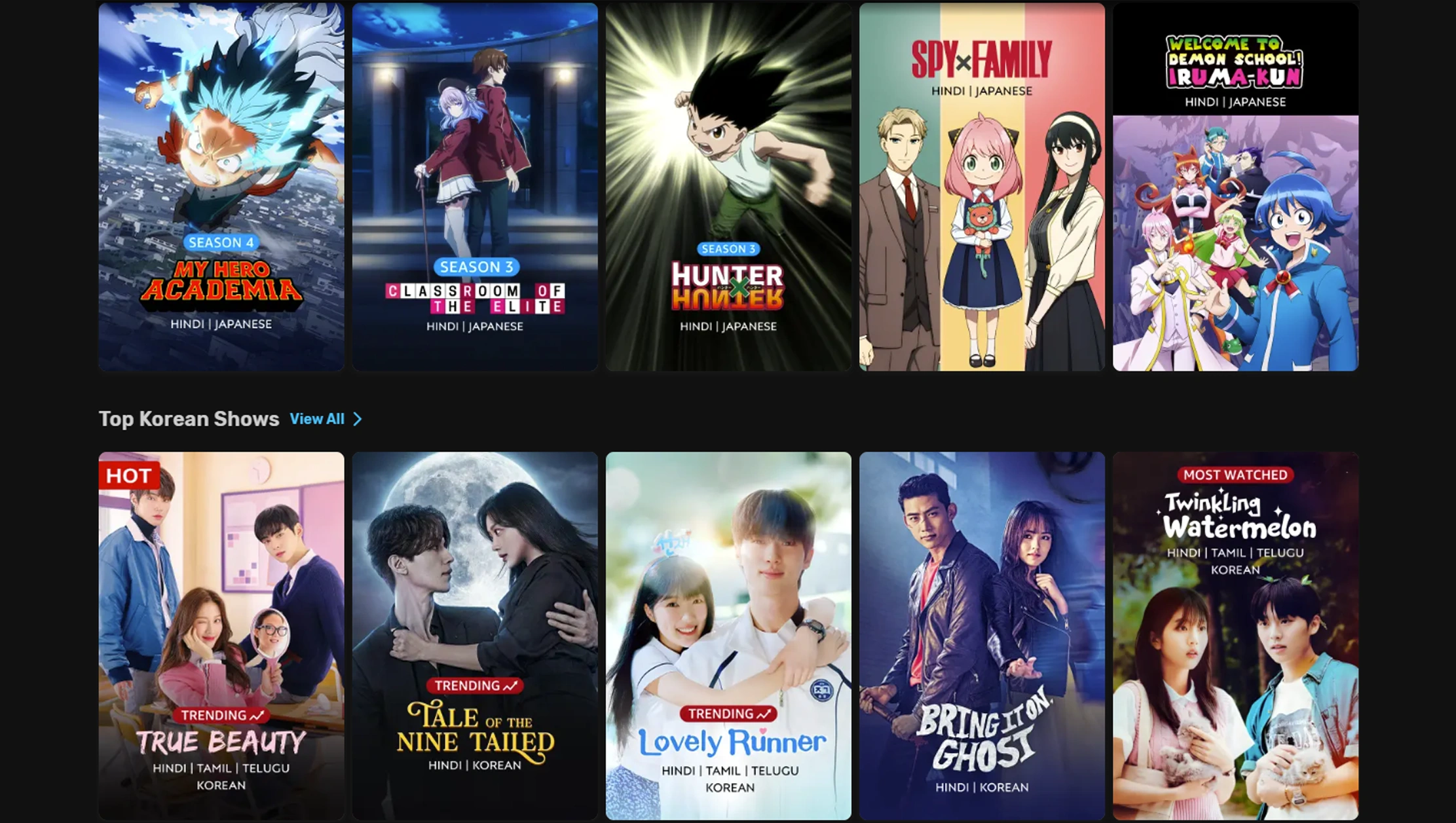
Effective OTT research begins with comprehensive data collection. MX Player data collection services for OTT market research can help organizations establish a structured view of movies, web series, genres, languages, release information, ratings, availability, and other accessible metadata. Instead of depending on manually maintained spreadsheets, automated collection creates repeatable processes that can accommodate large catalogs and frequent changes.
Between 2020 and 2022, streaming consumption expanded substantially as audiences became more accustomed to digital-first entertainment. By 2023 and 2024, OTT research increasingly shifted toward catalog intelligence, genre-level comparisons, and competitive benchmarking. During 2025 and 2026, the emphasis has further moved toward continuous monitoring and faster interpretation of content changes.
| Research Period | Key Data Focus | Business Application |
|---|---|---|
| 2020 | Movies and web series availability | Catalog discovery |
| 2021 | Genre and language expansion | Audience research |
| 2022 | Content volume and metadata | Catalog benchmarking |
| 2023 | Competitive content comparison | Market intelligence |
| 2024 | Genre and release monitoring | Content strategy |
| 2025 | Automated catalog tracking | Competitive intelligence |
| 2026 | Continuous OTT analytics | Strategic decision-making |
A scalable collection framework can normalize titles, categories, genres, release dates, language information, URLs, and availability fields into consistent records. Researchers can then compare the catalog across different periods instead of treating each observation as an isolated data point.
For content businesses, this historical perspective is valuable because OTT competition is increasingly influenced by content breadth as well as content freshness. Tracking changes over time makes it easier to identify growing genres, declining categories, catalog gaps, and opportunities for differentiated programming.
Turning Catalog Records into Streaming Intelligence
Once content information has been collected, the next challenge is transforming raw records into useful insights. Businesses can extract MX Player OTT data for streaming analysis to study content distribution, genre representation, release patterns, and catalog changes across different periods.
Streaming analysis becomes more meaningful when datasets contain standardized fields. A movie title recorded under different naming conventions, for example, can distort counts and trend calculations. Data cleaning, normalization, deduplication, and consistent classification therefore play an important role in OTT research.
From 2020 to 2026, OTT analysis has progressively become more granular. Earlier research often focused on total content availability, while modern analysis can examine individual genres, languages, release periods, content formats, and catalog movements.
| Year | Analytical Priority | Example Insight |
|---|---|---|
| 2020 | Catalog size | Overall content availability |
| 2021 | Content categories | Genre distribution |
| 2022 | Metadata depth | Language and format analysis |
| 2023 | Release patterns | New-title frequency |
| 2024 | Competitive benchmarking | Catalog comparison |
| 2025 | Trend monitoring | Fast-changing preferences |
| 2026 | Predictive intelligence | Emerging content opportunities |
Researchers can calculate genre shares, year-over-year catalog changes, title additions, removals, and category concentration. These measurements provide a clearer understanding of how the platform's content ecosystem develops.
For example, if a particular genre shows consistent growth in catalog representation, researchers can compare that development against competing platforms or broader entertainment trends. Similarly, identifying frequently refreshed categories can help content strategists understand where platforms may be prioritizing discovery and engagement.
The value of streaming analysis therefore extends beyond collecting titles. It creates a structured evidence base for market research, content planning, competitive monitoring, and strategic decision-making.
Understanding Movies, Series, and Genre Dynamics
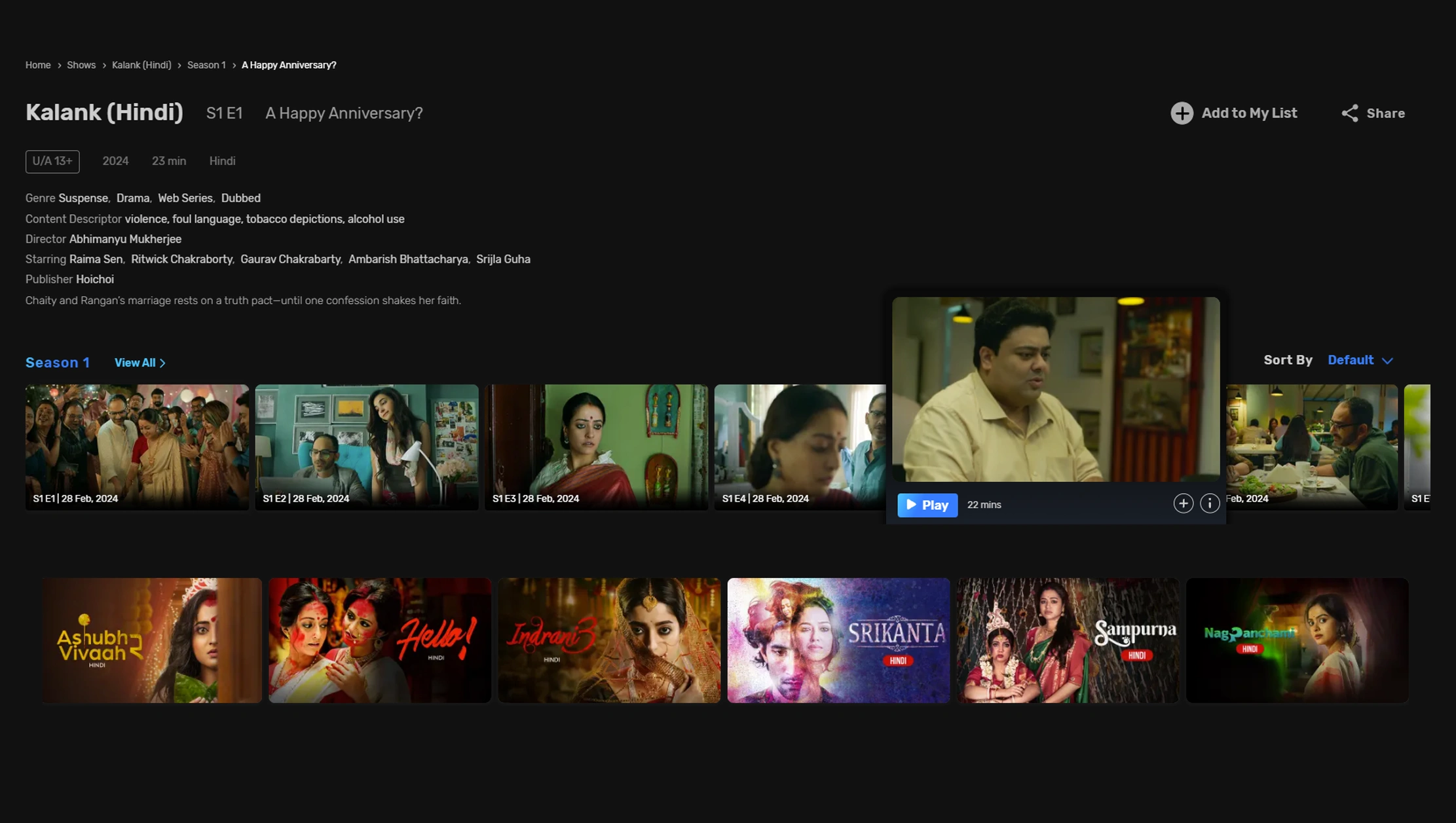
A detailed MX Player API for movies, web series and genre data can provide an efficient foundation for applications that require structured entertainment information. API-oriented access is particularly useful when analysts or technology teams need to integrate OTT information into dashboards, databases, research platforms, or internal analytics systems.
Between 2020 and 2026, the growing complexity of OTT catalogs has increased the importance of granular classification. Movies and web series can differ significantly in their release cycles, genre structures, episode formats, and audience positioning. Separating these dimensions allows researchers to conduct more accurate analysis.
| Content Dimension | What Can Be Studied | Strategic Value |
|---|---|---|
| Movies | Titles, genres, release information | Movie catalog analysis |
| Web Series | Series metadata and categories | Series benchmarking |
| Genres | Category distribution | Preference analysis |
| Languages | Language-level availability | Regional research |
| Release Period | Year/month patterns | Content-cycle analysis |
| Availability | Catalog presence | Monitoring and comparison |
API-based datasets can also support repeated data retrieval. Rather than rebuilding an analysis from scratch, teams can update records and compare current observations with historical snapshots.
For researchers, this enables questions such as: Which genres are expanding? How frequently does the catalog change? Are certain content formats becoming more prominent? How does the distribution of genres differ across time?
These questions can support investment research, media planning, content acquisition studies, recommendation-system development, and competitive analysis.
Build a structured OTT intelligence workflow with reliable movie, web series, and genre data for faster research and smarter content decisions.
Get Insights Now!Measuring Competitive Positioning Through Content
Competitive OTT analysis increasingly depends on detailed catalog information rather than broad market assumptions. MX Player data extraction for OTT competitive analysis can help researchers compare content availability, genre coverage, release patterns, and other publicly accessible attributes against competing entertainment platforms.
The period from 2020 to 2026 demonstrates why continuous comparison matters. OTT catalogs can change rapidly as titles are introduced, removed, reclassified, or promoted. A single snapshot may therefore provide only a limited understanding of competitive positioning.
| Period | Competitive Analysis Focus | Potential Outcome |
|---|---|---|
| 2020–2021 | Basic catalog comparison | Market mapping |
| 2022 | Genre coverage | Content-gap identification |
| 2023 | Release activity | Competitive monitoring |
| 2024 | Catalog depth | Benchmarking |
| 2025 | Frequent updates | Trend detection |
| 2026 | Integrated intelligence | Strategic forecasting |
A competitive dataset can help businesses identify where one platform has greater representation and where another may have stronger specialization. For example, genre-level comparison can reveal whether competitors are concentrating heavily on specific entertainment categories.
Historical snapshots also allow analysts to calculate changes over time. A category with a growing share may indicate increased strategic importance, while a declining share could suggest a shift in programming priorities.
For media companies, agencies, researchers, and technology providers, this information can support competitor dashboards and recurring market reports. Rather than relying exclusively on subjective observations, teams can use structured records to substantiate their conclusions.
Competitive analysis is most effective when collection is consistent, fields are standardized, and historical data is retained. This transforms OTT monitoring from a one-time research exercise into an ongoing intelligence program.
Building a Reliable Historical Data Foundation
A high-quality MX Player OTT Dataset should be designed around consistency, completeness, and repeatability. The usefulness of a dataset is determined not only by the number of records collected but also by how accurately those records can be compared over time.
Historical datasets are especially valuable because streaming catalogs are dynamic. A title available in 2021 may not remain available in 2026. Similarly, genre classifications, content formats, and catalog composition may change. Maintaining dated snapshots allows analysts to understand these movements instead of losing historical context.
| Data Quality Factor | Importance |
|---|---|
| Consistent fields | Enables reliable comparisons |
| Historical snapshots | Supports trend analysis |
| Deduplication | Prevents inflated content counts |
| Standardized genres | Improves category analysis |
| Regular updates | Captures catalog changes |
| Structured storage | Supports analytics and dashboards |
From 2020 to 2026, OTT research has moved from static catalog reporting toward longitudinal analysis. Researchers increasingly want to know not only what exists but how the catalog has changed.
A historical dataset can support year-over-year comparisons, genre-growth calculations, content addition monitoring, and catalog-change analysis. It can also become a reusable research asset for multiple business functions.
For example, marketing teams can use historical content trends to understand promotional opportunities, while strategy teams can evaluate competitive movements. Data analysts can integrate structured records into dashboards, while researchers can use them to produce periodic industry reports.
The key is to establish a repeatable collection and validation process. Automated workflows, standardized schemas, quality checks, and historical storage can collectively improve the reliability of downstream analysis.
Scaling Automated Collection and Monitoring
A scalable MX Player Scraper can support recurring collection workflows when organizations need to monitor publicly accessible OTT information over extended periods. Combined with the MX Player OTT Dataset, automated extraction can create a continuous pipeline from content discovery to structured analytics.
Scalability became increasingly important between 2020 and 2026 because OTT research requirements expanded from occasional catalog checks to recurring monitoring. Manual collection becomes inefficient when teams need to track thousands of records or compare multiple time periods.
| Capability | Manual Research | Automated Workflow |
|---|---|---|
| Record collection | Time-intensive | Scalable |
| Updates | Periodic | Recurring |
| Historical tracking | Difficult | Structured |
| Data normalization | Manual | Rule-based |
| Competitive comparison | Limited | Repeatable |
| Reporting | Spreadsheet-heavy | Dashboard-ready |
An automated workflow can be configured around predefined fields such as title, content type, genre, language, release information, URL, availability, and other accessible attributes. Validation rules can then identify duplicates, missing values, or unexpected changes.
The resulting data can feed analytics environments where teams monitor catalog growth, genre movements, and content trends. Historical records can also be compared with current observations to identify additions, removals, or classification changes.
For organizations conducting recurring OTT research, automation offers an important advantage: consistency. A standardized process reduces dependence on manual searches and creates a repeatable foundation for periodic reporting.
Automate OTT content monitoring and turn recurring catalog changes into actionable streaming intelligence with Real Data API!
Why Choose Real Data API?
Choosing the right data partner is important when OTT intelligence needs to support recurring research, competitive monitoring, or analytics. Real Data API can be positioned as a data-engineering partner for organizations seeking scalable extraction, structured outputs, automation, and research-ready datasets.
A reliable OTT Dataset can provide the foundation for catalog analysis, historical comparisons, genre research, and content intelligence. When data is consistently structured, organizations can spend less time preparing raw records and more time interpreting market signals.
The MX Player OTT Dataset can further support research workflows focused on movies, web series, genres, and streaming trends. A scalable approach can help teams handle recurring requirements while maintaining consistent fields and historical records.
This is particularly useful for teams that want to integrate OTT intelligence into dashboards, market research systems, analytics platforms, or internal databases.
Conclusion
The rapid evolution of streaming between 2020 and 2026 has made structured OTT intelligence increasingly important. The MX Player OTT Dataset can help researchers and businesses examine movies, web series, genres, catalog movements, and broader streaming trends through organized data.
From content discovery to competitive benchmarking, historical tracking, and genre analysis, structured OTT data can support multiple research applications. Automated collection further improves scalability by enabling recurring monitoring rather than relying solely on manual catalog reviews.
For media businesses, researchers, marketers, and technology teams, the opportunity lies in transforming publicly accessible content information into measurable insights. A well-designed data pipeline can make OTT research faster, more consistent, and easier to integrate into business intelligence workflows.
Unlock deeper OTT market intelligence with scalable data collection and research-ready datasets from Real Data API!
FAQs
What is an MX Player OTT Dataset?
An MX Player OTT Dataset is a structured collection of publicly accessible OTT information covering movies, web series, genres, metadata, availability, and related attributes for research and analysis.
How does MX Player OTT Data Scraping support research?
MX Player OTT Data Scraping automates collection of publicly accessible catalog information, helping researchers monitor content changes, analyze genres, benchmark competitors, and identify emerging streaming trends.
Who can benefit from OTT content data?
Media companies, market researchers, marketers, technology providers, analysts, and content strategists can use structured OTT information to evaluate catalogs, genres, releases, and competitive opportunities.
What is an MX Player Scraper used for?
An MX Player Scraper can automate the collection of publicly accessible entertainment information, helping organizations create structured records for catalog monitoring, competitive research, and historical trend analysis.
Why is an OTT Dataset valuable for streaming analysis?
An OTT Dataset enables structured comparison of content, genres, release patterns, and catalog changes. Real Data API can help organizations build scalable data workflows for recurring analysis.
Latest posts

How Myntra Fashion Dataset Solves Fashion Intelligence Challenges Across Products, Prices, Brands, and Fashion Market Trends?
How Hyatt Travel Dataset Helps Businesses Track Hotels, Room Prices, Amenities, Locations, and Travel Trends?

How Louis Vuitton Fashion Dataset Enables Better Analysis of Luxury Products, Prices, Brands, and Fashion Trends?
How Blinkit Grocery Dataset Enables Smarter Analysis of Products, Prices, Availability, and Quick-Commerce Trends?







.png)



