TL;DR
- Nykaa API can support structured access to beauty, fashion, product, pricing, and brand information for market research and competitive intelligence.
- Nykaa Product Data Scraping can organize product attributes, prices, availability, categories, and other publicly accessible information into analysis-ready datasets.
- From 2020–2026, Nykaa expanded from a beauty-focused digital platform into a broader beauty, fashion, lifestyle, and omnichannel ecosystem, increasing the value of structured product intelligence. (Nykaa)
Introduction
India's online beauty and fashion market has become increasingly data-driven. Product assortments change frequently, brands introduce new SKUs, prices fluctuate, discounts appear for limited periods, and product availability can vary across categories and locations. For businesses monitoring these changes, structured product information can provide a foundation for competitive research, pricing analysis, assortment planning, and market intelligence.
Nykaa API solutions can be designed to make relevant product information accessible in structured formats for downstream analytics. Depending on the permitted data source and available fields, businesses can work with product names, categories, brands, prices, discounts, ratings, availability, product URLs, attributes, and other catalog information.
At the same time, Nykaa Product Data Scraping can support recurring collection of publicly accessible catalog information where technically feasible and legally permitted. Instead of manually reviewing thousands of product pages, automated workflows can organize records into standardized datasets that are easier to compare and analyze.
Nykaa's scale makes this type of research particularly relevant. The company's current corporate profile states that it serves more than 52 million customers, has 276+ offline beauty destinations, and offers 4,000+ brands across beauty, wellness, fashion, and related categories. (Nykaa) Its FY2024 investor presentation also reported approximately 33 million customers, 138 million app installs, 1.7 billion+ annual visits, 6,700+ brands, and $1.6 billion consolidated GMV for FY2024, illustrating how the reported scale has changed over time. (Nykaa)
Understanding the Expanding Beauty Catalog
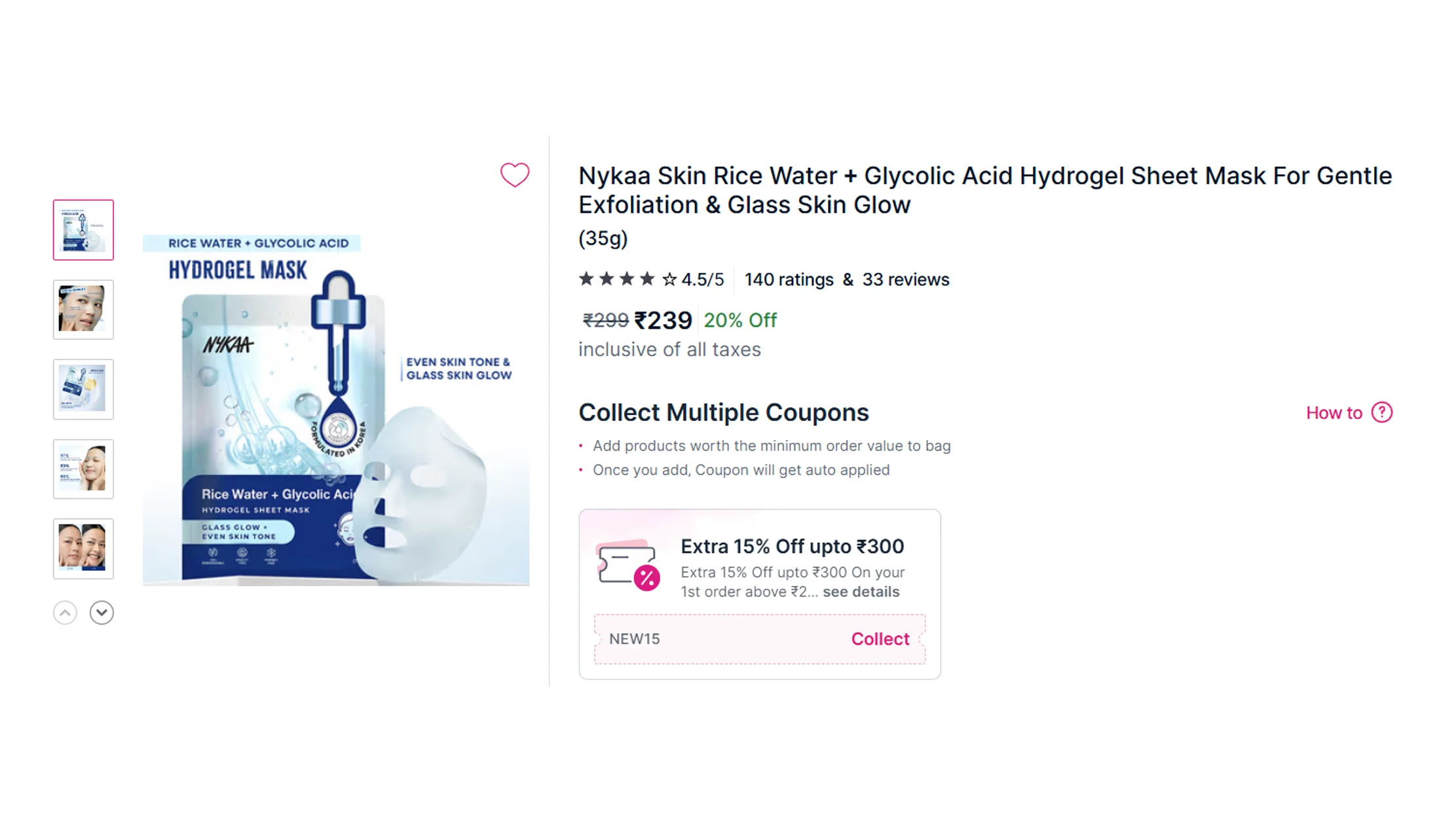
Nykaa beauty product data web scraping can help businesses monitor a broad range of beauty-related product attributes, including product names, brands, categories, prices, discounts, ratings, reviews, availability, ingredients where publicly listed, and product URLs.
The value of such data comes from organizing multiple product attributes into consistent records. A retailer or brand can then compare products across categories, identify price differences, monitor assortment changes, and study how product positioning evolves.
| Data Point | Potential Research Application |
|---|---|
| Product name | Catalog identification |
| Brand | Brand-level benchmarking |
| Category | Assortment analysis |
| MRP | Reference-price comparison |
| Selling price | Price monitoring |
| Discount | Promotion analysis |
| Rating | Customer perception indicator |
| Availability | Stock monitoring |
| Product URL | Record verification |
| Product attributes | Product comparison |
2020–2026 Development
Between 2020 and 2021, India's online beauty ecosystem benefited from increasing digital shopping adoption. Beauty products that were traditionally discovered through physical stores increasingly became part of online research and purchasing journeys. For businesses, this created greater interest in monitoring digital assortments, prices, and promotional activity.
In 2022, the competitive landscape became broader as established international brands, Indian brands, D2C companies, and marketplace-led sellers competed for online visibility. Structured catalog information became useful for understanding which brands and categories were expanding.
During 2023, Nykaa continued to operate across beauty and fashion while developing its omnichannel presence. The company also maintained a significant store network and digital audience, increasing the number of product and category signals that could be studied.
By FY2024, Nykaa's investor presentation reported 6,700+ brands, approximately 33 million customers, and more than 1.7 billion annual visits. (Nykaa) These figures demonstrate the scale of the ecosystem represented by the platform.
In FY2025, Nykaa reported consolidated revenue from operations of ₹7,950 crore, representing 24% growth over the previous year. Its annual report described beauty and fashion as core verticals and highlighted continued investments in technology and customer experience. (Nykaa)
By 2026, Nykaa's corporate profile described more than 52 million customers, 276+ offline beauty destinations, and 4,000+ brands. (Nykaa) For researchers, this expanding ecosystem creates opportunities for historical catalog comparisons, brand monitoring, category intelligence, and pricing research.
Mapping Fashion Assortment and Competitive Movement
Fashion catalogs can change rapidly because brands introduce seasonal collections, new styles, promotional campaigns, and changing inventory. Nykaa fashion product data collection services can help businesses structure these changes into comparable datasets.
A Nykaa API can also provide a structured delivery layer for integrating collected product information into databases, dashboards, business-intelligence systems, or internal analytics workflows, depending on the API's actual access and permitted data fields.
| Fashion Data | Business Application |
|---|---|
| Product title | Catalog monitoring |
| Brand | Competitive research |
| Category | Category trends |
| Price | Benchmarking |
| Discount | Promotion analysis |
| Size | Variant monitoring |
| Color | Assortment analysis |
2020–2026 Development
In 2020, fashion e-commerce experienced significant changes as consumer shopping behavior shifted toward digital channels. Online fashion catalogs became more important for brands seeking visibility outside traditional retail environments.
During 2021, retailers and fashion brands increasingly focused on digital merchandising, online assortment, and promotional activity. Monitoring product availability and pricing became relevant for businesses competing in crowded categories.
In 2022, Nykaa's broader ecosystem included Nykaa Fashion, extending the company's data landscape beyond cosmetics and personal care. The development increased the importance of analyzing fashion products alongside beauty categories.
In 2023, fashion competition continued to involve brands, marketplaces, D2C businesses, and omnichannel retailers. Structured product information could help companies identify assortment changes, price positioning, and brand presence.
By FY2024, Nykaa reported 15-18% online premium market share in fashion in its investor presentation, alongside more than 6,700 brands across its broader ecosystem. (Nykaa)
During FY2025, the company's annual report described continued strengthening of both beauty and fashion verticals and investments in technology and customer experience. (Nykaa)
By 2026, Nykaa's corporate profile continued to position the company across beauty, fashion, B2B, and omnichannel retail, with Nykaa Fashion and Nykaa Man included among its platforms. (Nykaa) This broader product ecosystem makes structured fashion data useful for assortment research, competitive monitoring, pricing studies, and category-level analysis.
Tracking Pricing, Promotions, and Availability
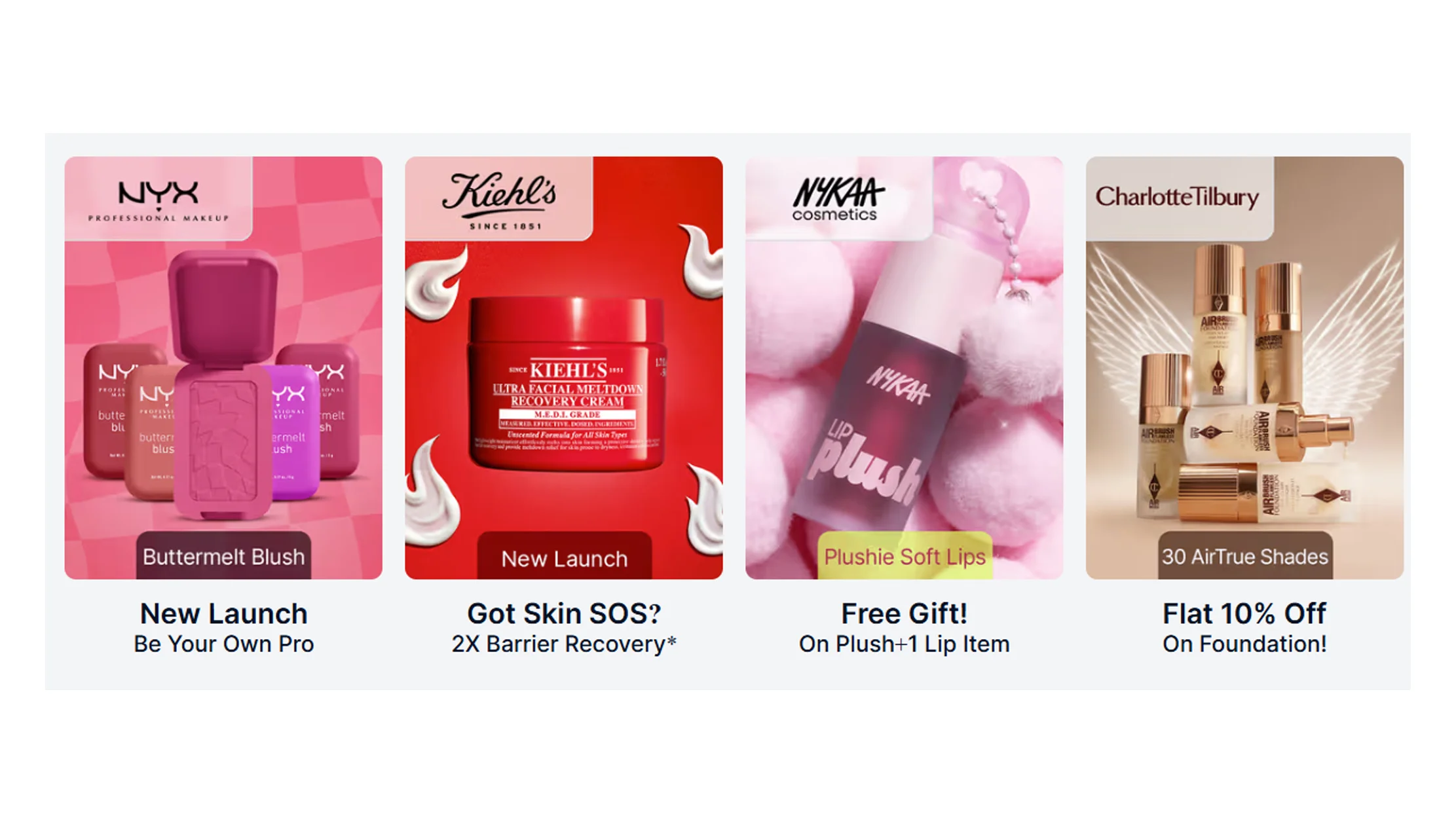
Businesses that need to extract Nykaa product price data can use structured collection workflows to monitor changes across products, categories, brands, and time periods.
Price intelligence becomes more useful when it is combined with other product attributes. A price record by itself may not explain why a product's price changed. Adding brand, category, discount, rating, availability, and product attributes creates a more complete competitive picture.
| Pricing Metric | Possible Use |
|---|---|
| MRP | Reference-price analysis |
| Selling price | Competitive benchmarking |
| Discount percentage | Promotion monitoring |
| Price history | Trend analysis |
| Product availability | Stock-price relationship |
| Brand | Brand-level comparison |
| Category | Category pricing analysis |
| Variant | SKU-level monitoring |
2020–2026 Development
In 2020, online price visibility became particularly important as consumers increasingly compared products digitally. Retailers and brands needed ways to understand how promotional pricing affected online competitiveness.
In 2021, price comparison expanded alongside digital adoption. Brands could benefit from tracking both regular prices and temporary discounts because promotional activity often influenced product visibility and purchase decisions.
During 2022, beauty and fashion businesses faced increasingly dynamic competition. Monitoring prices across product categories allowed companies to identify changes in positioning and promotional intensity.
In 2023, pricing analysis became increasingly connected to assortment and availability. A product with a lower listed price could have different business implications depending on whether it was fully available, discounted, newly launched, or approaching stock depletion.
In FY2024, Nykaa reported $1.6 billion in consolidated GMV, while its investor presentation also reported 30%+ online market share in beauty and 15-18% online premium market share in fashion. (Nykaa) These company-reported figures provide context for the commercial scale in which price and assortment intelligence can be applied.
In FY2025, Nykaa reported ₹7,950 crore consolidated revenue from operations and continued investments in technology and customer experience. (Nykaa)
By 2026, pricing intelligence can be connected with historical datasets to identify discount cycles, product-level price movements, category-level changes, and competitive positioning. For businesses, recurring data collection is particularly useful because a single snapshot cannot show whether a price change is temporary or persistent.
Build a structured pricing intelligence workflow to monitor product prices, discounts, availability, and assortment changes at scale!
Get Insights Now!Connecting Brand Intelligence With Product-Level Data
A Nykaa brand data API can help businesses organize information around individual brands and connect brand-level records with their associated products, categories, prices, and availability.
This approach is useful for companies researching competitors, tracking brand expansion, identifying new product launches, or comparing brand positioning across categories.
| Brand Data Field | Research Value |
|---|---|
| Brand name | Brand identification |
| Product count | Assortment measurement |
| Category presence | Category expansion |
| Product prices | Positioning analysis |
| Discounts | Promotional monitoring |
| Ratings | Customer-response indicator |
| New products | Launch monitoring |
| Availability | Distribution visibility |
2020–2026 Development
From 2020 to 2021, the expansion of D2C and digitally native beauty brands increased the number of brands competing for online consumer attention. Brand-level monitoring became more important because product launches and promotional campaigns could quickly alter competitive visibility.
In 2022, established international labels competed alongside Indian and emerging brands. Businesses increasingly needed structured ways to monitor which brands appeared across categories and how their product assortments changed.
During 2023, brand intelligence became increasingly connected with product-level information. Instead of simply tracking whether a brand was present, analysts could examine product counts, pricing, ratings, availability, and category coverage.
In 2024, Nykaa's investor presentation reported 6,700+ brands across its ecosystem, demonstrating the breadth of its marketplace and retail environment. (Nykaa)
In 2025, Nykaa continued expanding its owned-brand portfolio and described investments in innovation and customer experience in its annual report. (Nykaa)
By 2026, Nykaa stated that its portfolio included more than 4,000 brands across makeup, skincare, haircare, fragrance, wellness, and fashion, along with owned brands such as Nykaa Cosmetics, Dot & Key, Kay Beauty, and others. (Nykaa)
This evolution demonstrates why brand monitoring is most useful when connected to product-level data. Tracking brands over time can reveal assortment expansion, category movement, pricing changes, new launches, and shifts in online visibility.
Creating Structured Data Pipelines for Research
The Nykaa API concept is particularly relevant when organizations need to move from one-time product research toward repeatable data workflows. Structured delivery can make product information easier to integrate with databases, dashboards, business intelligence platforms, and analytical applications.
Rather than treating product data as a static spreadsheet, organizations can establish recurring processes for collection, normalization, validation, storage, and delivery.
| Pipeline Component | Purpose |
|---|---|
| Data collection | Capture permitted product information |
| Normalization | Standardize fields |
| Deduplication | Remove repeated records |
| Validation | Improve data consistency |
| Historical storage | Enable time-series analysis |
| API delivery | Support system integration |
| Monitoring | Identify collection issues |
2020–2026 Development
During 2020–2021, many e-commerce research workflows relied heavily on spreadsheets and manual catalog monitoring. As product catalogs grew, maintaining accurate records manually became increasingly difficult.
In 2022, businesses began looking for more automated approaches to product monitoring. Scheduled collection and structured data delivery could reduce repetitive work while improving consistency.
In 2023, API-oriented workflows became increasingly useful for connecting e-commerce data with internal systems. Product information could be combined with sales, inventory, CRM, advertising, and market-research datasets.
During 2024, the value of historical records increased because businesses wanted to compare assortment and pricing changes over time rather than rely on isolated snapshots. Nykaa's scale—33 million customers and 6,700+ brands reported in its FY2024 investor presentation—illustrates why manual monitoring becomes difficult at large scale. (Nykaa)
In FY2025, Nykaa reported continued investments in technology, operational excellence, and customer experience while strengthening its beauty and fashion verticals. (Nykaa)
By 2026, structured e-commerce data pipelines can support more advanced use cases such as automated dashboards, competitive price monitoring, assortment benchmarking, product-launch tracking, and historical trend analysis.
For organizations working with large catalogs, the key consideration is not only collection volume but also data quality. Consistent schemas, reliable identifiers, validation rules, duplicate handling, and historical storage can make the resulting data substantially more useful for business analysis.
Building Historical Fashion Intelligence
A Nykaa Fashion Dataset can organize fashion-related product information into structured records for research across brands, categories, products, prices, variants, and availability. Combined with a Nykaa API, such data can be incorporated into recurring analytical workflows where access and usage are permitted.
Fashion datasets are especially useful for tracking seasonal changes because product availability and assortment can shift quickly.
| Dataset Dimension | Example Application |
|---|---|
| Brand | Competitive research |
| Product | Catalog analysis |
| Category | Category trends |
| Price | Benchmarking |
| Discount | Promotion analysis |
| Size | Variant monitoring |
| Color | Assortment analysis |
2020–2026 Development
In 2020, fashion e-commerce underwent a major behavioral shift as consumers increasingly depended on digital channels. Product discovery, comparison, and purchase journeys moved further online.
During 2021, online fashion retailers expanded their digital assortments and promotional strategies. Structured product datasets became useful for monitoring these changes.
In 2022, Nykaa Fashion represented an increasingly important part of the company's broader lifestyle ecosystem. This allowed businesses to study fashion products alongside the company's established beauty operations.
In 2023, fashion brands increasingly competed through assortment breadth, pricing, promotions, and digital visibility. Historical datasets allowed analysts to identify changes that could otherwise be missed in manual monitoring.
In 2024, Nykaa's investor presentation reported 15-18% online premium market share in fashion. (Nykaa) This provides context for the relevance of structured fashion intelligence within the company's reported market position.
In FY2025, Nykaa described beauty and fashion as core verticals and highlighted investments in technology and customer experience. (Nykaa)
By 2026, Nykaa continued operating across fashion and beauty, with its corporate profile listing Nykaa Fashion and Nykaa Man alongside its beauty platforms. (Nykaa) For researchers, historical fashion datasets can help compare product availability, pricing, brands, categories, and assortment patterns across time.
Turn changing fashion catalogs into structured intelligence for assortment, pricing, brand, and competitive analysis!
Why Choose Real Data API?
For large-scale e-commerce research, businesses need more than raw product records. A reliable workflow should address data collection, normalization, validation, historical storage, and delivery in formats that fit existing analytical systems.
Real Data API can support organizations that need structured e-commerce intelligence for competitive research, pricing analysis, product monitoring, and market research.
Key benefits can include:
- Structured product datasets
- Recurring data collection
- Product and brand-level monitoring
- Price and discount tracking
- Historical data availability
- Data cleaning and normalization
- Duplicate detection
- Flexible data delivery
- Scalable processing workflows
- Analytics-ready datasets
A Nykaa Fashion Data Scraping workflow can help organize fashion product information for recurring monitoring, while a Nykaa API can provide an integration-oriented layer for applications and analytical systems, subject to the actual API access, platform terms, and permitted data usage.
Conclusion
The growth of India's beauty and fashion e-commerce ecosystem has increased the importance of structured product intelligence. Nykaa's reported expansion—from 33 million customers and 6,700+ brands in FY2024 to more than 52 million customers and 4,000+ brands in its current corporate profile—illustrates the scale and evolution of the business. The differences in reported metrics also highlight why researchers should define measurement periods and sources carefully. (Nykaa)
A well-designed Nykaa API data workflow can help businesses organize product, price, brand, fashion, beauty, and availability information into structured datasets for competitive intelligence and market research.
The most useful workflows combine recurring collection with normalization, validation, historical storage, and analytical integration. Businesses can then move beyond individual product snapshots and develop a broader view of pricing, assortment, brands, and market movements.
Connect with Real Data API to build a scalable, structured, and analysis-ready Nykaa data workflow for product, price, beauty, fashion, and brand intelligence!
FAQs
What is Nykaa API used for?
Nykaa API can support structured access to permitted product information for research, catalog analysis, price monitoring, brand intelligence, and integration with business analytics systems.
How does Nykaa Product Data Scraping help businesses?
Nykaa Product Data Scraping can organize publicly accessible product information into structured records, helping businesses monitor catalogs, prices, availability, categories, brands, and product changes.
What is Nykaa beauty product data web scraping?
Nykaa beauty product data web scraping involves collecting permitted, publicly accessible beauty-product information such as names, categories, brands, prices, discounts, ratings, and availability.
What are Nykaa fashion product data collection services?
Nykaa fashion product data collection services can provide structured fashion catalog information for monitoring brands, products, categories, prices, discounts, variants, and availability across recurring research periods.
How can businesses extract Nykaa product price data?
Businesses can extract Nykaa product price data through structured collection workflows that capture permitted pricing information and organize it for historical comparison, benchmarking, and competitive analysis. Real Data API can support such workflows.
Latest posts
How real-time food data scraping services Help Food Brands Track Products, Prices, and Market Trends
Why Sainsbury's grocery data web scraper Is Essential for Smarter Grocery Pricing and Product Intelligence
How Talabat Scraper Helps Brands Monitor Talabat Listings, Discounts, Reviews, and Availability at Scale
How Twitter Scraper Enables Faster Social Media Data Collection for Trend, Competitor, Audience Intelligence, and Social Media Data Collection







.png)