Quick Summary
- Trip.com travel dataset helps travel companies organize hotel prices, reviews, availability, amenities, locations, and competitor information into structured records for analysis.
- Trip.com Data Insights can support pricing intelligence, destination research, hotel benchmarking, demand analysis, and strategic planning.
- Recurring data collection gives hospitality brands a historical view of marketplace changes instead of relying on isolated manual checks.
Introduction
A Trip.com travel dataset helps brands turn constantly changing hotel and travel marketplace information into structured intelligence. By tracking room prices, availability, reviews, ratings, amenities, locations, and competitor offerings, hotels, travel agencies, OTAs, and market researchers can make faster pricing and market decisions.
Trip.com Group is a global one-stop travel platform covering accommodation, transportation, packaged tours, and corporate travel. Its 2025 annual report states that total revenue increased 17% to RMB62.5 billion, while accommodation reservation revenue increased 21% to RMB26.1 billion. (Trip.com Group Limited)
This scale creates a continuously changing information environment. Hotel prices can vary by date, room type, cancellation policy, destination, demand, and promotional conditions. Availability can also change rapidly, making periodic monitoring valuable for businesses that compete on price and inventory.
Trip.com Data Insights can therefore help decision-makers understand not only what a hotel listing looks like today, but also how its position changes over time. Historical observations can reveal pricing patterns, availability shifts, rating movements, new competitors, and changing destination-level supply.
For revenue managers, hotel groups, travel agencies, and hospitality analysts, the core challenge is not simply obtaining more travel information. It is collecting the right fields consistently, preserving historical observations, and converting them into actionable business intelligence.
How can travel businesses use marketplace data for market analysis?
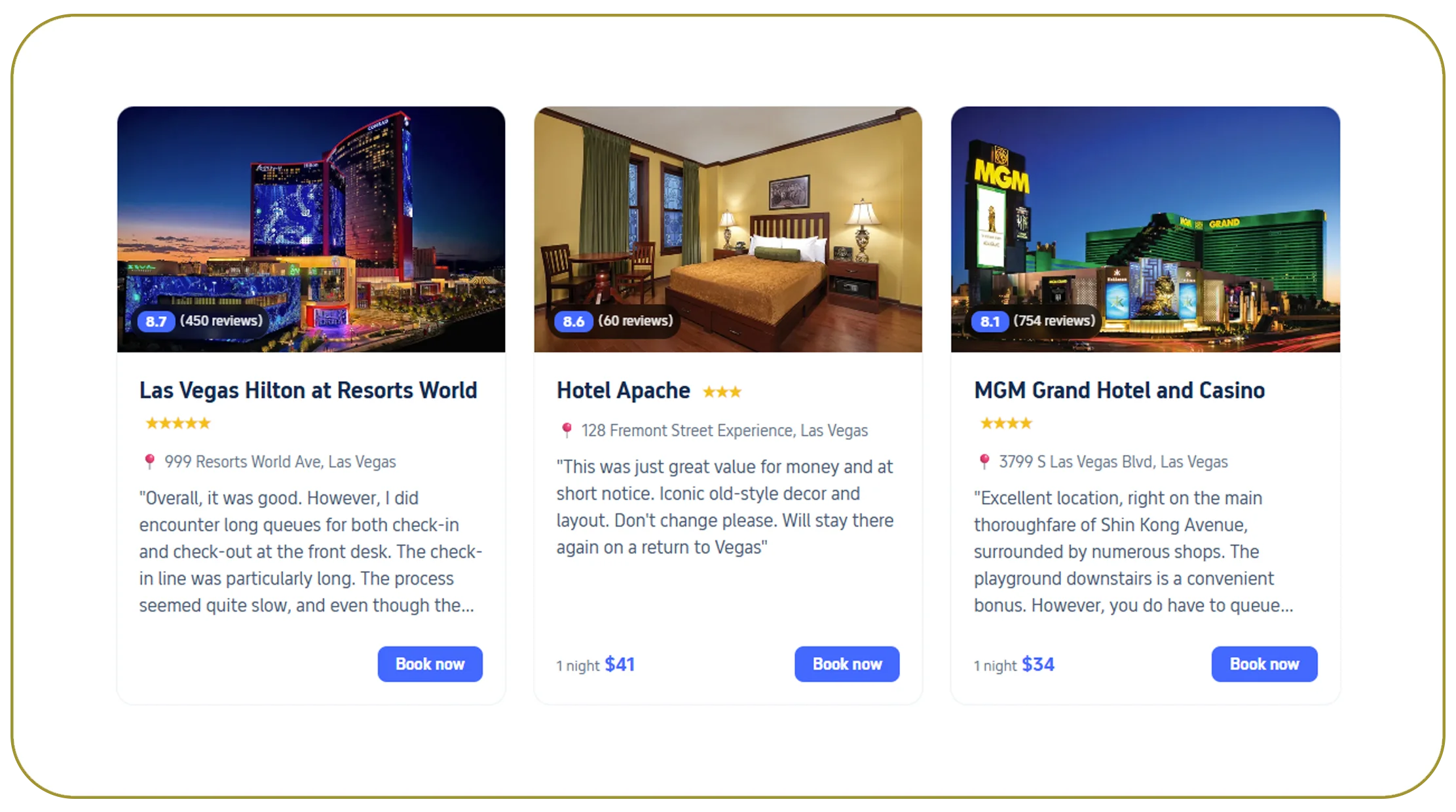
Trip.com data for travel market analysis can help hospitality businesses understand hotel supply, price positioning, destination competition, customer sentiment, and changing accommodation trends.
The first step is to define the business questions. A hotel group may want to know how its room prices compare with competing properties. A travel agency may want to identify destinations with expanding hotel supply. A market research company may need historical observations of hotel ratings, amenities, and availability.
Trip.com Group's financial performance demonstrates the scale of the accommodation market. Its accommodation reservation revenue increased from RMB7.4 billion in 2022 to RMB17.3 billion in 2023 and RMB21.6 billion in 2024. Accommodation represented 40% of total revenue in 2024. (HKEX News)
In 2025, accommodation reservation revenue increased another 21% to RMB26.1 billion, with accommodation GMV increasing 17%. The company attributed this growth partly to outbound travel and international hotel bookings. (FinancialFilings)
| Data Point | Business Application |
|---|---|
| Hotel name | Competitor mapping |
| Destination | Geographic analysis |
| Room type | Product comparison |
| Nightly price | Pricing intelligence |
| Availability | Inventory monitoring |
| Rating | Reputation benchmarking |
| Review count | Customer engagement |
| Amenities | Product differentiation |
| Cancellation policy | Value comparison |
| Collection timestamp | Historical analysis |
From 2020–2022, travel businesses faced major disruption from changing mobility patterns and travel restrictions. During 2023–2024, recovery increased the importance of understanding destination-level demand and accommodation pricing. In 2025, continued international travel growth created additional opportunities for businesses to compare domestic and outbound hotel markets.
By 2026, the more useful approach is to connect individual hotel observations into time-series datasets. This allows analysts to identify whether a price movement is temporary, seasonal, promotional, or part of a longer-term market trend.
Actionable insight: Segment data by destination, hotel category, room type, stay date, and collection date. This prevents broad averages from hiding important differences between properties.
How can automated collection improve hotel intelligence?
Hotels and travel businesses often need information at a frequency that manual research cannot efficiently support. A researcher checking 20 hotels once a week may gather useful information, but monitoring hundreds of properties across multiple destinations becomes considerably more difficult.
A workflow to scrape Trip.com travel data API information can be designed around recurring collection, structured fields, validation, and historical storage, where technically and legally appropriate.
The objective is to create comparable records rather than isolated observations. Each observation can include the hotel, destination, stay date, room category, displayed price, availability, rating, review count, and other relevant attributes.
Trip.com Group's 2024 annual report highlights the scale of its accommodation ecosystem. Accommodation reservation revenue grew 25% year over year in 2024, reaching RMB21.6 billion. (Trip.com Group Limited)
| Stage | Activity |
|---|---|
| Target definition | Select destinations and properties |
| Data collection | Capture permitted marketplace information |
| Validation | Check missing and inconsistent records |
| Normalization | Standardize currencies and fields |
| Timestamping | Record collection date and time |
| Historical storage | Preserve previous observations |
| Analysis | Compare prices and availability |
| Reporting | Deliver dashboards or datasets |
The 2020–2022 period demonstrated the importance of flexible travel intelligence because hotel availability and travel conditions could change rapidly. From 2023 onward, recovery created a stronger need for competitive pricing and destination benchmarking. In 2024, Trip.com's accommodation revenue growth reflected renewed demand, while 2025 showed another 21% increase in accommodation reservation revenue. (FinancialFilings)
For 2026, businesses can use recurring collection to move from reactive research to continuous monitoring.
The most important technical consideration is consistency. If one observation records the total room price while another records only the base rate, the resulting comparison can be misleading. Data schemas should therefore be defined before collection begins.
What can a booking dataset reveal about traveler and hotel-market behavior?
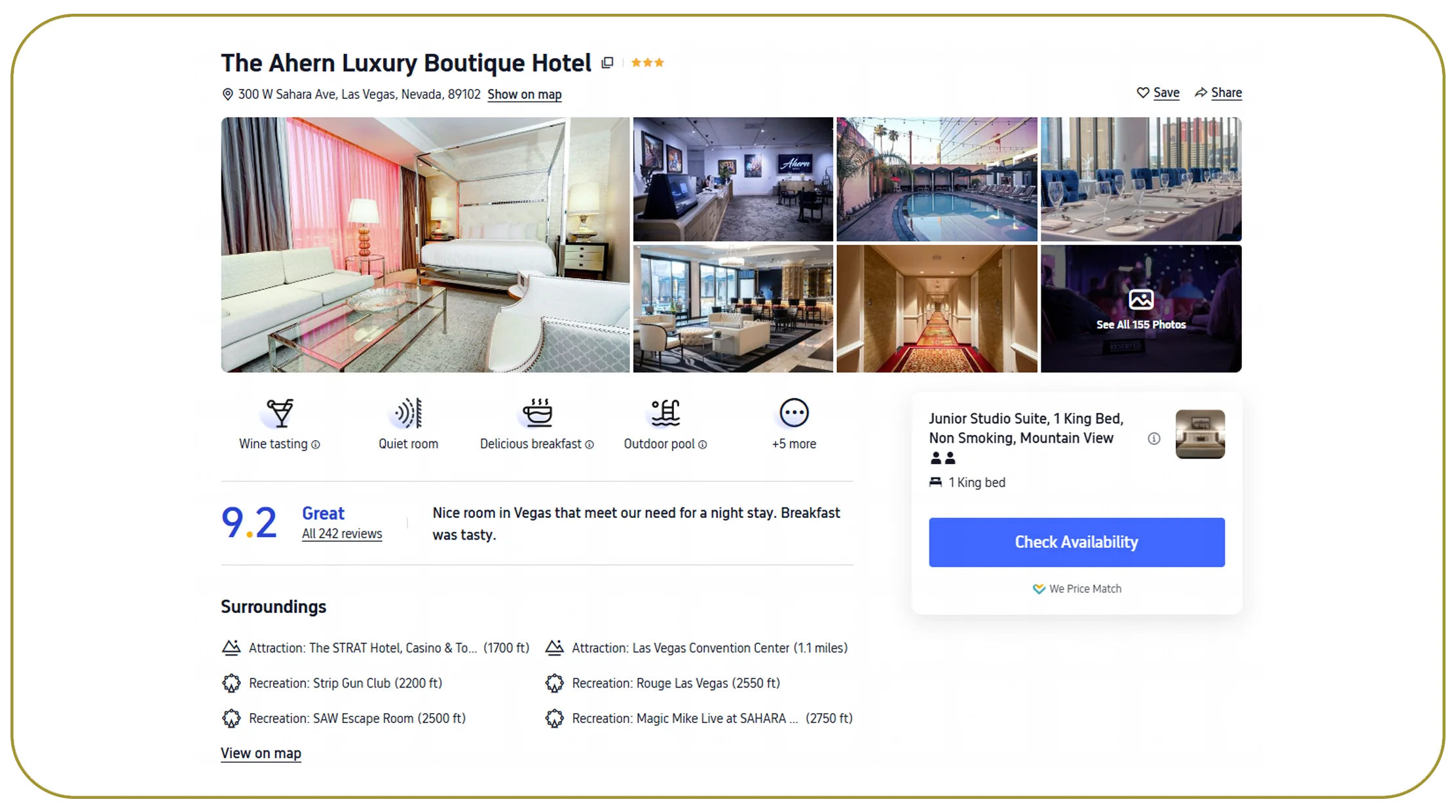
A Trip.com travel booking dataset can support analysis of accommodation demand, destination activity, hotel positioning, room categories, and customer-facing pricing information.
For a hotel chain, structured booking-related observations can help answer questions such as:
- Which destinations have the highest competitive density?
- How do room prices vary across weekdays and weekends?
- Which properties consistently maintain higher ratings?
- How frequently do competitors show limited availability?
- Which room categories are most widely promoted?
- Where are price gaps largest between comparable hotels?
Trip.com Group's 2025 annual report describes its platform as supporting accommodation reservation, transportation ticketing, packaged tours, corporate travel, and other travel services. The company also operates an open platform involving hotels and other accommodation providers and travel partners. (HKEX News)
This breadth means that hotel intelligence can be combined with broader destination analysis.
| Dimension | Example Question |
|---|---|
| Destination | Which markets are expanding? |
| Hotel class | How does competition vary by segment? |
| Room type | Which room categories dominate listings? |
| Stay date | How does pricing change by date? |
| Availability | Which properties frequently show limited inventory? |
| Rating | Which competitors have stronger customer sentiment? |
| Review volume | Which properties receive greater engagement? |
| Cancellation | How does flexibility affect value? |
Between 2020 and 2022, changes in travel demand made historical comparison especially important. During 2023 and 2024, businesses increasingly had to interpret recovery patterns across domestic and international markets. In 2025, Trip.com reported that accommodation GMV increased 17%, driven in part by outbound travel and international hotel bookings. (FinancialFilings)
In 2026, analysts can use historical datasets to distinguish seasonal demand from structural changes. For example, a hotel may show higher prices every weekend, but a sustained increase across weekdays may indicate a broader demand shift.
Turn changing hotel marketplace signals into structured datasets that support smarter pricing, benchmarking, and destination intelligence!
How can price extraction strengthen hotel competitive intelligence?
Hotel pricing is highly dynamic. The same property can display different prices depending on travel dates, room type, cancellation terms, promotions, occupancy, and demand.
Trip.com pricing data extraction can help businesses create historical price records and compare properties under consistent conditions.
This matters because an isolated price observation has limited meaning. A hotel displayed at RMB800 per night could be expensive or inexpensive depending on the destination, season, room category, and competitor prices. Historical and comparative context makes the observation more useful.
Trip.com Group's accommodation reservation revenue grew from RMB17.3 billion in 2023 to RMB21.6 billion in 2024, representing 25% growth. In 2025, it increased another 21% to RMB26.1 billion. (HKEX News)
| Metric | What It Helps Measure |
|---|---|
| Average room price | General market positioning |
| Median room price | Typical competitive price |
| Minimum price | Promotional floor |
| Maximum price | Premium positioning |
| Price spread | Competitive differentiation |
| Price change | Market movement |
| Discount value | Promotional intensity |
| Weekend premium | Seasonal/weekly behavior |
From 2020–2022, hospitality businesses had to account for extraordinary volatility. In 2023–2024, increasing travel activity made competitive benchmarking more relevant. By 2025, strong accommodation revenue growth and higher international demand reinforced the importance of monitoring price and inventory changes. (FinancialFilings)
A practical pricing system should capture both price and context. For example, records should ideally distinguish refundable and non-refundable rates, room categories, occupancy assumptions, stay dates, and applicable promotional conditions.
By 2026, historical pricing datasets can support revenue-management teams with competitor benchmarks, price-positioning analysis, and alerts for significant changes.
Actionable insight: Compare like-for-like rooms and stay dates. Comparing different room types can create false pricing signals.
How can a structured travel dataset support long-term decisions?

A Trip.com Travel Dataset becomes significantly more valuable when it is maintained as a historical resource instead of being treated as a one-time export.
A structured dataset can connect hotel identities, locations, room categories, prices, availability, ratings, reviews, amenities, policies, and timestamps. This creates a foundation for dashboards, business intelligence, forecasting, and competitive analysis.
Trip.com Group's reported financial trajectory illustrates why historical context matters. Total revenue increased from RMB20.0 billion in 2022 to RMB44.6 billion in 2023 and RMB53.4 billion in 2024. In 2025, total revenue increased another 17% to RMB62.5 billion. (HKEX News)
| Layer | Example Fields |
|---|---|
| Property | Hotel name, ID, address |
| Geography | Country, city, destination |
| Accommodation | Room type, occupancy |
| Pricing | Base rate, displayed rate, discount |
| Availability | Available, limited, unavailable |
| Reputation | Rating, review count |
| Amenities | Facilities and services |
| Policies | Cancellation and booking conditions |
| Time | Collection timestamp |
| History | Previous observations |
During 2020–2022, historical records could help businesses understand disruption. During 2023–2024, they became useful for tracking recovery. In 2025–2026, the same architecture can support more sophisticated competitive and revenue intelligence.
The key is maintaining consistent identifiers. If a hotel is represented by different names across records, historical comparisons can become unreliable. A normalized property identifier can connect observations across collection periods.
The dataset can also be segmented by destination, hotel category, price range, and travel period. This allows analysts to create targeted comparisons instead of relying on broad marketplace averages.
Build a clean historical travel dataset that transforms hotel-market observations into measurable competitive intelligence.
How can an API-based workflow make travel intelligence scalable?
A Travel Scraping API can provide a structured delivery layer between data collection and business analytics. Instead of manually exporting information, businesses can design workflows where validated records move into databases, dashboards, data warehouses, or analytical applications.
This approach is particularly useful for organizations monitoring large hotel portfolios or multiple destinations.
Trip.com Group describes its platform as an integrated travel ecosystem covering accommodation, transportation, packaged tours, corporate travel, and related services. Its open-platform model also includes hotels and other accommodation providers as ecosystem partners. (HKEX News)
| Component | Purpose |
|---|---|
| Collection layer | Gather permitted source data |
| Processing layer | Clean and normalize records |
| Validation layer | Identify errors and duplicates |
| Storage layer | Maintain historical data |
| API layer | Deliver structured outputs |
| Analytics layer | Generate insights |
| Alert layer | Detect important changes |
From 2020–2022, businesses primarily needed resilience and visibility. During 2023–2024, travel recovery increased demand for market intelligence. In 2025, Trip.com Group's accommodation reservation revenue reached RMB26.1 billion, showing continued growth in a major part of its business. (FinancialFilings)
In 2026, API-driven architectures can help businesses operationalize this intelligence. For example, a revenue team could receive updated competitor pricing, while a market research team could work from a larger historical dataset.
The API approach also supports modularity. Businesses can change destinations, properties, fields, or collection frequency without redesigning the entire analytical workflow.
The result is a repeatable data pipeline rather than a collection of disconnected spreadsheets.
Why Choose Real Data API?
Real Data API can help businesses design scalable travel-data workflows around specific research and competitive-intelligence requirements. The focus should be on structured collection, validation, historical storage, and analytics-ready delivery rather than simply gathering large volumes of records.
A hospitality company may need daily competitor pricing, while a destination research firm may need weekly hotel availability and monthly market snapshots. The collection architecture can be aligned with the actual business question.
Key benefits
- Structured hotel and travel data
- Recurring marketplace monitoring
- Historical price comparisons
- Hotel-level competitive benchmarking
- Destination-level analysis
- Review and rating monitoring
- Data normalization and validation
- Analytics-ready outputs
- Scalable delivery workflows
Travel Data Scraping can support organizations that need consistent travel intelligence across destinations, properties, and time periods.
The strongest workflow begins with clearly defined KPIs. For example, a revenue-management team could track median competitor price, price gap, availability rate, rating movement, and promotional frequency. These metrics can then be refreshed automatically and incorporated into decision-making.
The emphasis should remain on permitted data collection, responsible handling, source requirements, and a reliable technical architecture.
Conclusion
Travel businesses operate in a market where prices, availability, reviews, and competitor positioning can change quickly. A single manual snapshot rarely provides enough context to understand those movements.
A Trip.com travel dataset gives brands a structured foundation for monitoring hotel prices, availability, ratings, reviews, amenities, and competitive positioning. When collected consistently and stored historically, the data can support revenue management, destination analysis, market research, competitor benchmarking, and strategic planning.
Trip.com Group's recent performance highlights the continuing importance of accommodation intelligence. Accommodation reservation revenue reached RMB21.6 billion in 2024 and RMB26.1 billion in 2025, while 2025 accommodation GMV increased 17%. (Trip.com Group Limited)
The opportunity for brands is to move beyond isolated observations and create an ongoing intelligence system. Historical comparisons make it easier to identify meaningful changes, understand competitive behavior, and respond to market opportunities.
Ready to turn hotel marketplace data into actionable travel intelligence? Connect with Real Data API to build a scalable, structured data solution tailored to your pricing, availability, competitor, and market-research goals!
FAQs
1. What is a Trip.com travel dataset used for?
A Trip.com travel dataset can support hotel price comparison, availability monitoring, review analysis, competitor benchmarking, destination research, and hospitality intelligence using structured historical records.
2. How does Trip.com Data Insights help hotels?
Trip.com Data Insights can help hotels understand competitor pricing, ratings, availability, amenities, promotions, and destination-level patterns to improve strategic planning and market positioning.
3. What information can Trip.com data for travel market analysis include?
Trip.com data for travel market analysis may include hotel names, destinations, room types, prices, ratings, reviews, amenities, availability, booking policies, and timestamps.
4. Can businesses scrape Trip.com travel data API information?
Businesses can scrape Trip.com travel data API information only where technically permitted and legally appropriate, following applicable platform terms, access controls, privacy requirements, and data-use restrictions.
5. How can Real Data API support a Trip.com travel booking dataset?
Real Data API can help structure a Trip.com travel booking dataset into validated, historical records suitable for pricing research, competitor analysis, dashboards, and broader hospitality intelligence workflows.
Latest posts

How Trip.com travel dataset Helps Brands Track Hotel Prices, Reviews, Availability, and Competitor Trends
How Reddit Scraper Solutions Collect Public Data for Market Research and Competitive Analysis
How Wildberries Product Scraper Helps Track Prices, Sellers, and Product Availability
How Coupang Scraper Helps Monitor Products, Prices, Sellers, Reviews, and Market Changes







.png)



