.gif)
.gif)
Quick Summary
- Discover how businesses can identify suspicious follower growth, detect unusual engagement patterns, and evaluate Instagram account authenticity using continuous Real-Time Instagram Profile Monitoring.
- Understand how Instagram Social Media Data Scraping, historical performance tracking, and automated monitoring help brands protect influencer marketing investments.
- Explore practical monitoring strategies, verified research findings, and data-driven methods for improving social media reputation management.
Introduction
Instagram has become an important marketing channel for businesses, influencers, and digital agencies. However, fake followers, artificial engagement, sudden audience changes, and declining interactions can distort campaign performance and damage brand credibility. Real-Time Instagram Profile Monitoring helps businesses identify suspicious account activity, evaluate engagement quality, and detect potential reputation risks before they affect marketing decisions. By combining structured account analysis with Instagram Social Media Data Scraping, companies can collect relevant public information, monitor profile changes, and evaluate social media performance over time.
For marketing managers, influencer agencies, and brand protection teams, follower counts alone are no longer sufficient to measure account quality. Businesses need to understand whether followers interact naturally, whether engagement remains consistent, and whether an influencer's audience matches the intended customer segment. Automated monitoring provides a more organized approach to these challenges. It enables companies to compare historical account activity, identify unusual patterns, and make better-informed influencer partnership decisions. The result is a more transparent social media evaluation process that supports marketing efficiency and long-term brand reputation.
Why Do Fake Followers Create Problems for Marketing Campaigns?
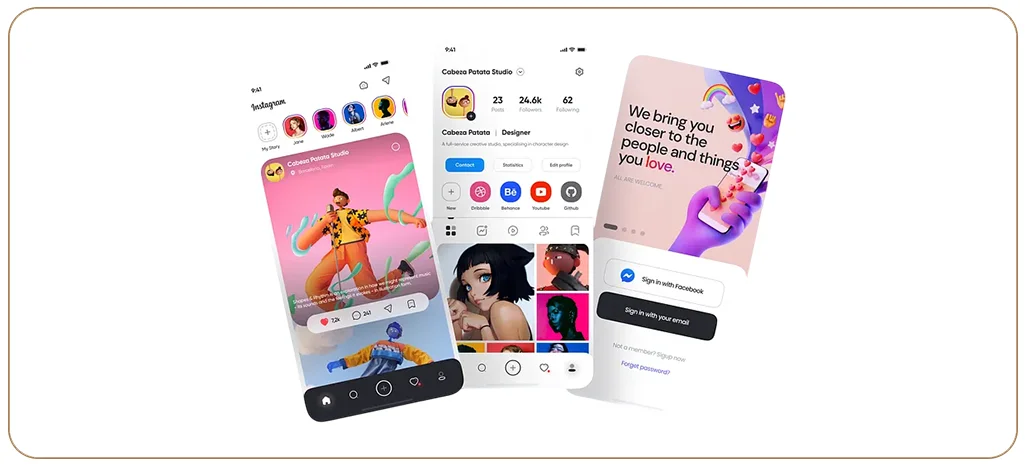
Fake followers can make an Instagram profile appear more influential than its actual audience engagement justifies. These accounts may be automated, inactive, purchased, or created to inflate popularity metrics. When businesses evaluate influencers using follower counts alone, they risk investing marketing budgets in partnerships that generate limited genuine audience interaction.
Meta has publicly acknowledged the problem. In October 2020, the company announced legal action against four individuals accused of providing fake engagement services through automated networks that artificially increased Instagram likes and followers. Meta also described its use of machine learning to identify inauthentic activity.
Businesses can improve their evaluation process by examining several indicators:
- Unusual follower growth: Sudden increases without corresponding content reach or engagement deserve investigation.
- Low interaction consistency: A large audience combined with consistently weak interactions may indicate an audience-quality issue.
- Repetitive comments: Generic, duplicated, or irrelevant comments can indicate artificial engagement.
- Audience irregularities: Unusual patterns in publicly observable account activity can justify additional verification.
- Suspicious engagement timing: Large bursts of interactions immediately after publication may require closer analysis.
Research published in Computers in Human Behavior Reports in December 2023 examined 1,860 public Instagram profiles and investigated relationships between account metrics. The researchers also reported 94% classification accuracy when evaluating a subset of 100 verified pages using their proposed approach. This is a study-specific result, not a guarantee that any commercial monitoring system can achieve the same accuracy.
Historical evidence and research developments, 2020–2026
| Year | Verified evidence | Business relevance |
|---|---|---|
| 2020 | Meta announced legal action involving four individuals accused of selling fake Instagram engagement. | Demonstrated the commercial and platform-integrity risks of artificial engagement. |
| 2021 | Pew Research Center reported that 40% of US adults used Instagram. | Established the platform's relevance to consumer-facing businesses. |
| 2022–2023 | Research published in 2023 examined 1,860 public profiles and reported 94% accuracy on a 100-page verified subset. | Demonstrated the potential of account-metric analysis for detecting suspicious profiles. |
| 2024 | Research published in Algorithms investigated machine-learning approaches to Instagram fake-account detection. | Expanded research into automated account classification. |
| 2025 | No directly comparable annual Instagram fake-follower prevalence benchmark is established by the sources cited here. | Businesses should use their own historical baselines rather than assume a universal fraud rate. |
| 2026 | Meta's Content Library documentation describes account discovery for eligible research environments. | Demonstrates the importance of authorized access and defined data availability. |
Sources:
The key business lesson is that follower numbers should never be treated as standalone proof of influence. Companies should combine account history, interaction quality, content relevance, and campaign outcomes before approving influencer partnerships.
How Can Businesses Identify Sudden Engagement Drops?
An engagement drop occurs when an Instagram account receives fewer meaningful interactions than its historical performance would suggest. It can affect influencer campaigns, product promotions, brand awareness, and customer acquisition activities. However, a decline does not automatically indicate fake followers or fraudulent activity. Changes in content formats, posting frequency, audience interests, distribution, and campaign timing can also influence engagement.
Businesses should establish historical performance baselines and compare accounts across consistent reporting periods. Important metrics include:
- Follower growth rate: Measures the percentage change in followers over a selected period.
- Engagement rate: Compares interactions with an appropriate audience or reach denominator.
- Comments per post: Helps evaluate whether audiences are participating in conversations.
- Likes and shares: Provide additional indicators of content interaction.
- Posting frequency: Helps explain whether reduced publishing activity contributes to declining interactions.
- Reach and impressions: Help distinguish lower distribution from weaker audience response.
Meta's Insights APIs provide performance metrics for Instagram professional accounts and individual media objects. These include account-level and content-level insights, subject to applicable permissions and access requirements.
Businesses that Extract Twitter analytics data alongside Instagram performance information can also develop cross-platform reporting systems. However, Instagram and X use different data structures, metrics, and access permissions. Their engagement figures should not be treated as directly interchangeable.
For example, a marketing team can compare weekly Instagram engagement against its previous eight-week average. If interactions fall while publishing frequency remains stable, the team can investigate content performance, audience changes, and distribution patterns.
Real-Time Instagram Profile Monitoring makes this analysis more consistent by organizing account observations into repeatable monitoring cycles. Instead of discovering performance problems during monthly reporting, marketing teams can establish alerts for significant deviations from their own historical baselines.
Recommended engagement monitoring framework
| Metric | What to examine | Business purpose |
|---|---|---|
| Follower growth | Daily and weekly changes | Identify unusual audience movements |
| Likes | Average interactions per post | Evaluate content response |
| Comments | Volume and relevance | Understand audience participation |
| Engagement rate | Interactions relative to reach or followers | Compare performance consistently |
| Posting frequency | Posts published per period | Identify publishing changes |
| Reach | Unique accounts reached | Understand content distribution |
The most useful approach is to evaluate several metrics together. A follower increase accompanied by stable reach and declining interactions deserves investigation, but it should not automatically be classified as fraudulent.
How Can Cross-Platform Social Listening Improve Brand Protection?
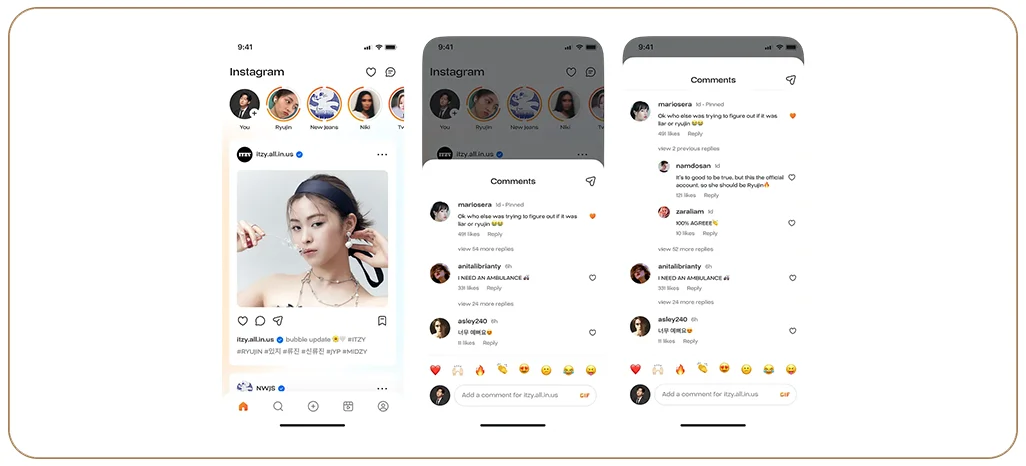
Businesses frequently operate across Instagram, X, YouTube, and other social networks. Monitoring these platforms separately can create fragmented reporting and make it difficult to identify emerging conversations about products, services, and competitors.
Cross-platform social listening helps companies organize relevant public conversations and evaluate how customers respond to brand activities.
For example, an increase in negative Instagram comments may coincide with discussions about the same product on X. Reviewing both sources can help customer support teams understand whether the issue is isolated or part of a broader customer concern.
The Twitter search results API offers a documented way to search X posts using keywords, hashtags, mentions, URLs, and other query operators. X documentation distinguishes recent search, which covers the previous seven days, from full-archive search, which has different access requirements.
Businesses can use cross-platform monitoring to:
- Identify brand mentions and relevant product conversations.
- Track customer complaints and recurring service issues.
- Monitor competitor announcements and campaign discussions.
- Discover emerging hashtags and industry topics.
- Compare audience responses to marketing initiatives.
- Identify potentially misleading posts requiring human review.
However, companies must distinguish between public social listening and private account analytics. A public post does not provide access to private messages, restricted profiles, or confidential account information.
What should businesses monitor across platforms?
| Monitoring area | X | |
|---|---|---|
| Brand mentions | Public mentions and accessible tags | Searchable posts and mentions |
| Engagement | Available likes, comments, and other insights | Available likes, replies, reposts, and quotes |
| Content trends | Reels, posts, hashtags | Posts, hashtags, topics |
| Reputation signals | Public comments and account activity | Public conversations and discussions |
| Historical analysis | Authorized historical datasets | Search access according to API tier |
Build a stronger social listening strategy with structured social media data from Real Data API. Explore how consistent monitoring can help your business identify reputation risks and emerging audience trends!
Get Insights Now!How Does Automated Monitoring Help Prevent Reputation Damage?
Brand reputation can change quickly when misleading information, negative customer experiences, or suspicious influencer activity becomes visible online. Businesses that rely entirely on manual profile checks may discover these problems after they have already attracted significant attention.
An automated monitoring framework helps marketing and reputation management teams organize public account activity and identify unusual developments.
Real-time social media data scraping can support the collection of publicly accessible information at defined intervals, subject to platform permissions, technical restrictions, and applicable terms.
A practical monitoring framework should include the following components:
- 1. Profile Activity Tracking
Monitor observable changes in follower counts, profile descriptions, usernames, posting frequency, and other available account attributes. Maintain historical records so that analysts can identify meaningful changes instead of relying on isolated observations.
- 2. Engagement Anomaly Detection
Compare current engagement with historical account performance. Establish thresholds based on account size, content format, and previous activity. This helps identify unusual interaction patterns that deserve investigation.
- 3. Brand Mention Monitoring
Track relevant brand names, product references, hashtags, and publicly accessible conversations. Categorize mentions by topic and sentiment, while recognizing that automated sentiment classification can misinterpret sarcasm, slang, and context.
- 4. Reputation Risk Alerts
Create notifications for significant negative changes, unusual follower movements, repeated complaints, or potentially misleading content. Human reviewers should verify alerts before escalation.
- 5. Historical Performance Analysis
Store time-stamped observations to understand how account activity changes across campaigns and reporting periods.
The importance of a monitoring framework is also supported by the Federal Trade Commission's guidance on influencer marketing. The FTC explains that advertisers should establish reasonable programs to monitor their marketing networks, periodically review influencer statements, and address questionable practices.
Reputation monitoring workflow
| Stage | Activity | Expected business benefit |
|---|---|---|
| Collection | Gather permitted public profile information | Consistent visibility |
| Validation | Check missing and inconsistent records | Better data quality |
| Comparison | Evaluate changes against historical baselines | Earlier anomaly identification |
| Classification | Categorize potential reputation concerns | Organized risk assessment |
| Review | Verify findings manually | Fewer false alarms |
| Response | Escalate verified concerns | Better reputation management |
Real-Time Instagram Profile Monitoring is most effective when automated data collection is combined with human judgment, documented response procedures, and clear escalation responsibilities.
What Should Businesses Evaluate When Selecting an Instagram Monitoring Solution?
Choosing a suitable monitoring solution requires more than checking whether it can collect follower counts. Businesses should evaluate data coverage, collection frequency, historical availability, accuracy, integration options, and compliance requirements.
An Instagram Profile Scraper can help organize publicly accessible profile information into structured records. Depending on authorized access and source availability, relevant fields may include:
- Username and profile URL.
- Publicly visible follower and following counts.
- Post counts and publishing activity.
- Public profile descriptions.
- Accessible post captions and timestamps.
- Available likes and comment counts.
- Hashtags and public mentions.
- Changes in observable profile information.
However, public profile information should not be confused with private Instagram Insights. Detailed reach, impressions, audience demographics, and certain performance metrics generally require authorized professional-account access.
Meta's official documentation explains that Instagram Insights APIs provide account-level and media-level performance information. Access depends on the relevant permissions, account configuration, and application approval requirements.
Important evaluation criteria
| Selection factor | Questions to ask |
|---|---|
| Data coverage | Which profile and content fields are available? |
| Update frequency | How frequently can information be refreshed? |
| Historical records | Can previous observations be stored and compared? |
| Data accuracy | Are missing values and duplicates identified? |
| API integration | Can records be delivered into existing systems? |
| Scalability | Can multiple accounts be monitored? |
| Compliance | Does collection follow applicable platform terms and privacy requirements? |
Businesses should also avoid assuming that every monitoring provider can access identical Instagram information. Platform permissions and technical restrictions determine which data can be collected.
A useful implementation strategy is to begin with a limited group of relevant business or creator accounts, define the required fields, establish baseline metrics, and validate data quality before expanding monitoring coverage.
This approach helps organizations control implementation costs while building a dependable foundation for social media intelligence.
How Can API Integration Make Social Media Monitoring More Scalable?
As businesses expand their influencer partnerships and social media campaigns, collecting account information manually becomes increasingly difficult. An API-based monitoring framework can help organizations retrieve, organize, and transfer permitted data into business intelligence platforms, CRM systems, and marketing dashboards.
An Instagram API Scraper workflow should be designed around available official interfaces, approved permissions, and accessible public information rather than assuming unrestricted access to Instagram accounts.
Meta provides several API-based capabilities for professional account and content insights. Its documentation identifies endpoints for Instagram account insights and individual media insights. These capabilities allow eligible applications to retrieve supported performance information from authorized accounts.
Which data fields should an integrated monitoring system capture?
| Data category | Relevant information | Application |
|---|---|---|
| Profile information | Username, biography, profile URL | Account identification |
| Audience metrics | Available follower counts | Growth analysis |
| Content metrics | Likes, comments, timestamps | Engagement evaluation |
| Publishing activity | Post frequency and content formats | Content strategy analysis |
| Hashtag information | Publicly accessible hashtags | Topic discovery |
| Account changes | Observable profile updates | Anomaly investigation |
| Performance insights | Authorized reach and impressions | Campaign evaluation |
How does an integrated workflow operate?
Step 1: Define monitoring requirements
Identify the accounts, business objectives, data fields, and collection frequency required by the marketing team.
Step 2: Connect authorized data sources
Use applicable official APIs and permitted public-data collection methods. Configure authentication and permissions according to platform requirements.
Step 3: Standardize collected information
Normalize usernames, timestamps, engagement metrics, and account identifiers to support consistent comparisons.
Step 4: Maintain historical records
Store time-stamped observations to identify changes in account performance, follower movements, and content engagement.
Step 5: Generate automated reports
Connect the collected information to dashboards and reporting systems so marketing teams can evaluate performance without repeatedly collecting information manually.
For organizations managing multiple brands, agencies, and influencer partnerships, Real-Time Instagram Profile Monitoring provides a structured approach to account evaluation and reputation management.
The main advantage of API integration is operational consistency. It helps businesses establish repeatable data workflows, compare account performance, and organize social media intelligence within their existing technology infrastructure.
Why Choose Real Data API?
Businesses need reliable social media information to make informed marketing decisions, evaluate influencers, and understand competitor activities. Real Data API can support these requirements through structured data access and scalable data collection solutions.
- 1. Structured Social Media Intelligence
Organized datasets make it easier to evaluate profile information, engagement activity, and content performance. An Instagram Social Media Dataset can support competitor research, influencer evaluation, campaign analysis, and market intelligence workflows.
- 2. Flexible Data Collection
Different businesses require different social media attributes. Marketing agencies may prioritize engagement information, while brand protection teams may focus on public mentions, profile changes, and suspicious activity.
Customized collection requirements help businesses concentrate on relevant information rather than managing unnecessary fields.
- 3. Historical Data Analysis
Maintaining historical observations helps businesses understand how social media accounts evolve over time. Teams can compare follower growth, engagement patterns, and content activity across defined reporting periods.
- 4. Business-Focused Integration
Structured data can support integration with analytical environments, reporting dashboards, and internal business systems. This helps marketing teams organize information and improve reporting efficiency.
- 5. Scalable Monitoring Workflows
Businesses can establish monitoring processes around their specific account coverage, update requirements, and analytical objectives. Appropriate validation and quality checks help maintain consistency as monitoring operations expand.
With Real Data API, businesses can explore data-driven approaches to social media intelligence, competitive research, and influencer performance evaluation.
Conclusion
Fake followers, unusual engagement patterns, and sudden audience changes can create significant challenges for businesses investing in social media marketing. Monitoring account activity consistently helps organizations identify suspicious patterns, evaluate influencer credibility, and understand changing audience behavior.
By combining historical analysis, structured data collection, automated alerts, and human verification, companies can make more informed marketing decisions. Real-Time Instagram Profile Monitoring provides a foundation for identifying potential reputation risks and improving influencer evaluation processes.
Businesses looking to strengthen their social media intelligence can explore Real Data API for scalable data collection solutions, structured datasets, and integration-ready information.
Ready to improve your social media monitoring strategy? Contact Real Data API today to explore customized data solutions that help protect brand reputation and support smarter marketing decisions!
FAQs
1. What is Real-Time Instagram Profile Monitoring?
It involves tracking publicly accessible Instagram account changes, follower movements, and engagement patterns to identify suspicious activity and evaluate account performance consistently.
2. Can Instagram Social Media Data Scraping identify fake followers?
It can collect account indicators for further analysis. However, identifying fake followers requires multiple signals, historical comparisons, and appropriate verification rather than follower counts alone.
3. How does Twitter engagement data scraping support businesses?
It collects available public engagement information, helping businesses analyze audience interactions, monitor brand conversations, and evaluate social media campaign performance.
4. Why do businesses Extract Twitter analytics data?
Businesses collect available X performance metrics to evaluate content interactions, identify audience trends, compare campaigns, and improve social media marketing strategies.
5. What is the purpose of a Twitter search results API?
It allows authorized applications to retrieve matching public posts using search queries, keywords, hashtags, and other supported filters for social listening and research.
Latest posts
BookMyShow Live Events Intelligence - How to Identify High-Demand Events and Optimize Ticket Sales Before Competitors

Car Rental Price Scraping for Australia: Booking.com Cars, DiscoverCars and CarJet at Eight Airports
Amazon.ae Multi-SKU Price Tracking for the UAE Market
Mercado Livre Brazil Data Scraping: Daily Hair Dryer Data and How to Handle Rounded sold_quantity Values


.png)


