.gif)
.gif)

Quick Summary
- Real-time marketplace monitoring helps retailers identify product demand shifts, competitor pricing changes, stock availability, and emerging sales opportunities.
- Structured product intelligence enables businesses to compare sellers, evaluate category performance, and respond faster to changing customer preferences.
- Continuous monitoring of marketplace listings supports better assortment planning, competitive positioning, and data-driven retail decisions.
Introduction
The Ukrainian e-commerce market is creating new opportunities for retailers, but changing product demand, competitive pricing, and seller activity make marketplace decisions increasingly complex. Prom.ua Market Trends in 2026 highlight the importance of tracking product categories, pricing movements, inventory availability, and customer preferences. Real-time product intelligence helps retailers understand these changes and respond with more informed commercial strategies.
A reliable Prom.ua Scraper can collect publicly accessible product information, including product names, descriptions, listed prices, seller details, ratings, availability indicators, and category information. When this information is collected at regular intervals, retailers can compare marketplace activity, identify pricing differences, monitor assortment changes, and evaluate competitors.
For retailers, distributors, manufacturers, and e-commerce businesses, the objective is not simply to collect large amounts of marketplace information. It is to transform frequently changing product listings into structured, usable intelligence. This makes it easier to recognize market opportunities, improve pricing decisions, and maintain relevant product assortments.
How Does Marketplace Product Visibility Help Retailers Understand Demand?
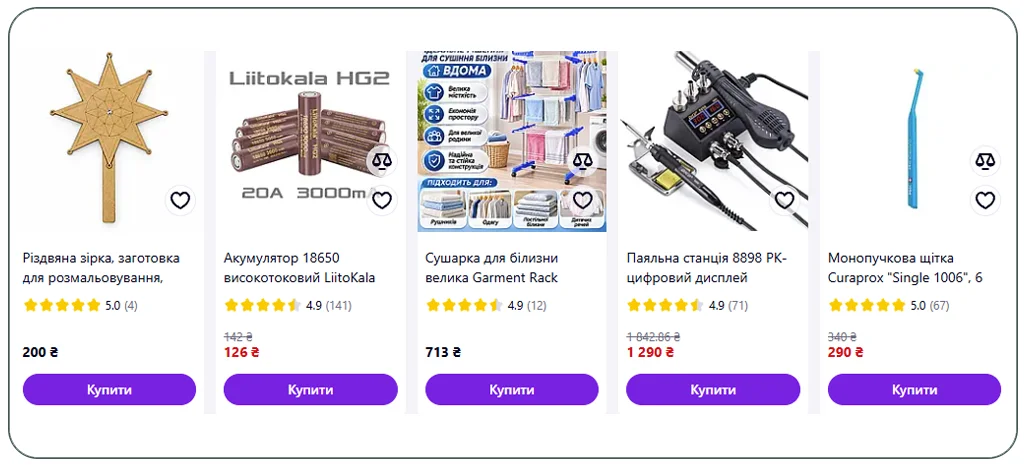
Understanding product visibility is an important starting point for evaluating marketplace competition. Retailers need to know which products are appearing across categories, how frequently sellers update listings, and where competing businesses are expanding their assortments. These insights help businesses distinguish between established product segments and emerging opportunities.
Prom.ua website product scraping enables retailers to collect publicly available listing information across relevant product categories. Useful fields include product titles, descriptions, prices, images, brand names, seller information, product URLs, and availability indicators. Collecting these fields in a consistent format makes it easier to compare similar products and identify assortment gaps.
For example, an electronics retailer can compare product specifications and listed prices across multiple sellers. A home improvement supplier can monitor changes in tool and construction-material listings. These comparisons help purchasing teams evaluate their product portfolios and identify areas requiring further market research.
What does the available market evidence reveal?
Prom's official marketplace information provides useful indicators of its commercial scale and category activity. Its current published figures include more than 120 million products and approximately 60,000 entrepreneurs. The marketplace identifies electronics, home and garden, automotive and motorcycle products, clothing and footwear, and beauty and health among its leading categories by orders.
The following table separates published market evidence from information that requires independent historical collection.
| Year | Verified market evidence | Retail interpretation |
|---|---|---|
| 2020 | No comparable Prom category dataset cited | Historical baseline requires archived records |
| 2021 | No comparable Prom category dataset cited | Track category and listing changes |
| 2022 | No comparable Prom category dataset cited | Evaluate changes in seller assortments |
| 2023 | No comparable Prom category dataset cited | Compare historical product positioning |
| 2024 | Ukraine's B2C e-commerce turnover reached approximately €5.3 billion | Stronger demand for online retail intelligence |
| 2025 | Kantar research cited by Prom identified its competitive price perception | Monitor price positioning and promotions |
| 2026 | Prom reports over 120 million products and 60,000 entrepreneurs | Analyze assortment breadth and competition |
Sources: European E-commerce Report: Ukraine; Prom official marketplace information. Missing historical figures are intentionally not estimated.
Retailers should combine listing visibility with historical price observations, category-level changes, and seller activity. A product appearing frequently does not automatically indicate strong sales demand. However, repeated listing changes, growing assortment coverage, and competitive price movements can provide useful signals for further investigation.
Why Is Consistent Competitor Monitoring Important for Pricing Decisions?
Pricing competition is one of the most important challenges for online retailers. Multiple sellers may offer similar products with different prices, delivery conditions, descriptions, and promotional offers. Without regular monitoring, businesses can overlook competitor adjustments and make decisions using outdated information.
A Prom.ua e-commerce web scraper helps retailers collect comparable product information across competing listings. Businesses can organize the collected information by product category, brand, model, seller, and price. This creates a structured foundation for evaluating marketplace positioning.
For example, a retailer selling household appliances can compare the listed prices of similar models across different sellers. The comparison becomes more meaningful when product specifications, package contents, and availability are checked alongside prices.
Which pricing indicators should retailers monitor?
| Indicator | Data to collect | Business application |
|---|---|---|
| Listed price | Current product price | Competitor price comparison |
| Previous price | Displayed original price, when available | Promotion evaluation |
| Discount | Advertised discount information | Promotional benchmarking |
| Seller count | Number of comparable listings | Competition assessment |
| Product availability | Displayed stock status | Assortment monitoring |
| Product specifications | Model, size, features | Like-for-like comparisons |
| Delivery information | Published delivery terms | Total offer comparison |
A useful pricing dataset should distinguish between genuinely comparable products and products that only appear similar. For instance, two smartphones with different storage capacities should not be treated as identical competitors. Similarly, different warranty terms or product bundles can affect the value of an offer.
Retailers should also account for price changes caused by seasonal campaigns, inventory clearance, and supplier adjustments. Monitoring prices at consistent intervals makes it easier to distinguish temporary promotions from longer-term pricing movements.
The practical objective is to create a repeatable competitor-monitoring process. Pricing teams can review significant changes, investigate unusual discounts, and determine whether their own prices remain competitive without automatically matching every competitor.
How Can Seller Intelligence Improve Retail Competition Analysis?
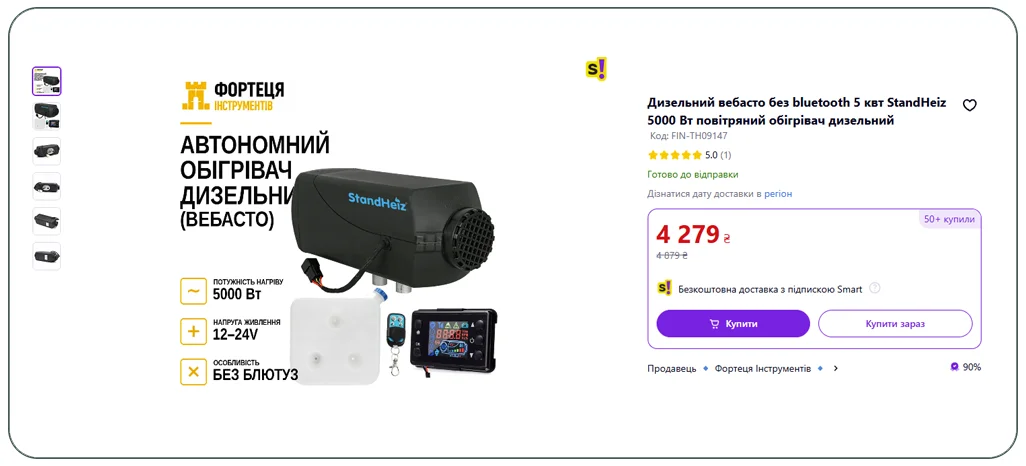
Marketplace competition involves more than comparing product prices. Retailers also need to understand who is selling similar products, how competitors organize their assortments, and which businesses are expanding into relevant categories.
Prom.ua seller information collection services help organize publicly available seller-level information for competitive research. Depending on what is publicly displayed and accessible, useful fields may include seller names, storefront URLs, listed products, product categories, ratings, review counts, and published business information.
This information allows retailers to develop a clearer picture of marketplace participation.
What seller-level information matters most?
- Seller identification: Distinguishing individual stores and their marketplace storefronts.
- Assortment coverage: Understanding which brands and product categories each seller offers.
- Price positioning: Comparing seller prices for equivalent products.
- Reputation indicators: Reviewing publicly displayed ratings and customer feedback.
- Listing activity: Observing new products, removed listings, and changes to existing offers.
- Competitive specialization: Identifying sellers concentrating on particular product segments.
Prom provides seller ratings and customer reviews as part of its shopping experience. These indicators help buyers assess sellers before making purchases and can also support competitor research when analyzed responsibly.
For example, a beauty products distributor can examine the publicly listed assortments of competing sellers and identify brands that appear across multiple storefronts. An automotive retailer can compare the product coverage of specialized stores against broader marketplace sellers.
Historical seller monitoring is particularly useful. A seller adding new brands or expanding into adjacent categories may indicate a change in competitive positioning. However, listing growth alone should not be interpreted as proof of increased sales.
Want to understand your marketplace competitors more clearly? Explore structured product and seller intelligence with Real Data API!
Get Insights Now!How Does Bulk Product Collection Support Large-Scale Retail Analysis?
Retailers managing extensive product catalogs often struggle to compare marketplace listings manually. Product information can be distributed across numerous categories, storefronts, and individual product pages. Manual collection makes it difficult to maintain consistent records and identify changes across a large assortment.
The ability to Scrape bulk product data helps businesses collect product information across multiple relevant listings and organize it into structured datasets. Instead of reviewing each listing individually, retailers can analyze larger product groups using standardized fields.
Which product attributes should be included?
| Data field | Purpose | Retail application |
|---|---|---|
| Product ID or URL | Listing identification | Record matching |
| Product title | Product identification | Catalog comparison |
| Brand and model | Product classification | Brand analysis |
| Category | Product grouping | Category research |
| Current price | Price benchmarking | Pricing decisions |
| Original price | Promotion comparison | Discount analysis |
| Product description | Specification analysis | Catalog enrichment |
| Images | Visual product identification | Duplicate detection |
| Seller details | Store identification | Competitor research |
| Availability | Listing status | Inventory intelligence |
| Ratings and reviews | Reputation indicators | Customer feedback analysis |
Bulk collection is particularly useful for distributors and retailers managing thousands of SKUs. It allows teams to compare product specifications, identify duplicate listings, and detect missing catalog attributes.
Another important application is product matching. Marketplace sellers may use different titles, abbreviations, and descriptions for the same product. A reliable matching process should therefore consider brand, model number, specifications, and other identifying attributes rather than relying exclusively on product names.
Retailers can also organize collected information by category, seller, and collection date. This creates a historical record that supports price comparisons and assortment reviews.
How should businesses manage large datasets?
A practical workflow includes:
- Identify the relevant marketplace categories and publicly accessible listings.
- Define the product attributes required for analysis.
- Collect information at scheduled intervals.
- Standardize currencies, product names, and category labels.
- Remove duplicates and validate incomplete records.
- Compare new observations with previously collected information.
- Export the results into business intelligence systems.
Bulk collection should follow applicable website terms, access restrictions, privacy requirements, and responsible data-use practices. Collection frequency should also be proportionate to business requirements.
Why Are Structured Product Datasets Important for Retail Intelligence?
Raw marketplace information becomes more useful when businesses can organize it into consistent and searchable records. Product listings often contain differences in naming conventions, specifications, descriptions, and seller formatting. Without standardization, retailers may struggle to compare products accurately.
E-Commerce Datasets provide a structured foundation for analyzing product information collected from marketplace listings. Retailers can use these datasets to evaluate product assortment, compare competing offers, monitor pricing, and identify changes in category coverage.
How can structured information improve business decisions?
- 1. Product catalog optimization
Retailers can compare their internal product catalogs with marketplace listings to identify missing attributes, outdated descriptions, and product identification inconsistencies. This helps catalog teams prioritize enrichment activities.
- 2. Competitive pricing analysis
Standardized price fields allow businesses to compare equivalent products across different sellers. Historical observations can also help pricing teams investigate discount patterns and identify significant price movements.
- 3. Category performance research
Product records organized by category make it easier to understand assortment concentration. Retailers can investigate which brands and product types have extensive marketplace representation and where their own catalogs may have gaps.
- 4. Seller comparison
Structured seller information supports the comparison of competing storefronts, their product coverage, and publicly visible reputation indicators.
- 5. Business intelligence integration
Clean datasets can be incorporated into spreadsheets, dashboards, databases, and internal reporting systems. This reduces the need for repeated manual formatting.
What does Ukraine's wider e-commerce market indicate?
The European E-commerce Report estimates that Ukraine's B2C online turnover reached approximately €5.3 billion in 2024, representing 25% year-on-year growth. The report placed Ukraine eighteenth among the 35 European markets covered.
The US International Trade Administration also reports that Ukraine's e-commerce market reached nearly $6 billion in spending in 2024, citing Ukrainian industry reporting. These figures use different reporting sources and methodologies and should not be combined into a single market estimate.
| Year | Market indicator | Source |
|---|---|---|
| 2020 | Comparable figure not established here | — |
| 2021 | Comparable figure not established here | — |
| 2022 | Comparable figure not established here | — |
| 2023 | Baseline year for the reported 2024 growth comparison | European report |
| 2024 | Approximately €5.3 billion; 25% annual growth | European E-commerce Report |
| 2025 | Prom cites Kantar research on consumer price perception | Prom |
| 2026 | Prom reports over 120 million products and 60,000 entrepreneurs | Prom |
Sources: European E-commerce Report; Prom marketplace information; International Trade Administration. These are separate indicators, not a continuous annual growth series.
For retailers, the takeaway is that marketplace datasets should be designed for ongoing analysis rather than one-time reporting. Historical records help explain how prices, listings, and seller assortments change over time.
How Can Continuous Marketplace Monitoring Improve Product Decisions?
A one-time marketplace data collection exercise provides only a snapshot. Retail conditions change as sellers adjust prices, update descriptions, introduce new products, and modify availability. Businesses that rely on outdated records may overlook important competitive developments.
Prom.ua Product Data Scraping supports ongoing marketplace observation by collecting relevant product attributes at defined intervals. When new records are compared with historical observations, retailers can identify changes and investigate their commercial significance.
Which marketplace changes deserve attention?
| Marketplace change | What retailers can investigate | Potential business response |
|---|---|---|
| Price increase | Changes in competitor positioning | Review pricing strategy |
| Price decrease | Promotional or clearance activity | Reassess price competitiveness |
| New product listing | Emerging assortment opportunities | Evaluate catalog expansion |
| Removed listing | Possible assortment or availability change | Investigate alternative products |
| New seller | Additional competitive presence | Review seller positioning |
| Description update | Specification or offer changes | Update product records |
| Availability change | Potential supply or stock movement | Review replenishment requirements |
The value of continuous monitoring depends on how businesses interpret these changes. A lower listed price, for example, does not automatically mean a competitor has a lower total offer. Delivery charges, product specifications, warranty conditions, and seller reliability may also affect the comparison.
Retailers should establish monitoring schedules based on product volatility. Frequently changing categories may require more frequent observations, while stable product groups can be reviewed less often.
A practical monitoring framework should include:
- Defined product and category coverage.
- Consistent collection intervals.
- Historical price and listing records.
- Product matching and duplicate management.
- Data validation and quality checks.
- Alerts for significant changes.
- Reporting dashboards for purchasing and pricing teams.
Businesses should also distinguish between a product disappearing from collected results and confirmed stock depletion. A listing may become inaccessible, change its URL, or be temporarily unavailable. Verification is necessary before treating every missing record as a stockout.
The strongest approach combines structured marketplace information with internal sales, inventory, and purchasing records. This allows retailers to evaluate external competition alongside their own business performance.
Why Choose Real Data API?
Retailers need marketplace information that is accurate, consistent, and useful for commercial decision-making. Real Data API supports businesses seeking structured product intelligence to evaluate online marketplaces, understand competitive activity, and improve product research workflows.
Key advantages include:
- Structured data collection: Organize relevant product attributes into consistent records for analysis.
- Competitor monitoring: Compare publicly available product listings, prices, and seller information.
- Catalog intelligence: Identify missing product attributes, duplicate records, and assortment differences.
- Scalable research workflows: Support broader product research across selected categories and listings.
- Historical comparisons: Maintain dated observations to evaluate changes in marketplace activity.
- Business-ready outputs: Prepare collected information for reporting, analysis, and integration into internal workflows.
How does market research become more actionable?
Market Research becomes more valuable when businesses can connect marketplace observations with practical commercial questions.
For example, purchasing teams can investigate whether a product category has sufficient competitive coverage before expanding their assortment. Pricing teams can compare equivalent product offers before reviewing their pricing strategies. Product managers can identify missing catalog attributes and prioritize product information improvements.
Real Data API helps businesses build a more organized approach to marketplace intelligence, turning publicly available product information into structured inputs for research and planning.
The objective is to help retailers make better-informed decisions through consistent data collection, validation, and analysis rather than relying on occasional manual marketplace checks.
Conclusion
The Ukrainian e-commerce environment offers significant opportunities for retailers, but succeeding in a competitive marketplace requires an understanding of changing product assortments, seller activity, pricing, and availability.
Prom.ua Market Trends in 2026 demonstrate why marketplace intelligence matters for businesses seeking to improve competitive positioning and make informed product decisions. Regular monitoring helps retailers identify listing changes, compare competing offers, evaluate category coverage, and maintain more relevant product catalogs.
A structured data strategy also creates opportunities to connect marketplace observations with internal sales, purchasing, and inventory information. This gives decision-makers a stronger foundation for evaluating market conditions and planning future activities.
Ready to improve your marketplace research and competitive intelligence? Contact Real Data API to explore structured product data collection solutions and build a smarter retail monitoring strategy!
FAQs
1. How can retailers understand marketplace demand in 2026?
Retailers can monitor Prom.ua Market Trends in 2026 by evaluating product listings, category coverage, pricing movements, seller activity, and publicly available customer feedback regularly.
2. What information can marketplace extraction provide?
A Prom.ua Scraper can collect publicly accessible product titles, descriptions, prices, seller details, categories, ratings, availability indicators, and listing URLs for structured analysis.
3. Why should retailers monitor product listings regularly?
Prom.ua website product scraping helps retailers identify listing changes, compare competing products, monitor price movements, and maintain updated product information for informed commercial decisions.
4. Can marketplace data help businesses evaluate competitors?
Yes. A Prom.ua e-commerce web scraper supports competitor research by organizing product offers, seller information, pricing differences, and category coverage into comparable records.
5. How can businesses organize marketplace seller information?
Prom.ua seller information collection services help organize publicly available seller details, storefront information, product assortments, and reputation indicators. Real Data API supports structured marketplace research workflows.
Latest posts
Amazon.ae Multi-SKU Price Tracking for the UAE Market
Mercado Livre Brazil Data Scraping: Daily Hair Dryer Data and How to Handle Rounded sold_quantity Values

Real Estate Data Scraping Across the Middle East and Turkey: A Managed Service for 26 Portals and 22 Million Records a Month
How Real-Time Product Data Scraping Helps Retailers Track Prom.ua Market Trends in 2026?




.png)


