.gif)
.gif)

Quick Summary
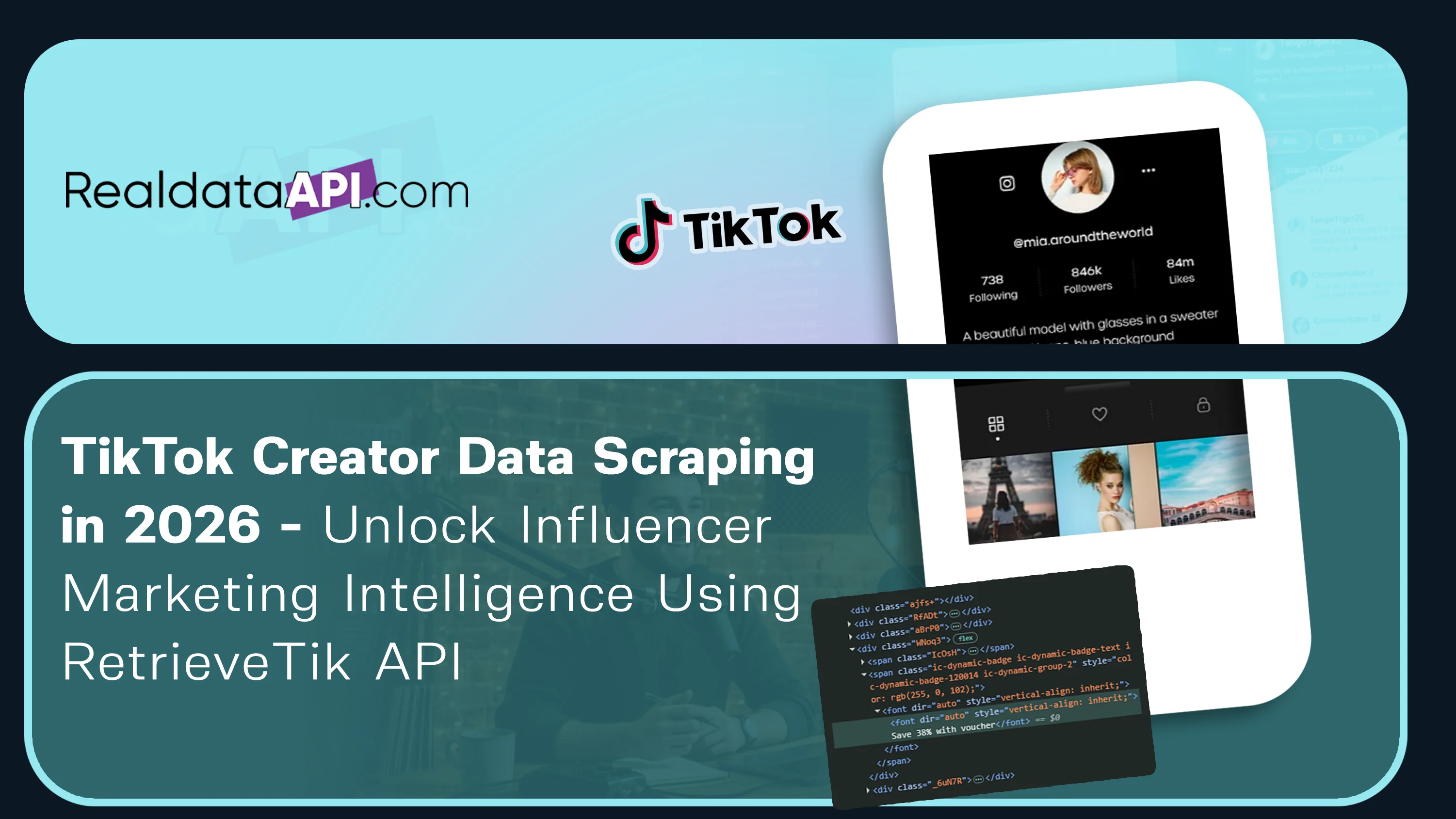
- TikTok Creator Data Scraping in 2026 can help brands organize creator and content information to support influencer discovery, campaign planning, and performance analysis.
- Creator-level metrics such as video views, likes, comments, and shares can provide useful engagement signals when collected through an authorized TikTok Data Scraper workflow.
- Structured datasets and API-based workflows help marketing teams compare creators more consistently while respecting platform rules and privacy requirements.
Introduction
Brands need reliable creator information to identify relevant influencers, compare content performance, and make better partnership decisions. TikTok Creator Data Scraping in 2026 focuses on organizing creator profiles, public video information, and engagement signals into structured datasets that marketing teams can analyze. Instead of judging creators only by follower counts, brands can examine content consistency, audience relevance, video interactions, and historical performance.
A TikTok Data Scraper is a tool or workflow that collects and structures TikTok information through an authorized access method. The resulting information can support influencer discovery, campaign research, creator benchmarking, and social media trend analysis. However, publicly visible information is not automatically free to collect through automated methods. TikTok's Developer Terms govern authorized API use, and its platform terms restrict certain automated extraction activities unless approved. Businesses should verify permissions, applicable terms, and privacy obligations before collecting or processing creator information. (TikTok Developer Terms, TikTok Terms of Service).
How can creator profile information improve influencer discovery?
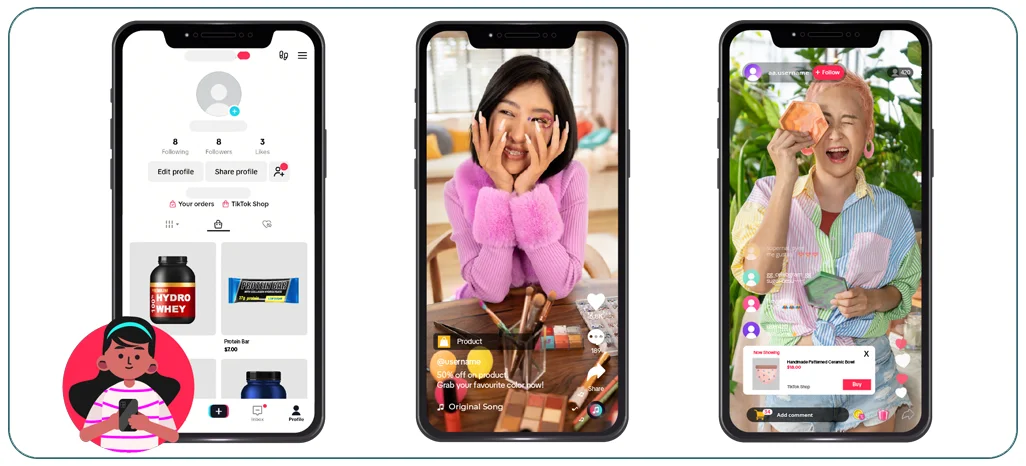
TikTok social media profile scraping describes the process of organizing relevant creator profile information for research, provided the data is obtained through an approved access method. A structured profile record can help brands understand whether a creator's public content aligns with a campaign's target category, geographic focus, and communication style.
TikTok's Research API documentation identifies public account fields such as display name, username, biography, verification status, follower count, following count, total likes, and video count. Access to Research Tools requires an application and approval, and the tools are intended for eligible non-profit academic and independent research—not unrestricted commercial influencer prospecting. (TikTok Research API, Research API Getting Started).
For commercial creator discovery, TikTok One provides a Creator Marketplace environment and associated API capabilities for approved business use. TikTok describes TikTok One as a platform connecting creators, advertisers, and brands. Its API supports creator discovery and collaboration workflows. (TikTok One API documentation).
TikTok Creator Data Scraping in 2026 should therefore be planned around the buyer's specific discovery requirements, rather than assuming every profile field can be collected from every account.
Which profile fields are useful?
| Profile attribute | How a brand can use it |
|---|---|
| Username or creator identifier | Identify and distinguish creator records |
| Display name | Support internal creator identification |
| Biography | Review creator positioning and stated interests |
| Follower count | Understand reported account audience size |
| Total likes | Provide a cumulative interaction signal |
| Video count | Understand the volume of published content |
| Verification status | Record the platform's visible verification indicator |
| Profile URL | Maintain a traceable creator reference |
Follower count should be treated as a discovery indicator, not proof of influence or audience quality. Brands should also assess content relevance, recent performance, audience fit, and the creator's suitability for the intended campaign.
How can RetrieveTik support an API-led creator research workflow?
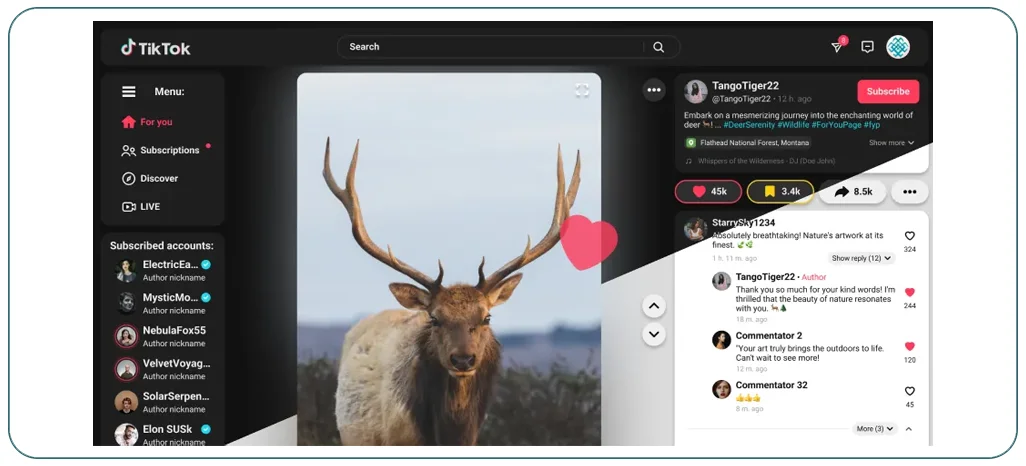
An API-led workflow can help marketing teams request, receive, and organize data in a consistent format. The phrase RetrieveTik API for TikTok creator describes the intended API-based use case in this article: retrieving permitted creator and content information for analysis.
One important distinction is necessary: TikTok's official documentation identifies TikTok One API and the Research API as separate products with different eligibility and use conditions. The public documentation reviewed for this article does not establish RetrieveTik as an official TikTok API or verify its specific endpoints, fields, service limits, or authorization model. Therefore, RetrieveTik should be treated as a named integration or product reference supplied for this article until its provider documentation confirms those details.
What should an API integration support?
A reliable creator-data integration should be evaluated against these requirements:
- Authorization: It should use a documented and permitted access method, with appropriate account or creator authorization where required.
- Field definitions: Every returned field should have a clear name, format, meaning, and source.
- Consistent identifiers: Creator and video identifiers should allow records to be matched without relying only on display names.
- Pagination and limits: The integration should document how large result sets are retrieved and what request limits apply.
- Timestamp handling: Data should include collection or update timestamps so users can distinguish current values from historical snapshots.
- Error handling: Failed requests, unavailable profiles, and incomplete responses should be recorded rather than silently discarded.
- Data retention: The workflow should define how long information is stored and when it must be refreshed or deleted.
TikTok's official Research API provides documented examples of querying public account information and video data. The commercial TikTok One API offers separate creator marketplace functionality. These official references are useful benchmarks when evaluating any third-party integration. (Research API guide, TikTok One API).
The practical objective is not simply to retrieve more records. It is to obtain permitted, consistent, traceable information that a marketing team can use confidently.
Which performance metrics help brands evaluate creators?
A creator's profile gives an initial view of their presence, but video-level performance helps marketers understand how audiences interact with individual posts. Real-time TikTok influencer analytics data is a useful description of the need for timely performance information, although actual update frequency depends on the authorized data source and its documented capabilities.
TikTok's Research API video documentation lists fields including video views, likes, comments, shares, creation time, description, username, hashtags, and video duration. The availability of these fields is subject to Research API eligibility and access conditions. (TikTok Research API – Query Videos).
Brands can use these metrics to compare creators, but they should avoid treating one viral post as a reliable measure of long-term performance. A campaign evaluation should consider multiple posts, content format, posting dates, and the campaign objective.
Common creator performance metrics
| Metric | What it indicates | How to interpret it |
|---|---|---|
| Video views | Recorded video viewing activity | Compare similar content and time periods |
| Likes | Positive interaction count | Review alongside views and comments |
| Comments | Audience response activity | Examine relevance and quality, not just volume |
| Shares | Content-sharing activity | Useful for understanding distribution signals |
| Followers | Account audience size | Use as context, not a standalone quality measure |
| Video frequency | Publishing activity | Review consistency over a defined period |
| Engagement rate | Interactions relative to a chosen base | Define the formula and denominator clearly |
An engagement rate can be calculated in different ways. For example, a view-based measure might be:
Engagement rate by views = Likes + Comments + Shares / Views x 100
This is a derived metric, not a universal TikTok-reported measure. Brands should document the formula and compare creators using the same method. A profile-based engagement formula using followers will produce a different result.
What do verified industry figures show?
The World Federation of Advertisers (WFA) reported that 61% of surveyed brands used TikTok for influencer marketing in 2025, compared with 10% in 2019. The WFA also reported that global creator partnership spending exceeded US$39 billion in 2025. These are industry-level findings, not measurements of individual creator performance. (WFA influencer marketing findings, WFA Annual Report 2025).
How should brands extract and validate creator statistics?
Extract TikTok influencer statistics should begin with a clear definition of what the marketing team wants to measure. A brand searching for beauty creators may need different information from a gaming company evaluating livestream personalities. Without a defined research scope, teams can collect large volumes of information that do not support actual campaign decisions.
A practical process starts by defining creator categories, markets, content formats, and the measurement period. The next step is selecting an approved data source and identifying which fields it can legitimately provide. TikTok's official documentation distinguishes between Research API access for eligible researchers and TikTok One's commercial creator marketplace capabilities. The two should not be treated as interchangeable. (Research Tools, TikTok One API).
A practical data validation process
- Creator identity: Match records using stable identifiers rather than display names alone.
- Profile completeness: Check whether required fields are present and correctly formatted.
- Video matching: Connect each video to its creator using the available creator identifier.
- Metric consistency: Confirm that views, likes, comments, and shares refer to the same video and observation period.
- Timestamp checks: Record when the data was retrieved and avoid presenting old metrics as current.
- Duplicate detection: Identify repeated profile or video records.
- Source documentation: Retain the source, authorization basis, and applicable data-use conditions.
Why does validation matter?
A creator's follower count can change, a video can continue accumulating views, and a profile can become unavailable. If a brand compares figures collected on different dates without recording those dates, its shortlist may be misleading. Similarly, a missing metric should not be converted into zero: unavailable data and a genuine zero value are different conditions.
Marketing teams should also separate platform-reported metrics from calculated indicators. Views and likes are source fields when returned by an authorized source. Engagement rates, creator rankings, and campaign suitability scores are derived measures. Recording the calculation method makes comparisons more transparent and repeatable.
Need a consistent way to organize creator performance information? Define your required fields and approved access method before building your influencer research dataset!
Get Insights Now!What does a useful creator intelligence dataset contain?
A structured TikTok Social Media Dataset should connect creator profiles with their relevant content and performance observations. It should also preserve the context required to interpret each record. A spreadsheet containing only usernames and follower counts may be useful for an initial list, but it is insufficient for detailed campaign analysis.
A more useful dataset separates profile-level information, video-level information, and observation history. Profile-level records describe the creator. Video-level records describe individual posts. Observation records capture when a metric was retrieved, allowing teams to understand changes over time without overwriting earlier values.
Recommended dataset structure
| Dataset layer | Suggested fields | Business purpose |
|---|---|---|
| Creator profile | Creator ID, username, display name, bio, verification status | Creator discovery and identification |
| Audience indicators | Follower count, following count, total likes | Initial account comparison |
| Video information | Video ID, description, creation date, duration | Content research |
| Video performance | Views, likes, comments, shares | Engagement analysis |
| Content classification | Category, topic, hashtags, language where available | Creator segmentation |
| Observation history | Retrieval timestamp, source, update date | Historical comparison and auditing |
| Campaign mapping | Campaign ID, creator ID, approved partnership status | Internal campaign organization |
TikTok's Research API codebook documents public account and video information available to qualifying researchers. Its listed fields include account identifiers and profile attributes as well as video views, likes, comments, shares, descriptions, and hashtags. Access and permitted use remain subject to the Research Tools eligibility requirements. (TikTok Research API Codebook).
What do 2020-2026 industry figures tell marketers?
The following figures provide verified context for the development of influencer marketing. They are drawn from different research releases and should not be interpreted as one continuous annual time series.
| Year | Reported finding | Source and context |
|---|---|---|
| 2020 | 29% of surveyed brands used extended influencer partnerships | WFA comparison reported in 2025 |
| 2021 | 59% of surveyed brands ensured proper partnership disclosure | WFA comparison reported in 2025 |
| 2022 | No directly comparable annual TikTok brand-use figure included here | Not reported in the cited WFA summary |
| 2023 | No directly comparable annual TikTok brand-use figure included here | Not reported in the cited WFA summary |
| 2024 | No directly comparable annual TikTok brand-use figure included here | Not reported in the cited WFA summary |
| 2025 | 61% of surveyed brands used TikTok for influencer marketing; global creator partnership spending exceeded US$39 billion | WFA 2025 findings |
| 2026 | 58% of marketers reported dedicated and growing creator/influencer budgets | Nielsen 2026 Annual Marketing Report |
Sources: WFA influencer marketing findings, Nielsen 2026 Annual Marketing Report.
These figures use different survey questions and populations. They show the growing business importance of creator partnerships, but they do not measure TikTok creator engagement or prove that a particular creator will deliver campaign results.
For brands, the practical takeaway is to build datasets that support decisions: creator relevance, content consistency, audience indicators, and campaign outcomes. A well-documented dataset also makes it easier to update shortlists and explain why a creator was selected.
How can brands use creator data to plan better campaigns?
Creator data becomes commercially useful when it is connected to campaign objectives. A brand focused on product awareness may prioritize creators whose content reaches a relevant audience. A business seeking website traffic may evaluate creators based on previous campaign outcomes and link performance data that it is authorized to access. A company launching a new product may focus on creators whose content regularly covers the relevant category.
The phrase Scrape TikTok creator profile data RetrieveTik API describes a proposed data-retrieval use case, not a verified statement about an official TikTok product. Before using RetrieveTik in a production workflow, buyers should request the provider's current documentation, field definitions, authorization model, update frequency, data-retention policy, and terms of use. The available official TikTok references identify TikTok One and Research API capabilities; they do not establish RetrieveTik's technical specifications.
Five practical campaign applications
- Creator shortlisting: Filter eligible creator records by relevant content category, geography, profile attributes, and campaign requirements.
- Performance benchmarking: Compare video-level views and interactions over consistent observation periods.
- Content planning: Identify recurring topics, hashtags, formats, and publishing patterns within a relevant creator category.
- Partnership evaluation: Combine creator metrics with audience relevance, brand suitability, disclosure practices, and negotiated campaign terms.
- Post-campaign analysis: Compare agreed campaign deliverables with authorized performance reports and business outcomes.
How should a creator shortlist be scored?
Brands can create an internal evaluation framework using transparent criteria. For example, a shortlist can consider category relevance, content quality, consistency, audience suitability, and available performance indicators. The weights should reflect the campaign objective rather than a generic influencer score.
A high follower count does not guarantee a successful partnership. A smaller creator may have stronger category relevance, while a large creator may offer broader reach but less specific audience alignment. Teams should also review the creator's actual content and brand suitability rather than relying entirely on automated classifications.
The final selection should combine structured data with human review. Metrics help narrow the field; campaign objectives, content quality, creator communication, and audience fit determine whether a partnership makes sense.
Why Choose Real Data API?
Brands need creator intelligence that is organized, relevant, and suitable for their marketing workflows. Real Data API can be positioned around structured data requirements, flexible delivery, and support for research and analytics projects.
- 1. Flexible data requirements
Every influencer campaign has different research priorities. Brands may need creator profile attributes, video statistics, content information, or historical observations. A clearly defined dataset helps teams focus on the fields that support their objectives.
- 2. Structured information for analysis
Consistent field names, creator identifiers, video identifiers, and timestamps make it easier to compare records. Structured delivery also supports integration with spreadsheets, databases, and business intelligence tools.
- 3. Scalable analytics workflows
As creator research expands across categories and markets, businesses need repeatable processes for validating, organizing, and updating records. TikTok Mobile App Scraping may describe a collection approach, but any automated mobile-app data access must be explicitly permitted and must comply with applicable platform rules.
- 4. Focus on useful creator intelligence
A dependable data strategy should prioritize relevant creators, meaningful metrics, and transparent data sources rather than simply maximizing collection volume. TikTok Creator Data Scraping in 2026 can support this objective when implemented through documented, authorized access methods and appropriate data governance.
Conclusion
Influencer marketing decisions are stronger when brands understand creator profiles, content performance, and audience engagement through consistent, verified information. Structured creator datasets can support influencer discovery, competitive benchmarking, campaign planning, and performance evaluation. TikTok Creator Data Scraping in 2026 offers a framework for turning permitted creator information into actionable marketing intelligence. Businesses considering RetrieveTik should first verify its technical documentation and authorization model, then align the integration with their campaign requirements. Contact Real Data API to discuss your creator-data requirements and build a structured approach to influencer research!
FAQs
1. What is creator data collection?
TikTok Creator Data Scraping in 2026 organizes permitted creator profile and content information into structured records for influencer discovery, benchmarking, and campaign research.
2. Which metrics can brands analyze?
A TikTok Data Scraper workflow may organize authorized follower, view, like, comment, share, and video information, depending on the source and access permissions.
3. What is profile data useful for?
TikTok social media profile scraping helps brands organize creator identifiers, biographies, follower counts, verification status, and other permitted profile attributes for research.
4. What does an API integration provide?
RetrieveTik API for TikTok creator describes an API-led retrieval use case. Verify provider documentation, authorization, supported fields, and data-use conditions before implementation.
5. How can brands use creator analytics?
Real-time TikTok influencer analytics data can support creator comparisons and campaign monitoring. Real Data API can help businesses define structured data requirements and reporting workflows. irbnb-scraper-smarter-rental-market-insights.php
Latest posts

Amazon.ae Multi-SKU Price Tracking for the UAE Market
Mercado Livre Brazil Data Scraping: Daily Hair Dryer Data and How to Handle Rounded sold_quantity Values

Real Estate Data Scraping Across the Middle East and Turkey: A Managed Service for 26 Portals and 22 Million Records a Month
How Real-Time Product Data Scraping Helps Retailers Track Prom.ua Market Trends in 2026?



.png)


