Introduction
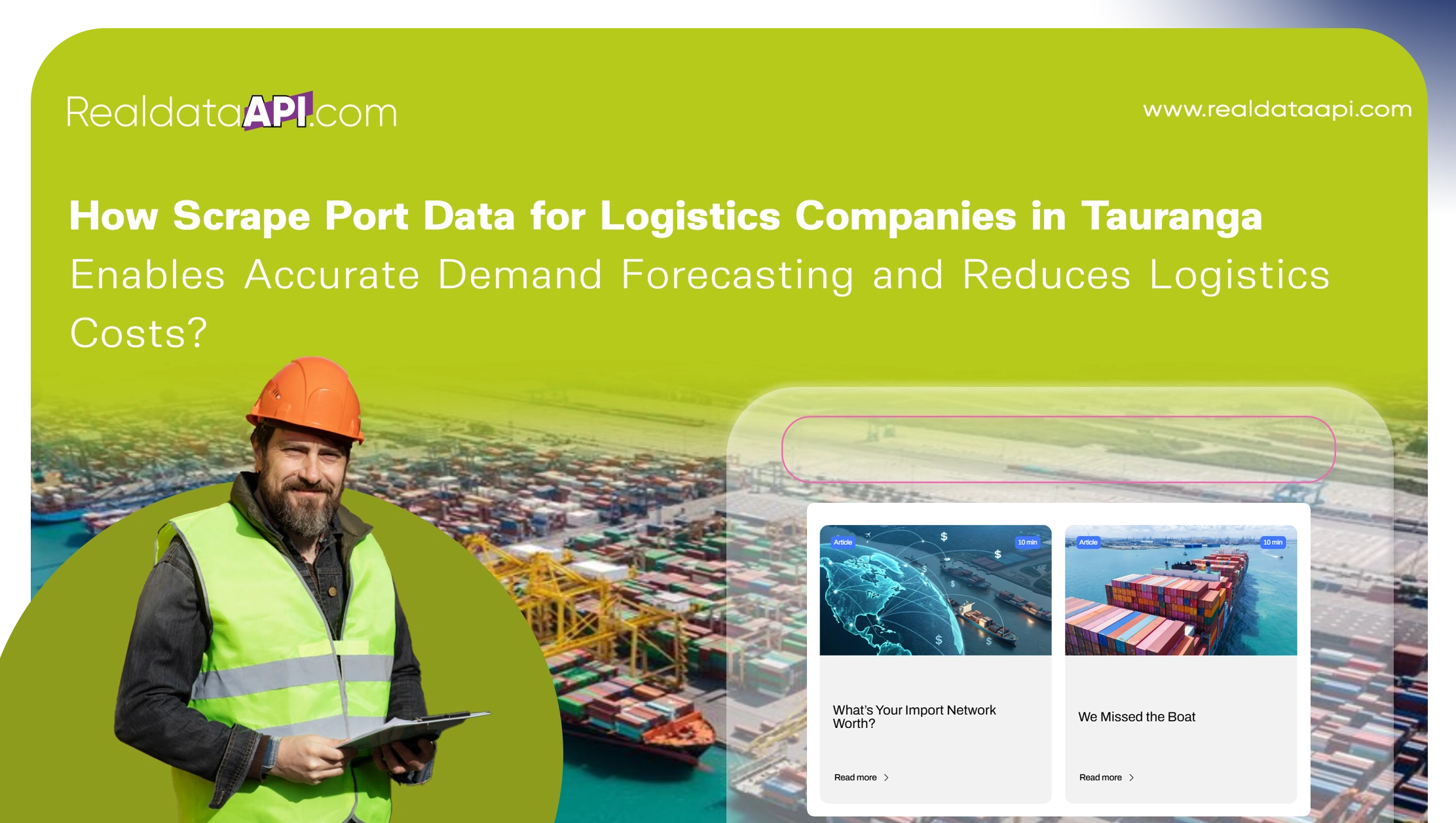
In today’s fast-evolving logistics ecosystem, access to accurate and timely data is essential for maintaining operational efficiency and profitability. Businesses increasingly rely on Scrape port data for logistics companies in Tauranga to gain visibility into cargo flow, vessel schedules, and port congestion. This data-driven approach empowers logistics providers to make informed decisions, optimize routes, and reduce unnecessary expenses.
By integrating a robust Web Scraping API, companies can automate the collection of large-scale port data and convert it into actionable insights. From predicting demand fluctuations to identifying bottlenecks in supply chains, data extraction plays a critical role in modern logistics strategies. As global trade continues to grow, leveraging advanced data scraping technologies ensures companies remain competitive while minimizing risks associated with uncertainty and inefficiencies.
Unlocking Market Intelligence Through Port Data
The logistics industry in New Zealand has witnessed rapid digital transformation, driven by the need for real-time insights and predictive analytics. Leveraging Web scraping shipping and port data in New Zealand allows companies to monitor cargo volumes, vessel turnaround times, and port congestion trends effectively.
Between 2020 and 2026, Tauranga port activity has shown consistent growth, making data-driven forecasting increasingly important.
| Year | Cargo Volume (Million Tonnes) | Vessel Visits | Avg Turnaround Time (hrs) |
|---|---|---|---|
| 2020 | 24.5 | 1,420 | 28 |
| 2022 | 26.8 | 1,510 | 26 |
| 2024 | 29.3 | 1,620 | 24 |
| 2026* | 32.1 | 1,750 | 22 |
With access to such structured data, logistics firms can anticipate seasonal demand spikes and allocate resources efficiently. Predictive analytics models built on scraped data enable companies to reduce idle fleet time and improve delivery timelines. Additionally, better visibility into port operations helps mitigate risks associated with delays, ultimately leading to improved customer satisfaction and reduced operational costs.
Enhancing Scheduling Accuracy and Freight Planning
Efficient freight management relies heavily on accurate scheduling and planning. By utilizing tools to Extract shipping schedules and freight data in New Zealand, logistics companies can align their operations with real-time port activities.
Shipping schedule data between 2020 and 2026 highlights the importance of precision planning:
| Year | Avg Delay (hrs) | On-Time Arrivals (%) | Freight Cost Index |
|---|---|---|---|
| 2020 | 12 | 68% | 100 |
| 2022 | 10 | 72% | 108 |
| 2024 | 8 | 78% | 115 |
| 2026* | 6 | 85% | 120 |
Access to accurate freight data helps businesses reduce scheduling conflicts and improve coordination between suppliers and distributors. It also allows for proactive adjustments in case of disruptions such as weather conditions or port congestion.
Ultimately, this level of precision leads to cost savings by minimizing detention charges and optimizing asset utilization. Companies that adopt data-driven scheduling strategies gain a significant competitive advantage in the logistics market.
Leveraging Real-Time Insights for Operational Efficiency
Real-time visibility into port operations is crucial for improving logistics performance. Using real-time NZ port traffic and cargo movements data scraping, companies can monitor vessel arrivals, departures, and cargo handling activities as they happen.
The adoption of real-time data has significantly improved logistics efficiency from 2020 to 2026:
| Metric | 2020 | 2023 | 2026* |
|---|---|---|---|
| Real-Time Tracking Adoption | 35% | 55% | 78% |
| Avg Waiting Time (hrs) | 14 | 10 | 7 |
| Operational Efficiency (%) | 62% | 74% | 86% |
Real-time insights enable faster decision-making and allow logistics managers to respond quickly to unexpected disruptions. This reduces downtime, enhances fleet productivity, and ensures timely deliveries.
Moreover, integrating real-time data into analytics platforms improves forecasting accuracy, enabling companies to anticipate demand shifts and adjust supply chain strategies accordingly.
Optimizing Routes and Reducing Transportation Costs
Route optimization is a key factor in reducing logistics costs. By leveraging New Zealand shipping route data extraction, companies can identify the most efficient routes based on historical and real-time data.
Route optimization trends from 2020 to 2026 demonstrate significant cost-saving potential:
| Year | Avg Route Efficiency (%) | Fuel Cost Reduction (%) | Delivery Time Reduction (%) |
|---|---|---|---|
| 2020 | 65% | 5% | 6% |
| 2022 | 70% | 8% | 9% |
| 2024 | 76% | 12% | 13% |
| 2026* | 82% | 15% | 18% |
Analyzing shipping routes helps companies minimize fuel consumption, reduce transit times, and improve delivery reliability. It also enables better coordination between ports and inland transportation networks.
By adopting route optimization strategies powered by data extraction, logistics providers can significantly lower operational costs while maintaining high service quality.
Scaling Data Capabilities for Competitive Advantage
As logistics operations grow, the need for scalable data solutions becomes increasingly important. Leveraging Web Scraping Services allows businesses to handle large volumes of data efficiently and gain deeper insights into port activities.
Scalability trends in logistics data usage from 2020 to 2026:
| Year | Data Volume (TB) | Automation Level (%) | Cost Savings (%) |
|---|---|---|---|
| 2020 | 2.5 | 40% | 10% |
| 2022 | 4.2 | 55% | 15% |
| 2024 | 6.8 | 70% | 20% |
| 2026* | 9.5 | 85% | 28% |
Scalable scraping solutions enable companies to integrate multiple data sources, including port authorities, shipping lines, and freight platforms. This comprehensive approach enhances decision-making and improves overall supply chain efficiency.
Businesses that invest in scalable data infrastructure are better positioned to adapt to market changes and maintain a competitive edge.
Driving Enterprise-Level Logistics Transformation
Large logistics enterprises require advanced data strategies to manage complex supply chains. Implementing Enterprise Web Crawling enables organizations to collect and analyze data at scale, supporting strategic decision-making.
Enterprise adoption trends from 2020 to 2026:
| Year | Enterprise Adoption (%) | Forecast Accuracy (%) | Cost Reduction (%) |
|---|---|---|---|
| 2020 | 30% | 65% | 8% |
| 2022 | 45% | 72% | 12% |
| 2024 | 60% | 80% | 18% |
| 2026* | 75% | 88% | 25% |
Enterprise-level data solutions provide end-to-end visibility across supply chains, enabling better coordination and improved forecasting accuracy. They also support advanced analytics, such as machine learning models for demand prediction.
By adopting enterprise-grade data extraction strategies, logistics companies can streamline operations, reduce costs, and enhance overall efficiency.
Why Choose Real Data API?
Real Data API offers advanced solutions tailored to the logistics industry, helping businesses unlock the full potential of port data. With cutting-edge technology and reliable infrastructure, companies can seamlessly integrate data into their operations.
Their Live Crawler Services ensure continuous data collection, providing real-time insights into port activities and market trends. This enables logistics providers to make proactive decisions and stay ahead of disruptions.
Additionally, Real Data API delivers scalable and customizable solutions, allowing businesses to adapt to changing market demands while maintaining high levels of efficiency and accuracy.
Conclusion
In an increasingly competitive logistics landscape, leveraging data-driven strategies is essential for success. By using advanced tools to Scrape port data for logistics companies in Tauranga, businesses can enhance demand forecasting, optimize operations, and significantly reduce costs.
From real-time tracking to route optimization and enterprise-level analytics, data extraction empowers logistics providers to make smarter decisions and achieve sustainable growth.
Get started with Real Data API today and transform your logistics operations with powerful, real-time port data insights!
Latest posts

How WhatsApp Scraper Helps Businesses Extract Public Business Profiles and Contact Data
How Businesses Use Instagram profile scraper to Track Profiles, Followers, Engagement, and Social Media Data
How Ixigo API Helps Businesses Solve Flight, Train, Hotel, Travel, and Pricing Data Challenges
How to Extract Restaurants, Menus, Prices, Ratings, and Business Data for Market Insights






.png)