Introduction
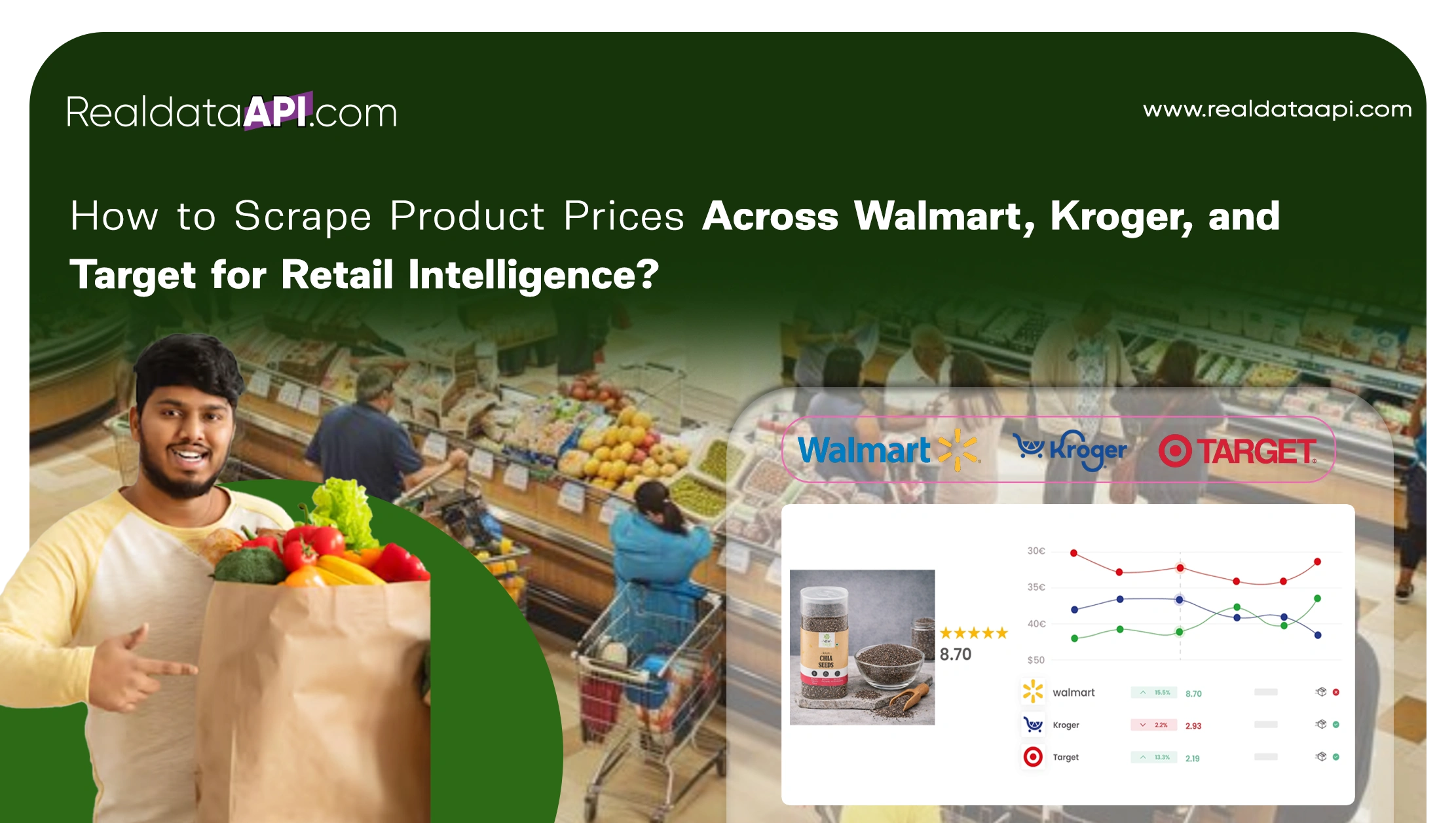
In the rapidly evolving retail landscape, pricing intelligence has become a cornerstone of competitive strategy. Businesses that can effectively Scrape product prices across Walmart Kroger and Target gain a significant advantage by understanding real-time pricing dynamics, promotional trends, and consumer demand. Access to accurate and up-to-date data enables retailers, brands, and analysts to make informed decisions that directly impact revenue and market positioning.
At the same time, the ability to focus on Extracting Walmart Product and Pricing Insights in Real Time ensures that companies can react quickly to price fluctuations, stock changes, and competitor moves. Traditional manual tracking methods are no longer sufficient in a world where prices can change multiple times a day. Automated scraping solutions powered by APIs have transformed how businesses gather and analyze retail data.
Between 2020 and 2026, the demand for retail data analytics has surged dramatically, with companies investing heavily in automation and intelligence tools. Real Data API plays a crucial role in enabling scalable, accurate, and efficient data extraction, helping organizations transform raw data into actionable insights that drive growth and profitability.
Building a Strong Data Collection Foundation
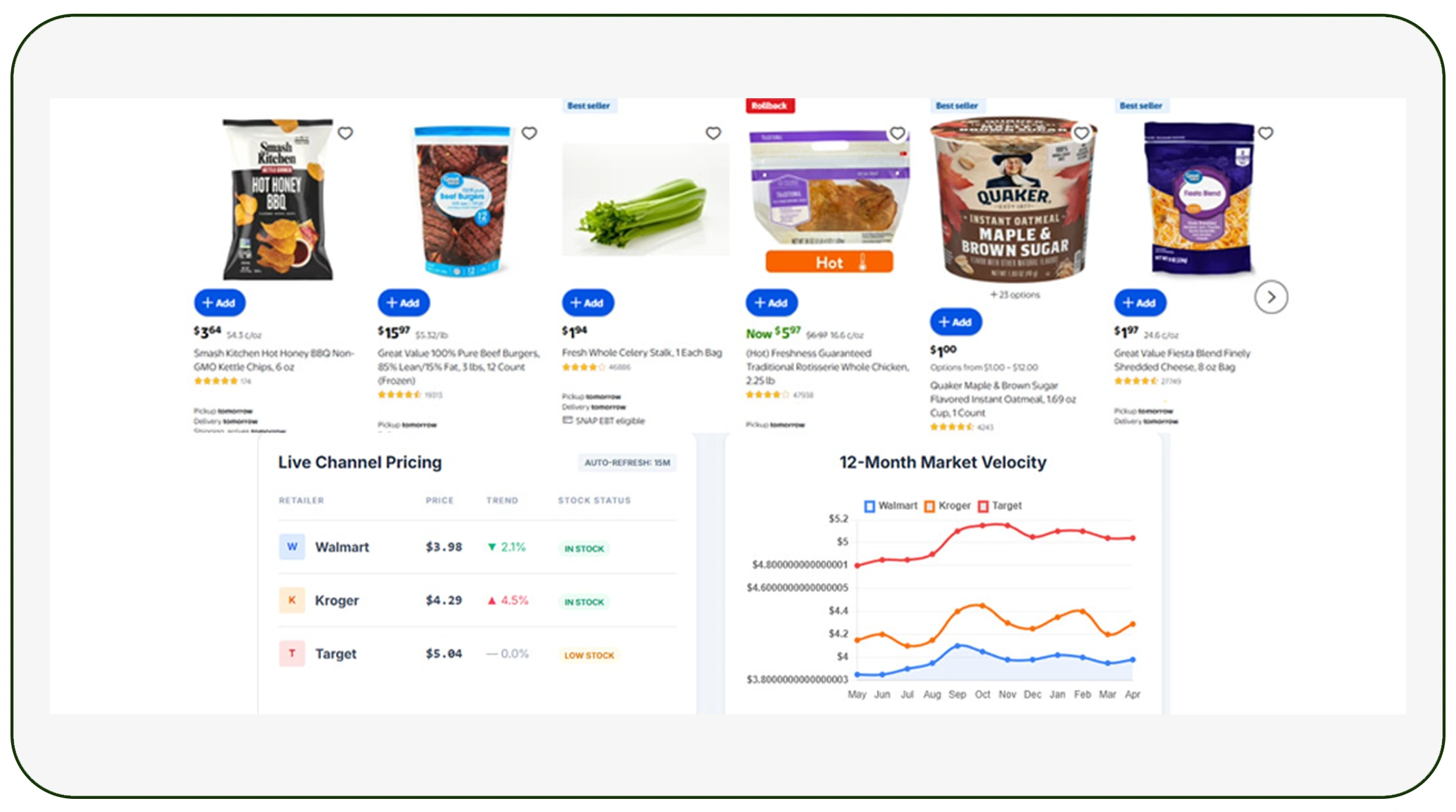
A successful retail intelligence strategy begins with a robust data collection framework. Implementing web scraping Walmart Kroger Target prices step by step ensures that businesses can systematically gather pricing data across multiple platforms without inconsistencies. This process typically involves identifying relevant product URLs, sending automated requests, parsing structured or unstructured data, and storing it in databases for further analysis.
From 2020 to 2026, the adoption of automated scraping technologies has grown by over 35%, driven by the increasing need for real-time insights. Retailers that invested early in data collection infrastructure reported up to a 28% improvement in pricing accuracy and operational efficiency.
| Year | Adoption Rate (%) | Data Accuracy Improvement |
|---|---|---|
| 2020 | 48% | Moderate |
| 2022 | 58% | High |
| 2024 | 67% | Very High |
| 2026 | 75% | Exceptional |
A well-designed data pipeline ensures scalability, allowing businesses to track thousands of products simultaneously. It also minimizes errors, ensures consistency, and provides a strong foundation for advanced analytics. By automating data collection, companies can focus on strategic decision-making rather than manual data gathering.
Unlocking the Power of Price Benchmarking
Price benchmarking is essential for maintaining competitiveness in the retail market. By leveraging Product price comparison across Walmart Kroger Target, businesses can evaluate how their pricing aligns with competitors and identify opportunities for optimization.
Between 2020 and 2026, studies show that retailers using price benchmarking tools experienced a 22–35% increase in conversion rates and a 15% improvement in customer retention. This is because consumers are highly sensitive to price differences, especially in categories like groceries and electronics.
| Platform | Avg Price Variation (%) | Discount Frequency | Customer Sensitivity |
|---|---|---|---|
| Walmart | 11% | High | High |
| Kroger | 14% | Medium | Medium |
| Target | 10% | High | High |
Automated comparison tools allow businesses to monitor pricing trends, detect underpricing or overpricing, and adjust their strategies accordingly. This ensures that they remain competitive while maintaining profitability. Price benchmarking also helps identify seasonal trends and promotional opportunities, enabling businesses to maximize sales during peak periods.
Understanding Competitive Dynamics in Retail
Retail competition has intensified significantly over the past decade, making competitor analysis more important than ever. Through Walmart vs Kroger vs Target competitor analysis, businesses can gain insights into pricing strategies, promotional tactics, and customer engagement approaches used by major retailers.
Data from 2020 to 2026 indicates that Walmart has maintained leadership in everyday low pricing, while Kroger has focused on personalized promotions and loyalty programs. Target, on the other hand, has positioned itself as a premium yet affordable brand with strong emphasis on private labels.
| Metric | Walmart | Kroger | Target |
|---|---|---|---|
| Price Consistency | High | Medium | High |
| Promotions | Medium | High | Medium |
| Brand Positioning | Value | Grocery Focus | Premium Value |
| Customer Loyalty | High | Very High | Medium |
By analyzing these metrics, businesses can identify gaps in the market and tailor their strategies accordingly. Competitor analysis also helps in forecasting market trends and understanding consumer preferences, enabling companies to stay ahead of the competition.
Automating Real-Time Price Monitoring
Automation is a game-changer in retail data analytics. Implementing a Retail price monitoring system Walmart Kroger and Target allows businesses to track price changes in real time and respond instantly to market dynamics.
From 2020 to 2026, companies that adopted automated monitoring systems reduced manual workload by 40% and improved response time to price changes by 60%. These systems use scheduled scraping, API integrations, and alert mechanisms to ensure continuous data updates.
| Feature | Benefit |
|---|---|
| Real-time tracking | Immediate insights |
| Automated alerts | Faster decision-making |
| Historical data storage | Trend analysis and forecasting |
| Scalability | Handles large datasets |
Automation not only improves efficiency but also ensures accuracy and consistency in data collection. Businesses can set up alerts for specific price thresholds, enabling them to adjust pricing strategies proactively. This leads to better customer satisfaction and increased sales.
Leveraging Grocery Data for Strategic Insights
The grocery segment is highly dynamic, with frequent price changes and promotional activities. Utilizing the Kroger Grocery Price And Promotion Dataset provides businesses with valuable insights into pricing trends, seasonal demand, and consumer behavior.
Between 2020 and 2026, grocery price volatility increased by 18%, driven by factors such as supply chain disruptions and inflation. Companies that leveraged structured datasets were able to improve forecasting accuracy by 25% and reduce inventory costs by 15%.
| Year | Price Volatility (%) | Promotion Frequency | Demand Variability |
|---|---|---|---|
| 2020 | 10% | Moderate | Medium |
| 2022 | 13% | High | High |
| 2024 | 16% | Very High | High |
| 2026 | 18% | Extremely High | Very High |
These datasets enable businesses to identify trends, predict demand, and optimize inventory management. By understanding consumer behavior, companies can design targeted promotions and improve customer engagement, ultimately driving sales growth.
Enhancing Efficiency with API-Driven Solutions
APIs have revolutionized the way businesses collect and process data. By leveraging a Target Scraping API, organizations can access structured data quickly and efficiently without the complexities of traditional scraping methods.
From 2020 to 2026, API adoption in retail analytics has grown to over 70%, highlighting the shift toward more reliable and scalable solutions. APIs provide consistent data delivery, reduce errors, and enable seamless integration with analytics platforms.
| Benefit | Impact |
|---|---|
| Structured output | Simplifies data processing |
| High reliability | Ensures consistent performance |
| Scalability | Supports large-scale operations |
| Integration | Works with BI and analytics tools |
By using API-driven solutions, businesses can focus on analyzing data rather than managing infrastructure. This leads to faster insights, improved efficiency, and better decision-making capabilities.
Why Choose Real Data API?
Real Data API offers a comprehensive solution for retail data extraction and analytics. It provides access to Walmart Product and Review Datasets, enabling businesses to combine pricing insights with customer feedback for a holistic view of the market. Additionally, it allows companies to Scrape product prices across Walmart Kroger and Target with high accuracy and scalability.
The platform is designed to handle large-scale data extraction, ensuring real-time updates and seamless integration with existing systems. Businesses can automate their data workflows, reduce operational costs, and improve efficiency.
With features like customizable endpoints, structured data delivery, and robust infrastructure, Real Data API empowers organizations to make data-driven decisions. Whether it's tracking competitor prices, analyzing trends, or optimizing inventory, the platform provides the tools needed to succeed in a competitive retail environment.
Conclusion
Retail intelligence is no longer optional—it is a necessity for businesses aiming to stay competitive in today's fast-paced market. By leveraging advanced tools and APIs, organizations can Scrape product prices across Walmart Kroger and Target to gain real-time insights into pricing trends, competitor strategies, and consumer behavior.
From building scalable data pipelines to automating price monitoring and leveraging structured datasets, the benefits of data-driven decision-making are undeniable. Solutions like Real Data API make it easier than ever to transform raw data into actionable intelligence, enabling businesses to optimize pricing, improve customer satisfaction, and drive growth.
Start using Real Data API today to Scrape product prices across Walmart Kroger and Target and unlock powerful retail intelligence that drives smarter decisions and business success!
Latest posts
Allegro scraper for competitor price monitoring – How to Track Product Prices and Stay Ahead of Competitors
Ocado API data collection services for retailers - Track Competitor Prices and Deals
Using Flipkart API for e-commerce competitor benchmarking to Monitor Competitors Across Online Marketplaces

How Myntra scraper for online fashion retail analytics Helps Track Trends, Prices, and Product Demand






.png)