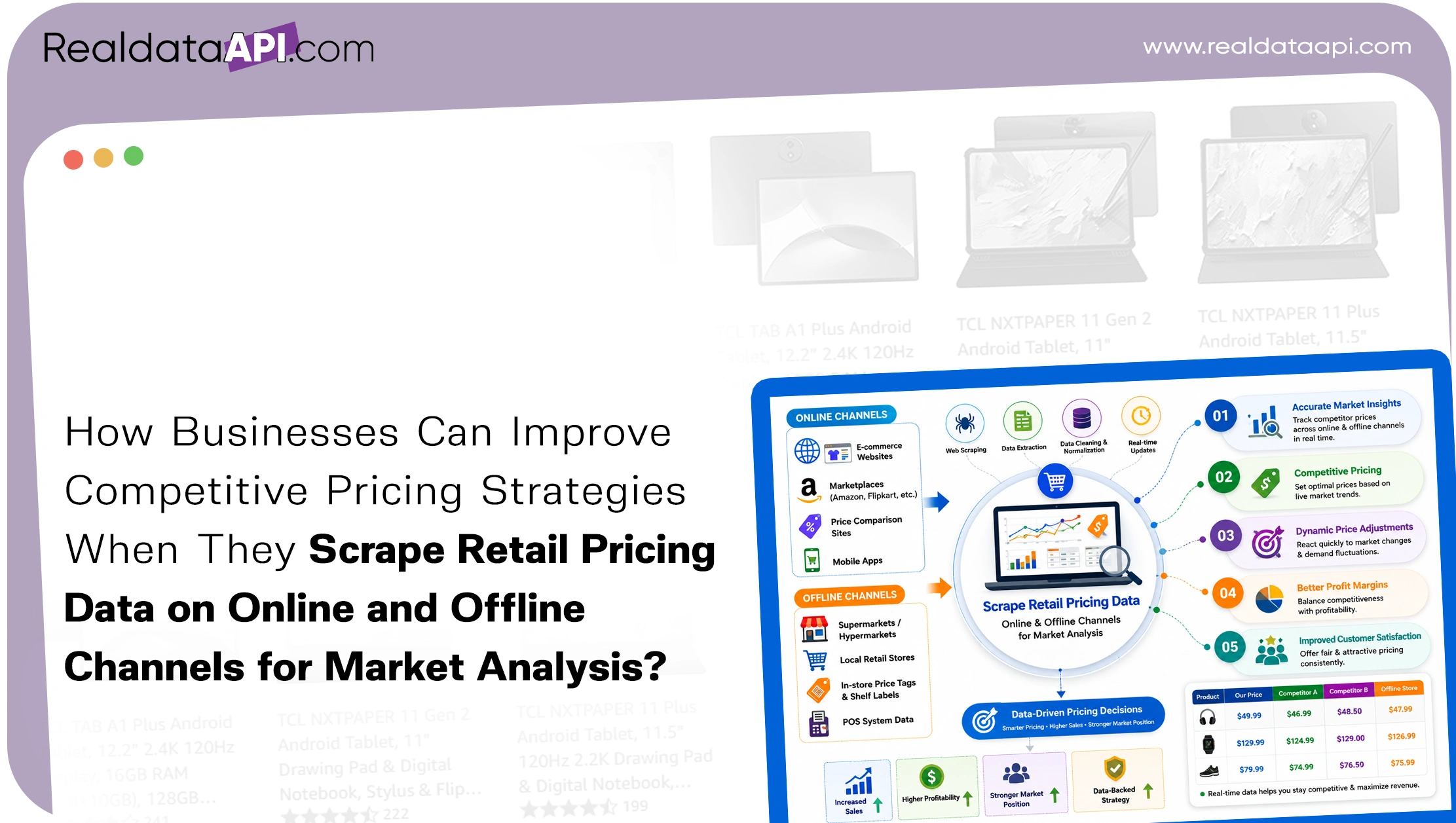
Introduction
How can businesses improve competitive pricing strategies?
Bottom Line Up Front (BLUF): Businesses can improve pricing strategies by collecting and analyzing competitor prices across both digital and physical retail environments. When companies scrape retail pricing data on online and offline channels for market analysis, they gain real-time visibility into market trends, pricing gaps, and consumer expectations, enabling faster and smarter pricing decisions.
Industry Insight: Industry research suggests that retailers using dynamic pricing intelligence can improve profit margins by 5–15% while increasing pricing responsiveness by over 30%. From 2020 to 2026, the adoption of retail pricing analytics accelerated significantly as businesses sought greater market visibility.
This article is designed for retail executives, pricing managers, category managers, eCommerce leaders, and market intelligence teams looking to solve the challenge of inconsistent pricing decisions and limited competitive visibility.
Modern pricing strategies depend heavily on data. Businesses increasingly rely on Price Monitoring solutions to track pricing fluctuations across online stores, marketplaces, and brick-and-mortar retailers to remain competitive.
Why Is Multi-Channel Pricing Visibility Important?
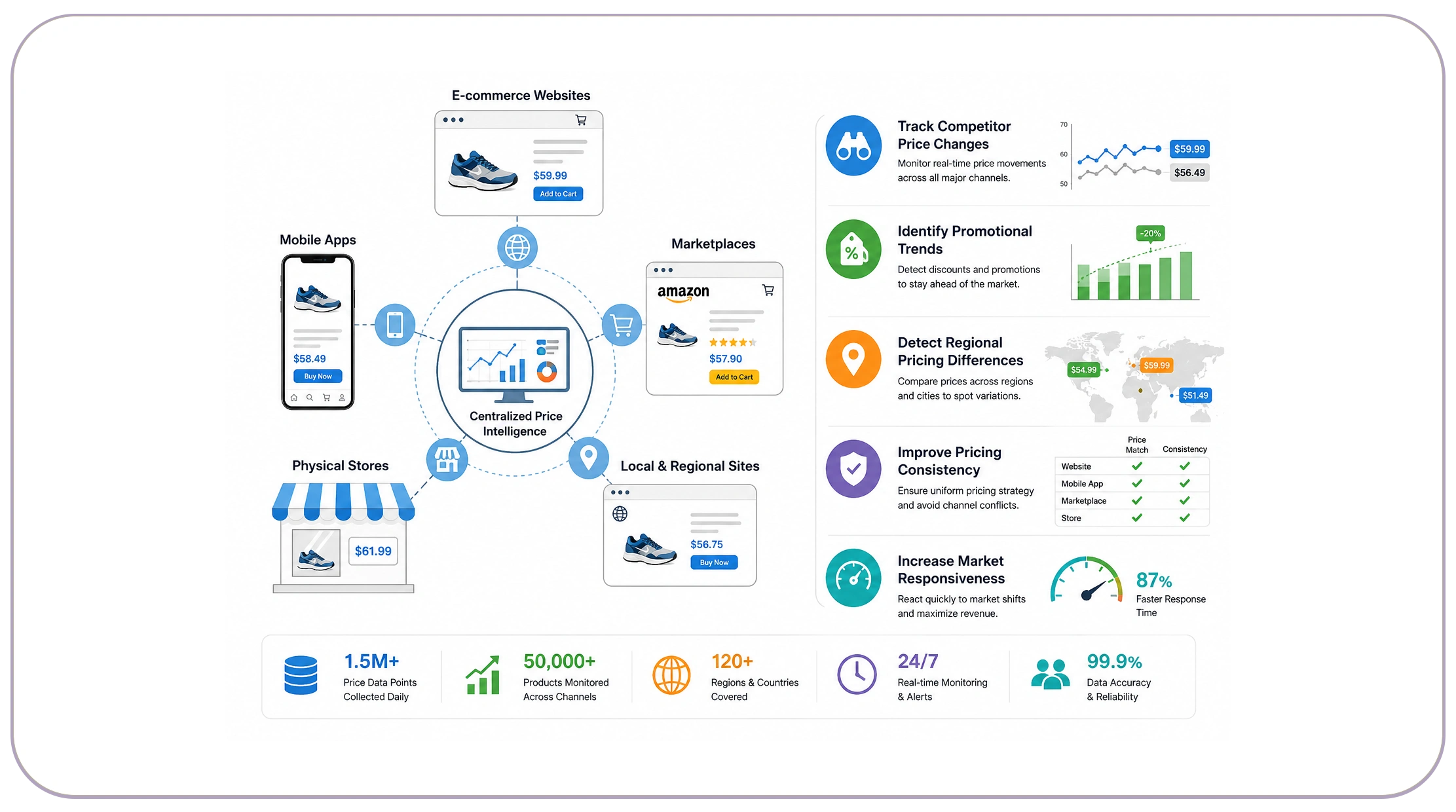
Retail markets have become increasingly complex. Consumers compare prices across websites, mobile apps, marketplaces, and physical stores before making purchase decisions.
Businesses that leverage web scraping retail price monitoring data for analytics gain comprehensive visibility into market pricing movements.
Benefits of Multi-Channel Monitoring
- Track competitor price changes
- Identify promotional trends
- Detect regional pricing differences
- Improve pricing consistency
- Increase market responsiveness
Retail Pricing Intelligence Adoption (2020–2026)
| Year | Businesses Using Pricing Intelligence (%) | Pricing Accuracy Improvement (%) |
|---|---|---|
| 2020 | 34 | 8 |
| 2021 | 40 | 10 |
| 2022 | 48 | 13 |
| 2023 | 57 | 17 |
| 2024 | 66 | 21 |
| 2025 | 74 | 26 |
| 2026 | 82 | 31 |
Retailers that monitor both online and offline pricing gain a more accurate picture of market conditions. This helps reduce pricing blind spots and improve decision-making.
Key Takeaways
- Consumers compare prices everywhere.
- Market conditions change rapidly.
- Pricing intelligence improves competitiveness.
- Better visibility leads to stronger margins.
How Can Competitor Pricing Data Improve Decision-Making?
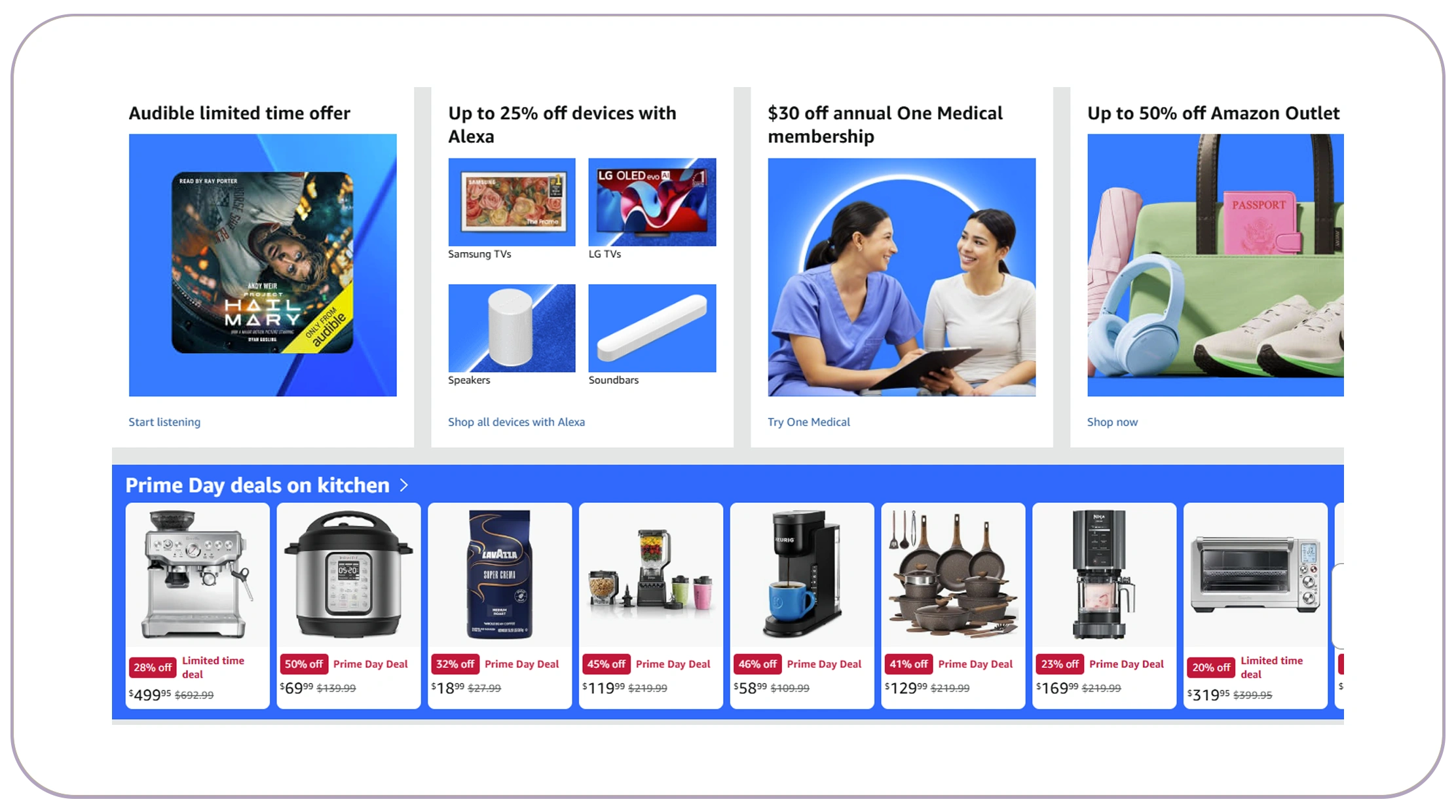
Pricing decisions should be based on facts rather than assumptions. Competitor intelligence provides the information needed to make informed pricing adjustments.
Businesses can extract retail competitor pricing dataset information to understand how competitors position products across channels.
What Data Can Be Collected?
- Product prices
- Promotional discounts
- Bundle offers
- Seasonal pricing changes
- Regional price variations
Business Benefits
- Better pricing optimization
- Faster response to competitors
- Improved margin management
- Enhanced demand forecasting
- Increased revenue opportunities
Competitor Intelligence Growth (2020–2026)
| Year | Companies Using Competitor Pricing Analytics (%) |
|---|---|
| 2020 | 29 |
| 2021 | 37 |
| 2022 | 45 |
| 2023 | 54 |
| 2024 | 63 |
| 2025 | 72 |
| 2026 | 80 |
Organizations that continuously monitor competitors are better equipped to identify opportunities and mitigate pricing risks before they impact profitability.
How Does Data Collection Support Dynamic Pricing?
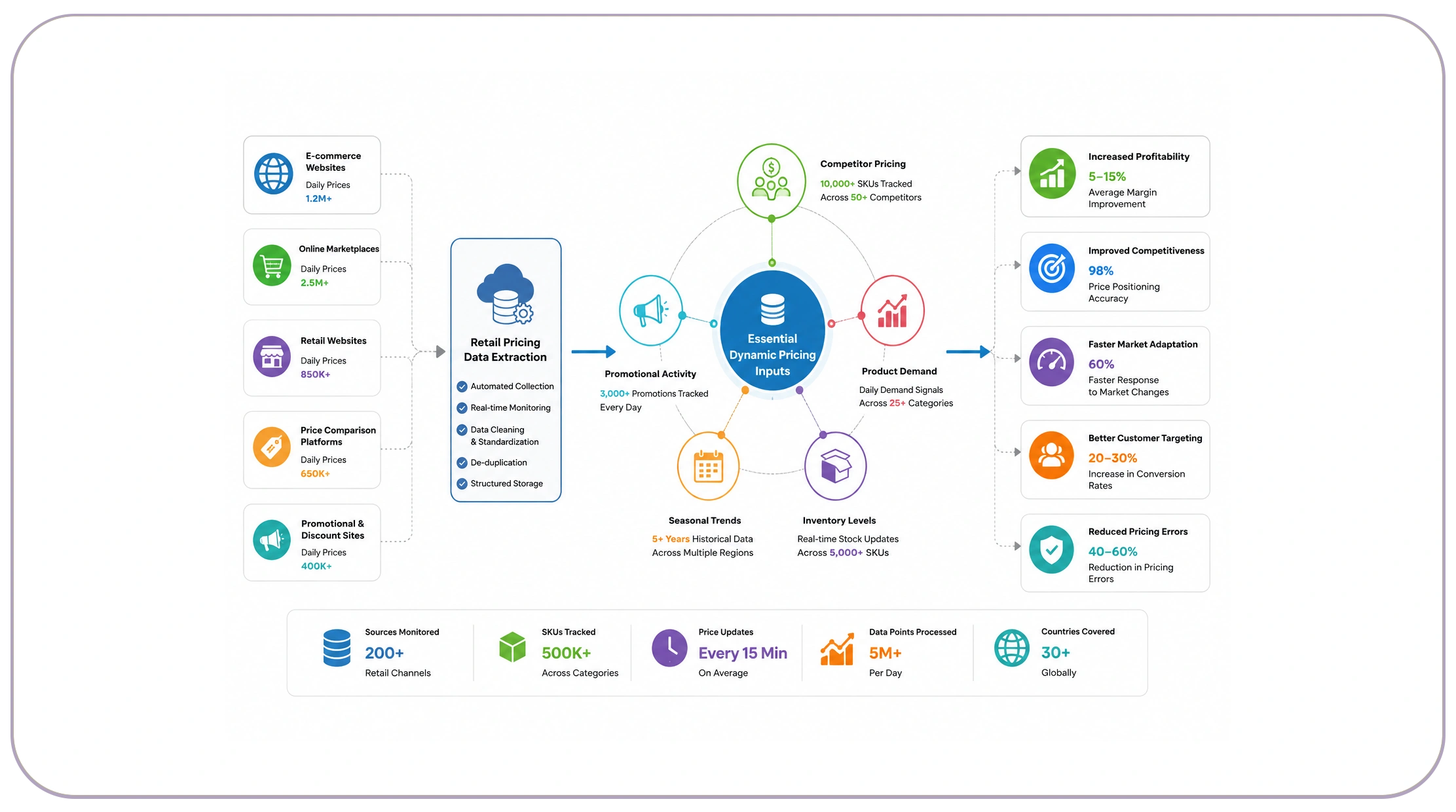
Dynamic pricing depends on accurate and timely market information. Without reliable data, pricing strategies become reactive instead of proactive.
Through retail pricing data extraction, businesses can automate the collection of pricing signals from multiple retail channels.
Essential Dynamic Pricing Inputs
- Competitor pricing
- Product demand
- Inventory levels
- Seasonal trends
- Promotional activity
Dynamic Pricing Advantages
- Increased profitability
- Improved competitiveness
- Faster market adaptation
- Better customer targeting
- Reduced pricing errors
Dynamic Pricing Adoption Trends
| Year | Retailers Using Dynamic Pricing (%) |
|---|---|
| 2020 | 25 |
| 2021 | 33 |
| 2022 | 41 |
| 2023 | 50 |
| 2024 | 60 |
| 2025 | 70 |
| 2026 | 79 |
When businesses combine pricing intelligence with analytics platforms, they can make pricing decisions based on real-time market conditions rather than historical assumptions.
Why Should Businesses Monitor Both Digital and Physical Stores?
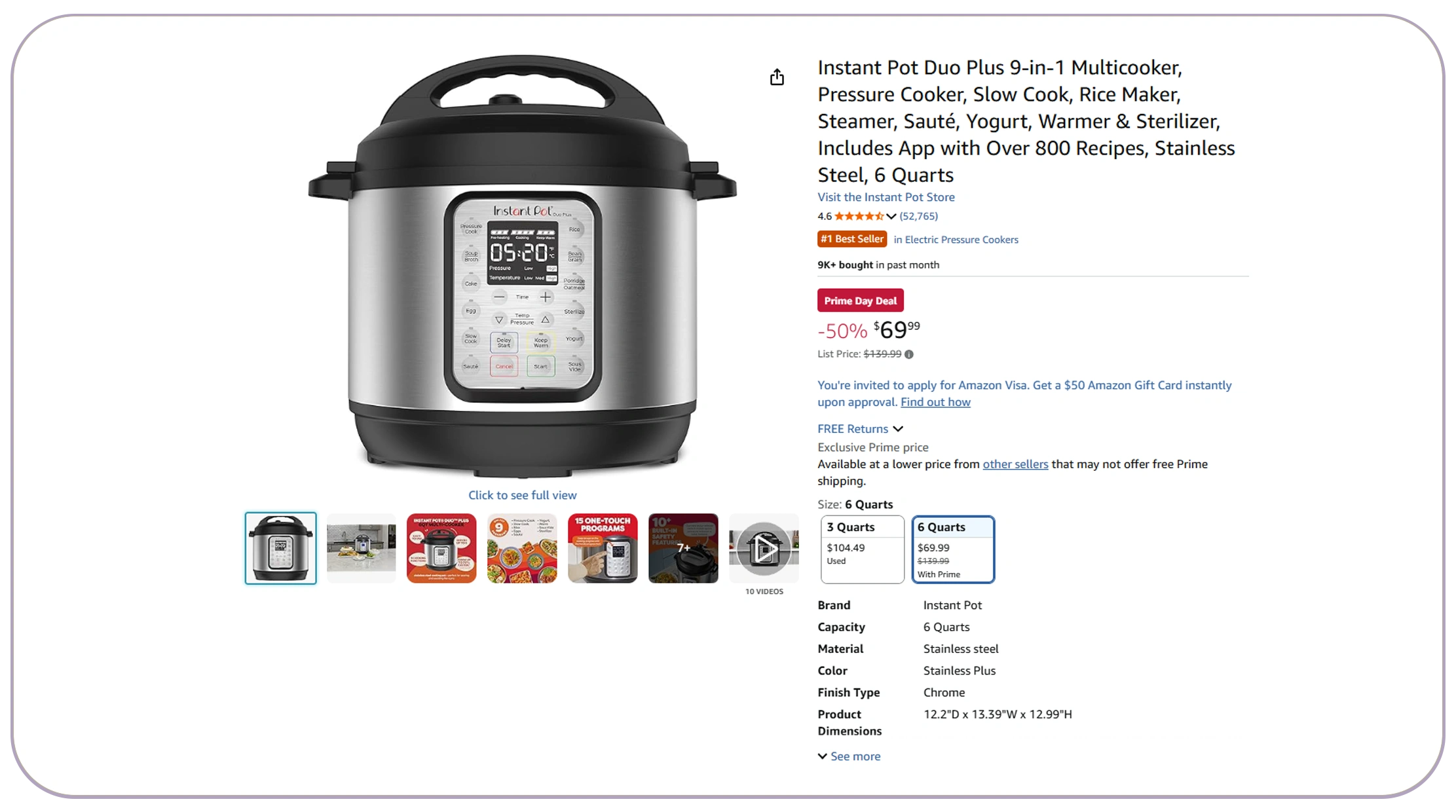
Many organizations focus only on online pricing. However, significant pricing opportunities and competitive threats also exist in physical retail environments.
By implementing online and offline retailers price scraping, businesses gain a complete view of the market.
Challenges of Single-Channel Monitoring
- Limited visibility
- Incomplete market insights
- Missed pricing opportunities
- Poor competitive positioning
Multi-Channel Intelligence Benefits
- Comprehensive market coverage
- Better regional analysis
- Stronger promotional tracking
- Improved customer understanding
- More accurate benchmarking
Cross-Channel Monitoring Growth (2020–2026)
| Year | Retailers Monitoring Multiple Channels (%) |
|---|---|
| 2020 | 30 |
| 2021 | 38 |
| 2022 | 47 |
| 2023 | 56 |
| 2024 | 65 |
| 2025 | 74 |
| 2026 | 83 |
Businesses that monitor both channels gain a more complete understanding of pricing dynamics and consumer purchasing behavior.
How Can Automation Scale Retail Pricing Intelligence?
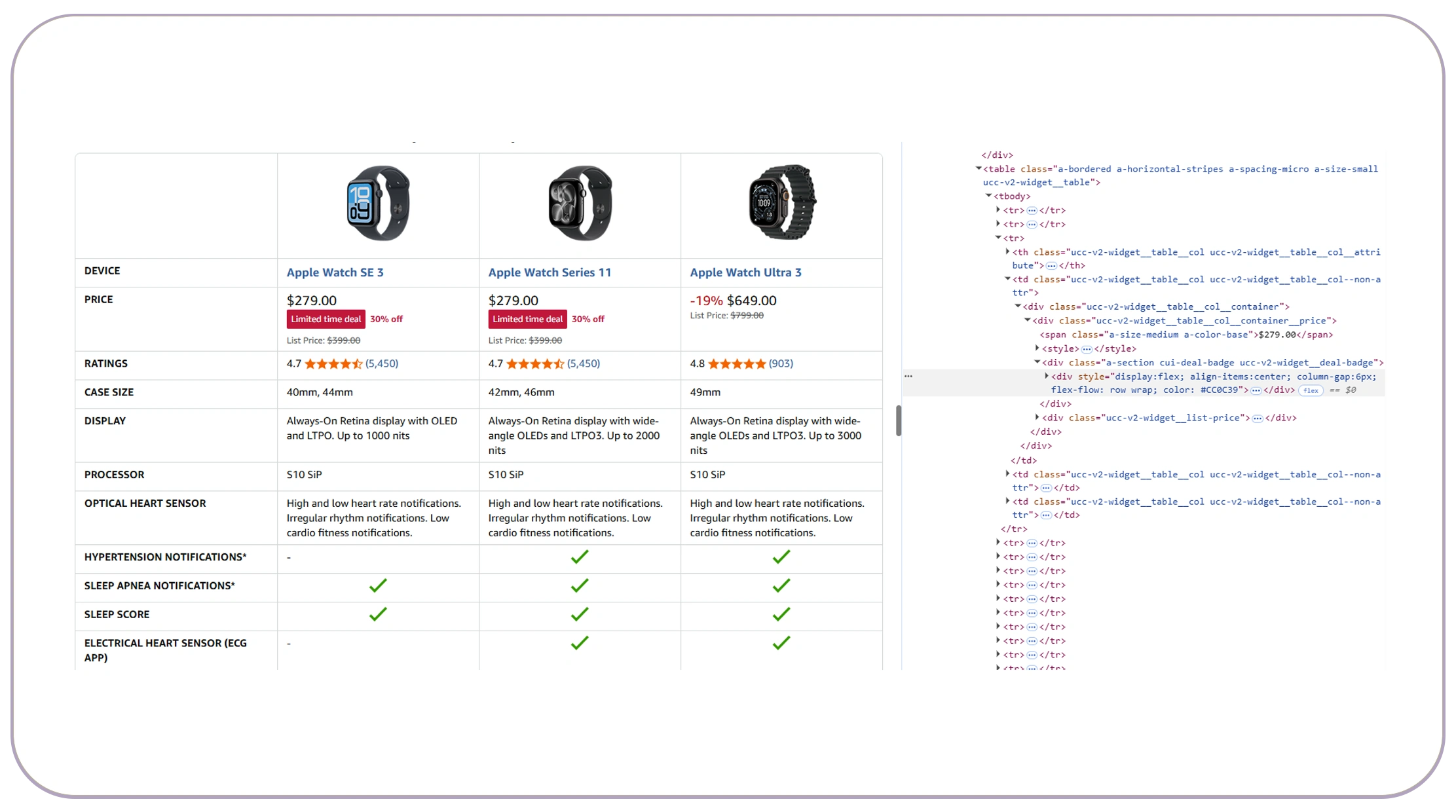
Manual pricing collection is slow and difficult to scale. Retail catalogs contain thousands of products that change frequently.
A modern Web Scraping API automates the process and delivers real-time pricing intelligence.
Automation Benefits
- Continuous monitoring
- Faster updates
- Improved data accuracy
- Reduced operational effort
- Greater scalability
Common Use Cases
- Competitor tracking
- Price optimization
- Promotion monitoring
- Assortment analysis
- Market benchmarking
API Adoption Trends (2020–2026)
| Year | Companies Using Automated Data Collection APIs (%) |
|---|---|
| 2020 | 32 |
| 2021 | 39 |
| 2022 | 47 |
| 2023 | 56 |
| 2024 | 65 |
| 2025 | 74 |
| 2026 | 82 |
Automation allows businesses to monitor thousands of products across multiple retailers without increasing operational complexity.
How Can Pricing Intelligence Drive Long-Term Growth?

Pricing intelligence is more than a tactical tool. It supports strategic growth initiatives.
Professional Web Scraping Services help organizations collect, clean, structure, and analyze pricing data at scale.
Strategic Applications
- Market expansion planning
- Category optimization
- Promotional effectiveness analysis
- Competitive benchmarking
- Revenue growth initiatives
Business Impact Metrics (2020–2026)
| Metric | 2020 | 2026 |
|---|---|---|
| Pricing Accuracy (%) | 69 | 91 |
| Margin Optimization (%) | 62 | 86 |
| Forecast Accuracy (%) | 65 | 88 |
| Competitive Visibility (%) | 58 | 90 |
Long-Term Benefits
- Improved profitability
- Faster market response
- Better customer retention
- Stronger competitive positioning
- Sustainable growth
Organizations that build pricing intelligence into their strategy gain an advantage in increasingly competitive retail environments.
Why Choose Real Data API?
Retail businesses require reliable data infrastructure to support pricing optimization and market intelligence initiatives.
Real Data API delivers scalable solutions powered by advanced Web Scraping Datasets and the ability to scrape retail pricing data on online and offline channels for market analysis.
What Makes Real Data API Different?
- Real-time retail monitoring
- Automated pricing intelligence
- Multi-channel coverage
- High-frequency updates
- Scalable infrastructure
- Custom data solutions
- Enterprise-grade reliability
Business Outcomes
- Better pricing decisions
- Improved market visibility
- Enhanced competitor tracking
- Increased profitability
- Faster strategic execution
Real Data API transforms raw pricing information into actionable insights that support growth and operational excellence.
Conclusion
Competitive pricing requires continuous market visibility. Businesses that scrape retail pricing data on online and offline channels for market analysis gain the intelligence needed to optimize pricing, improve profitability, and respond quickly to market changes.
From 2020 to 2026, pricing analytics evolved into a critical capability for retailers seeking sustainable growth. Organizations that leverage comprehensive pricing intelligence can strengthen competitive positioning, improve customer value, and maximize revenue opportunities.
As retail competition continues to intensify, the ability to scrape retail pricing data on online and offline channels for market analysis will remain a key driver of successful pricing strategies and market leadership.
Ready to optimize pricing decisions with real-time retail intelligence? Contact Real Data API today and unlock powerful pricing analytics across online and offline retail channels!
Latest posts
How Scrape Xiaohongshu Product Trends in Real Time Solves Product Discovery and Competitor Monitoring Challenges?
How to Scrape Taobao Product Data to Solve Pricing, Inventory, and Competitor Monitoring Challenges?
How to Extract grocery product listings Data from SPAR to Build Accurate Grocery Intelligence and Competitive Market Insights?
Scrape Douyin follower growth and engagement data to track influencer performance and trends






.png)