

Introduction
The manufacturing industry in Japan is globally recognized for its efficiency, innovation, and precision-driven supply chains. Major manufacturing hubs such as Tokyo, Osaka, and Nagoya depend heavily on consistent supplier pricing to maintain competitive production costs. However, procurement teams often face challenges in tracking fluctuating raw material prices, comparing supplier quotes, and gathering accurate data from multiple sources.
This is where automated data extraction becomes valuable. Businesses now scrape supplier price data for manufacturing companies in japan to collect real-time pricing information from supplier portals, distributor platforms, and industrial marketplaces. Instead of relying on manual research or outdated spreadsheets, procurement teams can gather structured pricing datasets and monitor supplier price movements continuously.
Using advanced tools such as a Web Scraping API, organizations can automate the collection of supplier data including material prices, bulk discounts, availability, and delivery timelines. These insights allow manufacturers to identify cost-effective suppliers, forecast price changes, and improve negotiation strategies.
With real-time data intelligence, companies gain the ability to respond quickly to price fluctuations in metals, electronic components, plastics, and other industrial materials. As Japan’s manufacturing sector continues to digitize procurement processes, automated data extraction is becoming a key driver for cost optimization and supply chain transparency.
Tracking Material Cost Fluctuations in Industrial Supply Chains

Manufacturers rely on stable raw material pricing to maintain profitability. Procurement teams often monitor raw material prices using web scraping japan to track cost changes across multiple suppliers and distributors. Automated data extraction enables organizations to collect updated pricing information for essential materials such as steel, aluminum, copper, and electronic components.
By gathering large volumes of supplier data, companies can analyze price patterns and detect cost fluctuations that may affect production budgets. Historical pricing analysis also helps procurement teams forecast future expenses and secure long-term supplier contracts at favorable rates.
Below is an estimated overview of raw material price monitoring adoption among Japanese manufacturers between 2020 and 2026.
| Year | Manufacturers Monitoring Prices | Raw Material Listings Tracked | Procurement Cost Savings |
|---|---|---|---|
| 2020 | 4,500 | 120,000 | 3% |
| 2021 | 5,200 | 150,000 | 4% |
| 2022 | 6,100 | 185,000 | 5% |
| 2023 | 7,300 | 230,000 | 6% |
| 2024 | 8,600 | 275,000 | 7% |
| 2025 | 9,800 | 320,000 | 8% |
| 2026 | 11,200 | 380,000 | 9% |
Automated price monitoring reduces procurement uncertainty and enables companies to respond quickly to supply chain disruptions. By collecting real-time data, businesses gain greater visibility into supplier pricing structures and can adjust procurement strategies accordingly.
Improving Procurement Strategy with Data Intelligence

Manufacturing companies increasingly rely on web scraping for procurement price intelligence data japan to gain competitive insights into supplier pricing and product availability. Data intelligence tools transform raw supplier listings into structured datasets that procurement teams can analyze for decision-making.
Supplier platforms often contain thousands of product listings, making manual comparison difficult. Automated data extraction collects essential information such as supplier pricing, minimum order quantities, product specifications, and delivery timelines.
The following table shows how procurement intelligence tools have expanded across Japan’s manufacturing sector.
| Year | Procurement Teams Using Data Analytics | Supplier Platforms Monitored | Price Comparisons Conducted |
|---|---|---|---|
| 2020 | 2,800 | 35 | 150,000 |
| 2021 | 3,400 | 42 | 190,000 |
| 2022 | 4,200 | 50 | 240,000 |
| 2023 | 5,100 | 58 | 310,000 |
| 2024 | 6,000 | 66 | 380,000 |
| 2025 | 7,100 | 75 | 460,000 |
| 2026 | 8,300 | 85 | 540,000 |
These insights allow procurement managers to compare suppliers efficiently and identify cost-saving opportunities. Automated procurement intelligence also supports strategic sourcing decisions by highlighting vendors with competitive pricing and reliable supply chains.
Strengthening Industrial Supply Chain Transparency
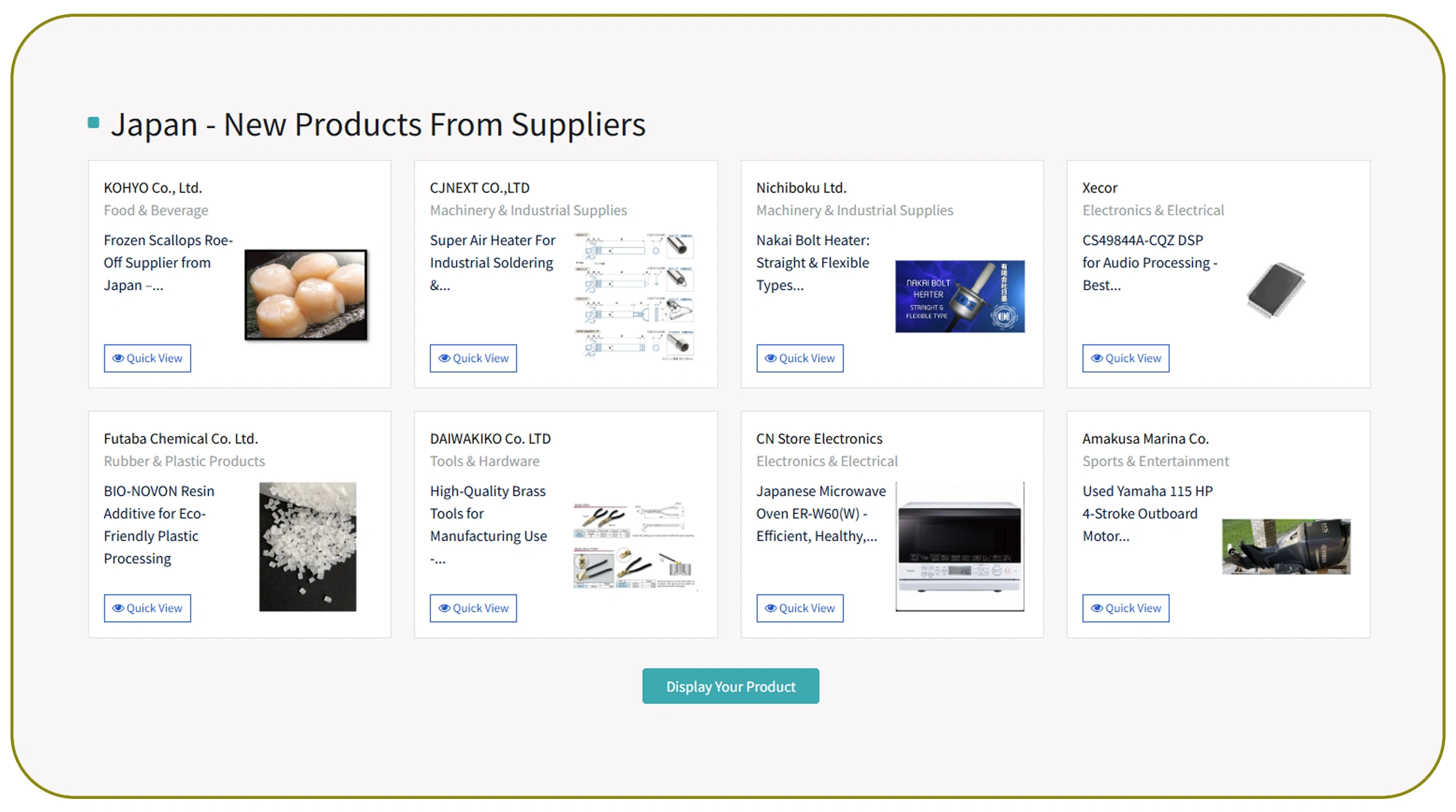
Supply chain visibility is critical for large manufacturing organizations. Many companies now rely on manufacturing supply chain data scraping Japan to monitor supplier networks, product availability, and market demand trends.
Automated supply chain data extraction helps businesses track supplier performance, delivery timelines, and inventory availability. These insights are essential for reducing procurement delays and preventing production disruptions.
The table below illustrates how supply chain data monitoring has grown between 2020 and 2026.
| Year | Supply Chain Data Points Collected | Suppliers Tracked | Manufacturing Firms Using Data |
|---|---|---|---|
| 2020 | 1.5M | 9,000 | 2,200 |
| 2021 | 1.9M | 10,500 | 2,700 |
| 2022 | 2.4M | 12,300 | 3,300 |
| 2023 | 3.1M | 14,800 | 4,100 |
| 2024 | 3.9M | 17,500 | 5,000 |
| 2025 | 4.8M | 20,200 | 6,200 |
| 2026 | 5.9M | 23,800 | 7,500 |
By analyzing supplier networks and price movements, businesses can optimize procurement planning and strengthen supplier relationships. Improved supply chain transparency ultimately leads to more efficient manufacturing operations.
Automating Large-Scale Industrial Data Collection

Industrial procurement often requires collecting data from numerous supplier websites and marketplaces. Many organizations use Web Scraping Services Japan to automate large-scale data collection across supplier portals and distributor networks.
These services enable manufacturers to gather thousands of supplier listings in a structured format. Automated extraction reduces manual data entry and ensures procurement teams always have access to the latest supplier pricing information.
Below is an overview of automated industrial data collection growth.
| Year | Companies Using Data Extraction Services | Supplier Sites Crawled | Daily Data Records Collected |
|---|---|---|---|
| 2020 | 1,800 | 120 | 350,000 |
| 2021 | 2,200 | 150 | 420,000 |
| 2022 | 2,800 | 190 | 520,000 |
| 2023 | 3,400 | 240 | 640,000 |
| 2024 | 4,100 | 300 | 780,000 |
| 2025 | 4,900 | 360 | 930,000 |
| 2026 | 5,800 | 420 | 1.1M |
Automated data extraction ensures procurement teams receive consistent and reliable supplier information. This allows manufacturers to maintain competitive sourcing strategies in rapidly changing markets.
Gaining Competitive Advantage Through Pricing Insights
Competitive supplier pricing analysis is essential for manufacturing cost optimization. Businesses increasingly use automated systems for Price Monitoring across supplier catalogs and industrial marketplaces.
Price monitoring tools track product price changes, supplier discounts, and inventory availability in real time. This data helps procurement managers determine the best time to purchase materials or negotiate better supplier contracts.
The table below shows the growth of supplier price monitoring adoption.
| Year | Products Monitored | Suppliers Compared | Procurement Savings Achieved |
|---|---|---|---|
| 2020 | 80,000 | 2,400 | $120M |
| 2021 | 100,000 | 3,000 | $150M |
| 2022 | 125,000 | 3,800 | $190M |
| 2023 | 155,000 | 4,700 | $240M |
| 2024 | 190,000 | 5,800 | $300M |
| 2025 | 230,000 | 7,000 | $370M |
| 2026 | 280,000 | 8,500 | $450M |
By continuously monitoring supplier prices, manufacturers can identify opportunities to reduce procurement costs and maintain profitability.
Scaling Procurement Intelligence with Advanced Data Crawling
As procurement datasets grow larger, companies rely on automated crawling technologies for scalable data collection. Many manufacturing organizations deploy Enterprise Web Crawling systems to gather supplier pricing data from multiple online sources simultaneously.
Enterprise-level crawling platforms allow businesses to collect millions of supplier records efficiently. These systems can scan industrial marketplaces, distributor websites, and supplier catalogs to build comprehensive pricing datasets.
Below is an overview of enterprise crawling adoption in manufacturing procurement.
| Year | Enterprises Using Crawling Systems | Supplier Websites Monitored | Data Records Collected |
|---|---|---|---|
| 2020 | 900 | 70 | 12M |
| 2021 | 1,100 | 90 | 16M |
| 2022 | 1,400 | 120 | 21M |
| 2023 | 1,700 | 150 | 27M |
| 2024 | 2,100 | 190 | 35M |
| 2025 | 2,600 | 240 | 44M |
| 2026 | 3,100 | 300 | 56M |
These technologies enable manufacturers to build powerful procurement intelligence systems capable of processing vast amounts of supplier data.
Why Choose Real Data API?
Real Data API provides advanced data extraction solutions designed for enterprise-level analytics. Businesses can scrape supplier price data for manufacturing companies in japan using scalable and secure infrastructure that collects supplier pricing information across multiple industrial platforms.
The platform supports automated data pipelines powered by a robust Web Scraping API, allowing companies to gather structured procurement data in real time. With customizable extraction solutions, Real Data API enables manufacturers to monitor supplier pricing trends, compare vendors, and analyze market fluctuations.
By delivering high-quality datasets and scalable crawling capabilities, Real Data API helps procurement teams transform raw supplier information into actionable insights that improve sourcing strategies and reduce operational costs.
Conclusion
Procurement teams in Japan’s manufacturing sector face constant challenges in tracking supplier pricing, managing supply chains, and maintaining cost efficiency. By using modern data extraction technologies, businesses can scrape supplier price data for manufacturing companies in japan and gain real-time visibility into supplier pricing trends.
Automated data collection enables manufacturers to monitor raw material costs, analyze supplier competitiveness, and improve procurement decision-making. With scalable web scraping infrastructure, companies can transform fragmented supplier listings into structured procurement intelligence.
Unlock powerful procurement insights today with Real Data API and start leveraging automated supplier data extraction to optimize your manufacturing supply chain!
Latest posts
How Scrape Xiaohongshu Product Trends in Real Time Solves Product Discovery and Competitor Monitoring Challenges?
How to Scrape Taobao Product Data to Solve Pricing, Inventory, and Competitor Monitoring Challenges?
How to Extract grocery product listings Data from SPAR to Build Accurate Grocery Intelligence and Competitive Market Insights?
Scrape Douyin follower growth and engagement data to track influencer performance and trends






.png)