Introduction
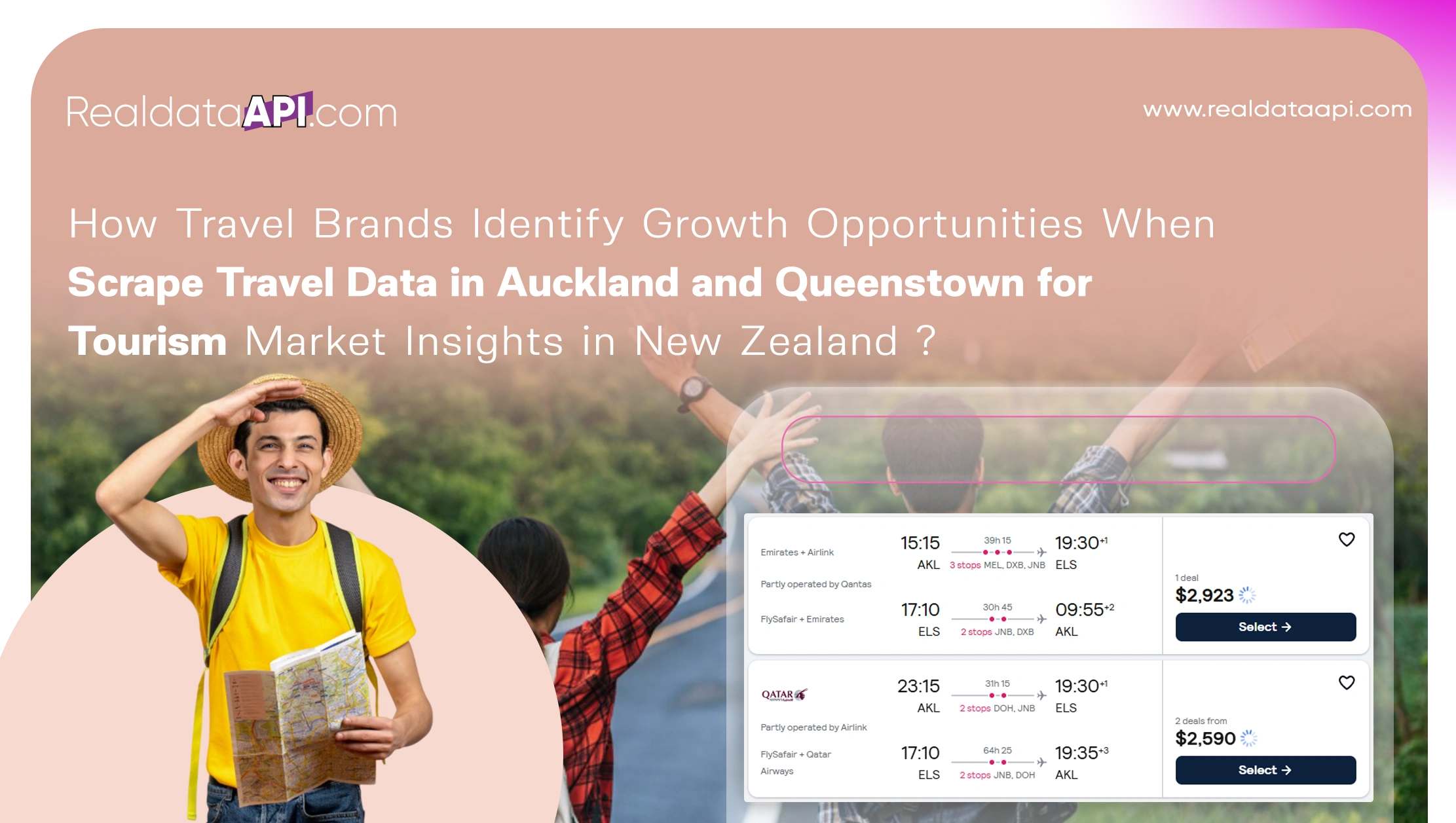
New Zealand’s tourism sector, especially in key destinations like Auckland and Queenstown, is highly competitive and constantly evolving. Travel brands must navigate fluctuating demand, seasonal pricing changes, and shifting customer preferences to stay ahead. However, relying on outdated or fragmented data often leads to missed opportunities and ineffective strategies. This is where the ability to Scrape travel data in Auckland and Queenstown for tourism market insights becomes essential for gaining a competitive edge.
By leveraging a powerful Travel Data Scraping API, businesses can automate the extraction of hotel prices, booking trends, customer reviews, and competitor offerings from multiple platforms. This provides real-time, structured data that enables smarter decision-making. Travel brands can monitor demand patterns, optimize pricing strategies, and identify emerging opportunities with precision. In this blog, we explore how companies use web scraping and analytics to unlock growth opportunities and thrive in New Zealand’s dynamic tourism market.
Unlocking Booking and Pricing Intelligence
Access to accurate booking and pricing data is critical for travel brands aiming to optimize revenue. By using tools to Extract travel booking and hotel price data Auckland and Queenstown, businesses can monitor fluctuations in room rates, booking patterns, and seasonal demand.
Between 2020 and 2026, tourism recovery and increased global travel have significantly impacted pricing dynamics in these cities.
| Year | Avg. Hotel Price (NZD/night) | Booking Growth (%) | Seasonal Demand Variation (%) |
|---|---|---|---|
| 2020 | 150 | -25% | 18% |
| 2022 | 180 | 12% | 22% |
| 2024 | 210 | 20% | 26% |
| 2026 | 250 | 28% | 32% |
With this data, businesses can adjust pricing strategies dynamically, maximize occupancy, and improve revenue management. It also helps identify peak booking periods and optimize promotional campaigns for better results.
Enhancing Customer Insights Through Reviews and Availability
Customer feedback and availability data provide valuable insights into traveler preferences and service quality. By leveraging Web Scraping NZ hotel availability and reviews data for tourism analytics, businesses can analyze guest sentiments, occupancy trends, and service gaps.
From 2020 to 2026, the influence of online reviews on booking decisions has grown significantly.
| Year | Reviews Analyzed (Millions) | Positive Sentiment (%) | Impact on Bookings (%) |
|---|---|---|---|
| 2020 | 10 | 70% | 22% |
| 2022 | 15 | 75% | 30% |
| 2024 | 22 | 80% | 38% |
| 2026 | 30 | 85% | 45% |
Analyzing reviews helps businesses identify strengths and weaknesses, improve service quality, and enhance customer satisfaction. Availability data also supports better inventory management and demand forecasting.
Monitoring Competitor Pricing Strategies
In a competitive tourism market, understanding competitor pricing is essential. Using travel competitor price monitoring New Zealand, businesses can track pricing strategies, promotional offers, and discounts across multiple platforms.
From 2020 to 2026, competitor monitoring has become a key factor in maintaining market competitiveness.
| Year | Competitor Listings Tracked | Pricing Accuracy (%) | Revenue Impact (%) |
|---|---|---|---|
| 2020 | 40,000 | 72% | 8% |
| 2022 | 65,000 | 80% | 12% |
| 2024 | 95,000 | 88% | 18% |
| 2026 | 140,000 | 94% | 25% |
By analyzing competitor data, businesses can adjust pricing strategies, identify gaps, and offer competitive deals. This ensures they remain attractive to customers while maximizing profitability.
Tracking Tourism Trends and Demand Patterns
Understanding tourism trends is essential for identifying growth opportunities. By using a New Zealand tourism trend Price monitoring data scraper, businesses can monitor demand patterns, seasonal trends, and traveler behavior.
From 2020 to 2026, tourism trends in Auckland and Queenstown have evolved significantly due to global travel recovery and changing preferences.
| Year | Tourist Arrivals (Millions) | Demand Growth (%) | Seasonal Impact (%) |
|---|---|---|---|
| 2020 | 1.5 | -30% | 20% |
| 2022 | 2.2 | 18% | 25% |
| 2024 | 3.0 | 25% | 30% |
| 2026 | 3.8 | 32% | 35% |
This data helps businesses anticipate demand, plan marketing strategies, and optimize operations. By staying updated on trends, companies can align their offerings with customer expectations.
Leveraging Structured Data for Strategic Growth
A well-organized Travel Dataset is essential for extracting meaningful insights from large volumes of data. By consolidating data from multiple sources, businesses can gain a comprehensive view of the tourism market.
From 2020 to 2026, the use of structured datasets has significantly improved decision-making in the travel industry.
| Year | Data Utilization (%) | Forecast Accuracy (%) | ROI Improvement (%) |
|---|---|---|---|
| 2020 | 42% | 70% | 9% |
| 2022 | 58% | 78% | 14% |
| 2024 | 72% | 86% | 20% |
| 2026 | 85% | 93% | 27% |
With structured datasets, businesses can identify patterns, forecast trends, and optimize strategies. This ensures better outcomes and sustained growth.
Scaling Data Operations with Advanced APIs
As data requirements grow, businesses need scalable solutions for efficient data extraction. A Web Scraping API enables automated and real-time data collection across multiple platforms.
From 2020 to 2026, API adoption has significantly improved efficiency and accuracy in the tourism industry.
| Year | API Adoption (%) | Data Accuracy (%) | Time Savings (%) |
|---|---|---|---|
| 2020 | 35% | 78% | 22% |
| 2022 | 50% | 85% | 34% |
| 2024 | 65% | 92% | 46% |
| 2026 | 80% | 96% | 60% |
APIs provide seamless integration with analytics platforms, ensuring continuous data flow and real-time insights. This allows businesses to focus on strategy rather than manual data collection.
Optimizing Marketing Campaigns with Data-Driven Insights
Marketing effectiveness in the tourism industry depends heavily on timing, audience targeting, and pricing strategies. By leveraging data-driven tourism marketing insights using scraped data, travel brands can analyze customer behavior, booking trends, and campaign performance across Auckland and Queenstown.
From 2020 to 2026, digital marketing in tourism has become increasingly data-centric, with businesses relying on real-time insights to improve ROI.
| Year | Marketing ROI Improvement (%) | Customer Targeting Accuracy (%) | Campaign Conversion Rate (%) |
|---|---|---|---|
| 2020 | 10% | 65% | 4.5% |
| 2022 | 16% | 72% | 6.2% |
| 2024 | 22% | 80% | 8.1% |
| 2026 | 30% | 88% | 10.5% |
By analyzing this data, businesses can create targeted campaigns based on traveler preferences, seasonal demand, and pricing trends. For example, promoting discounted packages during off-peak seasons can boost occupancy rates. Additionally, understanding customer segments allows brands to personalize offers and improve engagement. This approach ensures marketing budgets are utilized effectively while maximizing bookings and revenue.
Forecasting Demand and Improving Revenue Management
Accurate demand forecasting is essential for maximizing profitability in the tourism sector. By using predictive analytics on scraped travel data, businesses can anticipate booking trends, identify peak seasons, and adjust pricing strategies accordingly.
Between 2020 and 2026, predictive analytics adoption has significantly improved revenue management in the travel industry.
| Year | Forecast Accuracy (%) | Revenue Optimization (%) | Occupancy Rate Improvement (%) |
|---|---|---|---|
| 2020 | 68% | 9% | 6% |
| 2022 | 75% | 14% | 10% |
| 2024 | 83% | 20% | 14% |
| 2026 | 90% | 27% | 18% |
With predictive insights, travel brands can implement dynamic pricing strategies, ensuring optimal room rates based on demand. This helps avoid underpricing during peak periods and overpricing during low demand. Additionally, forecasting supports better resource allocation, staffing, and inventory management. By combining historical data with real-time insights, businesses can make proactive decisions that enhance profitability and maintain a competitive edge in Auckland and Queenstown’s tourism markets.
Why Choose Real Data API?
Real Data API provides advanced solutions for tourism data extraction and analysis. With powerful Enterprise Web Crawling capabilities, businesses can collect large-scale data efficiently and accurately. The platform is designed to Scrape travel data in Auckland and Queenstown for tourism market insights, delivering reliable and real-time datasets.
Real Data API offers scalable infrastructure, customizable solutions, and seamless integration to meet diverse business needs. Whether it’s tracking hotel prices, analyzing competitor strategies, or monitoring tourism trends, the platform delivers actionable insights that drive growth. Its commitment to data accuracy and compliance ensures businesses can rely on the information for critical decisions.
Conclusion
In New Zealand’s competitive tourism industry, access to accurate and timely data is essential for identifying growth opportunities. By leveraging advanced technologies to Scrape travel data in Auckland and Queenstown for tourism market insights, businesses can track pricing trends, monitor competitors, and optimize strategies effectively.
From booking intelligence to trend analysis and real-time monitoring, data-driven approaches empower travel brands to stay ahead of the curve and maximize profitability.
Ready to unlock powerful tourism insights? Partner with Real Data API today and Scrape travel data in Auckland and Queenstown for tourism market insights to drive smarter decisions and accelerate your business growth.
Latest posts
Truthsocial Data Scraping For Real-Time Social Media Insights

Zara Web Data Scraper For Fashion Trend Analysis - How Retailers Overcome Fast-Changing Fashion Demand & Inventory Challenges
How Real Estate Web Scraping Using Bayut API Solves Rental Pricing and Property Tracking Problems?

How Trendyol Data Collection for Ecommerce Market Research Solves Assortment, Pricing, and Market Intelligence Challenges?







.png)