.gif)
.png)

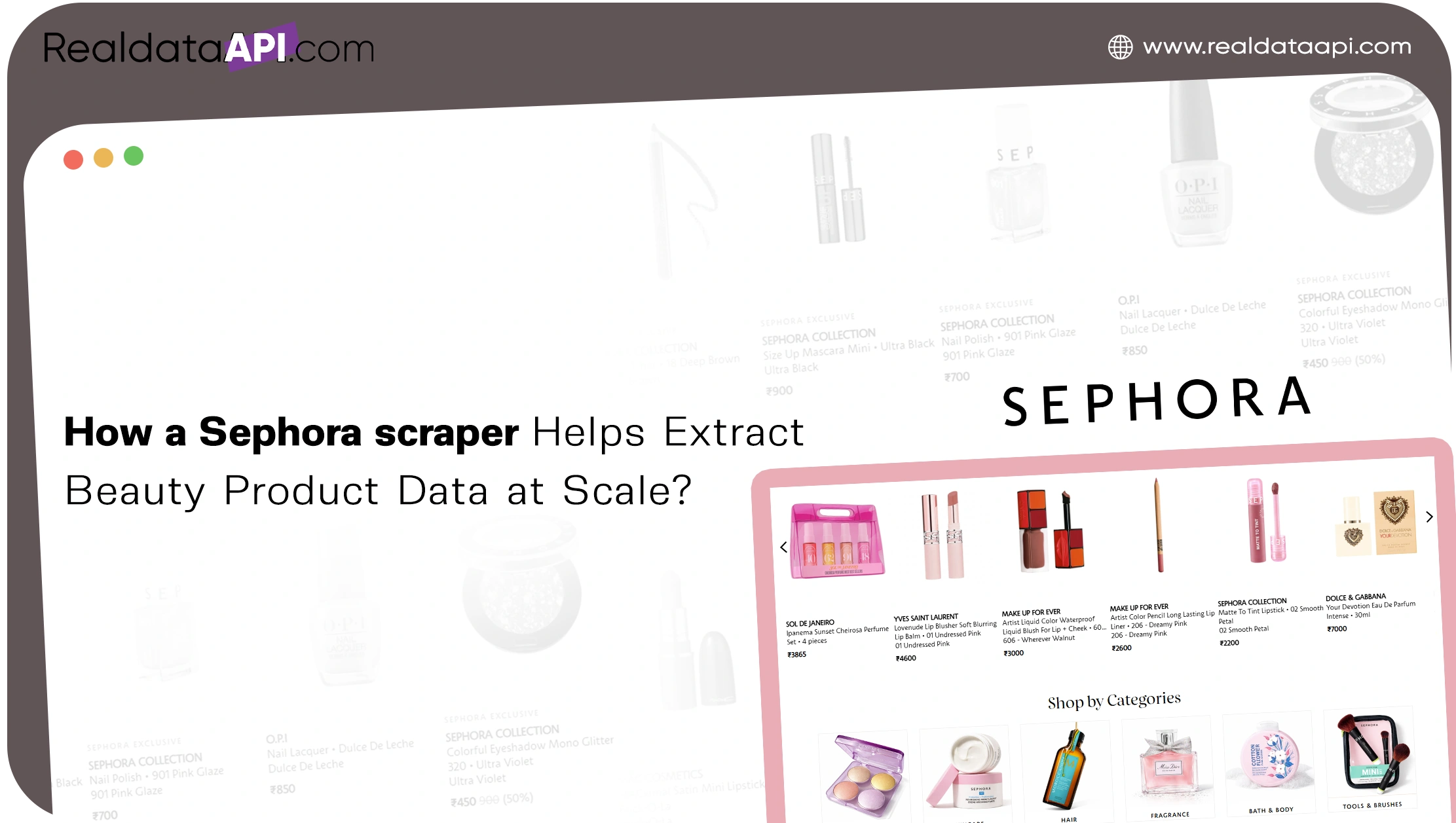
TL;DR
- Sephora scraper technology can help beauty brands, retailers, analysts, and e-commerce teams collect structured product information at scale for pricing, assortment, competitor, and market intelligence.
- Fashion Data Scraping workflows can organize product attributes, prices, availability, ratings, categories, and other publicly available signals into datasets that support faster commercial decisions.
- Sephora's scale makes automated product intelligence increasingly valuable. LVMH reported Sephora revenue of €18.262 billion in 2024 and €18.348 billion in 2025, with around 100 stores opened during 2025.
Introduction
Beauty e-commerce is highly dynamic. Product launches, price changes, promotions, ratings, stock positions, and assortment changes can happen frequently, making manual competitive research slow and difficult to maintain.
A Sephora scraper can help businesses collect publicly available beauty product information in a structured format. Instead of manually checking individual product pages, analysts can build repeatable datasets containing product names, brands, categories, prices, discounts, ratings, reviews, availability signals, and other relevant attributes.
This matters because Sephora has developed into a major global beauty retailer with a strong omnichannel strategy. LVMH reported that Sephora surpassed its 2019 activity level in 2021 after the pandemic disruption, supported by a strong rebound in stores and continued online-sales momentum.
Fashion Data Scraping can also provide a broader framework for analyzing beauty and fashion-adjacent retail data. A structured dataset allows businesses to compare products across brands, monitor competitive prices, identify assortment gaps, and understand changing market patterns.
For a pricing manager, the goal is not simply to gather more records. The goal is to convert frequently changing retail information into reliable, normalized data that can feed dashboards, market research, pricing models, and product intelligence systems.
How has Sephora's digital and retail presence evolved from 2020 to 2026?
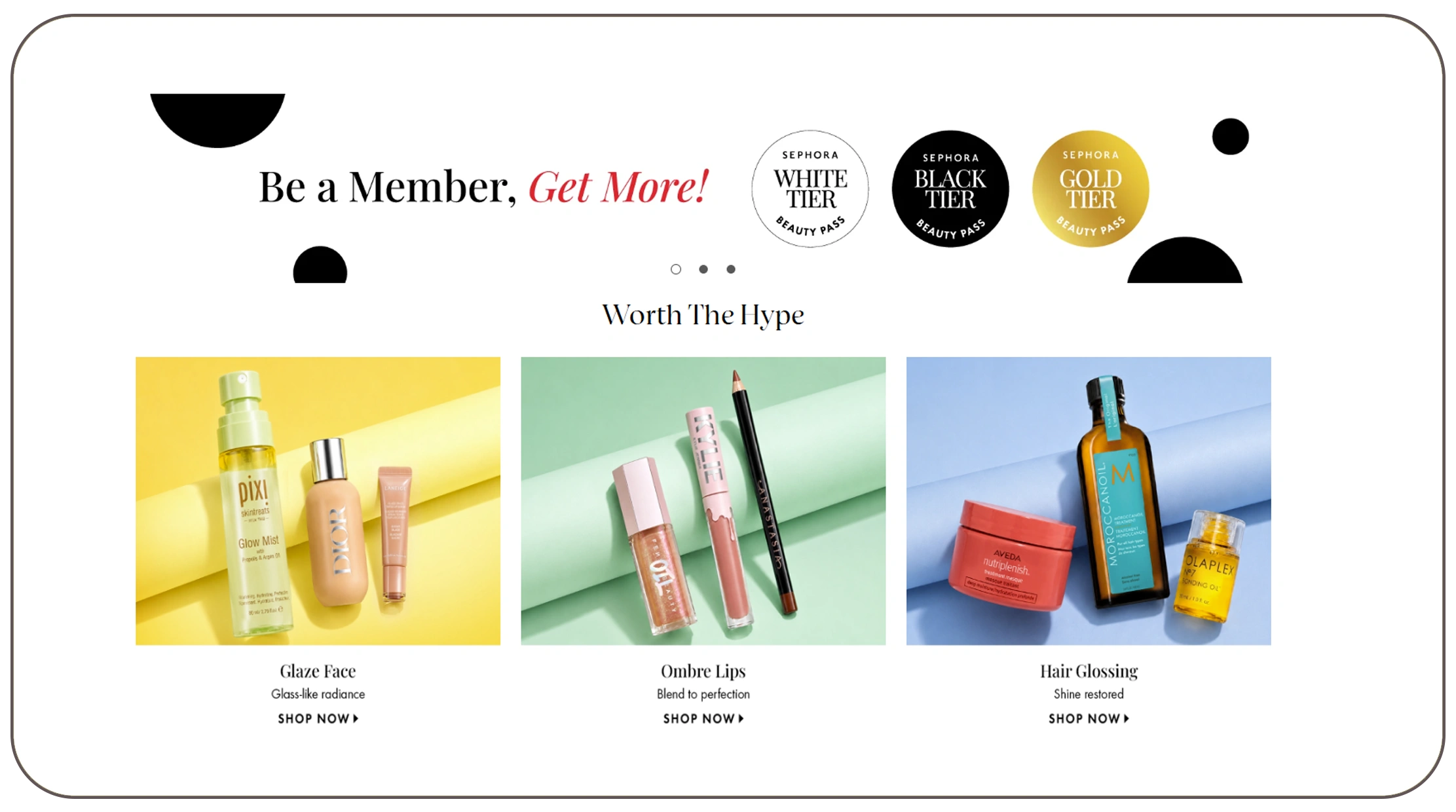
The 2020-2026 period shows why beauty product monitoring has become increasingly important. In 2020, the pandemic forced many physical stores to close temporarily, but Sephora accelerated online sales, Click & Collect, and Live Shopping. LVMH described online sales as reaching historic levels across markets during that period.
By 2021, Sephora had surpassed its 2019 level of activity, while its store network continued expanding, particularly in China and the United States. LVMH also highlighted the Kohl's partnership and Sephora's acquisition of Feelunique.
The expansion continued. In 2022, Sephora's first-half revenue reached €6.63 billion, up 22% versus the first half of 2021 on a comparable basis.
By 2024, Sephora's reported revenue reached €18.262 billion, representing 6% growth versus 2023 on a comparable structure and constant-currency basis. In 2025, revenue reached €18.348 billion, up 4%, while operating profit increased 28%.
Selected 2020-2026 indicators
| Year | Publicly reported Sephora/LVMH indicator | Data-intelligence relevance |
|---|---|---|
| 2020 | Online sales reached historic levels | Digital product monitoring became more important |
| 2021 | Sephora surpassed 2019 activity level | Recovery and assortment benchmarking |
| 2022 | H1 revenue €6.63B, +22% YoY | Faster commercial growth |
| 2023 | Baseline year for 2024 comparison | Continued international expansion |
| 2024 | Revenue €18.262B, +6% | Larger competitive dataset |
| 2025 | Revenue €18.348B, +4% | Continued omnichannel expansion |
| 2026 | Around 100 stores had been opened in 2025; omnichannel strategy continued | Higher monitoring complexity |
Note: These are reported corporate indicators, not a standardized annual product-database series. LVMH does not publicly disclose every product-level metric requested by data buyers.
For businesses, the message is clear: as retail operations expand across physical and digital channels, product intelligence needs to become more systematic.
What information can businesses capture from beauty retail pages?
Sephora beauty product data extraction can provide a structured view of a retailer's assortment. The exact fields depend on the business objective, but product title, brand, category, price, promotional information, ratings, reviews, availability, product attributes, and URLs can form the core dataset.
For a retailer, this dataset can answer questions such as:
- Which brands have the largest assortment?
- Which products are positioned at premium price points?
- Which categories are gaining or losing visibility?
- Which products have high ratings?
- Which products are repeatedly unavailable?
- Which competitors are introducing new products?
- How frequently do prices change?
- Which brands dominate specific beauty categories?
Product-data framework
| Data field | Business use |
|---|---|
| Product name | Product identification |
| Brand | Brand benchmarking |
| Category | Assortment analysis |
| Price | Competitive pricing |
| Discount | Promotion monitoring |
| Rating | Customer-sentiment signal |
| Review count | Product popularity proxy |
| Availability | Inventory visibility |
| Product attributes | Comparable-product analysis |
| Collection timestamp | Historical tracking |
The 2020-2026 period also demonstrates why historical snapshots matter. In 2020, online shopping behavior accelerated because physical retail was disrupted. By 2021, Sephora reported strong online momentum alongside store recovery. Later years brought continued omnichannel expansion.
A historical product dataset allows an analyst to move beyond a current snapshot. For example, a product that costs €30 today may have been priced at €28 six months earlier. A product that is unavailable today may have experienced repeated stock gaps. A new brand may have expanded from a handful of SKUs to a major category presence.
This historical layer is what turns product collection into commercial intelligence.
How can businesses monitor availability and assortment changes?
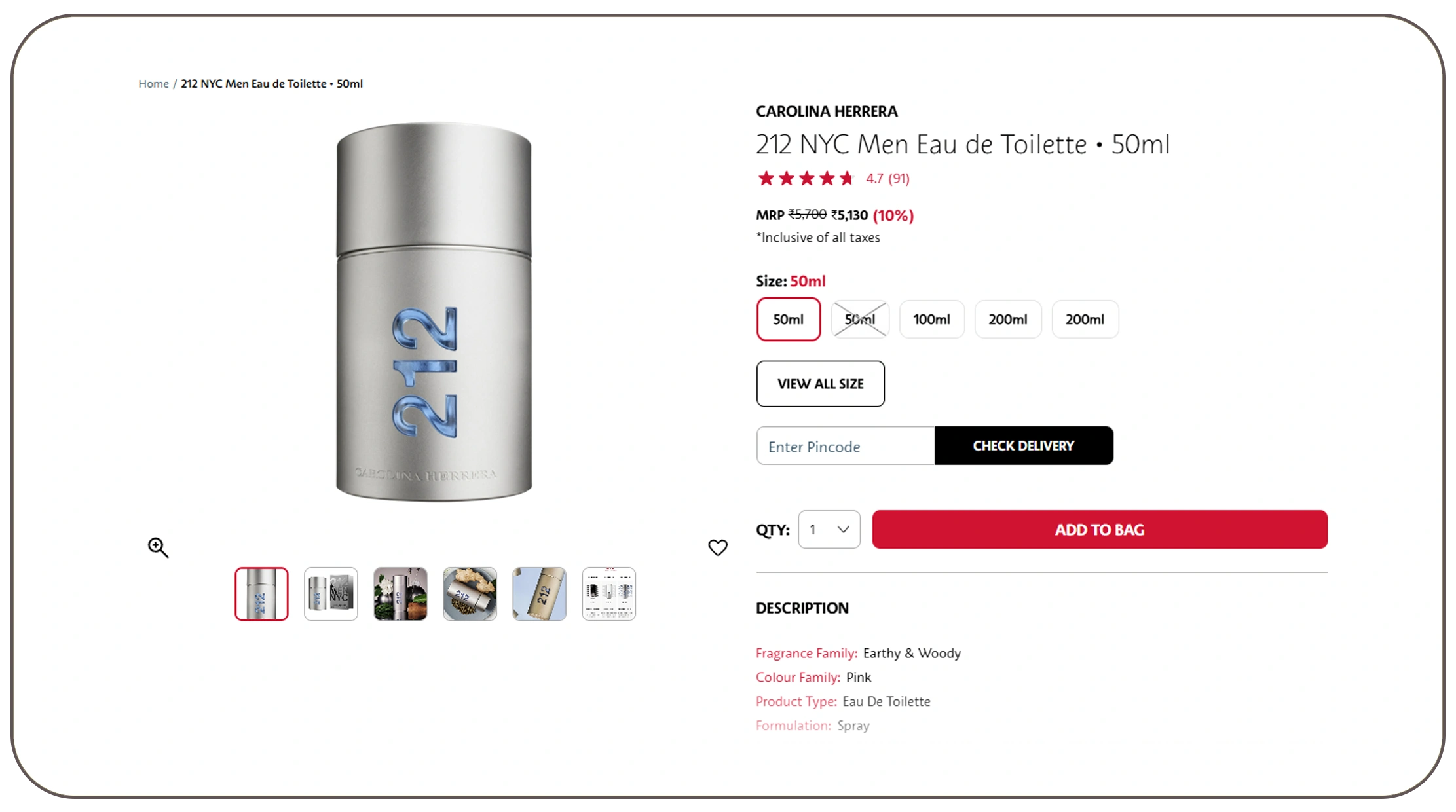
real-time Sephora product availability monitoring helps teams understand whether products are currently visible and purchasable rather than relying only on static catalogs.
Availability is particularly useful for competitive intelligence because a product being listed does not necessarily mean it is immediately available. Businesses may therefore track availability status alongside price, product URL, category, location or market, and collection timestamp.
The value increased during the pandemic period. In 2020, Sephora adapted its retail model through online sales, Click & Collect, and Live Shopping while physical stores faced closures.
By 2025, LVMH said Sephora was continuing to invest in its omnichannel strategy and had opened around 100 stores during the year.
Availability intelligence across the period
| Period | Market development | Monitoring priority |
|---|---|---|
| 2020 | Store closures and online acceleration | Online availability |
| 2021 | Store recovery and digital momentum | Cross-channel assortment |
| 2022 | Strong rebound in-store | Product availability |
| 2023 | International expansion | Category and market comparison |
| 2024 | Double-digit Sephora growth | Competitive assortment |
| 2025 | ~100 stores opened | Omnichannel monitoring |
| 2026 | Continued network and digital development | Continuous intelligence |
A business can use availability data to identify potential assortment gaps, compare competitors, and detect changes that might affect pricing decisions.
For example, if a competing premium moisturizer disappears from a retailer's online catalog while similar products remain available, the event can become an input into an assortment-monitoring system. It should not automatically be interpreted as inventory depletion, however, because page changes can have several explanations.
The best practice is to combine availability signals with repeated observations, timestamps, product identifiers, and historical records.
Build a continuously refreshed beauty product dataset with Real Data API and turn product availability signals into actionable competitive intelligence.
Get Insights Now!How can product attributes improve competitive analysis?
Businesses that extract Sephora beauty product information can create richer competitive datasets than price-only monitoring allows.
A product's price becomes much more meaningful when combined with brand, category, size, formulation, product type, rating, review volume, and promotional status. This makes it possible to compare genuinely similar products instead of comparing unrelated items.
For example, a €40 facial serum should ideally be compared with products sharing similar category, size, positioning, and formulation characteristics. Without normalization, simple price comparisons can generate misleading conclusions.
Example competitive intelligence model
| Dimension | Example analytical question |
|---|---|
| Brand | Which brands are expanding fastest? |
| Category | Which categories contain the most products? |
| Price | What is the median price by category? |
| Discount | Which brands use promotions most frequently? |
| Rating | Which products achieve stronger customer ratings? |
| Reviews | Which products attract greater customer engagement? |
| Size | How does price per unit vary? |
| Availability | Which products show recurring availability changes? |
| Launch timing | Which new products gain visibility quickly? |
From 2020 through 2026, Sephora's commercial trajectory demonstrates the importance of multi-dimensional data. LVMH described strong online momentum in 2020, a return above 2019 activity in 2021, strong growth in 2022, and double-digit growth for Sephora in 2024.
For analysts, the practical takeaway is to collect enough contextual information to explain price and assortment differences.
A strong product dataset should also preserve historical timestamps. This allows businesses to calculate price movement, detect newly added products, identify discontinued listings, compare promotional periods, and measure assortment changes.
What role can an API play in scalable product intelligence?
A Sephora product data API can make structured product intelligence easier to integrate into business applications. Rather than requiring analysts to repeatedly collect pages and manually transform information, an API-oriented workflow can provide standardized records for downstream systems.
The most useful architecture separates collection from analytics. Data is collected first, normalized second, stored historically, and then delivered to dashboards or analytical applications.
Example API data pipeline
| Layer | Purpose | Example output |
|---|---|---|
| Collection | Gather permitted public data | Raw product records |
| Parsing | Identify fields | Price, brand, rating |
| Normalization | Standardize data | Comparable SKUs |
| Validation | Check quality | Clean records |
| Storage | Preserve history | Product time series |
| API delivery | Distribute data | JSON/API response |
| Analytics | Generate insights | Price and assortment trends |
This structure is useful for retailers, brands, agencies, market researchers, and data teams.
A retailer could use the dataset for competitive pricing. A beauty brand could monitor its assortment position. A research organization could analyze category growth. A product intelligence platform could combine retailer data with internal sales information.
The key is to define collection requirements before building the pipeline. Important decisions include target categories, geographic market, required fields, refresh frequency, historical requirements, and output format.
Data governance is equally important. Automated collection should respect applicable laws, platform terms, access restrictions, privacy requirements, and appropriate request rates. Data minimization is preferable to collecting unnecessary personal information.
How can automated collection support beauty-market intelligence?
A Sephora Scraper can be used as part of a broader product-intelligence workflow designed to transform changing retail information into structured datasets.
For large-scale monitoring, the objective should not be simply to collect as many pages as possible. Instead, businesses should define a repeatable data model.
Recommended data model
| Dataset component | Recommended fields |
|---|---|
| Product | Name, SKU, URL |
| Brand | Brand name, brand category |
| Pricing | Current price, original price, discount |
| Classification | Category, subcategory |
| Product attributes | Size, formulation, features |
| Reviews | Rating, review count |
| Availability | Status, timestamp |
| Metadata | Collection date, market |
| History | Previous observations |
This approach supports both operational and strategic use cases.
Operational teams can identify current pricing and availability changes. Strategic teams can analyze assortment expansion, brand positioning, category development, and competitive behavior.
The 2024 and 2025 results demonstrate the commercial scale behind this requirement. Sephora generated €18.262 billion in revenue in 2024 and €18.348 billion in 2025, while LVMH said the retailer continued gaining market share in multiple countries.
For a buyer evaluating data infrastructure, the main question should therefore be: Can the system produce consistent, timestamped, structured records at the frequency required by the business?
If the answer is yes, the resulting dataset can become an input into pricing intelligence, assortment planning, market research, competitor monitoring, and business dashboards.
Why should businesses build a dedicated beauty data pipeline?
Sephora Product Data Scraping becomes more valuable when it is treated as a data-engineering process rather than a one-off extraction task.
A dedicated pipeline can support scheduled collection, normalization, validation, historical storage, and downstream delivery. This allows businesses to compare products consistently over time.
A Fashion Dataset can also provide a broader analytical foundation when beauty and fashion categories overlap in consumer behavior, pricing strategy, brand positioning, and e-commerce trends.
For data buyers, several capabilities matter:
- Scalability: The workflow should support growing product volumes.
- Freshness: Refresh schedules should match business requirements.
- Normalization: Similar products should be represented consistently.
- Historical storage: Previous observations should remain available.
- Quality control: Missing or malformed fields should be detected.
- Integration: Data should be usable by BI tools and internal applications.
- Governance: Collection should follow applicable legal and platform requirements.
This is especially relevant as Sephora continues expanding its omnichannel model. LVMH reported around 100 Sephora store openings during 2025 and continued investment in its digital and physical retail experience.
A data pipeline can help businesses keep pace with assortment complexity without requiring analysts to repeatedly perform the same manual research.
Why Choose Real Data API?
Real Data API can provide a practical infrastructure layer for organizations that need scalable product and marketplace intelligence.
For businesses evaluating a Fashion Dataset, the primary advantage is the ability to transform changing retail information into structured, reusable records rather than isolated research snapshots.
A well-designed data workflow can support product discovery, price monitoring, assortment benchmarking, availability tracking, competitor analysis, and historical research.
The solution is particularly relevant for teams that need to integrate collected information into existing applications. Structured API delivery can reduce the operational burden associated with repeatedly downloading, cleaning, and formatting data.
The strongest implementation starts with the buyer's actual requirements: target market, product categories, fields, refresh rate, historical depth, and output format.
Businesses should also treat responsible data collection as part of the architecture. Appropriate controls, validation, rate management, privacy considerations, and platform-policy compliance help create a more sustainable data operation.
For brands, retailers, market researchers, and analytics companies, the objective is simple: create a dependable product-data layer that turns marketplace changes into measurable business signals.
What should businesses consider before scaling beauty data collection?
A successful beauty-data program requires more than extraction technology. It requires a clear definition of the business problem.
If the goal is price intelligence, price, discount, product identity, size, timestamp, and comparable-product attributes may be the highest priorities.
If the goal is assortment intelligence, brand, category, product type, availability, launch timing, and product attributes become more important.
If the objective is market research, historical snapshots and geographic segmentation can be more valuable than extremely frequent collection.
Buyer decision framework
| Business objective | Priority data | Recommended refresh |
|---|---|---|
| Price monitoring | Price, discount, product identity | High |
| Assortment research | Brand, category, SKU, availability | Daily/weekly |
| Product research | Attributes, ratings, reviews | Scheduled |
| Competitive analysis | Price, assortment, promotions | Regular |
| Trend analysis | Historical product observations | Long-term |
| Market sizing | Listings, categories, product counts | Periodic |
The 2020-2026 period reinforces this distinction. Sephora moved from pandemic-era digital acceleration to strong omnichannel growth and continued global expansion.
Therefore, the ideal data frequency is not necessarily "as fast as possible." It is the frequency that captures commercially meaningful changes without creating unnecessary collection costs.
Businesses should also validate whether a change is real before acting on it. A temporary page error, regional variation, product relaunch, or catalog restructuring can look like a meaningful market event if historical context is missing.
The strongest systems combine automation with validation rules and historical comparison.
Conclusion
A Sephora scraper can help businesses transform frequently changing beauty-retail information into structured datasets for pricing, product, assortment, availability, and competitive intelligence.
The opportunity has grown alongside Sephora's commercial expansion. LVMH reported €18.262 billion in Sephora revenue for 2024 and €18.348 billion for 2025, while noting continued market-share gains and further retail-network expansion.
For data buyers, the strongest approach is not simply collecting product pages. It is building a reliable pipeline that captures relevant fields, normalizes records, preserves historical observations, validates changes, and delivers data into business systems.
That enables pricing teams to benchmark competitors, product teams to analyze assortments, researchers to identify trends, and brands to understand market positioning.
Start building scalable beauty product intelligence with Real Data API and turn continuously changing product, price, and availability signals into actionable business insights!
FAQs
What is a Sephora scraper used for?
A Sephora scraper helps businesses collect publicly available product, pricing, assortment, rating, and availability information for competitive intelligence and market analysis at scale.
How does Fashion Data Scraping help beauty businesses?
Fashion Data Scraping can organize product attributes, prices, categories, ratings, and availability into structured datasets, helping retailers benchmark competitors and identify assortment opportunities.
Can Real Data API support beauty product collection?
Real Data API can support structured workflows for collecting Sephora Scraper outputs, enabling businesses to integrate product intelligence into databases, dashboards, analytics platforms, and applications.
What insights come from Sephora Product Data Scraping?
Sephora Product Data Scraping can help analyze prices, discounts, brands, categories, ratings, availability, and product changes to support competitive research and assortment decisions.
Why build a Fashion Dataset?
A Fashion Dataset can consolidate structured retail information across products, brands, categories, pricing, and availability, giving analysts historical data for market research, benchmarking, and trend analysis.
Latest posts
Keeta scraper for monitoring food marketplace trends - Identify Discount Changes and Emerging Customer Demand
How to build a structured Nike product dataset for Product Intelligence and Retail Analytics
Allegro scraper for competitor price monitoring – How to Track Product Prices and Stay Ahead of Competitors
Ocado API data collection services for retailers - Track Competitor Prices and Deals






.png)