.gif)
.gif)
Introduction
When a highly anticipated electronics product launches, stock moves fast. A few units appear in one pincode, vanish within minutes and reappear later after a restock. Buyers who want the product are glued to apps, refreshing pages. Businesses see the same behaviour from the other side: resellers, deal communities, brand teams and market researchers all want to know exactly when and where the product is in stock. An automated stock availability monitoring system with WhatsApp alerts answers that need. This guide explains how such a system works for a small set of high-demand SKUs across Blinkit, Zepto, Flipkart and Swiggy Instamart, covering around 200 pincodes in Delhi and Delhi NCR, with status checks every ten minutes.
For a broader view of the data fields and collection options behind this workflow, see Real Data API’s quick commerce data scraping API, which covers product listings, pricing, stock status and store availability across supported platforms.
The Scenario
A typical request looks like this:
- SKUs: about three high-demand electronics products, such as newly launched phones or laptops in specific colours
- Platforms: Blinkit, Zepto, Flipkart and Swiggy Instamart, and possibly more later
- Coverage: around 200 pincodes across Delhi and the National Capital Region
- Frequency: a status check every 10 minutes
- Alerts: WhatsApp notifications when a product moves between in stock and out of stock or sold out
This is a small catalogue with very large location and time coverage, which makes the system an engineering challenge rather than a data-volume challenge.
Why Quick Commerce And Marketplaces Behave Differently
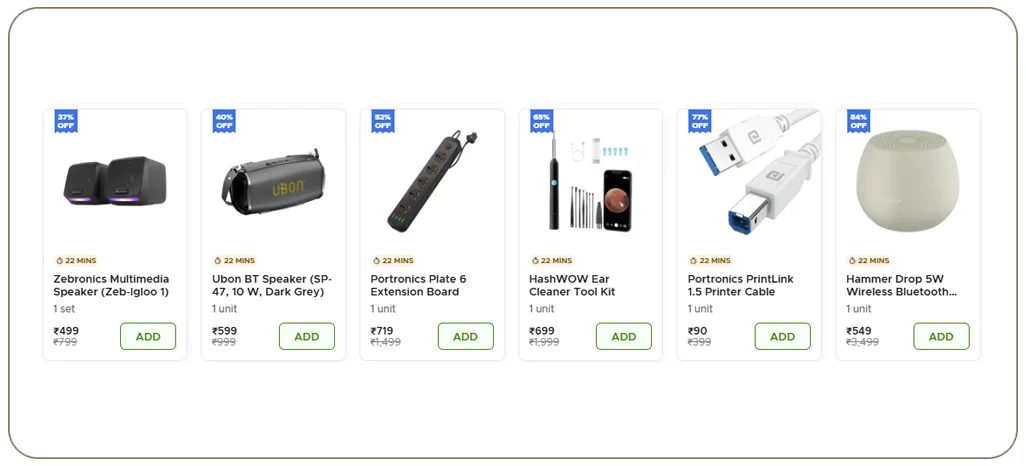
Quick-commerce apps such as Blinkit, Zepto and Swiggy Instamart serve from nearby dark stores. Stock is hyperlocal and tiny: a dark store may hold one or two units of an expensive item, or none. A pincode can flip from sold out to available within minutes when a store receives stock.
For platform-level implementation details, the Blinkit data API, Zepto API and Swiggy API pages describe the product, inventory and pincode-related fields available from these quick-commerce ecosystems.
Flipkart, as a marketplace, shows availability by delivery pincode, based on the seller's inventory and the fulfilment centre. Changes are less frequent than in quick commerce, but launch-day sell-outs and restocks still happen quickly.
For marketplace checks, the Flipkart data scraping API includes listing availability and pincode-level delivery information, alongside seller and product details.
Because the mechanics differ, the monitoring logic and the interpretation of statuses differ too.
The Scale Of The Problem
A simple calculation shows the workload. With 3 SKUs, 4 platforms and 200 pincodes, each cycle makes 2,400 checks. With a check every 10 minutes, there are 144 cycles per day, which means 345,600 checks per day. Some of these are cheap, because a platform may show the same dark-store state for neighbouring pincodes, but the system must still verify each location it claims to cover. That scale requires parallel workers, careful scheduling and efficient request handling.
Optimising The Pincode List
Covering 200 pincodes does not mean 200 independent checks in all cases. Many pincodes are served by the same dark store or fulfilment centre and therefore show the same availability. A smart design builds a mapping between pincodes and serving stores during an initial discovery phase. Once the mapping is known, the system can check one representative pincode per store and apply the result to the group, with periodic verification checks to confirm the mapping still holds. This can cut the number of requests a lot while preserving accuracy.
This location-aware approach is also relevant to grocery and store-level scraping, where the selected store or pincode can affect the stock and delivery data returned for the same item.
Statuses To Capture
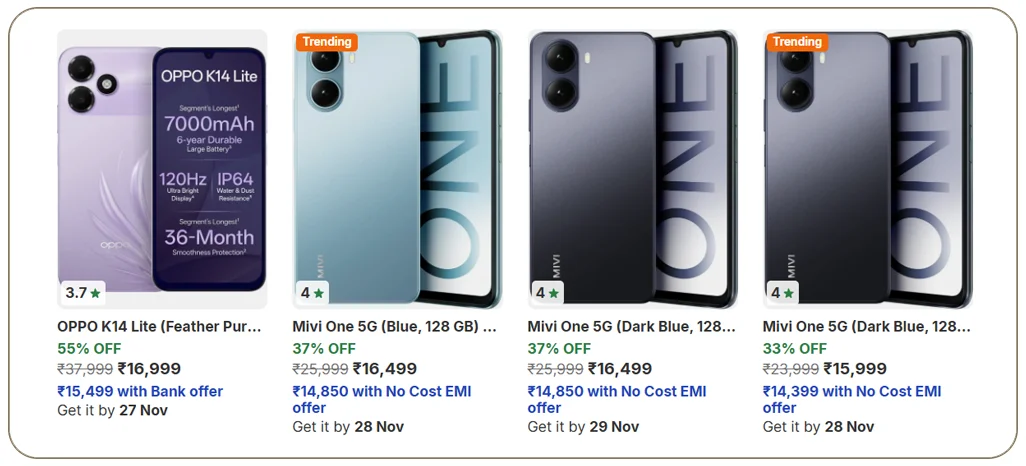
A reliable system defines a clear set of statuses and maps each platform's wording to them:
- In stock: the product can be added to cart
- Low stock: a limited stock message is shown
- Out of stock or sold out: the product is visible but cannot be bought
- Not listed: the product does not appear at that location
- Coming soon or notify me: the platform shows a pre-launch state
- Unknown or error: the check failed or was inconclusive
The last status is important. A failed check must never be reported as sold out. Treating errors as unknown prevents false alerts.
Alert Logic
The value of the system lies in the alerts. Good alert design includes:
- State changes only: send a message when a product's status changes, not on every check
- Confirmation: require two consecutive checks to agree before sending an alert, to avoid flapping caused by temporary glitches
- Grouping: combine multiple pincodes served by the same store into one alert
- Priority rules: treat a product coming into stock as higher priority than going out of stock
- Rate limits: avoid flooding the recipient during volatile periods by batching messages
- Quiet hours and filters: allow recipients to choose pincodes, platforms and products
A typical alert message might say that the product is now in stock at a platform for a set of pincodes, with the time of detection and a link to open the product.
The same product-status feed can support wider price monitoring and automated alerts when teams need to review stock changes alongside competitor prices, discounts and promotions.
WhatsApp Delivery: What To Know
WhatsApp is a popular channel in India, but automated messaging must follow the rules of the WhatsApp Business Platform:
- Businesses send automated messages through the official WhatsApp Business API, usually via an approved provider.
- Messages sent outside a customer-initiated conversation window generally need to use pre-approved templates.
- Recipients must have opted in to receive messages.
- Pricing is typically per message or per conversation, so message volume affects cost.
- Message formatting is limited, so alerts must be short and clear.
For internal teams, a small group of recipients is straightforward. For public alert services with many subscribers, opt-in management, unsubscribe handling and cost control become important parts of the design.
System Architecture
A robust system has several components:
- Configuration store: SKUs, platforms, pincodes, recipients and alert rules
- Scheduler: triggers a check cycle every 10 minutes and balances the load
- Checkers: platform-specific workers that set the pincode, load the product and read the status
- State store: the latest status for each SKU, platform and pincode, plus a history
- Change detector: compares new status with the previous one and applies confirmation rules
- Alert service: formats messages and sends them through the WhatsApp provider
- Dashboard: shows current status, history and system health
- Monitoring: tracks success rates, latencies and layout changes, and alerts the engineering team when a checker fails
Technical Challenges
- Anti-bot protection: these platforms limit automated traffic. Checking hundreds of pincodes every ten minutes requires careful pacing, rotation and ongoing maintenance, and some platforms may make this level of frequency harder than others.
- App-first quick-commerce platforms: collection often relies on mobile endpoints that change.
- Pincode setting reliability: the pincode must be applied and verified on each check.
- Speed: a cycle of 2,400 checks must complete well within ten minutes, so the system needs enough parallel capacity.
- Accuracy under volatility: statuses can flip quickly. Confirmation rules balance speed against false alerts.
- Product matching: the exact variant, such as a specific storage size and colour, must be identified correctly on each platform.
- Cost control: high-frequency checks and WhatsApp messages both cost money, so the design should avoid unnecessary requests and messages.
- Platform terms: frequent automated checks may conflict with platform terms, so legal and policy review is important.
Use Cases
- Individual buyers and deal communities: get notified the moment a sought-after product appears.
- Resellers and retailers: track competitors' stock and plan purchases. Retail teams comparing stock and product movement across marketplaces can also use e-commerce data scraping to bring product, seller and listing information into a consistent analysis workflow.
- Brands: monitor availability of launch products on partner platforms, and identify locations where stock is missing.
- Market researchers: study how quickly launch stock sells out and where.
- Customer-support and PR teams: understand why customers report that a product is unavailable.
- Media and influencers: track availability for coverage and community updates.
Example: Launch-Day Brand Monitoring
A brand launches a flagship product exclusively through several platforms. Its channel team sets up monitoring for the product's top two variants across 200 pincodes in the capital region. During the first hours, the system shows that quick-commerce platforms sell out within minutes in affluent areas, while a marketplace still shows stock in the same areas. The team uses the data to prioritise replenishment to the dark stores that sell out first and to communicate availability on social media.
Example: A Community Alert Service
A tech-deals community creates a WhatsApp group for subscribers in Delhi. The monitoring system sends an alert whenever one of three target products becomes available in any covered pincode, with the platform, the pincodes and a link. The community manager adjusts the alert rules during peak launch days to avoid overloading members.
Sample Data Model
The state store holds rows such as: SKU ID, platform, pincode, store group, status, last-checked time, last-changed time and confidence. The history table stores each change with a timestamp, previous status and new status. Alert logs record each message with recipient, template, time and delivery result. This makes it easy to audit what was sent and why.
Metrics Worth Tracking
- Time to detect: how long it takes from a status change to an alert
- Check success rate: the share of checks that return a clear status
- False alert rate: alerts later found to be wrong
- Availability windows: how long each product stays in stock at each location
- Sell-out speed: time from restock to sold out
- Coverage: share of pincodes checked on schedule
Delivery And Integration Options
Besides WhatsApp, the same events can be delivered by email, SMS, Telegram, Slack, webhooks or an API. Dashboards can show live availability maps by pincode, which are useful for brand teams. Data can also be exported for analysis after the launch.
Responsible Use
Collect only publicly visible availability information, avoid personal data other than recipients' opted-in contact details, keep request rates sensible and respect platform terms and applicable laws. Follow the WhatsApp Business policies, including consent and opt-out handling. Avoid using the system to enable abusive purchasing behaviour, such as automated checkout, which platforms prohibit.
Why Choose Real Data API For Stock Availability Monitoring
Real Data API designs high-frequency, pincode-aware monitoring with store mapping, confirmation rules and WhatsApp alerting. We can start with a pilot on one platform and a few dozen pincodes to prove accuracy, speed and cost before extending to the full 200 pincodes and four platforms.
For a pilot that spans quick-commerce and marketplace sources, explore the Quick Commerce API, the platform-specific Blinkit API, Zepto API, Swiggy API and Flipkart API. The exact coverage, refresh interval and fields should be confirmed during scoping and a pilot.
Conclusion
Automated stock availability monitoring with WhatsApp alerts gives buyers, brands and researchers instant visibility into where high-demand electronics are in stock. With smart pincode mapping, careful status logic and responsible alerting, a small set of SKUs can be watched across hundreds of pincodes in near real time.
Need stock monitoring and alerts? Real Data API can design a pilot for your products and pincodes.
FAQs
Can checks run every 10 minutes for 200 pincodes?
Yes, with parallel workers and store mapping. Cost and feasibility depend on each platform's protections, which a pilot will test.
How do you avoid false alerts?
Failed checks are treated as unknown, and alerts require confirmation from consecutive checks.
Can alerts go to several people?
Yes. Recipients, products, platforms and pincodes can be configured per person or group.
Is WhatsApp the only channel?
No. Email, SMS, Telegram, Slack and webhooks can also be used.
Can you add more platforms or products later?
Yes. The configuration-driven design allows new SKUs, platforms and pincodes to be added.
Latest posts
Stock Availability Monitoring with WhatsApp Alerts: Tracking High-Demand Electronics Across Blinkit, Zepto, Flipkart and Instamart
Cyber Week Stock Tracking in 2026: How Meesho Monitor Product Availability and Restocks in Real Time
How to Scrape Amazon Fresh Grocery Delivery Data in 2026 - How to Monitor Competitor Prices and Protect Grocery Retail Profit Margins
Quick Commerce Data Scraping - Tracking Blinkit, Zepto and Instamart During New Year 2026




.png)


