Introduction
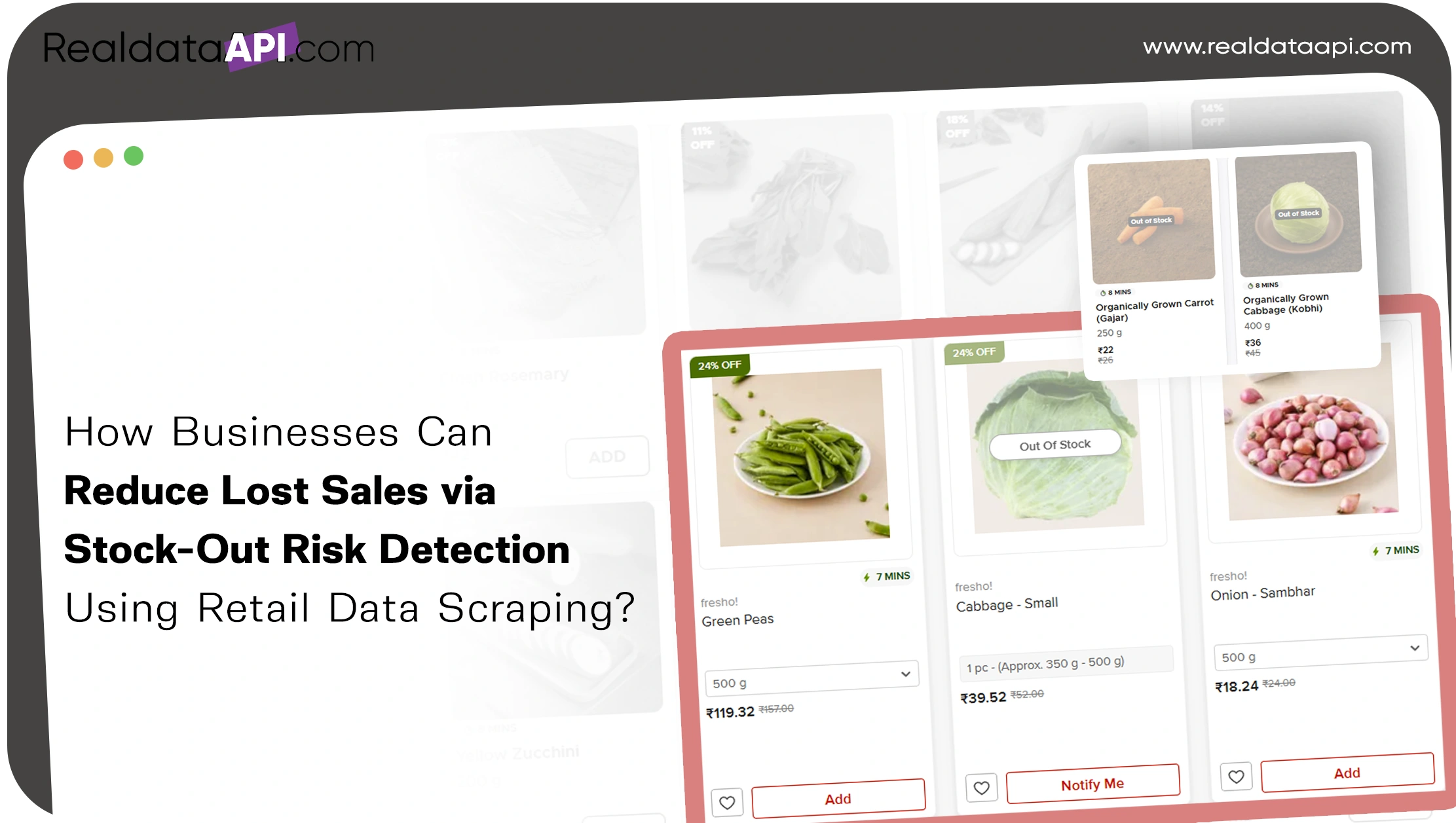
Businesses can significantly reduce lost sales by identifying inventory shortages before they impact customers. Using stock-out risk detection using retail data scraping, retailers gain real-time visibility into product availability, demand fluctuations, and inventory gaps, enabling proactive replenishment and better customer satisfaction.
Industry Insight: According to industry estimates, retailers lose billions annually due to stock-outs, with inventory unavailability contributing to nearly 8–10% of missed sales opportunities globally. Between 2020 and 2026, increasing demand for real-time retail intelligence has accelerated investment in inventory analytics and automated monitoring solutions.
For grocery retailers, quick commerce platforms, and omnichannel brands struggling with inventory visibility, data-driven stock monitoring has become essential. Modern businesses leverage Quick Commerce Data Scraping API solutions to collect real-time inventory signals, monitor competitor availability, and forecast stock shortages before they occur.
As consumer expectations for instant fulfillment continue rising, proactive inventory intelligence is no longer optional. Businesses that implement retail data scraping can optimize replenishment cycles, reduce lost revenue, improve customer retention, and gain a significant competitive advantage.
How Can Retailers Improve Inventory Visibility Before Stock Runs Out?
Inventory visibility remains one of the biggest challenges in modern retail. Retailers often struggle with fragmented systems, delayed reporting, and inconsistent stock updates across channels.
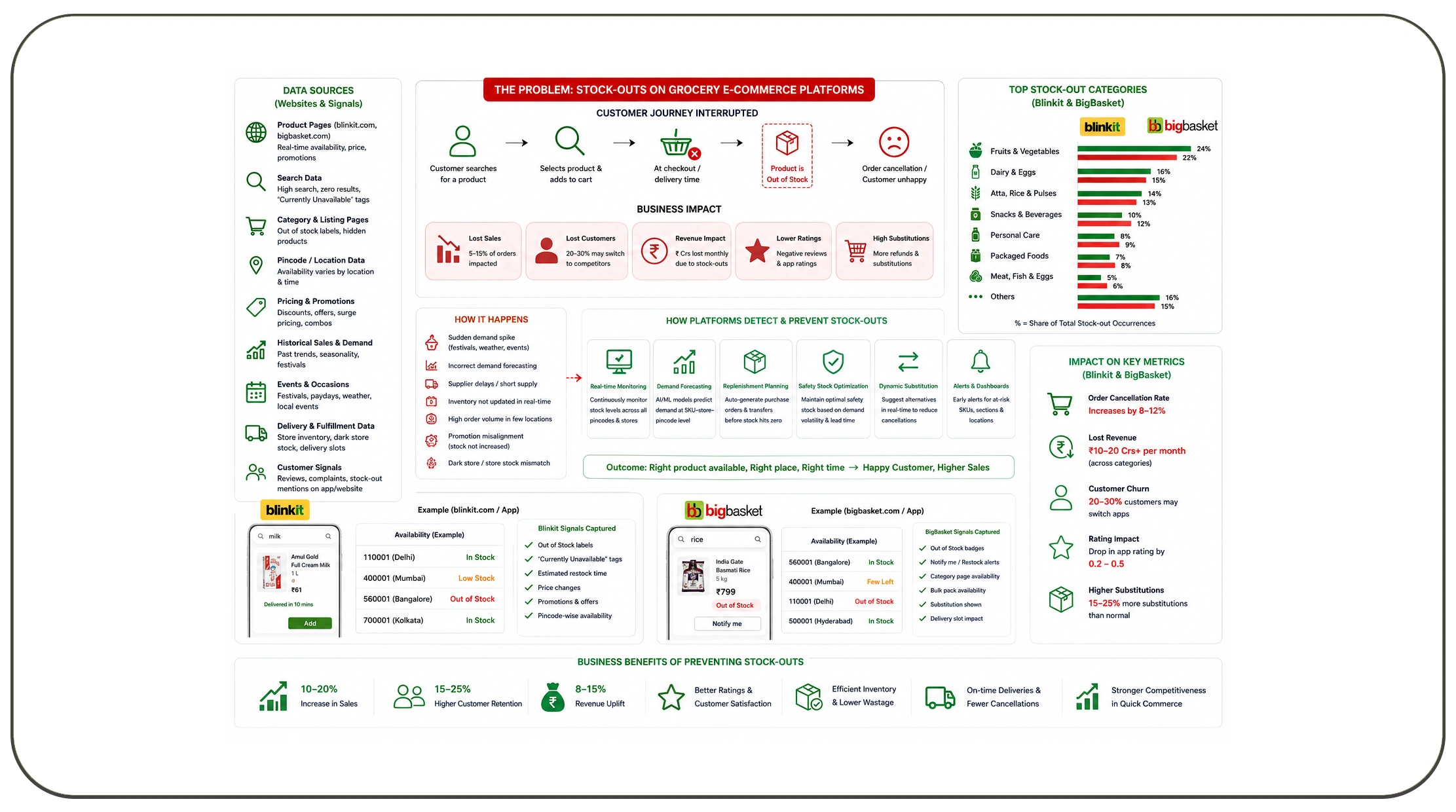
The solution is to Scrape stock availability intelligence data for retailers and centralize insights into a unified monitoring framework. Real-time inventory tracking enables businesses to identify stock risks earlier and react before shortages affect customers.
Retail Inventory Intelligence Trends (2020–2026)
| Year | Retail Inventory Monitoring Adoption (%) | Average Stock-Out Rate (%) |
|---|---|---|
| 2020 | 32 | 10.8 |
| 2021 | 38 | 10.1 |
| 2022 | 46 | 9.4 |
| 2023 | 54 | 8.7 |
| 2024 | 63 | 8.0 |
| 2025 | 70 | 7.3 |
| 2026 | 78 | 6.5 |
Key Benefits
- Early detection of inventory shortages
- Improved replenishment planning
- Enhanced customer satisfaction
- Better warehouse allocation
- Reduced revenue leakage
Retailers that continuously monitor inventory signals can respond faster to demand changes while minimizing lost sales opportunities.
How Does Predictive Analytics Help Prevent Stock-Outs?
Traditional inventory systems react after products become unavailable. Predictive analytics enables businesses to anticipate shortages before they occur.
Through retail stock-out prediction using web scraping, retailers collect historical inventory trends, competitor stock movements, seasonal demand patterns, and product performance data.
Why Predictive Models Matter
Predictive systems evaluate:
- Product demand velocity
- Inventory depletion rates
- Promotional impacts
- Regional buying patterns
- Competitor inventory shifts
Retail Forecasting Growth
| Year | Businesses Using Predictive Inventory Analytics (%) |
|---|---|
| 2020 | 24 |
| 2021 | 29 |
| 2022 | 37 |
| 2023 | 45 |
| 2024 | 54 |
| 2025 | 63 |
| 2026 | 72 |
When integrated into inventory workflows, predictive models can improve replenishment accuracy and reduce operational disruptions.
Retailers gain confidence in decision-making because inventory actions become proactive rather than reactive.
Why Is Continuous Inventory Monitoring Important?
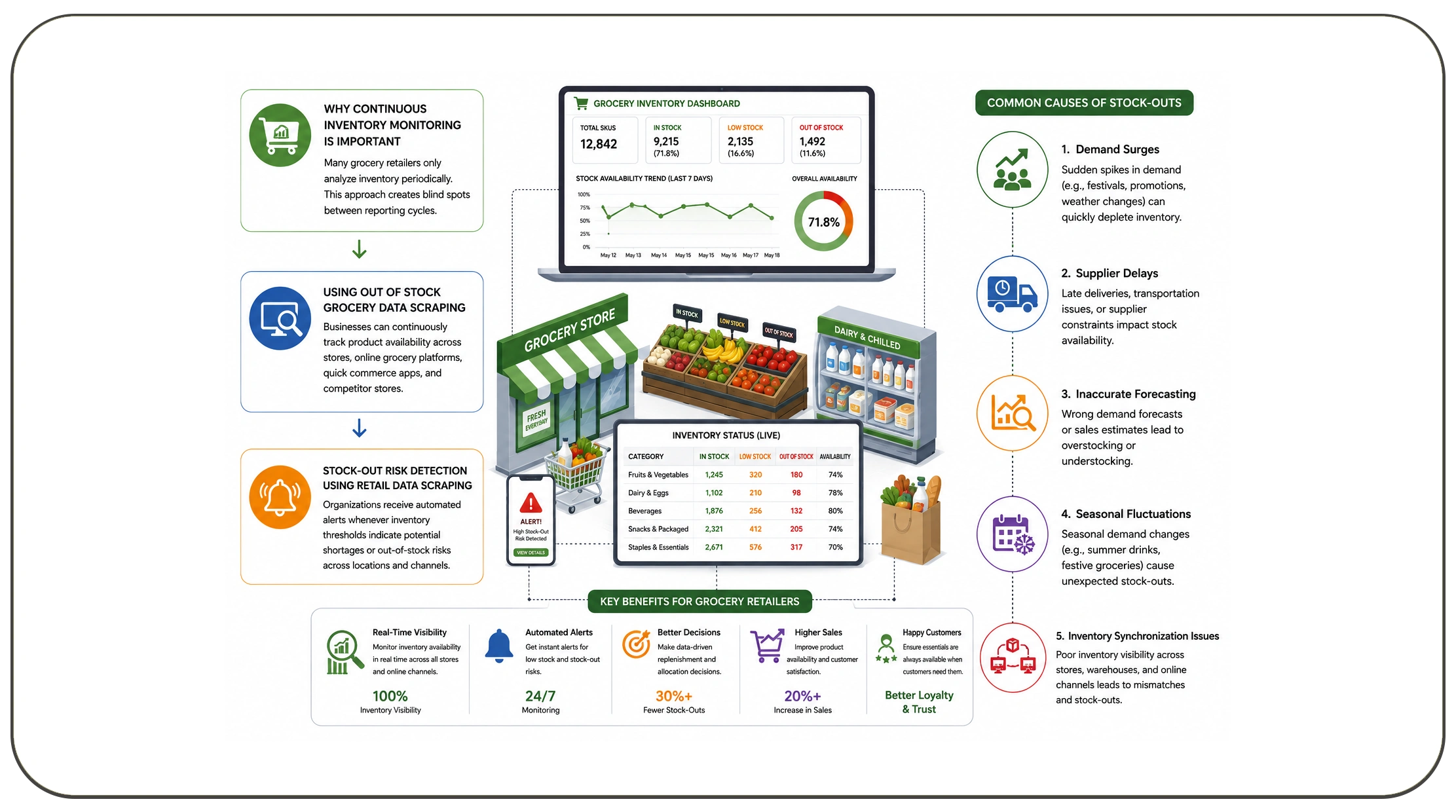
Many retailers only analyze inventory periodically. This approach creates blind spots between reporting cycles.
Using out of stock inventory data scraping, businesses can continuously track product availability across stores, marketplaces, and competitor platforms.
Combined with stock-out risk detection using retail data scraping, organizations receive automated alerts whenever inventory thresholds indicate potential shortages.
Common Causes of Stock-Outs
- Demand surges
- Supplier delays
- Inaccurate forecasting
- Seasonal fluctuations
- Inventory synchronization issues
Stock-Out Impact Analysis (2020–2026)
| Factor | Revenue Impact (%) |
|---|---|
| Lost Immediate Sales | 45 |
| Customer Switching | 25 |
| Reduced Loyalty | 15 |
| Operational Costs | 10 |
| Brand Impact | 5 |
Continuous monitoring reduces these risks by creating visibility into inventory movement at every stage of the supply chain.
Retailers can prioritize replenishment efforts and prevent disruptions before customers encounter unavailable products.
What Role Does Real-Time Monitoring Play in Quick Commerce?
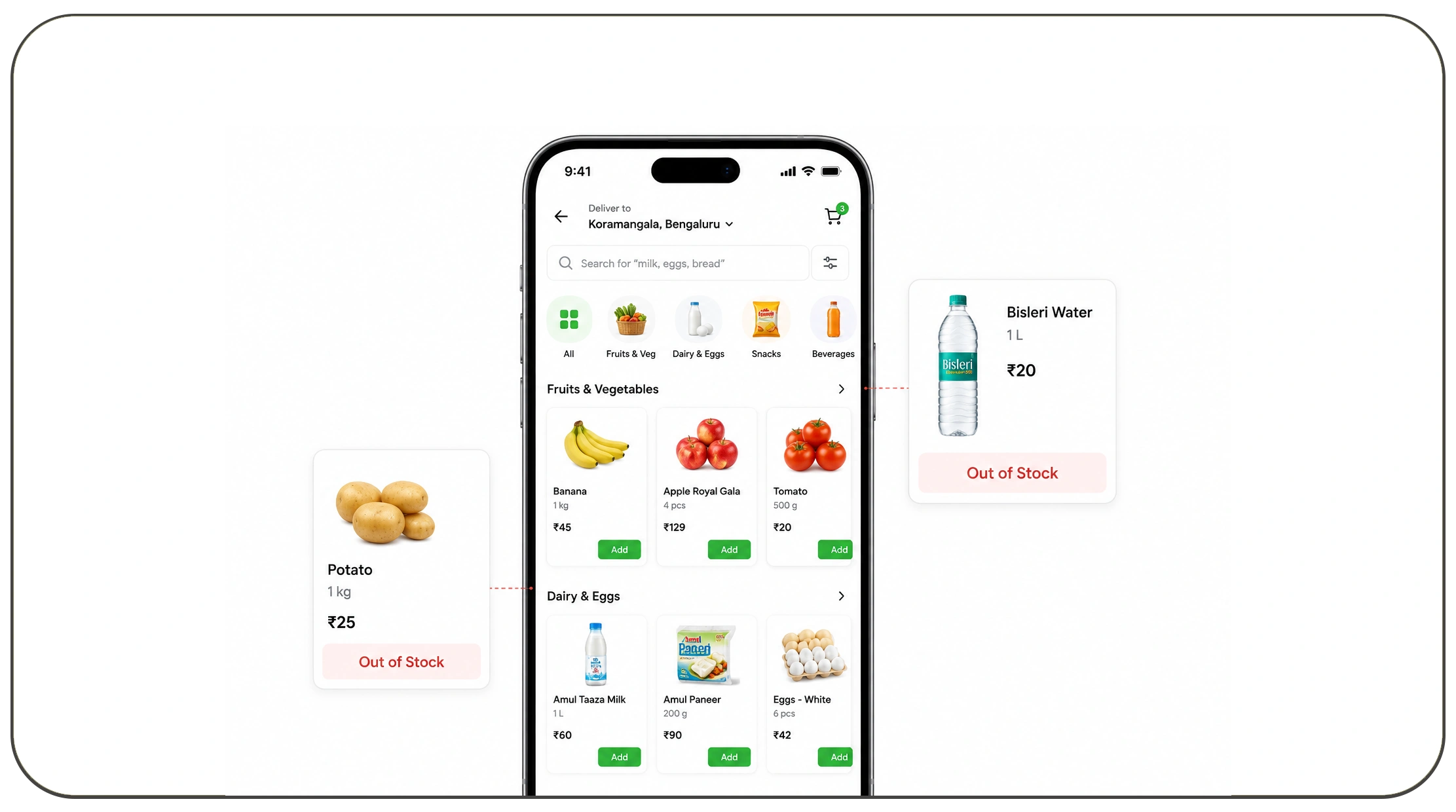
Quick commerce operates on speed. Consumers expect deliveries within minutes, making inventory accuracy critical.
Real-Time Out-Of-Stock Detection In Quick Commerce Apps provides instant visibility into inventory changes occurring across fulfillment centers and dark stores.
When products become unavailable, businesses can immediately:
- Trigger replenishment workflows
- Update inventory records
- Adjust recommendations
- Redirect customer demand
- Prevent overselling
Quick Commerce Growth Statistics
| Year | Quick Commerce Market Adoption Index |
|---|---|
| 2020 | 100 |
| 2021 | 135 |
| 2022 | 178 |
| 2023 | 225 |
| 2024 | 290 |
| 2025 | 360 |
| 2026 | 440 |
Key Advantages
- Faster inventory updates
- Better order fulfillment
- Reduced customer complaints
- Increased operational efficiency
- Higher customer retention
For quick commerce businesses, real-time inventory intelligence directly impacts customer experience and profitability.
How Can Data Enrichment Improve Inventory Decisions?
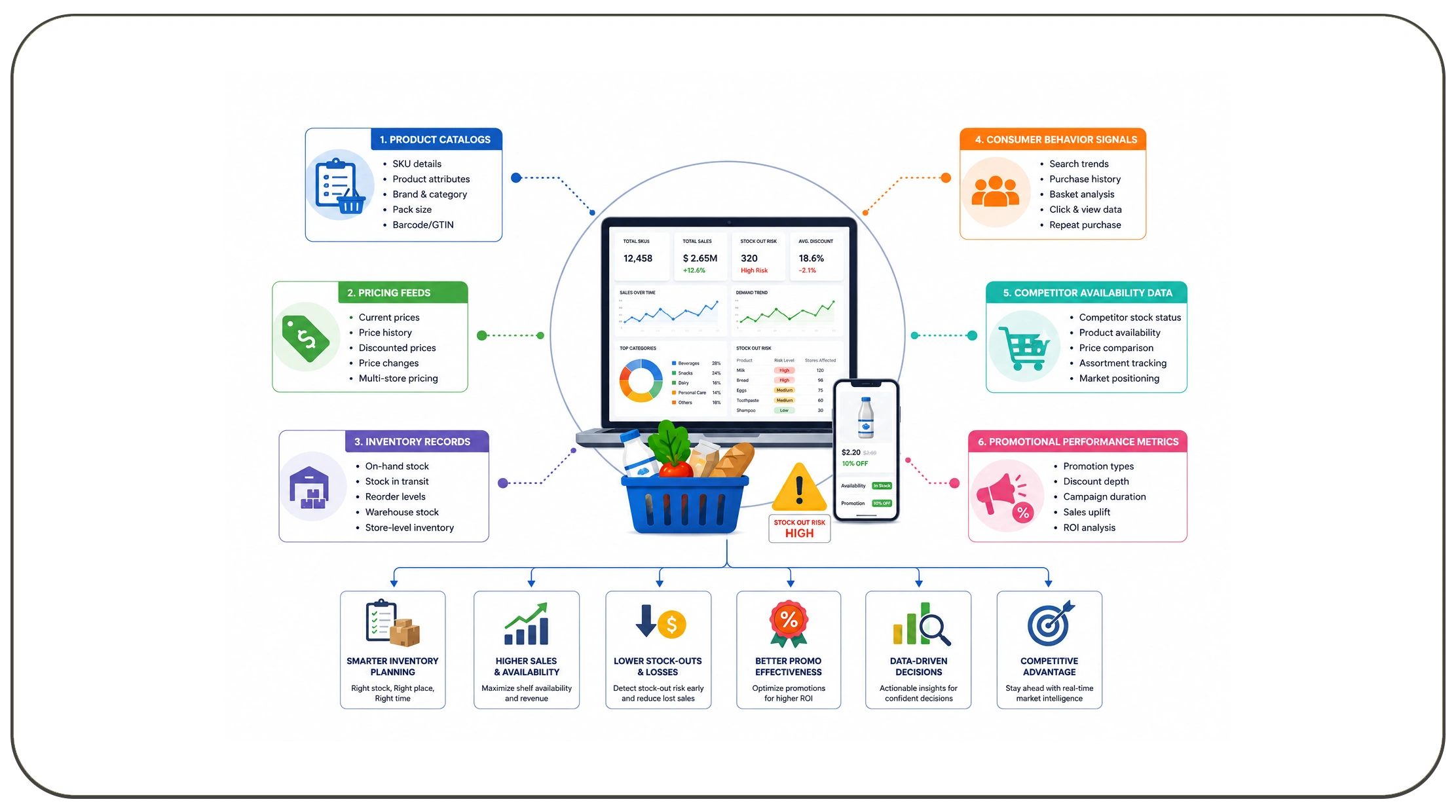
Inventory decisions become more effective when businesses combine stock intelligence with broader retail datasets.
A comprehensive Grocery Dataset provides product-level information including pricing, promotions, availability, demand signals, category performance, and competitor activity.
When paired with stock-out risk detection using retail data scraping, retailers gain a complete understanding of market conditions.
Data Sources Commonly Used
- Product catalogs
- Pricing feeds
- Inventory records
- Consumer behavior signals
- Competitor availability data
- Promotional performance metrics
Grocery Intelligence Adoption (2020–2026)
| Year | Retailers Using Data-Enriched Inventory Strategies (%) |
|---|---|
| 2020 | 28 |
| 2021 | 35 |
| 2022 | 43 |
| 2023 | 52 |
| 2024 | 61 |
| 2025 | 69 |
| 2026 | 77 |
These enriched datasets help retailers identify opportunities and risks that traditional inventory systems often overlook.
The result is improved forecasting accuracy and stronger inventory performance.
How Can Dashboards Turn Inventory Data Into Actionable Insights?

Data is only valuable when decision-makers can act on it quickly.
A centralized Grocery Delivery Dashboard transforms complex inventory information into clear visual insights.
Dashboards provide:
- Stock availability tracking
- Inventory risk alerts
- Demand forecasting indicators
- Competitor monitoring
- Product performance metrics
- Replenishment recommendations
Dashboard Benefits
- Faster operational decisions
- Improved inventory transparency
- Better stakeholder collaboration
- Reduced manual reporting
- Increased forecasting accuracy
Inventory Intelligence Maturity Trends
| Year | Businesses Using Inventory Dashboards (%) |
|---|---|
| 2020 | 31 |
| 2021 | 39 |
| 2022 | 48 |
| 2023 | 57 |
| 2024 | 66 |
| 2025 | 73 |
| 2026 | 81 |
By visualizing inventory risks in real time, retailers can respond faster and minimize revenue losses caused by stock shortages.
Why Choose Real Data API?
Retailers need reliable, scalable, and accurate inventory intelligence solutions to stay competitive.
Real Data API delivers advanced inventory monitoring capabilities powered by stock-out risk detection using retail data scraping.
What Sets Real Data API Apart?
- Real-time inventory tracking
- Automated stock-out alerts
- Scalable data extraction infrastructure
- Multi-platform retail monitoring
- High-frequency data refresh
- Competitive intelligence integration
- Advanced analytics capabilities
- Enterprise-grade reliability
Business Benefits
- Reduced lost sales
- Better inventory forecasting
- Improved replenishment efficiency
- Enhanced customer satisfaction
- Increased operational agility
With access to actionable inventory intelligence, businesses can confidently manage stock levels and respond to changing market conditions.
Conclusion
Inventory shortages directly impact revenue, customer loyalty, and operational performance. Businesses that invest in stock-out risk detection using retail data scraping gain the ability to identify risks early, forecast demand more accurately, and maintain optimal inventory levels across channels.
As retail competition intensifies between 2020 and 2026, proactive inventory intelligence will become a key differentiator for successful brands. Organizations that embrace data-driven stock monitoring can reduce lost sales, improve customer experiences, and strengthen supply chain resilience.
Ready to prevent inventory shortages and maximize sales opportunities? Contact Real Data API today to unlock real-time retail intelligence and proactive stock-out risk monitoring solutions!
Latest posts
How Safeway Grocery Data Scraping for Consumer Buying Trends Helps Track Shopper Behavior?
How to Analyze consumer electronics trends Micro Center API to Identify Product Demand and Market Opportunities?

How A guide to Momondo flight data scraping Helps Businesses Overcome Flight Price Tracking and Market Analysis Challenges?
How Scrape Xiaohongshu Product Trends in Real Time Solves Product Discovery and Competitor Monitoring Challenges?






.png)