.gif)
.gif)

Quick Summary
- Why brands monitor prices after Black Friday (2026) explains how post-sale competitor discounting, changing promotions, and marketplace price fluctuations can affect revenue, customer retention, and retail profitability.
- Consistent pricing intelligence and Price Comparison help businesses identify competitor price reductions, detect unauthorized discounts, and recover sales opportunities through informed pricing decisions.
- Historical retail data demonstrates why monitoring should continue beyond major shopping events, supporting better promotional planning, competitive positioning, and margin protection.
Introduction
Black Friday creates significant sales opportunities, but competitive pricing pressure does not disappear when the shopping event ends. Why brands monitor prices after Black Friday (2026) comes down to one business priority: identifying competitor discounts early enough to protect revenue, retain customers, and recover potential lost sales. Brands that stop tracking prices after the promotional weekend risk overlooking extended discounts, changing marketplace offers, and unexpected pricing gaps.
For retailers, manufacturers, distributors, and e-commerce businesses, Price Comparison is an important part of post-event decision-making. Competitors may extend promotions, introduce clearance offers, adjust product prices, or use different discount strategies to attract shoppers throughout the remaining holiday season.
The challenge is that a competitor's lower displayed price does not automatically mean a brand should reduce its own price. Businesses must understand whether the difference comes from a genuine discount, a different product variant, a seller-specific promotion, or a change in shipping and fulfilment costs.
A structured monitoring process helps pricing teams identify these differences and determine which actions are commercially justified. By collecting historical and current marketplace information, brands can evaluate discount patterns, monitor reseller activity, identify pricing inconsistencies, and make informed decisions about promotional recovery.
The following strategies explain how businesses can use competitive pricing intelligence to protect their market position after Black Friday.
Why Does Competitor Discounting Continue After Major Shopping Events?
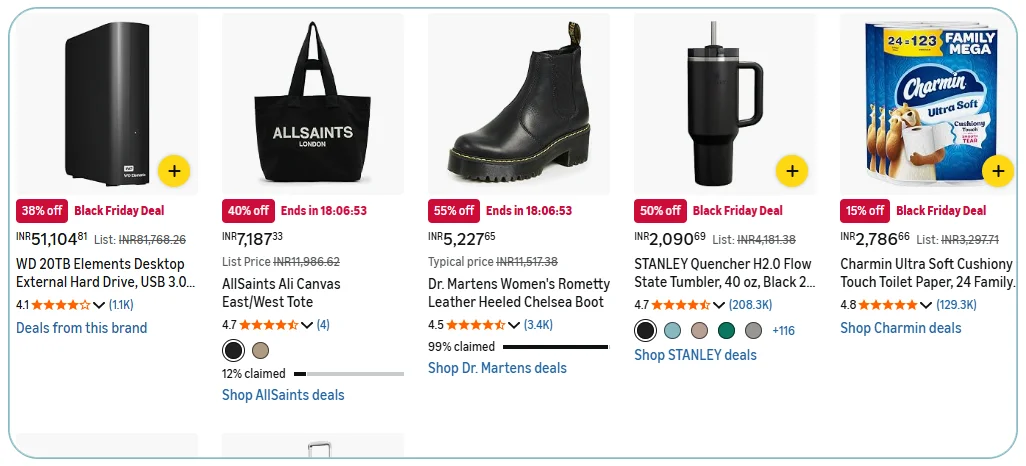
Black Friday is no longer the only important promotional period in the holiday shopping calendar. Retailers increasingly distribute offers across several weeks, giving consumers multiple opportunities to compare prices and purchase products. Brands that monitor Cyber Monday price monitoring signals can understand how competitors continue their promotional activity after Black Friday.
The 2025 U.S. online shopping season demonstrates the scale of this activity. Adobe Analytics reported that consumers spent $11.8 billion online on Black Friday 2025, while Cyber Monday generated $14.25 billion. Cyber Monday spending increased 7.1% year over year. These figures show that substantial online spending continues after Black Friday.
Source: Adobe Cyber Monday 2025 Report.
Competitor discounting can continue because retailers have different inventory positions, promotional calendars, supplier agreements, and sales targets. Some businesses may extend discounts on selected products, while others introduce new offers to maintain customer interest.
For brands, the main concern is identifying which price changes require action. A competitor discount on a high-demand product may affect sales, whereas a temporary markdown on an unrelated product may have little commercial impact.
Retail teams should monitor:
- Product-level selling prices and discount percentages.
- Changes in advertised promotional periods.
- Competitor offers across marketplaces and retail websites.
- Product availability and seller information.
- Differences between standard and promotional prices.
- Shipping charges and other mandatory purchase costs.
Historical data also explains why monitoring should continue beyond one shopping day.
| Year | U.S. Cyber Week online spending | Annual change |
|---|---|---|
| 2020 | $34.4 billion | +20.7% |
| 2021 | $33.9 billion | -1.4% |
| 2022 | $35.3 billion | +4.0% |
| 2023 | $38.0 billion | +7.8% |
| 2024 | $41.1 billion | +8.2% |
| 2025 | $44.2 billion | +7.7% |
| 2026 | Not yet available | Event pending |
Source: Adobe Analytics annual Cyber Week reporting: 2020, 2021, 2022, 2023, 2024, and 2025.
The 2026 Black Friday and Cyber Week events have not occurred as of November 24, 2026. Figures are U.S. online spending across Cyber Week, not Black Friday-only sales.
This historical growth demonstrates the commercial importance of the broader promotional period. Brands should therefore evaluate competitor activity across the entire shopping season rather than treating Black Friday as the end of competitive pricing pressure.
How Can Post-Event Data Reveal Lost Sales Opportunities?
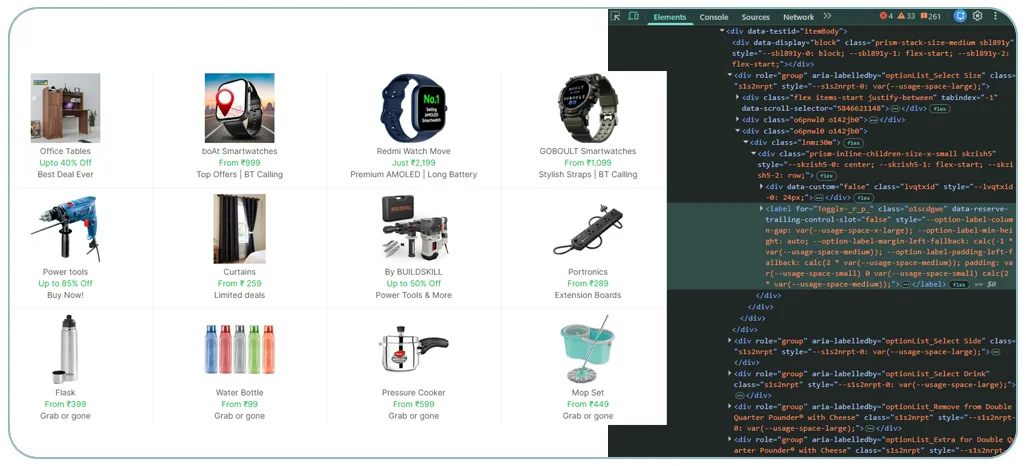
After a major shopping event, businesses need to understand whether competitor discounts have changed customer purchasing patterns. Post Black Friday price data extraction helps retailers organize historical and current pricing observations to identify where their products may have become less competitive.
The first step is collecting comparable product information across relevant marketplaces. Product identifiers, brand names, model numbers, package sizes, selling prices, discount labels, and seller details help businesses distinguish genuine price differences from unrelated listings.
For example, two products may appear identical but have different model numbers, bundle contents, or warranty conditions. Comparing their displayed prices without validating these attributes can produce misleading conclusions.
Brands should organize the collected information around several important indicators:
Price differences: Identify how much more or less a competitor charges for an equivalent product.
Discount changes: Record whether competitors have extended, increased, reduced, or discontinued promotional offers.
Product availability: Determine whether a competing product is available for purchase or temporarily unavailable.
Seller-level changes: Identify which marketplace sellers are offering discounted products and whether the offers are consistent across sellers.
Historical movements: Compare current observations with pre-event prices and Black Friday promotional prices.
A useful dataset should preserve observation dates and product matching information. This makes it possible to distinguish a genuine price reduction from a temporary offer or a change in product configuration.
| Data attribute | What it helps identify | Business application |
|---|---|---|
| Product identifier | Equivalent products | Accurate comparisons |
| Listed price | Current selling price | Pricing decisions |
| Discount percentage | Promotional intensity | Offer evaluation |
| Seller information | Offer source | Seller monitoring |
| Availability | Product accessibility | Sales opportunity analysis |
| Timestamp | Price movement | Historical reporting |
| Shipping charges | Additional purchase costs | Total-price comparison |
Brands can then combine marketplace observations with their own sales records, conversion rates, and inventory information. If sales decline while an equivalent competitor product becomes cheaper, the pricing team can investigate whether the difference contributed to the performance change.
However, correlation alone does not prove that competitor pricing caused lost sales. Businesses should also evaluate advertising activity, product demand, seasonality, stock availability, and customer experience before changing prices.
This approach helps retailers identify opportunities to recover sales without automatically entering another discounting cycle.
How Does Holiday Pricing Intelligence Help Brands Recover Revenue?
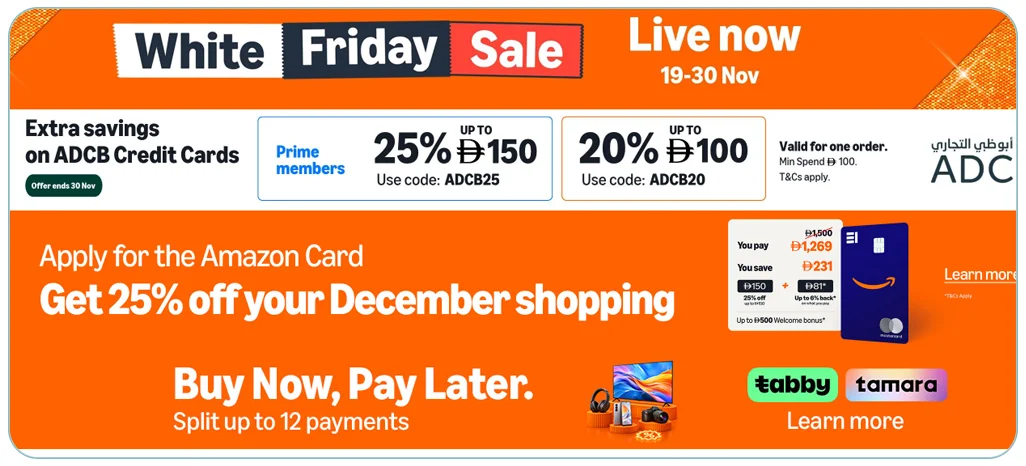
Brands need a complete view of competitor activity throughout the promotional calendar. Holiday season retail data collection helps businesses understand how pricing strategies change between Black Friday, Cyber Monday, Christmas, and year-end clearance periods.
This is particularly important for businesses managing products across multiple marketplaces. A competitor may offer different prices on its website, marketplace storefront, and retail partner channels. Without a consistent collection process, pricing teams may miss important differences.
A practical monitoring strategy should connect three types of information:
- External pricing: Competitor selling prices, promotional discounts, and seller-level offers.
- Internal performance: Product sales, conversion rates, inventory levels, and gross margins.
- Market conditions: Seasonal demand, product availability, and promotional activity.
Adobe's 2024 holiday shopping report recorded $241.4 billion in U.S. online spending between November 1 and December 31, representing 8.7% year-over-year growth. Its report also found that Cyber Week generated $41.1 billion in online spending. These figures demonstrate the importance of tracking competitive activity beyond a single promotional day.
Source: Adobe 2024 Holiday Shopping Season Report.
Brands can use these observations to identify products that may need additional promotional support. However, price reductions should be evaluated against contribution margins, inventory availability, and customer demand.
| Business challenge | Information to monitor | Recommended decision |
|---|---|---|
| Declining product competitiveness | Competitor prices | Review price positioning |
| Extended competitor promotions | Discount duration | Reassess promotional timing |
| Weak product visibility | Marketplace listings | Improve product merchandising |
| Excess inventory | Internal stock and sales | Evaluate clearance strategy |
| Reduced conversion | Sales and competitor offers | Investigate pricing and customer experience |
The most effective recovery strategy is not necessarily offering the deepest discount. A brand may instead improve product bundles, provide additional value, strengthen advertising, or target promotions toward selected products.
This makes historical pricing information useful for both immediate revenue recovery and future promotional planning.
What Marketplace Information Should Brands Track After Black Friday?
Collecting isolated competitor prices is not enough to understand marketplace competition. Brands need structured information covering product details, seller activity, discounts, and purchase conditions.
Businesses that Extract real-time marketplace pricing data can build a more current view of competitive offers, provided the information is available through authorized access methods. The objective is to identify meaningful price movements rather than react to every temporary change.
A reliable monitoring framework should include the following data points:
Product-level information: Capture product titles, brand names, model numbers, SKUs, categories, and product variants. These attributes help ensure that comparisons involve equivalent products.
Pricing information: Record current prices, original prices where available, discount percentages, promotional labels, and applicable shipping charges. Businesses should distinguish the displayed price from the total purchase price.
Seller information: Track seller names and marketplace identifiers where permitted. This helps brands investigate whether a price change originates from a retailer, distributor, or third-party marketplace seller.
Availability information: Record whether products are available, unavailable, or subject to fulfilment restrictions. Availability can influence the commercial significance of a competitor's advertised offer.
Historical information: Maintain dated records so analysts can compare prices before, during, and after major shopping events.
The Federal Trade Commission's guidance on pricing and promotions is also relevant. Its Rule on Unfair or Deceptive Fees requires covered businesses to provide accurate pricing information and address mandatory charges when displaying total prices. Businesses should therefore consider applicable pricing disclosure requirements when evaluating promotional offers.
Source: FTC – Rule on Unfair or Deceptive Fees FAQs.
A practical data structure could look like this:
| Monitoring field | Purpose | Potential business insight |
|---|---|---|
| Product SKU | Product identification | Match equivalent items |
| Marketplace | Channel identification | Compare sales channels |
| Seller name | Seller identification | Investigate discount sources |
| Current price | Price observation | Identify price gaps |
| Previous price | Historical reference | Measure price movement |
| Promotion period | Offer duration | Track extended discounts |
| Shipping cost | Purchase-cost comparison | Evaluate total price |
| Observation time | Data freshness | Identify recent changes |
Brands should also establish validation rules. Missing prices, duplicate product records, inconsistent currencies, and unmatched product variants should be flagged before the information reaches pricing dashboards.
This improves decision-making and reduces the risk of responding to inaccurate marketplace observations.
How Can Brands Use Market Insights to Strengthen Pricing Decisions?
Market Research becomes more valuable when brands combine competitor pricing observations with their own commercial performance. The objective is to understand why a product is losing competitiveness and identify the most suitable recovery strategy.
For example, a brand may observe that an equivalent product is being offered at a lower price by several marketplace sellers. The pricing team should first establish whether the products have identical specifications, whether the lower price includes shipping, and whether the offer is available to all customers.
Next, the team should compare the observed price difference with internal profitability information. This includes procurement costs, marketplace commissions, fulfilment expenses, promotional costs, and other relevant operating expenses.
The following indicators can support a more complete assessment:
- Gross margin: Determine whether matching a competitor's price would leave sufficient margin.
- Conversion rate: Examine whether product conversion changes alongside competitor pricing.
- Average selling price: Identify whether promotional activity is reducing realized selling prices.
- Inventory turnover: Understand whether stock levels justify a clearance promotion.
- Promotional effectiveness: Evaluate whether previous discounts generated sufficient incremental sales.
- Customer acquisition cost: Consider the cost of attracting customers during competitive promotional periods.
Historical market information is especially useful for evaluating pricing decisions. According to the National Retail Federation, U.S. holiday retail sales reached $994.1 billion in 2024, increasing 4% over 2023. The NRF's January 2026 Retail Monitor reported that 2025 holiday sales increased 4.1% from November 1 through December 31.
Sources: NRF 2024 Holiday Sales Results and NRF December 2025 Retail Monitor Results.
These figures represent overall U.S. retail performance, not the results of individual brands. They provide market context rather than evidence that a particular competitor's discount caused lost sales.
A useful pricing decision framework is:
| Observed situation | What the pricing team should investigate | Possible response |
|---|---|---|
| Competitor price is lower | Product equivalence and margin | Review price positioning |
| Competitor discount continues | Offer duration and demand | Adjust promotional calendar |
| Own sales decline | Conversion and traffic data | Investigate underlying causes |
| Marketplace seller undercuts pricing | Seller identity and channel agreements | Review distribution policies |
| Inventory remains high | Stock levels and product lifecycle | Consider targeted clearance |
The strongest pricing decisions are based on multiple indicators rather than competitor prices alone. This prevents unnecessary discounting and supports more sustainable revenue recovery.
How Can Brands Measure Their Position Against Competitors?
Competitive Benchmarking helps businesses evaluate their products, prices, promotional strategies, and marketplace presence against relevant competitors. After Black Friday, it becomes particularly useful for identifying where a brand has lost pricing competitiveness and where it can regain customer attention.
The first requirement is selecting the right comparison group. Brands should avoid comparing their products with unrelated alternatives simply because they belong to the same broad category.
Product matching should consider:
- Brand and product model.
- Technical specifications and product variants.
- Package size or quantity.
- Warranty and included accessories.
- Seller identity and fulfilment conditions.
- Shipping costs and applicable promotions.
Once equivalent products are identified, brands can calculate price differences and monitor how those differences change over time.
A simple price-gap calculation is:
Price Gap (%) = [(Brand Price − Competitor Price) ÷ Competitor Price] × 100
A positive result indicates that the brand's listed price is higher than the competitor's listed price. A negative result indicates that it is lower. The calculation should use comparable products and consistent total-price assumptions.
For effective reporting, pricing teams can organize their dashboards around several indicators:
| KPI | Measurement purpose |
|---|---|
| Average competitor price | Understand market price positioning |
| Price gap percentage | Identify pricing differences |
| Discount frequency | Monitor promotional intensity |
| Price volatility | Identify frequent price changes |
| Product availability rate | Understand assortment accessibility |
| Seller-level price variation | Identify marketplace inconsistencies |
| Promotional duration | Track extended campaigns |
Brands should also establish clear escalation rules. For example, a pricing team can prioritize products that combine a substantial competitor price gap with declining internal sales and sufficient inventory. The exact thresholds should be based on the company's margins, category economics, and historical performance rather than arbitrary industry-wide assumptions.
The resulting analysis helps commercial teams decide where to adjust prices, where to maintain existing positioning, and where non-price improvements may be more effective.
It also creates a useful historical record for evaluating future promotional campaigns and improving pricing discipline.
Why Choose Real Data API?
Brands need dependable market intelligence to make informed pricing decisions, identify competitive gaps, and protect profitability after major promotional events. Real Data API helps businesses develop structured data collection and analysis workflows based on their specific requirements.
Key benefits include:
- Customized data collection: Define relevant competitors, product categories, marketplaces, and pricing attributes.
- Structured data delivery: Organize product information, prices, discounts, and seller details into consistent datasets.
- Historical price tracking: Maintain dated observations to evaluate pricing movements and promotional patterns.
- Product-level intelligence: Support product matching and comparable pricing analysis across different sales channels.
- Scalable data workflows: Build collection processes suited to business requirements and reporting needs.
- Data quality management: Identify missing fields, duplicates, and inconsistencies before analysis.
Real Data API focuses on helping businesses turn marketplace information into organized, actionable intelligence. Data access, coverage, and update frequency can be defined according to the project's permitted sources and technical requirements.
How Can Web Scraping Services Support Post-Event Pricing Intelligence?
Businesses can use Web Scraping Services to develop structured workflows for collecting publicly accessible marketplace information through authorized methods.
These workflows can support:
- Competitor price monitoring across relevant marketplaces.
- Product-level discount and promotional analysis.
- Seller and product availability tracking.
- Historical price comparison and reporting.
- Structured data delivery for business intelligence platforms.
By connecting external market observations with internal sales and margin information, brands can make better-informed decisions about promotional recovery and competitive positioning.
Conclusion
Black Friday may generate significant sales opportunities, but competitive pricing challenges continue throughout the holiday shopping season. Why brands monitor prices after Black Friday (2026) is ultimately about protecting revenue, identifying competitor discounts, and recovering sales opportunities without sacrificing long-term profitability.
Brands that continuously evaluate competitor prices, marketplace promotions, seller activity, and product availability can identify important market changes before making pricing decisions. Historical data also helps businesses understand promotional patterns and evaluate whether their pricing strategies are delivering sustainable results.
The key is to combine accurate marketplace observations with internal sales performance, inventory information, and margin calculations. This creates a more complete picture of competitive pressure and helps retailers avoid unnecessary discounting.
Want to identify competitor discounts, strengthen pricing strategies, and recover lost sales opportunities? Connect with Real Data API our team to explore customized retail data collection, competitor price monitoring, and actionable market intelligence solutions for your business!
FAQs
1. How does post-event pricing analysis help brands?
It helps businesses identify competitor discounts, compare equivalent products, and evaluate pricing opportunities. Effective Price Comparison supports informed promotional decisions and helps protect profitability.
2. Why should retailers continue monitoring prices after Cyber Monday?
Competitors may extend promotions or introduce new offers. Cyber Monday price monitoring helps retailers track these changes and evaluate their post-event pricing strategies.
3. What information should brands collect after Black Friday?
Businesses should monitor product identifiers, selling prices, discounts, seller details, availability, and timestamps. Post Black Friday price data extraction helps organize these observations for analysis.
4. Can historical pricing information improve future promotional planning?
Yes. Holiday season retail data collection helps businesses evaluate previous discount patterns, identify seasonal pricing changes, and improve future campaign planning.
5. How can Real Data API support competitor price intelligence?
Businesses can use Extract real-time marketplace pricing data workflows to organize competitor information, identify pricing differences, and support informed retail decisions through structured datasets.
Latest posts
Amazon.ae Multi-SKU Price Tracking for the UAE Market

Mercado Livre Brazil Data Scraping: Daily Hair Dryer Data and How to Handle Rounded sold_quantity Values
Real Estate Data Scraping Across the Middle East and Turkey: A Managed Service for 26 Portals and 22 Million Records a Month

How Real-Time Product Data Scraping Helps Retailers Track Prom.ua Market Trends in 2026?




.png)


