TL;DR
- Amazon API for real-time ecommerce data helps businesses access fresh product, pricing, availability, seller, and offer information for faster marketplace decisions.
- An Amazon Scraper can automate large-scale product intelligence, reducing manual monitoring and helping brands identify pricing changes, stock movements, and competitive opportunities.
- From 2020 to 2026, Amazon's expanding marketplace and seller ecosystem have increased the importance of structured, timely ecommerce data for pricing and competitive analysis.
Introduction
Amazon has evolved into one of the world's most influential ecommerce marketplaces, creating a constantly changing environment for brands, retailers, sellers, agencies, and market researchers. Product prices can change, seller offers can appear or disappear, inventory positions can shift, and competing products can gain visibility within short periods. Manual monitoring makes it difficult to capture these changes consistently at scale.
Businesses increasingly need reliable methods to extract Amazon pricing data for competitive analysis, identify product availability changes, compare competing listings, and understand marketplace movements. An Amazon Scraper for real-time ecommerce data can support this requirement by providing structured access to product and offer information that can be processed by analytics platforms, dashboards, pricing engines, and business intelligence systems.
Amazon's own ecosystem demonstrates the scale of marketplace activity. Amazon reported that more than 60% of sales in its store came from independent sellers, while more than 75,000 independent sellers surpassed $1 million in sales during 2025.
The need for automated data intelligence has therefore grown alongside marketplace complexity. A business tracking Samsung televisions, Apple accessories, Nike footwear, Philips appliances, or Bosch products may need to monitor hundreds or thousands of competing SKUs simultaneously. Real-time or frequent data collection makes it possible to move from occasional product research toward continuous marketplace intelligence.
Turning Marketplace Complexity Into Actionable Research
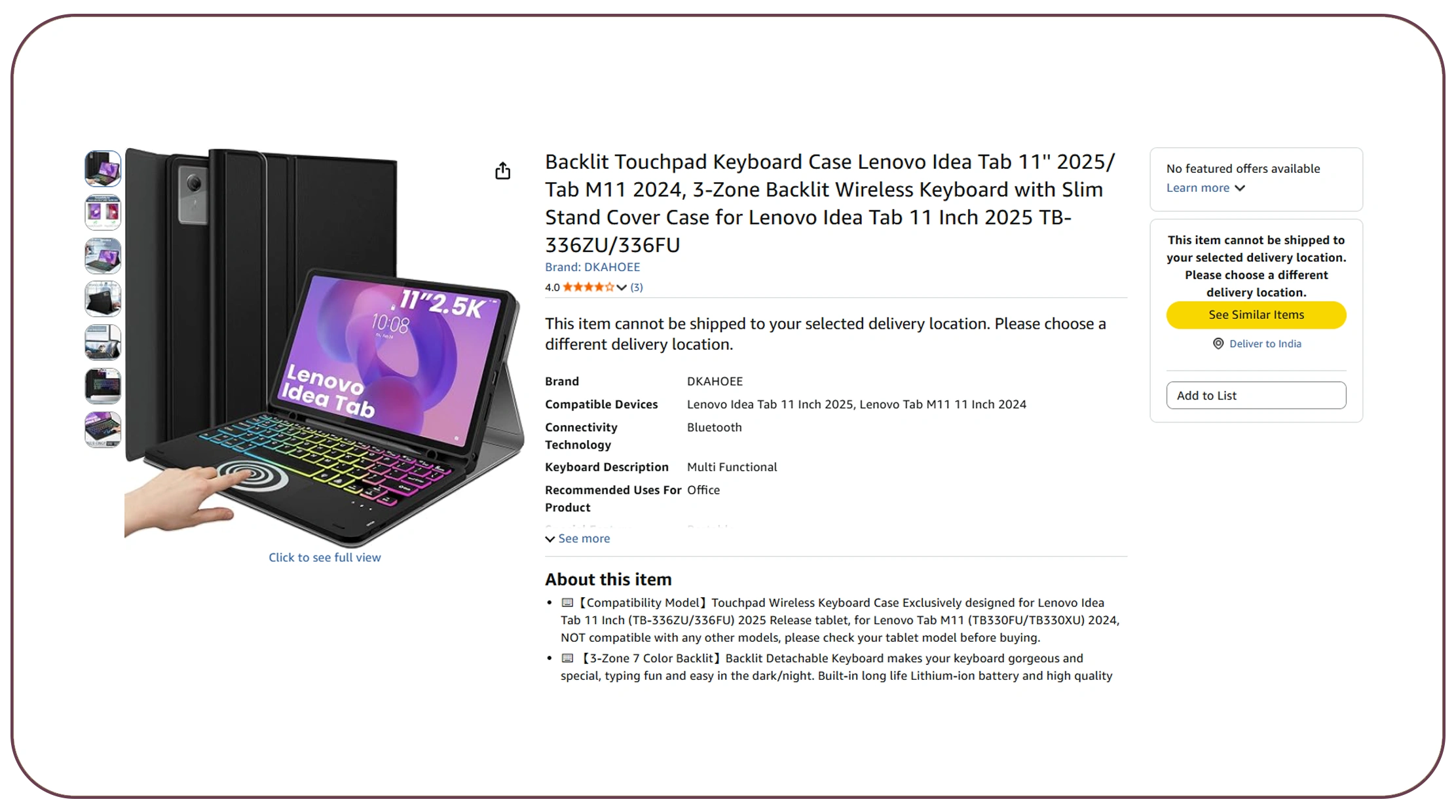
Amazon ecommerce data extraction for market research enables companies to convert large volumes of marketplace information into structured datasets for analysis. Instead of checking individual product pages manually, teams can collect attributes such as product title, ASIN, brand, category, price, discount, seller, availability, ratings, reviews, and offer information.
This matters because market research increasingly depends on observing change rather than simply recording a product once. For example, a consumer electronics company can compare Samsung, Sony, LG, and Philips products across categories, while a footwear brand can monitor Nike, Adidas, Puma, and New Balance listings.
Amazon's marketplace scale makes automation particularly useful. Amazon states that independent sellers accounted for more than 60% of sales in its store in 2025. This means marketplace research must account for multiple sellers and competing offers rather than only Amazon's own retail listings.
From 2020 through 2022, ecommerce adoption accelerated as consumers shifted toward online purchasing during the pandemic. In 2023 and 2024, businesses increasingly focused on profitability, assortment optimization, and competitive pricing. By 2025 and 2026, the emphasis has moved further toward automation, structured data, AI-assisted analysis, and faster marketplace response. Amazon's 2026 documentation also shows continued development of product-search capabilities, including sorting by price, popularity, relevance, and customer ratings.
| Period | Marketplace intelligence focus | Business requirement |
|---|---|---|
| 2020 | Rapid ecommerce adoption | Product visibility |
| 2021 | Digital shopping expansion | Price and assortment monitoring |
| 2022 | Competitive marketplace growth | Seller comparison |
| 2023 | Profitability focus | Pricing intelligence |
| 2024 | Marketplace maturity | Product and availability tracking |
| 2025 | Larger seller ecosystem | Automated monitoring |
| 2026 | AI and API-driven analysis | Faster real-time decisions |
The resulting dataset can support category research, competitor benchmarking, assortment analysis, demand signals, and pricing strategy. Instead of treating marketplace data as a static report, organizations can use it as a continuously updated intelligence layer.
Building a Reliable Product Intelligence Pipeline
An Amazon web scraping API for product information can provide a scalable approach for collecting product-level information and delivering it into databases, analytics systems, or internal applications.
A product intelligence pipeline generally begins with a list of ASINs, search terms, categories, or competitor products. Data collection can then be organized around fields such as product name, brand, category, price, MRP/list price, discount, seller, availability, ratings, reviews, images, specifications, and offers.
Amazon's current API ecosystem illustrates the growing importance of structured product access. Its Product Search API supports product searches, offer discovery, and bulk retrieval of up to 30 ASINs in a request for certain operations. Amazon's Creators API documentation also lists resources covering item information, images, offers, variations, and other product-related data.
There is also an important distinction between Amazon's official APIs and third-party data collection solutions. Amazon's Product Advertising API 5 has been deprecated in favor of the Creators API, so businesses building direct integrations need to consider current API availability and access requirements.
Between 2020 and 2022, many ecommerce research teams relied heavily on manual spreadsheets and scheduled scraping. In 2023-2024, structured APIs became increasingly valuable for feeding dashboards and pricing systems. During 2025-2026, the combination of APIs, automation, cloud databases, and AI analytics has made continuous product monitoring more practical.
| Data field | Business application |
|---|---|
| Product title | Catalog intelligence |
| ASIN | Product identification |
| Price | Competitive pricing |
| Discount | Promotion monitoring |
| Seller | Marketplace intelligence |
| Availability | Stock monitoring |
| Rating | Product quality benchmarking |
| Reviews | Customer sentiment |
| Category | Assortment analysis |
| Images | Visual catalog research |
The key advantage is consistency. A standardized pipeline can transform marketplace information into comparable records, allowing organizations to monitor thousands of products without depending on manual collection.
Automating Competitive Product Monitoring
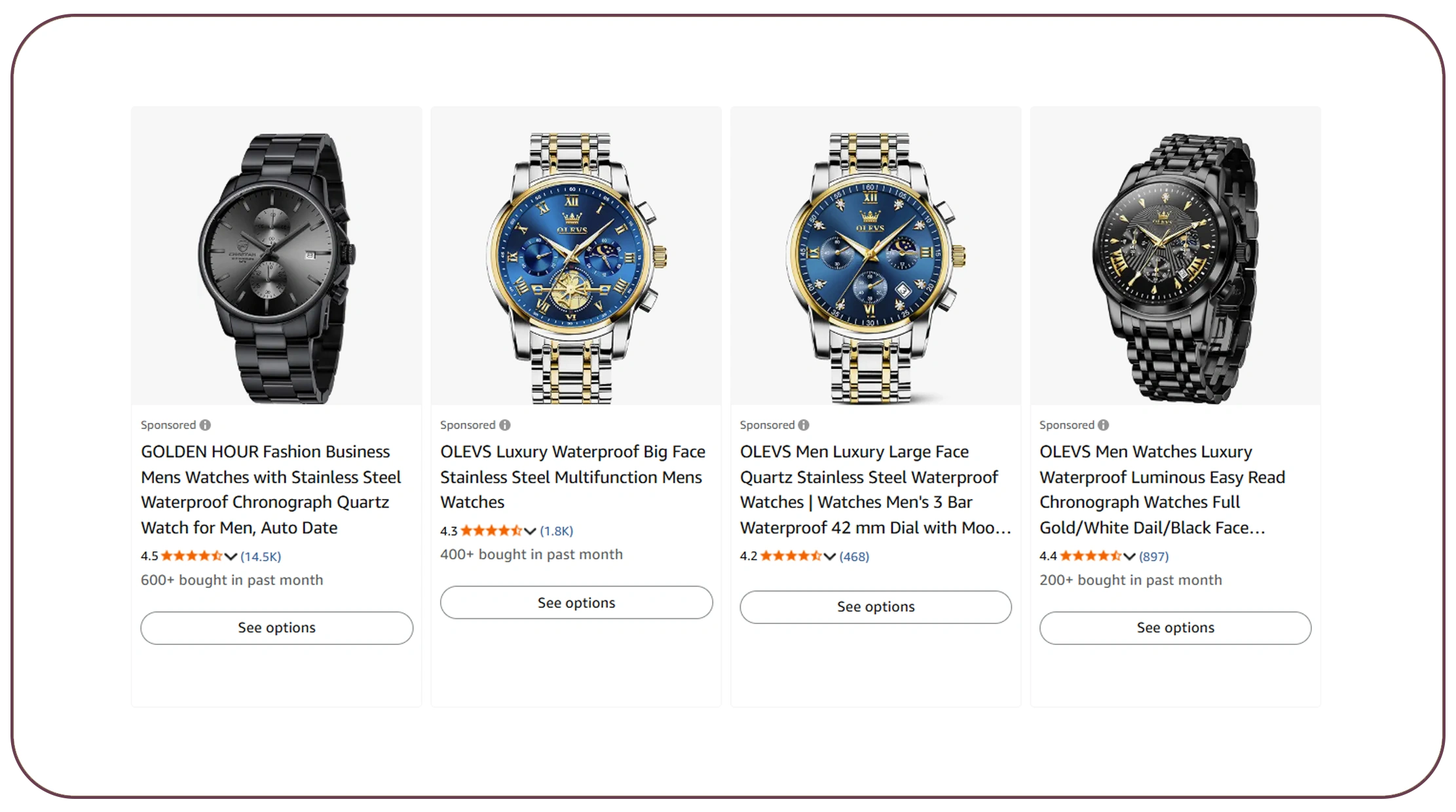
Businesses that scrape Amazon product data using API infrastructure can automate recurring collection and create a more systematic competitive intelligence process.
Consider a consumer electronics retailer monitoring Apple iPhones, Samsung Galaxy smartphones, Sony televisions, and Philips appliances. Prices may change because of promotions, seller competition, inventory pressure, or marketplace events. If the business only checks prices weekly, it may miss significant changes between monitoring cycles.
API-driven collection allows companies to establish monitoring schedules based on business importance. High-value products can be checked more frequently, while long-tail SKUs can be monitored at longer intervals. The collected information can then be compared with historical records to identify price movements, availability changes, seller additions, or competitive shifts.
Amazon's own marketplace statistics highlight why seller monitoring matters. More than 75,000 independent sellers surpassed $1 million in sales in 2025, up 36% from 2024 according to Amazon.
The progression from 2020 to 2026 demonstrates how competitive monitoring has changed. In 2020, many brands were primarily concerned with maintaining online availability. In 2021 and 2022, price competition intensified as digital shopping expanded. In 2023 and 2024, businesses increasingly connected pricing data with assortment and promotional analysis. By 2025 and 2026, automated monitoring has become increasingly important for organizations managing large SKU portfolios.
| Monitoring area | Traditional approach | API-driven approach |
|---|---|---|
| Price | Manual checks | Automated collection |
| Availability | Periodic review | Scheduled monitoring |
| Sellers | Spreadsheet tracking | Structured seller records |
| Discounts | Manual discovery | Automated comparison |
| Competitors | Limited sample | Large SKU coverage |
| Historical trends | Difficult to maintain | Database-based tracking |
Turn marketplace changes into actionable intelligence with scalable Amazon data collection and automated monitoring.
Get Insights Now!Connecting Marketplace Data With Business Systems
An Amazon API becomes most valuable when marketplace information does not remain isolated in a spreadsheet. Businesses can connect structured data with pricing engines, business intelligence dashboards, product information management platforms, databases, and internal analytics applications.
For example, a retailer can create a dashboard that compares its own prices against selected Amazon competitors. A brand can monitor whether its products remain available while competing products go out of stock. A market research company can create category-level datasets showing pricing ranges, seller counts, ratings, and assortment changes.
Amazon's current Product Search API supports offer searching and product retrieval, while its 2026 release notes describe sorting search results by criteria such as price, popularity, customer ratings, and relevance.
The 2020-2026 period also shows why integration has become more important. During 2020-2021, businesses primarily needed visibility into rapidly expanding online demand. During 2022-2023, competitive pricing and margin management became stronger priorities. In 2024-2025, businesses increasingly integrated marketplace information with centralized analytics. In 2026, API-based systems can feed data into more automated decision workflows.
| Integration | Potential use |
|---|---|
| BI dashboard | Competitive reporting |
| Pricing engine | Price benchmarking |
| PIM | Product enrichment |
| Data warehouse | Historical analysis |
| CRM | Customer and product intelligence |
| Inventory system | Availability monitoring |
| AI analytics | Trend and anomaly detection |
The real advantage is not simply collecting more information. It is connecting marketplace information with the systems that already drive business decisions. That creates a feedback loop in which product changes can be detected, analyzed, and acted upon more quickly.
Moving From Periodic Checks to Continuous Intelligence
Amazon Scraping can help organizations address a fundamental ecommerce challenge: marketplace information changes continuously.
A product may be priced at $499 in the morning and $479 later in the day. A competing seller may introduce a lower offer. A previously available product may become unavailable. A promotional badge may appear during a major shopping event. These changes can affect pricing strategy, sales positioning, advertising decisions, and inventory planning.
Amazon's Featured Offer guidance confirms that price competitiveness and product availability are among the factors Amazon evaluates for Featured Offer eligibility. This reinforces why pricing and availability monitoring are strategically connected rather than separate activities.
From 2020 through 2022, marketplace monitoring was often event-driven, especially during periods of rapid ecommerce adoption. In 2023 and 2024, brands increasingly sought historical datasets to understand competitive movements. In 2025, Amazon reported more than 75,000 independent sellers exceeding $1 million in annual sales, demonstrating the scale of marketplace competition. In 2026, API-enabled search and product technologies continue to support more structured access to marketplace information.
| Challenge | Data-driven response |
|---|---|
| Price changes | Historical price tracking |
| New competitors | Seller monitoring |
| Stock changes | Availability tracking |
| Promotions | Discount monitoring |
| Assortment shifts | Product comparison |
| Rating changes | Review intelligence |
| Market movement | Trend analysis |
Continuous monitoring also enables alerts. A company could trigger an internal notification when a competitor's price falls below a defined threshold, when a key product becomes unavailable, or when a major seller enters a category.
This changes the role of marketplace data from retrospective reporting to proactive decision support.
Creating a Historical Foundation for Better Decisions
An Amazon Dataset provides the historical foundation needed to understand marketplace behavior rather than simply observe individual events. When product records are collected consistently over time, businesses can compare today's conditions with previous prices, seller activity, availability patterns, and product changes.
This is particularly useful for categories with frequent promotions. A retailer can analyze how Samsung television prices changed around major shopping events. A beauty company can examine competing product discounts. A consumer electronics brand can identify recurring periods when specific products become unavailable.
Amazon's marketplace has continued expanding its seller ecosystem. Amazon reports that more than 75,000 independent sellers surpassed $1 million in sales in 2025, compared with more than 55,000 in 2024. Amazon's quarterly data also shows continued scale in retail third-party seller services, reaching $46.8 billion in revenue in Q2 2026.
The 2020-2026 progression can therefore be viewed as a shift from simple ecommerce presence to data-intensive marketplace competition. 2020 introduced a major acceleration in online shopping. 2021 and 2022 brought greater marketplace adoption. 2023 and 2024 increased the importance of pricing and assortment optimization. 2025 demonstrated the scale of independent seller participation, while 2026 is characterized by increasingly sophisticated API, automation, and AI-supported product discovery.
| Year | Key marketplace-data priority |
|---|---|
| 2020 | Ecommerce expansion |
| 2021 | Product availability |
| 2022 | Competitive pricing |
| 2023 | Assortment intelligence |
| 2024 | Seller and promotion monitoring |
| 2025 | Large-scale marketplace intelligence |
| 2026 | API and automated decision support |
An Amazon API for real-time ecommerce data can complement historical datasets by providing frequently refreshed information for current monitoring. Together, historical and current data enable businesses to answer both questions: "What is happening now?" and "How does it compare with the past?"
Build a continuously updated marketplace intelligence pipeline and turn Amazon product changes into faster business decisions.
Why Choose Real Data API?
For businesses managing large ecommerce datasets, the value of an API depends on scalability, structured output, data coverage, reliability, and the ability to integrate collected information into existing workflows.
Amazon API for real-time ecommerce data solutions can help organizations reduce repetitive manual research and establish a repeatable process for product intelligence.
A suitable data platform can support use cases such as:
- Product and competitor monitoring
- Price and discount tracking
- Seller intelligence
- Product availability monitoring
- Ratings and review analysis
- Category research
- Assortment comparison
- Historical marketplace analysis
- Data warehouse integration
- Automated reporting and alerts
The broader Amazon API ecosystem also demonstrates how structured marketplace information can be integrated into applications. Amazon's official Product Search API supports product and offer discovery, while Amazon's Creators API provides resources including item information, images, offers, and variation data.
For organizations that need marketplace intelligence at scale, the objective should not simply be to collect large quantities of data. The goal is to create clean, consistent, frequently updated information that can support pricing, merchandising, competitive analysis, and strategic planning.
Conclusion
The growth of Amazon's marketplace has made pricing, product availability, seller activity, and competitor monitoring increasingly difficult to manage manually. From the ecommerce acceleration of 2020 to the API- and automation-driven environment of 2026, businesses have moved toward more continuous approaches to marketplace intelligence.
An Amazon API for real-time ecommerce data can help organizations build structured workflows for tracking products, prices, offers, availability, sellers, and competitive movements. When combined with historical datasets and analytics systems, this information can support faster decisions across pricing, assortment, merchandising, and market research.
For brands and retailers competing in fast-moving ecommerce categories, timely marketplace intelligence can become a strategic advantage.
Explore scalable data solutions with Real Data API and build a smarter, continuously updated monitoring workflow!
FAQs
How can businesses monitor Amazon prices automatically?
Businesses can use Amazon API for real-time ecommerce data to collect pricing information at scheduled intervals, store historical records, compare competitors, and trigger alerts when significant price changes occur.
What product information can an Amazon API provide?
An Amazon web scraping API for product information can support structured collection of product titles, ASINs, brands, categories, prices, sellers, availability, ratings, reviews, offers, images, and specifications.
Why is real-time Amazon monitoring important?
Amazon Scraping helps businesses identify changing prices, seller activity, availability, discounts, and competitive movements faster than manual research, supporting timely pricing and merchandising decisions.
Can Amazon data support competitive analysis?
Yes. extract Amazon pricing data for competitive analysis workflows can compare products, sellers, discounts, and historical pricing patterns to identify competitive positioning and marketplace opportunities.
Why use Real Data API for marketplace intelligence?
Real Data API can help businesses build scalable Amazon Dataset workflows for product research, competitive monitoring, price tracking, availability analysis, and structured ecommerce intelligence.
Latest posts
How A Flipkart Scraper For Product Data Extraction Tracks Product Reviews, Ratings, Prices, And Availability
How Amazon API for real-time ecommerce data Solves Pricing, Availability, and Competitor Monitoring Challenges?
How to Track Prices, Products, and Competitors with Meesho Data Scraping for Ecommerce Market Intelligence?

Indiamart Data Extraction For B2B Market Intelligence - Track Products, Competitors, And B2B Pricing Trends







.png)