Introduction
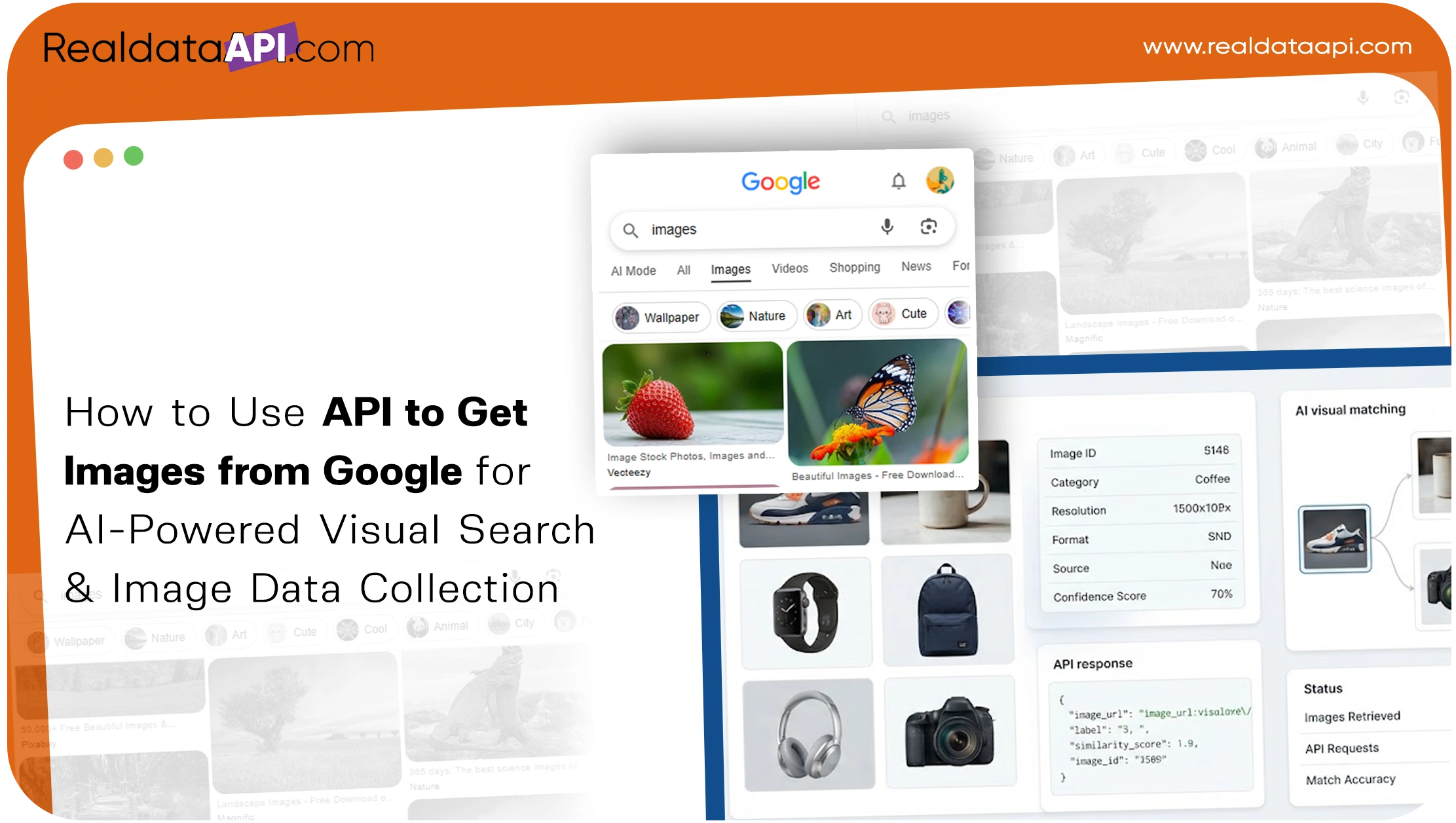
Yes, an API is the fastest and most scalable way to collect Google image results for AI-powered visual search and image data collection. Instead of manually downloading images, businesses can automate image discovery, extract metadata, organize datasets, and update image repositories in real time. This approach saves time, improves accuracy, and supports machine learning, eCommerce, market research, and content intelligence applications.
Industry Insight: According to industry reports, the global AI market is projected to exceed $800 billion by 2030 , while computer vision continues to rank among the fastest-growing AI segments. Between 2020 and 2026, organizations increasingly adopted image data pipelines to improve recommendation engines, visual search accuracy, and automated content moderation. Reliable image collection has become a strategic asset for AI-driven businesses.
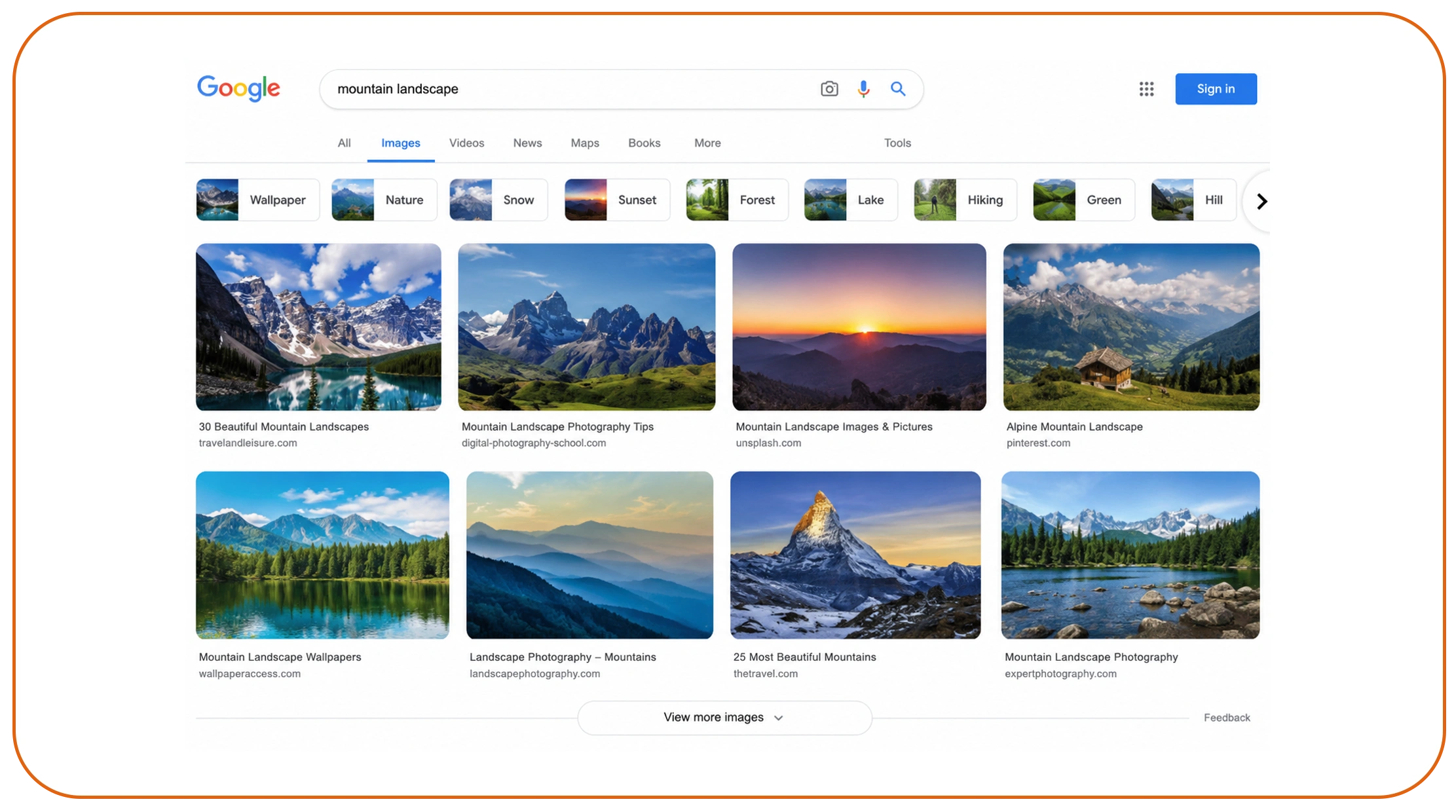
For AI developers, data scientists, digital marketers, eCommerce businesses, and research organizations, collecting image datasets at scale is often challenging. Manual searches are slow, inconsistent, and difficult to maintain. An API to get images from Google automates this process by retrieving image URLs, metadata, dimensions, and search-related information for thousands of queries within minutes.
Modern organizations also rely on Best Google Image Search APIs for Web Scraping Images to power recommendation systems, train computer vision models, monitor competitor visuals, verify brand assets, and enrich search applications. These APIs simplify large-scale image acquisition while ensuring structured and consistent outputs that integrate seamlessly into analytics workflows.
How Can Businesses Build Reliable AI Image Datasets?
Creating a high-quality AI dataset requires more than downloading images. Organizations must collect diverse images, eliminate duplicates, organize metadata, and continuously refresh data as visual trends evolve. Automated APIs make these tasks significantly easier.
For AI teams, consistent image collection improves model accuracy while reducing manual effort. Retailers use image datasets to recognize products. Healthcare companies train diagnostic models. Automotive firms build autonomous driving systems. Marketing agencies analyze creative trends across industries.
One essential capability is the ability to Extract Google image URLs using API . Rather than saving individual files manually, APIs return structured image URLs together with thumbnails, source pages, image dimensions, titles, and other useful attributes. This enables organizations to build scalable image repositories for downstream AI workflows.
Key benefits include:
- Faster dataset creation
- Automated image discovery
- Consistent metadata collection
- Reduced manual labor
- Better AI model accuracy
- Easier integration into machine learning pipelines
Industry Adoption Trends (2020–2026)
| Year | Organizations Using Automated Image Collection | AI Projects Using Visual Data | Average Dataset Size |
|---|---|---|---|
| 2020 | 28% | 35% | 100K Images |
| 2021 | 36% | 43% | 180K Images |
| 2022 | 48% | 56% | 320K Images |
| 2023 | 61% | 68% | 520K Images |
| 2024 | 73% | 76% | 760K Images |
| 2025* | 82% | 84% | 1.1 Million |
| 2026* | 89% | 91% | 1.6 Million |
*Projected industry estimates.
These trends highlight how image collection has evolved from a manual task into an automated data pipeline. Companies that continuously update their datasets generally achieve better AI performance because newer images reflect changing products, environments, and consumer behavior.
For businesses investing in computer vision, automation is no longer optional. It is becoming a competitive requirement.
Why Is Automation Essential for Large-Scale Image Intelligence?
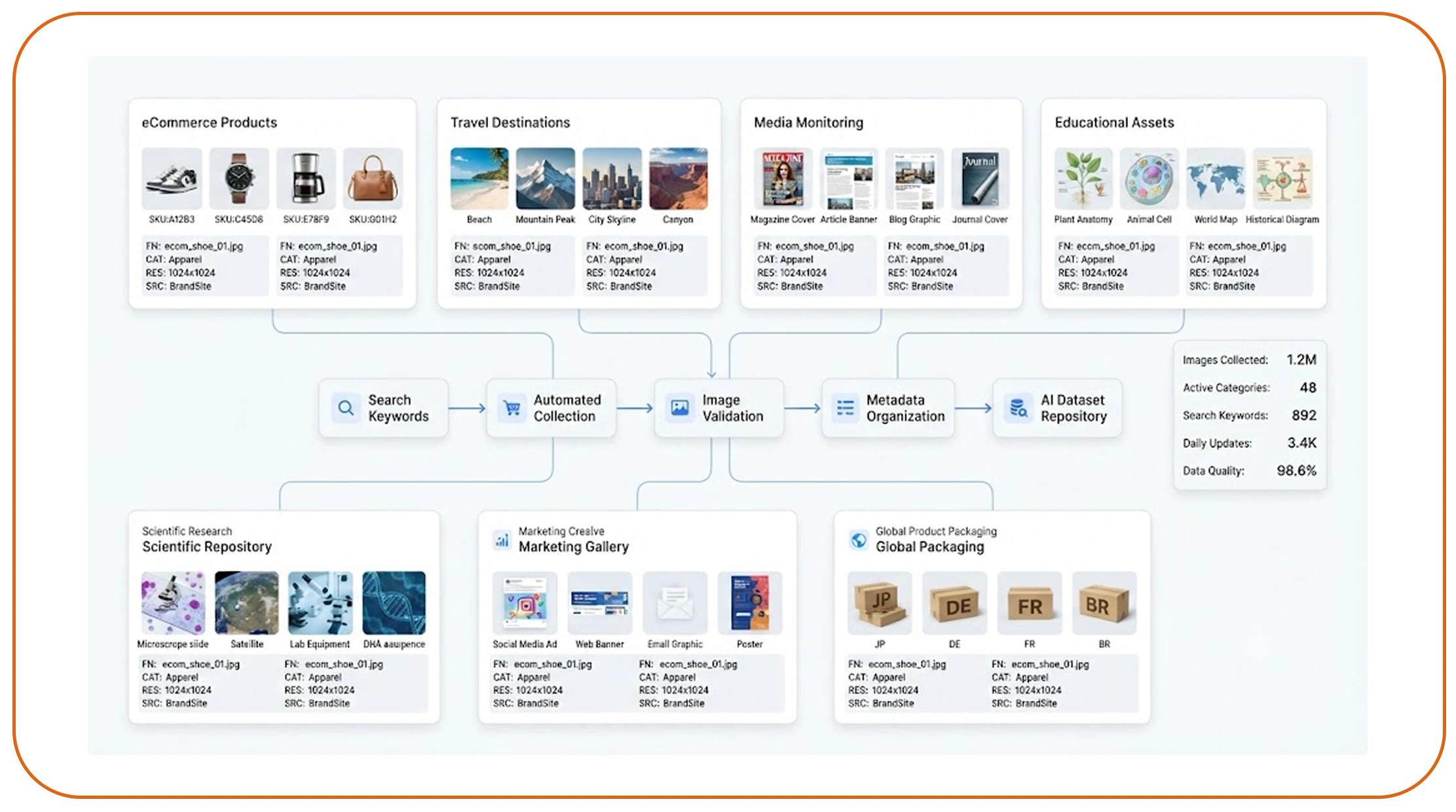
Manual image collection becomes impractical when organizations need millions of images from multiple search categories every month. Automated workflows improve consistency, reduce operational costs, and deliver fresh data at enterprise scale.
Companies increasingly depend on a professional Google image extraction service to automate image acquisition across thousands of search keywords simultaneously. Instead of assigning employees to repetitive searches, APIs continuously retrieve relevant image results while maintaining structured outputs for analytics and AI training.
Automation provides measurable advantages across industries:
- eCommerce companies monitor product imagery.
- Travel platforms collect destination visuals.
- Media companies analyze publishing trends.
- Educational platforms build learning datasets.
- Research institutions gather scientific imagery.
- Marketing agencies monitor creative campaigns.
- Manufacturers compare product packaging worldwide.
Image Automation Growth Across Industries (2020–2026)
| Industry | 2020 | 2022 | 2024 | 2026* |
|---|---|---|---|---|
| Retail & eCommerce | 30% | 52% | 74% | 90% |
| Healthcare AI | 18% | 39% | 61% | 82% |
| Automotive | 25% | 46% | 68% | 87% |
| Digital Marketing | 34% | 58% | 79% | 93% |
| Media & Publishing | 29% | 50% | 73% | 88% |
*Projected adoption.
Organizations adopting automated image workflows commonly report:
- Faster AI development cycles.
- Lower operational costs.
- Improved search relevance.
- More diverse training datasets.
- Better scalability across global markets.
- Higher productivity for engineering teams.
As AI applications continue expanding, automated image collection supports everything from visual recommendation engines and object detection to brand monitoring and content analysis. Instead of spending hours locating images manually, businesses can focus on extracting actionable insights and building intelligent products powered by high-quality visual data.
How Can Developers Scale Image Collection for AI Applications?
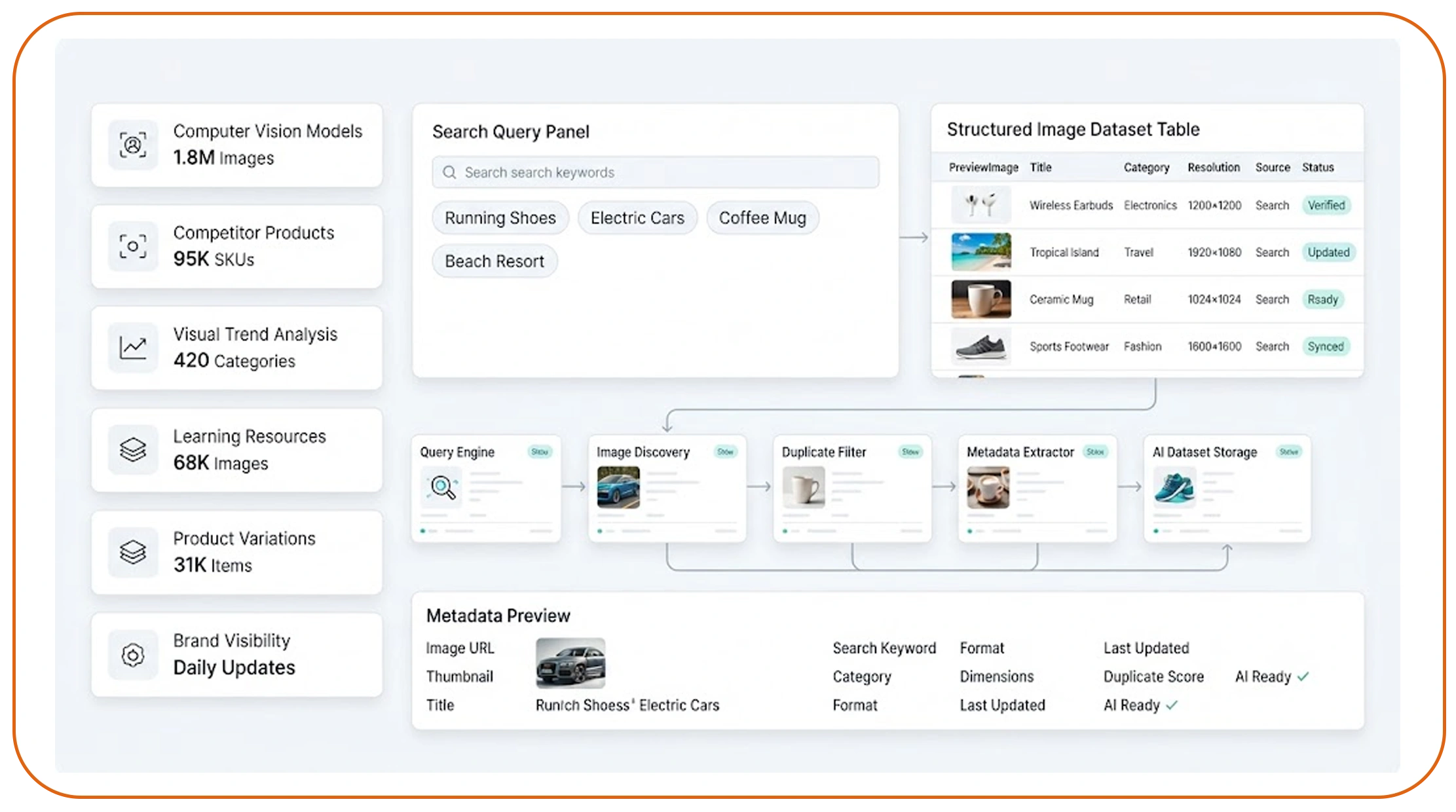
Building AI-ready image datasets requires more than collecting pictures. Developers need consistent results, structured metadata, and reliable automation. As AI models become more sophisticated, image acquisition pipelines must also scale efficiently. APIs eliminate repetitive manual work and enable organizations to gather millions of relevant images while maintaining quality and consistency.
A robust Google Images scraper API helps businesses automate image discovery using targeted search queries. Instead of relying on browser-based searches, developers can integrate API calls into applications that collect image URLs, thumbnails, titles, and related information automatically. These datasets support facial recognition, object detection, visual similarity search, recommendation engines, and generative AI training.
Organizations across industries benefit from scalable image collection:
- AI startups build computer vision models.
- Retail brands monitor competitor product images.
- Media companies analyze visual content trends.
- Educational platforms create learning resources.
- Manufacturing firms identify product variations.
- Marketing teams measure brand visibility through images.
Automation also reduces duplicate images and enables scheduled updates. Fresh datasets improve AI performance because models learn from current visual content instead of outdated information.
Enterprise Adoption of Automated Image Collection (2020–2026)
| Year | AI Organizations Using Image APIs | Monthly Images Processed | Average Processing Time |
|---|---|---|---|
| 2020 | 24% | 5 Million | 12 Hours |
| 2021 | 33% | 8 Million | 9 Hours |
| 2022 | 45% | 14 Million | 6 Hours |
| 2023 | 58% | 24 Million | 4 Hours |
| 2024 | 71% | 38 Million | 2.5 Hours |
| 2025* | 82% | 55 Million | 1.8 Hours |
| 2026* | 90% | 75 Million | Under 1 Hour |
*Projected industry estimates.
As organizations adopt AI-driven workflows, automated image collection becomes a foundational capability. APIs help developers build scalable systems that continuously gather fresh visual data without increasing operational complexity. This allows engineering teams to spend less time on data collection and more time improving AI models and delivering business value.
What Metadata Should Businesses Collect Alongside Images?
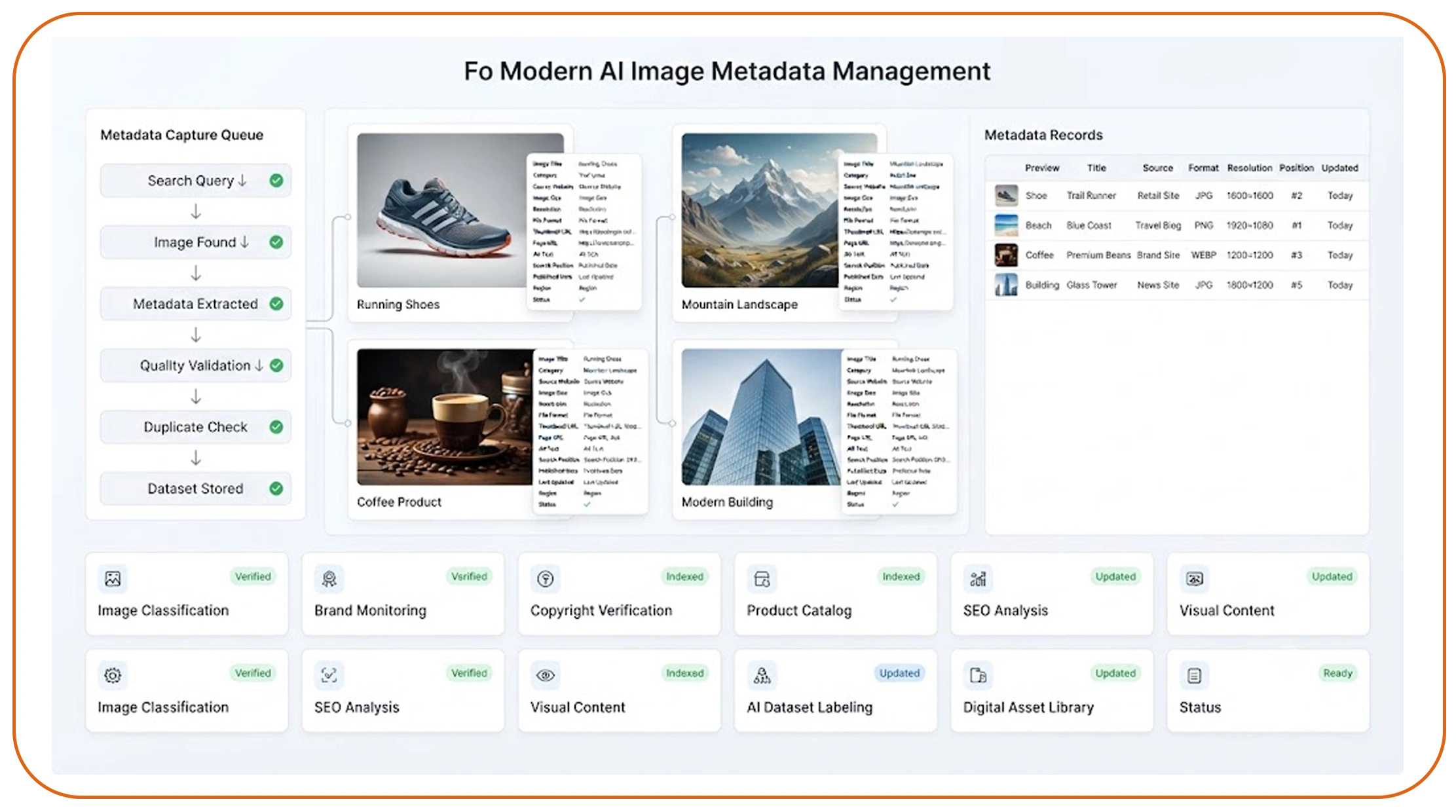
Images alone provide limited value without context. Metadata explains where an image originated, how it should be categorized, and whether it is relevant for a particular AI application. Rich metadata improves search quality, supports analytics, and enables more accurate machine learning models.
Organizations increasingly use a Scrape Google image metadata API to collect structured information together with image results. Typical metadata includes image title, source website, image dimensions, thumbnail URL, page URL, file format, alt text, search position, publication details, and timestamps. This information helps businesses organize datasets, eliminate duplicates, and maintain data quality.
Metadata supports numerous enterprise use cases:
- Image classification
- Brand monitoring
- Copyright verification
- Product catalog enrichment
- Search engine optimization
- Visual content analysis
- AI dataset labeling
- Digital asset management
For example, an eCommerce company can identify whether competitor product images have changed. A research organization can categorize scientific illustrations by topic and source. Marketing teams can analyze image rankings across different keywords and regions.
Image Metadata Utilization Trends (2020–2026)
| Metadata Attribute | 2020 | 2022 | 2024 | 2026* |
|---|---|---|---|---|
| Image URL | 100% | 100% | 100% | 100% |
| Source Page | 42% | 61% | 79% | 93% |
| Image Dimensions | 36% | 55% | 74% | 90% |
| Alt Text | 28% | 46% | 67% | 86% |
| File Format | 33% | 50% | 71% | 88% |
| Search Position | 25% | 47% | 70% | 89% |
| Thumbnail URL | 39% | 60% | 81% | 94% |
*Projected industry estimates.
Organizations that collect comprehensive metadata gain better visibility into image quality and relevance. Structured metadata also simplifies indexing, filtering, and retrieval, making large image repositories easier to manage. As AI adoption accelerates, metadata has become just as valuable as the images themselves because it transforms raw visual content into actionable business intelligence.
How Can Businesses Simplify Large-Scale Image Collection?
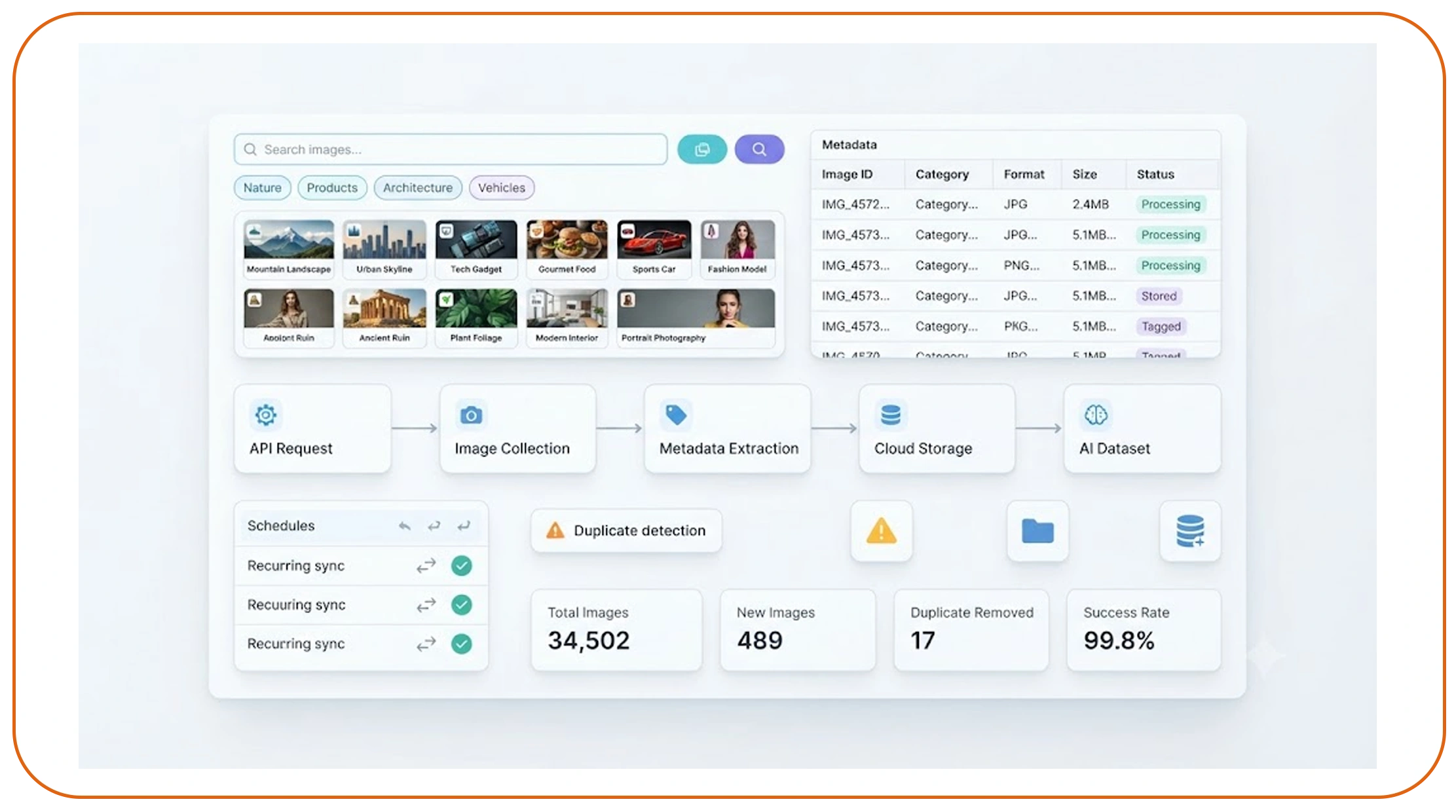
Organizations collecting thousands or millions of images require a solution that is fast, scalable, and easy to integrate. Manual downloading introduces delays, duplicate files, and inconsistent quality. Modern APIs automate the entire workflow, enabling businesses to collect fresh image datasets for analytics, AI, and business intelligence.
One of the simplest approaches is to Extract Images Online through automated API requests. Instead of searching and downloading images individually, businesses can retrieve structured image results based on keywords, locations, languages, or categories. Automated pipelines can also schedule recurring data collection, ensuring datasets remain current as new content appears online.
Common business applications include:
- AI and machine learning dataset creation
- Visual search platforms
- Product catalog enrichment
- Competitor image monitoring
- Brand reputation analysis
- Digital asset management
- Educational and research databases
- Content recommendation systems
Automation also improves collaboration between engineering and analytics teams. Structured image data can be imported directly into cloud storage, data warehouses, or AI training environments without manual intervention.
Growth of Automated Image Collection Projects (2020–2026)
| Year | Businesses Using Automated Image Collection | Average Images Collected Monthly | Dataset Refresh Frequency |
|---|---|---|---|
| 2020 | 27% | 2 Million | Quarterly |
| 2021 | 38% | 5 Million | Monthly |
| 2022 | 50% | 9 Million | Biweekly |
| 2023 | 64% | 16 Million | Weekly |
| 2024 | 77% | 29 Million | Daily |
| 2025* | 86% | 44 Million | Daily |
| 2026* | 92% | 60 Million | Near Real-Time |
*Projected industry estimates.
Businesses that automate image collection gain faster access to current visual content, enabling quicker insights and more responsive AI applications. As image-driven technologies continue to evolve, scalable collection strategies help organizations maintain a competitive advantage while reducing operational effort.
How Do Professional Data Collection Solutions Improve Results?
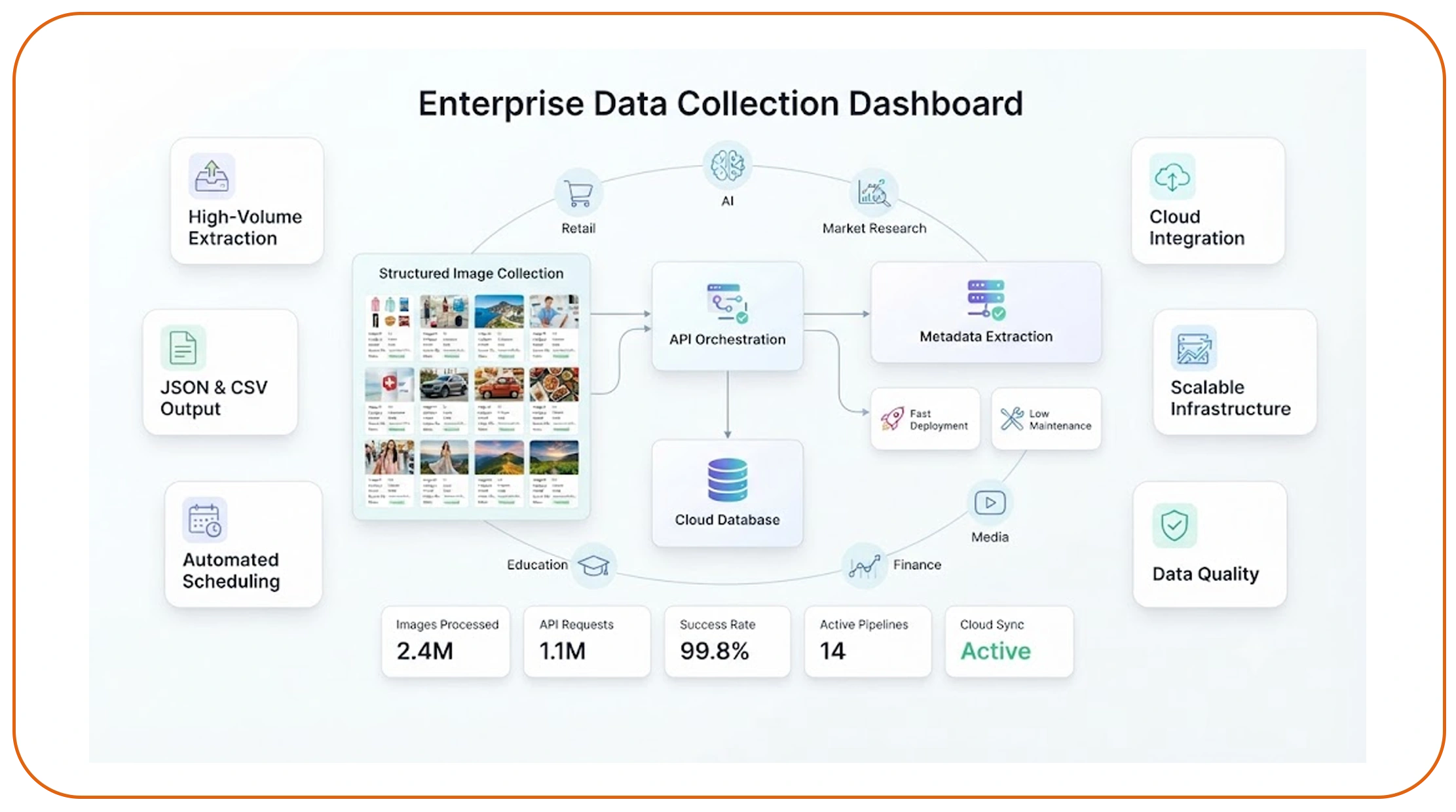
Enterprise image collection requires more than speed. Businesses also need reliability, scalability, structured outputs, and seamless integration with analytics platforms. Professional providers deliver these capabilities through robust APIs designed for enterprise workloads.
Modern Web Scraping Services simplify large-scale image retrieval by handling request management, structured parsing, metadata extraction, pagination, scheduling, and data delivery. Organizations no longer need to build complex scraping infrastructure or maintain frequent updates when search engines change layouts.
Professional solutions support numerous industries:
- Retail and eCommerce
- Artificial Intelligence
- Market Research
- Healthcare Analytics
- Travel Platforms
- Media Monitoring
- Financial Intelligence
- Academic Research
Key enterprise advantages include:
- High-volume data extraction.
- Structured JSON and CSV outputs.
- Automated scheduling.
- Cloud-ready integrations.
- Scalable infrastructure.
- Reliable data quality.
- Faster implementation.
- Lower maintenance costs.
Enterprise Adoption of Managed Image Data Solutions (2020–2026)
| Year | Enterprise Adoption | Average API Requests/Day | Estimated Productivity Improvement |
|---|---|---|---|
| 2020 | 22% | 120K | 18% |
| 2021 | 33% | 210K | 27% |
| 2022 | 47% | 390K | 38% |
| 2023 | 61% | 650K | 52% |
| 2024 | 75% | 980K | 66% |
| 2025* | 85% | 1.4 Million | 77% |
| 2026* | 92% | 2.1 Million | 86% |
*Projected industry estimates.
Organizations increasingly prefer managed image data solutions because they reduce technical complexity while ensuring reliable access to high-quality image datasets. This enables businesses to focus on AI innovation, analytics, and customer experiences rather than maintaining data collection infrastructure.
Why Choose Real Data API?
Real Data API delivers enterprise-grade image data solutions designed for organizations that depend on reliable, scalable, and real-time information. Whether you are building AI models, monitoring visual trends, enriching product catalogs, or developing visual search applications, our platform simplifies image data acquisition through a powerful Web Scraping API .
With an advanced API to get images from Google , businesses can automate image retrieval, collect structured metadata, monitor image search results, and integrate visual datasets directly into machine learning pipelines or business intelligence platforms.
Why organizations trust Real Data API:
- Enterprise-scale image extraction
- High-speed API performance
- Structured JSON and CSV responses
- Rich image metadata collection
- Scalable cloud infrastructure
- Easy integration with AI workflows
- Reliable customer support
- Flexible solutions for multiple industries
Our solutions help AI developers, retailers, research organizations, digital marketers, and enterprises transform image search data into valuable business intelligence with minimal operational overhead.
Conclusion
Modern AI applications depend on fresh, accurate, and scalable image datasets. Manual image collection can no longer support enterprise requirements for speed, consistency, and quality. Businesses that automate image retrieval gain faster access to valuable visual information, improve machine learning performance, and reduce operational costs.
Using an API to get images from Google enables organizations to build automated image pipelines, collect structured metadata, support visual search, monitor competitors, and create high-quality datasets for AI, analytics, and research. As image-based technologies continue to evolve, automated image collection will remain an essential component of digital transformation strategies.
Ready to automate your image data collection? Partner with Real Data API to leverage a powerful API to get images from Google and transform visual search data into actionable business intelligence with secure, scalable, and enterprise-ready solutions.
Latest posts
E-commerce data scraper for inventory analysis 2027 - Real-Time Stock Tracking and Demand Forecasting

How Meesho API data extraction for product research Helps E-Commerce Brands Improve Product Selection and Market Intelligence?
How AliExpress API integration for automated data collection Streamlines Product Monitoring, Price Tracking, and Seller Intelligence

How H&M data scraping for fashion retail analytics Enhances Stock Monitoring, Apparel Pricing, and Product Category Insights






.png)