.gif)
.jpg)
Quick Summary
- An Automated e-commerce web data scraper for businesses helps retailers collect product prices, descriptions, and availability information to improve inventory visibility and competitor monitoring.
- The Power of E-commerce Web Scraping lies in transforming scattered online product information into structured datasets that support pricing analysis, catalog management, and informed retail decisions.
- This article explores market trends, data collection strategies, inventory monitoring, and practical applications for e-commerce businesses.
Introduction
E-commerce businesses face constant challenges in maintaining accurate product information, monitoring competitor prices, and identifying inventory shortages. Product prices change, promotional offers appear, and stock availability varies across online marketplaces. These changes can create operational problems when retailers depend on outdated spreadsheets or manual research. An Automated e-commerce web data scraper for businesses provides a structured approach to collecting relevant product information from authorized online sources, helping retailers improve market visibility and organize product intelligence.
The Power of E-commerce Web Scraping comes from its ability to convert large volumes of online information into usable business datasets. Retailers can analyze competitor pricing, compare product specifications, monitor availability, and identify changes across selected e-commerce platforms. However, successful data collection requires more than automated extraction. Businesses must also consider product matching, data freshness, validation, source permissions, and integration with existing systems.
This article examines how e-commerce data collection supports modern retail operations, what market developments between 2020 and 2026 reveal, and how businesses can build more reliable product intelligence workflows.
How does online retail growth increase the need for better product intelligence?
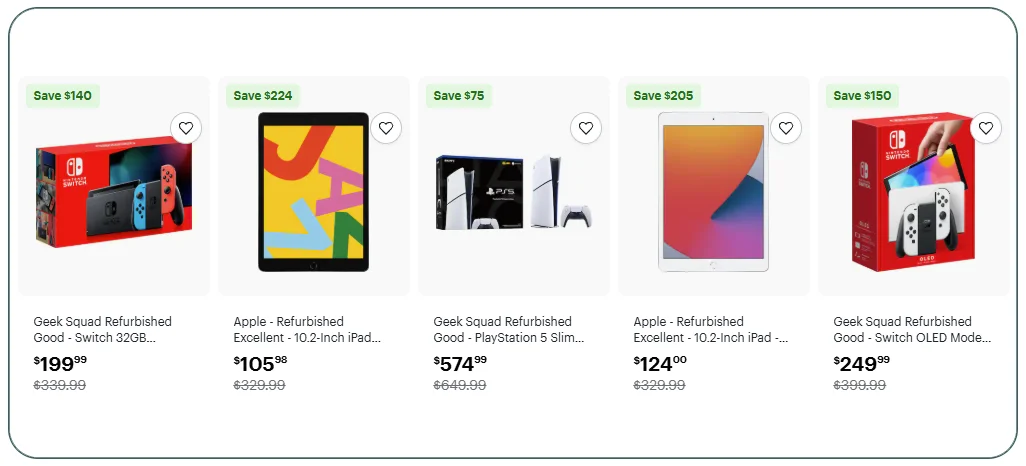
E-commerce growth has increased the amount of product information retailers must manage. Online stores compete through pricing, product assortment, promotional offers, and availability. A retailer selling across several marketplaces must understand how its products compare with competing listings and whether important items remain available.
E-commerce web scraping for market research helps businesses collect publicly accessible product information from authorized sources and organize it for competitive analysis. Retailers can examine product categories, brand positioning, price differences, promotional activity, and assortment changes without relying entirely on manual research.
An Automated e-commerce web data scraper for businesses can support this process by collecting relevant fields according to predefined rules. Product identifiers, URLs, prices, stock indicators, and observation timestamps help create consistent records for analysis.
What do recent retail statistics reveal?
U.S. Census Bureau statistics show that e-commerce has become an increasingly important part of retail activity. The following table presents the seasonally adjusted share of U.S. retail sales represented by e-commerce in the second quarter of each year.
| Year | E-commerce share of U.S. retail sales |
|---|---|
| 2020 | 16.3% |
| 2021 | 14.6% |
| 2022 | 14.2% |
| 2023 | 15.3% |
| 2024 | 16.1% |
| 2025 | 16.3% |
| 2026 | 17.1% |
Source: U.S. Census Bureau historical quarterly series, seasonally adjusted. Q2 2026 is preliminary.
The figures demonstrate the importance of online retail as a sales channel. The second-quarter share increased from 14.2% in 2022 to 17.1% in 2026. This trend makes product information management, competitive pricing research, and inventory visibility increasingly relevant for retailers.
Eurostat also reported that 77% of EU internet users purchased goods or services online in 2024, compared with 59% in 2014. This illustrates the broad adoption of online shopping across European markets.
For retailers, the practical lesson is to establish a consistent information pipeline that can support changing product catalogs and competitive conditions.
Why do large product catalogs require automated collection?
Managing product information manually becomes challenging when retailers operate across multiple categories, marketplaces, and geographic regions. Each product may contain several attributes, including its name, brand, model, price, description, specifications, images, and availability status. Maintaining these details manually increases the operational effort required to keep product records consistent.
Bulk e-commerce product data collection services help businesses organize large volumes of product information into structured datasets. Rather than reviewing individual product pages repeatedly, retailers can establish collection rules for selected websites and categories, subject to source permissions.
A structured collection workflow should include the following elements:
- Product identification: Capture product URLs, brand names, model numbers, and available identifiers.
- Pricing information: Record displayed prices, currencies, discounts, and applicable promotional details.
- Inventory indicators: Capture the availability status shown by the source.
- Product specifications: Organize size, color, dimensions, material, and other relevant attributes.
- Source information: Maintain the original URL and collection timestamp.
- Data validation: Identify missing fields, inconsistent formats, and duplicate listings.
How should businesses organize large datasets?
The first step is to create a standardized product schema. Every source should map its information into the same internal field structure. For example, one retailer may label a field as "Selling Price," while another uses "Current Price." Both can map to a common price field without losing the original source information.
| Data category | Recommended fields | Business application |
|---|---|---|
| Product identity | SKU, brand, model, URL | Product matching |
| Pricing | Current price, currency, discount | Competitor comparison |
| Availability | Stock status, quantity if disclosed | Inventory planning |
| Catalog | Category, description, specifications | Catalog enrichment |
| Monitoring | Source, timestamp, collection status | Data freshness |
| Quality | Missing fields, duplicate flag | Validation |
Another important consideration is data ownership. Internal product identifiers should be maintained separately from retailer-specific identifiers. This prevents different versions of the same product from being incorrectly merged.
Adobe's analysis of the 2024 U.S. holiday shopping season covered more than one trillion visits to retail websites, 100 million SKUs, and 18 product categories. Adobe reported $241.4 billion in online holiday spending, up 8.7% year over year. This provides a real-world indication of the scale and complexity of modern retail data environments.
For businesses managing extensive product catalogs, standardized collection and validation can make information easier to maintain, compare, and distribute.
How can product extraction prevent competitor pricing gaps?
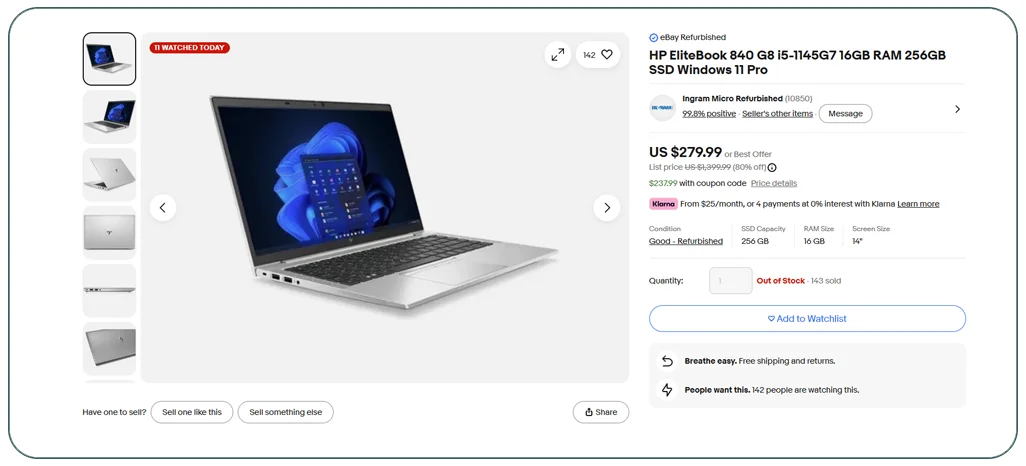
Competitor pricing gaps occur when businesses cannot identify or compare relevant market prices consistently. A retailer might monitor a competitor's homepage but overlook category-level discounts, product-specific promotions, or changes to individual listings. Manual research can also miss price updates occurring between scheduled checks.
To scrape e-commerce product data effectively, businesses should identify the products and competitor websites that matter most to their pricing strategy. Collection rules should focus on comparable products rather than simply gathering every available listing.
For accurate comparisons, the extraction workflow should consider:
- Exact product matching: Use model numbers, brand names, GTINs, and other identifiers where available.
- Price normalization: Convert currencies and standardize numerical formats.
- Promotion identification: Distinguish regular prices from displayed promotional prices.
- Variant matching: Compare equivalent sizes, colors, pack quantities, and configurations.
- Timestamp management: Preserve the time each observation was collected.
- Outlier detection: Flag unusually high or low values for verification.
An Automated e-commerce web data scraper for businesses can help maintain these records through scheduled collection and standardized data processing.
How should competitor pricing data be evaluated?
Consider a retailer comparing the same model across several authorized data sources. The comparison should not rely on product titles alone. It should also consider the model number, package size, condition, shipping charges, and promotion eligibility.
For example, a displayed price of $50 for a single product should not be compared directly with a $50 bundle containing two products. Similarly, a discounted price may only apply to customers using a particular promotional code.
A useful comparison framework is:
| Comparison field | Validation question |
|---|---|
| Product model | Is it the same model? |
| Package quantity | Are pack sizes identical? |
| Displayed price | Is the price current? |
| Discount | Are promotional conditions comparable? |
| Shipping | Are delivery charges included? |
| Currency | Are values converted consistently? |
| Timestamp | Were prices observed at comparable times? |
Businesses should also maintain a historical record of price observations. This makes it possible to distinguish temporary promotions from longer-term pricing changes.
Want to improve competitor price visibility and product catalog accuracy? Connect with Real Data API to discuss customized e-commerce data collection workflows!
Get Insights Now!How can businesses identify stock shortages before they affect sales?
Inventory visibility is essential for retailers managing products across multiple online channels. When stock availability changes, outdated product information can affect purchasing decisions, promotional planning, and customer expectations. Businesses therefore need a process for identifying availability changes and reviewing products that may require replenishment.
A Real-time e-commerce inventory tracking API can support inventory monitoring by transferring structured availability information from authorized sources into internal systems. However, businesses should distinguish between real-time source updates and scheduled data collection. The actual freshness of inventory information depends on the source, access method, update frequency, and processing delays.
Which inventory indicators should retailers monitor?
- In-stock status: Identifies products currently displayed as available.
- Out-of-stock status: Highlights products that cannot currently be purchased.
- Low-stock indicators: Captures low-availability messages when explicitly displayed.
- Preorder status: Identifies products available for advance ordering.
- Discontinued products: Helps distinguish permanently removed listings from temporary shortages.
- Availability timestamps: Shows when each observation was collected.
How can inventory monitoring improve operational decisions?
Retailers can use availability observations to identify products that repeatedly become unavailable across selected competitors. These patterns may help purchasing teams review supplier reliability, demand fluctuations, and replenishment priorities.
For example, if a frequently monitored product changes from available to unavailable, the system can flag the observation for review. The inventory team can then compare internal stock levels, supplier lead times, and expected demand before deciding whether replenishment is necessary.
| Monitoring activity | Data requirement | Operational use |
|---|---|---|
| Stock availability | Product status | Identify unavailable products |
| Availability changes | Historical observations | Review stockout patterns |
| Low-stock detection | Source-displayed indicators | Prioritize replenishment |
| Competitor inventory | Retailer-level observations | Understand market availability |
| Update monitoring | Collection timestamps | Identify stale records |
What do recent retail developments indicate?
Adobe reported that U.S. consumers spent $257.8 billion online during the 2025 holiday season, covering November 1 through December 31. Its analysis included more than one trillion visits to U.S. retail websites and 100 million SKUs. Adobe also reported that generative AI tools drove a 693.4% increase in traffic to retail sites compared with the previous holiday season.
These figures illustrate the scale of digital retail activity. They do not directly measure stockout rates, but they reinforce why retailers need dependable product and availability information.
An effective inventory monitoring system should combine external availability observations with internal warehouse data, supplier information, and replenishment rules. External website information alone cannot establish a retailer's actual inventory position.
How does structured product intelligence improve retail operations?
Retail businesses collect information for several purposes beyond price comparison. Product descriptions, specifications, category structures, availability, and promotional details can support catalog enrichment, assortment planning, and market analysis.
E-Commerce Data Scraping helps businesses transform publicly accessible information from authorized sources into organized datasets. These records can support product research, competitor monitoring, category analysis, and reporting.
Which business operations benefit from structured information?
Product catalog management: Retailers can compare product descriptions, specifications, and attributes across different websites. This helps identify missing information and inconsistencies in internal catalogs.
Competitive assortment analysis: Businesses can identify products and brands listed by competitors. This provides information for evaluating category coverage and identifying potential assortment gaps.
Promotional analysis: Structured price observations help businesses review discounts and promotional changes. Historical records can distinguish temporary price reductions from recurring offers.
Product content enrichment: Retailers can use verified product attributes to identify missing specifications, inconsistent descriptions, and incomplete category information.
Market expansion research: Businesses entering new regions can examine available product ranges, retailer pricing, and category representation across selected online stores.
An Automated e-commerce web data scraper for businesses can organize these activities into a repeatable data collection workflow. The business can define the sources, product categories, required fields, validation rules, and update schedules according to its operational needs.
What does a useful product intelligence dataset contain?
| Dataset component | Example information | Business application |
|---|---|---|
| Product catalog | Names, brands, SKUs | Catalog management |
| Price intelligence | Displayed prices, discounts | Pricing strategy |
| Inventory observations | Availability, timestamps | Stock monitoring |
| Competitor information | Retailer, product URL | Competitive analysis |
| Product attributes | Size, color, specifications | Catalog enrichment |
| Historical records | Previous observations | Trend analysis |
The dataset should preserve the original source and collection timestamp. This makes it easier to investigate unusual changes and verify information before using it in business reports.
Businesses should also establish data retention policies. Not every historical product observation needs to be stored indefinitely. High-value products may require longer historical records, while low-priority listings may need less frequent monitoring.
How can API integration simplify e-commerce data management?
Collecting product information is only one part of a successful data strategy. Businesses must also transfer the collected information into systems where employees can use it.
An Ecommerce Scraping API can provide a structured method for delivering product information to applications, databases, analytics platforms, and internal dashboards.
How does an integrated data workflow operate?
A typical architecture includes five stages:
- Source selection: Identify authorized e-commerce websites and relevant product categories.
- Data extraction: Collect the required product attributes according to defined rules.
- Data processing: Normalize names, prices, currencies, and product identifiers.
- Quality validation: Check duplicates, missing values, and inconsistent records.
- Data delivery: Send validated information to the client's preferred system.
Which integrations are useful for retailers?
CRM platforms: Structured company and product information can support sales and account research.
Inventory management systems: Availability observations can be reviewed alongside internal stock records.
Business intelligence dashboards: Historical pricing and catalog information can support visual reporting and trend analysis.
Data warehouses: Large product datasets can be stored for historical comparisons and advanced analytics.
Pricing applications: Validated competitor observations can support internal pricing review workflows.
What should businesses verify before API integration?
| Technical requirement | Why it matters |
|---|---|
| Authentication | Protects access to the data service |
| API documentation | Explains available fields and endpoints |
| Data schema | Ensures consistent field definitions |
| Update frequency | Establishes expected data freshness |
| Error handling | Helps manage failed requests |
| Rate limits | Prevents excessive requests |
| Data security | Protects credentials and business information |
| Source permissions | Ensures compliant data access |
Businesses should also consider pagination, retry policies, incremental updates, and monitoring logs. These technical features help maintain reliable data movement when product catalogs grow.
A well-designed integration should not simply transfer every available field. It should deliver the information that employees and applications actually need, reducing unnecessary processing and improving the usability of the dataset.
Why Choose Real Data API?
Choosing the right data partner can help businesses establish a consistent approach to product monitoring, competitor analysis, and inventory intelligence. Real Data API focuses on structured data solutions that support business research and digital operations.
What makes a reliable data partner valuable?
- 1. Customized Data Collection
Every retailer has different requirements. A business selling electronics may need model numbers and technical specifications, while a fashion retailer may prioritize sizes, colors, materials, and availability. Customized collection workflows help address these differences.
- 2. Structured Data Delivery
Reliable E-Commerce Datasets should contain consistent fields, identifiable sources, and relevant timestamps. Standardized delivery makes information easier to integrate into reporting and business applications.
- 3. Data Quality and Validation
Duplicate identification, field normalization, missing-value checks, and product matching help improve the usability of collected information.
- 4. Flexible Integration
Businesses may require information in CSV, JSON, database-ready structures, or API-based delivery formats. Delivery requirements should be aligned with existing technical infrastructure.
- 5. Scalable Workflows
Growing retailers need collection processes that can accommodate additional products, categories, and authorized sources without losing consistency.
- 6. Business-Focused Support
The right solution should address practical problems, including competitor pricing gaps, outdated product information, catalog inconsistencies, and inventory visibility.
An Automated e-commerce web data scraper for businesses can become an important part of a retailer's data infrastructure when supported by appropriate source permissions, validation processes, and clearly defined business objectives.
Real Data API can help businesses explore structured data collection requirements and identify suitable workflows for their product intelligence projects.
Conclusion
E-commerce retailers need accurate product information to manage competitor pricing, monitor inventory changes, and maintain consistent product catalogs. Manual research becomes increasingly difficult as product ranges and online marketplaces expand. An Automated e-commerce web data scraper for businesses provides a structured approach to collecting and organizing relevant product information from authorized sources. By combining automated extraction, product matching, timestamp validation, and API integration, businesses can improve their market visibility and support better retail decisions.
Ready to improve your product intelligence strategy? Contact Real Data API to discuss customized e-commerce data scraping and inventory monitoring solutions for your business!
FAQs
1. What is an automated product data scraper?
An Automated e-commerce web data scraper for businesses collects and organizes product information from authorized websites, helping retailers monitor prices, availability, descriptions, and competitor activities.
2. How does e-commerce scraping support retail growth?
The Power of E-commerce Web Scraping lies in organizing product intelligence, supporting competitive analysis, improving catalog visibility, and helping businesses make informed decisions.
3. Why do businesses use product market research?
E-commerce web scraping for market research helps retailers examine competitor products, pricing differences, category coverage, and promotional activities using structured information.
4. Can large product catalogs be monitored automatically?
Yes. Bulk e-commerce product data collection services help retailers organize extensive catalogs, standardize product attributes, and monitor selected information across authorized sources.
5. Who provides customized product data solutions?
Real Data API supports structured data collection requirements. Businesses can scrape e-commerce product data to support catalog enrichment, pricing research, and inventory analysis.
Latest posts
Blinkit SKU Data Scraping: City-Wise & Dark-Store-Wise Multi-SKU Tracking
Walmart & Costco Grocery Category API: Pull Entire Departments in One Call
USA Grocery Category API: Product, Price & Availability by ZIP Code

How an Automated e-commerce web data scraper for businesses Prevents Stockout Errors and Competitor Pricing Gaps



.png)


