.gif)
.gif)
Quick Summary
- Property price inconsistencies make it difficult for real estate companies, brokers, and investors to compare listings and understand local market conditions. Real Estate Data Scraping helps organize property information from multiple authorized sources into consistent datasets.
- This article explains how businesses can collect, validate, standardize, and analyze property prices using automated data workflows.
- It also explores verified housing market trends from 2020–2026 and practical ways to improve property data quality.
Introduction
Property prices often differ across real estate portals, even when listings describe similar properties in the same neighborhood. Differences in property sizes, listing updates, taxes, amenities, and duplicate advertisements can create misleading comparisons. In 2026, businesses need reliable property information to make informed investment, pricing, and market research decisions. Learning how to extract real estate datasets from property websites 2026 helps real estate companies organize scattered listing information, identify pricing differences, and develop consistent property comparison frameworks.
Property portals publish valuable information, including asking prices, rental rates, property locations, floor areas, configurations, and listing dates. However, collecting this information manually across multiple websites can become difficult when businesses monitor several cities or property categories.
Automated collection workflows can organize permitted listing information into structured formats such as CSV, JSON, and database-ready records. These datasets allow analysts to compare similar properties, identify unusual asking prices, monitor listing changes, and understand local market movements.
The challenge is not simply collecting more property listings. It is ensuring that every record uses consistent units, comparable property attributes, accurate location details, and reliable timestamps. A well-designed data workflow helps businesses turn fragmented property information into meaningful market intelligence.
Why Are Property Prices Different Across Online Listings?
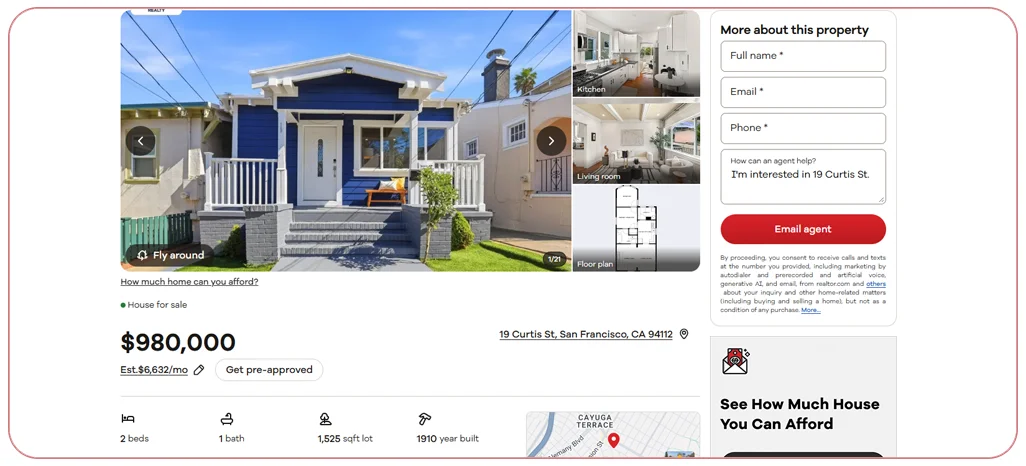
Property price inconsistencies frequently arise because different websites display information using different formats, update schedules, and property descriptions. One portal may show the total asking price, while another emphasizes price per square foot. Rental listings may include maintenance charges separately, whereas other platforms combine them with the displayed rent.
For real estate investors, brokers, property aggregators, and market researchers, these differences make direct comparisons difficult. A standardized dataset can help address the problem by organizing listings according to location, property type, size, price, and listing status.
Understanding changing market conditions
The European Union's official House Price Index provides a useful example of why property price comparisons need historical context. According to Eurostat, EU house prices increased by 4.7% year over year in Q2 2026. The euro area recorded 4.0% annual growth during the same period. Eurostat housing price statistics.
The following table summarizes approximate EU house price index levels shown in Eurostat's historical chart. The index uses 2025 = 100 as its reference base.
| Year | Approximate EU house price index | Market observation |
|---|---|---|
| 2020 | 80 | Prices continued increasing |
| 2021 | 87 | Faster market appreciation |
| 2022 | 93 | Strong growth followed by moderation |
| 2023 | 92 | Prices fluctuated |
| 2024 | 97 | Growth resumed |
| 2025 | 101 | Index moved above its reference level |
| 2026 Q2 | 104 | Prices continued increasing |
Source: Eurostat, House Price Index, Q2 2026. Values are approximate readings of the published chart, not transaction prices. View the official historical chart.
How structured property data addresses inconsistencies
- Compare properties within the same locality and property category.
- Convert square feet and square metres into a common measurement unit.
- Separate total property prices from price-per-area calculations.
- Record listing dates and last-observed timestamps.
- Identify duplicate advertisements using property attributes and listing identifiers.
- Distinguish asking prices from completed transaction prices.
Businesses seeking real-time real estate market intelligence should also consider the frequency of source updates. A listing collected today may have a different price tomorrow. Maintaining timestamps makes it easier to understand when a price changed instead of treating every collected value as current.
How Can Automated Systems Collect Property Information?
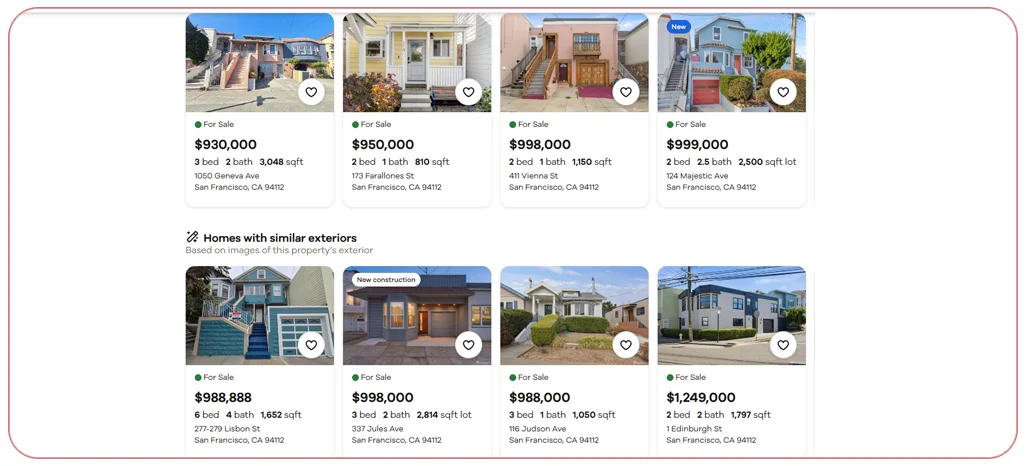
Automated collection systems help businesses gather property information from multiple authorized websites without depending entirely on manual research. A typical workflow starts by identifying target websites, selecting relevant listing categories, defining required fields, and establishing collection schedules.
A properly configured real estate data scraping API can help retrieve permitted property information and deliver it in a consistent format. Instead of maintaining separate spreadsheets for every property portal, businesses can organize records through a common data structure.
Which property attributes should businesses collect?
| Data category | Important fields | Business application |
|---|---|---|
| Property identity | Listing ID, property URL | Record identification |
| Location | Country, city, locality, postcode | Geographic comparison |
| Pricing | Asking price, rent, currency | Price benchmarking |
| Property details | Bedrooms, bathrooms, area | Property comparison |
| Building details | Property type, amenities, furnishing | Segmentation |
| Listing information | Posted date, updated date, status | Listing monitoring |
| Source details | Website, collection timestamp | Traceability |
The collection process should also account for differences in website structures. Some websites provide structured page information, while others load listing details dynamically. Field mapping and extraction rules must therefore be configured according to each permitted source.
How does API-based collection improve operations?
- Standardizes information from different property portals.
- Supports scheduled collection and repeatable updates.
- Reduces manual copying and spreadsheet maintenance.
- Makes datasets easier to connect with analytics systems.
- Provides consistent output for dashboards and reporting.
For example, a property analytics company monitoring apartments in several cities can organize records using a common schema. Analysts can then compare asking prices for similar property configurations without manually restructuring every source file.
It is important to distinguish between automated collection and permission to use collected information. Businesses should review applicable website terms, source permissions, and relevant legal requirements before implementing collection workflows.
How Does Data Standardization Improve Property Comparisons?
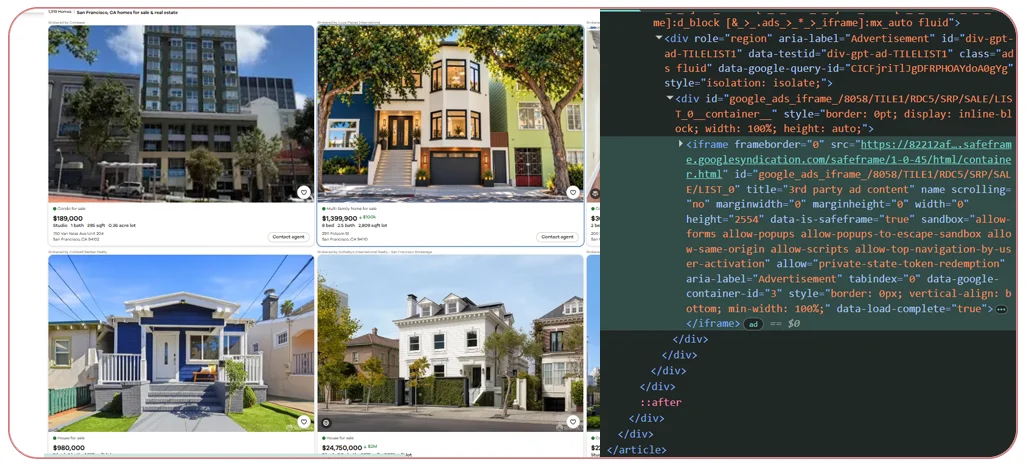
Collecting property information is only the first stage of building a useful dataset. The next challenge is ensuring that records from different sources can be compared accurately.
Standardized real estate data extraction involves transforming inconsistent property fields into a common structure. This process includes cleaning text, normalizing measurement units, standardizing currencies, validating locations, and checking whether important attributes are missing.
Consider two property listings that describe apartments in the same locality. One portal displays an area of 1,200 square feet, while another uses 111.48 square metres. These values are approximately equivalent. Without unit normalization, an automated comparison could incorrectly classify them as different property sizes.
Essential standardization procedures
- Price normalization: Store currency codes and apply a documented exchange-rate reference when cross-currency comparisons are required.
- Area normalization: Convert property areas into a common unit before calculating price per square metre or square foot.
- Location normalization: Standardize locality names, postal codes, and administrative regions.
- Property classification: Group apartments, villas, townhouses, commercial spaces, and land separately.
- Duplicate detection: Compare listing IDs, URLs, location, area, and other available attributes.
- Timestamp management: Maintain original publication dates and collection dates separately.
Why historical data matters
The Federal Housing Finance Agency (FHFA) publishes a House Price Index covering all 50 US states and more than 400 cities. Its methodology uses a weighted repeat-sales statistical technique to analyze housing transaction data. The index provides national, state, metropolitan, county, ZIP-code, and census-tract perspectives. FHFA House Price Index methodology.
FHFA also provides downloadable datasets in CSV, JSON, XML, and SQL formats. This demonstrates how standardized historical housing information can support structured analysis. Explore FHFA datasets.
For businesses, combining appropriately sourced property listings with reliable historical market indicators can improve comparative research. However, asking prices and completed transaction prices should remain separate data categories.
Want to build cleaner property datasets and improve pricing comparisons? Explore Real Data API for structured data solutions and scalable property intelligence workflows!
Get Insights Now!How Can Property Websites Be Monitored for Pricing Changes?
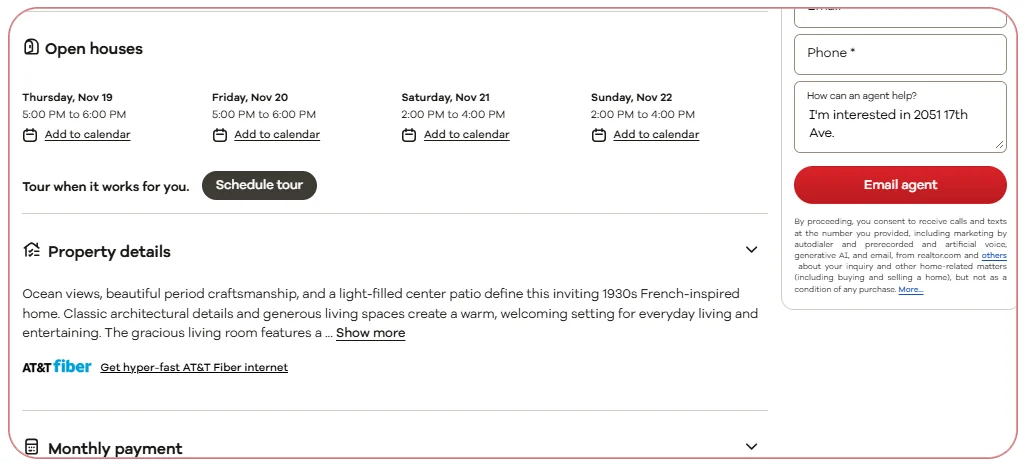
Property listings are dynamic. Sellers and agents may update asking prices, change rental conditions, modify property descriptions, or remove advertisements. Monitoring these changes helps businesses maintain a more reliable view of available properties.
A structured real estate website scraping for property analytics workflow can capture permitted listing information at defined intervals and compare new observations against previously collected records.
Important monitoring activities
- Price-change tracking: Identify whether an asking price has increased, decreased, or remained unchanged.
- Listing-status monitoring: Identify newly published, updated, unavailable, or removed listings.
- Property attribute monitoring: Detect changes in floor area, bedroom count, furnishing, or amenities.
- Location-based monitoring: Compare properties across neighborhoods and postal-code areas.
- Competitor monitoring: Evaluate publicly available competitor listings and asking prices.
What can historical property observations reveal?
Historical observations help analysts distinguish temporary listing adjustments from broader market movements. For example, a property whose asking price changes several times within a short period may require additional review before being included in a pricing benchmark.
A useful monitoring record should contain:
| Field | Purpose |
|---|---|
| Listing identifier | Connect observations to the same listing |
| Previous asking price | Establish the earlier price |
| Current asking price | Record the latest observed price |
| Previous timestamp | Identify the earlier observation |
| Latest timestamp | Record when the new value was collected |
| Listing status | Track availability changes |
| Source URL | Maintain source traceability |
Businesses should avoid interpreting a removed advertisement as proof that a property has been sold. A listing can disappear because of withdrawal, expiration, duplication, or a website update. Confirming transaction status requires an appropriate verified source.
Using official market indicators alongside listing data
FHFA's 2026 Q2 state-level house price statistics demonstrate how geographic differences matter. Its published one-year changes included 8.30% for Alaska, 7.29% for Vermont, and 5.82% for Hawaii. These are changes in the FHFA purchase-only house price index, not average online asking-price changes. View FHFA state-level statistics.
Combining regional market indicators with consistently collected listing observations can help businesses avoid treating one property's asking price as representative of an entire market.
How Can Businesses Build a Reliable Property Data Pipeline?
A reliable property data pipeline needs more than a web crawler. It requires source management, structured extraction, validation, storage, monitoring, and repeatable delivery.
A customized Real Estate Scraping API can help businesses connect permitted property information sources with internal analytics systems. This approach is useful for companies that need consistent records across several property portals, locations, and property categories.
A practical pipeline architecture
- 1. Authorized property sources
Property portals, listing pages, approved feeds
- 2. Automated collection
Scheduled extraction and source-specific field mapping
- 3. Data cleaning and validation
Normalization, duplicate checks, missing-field detection
- 4. Structured storage
Database, CSV, JSON, or other agreed formats
- 5. Analytics and reporting
Price comparisons, market trends, dashboards
What should a quality assurance process include?
| Quality check | Recommended validation |
|---|---|
| Price | Numeric values, currency, reasonable field format |
| Area | Consistent measurement units |
| Location | Standardized geographic identifiers |
| Listing identity | Duplicate and identifier checks |
| Dates | Valid publication and collection timestamps |
| Availability | Clearly defined status categories |
| Source | Original URL and collection record |
Build a repeatable process rather than a one-time dataset
A one-time extraction provides a snapshot of the market. A repeatable pipeline creates a history of observations. This distinction matters for businesses that want to understand price movements, monitor rental markets, or evaluate changes in property supply.
For example, a property portal comparing rental apartments across multiple cities may need daily updates for listing availability but less frequent updates for relatively stable building attributes. Collection frequency should reflect the business purpose, source update patterns, and permitted access conditions.
Important implementation consideration: The IETF's RFC 9309 defines the Robots Exclusion Protocol and specifies how automated crawlers should follow applicable robots.txt rules. The standard also clarifies that robots.txt is not itself a form of access authorization. Businesses should separately assess source permissions and legal requirements. Read IETF RFC 9309.
Which Property Data Fields Deliver the Most Business Value?
Not every property attribute has equal value for every business. An investment research firm may prioritize asking prices, locality, property size, and historical observations. A rental marketplace may focus on monthly rent, furnishing, bedroom count, and listing availability.
The objective should be to build datasets around clearly defined business questions rather than collect every available field.
Recommended property data categories
| Dataset category | Important attributes | Business value |
|---|---|---|
| Residential sales | Asking price, area, bedrooms, location | Sales-price comparison |
| Rental properties | Monthly rent, furnishing, availability | Rental benchmarking |
| Commercial properties | Property type, floor area, lease terms | Commercial market analysis |
| Land listings | Plot size, zoning details, asking price | Land valuation research |
| New developments | Project name, configuration, launch details | Development monitoring |
| Historical listings | Previous prices, dates, status | Price movement analysis |
How can these datasets solve business problems?
- 1. Property price benchmarking
Compare similar properties within a defined geographic area. Use consistent property types, sizes, and pricing units to avoid misleading comparisons.
- 2. Rental market research
Organize rental listings by locality, bedroom count, furnishing, and monthly rent. This helps property managers and analysts understand differences between comparable rental offerings.
- 3. Competitor intelligence
Monitor publicly available competitor listings and identify changes in advertised prices, property categories, and market coverage.
- 4. Investment research
Combine property listing observations with official housing indicators, local economic information, and other relevant sources. Keep asking-price data separate from verified transaction data.
- 5. Property portal enrichment
Use standardized attributes to improve search filters, listing categorization, and property comparison features.
For example, Schema.org defines a RealEstateListing type for web pages describing real estate offers. Its properties include listing identifiers, publication dates, names, images, and URLs. This provides a useful reference for designing consistent property listing schemas. Explore Schema.org RealEstateListing.
A well-organized property dataset should also retain source information and collection timestamps. These fields help analysts investigate discrepancies rather than accepting every displayed price as an accurate market valuation.
Why Choose Real Data API?
Businesses need structured property information that supports practical decisions rather than disconnected spreadsheets. Real Data API focuses on building data workflows that help organizations collect, organize, and analyze information from suitable sources.
- 1. Customized property data collection
Property businesses have different requirements. Some need residential sales information, while others prioritize commercial properties, rentals, or land listings. Customized extraction helps align collected fields with business objectives.
- 2. Structured and consistent datasets
Standardized output formats make it easier to compare prices, analyze locations, and integrate property information into internal systems.
- 3. Automated data workflows
Repeatable collection processes help businesses maintain historical observations and monitor changes without depending entirely on manual research.
- 4. Flexible integration
Structured datasets can support reporting systems, business intelligence platforms, databases, and property analytics applications.
- 5. Industry-focused applications
The following Real Estate Scraping API Use Cases demonstrate how organized property information can support different business functions:
- Real estate marketplaces: Listing comparison and property search enrichment.
- Property investors: Geographic price research and market monitoring.
- Brokers and agencies: Competitor listing analysis.
- Rental management companies: Rental rate and availability monitoring.
- Market research firms: Historical property trend analysis.
- Developers: New project and development listing research.
- 6. Responsible source management
The collection process should account for source-specific terms, access permissions, privacy obligations, and data retention requirements. For example, the European Commission's GDPR guidance explains principles including data minimization, accuracy, and storage limitation when personal data is processed. Review European Commission GDPR principles.
Real Data API can help businesses plan structured data projects around their required property categories, geographic coverage, output formats, and update schedules.
Conclusion
Property price inconsistencies can affect investment research, competitor analysis, rental benchmarking, and real estate business decisions. Businesses need structured information that makes property comparisons more accurate and market observations easier to understand.
Automated collection, standardized fields, duplicate detection, historical monitoring, and data validation help transform fragmented property listings into useful analytical resources. Combining listing information with official housing price indicators also provides stronger context for understanding market movements.
As property markets continue evolving in 2026, investing in reliable data infrastructure can help businesses improve research efficiency and make better-informed decisions.
Ready to improve your property market intelligence? Contact Real Data API to explore customized real estate data collection, structured datasets, and scalable property analytics solutions!
FAQs
1. How can businesses identify incorrect property prices?
Businesses can compare similar listings using location, property size, category, and asking price. Standardization and duplicate detection help identify inconsistencies.
2. What information should property datasets contain?
Essential fields include property price, address, area, bedrooms, bathrooms, property type, listing date, availability, and source URL.
3. How frequently should property listings be updated?
Update frequency depends on market activity and business requirements. Daily or weekly monitoring may be suitable for tracking changing listings and asking prices.
4. Can Real Data API support customized property datasets?
Yes. Real Data API can help businesses plan structured collection workflows based on property categories, geographic coverage, required attributes, and delivery formats.
5. How can companies improve property dataset accuracy?
Use standardized fields, source verification, timestamp tracking, duplicate checks, and consistent validation rules. Separate advertised prices from confirmed transaction values.
Latest posts
How to Extract Real Estate Datasets from Property Websites 2026 to Solve Property Price Inconsistencies
How Datasets Are Shaping the Future 2026 - Turning Fragmented Business Data into Actionable Market Insights

How Fashion Datasets Are Driving Market Intelligence in 2026 to Identify Consumer Trends and Emerging Fashion Brands
Etsy Product Data Scraping for the USA




.png)


