.gif)
.gif)
Introduction
A fashion brand rarely competes in one country or against one rival. A retailer may sell in five markets and compete with a dozen brands in each. To plan pricing, assortment and promotions, teams need a consistent view across brands and countries. That requires fashion catalogue scraping at scale: many websites, many languages, many currencies and a common data model that makes the results comparable.
For broader competitive monitoring, a dedicated fashion data scraping workflow can help standardise product, price, size and availability fields across markets.
This guide explains how multi-country, multi-brand fashion scraping is designed, which technical and data problems must be solved and how the data is used for pricing, merchandising and market research.
The Challenge Of Multi-Brand, Multi-Country Data
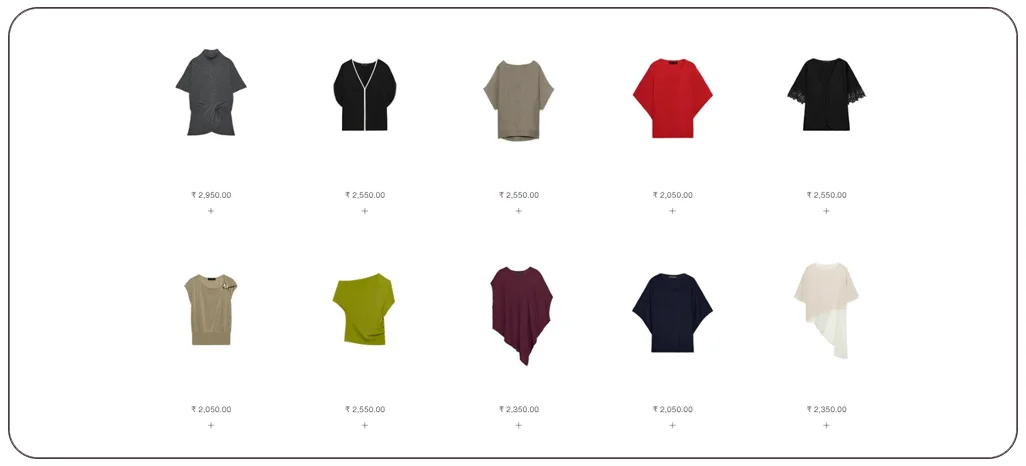
Every fashion site has its own structure, categories, naming and price formats. Add multiple countries and you also face:
- Different languages and scripts
- Different currencies and tax rules
- Different sizing systems
- Different assortments and release timings
- Different promotions and sale calendars
If each site is handled separately, comparisons are unreliable. A unified data model is the foundation of a successful project.
A structured fashion dataset can then make cross-brand and cross-country comparisons easier to maintain over time.
Designing The Unified Data Model
A good model usually has these layers:
Brand and site layer: brand name, site domain, country, language and currency.
Style layer: style or product ID, name, gender, department, category, sub-category and description.
Colour layer: colour name (original and standard colour family), images and price per colour where different.
Size layer: size label (original), standardised size, size type (clothing, shoe, kids) and availability.
Price layer: price in local currency, original price, discount percent, currency code, tax-included flag, converted price in a base currency, exchange rate and date.
For projects that need a reusable delivery layer, a Fashion Data API can provide consistent outputs for pricing and assortment analysis.
Attributes layer: material, fit, pattern, sleeve, neckline, occasion, sustainability tags and care instructions.
Time layer: collection timestamp, first-seen date and last-seen date.
Currency And Tax Handling
Prices must be comparable. Record the local price and currency exactly as displayed, note whether tax is included, and add a converted price using a stated exchange rate and date. In many markets, displayed prices include VAT, while in others they do not. For analysis, flag this clearly, and avoid mixing tax-inclusive and tax-exclusive prices in the same comparison without adjustment.
Standardising Sizes And Colours
Size labels vary: S, M, L, numeric sizes, EU sizes, UK sizes and US sizes. A size-mapping table converts them to a standard system, while keeping the original label. Colours are similar: Navy, Midnight, Dark Blue and Ink may all belong to the same family. A colour dictionary maps raw names into families such as blue, black, white and green, enabling analysis of colour trends across brands.
Matching Products Across Brands
Brands do not share product IDs, so cross-brand comparison needs similarity matching based on category, attributes and sometimes images. For example, a plain white cotton t-shirt in the same size range across several brands can be grouped as a comparable item. Matching is approximate. Use it for price positioning analysis rather than exact comparisons, and keep the logic transparent.
Scraping Workflow
- Define the brand and country list. Include the brands and country sites you need, with their languages.
- Build one scraper per site. Each site gets its own logic but outputs the same schema.
- Map categories. Convert each site's categories into your standard taxonomy.
- Collect listings and product pages. Capture the full catalogue, including variants and sizes.
- Normalise. Standardise currencies, sizes, colours and attributes.
- Track changes. Store each run to detect new arrivals, removals, price changes and sell-outs.
- Quality-check by site. Each site has its own validation rules, such as expected product counts.
- Deliver. Provide unified files or an API with filters for brand, country and category.
Where multiple product sources need to feed downstream systems, a unified apparel and accessories data API can simplify integration and recurring delivery.
Technical Challenges
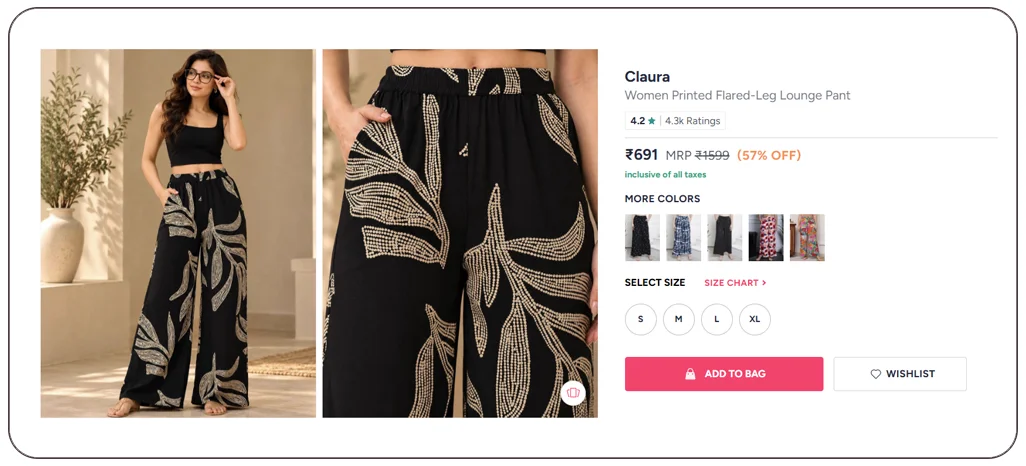
- Scale and diversity: dozens of sites with different technologies, from simple pages to heavily scripted apps.
- Site-specific protection: each site's anti-bot approach differs, requiring per-site tuning.
- Maintenance: fashion sites redesign often, so scrapers must be monitored and repaired quickly.
- Geo-restrictions: some country sites require a local context. Correct country settings must be verified.
- Language processing: translating or mapping text attributes across languages such as German, French, Arabic and Spanish.
- Data volume: large catalogues across many countries create large datasets that require efficient storage.
Use Cases
- Pricing teams: compare your prices to competitors in each country and set price corridors.
- Merchandising and buying: see which categories, colours and fits competitors are pushing.
- Market entry: assess price levels and assortment before entering a new country.
- Marketplaces and aggregators: build product feeds and comparison tools.
- Brand and legal teams: monitor parity and unauthorised price differences across regions.
- Investors and analysts: track markdown depth and assortment changes as indicators of demand and inventory.
For broader e-commerce benchmarking beyond apparel, ecommerce data scraping can extend the same pricing and assortment approach to other product categories.
Example: A Sportswear Brand
A sportswear brand sells in the UK, Germany, UAE and Saudi Arabia. It tracks eight competitors across all four countries. The unified dataset shows that its running shoes are priced at a premium in the Gulf compared with Europe, while competitors keep a smaller regional gap. It also reveals that competitors launch certain colours earlier in Europe. The brand adjusts regional pricing and timing of launches.
Example: Price Parity Reporting
A global fashion brand monitors parity between its own country sites after currency conversion. Weekly reports highlight styles whose converted prices differ by more than a set threshold, helping the pricing team to investigate and fix errors.
Sample Output
A row may contain: brand, country, language, style ID, name, gender, category, standard category, colour, colour family, price local, original price local, currency, tax-included flag, price in base currency, discount percent, sizes available, sizes sold out, material, fit, product URL, image URL, first-seen date and timestamp.
For ready-to-use market research, fashion and apparel datasets can provide structured product-level data for analysis and reporting.
Quality Checks
- Product counts per brand and country compared with previous runs
- Currency and price format validation
- Size and colour mapping coverage
- Discount logic checks
- Manual sampling per site
Delivery And Refresh
Unified data can be delivered as CSV, Excel or Parquet files, or through an API with filters. Weekly collection suits assortment tracking, while daily collection suits price monitoring during sale seasons. For large projects, a data warehouse load is common.
Responsible Data Collection
Collect only public product information, avoid personal data and follow the terms of each site and local laws. Product images and text are often protected by copyright, so check usage rights.
Why Choose Real Data API For Fashion Catalogue Scraping
Real Data API also supports fashion catalogue scraping across countries for brands that need consistent multi-market catalogue coverage.
Real Data API builds and maintains scrapers across many brands and countries, with one consistent schema and strong quality monitoring. A pilot with three brands in two countries is an effective way to validate the approach before scaling.
Conclusion
Multi-country, multi-brand fashion catalogue scraping turns many different websites into one comparable dataset. With a unified schema, careful currency, size and colour handling and strong monitoring, fashion teams gain a reliable view of competitors and markets across borders.
Need multi-country fashion data? Real Data API can design and deliver a pilot for your brands and countries.
FAQs
How many brands and countries can be covered?
There is no fixed limit. Projects usually start with a core group and expand over time.
Do you convert currencies?
Yes. Local prices are kept, and converted prices are added with a stated exchange rate and date.
How do you handle different languages?
Original text is kept, and standardised categories and attributes are added so that analysis works across languages.
Can you match similar products across brands?
Yes, using category, attribute and optional image similarity. Matches are approximate and flagged with a confidence score.
Can I receive alerts for price changes?
Yes. Rules can notify you when selected products or competitors change price.
Latest posts
Multi-Country, Multi-Brand Fashion Catalogue Scraping
Amazon & Zalando Germany Data for D2C Multi-Brand Tracking
Cashify Final Price Breakup Data: How to Capture Deductions & Offer Prices
H&M Saudi Arabia Data Scraping: Men's & Women's Clothing



.png)


