.gif)
.gif)
Introduction
Germany is Europe's largest e-commerce market for fashion and lifestyle, and two marketplaces dominate the conversation for direct-to-consumer brands: Amazon.de and Zalando. Many D2C brands sell on their own websites while also listing on these marketplaces, because that is where shoppers search and compare. The problem is visibility. Once a brand lists on a marketplace, it competes not only on price but on search position, reviews, size availability, delivery promise and the range of similar brands next to it. Multi-brand tracking through Amazon.de and Zalando data scraping provides the evidence that D2C teams need to compete.
This guide explains what to track, how data is collected from both marketplaces, how multi-brand comparisons are built, which challenges arise and how brands use the output.
Why D2C Brands Track Marketplaces
Marketplaces are both a sales channel and a competitive arena. Tracking them answers questions such as:
- Are my products priced competitively against similar brands at the same quality level?
- Where do my products rank for important search terms, and who ranks above me?
- How do ratings and review counts compare with competitors?
- Which sizes and colours sell out first?
- Are retailers or resellers undercutting my recommended price?
- How does my share of shelf in a category compare with other brands?
How Amazon.de And Zalando Differ
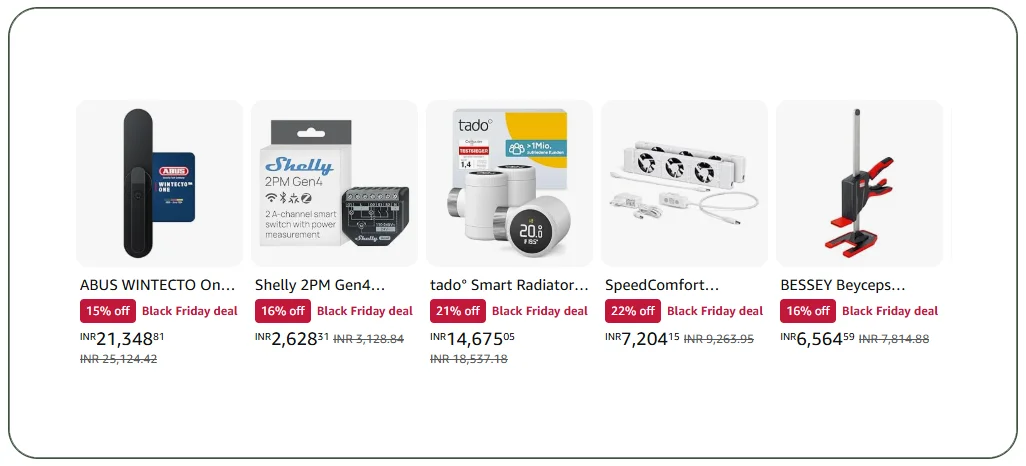
Amazon.de is an open marketplace with many sellers, and the same product can be offered by the brand itself, by Amazon and by third-party sellers. Key features include the featured offer, seller ratings, fulfilment options, sponsored placements, best-seller ranks and customer questions and reviews.
For deeper marketplace-level collection, Amazon.de Product Data Scraping API can provide structured product, pricing, rating and availability data.
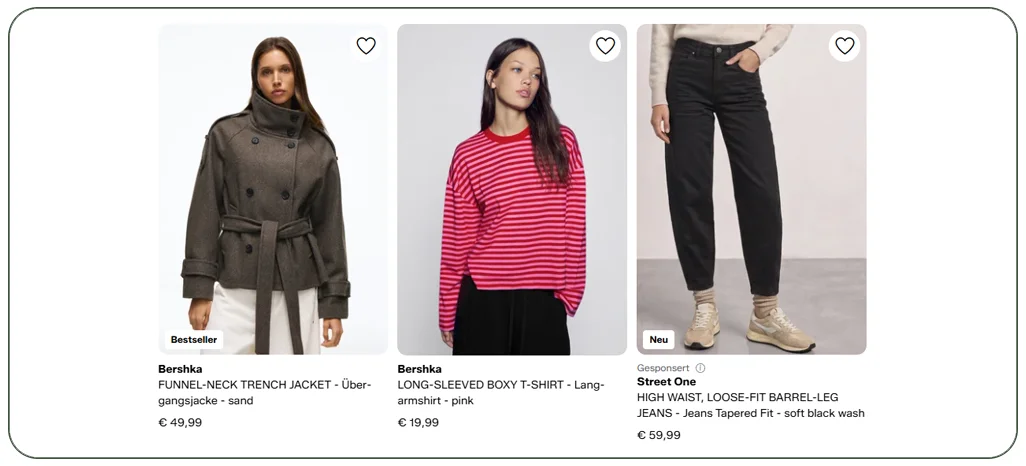
Zalando is a curated fashion platform with a strong focus on brand presentation, size and fit, delivery and returns. Products are organised into brands, categories and campaigns. Zalando also shows size availability, price reductions and fit information, which are valuable for fashion analysis.
For fashion-specific marketplace extraction, Zalando Data Scraper can support product, size, price and image collection.
Together they show both the open-market and curated sides of German online fashion.
Defining The Brand Set
A D2C brand usually defines three groups:
- Own brand: every listing of your products on the marketplaces
- Direct competitors: brands in the same style, price and audience range
- Aspirational or benchmark brands: leaders in your category that you want to learn from
Tracking 10 to 30 brands across a few categories is typical.
Data Fields To Collect
A broader ecommerce scraping API can also standardize marketplace product fields across different sources.
Product data: product ID (ASIN on Amazon, article number on Zalando), title, brand, category, gender, colour, material, description and images.
Price data: current price, original or reference price, discount percentage, currency (EUR) and price history over time.
Availability: in stock status, size-level availability, delivery estimate and fulfilment type.
Marketplace signals: rating, review count, best-seller rank, badges such as new or sustainable labels, and number of sellers on Amazon.
Search and listing visibility: rank for chosen keywords and categories, sponsored or organic position and page number.
Seller data on Amazon: seller name, seller rating, fulfilment method and Buy Box status.
Context: keyword or category used, timestamp and language of the page.
How Multi-Brand Tracking Works
For the Amazon side of this workflow, Amazon Data API can support product, search, review, offer and ranking data collection.
- Define brands, categories and keywords. For example, brand names plus keywords such as sneakers, rain jacket or linen shirt.
- Collect category and search listings. For each keyword or category, capture listing pages and ranks up to a defined depth.
- Collect product pages. Visit each product to capture details, price, sizes and ratings.
- Collect seller offers on Amazon. Open the offers view to see all sellers and prices.
- Capture size-level stock on Zalando. Read which sizes are available.
- Normalise and match. Standardise categories and attributes, and match similar products across brands.
- Store time series. Save each run to analyse trends.
- Calculate metrics and deliver. Compute share of shelf, price index and rank changes, and provide data or dashboards.
Metrics That Matter
- Price index: your average price relative to competitors for comparable products
- Discount depth and frequency: how often and how much each brand discounts
- Share of shelf: the percentage of top search results occupied by each brand
- Rank volatility: how often your rank for key terms changes
- Review velocity: growth in the number of reviews over time
- Size availability rate: the share of sizes in stock for a product or brand
- Unauthorised seller incidence: number of third-party sellers on Amazon for your products
Technical Challenges
For broader fashion-market monitoring, fashion data scraping helps organize product attributes, prices, sizes and availability across fashion sites.
- Anti-bot protection: both marketplaces actively limit automated traffic, so careful pacing and monitoring are essential.
- Personalisation: search results can vary by session, location and device. Collection should use consistent settings and note them.
- Dynamic content: product lists, prices and sizes load via scripts and change frequently.
- German language handling: product titles, materials and attributes are in German, with special characters such as ä, ö, ü and ß. Mapping to English attributes may be needed.
- Product matching across brands: requires attribute and image similarity, and is approximate.
- Variant complexity: colours and sizes create many variants per product.
- Data volume: tracking many brands daily produces large datasets that need organised storage.
Use Cases
- Pricing and promotion strategy: align prices with the market and time discounts well.
- Search and advertising optimisation: identify which keywords your products rank for, and where competitors dominate.
- Product and range planning: see which styles, colours and sizes perform well for competitors.
- Channel and reseller control: detect resellers and price undercutting on Amazon.de.
- Investor and market reporting: measure brand strength in the German market.
- Marketplace operations: monitor stock-outs in popular sizes and fix replenishment.
Example: A Sustainable Footwear Brand
A D2C sustainable footwear brand sells on its own site, Amazon.de and Zalando. It tracks 12 competing brands across sneakers and boots. The data shows that its flagship sneaker ranks on the second page for an important search term on Amazon.de, that two competitors discount heavily every month on Zalando and that its best-selling size sells out repeatedly on the marketplace. The brand improves its listing content and advertising for the keyword, plans its own seasonal promotion and increases stock in the key size.
Example: Detecting Resellers
A home-textile brand finds through seller-level tracking that several third-party sellers list its products on Amazon.de below its recommended price. It raises the issue with its distributors, updates its seller policy and restores price consistency.
Sample Output
A row may include: marketplace, keyword or category, rank, sponsored flag, brand, product ID, title, colour, price, original price, discount percent, availability, sizes available, rating, review count, best-seller rank, seller name, fulfilment type, Buy Box flag, product URL and timestamp.
Delivery And Refresh
For projects spanning several countries and brands, multi-country fashion catalogue scraping can provide a consistent approach to catalogue normalization.
Data can be delivered as CSV, Excel or JSON via API, or loaded into a data warehouse or dashboard tool. Daily collection is common for ranks and prices, and weekly collection suits range and review analysis. During sales events such as Black Friday, more frequent collection helps.
Responsible Data Collection
Collect only public product information, avoid personal data and follow marketplace terms and applicable laws, including EU data-protection and competition rules. Reviews and images may be protected by copyright, so check usage rights.
Why Choose Real Data API For Marketplace Data In Germany
A broader Zalando Product Data Scraping API can complement marketplace tracking when Zalando-specific fields are required.
Real Data API builds marketplace scrapers for Amazon.de and Zalando, handles German-language data and tracks multiple brands in a single schema. A pilot for a few brands and keywords is a good way to validate the data and metrics before scaling.
Conclusion
For wider retail coverage beyond these two marketplaces, ecommerce data scraping can extend competitor and price monitoring across additional retailers.
Amazon and Zalando data scraping for Germany gives D2C brands a clear view of pricing, visibility, availability and competitors on the country's biggest fashion marketplaces. With multi-brand tracking, consistent schemas and regular refreshes, brands can compete with evidence instead of instinct.
Need marketplace tracking in Germany? Real Data API can deliver a pilot for your brands and keywords.
FAQs
Can you track my own products and competitors together?
Yes. Your products and competitor products are tracked in the same dataset, so comparisons are easy.
Can you track search rank for keywords?
Yes. Ranks are captured for the keywords you provide, with sponsored and organic positions separated.
Do you collect size-level availability?
Yes, where the site shows it, especially on Zalando.
Can you collect reviews?
Rating and review counts are standard. Review text can be added with attention to volume and usage rights.
How often should data be refreshed?
Daily for prices and ranks, weekly for reviews and range analysis.
Latest posts
Multi-Country, Multi-Brand Fashion Catalogue Scraping
Amazon & Zalando Germany Data for D2C Multi-Brand Tracking
Cashify Final Price Breakup Data: How to Capture Deductions & Offer Prices
H&M Saudi Arabia Data Scraping: Men's & Women's Clothing


.png)


