Introduction
Saudi Arabia is among the fastest-growing fashion markets in the Middle East. A young population, rising online shopping and a strong appetite for global fast-fashion brands make it an attractive market for retailers and brands. H&M is one of the most visible names in this space, with a localised online store, a rotating assortment and frequent promotions. For competitors, local retailers, marketplaces and fashion analysts, structured data from H&M Saudi Arabia reveals pricing, assortment, trends and sale behaviour in men's and women's clothing. H&M Saudi Arabia data scraping makes that data available at scale.
For broader apparel projects, Real Data API's fashion data scraping solutions cover product, pricing, availability and catalogue attributes across fashion websites.
This guide explains what can be extracted from the store, how a scraping workflow handles the catalogue, which data challenges are typical for fashion, and how the data is used.
For cross-country catalogue work, fashion catalogue scraping across countries can help standardise product, price, size and availability data across markets.
Why Scrape H&M Saudi Arabia?
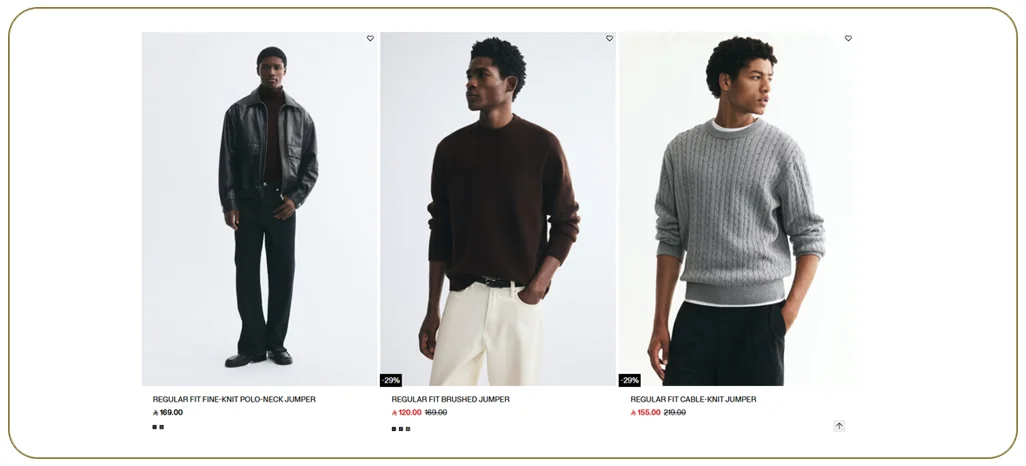
- Local pricing: prices in Saudi riyals differ from other regions after currency, taxes and local strategy.
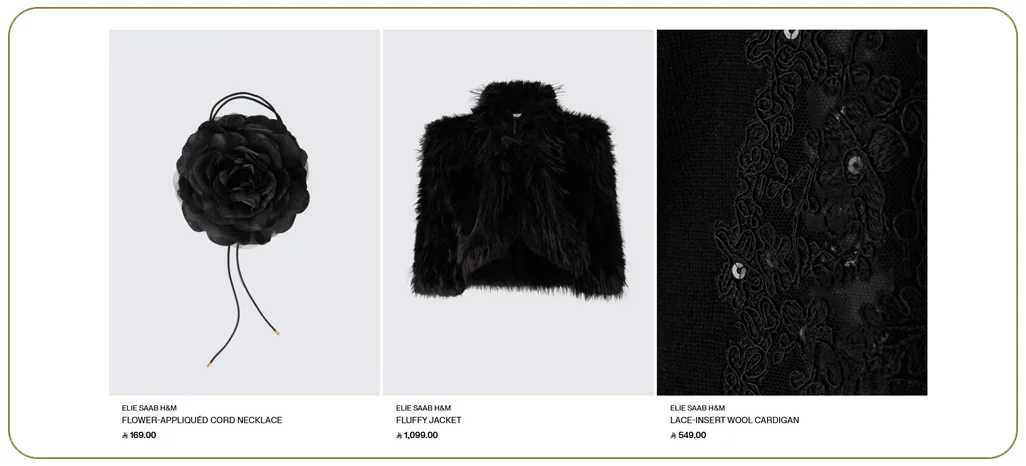
- Local assortment: products offered in Saudi Arabia may differ from those in Europe or the UAE because of climate, culture and demand.
- Trend signals: new arrivals and best-selling categories show which styles are being pushed locally.
- Promotion behaviour: sale timing and depth reveal how H&M manages inventory in the region.
- Benchmark for competitors: local and regional fashion retailers can compare price points and assortment depth.
Scope: Men's And Women's Clothing
A typical project covers the men's and women's departments and their sub-categories. Examples include:
- Women's: dresses, tops, trousers, jeans, skirts, knitwear, abayas and modest wear where offered, outerwear, activewear and loungewear
- Men's: t-shirts, shirts, trousers, jeans, shorts, hoodies, jackets, suits, activewear and basics
Projects can also include other departments such as kids, accessories, shoes and home when needed.
When the scope expands beyond clothing, an ecommerce data scraping workflow can cover broader product and category datasets.
Data Fields To Extract
Product identity: product name, product ID or article number, colour-specific variant ID, URL and images.
Category data: department, category, sub-category, collection and tags such as new arrival, bestseller or conscious.
Price data: current price in SAR, original price, discount percentage, sale label and price history over time.
Variant data: colours, sizes and size-level availability, such as sold out sizes.
Product details: description, fit, composition and material percentages, care instructions, product measurements where shown and sustainability labels.
Customer signals: ratings and review counts where available.
Context: language version, timestamp and position in the category listing.
Workflow
- Map the site structure. Discover the department and category tree for the Saudi store, in English and Arabic if both are needed.
- Collect product listings. Load each category, scroll or page to the end and capture the list of products with price and key attributes.
- Open product pages. Collect details, colours, sizes and composition.
- Capture size availability. Record which sizes are in stock for each colour.
- Normalise data. Standardise categories, convert sizes to a consistent scale, split composition into material fields and ensure that prices are numeric.
- Track changes. Store each run, so you can see new arrivals, removed items, price changes and stock changes over time.
- Deliver. Provide files or API output, with a change report if required.
Handling Arabic And English Versions
The store typically offers Arabic and English. Right-to-left Arabic text must be stored correctly in all files. If your analysis needs product names in both languages, collect both and link them using the product ID. Keep original names, since translations can differ between languages.
Handling Sizes, Colours And Variants
Fashion data is full of variants. One style may come in five colours and six sizes, which makes 30 variants. A clean data model separates:
- Style level: the product concept, with name, category and description
- Colour level: each colour option, with its own images and sometimes its own price
- Size level: each size within a colour, with an availability flag
This structure allows you to count assortment depth accurately and to monitor stock by size, which is a good proxy for demand.
For regional fashion benchmarking, Namshi fashion product and price data can provide a comparable source for product, size, colour, price and availability analysis.
Technical Challenges
- Dynamic loading: products load as users scroll, and filters change what is visible.
- Frequent assortment changes: new items arrive weekly, and others disappear.
- Anti-bot protection: large retail sites limit automated access, so collection must be paced and monitored.
- Bilingual content: Arabic and English fields need careful alignment.
- Price and promotion logic: sale prices, member prices and promotional labels vary.
- Image-heavy pages: pages are large, so efficient collection matters for speed.
- Geographic restrictions: the Saudi store may differ from other country stores, so the correct country context must be set and verified.
Use Cases
- Fashion retailers: benchmark price positioning and assortment against H&M in the Saudi market.
- Marketplaces and aggregators: match products and track price differences to power comparison features.
- Brands entering Saudi Arabia: study price tiers and categories to define a market entry strategy.
- Trend and merchandising teams: monitor new arrivals, colours and categories to inform buying decisions.
- Investors and analysts: track sale timing and discount depth as a signal of inventory health.
- Resale and thrift platforms: use original prices to estimate resale values.
Regional competitor research can also include 6thStreet fashion product and price data for pricing, stock and catalogue comparisons across GCC markets.
Example: A Regional Fashion Retailer
A Gulf-based fashion retailer wants to compare its basics range with H&M. It scrapes H&M Saudi Arabia weekly for men's and women's t-shirts, jeans and hoodies. It records price, colours and size availability, and compares them with its own range. The analysis shows that H&M's entry price points are lower on t-shirts but similar on hoodies, and that some popular sizes sell out quickly. The retailer adjusts its pricing and size run for key items.
Example: A Sale-Timing Study
An analyst tracks prices for 3,000 items daily across a season. The data shows when markdowns start, how discounts deepen over time and which categories are discounted first. The analyst uses the pattern to forecast future promotional periods.
Sample Output
A record may contain: product ID, name (English), name (Arabic), department, category, sub-category, colour, price in SAR, original price, discount percent, sale flag, sizes available, sizes sold out, composition, product URL, image URL, new-arrival flag and timestamp.
Data Quality Checks
- Confirm that all prices are in SAR and numeric
- Check that discounted prices are lower than original prices
- Verify that the number of products per category is stable between runs
- Check that Arabic text is complete and correctly encoded
- Review a sample against the live site
Delivery And Refresh
Catalogue data can be delivered as CSV, Excel or JSON via API. Weekly collection suits assortment tracking, while daily collection is better for price and stock monitoring during sale periods.
For a scalable API-based approach, the ecommerce scraping API can provide structured product, price, stock and catalogue data for downstream analytics.
Responsible Data Collection
Collect only publicly visible product information, avoid personal data and follow the site's terms and applicable laws. Product images and descriptions are usually protected by copyright, so check usage rights before reusing them publicly.
Why Choose Real Data API For Fashion Data Scraping
Real Data API builds retailer-specific scrapers that handle variants, sizes, bilingual content and change tracking. A pilot with a few categories shows you the data quality before you scale to the full catalogue.
Conclusion
H&M Saudi Arabia data scraping gives fashion retailers, marketplaces and analysts a detailed view of pricing, assortment and promotions in men's and women's clothing. With careful variant handling, bilingual support and change tracking, the data becomes a reliable tool for benchmarking and merchandising decisions.
Need H&M Saudi Arabia catalogue data? Real Data API can deliver a pilot for your categories.
FAQs
Can you collect size-level availability?
Yes, where the site shows which sizes are sold out.
Can I get Arabic and English names?
Yes, both versions can be collected and linked by product ID.
How often should the catalogue be refreshed?
Weekly for assortment tracking, daily for price and stock monitoring.
Can you track price history?
Yes. Each run is stored, so you can see price changes over time.
Can other departments such as kids and accessories be included?
Yes. The scope can include any department on the site.
Latest posts
Uber Eats & Deliveroo Restaurant Data Scraping for the UK
Yemeksepeti Restaurant Data API for Turkey: Multi-City Coverage
Dubai Restaurant Menu Intelligence: Business Bay & Hessa Street
How a Travel data scraping API for market intelligence Helps Travel Businesses Solve Inaccurate Pricing and Competitor Tracking Challenges



.png)


