
Introduction
The UK food delivery market is one of the most competitive in Europe. Uber Eats and Deliveroo, alongside other apps, serve millions of orders through tens of thousands of restaurants, from independent takeaways to national chains. For restaurant groups, delivery aggregators, market researchers and investors, understanding what is listed, at what price and with what fees is critical. Uber Eats and Deliveroo data scraping delivers this view at the level of individual postcodes.
For platform-specific collection, see the Uber Eats Food Data Scraping API for restaurant, menu, pricing, review and delivery data.
For wider food delivery data projects, similar restaurant, menu and pricing fields can be collected across delivery platforms.
For broader restaurant-data projects, Real Data API's Food Data Scraping API can also support structured collection of menus, prices, ratings and delivery information.
This guide explains how UK delivery platform data is collected, what it includes, how postcode-based scraping works, what challenges are involved and how organisations use the results.
Why UK Delivery Data Is Valuable
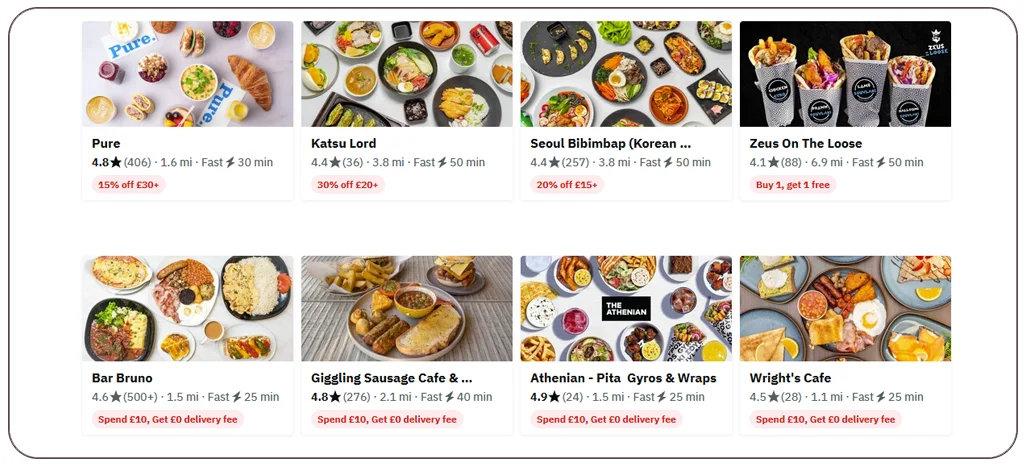
Delivery apps are now a primary sales channel for many UK restaurants. Prices on apps often differ from in-store prices. Fees, minimum orders and promotions vary by area. Brands appear and disappear, including virtual brands from shared kitchens. Without data, it is hard to know:
- How your menu prices compare with local competitors
- Whether competitors discount aggressively on a given platform
- How delivery fees and service fees differ between Uber Eats and Deliveroo
- Which cuisines or dishes are growing in a city
- Where there are gaps in coverage
What Data Can Be Collected
Restaurant level: name, brand, cuisine tags, rating and review count, price band, address or area, delivery time estimate, delivery fee, service fee, minimum order and opening hours.
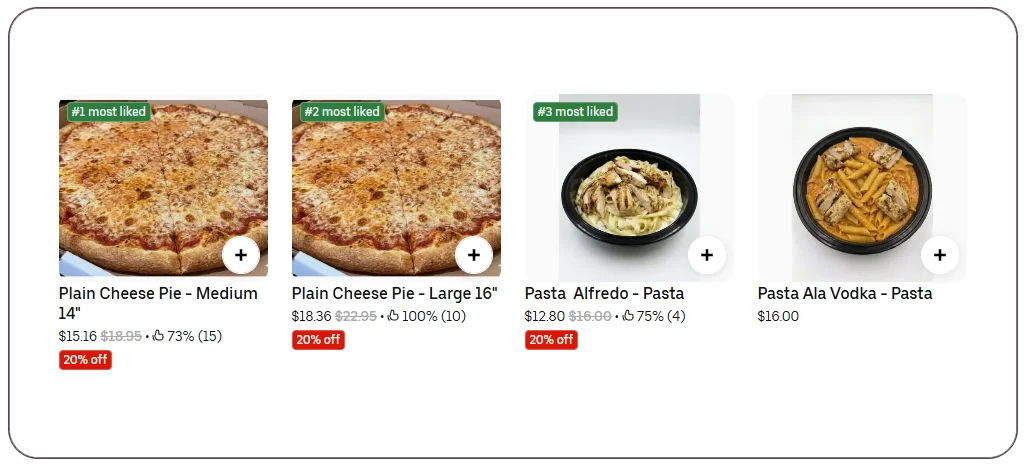
Menu level: categories, item names, descriptions, prices, discounted prices, dietary tags such as vegetarian and vegan, allergens where displayed, bestseller or popular tags, images, modifiers and add-ons with prices.
Offers: percentage discounts, free-delivery offers, meal deals, buy-one-get-one promotions and new-customer promotions where visible.
Context: postcode and delivery address used, platform, timestamp and listing rank.
How Postcode-Based Scraping Works
UK delivery platforms decide which restaurants to show based on the delivery address, usually a postcode. A restaurant may serve some postcodes and not others, even in the same city. To collect data properly:
- Select postcodes. Choose a set of postcodes covering the area of interest. For a city, use postcode districts such as the first part of the postcode, and add representative full postcodes inside each district. For additional local restaurant discovery, Google Maps business data scraping can complement delivery-platform data with business and location information.
- Set the delivery address. For each postcode, enter it into the platform, as a customer would.
- Collect the restaurant list. Load the restaurant list, including filters, categories and collections, and scroll to the end.
- Merge and de-duplicate. The same restaurant appears for several postcodes. Merge into a master list with the list of postcodes it serves.
- Collect menus. Open each restaurant and capture the full menu, modifiers and offers.
- Standardise. Map categories, normalise dish names and sizes and record price formats.
- Match across platforms. Link restaurants that are on both Uber Eats and Deliveroo, and compare menu prices and fees. For the second platform, Real Data API also supports Deliveroo restaurant and menu data scraping for UK-focused cross-platform restaurant and menu analysis. This type of cross-platform workflow is useful when building a restaurant data scraping pipeline for competitor and menu-price analysis.
- Deliver.
Comparing Uber Eats And Deliveroo
Once you have both platforms, you can compare:
- Menu price differences: the same restaurant may price items differently on each app.
- Fees: delivery fee, service fee and small-order fee structures.
- Offers: which platform has more discounts and what types.
- Coverage: which restaurants are exclusive to one platform.
- Delivery times: estimated delivery times for the same restaurant.
These comparisons are valuable for chains deciding where to focus marketing and for analysts studying competition between platforms.
Technical Challenges
- Postcode-driven results: many postcodes are needed for full coverage, which multiplies the workload.
- Anti-bot controls: both platforms use strong protection, so collection needs careful pacing, rotation and ongoing maintenance.
- Dynamic content: menus and offers load via scripts and app endpoints, and change often. For technically complex pages and scalable extraction, a Web Scraping API can be used as part of a broader automated collection workflow.
- Virtual brands and shared kitchens: the same kitchen may operate several brands with different names and menus.
- Price formats and modifiers: extras, sizes and meal deals complicate the real price of a dish.
- Frequent menu updates: items and prices are updated regularly, particularly during promotions.
- Data protection: while menus are business data, be careful not to collect any personal data and follow UK GDPR principles when handling datasets.
Use Cases
- Restaurant chains: benchmark menu prices, deals and delivery fees against local competitors by postcode.
- Delivery aggregators and startups: understand the competitive landscape, restaurant coverage and fee structures.
- Market researchers and investors: analyse growth in cuisines, brand counts and promotions.
- Food and drink suppliers: target restaurants by cuisine and price band for B2B sales.
- Franchise and site planning: estimate competition density for new locations or kitchens.
- Consultants: produce reports on delivery pricing and platform competition.
Example: A Burger Chain
A burger chain has 20 UK sites and wants to understand how its delivery prices compare with competitors. It scrapes menus from Uber Eats and Deliveroo for the postcodes around each site and compares the price of a standard burger meal, side dishes and drinks. The chain finds that some competitors price delivery menus higher than in-store menus, while others discount heavily on one platform. It adjusts its delivery pricing and chooses where to concentrate offers.
Example: A Market Study
A research firm studies how the vegan food offer is changing in London. It collects restaurant and menu data every month for a year, tagging vegan items and counting them by postcode. The study shows which areas have the fastest growth in vegan options and what the typical price premium or discount is compared with non-vegan equivalents.
Sample Output
A row in a menu table may include: platform, postcode, restaurant name, brand, cuisine, category, item name, description, price, discounted price, dietary tag, popular flag, modifier name, modifier price, offer text, delivery fee, service fee, minimum order, delivery time and timestamp.
Data Quality Checks
- Compare restaurant counts per postcode with previous runs
- Check for missing prices and zero-price items
- Validate that currency is pounds sterling
- Check that modifiers are linked to the right item
- Sample manually against the app
Delivery And Refresh
Data can be delivered as CSV, Excel or JSON via API. A monthly refresh is common for full menus, while weekly or daily collection can be used for selected competitors or promotion tracking.
For teams that need structured recurring datasets, Real Data API also provides web scraping services tailored to ongoing data-collection requirements.
Responsible Data Collection
Collect only public business information, avoid personal data and follow UK data-protection and platform rules. Menu text and images may be protected by copyright, so check usage rights before republishing.
Why Choose Real Data API For UK Delivery Data Scraping
Real Data API builds postcode-based scrapers for Uber Eats and Deliveroo, cleans and standardises menus and matches restaurants across platforms. A pilot for one city or a handful of postcodes shows you the data quality and coverage before you scale.
Conclusion
Uber Eats and Deliveroo data scraping gives UK restaurant groups, aggregators and analysts a precise, postcode-level view of menus, prices, fees and offers. With careful postcode coverage, standardised menus and cross-platform matching, delivery data becomes a practical tool for pricing, competition and expansion decisions.
Need UK delivery platform data? Real Data API can deliver a pilot for your postcodes and restaurants.
FAQs
How many postcodes do I need?
It depends on the area. A city may need dozens of postcodes for full coverage. A pilot helps estimate this.
Can you collect fees and minimum orders?
Yes. They are collected with each restaurant and each postcode.
Do you capture modifiers and add-ons?
Yes. Modifiers, sizes and extras are collected with their prices.
Can I compare the same restaurant across both apps?
Yes. Restaurants are matched by name and address and compared item by item.
Can I get historical menu data?
History starts from the first collection. A regular schedule builds a record of changes.
Latest posts
Uber Eats & Deliveroo Restaurant Data Scraping for the UK
Yemeksepeti Restaurant Data API for Turkey: Multi-City Coverage
Dubai Restaurant Menu Intelligence: Business Bay & Hessa Street
How a Travel data scraping API for market intelligence Helps Travel Businesses Solve Inaccurate Pricing and Competitor Tracking Challenges



.png)


