.gif)
.gif)
Quick Summary
- Fashion Datasets Are Driving Market Intelligence in 2026 by helping fashion retailers, manufacturers, and e-commerce businesses understand consumer preferences, emerging styles, product demand, and competitor strategies.
- Structured fashion information supports product benchmarking, pricing comparisons, brand discovery, and inventory research.
- Businesses can use data-driven research to identify emerging opportunities, optimize product assortments, and make informed decisions in the changing global fashion industry.
Introduction
The fashion industry is becoming increasingly data-driven as retailers, manufacturers, luxury brands, and online marketplaces respond to changing consumer preferences and competitive pressures. Fashion Datasets Are Driving Market Intelligence in 2026 by transforming scattered product information into structured insights about clothing styles, footwear, accessories, brand positioning, prices, discounts, and product availability. Businesses increasingly need reliable information to identify emerging fashion trends, evaluate competitors, and understand how shopping preferences change across markets.
The growing importance of online shopping makes structured fashion information particularly valuable. According to Eurostat, 77% of EU internet users purchased goods or services online in 2024. Clothing, footwear, and accessories were the most frequently purchased online product category, with 45% of individuals making such purchases during the previous three months.
Through Fashion Data Scraping, businesses can organize permitted online product information into consistent records for competitive research, pricing intelligence, product discovery, and assortment analysis. This approach helps fashion companies replace fragmented manual research with structured information that can be evaluated across brands, categories, retailers, and geographic markets.
For fashion e-commerce companies, the central challenge is not simply identifying popular products. It is understanding why certain styles gain visibility, how competitors position similar products, and which consumer preferences may influence future buying decisions.
How Has the Fashion Industry's Digital Landscape Changed Between 2020 and 2026?
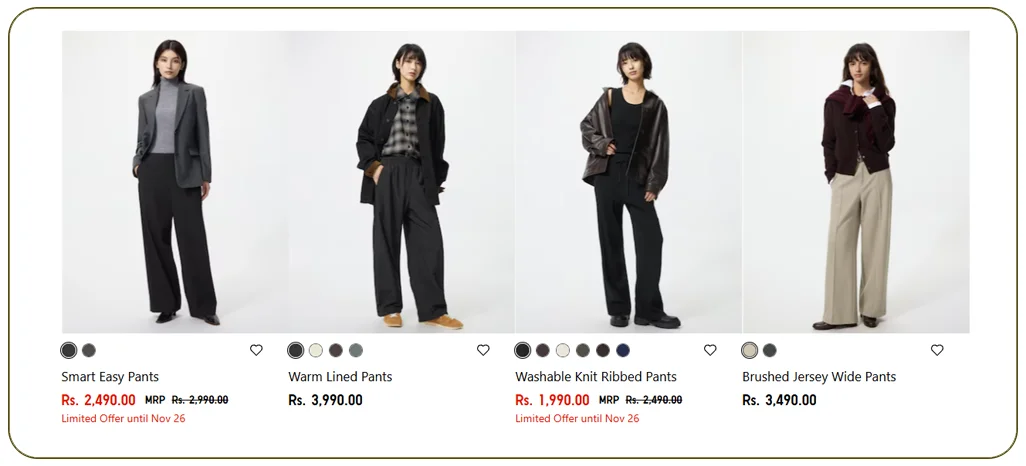
Fashion retail has experienced significant changes in digital shopping, product discovery, and consumer expectations. Online channels have become important places for consumers to explore apparel, footwear, accessories, and luxury products. This has increased the value of structured information for fashion brands seeking to understand competitive positioning.
Eurostat's online purchasing data provides a measurable indication of this development. In 2024, 45% of EU individuals purchased clothing, sportswear, footwear, or accessories online during the previous three months. Its 2026 digitalisation publication also reports that 70% of EU online shoppers purchased clothing, shoes, or accessories in 2024. The two figures use different population denominators and should not be confused.
What do historical online fashion purchasing figures show?
| Year | EU individuals purchasing clothes, shoes, or accessories online |
|---|---|
| 2020 | 33.47% |
| 2021 | 38.53% |
| 2022 | 38.15% |
| 2023 | 40.47% |
| 2024 | 42.32% |
| 2025 | Comparable clothing-specific figure not included here |
| 2026 | Full-year comparable figure not yet available |
Source: Eurostat online purchasing dataset, ISOC_EC_IBGS. The figures represent the share of individuals aged 16–74 purchasing clothing, including sports clothing, shoes, or accessories online in the previous three months. The 2020 figure is an estimate, and 2021 has a break in series.
The expansion of digital fashion retail creates new research requirements. Brands need to understand how product assortments differ between marketplaces, which styles appear across competing retailers, and how pricing changes between product categories.
Fashion product data web scraping can help businesses organize publicly accessible product information, subject to applicable permissions and website terms. Relevant attributes include product names, brand details, category labels, colors, sizes, descriptions, prices, discounts, and availability.
For manufacturers, these records can support assortment planning and competitor benchmarking. For online retailers, they can help identify category gaps and evaluate product positioning.
An important distinction is that online purchasing statistics describe consumer behavior, while product listings describe marketplace availability and presentation. Combining these information sources can provide a broader view of fashion retail without treating product visibility as proof of actual sales.
Why Should Fashion Brands Monitor Product Assortments Across Retailers?
Fashion brands compete through design, quality, pricing, brand identity, and product availability. A product assortment that performs well in one retail channel may have different visibility or positioning in another. This makes competitor assortment research valuable for fashion manufacturers, retailers, distributors, and e-commerce businesses.
A fashion product web data scraper can help organize permitted product listing information into standardized records. These records make it easier to compare similar products across retailers and identify differences in brand representation, product categories, and displayed prices.
Which product attributes should businesses compare?
| Attribute | Business application |
|---|---|
| Brand name | Identify competing fashion labels |
| Product title | Understand product positioning |
| Category | Compare apparel, footwear, and accessories |
| Color | Evaluate visible color assortments |
| Size range | Examine displayed size availability |
| Material | Compare product specifications |
| Listed price | Evaluate price positioning |
| Discount | Understand promotional activity |
| Product availability | Monitor listing status |
| Product URL | Maintain source traceability |
How can assortment intelligence support business decisions?
- Brand benchmarking: Compare how competing labels present similar apparel and accessory categories.
- Category research: Identify which product types are represented across selected retailers.
- Product differentiation: Evaluate variations in material, colors, styles, and design attributes.
- Price positioning: Compare equivalent products using consistent specifications.
- Geographic analysis: Understand differences in product assortment between selected markets.
The importance of these comparisons becomes clearer when considering the broader fashion outlook. McKinsey's State of Fashion 2026 projects low single-digit global fashion industry growth in 2026. It also highlights value-conscious consumer behavior and continued macroeconomic uncertainty as important industry considerations.
For retailers, this means assortment decisions should be supported by clear market evidence. Businesses can use competitor product records to identify overlapping collections, evaluate product differentiation, and investigate whether their pricing remains appropriate.
However, listing counts should not be interpreted as sales rankings. A product appearing on several websites does not automatically mean it has stronger consumer demand. Reliable assortment analysis should combine product observations with verified sales information or independent consumer research whenever available.
How Can Fashion Trend Research Help Brands Discover Emerging Styles?
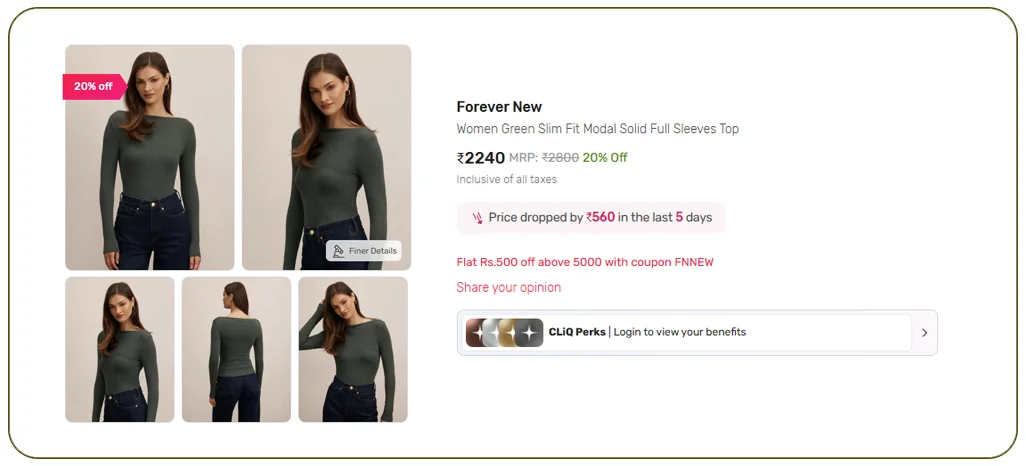
Fashion trends influence product development, merchandising, marketing campaigns, and inventory decisions. However, identifying emerging styles requires more than following social media discussions or observing popular collections. Businesses need to examine product attributes, category visibility, brand activity, and consumer interest across multiple information sources.
The ability to scrape fashion trends from permitted sources can help researchers organize information about emerging designs, clothing categories, footwear styles, colors, materials, and accessories.
Which fashion trends should businesses monitor?
Product design changes: Tracking product descriptions, silhouettes, materials, and design features helps brands understand how collections evolve across retailers.
Color and style preferences: Observing the colors and style attributes appearing in new collections helps merchandising teams compare product assortments and identify emerging design directions.
Brand discovery: Monitoring newly listed products and brand collections can help researchers identify smaller labels gaining marketplace visibility.
Seasonal collections: Comparing spring, summer, autumn, and winter product assortments helps businesses understand how retailers adjust their offerings.
Sustainability and resale: Secondhand fashion has become an important part of the wider apparel market. ThredUp's 2026 Resale Report, conducted with GlobalData, estimates that the global secondhand apparel market will reach $393 billion by 2030. It also reports that the US secondhand market grew nearly four times faster than the broader retail clothing market in 2025. These are report estimates, not audited industry-wide sales figures.
What does the 2026 fashion outlook indicate?
| Indicator | Reported finding |
|---|---|
| Global fashion industry growth | Low single-digit growth projected for 2026 |
| Global secondhand apparel market | $393 billion projected by 2030 |
| US secondhand market | Nearly 4 times broader clothing retail growth in 2025 |
| Gen Z and Millennials | Expected to drive over 70% of resale market growth through 2030 |
Sources: McKinsey's State of Fashion 2026 and ThredUp's 2026 Resale Report. Forecasts are projections, not completed market results.
For fashion retailers, these findings highlight the importance of tracking both traditional retail collections and alternative shopping models. Businesses can examine the appearance of resale categories, product descriptions, and brand participation to understand changing market positioning.
A useful research workflow should combine product-level observations with independent trend reports and consumer surveys. Marketplace visibility alone cannot establish that a style is trending among all consumers.
How Does Continuous Price Monitoring Strengthen Fashion Retail Strategies?
Fashion pricing changes throughout the year because of seasonal collections, promotional campaigns, clearance sales, product launches, and inventory decisions. Brands and retailers must understand these movements to protect margins and remain competitive.
Real-time fashion price tracking data helps businesses organize price observations across selected brands, retailers, and product categories. It allows pricing teams to examine how comparable products are positioned and how their displayed prices change over time.
Which pricing information matters most?
| Pricing attribute | Research value |
|---|---|
| Original listed price | Understand initial positioning |
| Current selling price | Monitor displayed retail pricing |
| Discount percentage | Compare promotional intensity |
| Product variant | Match equivalent products |
| Size and color | Avoid mismatched comparisons |
| Collection season | Identify seasonal pricing patterns |
| Availability status | Interpret price observations correctly |
| Timestamp | Establish when a price was observed |
McKinsey's State of Fashion 2026 provides a useful view of expected fashion retail growth across major markets.
Fashion retail sales growth by market
| Market | 2022 actual | 2023 actual | 2024 actual | 2025 estimate | 2026 estimate |
|---|---|---|---|---|---|
| Europe | 13% | 4% | 2% | 1–2% | 1–2% |
| United States | 2% | -1% | 3% | 2–3% | 1–3% |
| Mainland China | -3% | 9% | 2% | 2–3% | 1–3% |
Source: McKinsey Fashion Growth Forecasts 2026, published in The State of Fashion 2026. Figures are year-over-year fashion retail sales growth; 2025 and 2026 are estimates.
These differences demonstrate why fashion companies should not use a single pricing strategy across every geographic market. Consumer purchasing power, competitive intensity, and local market conditions can influence pricing decisions.
A structured monitoring process should:
- Match products using brand, product identifier, material, and size.
- Separate regular prices from promotional prices.
- Record collection timestamps.
- Identify changes between consecutive observations.
- Compare prices within equivalent product categories.
- Flag unusual price movements for further review.
For example, a fashion retailer can compare equivalent footwear products across selected online stores and investigate whether a price difference results from a discount, product variant, or different collection season.
Historical price records also help businesses evaluate promotional consistency. A displayed discount should not automatically be interpreted as a genuine reduction from a previously verified selling price.
Want to improve your fashion pricing intelligence? Build structured product and competitor datasets to support more informed retail decisions.
Get Insights Now!How Can Structured Product Information Improve Fashion Business Intelligence?
Fashion businesses handle large volumes of product information across apparel, footwear, accessories, luxury products, and seasonal collections. When product details are inconsistent, analysts may struggle to compare similar products or identify meaningful assortment changes.
Well-organized Fashion Datasets help businesses standardize these records and connect product-level information with pricing, brand, category, and availability research.
What should a useful dataset contain?
| Dataset component | Example fields | Business application |
|---|---|---|
| Product identity | Product name, SKU, product ID | Product matching |
| Brand information | Brand, designer, manufacturer | Brand benchmarking |
| Category | Apparel, footwear, accessories | Category analysis |
| Product attributes | Color, fabric, material, size | Product comparison |
| Pricing | Listed price, discounted price | Pricing intelligence |
| Availability | Available, unavailable, listing status | Assortment monitoring |
| Retailer information | Store name, listing reference | Competitor analysis |
| Historical records | Timestamp, previous observation | Trend monitoring |
| Geographic information | Country, market, currency | Regional analysis |
Which business problems can these records solve?
Fragmented product information: Standardized records help businesses combine information from different permitted sources without repeatedly cleaning inconsistent product descriptions.
Inconsistent product matching: Product identifiers, brand names, colors, and material attributes can help analysts identify equivalent items across retail platforms.
Limited competitor visibility: Structured listings help businesses understand which brands and product categories are represented by selected competitors.
Unclear historical changes: Timestamped observations make it easier to investigate price, assortment, and availability changes.
Regional research limitations: Geographic and currency fields help analysts compare market differences without mixing unrelated price values.
The importance of structured data is supported by the wider digital retail environment. Eurostat's 2026 digitalisation report shows that clothing, shoes, and accessories remained the most popular online goods among EU online shoppers in its 2024 product-category comparison.
For fashion manufacturers, this information can support collection planning and competitor research. For retailers, it can help evaluate assortment depth and pricing decisions. For market research agencies, standardized product records provide a more consistent foundation for category-level reporting.
The quality of a dataset depends on accurate identification, source traceability, and validation. Missing values should remain identifiable rather than being replaced with invented information. Similarly, product availability should be recorded as an observed listing condition, not assumed physical stock.
Businesses should also keep separate fields for actual sales information and marketplace observations. This prevents product visibility, ratings, or promotional frequency from being misrepresented as verified customer demand.
How Can Cross-Retailer Comparisons Help Businesses Identify Competitive Opportunities?
Fashion products frequently appear across multiple retail channels, making competitive comparisons important for manufacturers, distributors, online stores, and brand managers.
Price Comparison becomes more useful when businesses compare equivalent products instead of relying on broad category averages. A cotton shirt, for instance, should be compared with a product that has similar material, design, quality specifications, and size range.
What should businesses compare?
- Brand positioning: Compare how similar fashion products are presented across retailers.
- Product specifications: Examine fabric, materials, colors, sizes, and design attributes.
- Price differences: Identify variations in displayed selling prices for matched products.
- Promotional strategies: Compare discounts and campaign visibility.
- Assortment coverage: Evaluate which product categories and variants are represented.
- Availability patterns: Monitor whether matched products remain listed across collection periods.
What are the most useful comparison metrics?
| Metric | Interpretation |
|---|---|
| Average comparable price | Average price of matched products |
| Price gap | Difference between competitor and reference prices |
| Discount depth | Percentage reduction from the reference price |
| Brand assortment share | Brand listings as a proportion of relevant listings |
| Product availability rate | Available observations divided by valid observations |
| Category coverage | Number of distinct product categories represented |
| New product appearances | Newly observed product listings during a period |
These metrics should be calculated using consistent collection periods and product-matching rules. For example, comparing a luxury designer handbag with a mass-market handbag simply because both belong to the same category would create misleading conclusions.
Businesses can also use historical observations to investigate whether competitor pricing changes are seasonal, promotional, or associated with new collection launches.
For international retailers, currency conversion and tax treatment must be standardized before comparing prices across countries. Delivery costs and regional promotions should also be considered when relevant.
The ultimate benefit is improved decision-making. Fashion companies can use comparative information to investigate product gaps, evaluate competitive pricing, and understand how their assortments differ from those of other retailers.
Why Choose Real Data API?
Fashion businesses need reliable product intelligence to make informed decisions about pricing, assortment planning, brand positioning, and market expansion. Real Data API helps businesses transform fragmented online information into organized datasets that support competitive research and retail analytics.
Its data solutions can support Fashion Insights through structured collection, data processing, validation, and customized dataset delivery.
What makes a reliable data partner important?
- Structured product information: Organize apparel, footwear, accessories, and luxury product details into standardized records.
- Competitor intelligence: Compare brand assortments, product attributes, and displayed prices across selected retailers.
- Pricing research: Maintain historical price observations and promotional information for competitive analysis.
- Product matching: Identify comparable products using brand, SKU, material, size, and other attributes.
- Data validation: Detect duplicate listings, missing fields, and inconsistent product information.
- Customized delivery: Prepare datasets in formats suitable for business intelligence systems and reporting applications.
Which businesses can benefit?
| Business type | Potential application |
|---|---|
| Fashion retailers | Competitor assortment research |
| Apparel manufacturers | Product positioning |
| Luxury brands | Brand and pricing intelligence |
| Footwear companies | Category benchmarking |
| E-commerce businesses | Product and price monitoring |
| Market research agencies | Fashion market analysis |
| Distributors | Retailer and product research |
A dependable data workflow should prioritize source permissions, data accuracy, transparent collection methods, and consistent reporting. These practices help businesses develop reusable information assets rather than relying on isolated research exercises.
Real Data API can help organizations build structured data solutions aligned with their product categories, geographic coverage, and research requirements.
Conclusion
The fashion industry is becoming increasingly competitive as consumer preferences, digital shopping habits, product assortments, and pricing strategies continue to evolve. Fashion Datasets Are Driving Market Intelligence in 2026 by helping retailers, manufacturers, and fashion brands understand these changes through structured product information and historical market observations.
From identifying emerging styles and monitoring competitor collections to evaluating product prices and understanding regional differences, data-driven research provides valuable support for business decisions.
Companies that prioritize accurate product matching, consistent data collection, and historical analysis can develop a stronger understanding of their competitive environment. Combining marketplace observations with verified consumer research and industry reports can further improve decision-making.
Ready to strengthen your fashion market research strategy? Connect with Real Data API to build structured fashion datasets, monitor competitor activity, and transform product information into actionable business intelligence!
FAQs
1. How can fashion businesses identify emerging consumer preferences?
Fashion businesses can analyze product categories, brand visibility, colors, materials, and consumer purchasing research to identify changing preferences and emerging market opportunities.
2. Why is structured fashion information important?
Organized product records help retailers compare apparel, footwear, accessories, prices, and availability while reducing inconsistencies in competitive research.
3. How can retailers monitor competing fashion brands?
Retailers can examine competitor product listings, assortment changes, displayed prices, promotional offers, and product attributes across selected online stores.
4. Can fashion pricing information support better decisions?
Yes. Historical price observations help businesses evaluate promotional activity, compare equivalent products, understand price positioning, and investigate seasonal pricing changes.
5. How can Real Data API support fashion research?
Real Data API helps businesses organize permitted product information into structured datasets for competitor benchmarking, pricing analysis, assortment monitoring, and fashion market research.
Latest posts
How to Extract Real Estate Datasets from Property Websites 2026 to Solve Property Price Inconsistencies
How Datasets Are Shaping the Future 2026 - Turning Fragmented Business Data into Actionable Market Insights
How Fashion Datasets Are Driving Market Intelligence in 2026 to Identify Consumer Trends and Emerging Fashion Brands
Etsy Product Data Scraping for the USA



.png)


