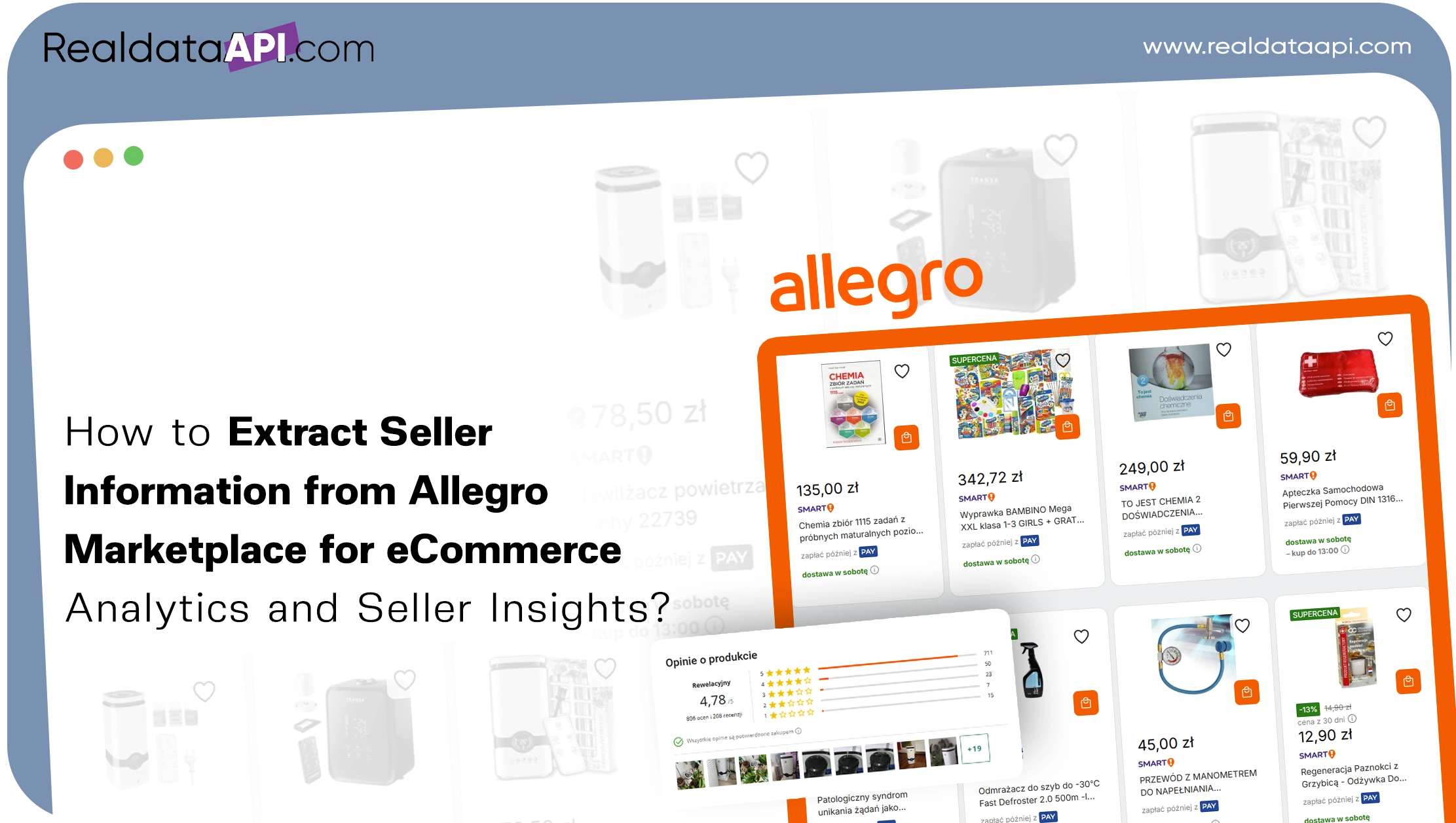
Introduction
Businesses can improve competitor analysis, pricing intelligence, and marketplace research by Extract seller information from Allegro marketplace using automated data extraction. Structured seller data helps brands, retailers, marketplace analysts, and eCommerce solution providers identify top-performing merchants, monitor customer feedback, benchmark performance, and make faster, data-driven decisions. The Allegro Scraping API further enables scalable, real-time access to marketplace information for business intelligence and operational automation.
Industry Insight (2025): Industry estimates suggest that over 78% of eCommerce brands use marketplace intelligence tools to monitor competitors, while 82% of online shoppers consider seller ratings before making a purchase. Between 2020 and 2026, investment in automated marketplace analytics is projected to grow by more than 60%, driven by increasing digital commerce adoption.
Allegro has become one of Europe's largest online marketplaces, serving millions of buyers and thousands of merchants across diverse product categories. As competition intensifies, businesses require more than product-level information to stay ahead. Understanding seller performance, customer trust, pricing behavior, fulfillment quality, and marketplace trends has become essential for making informed business decisions.
Automated seller intelligence enables organizations to build comprehensive market reports without relying on manual research. By collecting publicly available seller information, businesses can evaluate merchant credibility, analyze competitive positioning, monitor pricing consistency, and identify emerging market leaders.
This approach is especially valuable for eCommerce brands, marketplace consultants, pricing analysts, digital agencies, logistics providers, and business intelligence teams looking to improve strategic planning.
Seller datasets often include:
- Seller names
- Store profiles
- Ratings
- Customer reviews
- Product counts
- Response performance
- Marketplace activity
- Product categories
- Pricing behavior
- Sales indicators
These insights help businesses understand marketplace dynamics while identifying opportunities for expansion and optimization. As digital commerce continues to evolve from 2020 through 2026, automated seller intelligence has become an indispensable component of modern eCommerce analytics.
How Can Seller Profiles Improve Competitive Intelligence?
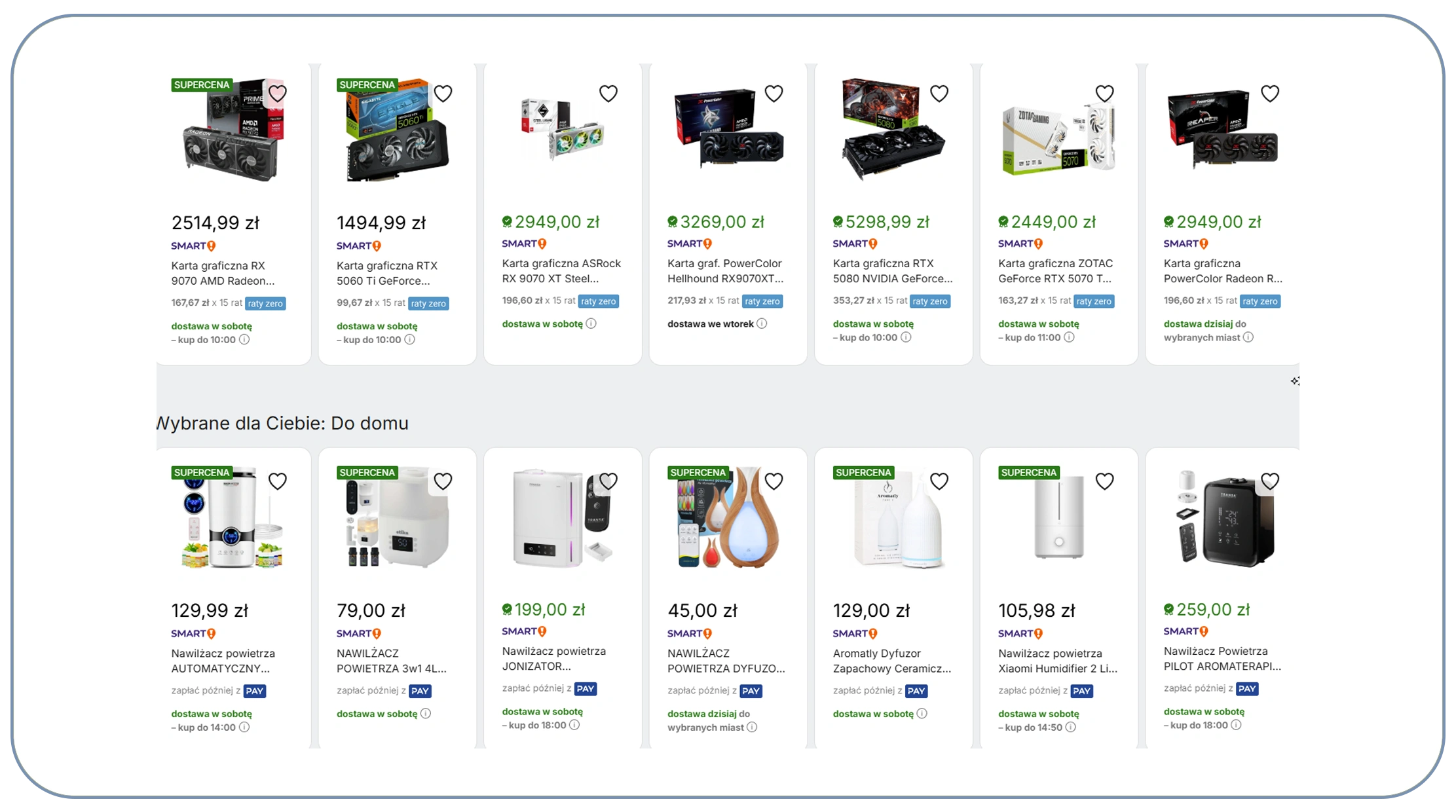
Understanding who sells on a marketplace is just as important as understanding what they sell. Businesses increasingly rely on Allegro seller profile data scraping to collect structured information that supports competitive benchmarking, merchant analysis, and strategic planning.
Seller profiles reveal valuable business insights, including marketplace experience, product diversity, customer engagement, and regional specialization. Rather than manually reviewing thousands of listings, organizations automate profile collection to build searchable datasets for ongoing analysis.
Important seller attributes include:
- Seller name
- Store URL
- Marketplace status
- Years of activity
- Product categories
- Number of active listings
- Store description
- Business location
- Shipping capabilities
- Customer engagement indicators
These datasets help businesses identify high-performing merchants and understand marketplace competition more effectively.
Marketplace Seller Profile Analytics (2020–2026)
| Year | Active Marketplace Sellers (Indexed) | Businesses Using Seller Analytics |
|---|---|---|
| 2020 | 100 | 36% |
| 2021 | 112 | 43% |
| 2022 | 126 | 51% |
| 2023 | 141 | 60% |
| 2024 | 156 | 68% |
| 2025 | 172 | 76% |
| 2026* | 188 | 83% |
*Projected industry estimates.
Organizations also combine seller profile information with product catalog data to evaluate assortment strategies, category dominance, and market concentration.
For retailers entering new markets, structured seller profiles provide a reliable starting point for identifying established competitors and understanding the marketplace landscape before launching products.
Why Are Customer Ratings Critical for Marketplace Success?
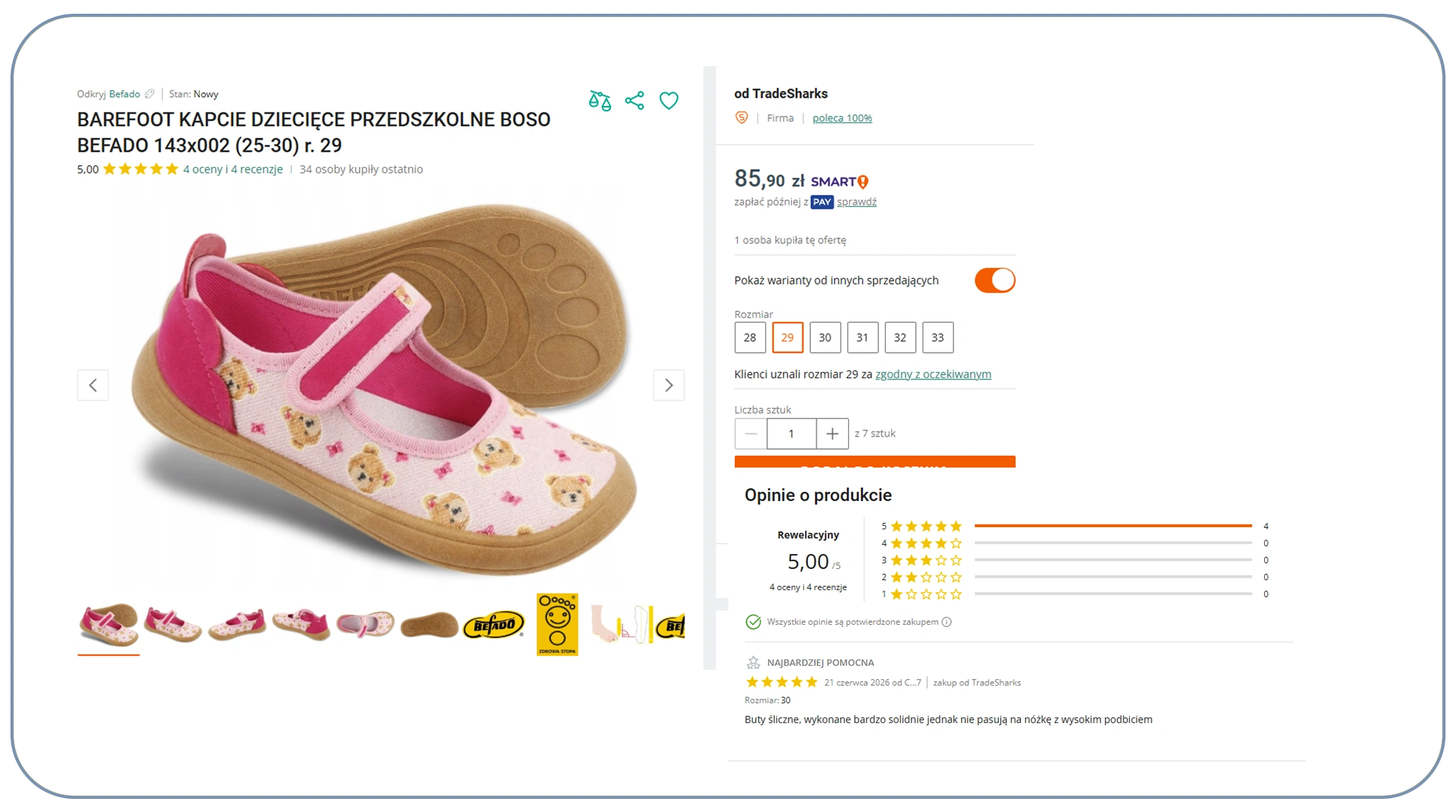
Customer trust has become one of the strongest drivers of online purchasing decisions. Businesses use Allegro seller ratings and reviews data scraper solutions to monitor merchant reputation, evaluate customer satisfaction, and measure service quality across thousands of sellers.
Ratings and reviews provide direct insight into buyer experiences. They highlight fulfillment performance, communication quality, delivery reliability, and product satisfaction. By collecting review data automatically, organizations can identify both successful sellers and areas where competitors struggle.
Businesses commonly analyze:
- Average seller ratings
- Total review count
- Positive review percentage
- Negative feedback trends
- Delivery satisfaction
- Customer response quality
- Complaint frequency
- Product-specific feedback
- Review growth
- Seasonal sentiment changes
These metrics help organizations benchmark competitors while improving their own marketplace strategies.
Importance of Seller Reviews (2020–2026)
| Year | Buyers Reading Reviews Before Purchase | Brands Monitoring Review Data |
|---|---|---|
| 2020 | 67% | 42% |
| 2021 | 71% | 49% |
| 2022 | 75% | 57% |
| 2023 | 79% | 65% |
| 2024 | 82% | 72% |
| 2025 | 85% | 78% |
| 2026* | 88% | 84% |
*Industry projections.
Businesses can also perform sentiment analysis on customer reviews to identify recurring complaints, measure service improvements, and detect changes in buyer preferences over time.
Monitoring review trends allows organizations to improve customer experience while identifying opportunities to differentiate themselves from competitors.
What Business Value Comes from Automated Seller Intelligence?
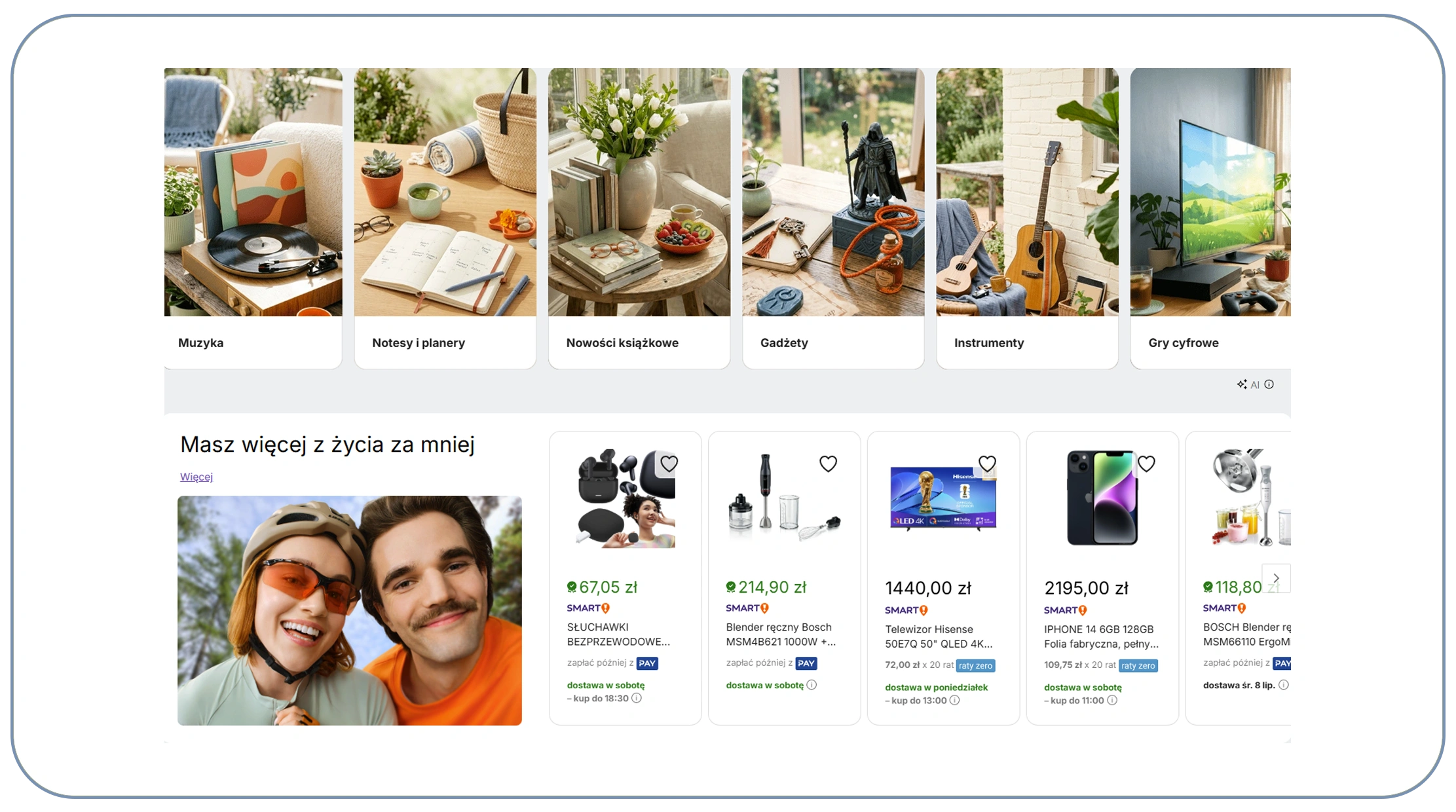
Modern eCommerce organizations require continuously updated marketplace intelligence to remain competitive. Allegro Seller Data Extraction enables businesses to automate seller monitoring while generating structured datasets that support pricing intelligence, market research, and strategic decision-making.
Instead of manually reviewing marketplace listings every day, automated extraction delivers consistent, standardized data that integrates easily into business intelligence platforms.
Organizations use automated seller intelligence for:
- Competitor benchmarking
- Category analysis
- Merchant monitoring
- Sales opportunity identification
- Marketplace expansion planning
- Pricing comparisons
- Performance tracking
- Trend forecasting
- Investment research
- Vendor evaluation
Automated workflows reduce operational costs while significantly improving reporting speed and data accuracy.
Adoption of Automated Marketplace Intelligence (2020–2026)
| Year | Companies Using Automated Seller Analytics | Productivity Improvement |
|---|---|---|
| 2020 | 33% | 16% |
| 2021 | 40% | 21% |
| 2022 | 48% | 27% |
| 2023 | 57% | 34% |
| 2024 | 66% | 40% |
| 2025 | 74% | 46% |
| 2026* | 81% | 52% |
*Projected industry estimates.
As marketplaces continue expanding across Europe, automated seller intelligence enables organizations to react more quickly to pricing changes, new competitors, and evolving customer preferences.
By integrating seller datasets into analytics platforms, businesses gain a complete view of marketplace performance, enabling smarter decisions based on reliable, real-time information instead of manual observation.
How Can Unified Marketplace Data Improve Strategic Decisions?
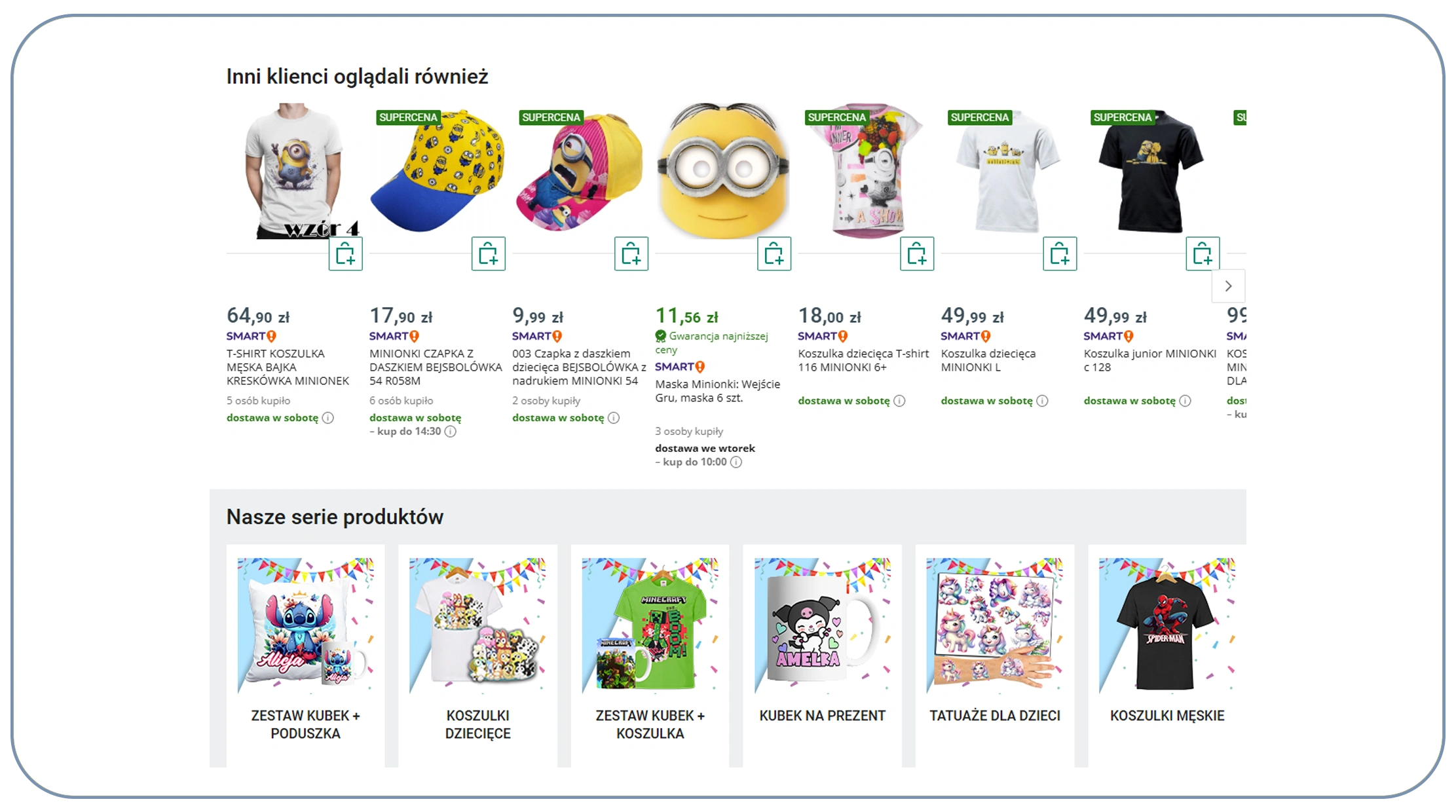
Businesses need more than isolated seller records to understand marketplace dynamics. They require connected datasets that combine seller activity, pricing, product availability, and customer feedback. Organizations that Scrape Allegro Seller Data can identify market leaders, evaluate pricing strategies, monitor assortment changes, and uncover emerging opportunities across product categories.
Between 2020 and 2026, eCommerce businesses increasingly shifted toward automated intelligence platforms to gain real-time visibility into marketplace performance. By consolidating seller information into a centralized repository, decision-makers can generate actionable insights that support category expansion, inventory planning, and competitive benchmarking.
Organizations typically analyze:
- Seller activity trends
- Product assortment changes
- Category leadership
- Stock availability
- Price fluctuations
- Customer engagement
- Regional seller distribution
- Marketplace growth
- Promotional campaigns
- Sales opportunities
These insights help businesses understand how sellers adapt to market demand and seasonal buying behavior.
Marketplace Intelligence Adoption (2020–2026)
| Year | Businesses Using Marketplace Intelligence | Average Decision-Making Speed Improvement |
|---|---|---|
| 2020 | 38% | 18% |
| 2021 | 46% | 23% |
| 2022 | 54% | 29% |
| 2023 | 63% | 35% |
| 2024 | 71% | 40% |
| 2025 | 78% | 46% |
| 2026* | 85% | 52% |
*Industry projections.
With unified marketplace intelligence, organizations can improve forecasting accuracy, benchmark competitors more effectively, and identify high-growth opportunities before competitors respond.
How Do Comprehensive Datasets Enhance Market Research?
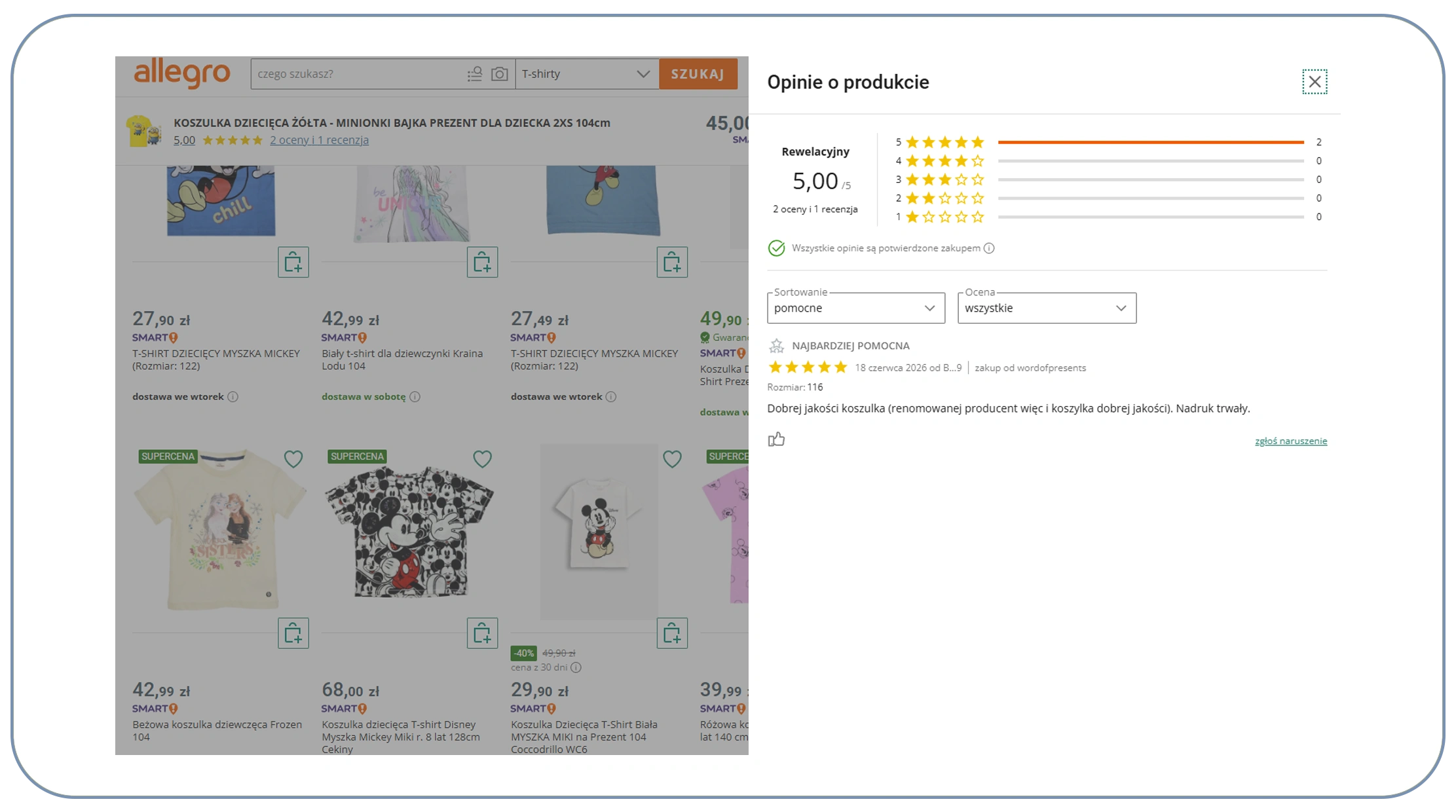
Reliable market research depends on high-quality datasets that provide a complete picture of marketplace activity. Allegro Product and Review Datasets combine seller information with product catalogs, customer reviews, ratings, pricing, and category insights, allowing businesses to perform deeper analysis without collecting data manually.
From 2020 through 2026, organizations increasingly relied on integrated datasets to evaluate customer preferences, monitor brand perception, and identify top-performing product segments. These datasets enable researchers to discover trends that may remain hidden when analyzing seller or product data separately.
Comprehensive datasets typically include:
- Product titles
- Product categories
- Seller profiles
- Customer ratings
- Written reviews
- Product availability
- Pricing history
- Discount activity
- Shipping options
- Category rankings
These structured datasets simplify business intelligence projects and improve analytical accuracy.
Growth of Marketplace Dataset Usage (2020–2026)
| Year | Organizations Using Unified Datasets | Analytics Accuracy Improvement |
|---|---|---|
| 2020 | 35% | 17% |
| 2021 | 43% | 22% |
| 2022 | 51% | 28% |
| 2023 | 60% | 34% |
| 2024 | 69% | 40% |
| 2025 | 77% | 46% |
| 2026* | 84% | 53% |
*Projected industry estimates.
Unified datasets eliminate data silos while helping organizations make faster, evidence-based decisions that improve competitiveness and customer satisfaction.
How Can Automation Scale Marketplace Intelligence?
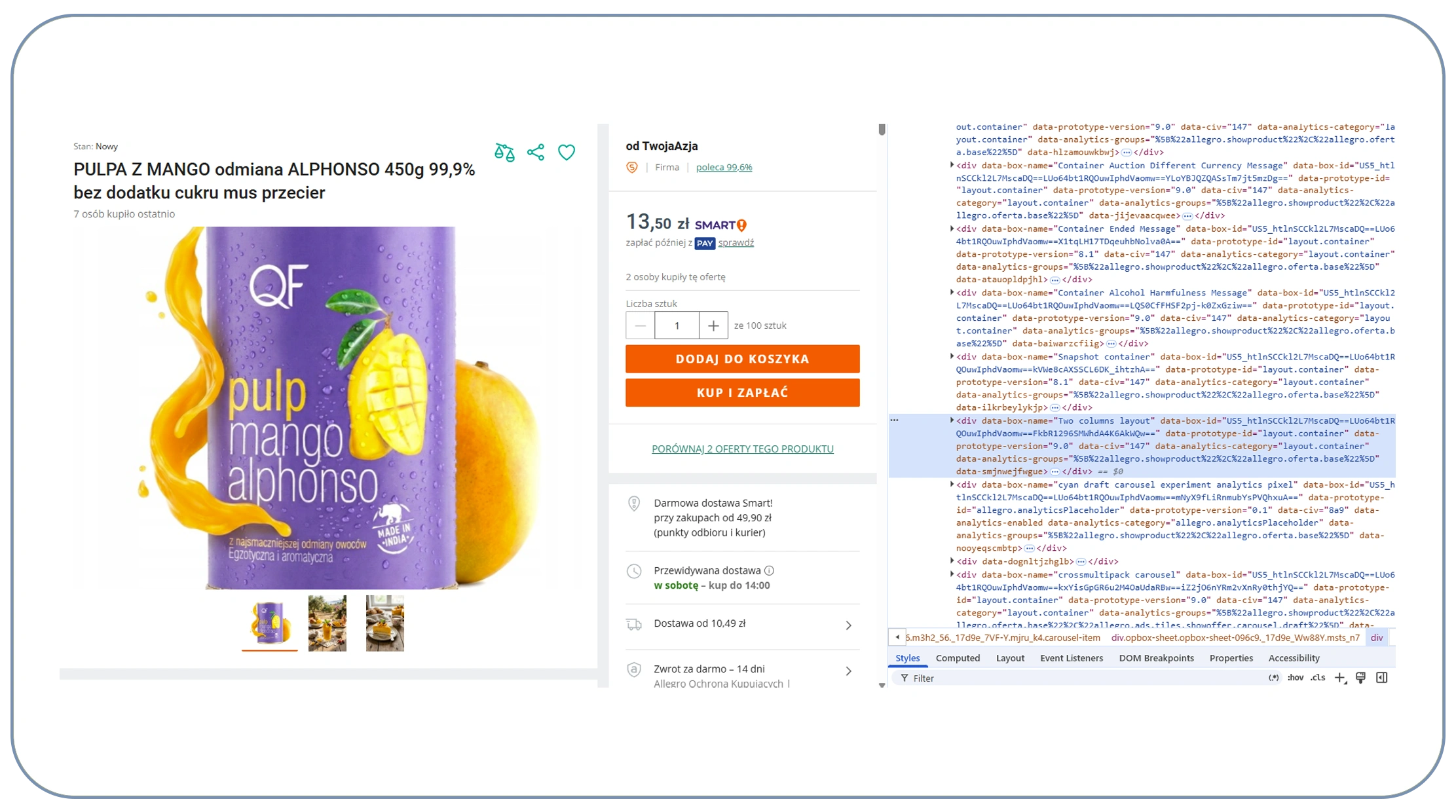
As marketplaces expand, manual research becomes increasingly inefficient. A powerful Allegro Scraper enables organizations to automate large-scale data collection and Extract seller information from Allegro marketplace with greater speed, consistency, and accuracy.
Automation reduces repetitive work while ensuring businesses always have access to updated marketplace intelligence. Instead of spending hours reviewing seller profiles manually, organizations can schedule automated data collection to monitor marketplace changes continuously.
Automation supports numerous business objectives, including:
- Continuous competitor monitoring
- Automated reporting
- Market expansion analysis
- Category performance tracking
- Seller performance benchmarking
- Historical trend analysis
- Price monitoring
- Customer sentiment evaluation
- Business intelligence integration
- Executive reporting
These capabilities allow businesses to react quickly to marketplace changes while improving strategic planning.
Automation Trends in Marketplace Analytics (2020–2026)
| Year | Businesses Using Automated Scrapers | Reporting Time Reduction |
|---|---|---|
| 2020 | 32% | 20% |
| 2021 | 41% | 26% |
| 2022 | 50% | 33% |
| 2023 | 60% | 39% |
| 2024 | 69% | 45% |
| 2025 | 77% | 51% |
| 2026* | 84% | 58% |
*Industry projections.
Organizations implementing automated marketplace intelligence gain faster access to reliable data, enabling proactive decision-making and stronger competitive positioning.
Why Choose Real Data API?
Real Data API provides enterprise-grade marketplace intelligence solutions that help businesses collect accurate, scalable, and actionable seller information. Whether you are monitoring competitors, analyzing customer sentiment, or tracking Web Scraping Allegro pricing trends in Poland, our solutions enable organizations to Extract seller information from Allegro marketplace efficiently and integrate the resulting datasets into existing analytics workflows.
Our platform is designed for:
- eCommerce brands
- Marketplace sellers
- Pricing intelligence firms
- Market research agencies
- Retail consultants
- Business intelligence teams
- Data analytics companies
- Digital commerce platforms
Why Businesses Trust Real Data API
- Enterprise-ready scraping infrastructure
- High-quality structured datasets
- Automated scheduled data collection
- API-first integration
- Real-time marketplace monitoring
- Custom export formats
- Scalable architecture
- Excellent data accuracy
- Dedicated technical support
- Flexible solutions for businesses of every size
With years of experience in marketplace intelligence, Real Data API enables organizations to convert raw marketplace information into meaningful business insights that support growth, innovation, and long-term success.
Conclusion
Marketplace intelligence has become an essential component of modern eCommerce strategy. Businesses that leverage structured seller information can better understand competitive landscapes, monitor customer trust, optimize pricing strategies, and identify emerging opportunities with greater confidence.
Choosing to Extract seller information from Allegro marketplace allows organizations to automate data collection, improve analytics accuracy, and make informed business decisions using reliable, up-to-date marketplace intelligence. Combined with advanced reporting, unified datasets, and scalable automation, seller intelligence becomes a powerful asset for sustainable business growth.
Ready to unlock actionable marketplace insights? Contact Real Data API today to automate seller intelligence, streamline eCommerce analytics, and gain a competitive advantage with customized marketplace data solutions!
Latest posts
Allegro scraper for competitor price monitoring – How to Track Product Prices and Stay Ahead of Competitors
Ocado API data collection services for retailers - Track Competitor Prices and Deals
Using Flipkart API for e-commerce competitor benchmarking to Monitor Competitors Across Online Marketplaces

How Myntra scraper for online fashion retail analytics Helps Track Trends, Prices, and Product Demand






.png)



