Introduction
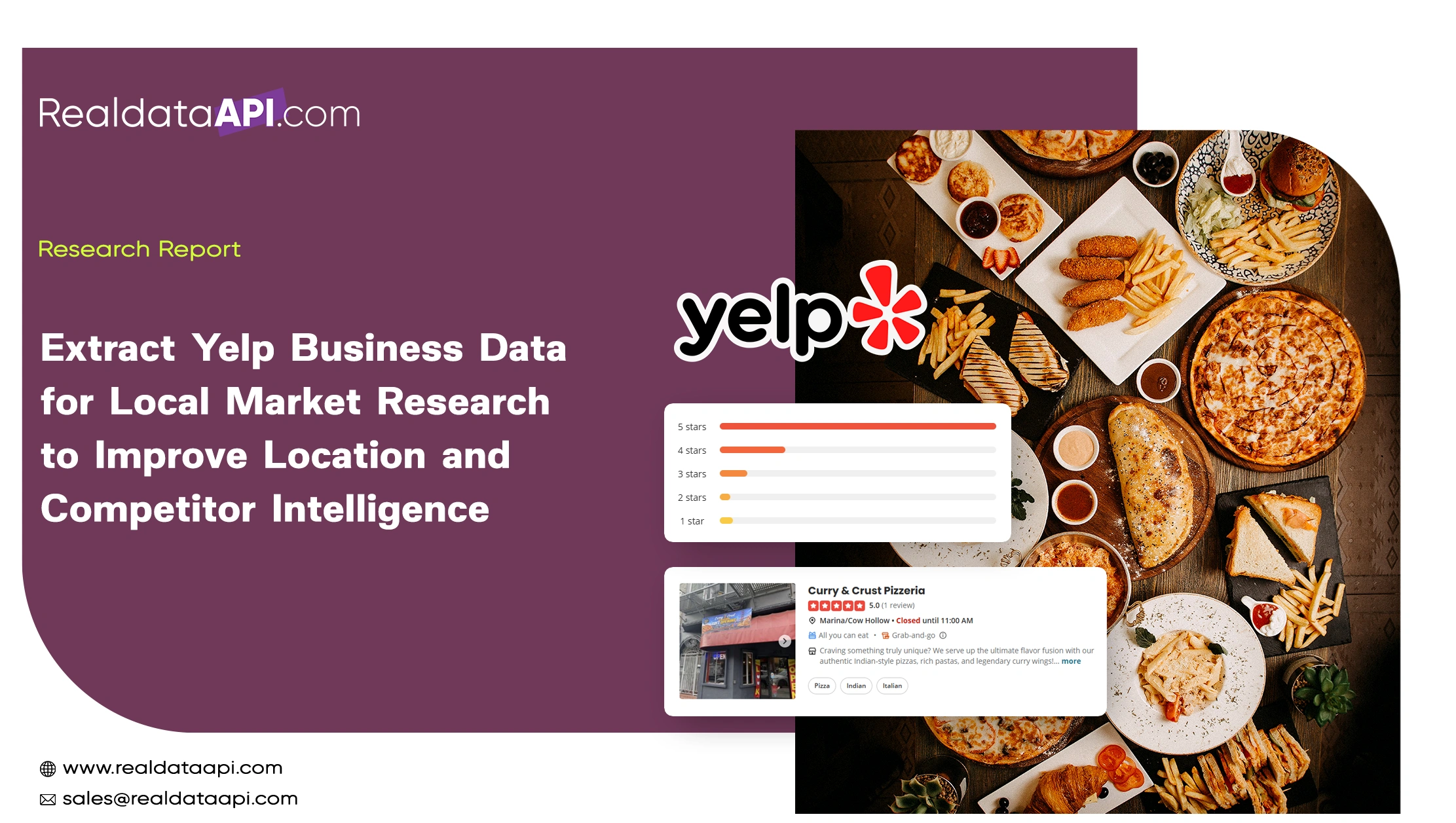
Local market research becomes more effective when businesses can evaluate competitors, customer feedback, locations, service categories, ratings, and market activity using structured information. extract Yelp business data for local market research enables companies to transform business listing information into datasets that support location planning, competitive benchmarking, service-market analysis, and customer intelligence. Real Data API provides data extraction solutions that can help businesses organize this information into scalable research workflows. A Yelp Scraper can automate the collection of relevant publicly available business information across selected locations and categories.
The value of local intelligence has increased as businesses compete for customers at increasingly granular geographic levels. A restaurant evaluating a new neighborhood, a home-services company expanding into another city, or a marketing agency analyzing a local industry all need information beyond national market averages.
This report examines how structured Yelp business data can help address these challenges from 2020 through 2026. The analysis focuses on competitive intelligence, location research, service-market analysis, API-driven extraction, and lead generation. The statistics shown below are clearly labeled as market indicators or research benchmarks rather than claims about Yelp's internal traffic or proprietary data.
| Year | Local Market Research Context | Business Intelligence Focus |
|---|---|---|
| 2020 | Pandemic disrupted local businesses | Identify market disruption |
| 2021 | Reopening changed local demand | Monitor business recovery |
| 2022 | Consumer activity normalized | Compare local competition |
| 2023 | Digital discovery remained important | Track business visibility |
| 2024 | Local competition intensified | Benchmark ratings and reviews |
| 2025 | Businesses emphasized data-driven expansion | Improve location intelligence |
| 2026 | AI-assisted research is accelerating | Build structured local datasets |
For decision-makers, the objective is not simply to collect more listings. The goal is to convert local business information into comparable signals that answer practical questions: Where is competition concentrated? Which locations show market gaps? Which businesses receive strong customer engagement? Which service categories are expanding? And where should a company consider its next opportunity?
How can businesses strengthen location decisions with local intelligence?
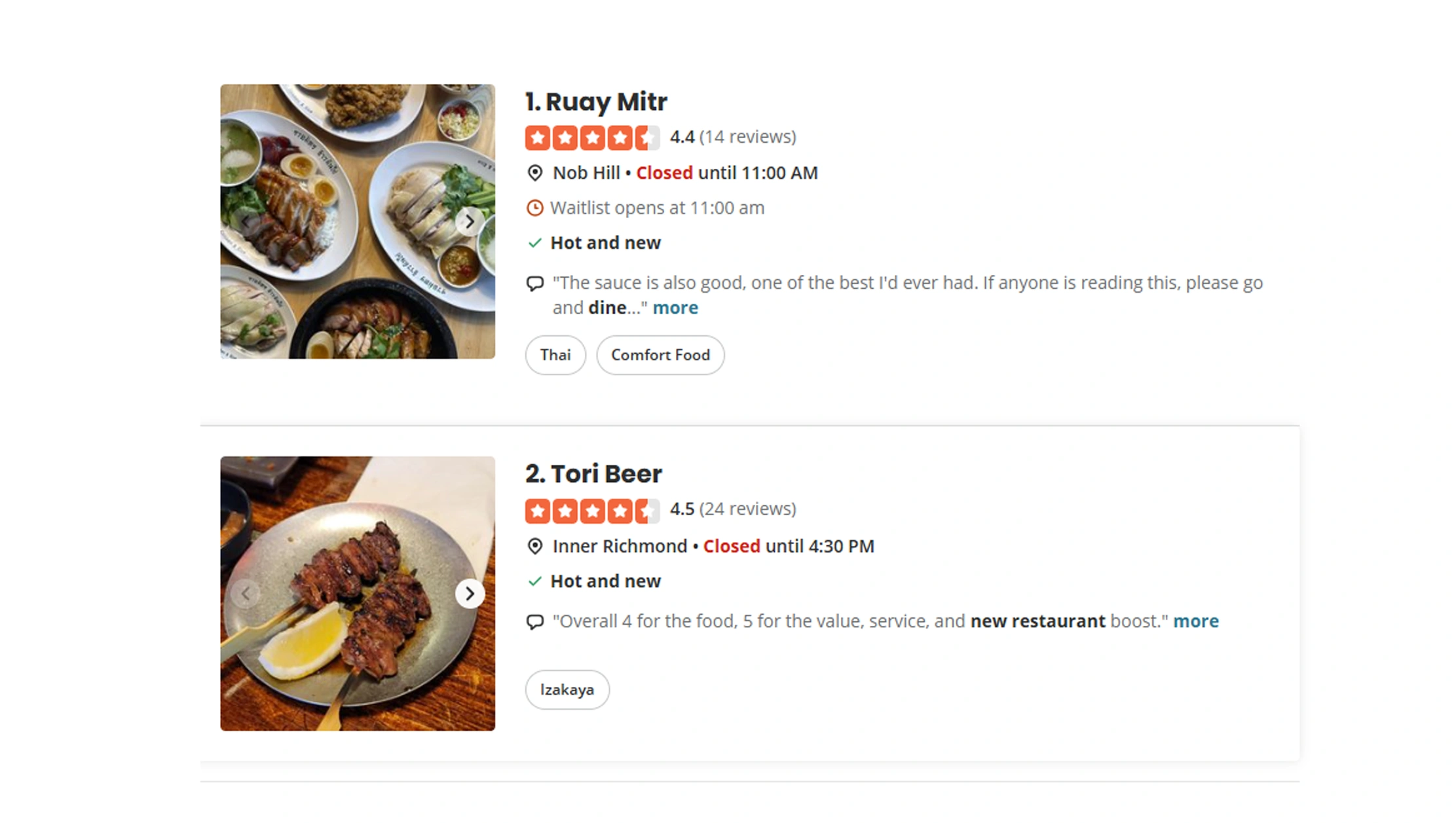
Yelp local market intelligence using web scraping can help companies evaluate local business landscapes before making expansion or investment decisions. Location selection is often influenced by population, income, real estate costs, and foot traffic, but competitor density and customer feedback can provide another valuable layer.
A structured dataset can organize businesses by city, neighborhood, category, rating, review count, and other available attributes. Analysts can then compare locations using consistent criteria instead of conducting disconnected searches.
The 2020-2026 period demonstrates why historical context matters. The pandemic significantly changed the operating environment for local businesses in 2020, followed by reopening and demand normalization in subsequent years. A dataset that preserves historical observations can help researchers distinguish temporary disruption from longer-term market changes.
| Year | Market Event | Location Research Application |
|---|---|---|
| 2020 | COVID-19 disruption | Establish a disruption baseline |
| 2021 | Business reopening | Track recovery patterns |
| 2022 | Demand normalization | Compare local business density |
| 2023 | Competitive markets matured | Identify underserved areas |
| 2024 | Greater emphasis on customer experience | Compare ratings and reviews |
| 2025 | Data-driven expansion increased | Improve market screening |
| 2026 | AI-supported analysis expands | Automate location comparisons |
For example, a service business considering expansion could compare several ZIP codes based on competitor counts, average ratings, review activity, and category coverage. A market with many competitors is not automatically unattractive; high customer demand can support dense competition. Conversely, a low-competition market may represent either an opportunity or weak demand.
The key is combining multiple signals. Location intelligence becomes stronger when businesses analyze competitive density alongside customer sentiment, service categories, and business activity. This approach can help expansion teams prioritize markets for deeper research rather than relying on intuition alone.
How does competitor intelligence reveal gaps in local markets?
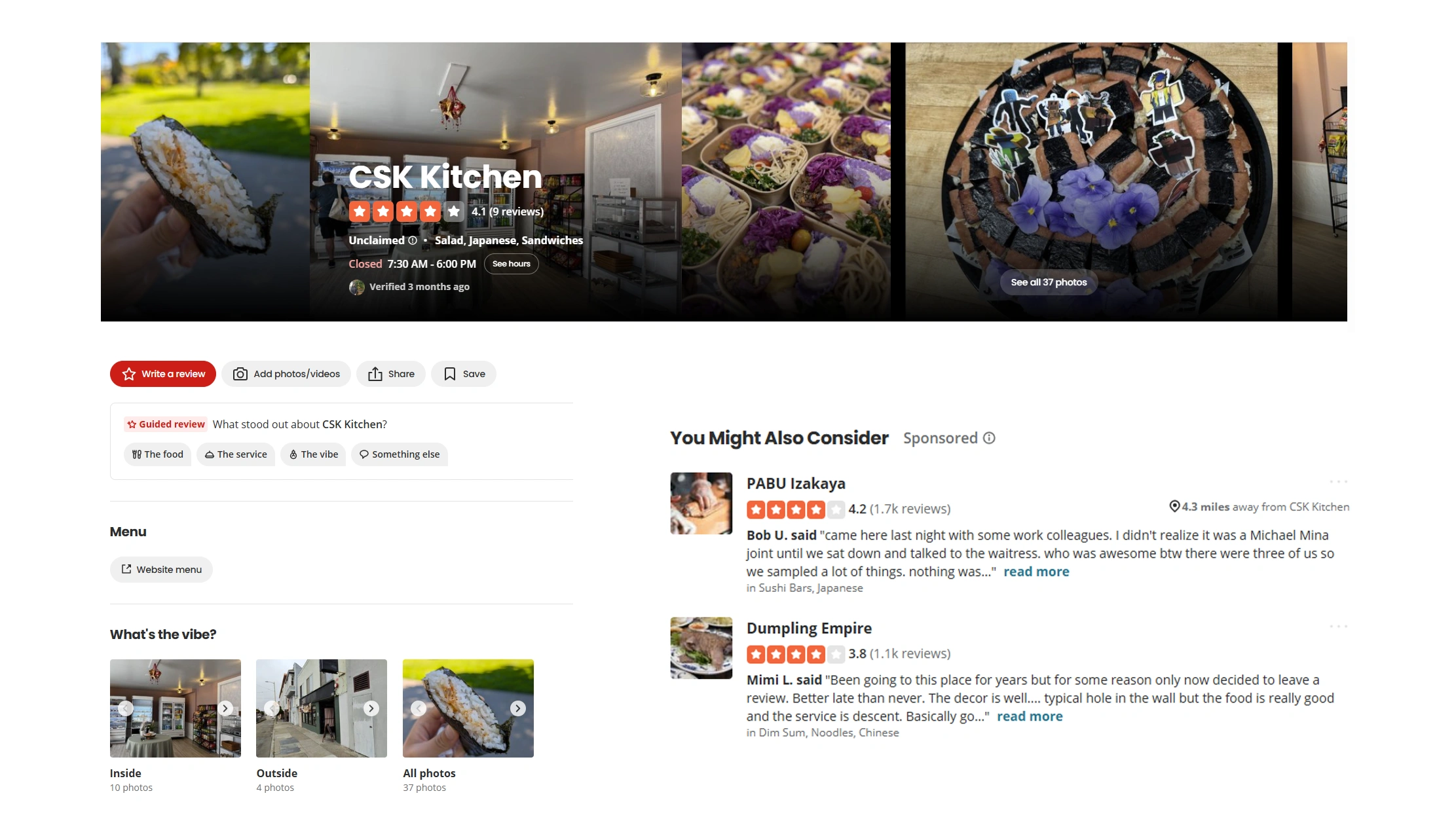
Yelp competitor analysis using web scraping can provide a structured view of how businesses position themselves within a specific local market. Competitor research becomes difficult when teams manually review dozens or hundreds of listings across different locations. Automated collection can standardize information and make side-by-side comparisons easier.
Businesses can examine available attributes such as categories, ratings, review counts, locations, services, and other listing details. These observations can help reveal competitive clusters and potential gaps. For example, if a neighborhood contains many businesses serving one customer segment but relatively few serving another, the pattern may justify further market investigation.
| Year | Competitive Signal | Potential Business Use |
|---|---|---|
| 2020 | Business closures and disruption | Identify unstable markets |
| 2021 | Reopening activity | Monitor competitor recovery |
| 2022 | Competitive normalization | Benchmark market density |
| 2023 | New businesses entered markets | Track emerging competitors |
| 2024 | Customer experience became a stronger differentiator | Analyze ratings and reviews |
| 2025 | Expansion strategies became more data-led | Improve market screening |
| 2026 | Automated analytics gained importance | Scale competitive monitoring |
The dataset can also support competitor segmentation. Businesses may be grouped by rating bands, review volumes, service categories, or geographic areas. This allows analysts to identify direct competitors separately from businesses that operate in adjacent categories.
Historical snapshots add another dimension. A current listing shows what exists now, but historical records can reveal whether a competitor has consistently maintained a strong presence or recently entered the market.
For marketing agencies, this information can support client benchmarking. For franchise operators, it can assist territory evaluation. For local businesses, it can provide context for positioning and service differentiation.
The most valuable outcome is therefore not a list of competitors. It is a structured competitive landscape that helps decision-makers understand how businesses are distributed and where meaningful differences exist.
Can API-driven research make local competitive intelligence scalable?
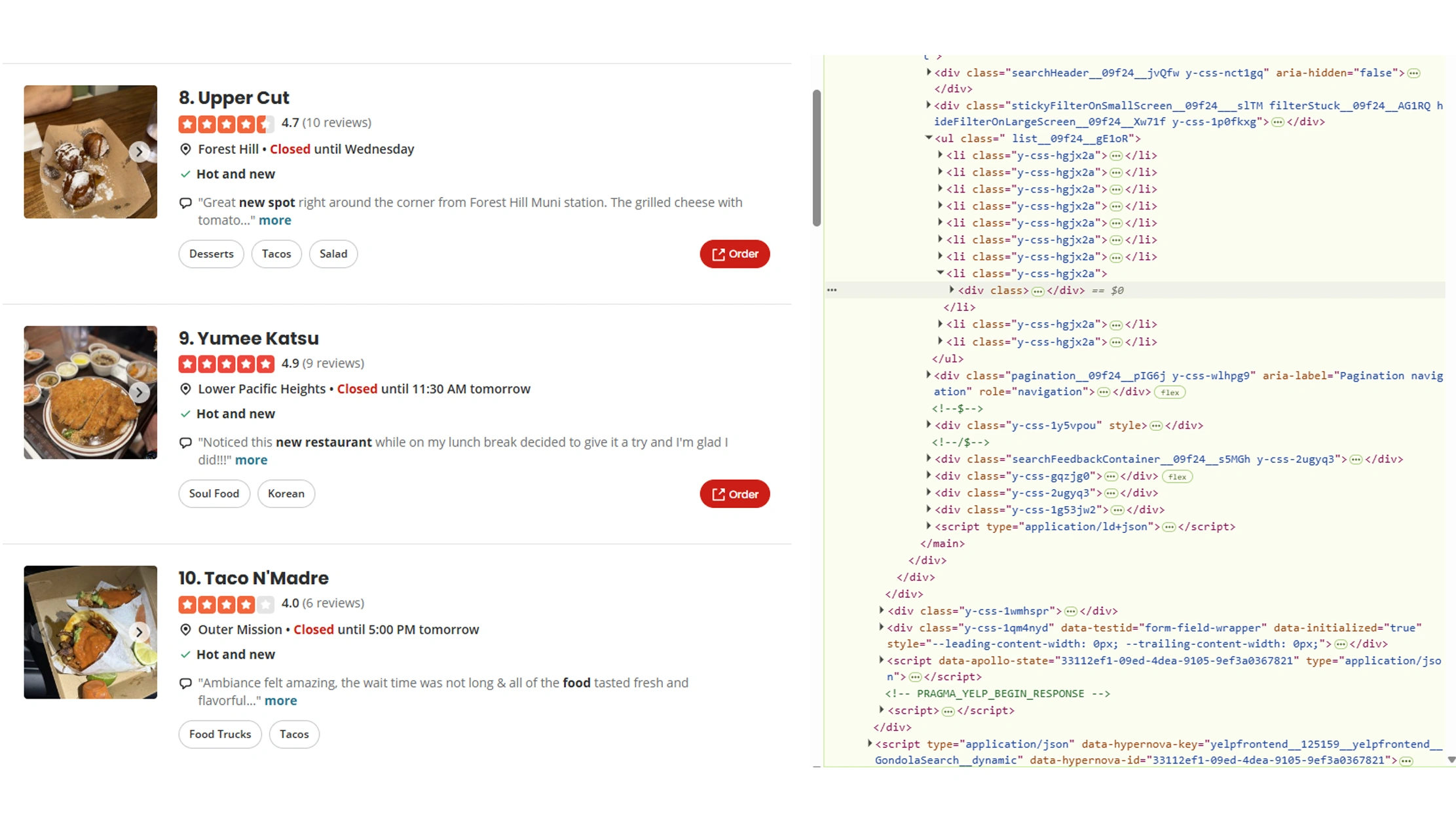
A Yelp API for competitive market research can provide a structured delivery mechanism for businesses that need recurring local intelligence. API-driven workflows can help move extracted information into databases, dashboards, business intelligence systems, or analytical applications.
A scalable workflow begins with clearly defined research requirements. A company may want to monitor restaurants within selected ZIP codes, compare home-service providers across cities, or analyze professional services within a particular metropolitan area. The extraction process can then be structured around relevant fields and geographic boundaries.
| Year | Data Requirement | Business Application |
|---|---|---|
| 2020 | Historical market baseline | Disruption analysis |
| 2021 | Recovery observations | Business survival research |
| 2022 | Competitive inventory | Market comparison |
| 2023 | Location-level records | Expansion screening |
| 2024 | Review and rating signals | Customer experience benchmarking |
| 2025 | Recurring market updates | Competitive monitoring |
| 2026 | Machine-readable datasets | AI and analytics workflows |
The API approach becomes particularly useful when the volume of locations increases. Instead of building a separate manual research process for every market, businesses can establish repeatable extraction and delivery workflows.
For example, a national service provider could monitor several hundred local markets using standardized fields. Its analysts could compare competitor density, ratings, review counts, and business categories across locations.
Data validation remains important. Duplicate businesses, inconsistent category naming, missing fields, and changes in business status can affect analytical accuracy. A reliable workflow should therefore include normalization and quality checks before data reaches the final analytical environment.
API-driven delivery can also support internal applications. Product teams can use structured business data in dashboards, while analysts can combine it with demographic, geographic, or sales information from other sources. The result is a more comprehensive market intelligence environment.
What insights emerge when businesses collect listing information systematically?

Businesses that scrape Yelp business data for market research can move from isolated competitor checks toward systematic local market analysis. The process becomes especially valuable when researchers need to compare multiple locations or categories using the same methodology.
A structured dataset can include business names, categories, locations, ratings, review counts, service information, and other publicly available attributes. Once standardized, these fields can support calculations such as competitor density, average rating, review-volume distribution, and category concentration.
| Year | Research Objective | Example Output |
|---|---|---|
| 2020 | Establish market baseline | Business inventory snapshot |
| 2021 | Monitor reopening | Active business comparison |
| 2022 | Evaluate normalization | Category density analysis |
| 2023 | Identify market gaps | Underserved-location shortlist |
| 2024 | Benchmark customer experience | Rating distribution |
| 2025 | Support expansion | Location opportunity scoring |
| 2026 | Automate recurring research | Continuous market intelligence |
For example, a fitness business could compare neighborhoods based on the number of competing facilities and their customer-review signals. A restaurant group could identify areas with strong category demand but limited competitive coverage. A professional-services firm could compare local providers before opening a new office.
The key analytical improvement comes from consistency. Every market can be evaluated using the same fields and methodology, reducing subjective differences between researchers.
Historical collection can further reveal trends. An increase in businesses within a category may indicate growing competition, while changes in ratings or review activity may provide signals about customer experience.
However, these signals should not be interpreted in isolation. Yelp listing information is one research input, not a complete representation of market demand. Businesses should combine it with demographic, economic, geographic, and first-party data where appropriate.
When used responsibly, systematic business-data collection can shorten the research cycle and give decision-makers a clearer starting point for evaluating local opportunities.
How can local service providers use structured business data?

Yelp Data Scraping for Local Services can help service businesses understand how competitors are distributed across geographic markets. Local services such as home improvement, cleaning, automotive services, healthcare-related businesses, professional services, and personal services often depend heavily on location and customer reputation.
A structured dataset can help companies compare service providers by location, category, rating, review volume, and other available business attributes. This makes it possible to identify highly competitive markets and areas where the existing provider landscape may warrant further investigation.
| Year | Local Services Trend | Data Opportunity |
|---|---|---|
| 2020 | Service disruption | Identify market changes |
| 2021 | Reopening and recovery | Track active providers |
| 2022 | Demand normalization | Compare service density |
| 2023 | Digital discovery remained relevant | Benchmark local visibility |
| 2024 | Experience differentiation | Analyze ratings and reviews |
| 2025 | Expansion became increasingly data-driven | Evaluate new territories |
| 2026 | Automated intelligence adoption grows | Scale market monitoring |
Consider a regional home-services company planning expansion. Rather than evaluating a city solely by population, the company can examine the number of competing providers, category distribution, ratings, and review activity. These indicators can help determine which markets deserve additional investigation.
The same data can support sales and marketing teams. A business can identify potential commercial prospects, segment providers by geography, and prioritize markets based on predefined criteria. This can make local outreach more targeted.
For franchise organizations, the dataset can contribute to territory research. For agencies, it can help benchmark clients against nearby competitors. For investors, it can provide additional context when assessing fragmented service industries.
The strongest approach combines business listing data with other market information. Structured Yelp observations can act as one layer in a broader local intelligence model that includes demographics, real estate data, consumer spending, and internal performance metrics.
How can an API help scale recurring local research?
A Web Scraping API can help organizations operationalize recurring business-data collection instead of treating every research project as a one-time exercise. For companies seeking to extract Yelp business data for local market research, an API-oriented workflow can provide structured outputs suitable for downstream analysis and integration.
Real Data API can design workflows around defined business requirements, including target locations, categories, fields, collection schedules, and delivery formats. The resulting data can be integrated into databases, dashboards, analytics systems, or research pipelines.
| Year | Business Need | API Workflow Value |
|---|---|---|
| 2020 | Rapid market changes | Faster information collection |
| 2021 | Recovery monitoring | Repeatable snapshots |
| 2022 | Competitive benchmarking | Standardized records |
| 2023 | Multi-market research | Scalable coverage |
| 2024 | Customer experience analysis | Structured review signals |
| 2025 | Expansion planning | Recurring market datasets |
| 2026 | AI-ready intelligence | Machine-readable delivery |
The workflow can begin with source discovery and field definition, followed by extraction, parsing, normalization, validation, and delivery. Historical records can be stored separately so changes are measurable over time.
For example, a company operating in 50 cities could establish standardized collection rules for each market. Analysts could then compare business density, ratings, review activity, and categories through a central dashboard rather than manually researching each city.
Real Data API can also help tailor the extraction architecture to different analytical requirements. A local marketing agency may need business-level records, while an investment firm may require broader geographic coverage and historical snapshots.
Data compliance should remain part of the implementation. Collection should respect applicable laws, contractual restrictions, and the target platform's access requirements.
The result is a reusable local intelligence pipeline that can support market research, competitive benchmarking, expansion analysis, and other business applications without requiring analysts to repeatedly rebuild the same data-collection process.
Why Choose Real Data API?
Real Data API helps organizations build structured data workflows around specific research and business intelligence requirements. For Lead Generation, businesses can use appropriately structured business information to identify and segment potential prospects by location, category, and other relevant attributes. The goal is to transform raw listing information into organized datasets that can support downstream analysis and outreach workflows.
Real Data API can support businesses that need extract Yelp business data for local market research through scalable extraction workflows, structured data delivery, normalization, and recurring collection. The service can be tailored for market researchers, agencies, local businesses, franchise organizations, investors, and PropTech teams.
A strong data provider should be evaluated on factors including field coverage, scalability, data quality, delivery formats, scheduling capabilities, integration options, and support. Organizations should also ensure that their intended collection and usage comply with applicable laws and platform requirements.
Conclusion
Local market research becomes more actionable when businesses can compare competitors, locations, categories, ratings, reviews, and service availability through structured information. extract Yelp business data for local market research can provide one valuable layer of intelligence for companies evaluating new territories, monitoring competitors, researching local services, and identifying potential opportunities.
The 2020-2026 period highlights why historical and location-specific research matters. Local businesses experienced major disruption and recovery during these years, while competitive conditions continued to evolve. Current listing information can show the present market, while historical snapshots can help reveal how that market developed.
Real Data API provides scalable data extraction workflows designed to help businesses convert marketplace and local business information into structured datasets. When combined with other sources such as demographic, geographic, economic, and first-party data, Yelp-derived business information can contribute to a broader market intelligence strategy.
Contact Real Data API to build a scalable, structured local business data workflow tailored to your competitor analysis, location research, market intelligence, or lead-generation requirements!
Latest posts

How Louis Vuitton Fashion Dataset Enables Better Analysis of Luxury Products, Prices, Brands, and Fashion Trends?
How Blinkit Grocery Dataset Enables Smarter Analysis of Products, Prices, Availability, and Quick-Commerce Trends?

How Chanel Fashion Dataset Enables Smarter Analysis of Luxury Products, Prices, Categories, and Fashion Trends?
How Foodpanda Food Dataset Helps Businesses Track Restaurants, Menus, Prices, Ratings, and Food Delivery Trends?






.png)