.gif)
.png)
Quick Summary
- A Glovo scraper for food marketplace analytics can help businesses organize publicly accessible restaurant, menu, pricing, and availability information for structured market research.
- A Glovo Food Dataset can support competitor comparisons, location-based analysis, menu monitoring, and food marketplace trend discovery when collected consistently and lawfully.
Introduction
Food delivery platforms provide a useful view of how restaurants present their menus, prices, and service availability across locations. A Glovo Scraper for food marketplace analytics can help restaurants, food brands, consultants, and market researchers transform publicly accessible marketplace information into structured data for business decisions. Instead of manually checking restaurant pages, teams can organize relevant observations into datasets and analyze changes over time.
Glovo describes its business as a technology platform connecting customers, local businesses, and couriers. Its corporate website reported operations in 21 countries and 150,000 monthly local stores in the information available on its site; these figures are company-reported and may change. Source: Glovo corporate website.
The opportunity for analysts is to examine observable marketplace signals, such as listed restaurants, menu categories, displayed prices, delivery estimates, and whether a restaurant appears available for a selected delivery location. These signals do not reveal every underlying business metric. For example, a menu listing alone does not prove how many orders a restaurant receives or how profitable it is.
A responsible data strategy therefore combines careful collection, timestamped observations, clear definitions, and validation. This article explains how marketplace data can support restaurant availability tracking and market research, what historical context is available from 2020 through 2026, and how businesses can turn collected information into practical insights without treating estimates as confirmed facts.
How can menu information reveal competitive opportunities?
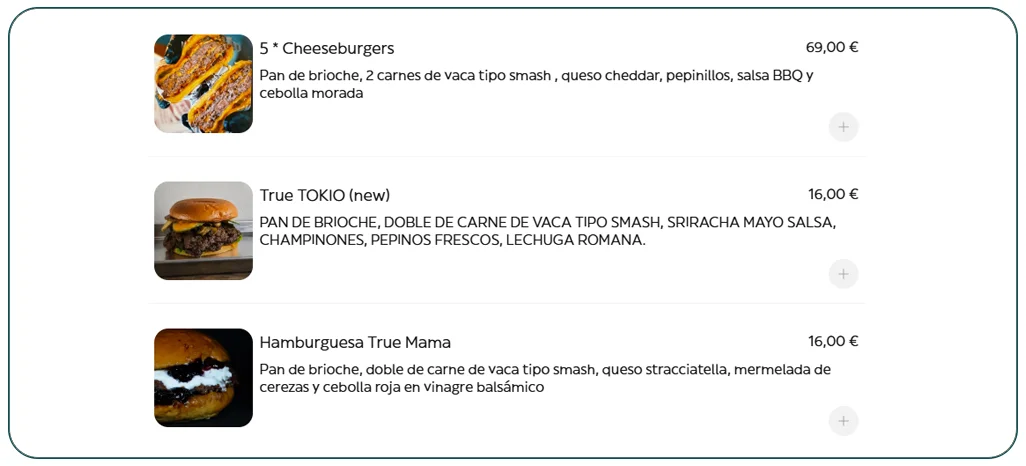
Glovo web scraping for restaurant menu data can help researchers organize menu names, categories, listed prices, descriptions, and other publicly visible fields into a consistent format. This information is useful for comparing how restaurants position their offerings, which categories they promote, and how their displayed prices differ across locations.
A structured menu dataset should include the restaurant identifier or name, location, item name, category, displayed price, currency, collection timestamp, and source URL where appropriate. Keeping these fields consistent makes it easier to compare records over time. Researchers should also preserve the original values so that data cleaning does not erase meaningful differences between menu items.
For example, a restaurant group could compare the displayed price of similar meal categories across several delivery zones. A food brand could identify which menu categories appear frequently in its selected competitive set. These are research methods, not evidence of actual sales or consumer preferences: marketplace listings show what is presented to customers, not necessarily what customers purchase.
The wider industry provides useful context. The World Health Organization's Regional Office for Europe discussed how online meal delivery platforms expanded during the COVID-19 period and cited an estimate of US$13.8 billion for the European online food delivery market in 2020. The report also included a projection of US$20.27 billion for 2026 in the WHO European Region. These figures are market estimates, not Glovo-specific revenue. Source: WHO Europe report.
The practical lesson is to build a reliable menu baseline first. Once categories, currencies, locations, and timestamps are standardized, researchers can identify meaningful differences without confusing missing information with genuine market changes.
How can delivery listings support market research?
Extract Glovo food delivery listings for market research to build a structured view of the restaurants and food options visible in a defined market. Depending on lawful access and the fields available, useful observations may include restaurant names, cuisine labels, menu categories, displayed prices, delivery estimates, promotions, and visible availability indicators.
The first step is to define the research question. A restaurant entering a new city may want to understand the range of cuisine categories listed in selected neighborhoods. A food manufacturer may want to examine how its product category is represented on delivery menus. A consultancy may compare visible menu prices across a defined group of competing restaurants.
The main keyword, Glovo scraper for food marketplace analytics, describes the data collection approach, but the value comes from how the dataset is structured and interpreted. Researchers should define the market boundaries before collection, including the locations, observation periods, restaurant categories, and comparison rules. Without those definitions, differences in results may reflect inconsistent sampling rather than real competitive changes.
Glovo's corporate materials describe a multi-category marketplace connecting customers with local businesses and couriers. That structure makes it important to separate restaurant listings from grocery and other store listings when the research question specifically concerns prepared food. Source: Glovo corporate website.
Researchers should also distinguish listing counts from market share. The number of visible restaurants in a sample does not establish the number of active businesses across a city, their order volumes, or their market revenue. A carefully bounded dataset can reveal useful marketplace patterns, but its limitations must remain clear in reports and dashboards.
What does restaurant availability tracking measure?
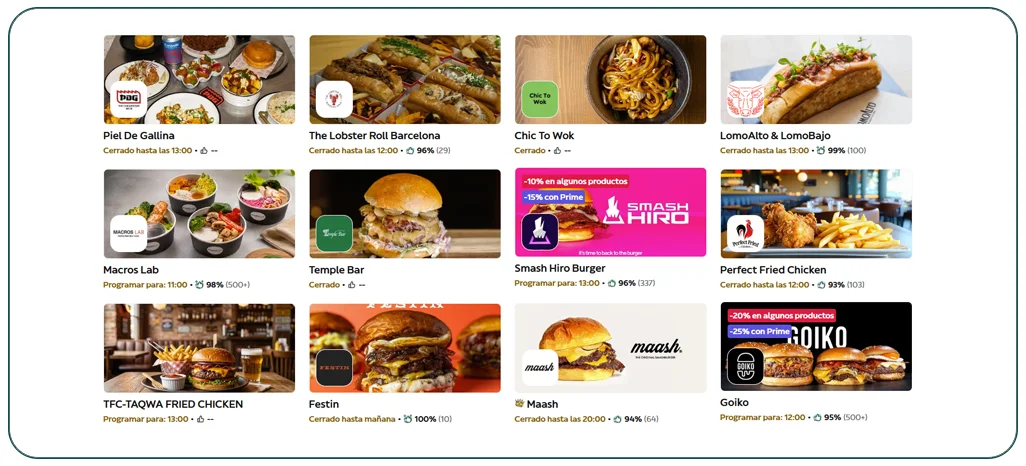
Real-time Glovo restaurant availability tracking means recording whether a restaurant appears available for a particular delivery location and observation time. The exact status displayed can depend on the platform interface, selected address, restaurant operating schedule, and other conditions. Therefore, a result should always be stored with its context rather than treated as a universal statement about the restaurant.
A useful availability record includes the restaurant name or identifier, delivery area, observation timestamp, displayed availability status, visible estimated delivery time where provided, and any collection error. Repeated observations can help researchers distinguish temporary changes from patterns that recur at similar times or locations.
For example, analysts may compare restaurant visibility during lunch and dinner observation windows. They could also investigate whether a restaurant is displayed as unavailable in one delivery area but available in another. Such observations can support operational research, but they do not independently prove why a restaurant is unavailable. Staffing shortages, kitchen capacity, platform settings, delivery coverage, or temporary technical issues may all require separate verification.
Historical context matters here. The WHO's 2021 publication on digital food environments discussed the growing importance of meal delivery applications and the acceleration of adoption during the COVID-19 pandemic. Its discussion helps explain why researchers may wish to compare marketplace conditions across time, but it does not provide a verified annual availability series for Glovo. Source: WHO Europe report.
For reliable analysis, define an availability rate carefully: specify the set of restaurants observed, the location, the observation window, and the rule used to classify a restaurant as available. Keep unsuccessful checks separate from confirmed unavailable statuses. This prevents collection failures from being incorrectly counted as restaurant closures or service interruptions.
Want structured restaurant marketplace data for your research? Explore data collection options with Real Data API and define the fields, locations, and update frequency your project requires.
How can API-based collection improve consistency?
A Glovo API for food delivery data collection can refer to an integration approach for gathering and organizing food marketplace information. Before implementation, businesses should verify whether an authorized API or data access method is available for their intended use. This article does not claim that Glovo provides a public API for every field described here.
The primary advantage of a properly designed collection pipeline is repeatability. Rather than collecting information in an inconsistent format, a pipeline can map source fields into a common schema, attach timestamps, validate values, and deliver records to a database or analytics platform. If an approved source provides restaurant and menu data, the same normalization rules can be applied to each collection cycle.
The main keyword, Glovo scraper for food marketplace analytics, is relevant when the objective is to turn collected observations into usable analysis. However, scraping should not be treated as permission to bypass access controls or platform restrictions. Glovo's published terms address the use of its application content and restrict certain forms of copying, reuse, and commercial exploitation without authorization. Review the applicable terms and obtain the necessary permissions before collecting or redistributing data. Source: Glovo terms.
A practical pipeline should include input validation, duplicate detection, currency handling, location normalization, timestamp storage, and error logging. Price comparisons should use consistent currencies and comparable products. When a field is absent, record it as missing instead of assuming a value.
These controls make datasets easier to audit and refresh. They also help analysts explain why a figure changed: the difference might represent an actual marketplace observation, a change in source coverage, or a correction to the collection process.
What should a food marketplace scraper capture?
A Glovo Scraper project should start with a precise list of research fields rather than attempting to collect every visible element. The right dataset depends on whether the business is studying menu positioning, restaurant visibility, pricing, cuisine coverage, or changes in delivery availability.
For restaurant-level analysis, useful fields may include restaurant name, displayed cuisine category, delivery area, visible status, and timestamp. For menu-level analysis, the schema may include item name, category, displayed price, currency, and promotional label. For availability research, observation time and delivery-location context are particularly important. Every field should have a clear definition so that multiple collection cycles can be compared consistently.
The historical period from 2020 to 2026 also requires careful treatment. Public reports provide market context, but they do not automatically supply a verified annual dataset of Glovo listings or availability. The table below separates the published market figures from years for which this cited source does not provide an annual value.
| Year | Published market figure | How to interpret it |
|---|---|---|
| 2020 | US$13.80 billion | European online food delivery market estimate cited by WHO Europe |
| 2021 | No annual figure in the cited source | Do not interpolate a value |
| 2022 | No annual figure in the cited source | Requires a separate verified source |
| 2023 | No annual figure in the cited source | Requires a separate verified source |
| 2024 | No annual figure in the cited WHO source | Other market reports may use different definitions |
| 2025 | No annual figure in the cited WHO source | Do not treat a forecast as an actual result |
| 2026 | US$20.27 billion | Forecast cited for the WHO European Region, not a confirmed outcome |
Source: WHO Regional Office for Europe. The 2020 and 2026 figures refer to the source's stated market estimate and forecast; they should not be interpreted as Glovo-specific figures or a complete annual time series.
For business reporting, pair the dataset with a collection log. Record when each location was checked, which fields were available, and whether the source was accessible. This makes it easier to distinguish real marketplace changes from missing observations and changes in data coverage.
How can food data collection reveal market trends?
Glovo Food Data Scraping can support market trend research when observations are collected consistently and interpreted within their limits. Potential analyses include changes in visible menu prices, cuisine-category representation, promotion frequency, and restaurant availability across selected locations. The findings describe the collected sample, not necessarily the entire food delivery market.
A useful workflow begins with a defined question, such as whether displayed prices for a selected menu category differ across neighborhoods. Researchers then define a comparable set of restaurants, collect authorized observations, normalize the records, and compare results across observation dates. A price change should be counted only when the same or genuinely comparable item can be identified and the currency and pricing basis are consistent.
The main keyword, Glovo scraper for food marketplace analytics, relates to the wider process of transforming marketplace observations into business intelligence. For example, a restaurant group could use repeated observations to review its visible positioning against selected competitors. A market researcher could examine which cuisine categories are present in a sampled area. Neither result, by itself, demonstrates sales performance or customer demand.
Independent sources help put the findings in context. Eurostat reported that 21% of internet users in the European Union had ordered food deliveries from restaurants, fast-food chains, or catering services during the three months covered by its 2024 survey. The measure relates to EU internet users and is not specific to Glovo or any individual country's restaurant marketplace. Source: Eurostat, 20 February 2025.
Combining carefully collected marketplace observations with credible public statistics can help analysts distinguish platform-level patterns from wider consumer behavior. The most valuable reports explain the sample, period, limitations, and methodology instead of presenting scraped listings as definitive market totals.
Why Choose Real Data API?
Businesses researching food delivery marketplaces need more than a large volume of records. They need a collection process that matches their research objectives, clear field definitions, reliable timestamps, and data that can be checked before it informs business decisions.
Glovo Data Scraping Emerging Restaurant Trends is a research use case in which repeated, properly authorized observations can help analysts identify changes in visible menus, pricing, restaurant availability, and cuisine-category representation. The results are most useful when researchers compare like with like and preserve a record of where and when each observation was collected.
A Glovo scraper for food marketplace analytics project should be planned around specific outcomes. A competitor-monitoring team may prioritize menu prices and promotions. A restaurant expansion team may need location-specific listings and availability snapshots. A market research firm may require normalized categories, a documented sampling method, and a repeatable schedule.
Real Data API can be considered as a data collection provider for businesses evaluating structured web data workflows. Before beginning a project, clarify the source access method, permitted data fields, collection frequency, geographic coverage, delivery format, and applicable restrictions. Confirm which capabilities are available for the specific Glovo use case instead of assuming that every field or endpoint can be accessed.
The recommended approach is to start with a small, clearly defined dataset, validate the output, and expand only after the quality and permissions are established. This reduces the risk of building dashboards on incomplete observations or inconsistent definitions. It also gives business teams a clearer understanding of what the data can—and cannot—support.
Want structured restaurant marketplace data for your research? Explore data collection options with Real Data API and define the fields, locations, and update frequency your project requires.
Contact UsConclusion
A Glovo scraper for food marketplace analytics can help food businesses and researchers organize marketplace observations for menu comparisons, restaurant availability analysis, price monitoring, and competitive research. Its value depends on consistent collection, accurate timestamps, comparable fields, and responsible interpretation.
The historical context from 2020 to 2026 shows why food delivery is an important research area, but public market estimates should not be confused with Glovo-specific data or verified annual listing counts. Businesses should use credible sources, disclose data limitations, and confirm that their collection methods comply with applicable terms and laws.
Ready to build a more structured food marketplace research workflow? Contact Real Data API to discuss your data requirements, intended use, coverage, and authorized collection options!
Frequently Asked Questions
1. What is a Glovo scraper for food marketplace analytics?
It is a data collection approach for organizing permitted marketplace observations, such as restaurant listings, menu prices, and availability, for structured analysis and competitor research.
2. What can a Glovo Food Dataset contain?
A Glovo Food Dataset may contain restaurant details, menu items, categories, displayed prices, and timestamped availability observations, depending on authorized source access and field availability.
3. How does Glovo web scraping for restaurant menu data help businesses?
Glovo web scraping for restaurant menu data can help businesses compare listed prices, organize menu categories, and monitor visible menu changes across selected restaurants and locations.
4. Can businesses extract Glovo food delivery listings for market research?
Extract Glovo food delivery listings for market research only through methods permitted by applicable terms and laws. Define the sample and verify data quality before drawing conclusions.
5. How does Real Data API support food marketplace research?
Real Data API can be evaluated for structured data collection workflows. Confirm source access, available fields, permitted use, geographic coverage, and update frequency before starting a project.
Latest posts
HungerStation Food Data Scraping for Restaurant Market Research - Key Benefits and Insights
Shopee API for Competitive Pricing Optimization - How Seller Data Analysis Improves Product Price Tracking
BigBasket scraper for competitor price analysis - How to Identify Price Gaps and Improve Pricing Decisions
How Carrefour API Solutions for Retail Data Integration Improve Business Intelligence



.png)


