.gif)
.png)
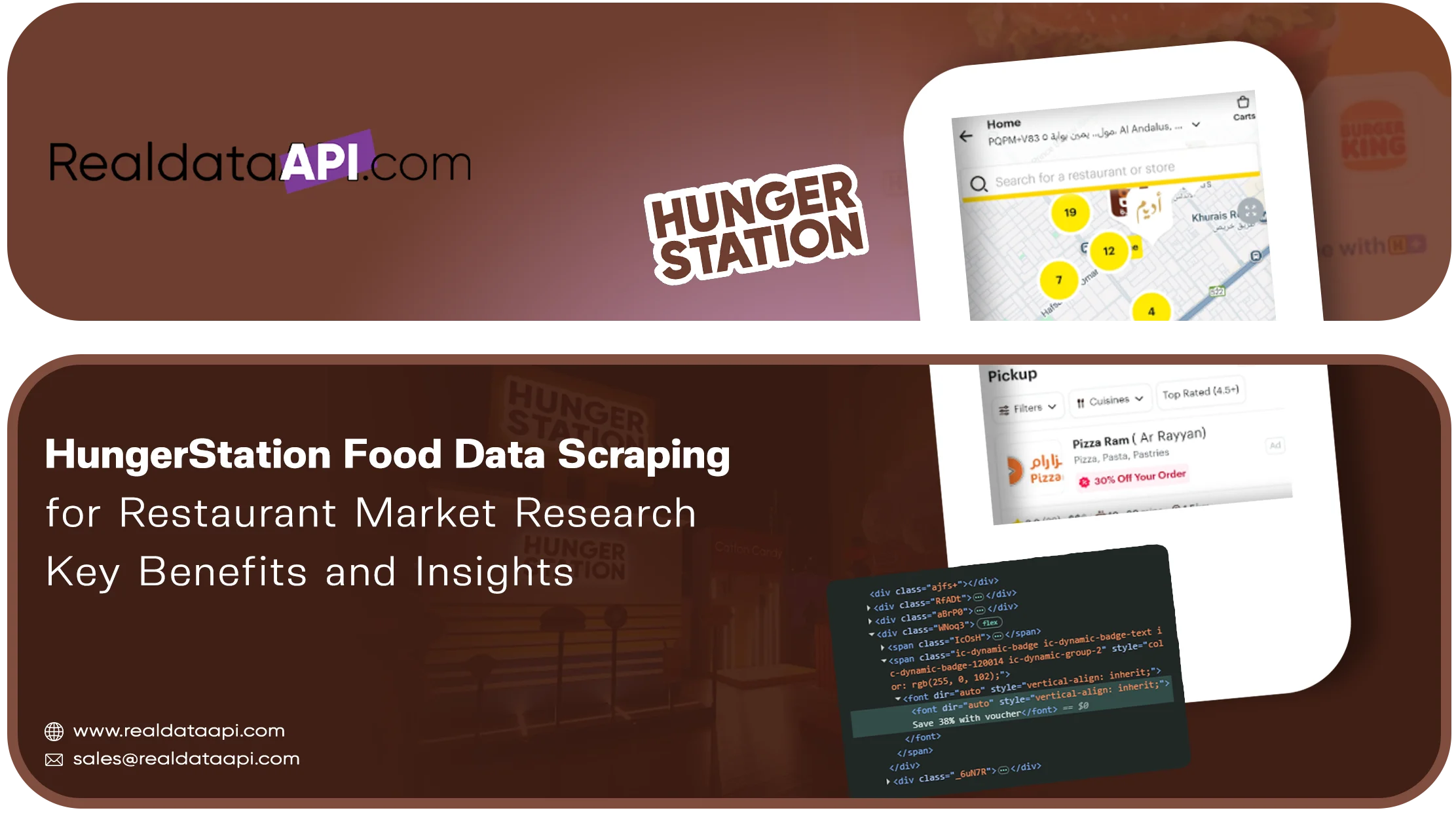
Quick Summary
- HungerStation food data scraping for restaurant market research helps businesses analyze menu prices, popular dishes, customer ratings, promotions, and competitor offerings to identify market trends and improve restaurant strategies.
- Using a HungerStation Scraper, restaurants can collect structured food delivery data to compare competitors, monitor pricing changes, understand customer preferences, and identify opportunities for menu optimization.
- These insights support data-driven decisions, more effective promotional campaigns, better competitive positioning, and informed business growth in Saudi Arabia’s food delivery market.
Introduction
Restaurant businesses need reliable market intelligence to understand menu positioning, compare prices, identify cuisine trends, and evaluate competitors. HungerStation food data scraping for restaurant market research can help transform accessible restaurant listings, menu information, prices, promotions, and ratings into structured datasets for informed business decisions.
For restaurants, food chains, cloud kitchens, and market research teams, the goal is not simply to collect more data. It is to turn relevant information into practical insights about pricing, product assortment, and local competition. A HungerStation Scraper can support this process when data collection is authorized, responsibly managed, and designed around a clear research objective.
HungerStation describes itself as a Saudi food-delivery platform established in 2012. Its official website states that its services cover more than 102 cities in Saudi Arabia and that it partners with restaurants and other businesses. These features make platform-level restaurant research potentially useful, although the information visible to a customer may vary by location and time. Source: HungerStation About Us.
How can restaurant listings reveal market opportunities?
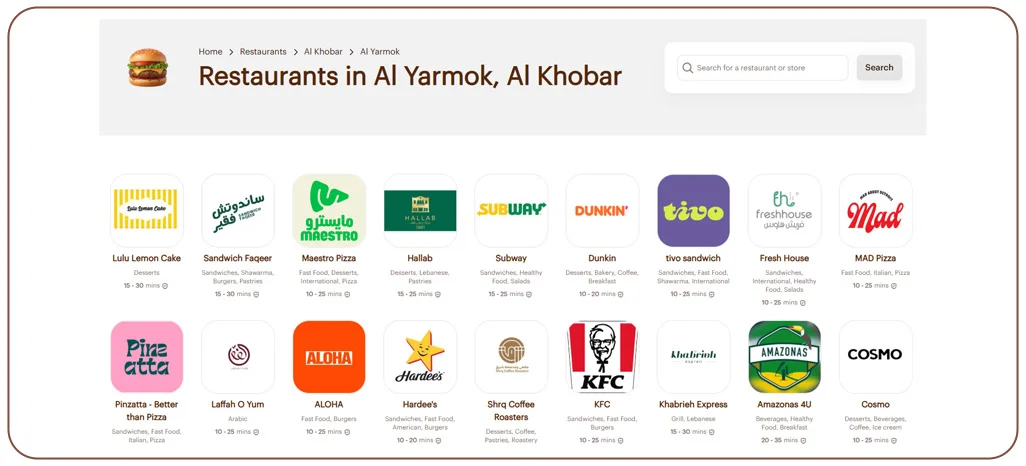
A structured dataset can help research teams compare restaurants across selected Saudi cities, neighborhoods, cuisine categories, and price ranges. A HungerStation food web data scraper may be considered for this purpose only where the collection method is permitted by the platform's terms and the relevant data rights. Before gathering information, define which fields are needed and confirm that access is authorized.
For HungerStation food data scraping for restaurant market research, useful research fields may include restaurant name, cuisine category, listed menu items, displayed prices, promotional labels, ratings, review counts where available, and collection timestamps. These fields can help analysts compare visible market positioning without claiming access to private order volumes, customer identities, or internal sales data.
What does the available market evidence show?
Official sources provide useful context, but they do not establish HungerStation's own annual order totals or prove demand for any specific cuisine. The following table separates verified public facts from gaps in platform-specific evidence.
| Year | Verified public evidence | Research implication |
|---|---|---|
| 2020 | No comparable HungerStation-specific annual dataset was verified for this article. | Establish a baseline from authorized historical records if available. |
| 2021 | No comparable platform-specific annual figure was verified. | Avoid estimating restaurant growth without comparable data. |
| 2022 | Saudi Arabia's Transport General Authority continued formal licensing and regulation of delivery-app activities. Source | Include regulatory and operational context in market analysis. |
| 2023 | The TGA reported growth in parcel-delivery activity during Ramadan; these figures concern parcels, not restaurant food orders. Source | Keep parcel logistics data separate from food-delivery metrics. |
| 2024 | Saudi Arabia recorded 290 million orders across the broader delivery-app sector, according to the Saudi Press Agency. Source | Delivery activity offers market context, not HungerStation-specific sales. |
| 2025 | The TGA reported more than 103 million delivery-sector orders in Q3, up 40% year over year. Source | Compare periods only when the source definitions are consistent. |
| 2026 | HungerStation's restaurant contract terms were updated on August 6, 2026. Source | Review current terms before planning any data-collection activity. |
The figures above cover different definitions of delivery activity, so they must not be combined into a single food-delivery growth rate. Their value is in establishing context and highlighting the need for a consistent, source-documented dataset.
What can an organized data feed contribute to analysis?
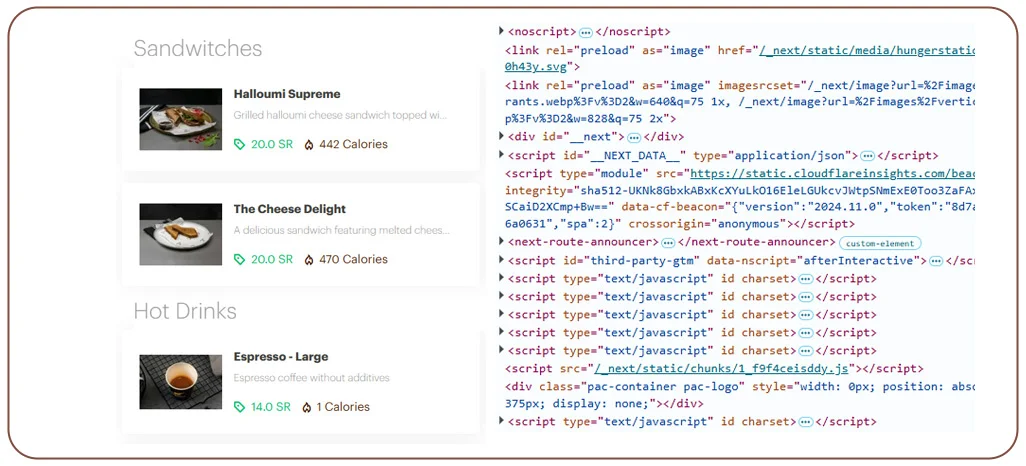
A HungerStation food data API can describe a structured approach to delivering permitted data into a research system. An API is useful when a data provider has authorized access and documents its endpoints, fields, refresh frequency, and usage limits. The term alone does not mean HungerStation offers a public API for extracting restaurant listings.
For a restaurant research project, an approved data feed can help standardize records from different collection periods. Analysts can organize menu names, categories, prices, promotional labels, and location identifiers into a consistent schema. This makes it easier to compare like with like and reduces manual spreadsheet work.
A useful dataset should include the source, collection timestamp, city or delivery area, currency, and any known limitations. Where an item disappears or a restaurant listing changes, analysts should distinguish a genuine change from a collection failure or a temporary availability issue.
Which fields should a research dataset contain?
| Data field | Business question it can help answer |
|---|---|
| Restaurant and location identifier | Which businesses compete in the same area? |
| Cuisine and menu category | Which categories are represented in the market? |
| Listed item and displayed price | How do visible prices differ across comparable items? |
| Promotional label and displayed offer | Which offers are visible during the observation period? |
| Rating and review count, if available | How do visible customer-feedback indicators compare? |
| Timestamp and source reference | When was the record observed, and where did it come from? |
A well-designed data feed supports repeatable analysis rather than a one-time data dump. It also makes it easier to audit results and explain why a comparison is valid. Research teams should confirm authorization and applicable terms before using a platform, third-party provider, or API.
How can competitor comparisons support restaurant decisions?
HungerStation restaurant competitor data collection can help restaurant groups understand how similar businesses present their offerings in a particular market. The most useful comparison is not necessarily the largest one. It is a dataset that matches the restaurant's location, cuisine, menu category, and target price range.
For example, a burger restaurant could compare the visible prices and menu composition of other burger restaurants in the same service area. A café might study beverage categories, dessert options, and displayed promotional offers. These are research methods, not claims about any specific restaurant's performance.
When conducting HungerStation food data scraping for restaurant market research, analysts should normalize menu records before drawing conclusions. Similar products may have different names, portion sizes, add-ons, or meal combinations. A direct price comparison can be misleading when those differences are ignored.
What should a competitor benchmarking table include?
| Benchmark | How to interpret it | Decision it may inform |
|---|---|---|
| Comparable item prices | Compare items with similar portions and ingredients. | Review menu pricing and value positioning. |
| Menu breadth | Count distinct items by category after removing duplicates. | Identify categories that competitors cover more extensively. |
| Promotional visibility | Record the offer and date it was observed. | Evaluate how competitors communicate value. |
| Ratings and review counts | Treat them as platform-visible signals, not a complete measure of customer satisfaction. | Identify businesses worth investigating further. |
| Location coverage | Compare listings in the same geographic area. | Assess where direct competition appears concentrated. |
The results should support decisions, not automatically dictate them. A restaurant with lower listed prices may have a different serving size, business model, or cost structure. Likewise, a high rating does not reveal profit margins, repeat-purchase rates, or total sales.
A stronger analysis combines platform-visible information with the restaurant's own menu costs, sales records, customer feedback, and operational knowledge. This lets decision-makers judge whether a competitor's pricing or assortment is relevant to their business rather than copying it without context.
Compare competitor pricing, menus, ratings, and promotions to make smarter restaurant decisions—leverage Real Data API’s food data scraping solutions to gain actionable market insights and stay ahead of the competition.
Get Insights Now!How can menu information be monitored over time?
A HungerStation food delivery data scraper describes a tool intended to gather food-delivery listing information. Any implementation must use a permitted access method; it should not bypass technical restrictions, reuse private account data, or collect information without authorization.
When an approved source is available, repeated observations can help businesses identify visible menu changes. The important distinction is between a single snapshot and a consistent time series. A snapshot tells an analyst what was visible at one point in time. A time series helps identify changes across multiple observations, provided the collection method and coverage remain comparable.
Which changes are worth tracking?
- Price changes: Record the previous and current displayed price, item identity, currency, and observation dates.
- Menu availability: Distinguish a removed listing from an item that was temporarily unavailable or not returned by the data source.
- Promotional changes: Store the offer text and any visible conditions instead of recording only a discount percentage.
- Restaurant coverage: Track newly observed or no-longer-observed listings without assuming that a missing record means the business has permanently closed.
- Category changes: Monitor shifts in menu assortment after checking that category definitions remain consistent.
These checks help avoid false conclusions. A price difference might reflect a changed serving size, a promotion, a location-specific menu, or an updated listing. Analysts should preserve the original observation and flag uncertain comparisons for review.
A practical reporting cadence depends on the research question. A menu-pricing study might need scheduled observations, while a broad competitor inventory may need less frequent updates. The refresh rate should be agreed with the authorized provider and justified by the expected value of the information.
How should collected information become actionable insight?
Hungerstation Food Data Scraping is useful only when the resulting data is reliable enough to support a decision. Collection is one step in a larger workflow that includes validation, normalization, analysis, and reporting.
For HungerStation food data scraping for restaurant market research, begin by defining a business question. For example, a restaurant chain may want to compare the prices of similar menu items across selected cities. The research team should then specify its geographic scope, comparison categories, observation period, and acceptable sources before collecting anything.
What does a reliable research workflow look like?
- Define the objective. Specify the decision the research will inform, such as pricing, menu expansion, or location planning.
- Confirm permitted access. Review applicable terms, rights, privacy obligations, and any required written permissions. Choose an authorized source or provider.
- Standardize the records. Normalize currency, category names, product names, units, and location identifiers while retaining the original values for auditing.
- Validate the data. Check for missing fields, duplicate records, implausible changes, stale observations, and inconsistent coverage.
- Analyze comparable items. Group similar products and distinguish regular prices from promotional prices wherever the source supports that distinction.
- Report limitations. State the collection dates, coverage, missing information, and any assumptions that affect interpretation.
Which metrics are useful for decision-makers?
| Metric | Calculation or method | Why it matters |
|---|---|---|
| Median listed price | Median of comparable observed prices | Reduces the influence of unusually high or low values. |
| Price range | Highest comparable price minus lowest comparable price | Shows the spread of visible pricing. |
| Menu category share | Items in a category divided by all eligible observed items | Describes the composition of the collected menu sample. |
| Promotion frequency | Observed listings with a promotion divided by eligible listings | Measures visible promotion prevalence in that sample and period. |
| Record completeness | Valid populated fields divided by expected fields | Helps assess whether the dataset is fit for analysis. |
These calculations describe the collected sample, not necessarily the entire Saudi restaurant market. Results should not be presented as market-wide facts unless the sample and methodology justify that conclusion.
How can listed prices be compared accurately?
Scrape Real-Time HungerStation Menu Pricing Data should be treated as a research objective that depends on the source's permitted access, update frequency, and data availability. “Real-time” should not be promised unless the provider can demonstrate an appropriate refresh interval and coverage. A periodically updated dataset is not the same as a live feed.
Price comparisons need particular care because the amount visible in a menu listing may not represent the final amount a customer pays. HungerStation's official terms of use explain that displayed prices and product descriptions can be inaccurate and that restaurant information may change. Its restaurant contract terms also state that delivery fees, delivery coverage, and minimum order values can be determined or amended by the platform.
How can analysts avoid misleading price comparisons?
- Compare equivalent items. Match size, portion, ingredients, and meal combinations where those details are available.
- Keep price types separate. Do not mix regular prices, discounted prices, bundle prices, and final checkout totals into one measure.
- Record the observation time. Promotions and displayed availability may change, so every observation needs a timestamp.
- Separate menu prices from delivery costs. Delivery fees, minimum order requirements, and customer-specific offers may affect the total cost.
- Check location differences. Compare restaurants using the same delivery area where possible, and disclose when that is not possible.
- Flag incomplete evidence. If an item's size, promotion conditions, or availability cannot be verified, exclude it from direct price comparisons or mark the limitation clearly.
For context, the Communications, Space and Technology Commission reported that internet penetration in Saudi Arabia reached 99% in 2024, while 99.4% of internet browsing usage was through mobile phones in its Saudi Internet Report 2024 announcement. These figures describe the wider digital environment; they are not HungerStation user statistics and do not independently measure restaurant demand.
The practical takeaway is to build a transparent comparison process. Accurate timestamps, comparable products, and clear definitions are more valuable than an impressive-looking dataset that mixes different prices or observation periods.
How can Real Data API help with a structured research project?
Real Data API can be positioned as a potential data-services partner for businesses that need help defining, organizing, and analyzing restaurant market information. Before engaging a provider, businesses should confirm the source of the data, the collection permissions, the supported fields, and the delivery format. No platform-specific integration or authorized HungerStation feed should be assumed without confirmation.
For teams evaluating a Food Scraping API, the most important questions concern the provider's documented data sources, permitted use, refresh schedule, historical coverage, error handling, and output formats. A business should also ask how missing or changed listings are handled and whether the data can be independently validated.
A HungerStation food data scraping for restaurant market research project can be planned around practical deliverables such as:
- A structured dataset of approved restaurant and menu fields.
- Standardized item names, categories, locations, and displayed prices.
- Time-stamped records that help analysts compare observations across periods.
- Quality checks for duplicates, missing values, and inconsistent product matches.
- Reports and dashboards designed around competitor benchmarking and pricing questions.
- Documentation of sources, collection scope, permissions, and analytical limitations.
For a Real Data API-focused content strategy, the same principles apply: explain the data source clearly, distinguish verified capabilities from proposed workflows, and avoid promising access to information that the provider cannot demonstrate it is authorized to supply.
What should buyers verify before selecting a provider?
| Evaluation area | Questions to ask |
|---|---|
| Data authorization | Is the collection method permitted, and can the provider document the basis for access? |
| Coverage | Which cities, restaurant listings, and fields are actually available? |
| Freshness | How frequently is the dataset updated, and what does “real-time” mean in practice? |
| Quality | Are timestamps, duplicates, missing fields, and validation checks included? |
| Delivery | Can data be delivered in a documented API response, CSV, spreadsheet, or another agreed format? |
| Compliance | How are platform terms, privacy, intellectual property, and retention requirements addressed? |
Important compliance consideration: HungerStation's current restaurant contract terms expressly state that restaurant partners must not use automated tools to extract data from the platform under that agreement. Its general terms of use also restrict unauthorized commercial use and copying of platform content. Businesses should obtain appropriate written authorization or use an authorized data source before proceeding. A service provider's availability does not, by itself, establish permission to collect or reuse the platform's data.
Conclusion
Restaurant market research is most useful when it combines consistent data collection with clear business questions, reliable validation, and careful interpretation. Menu listings, comparable prices, promotional labels, and visible customer-feedback indicators can help businesses understand how restaurants position themselves in selected markets. They cannot, on their own, reveal private sales, profit margins, or total customer demand.
HungerStation food data scraping for restaurant market research should therefore begin with a defined objective, an authorized data source, and a transparent methodology. The 2020–2026 context also shows why researchers must distinguish official delivery-sector statistics from platform-specific restaurant metrics and avoid treating unrelated figures as evidence of HungerStation's own performance.
With a well-structured dataset, restaurant groups and market analysts can make better-informed decisions about menu positioning, pricing comparisons, promotional strategy, and competitive research. The quality of those decisions ultimately depends on data accuracy, appropriate permissions, and sound analysis.
Ready to strengthen your restaurant market research with reliable data? Contact Real Data API to discuss your requirements, authorized data sources, and a research workflow tailored to your business objectives.
Frequently Asked Questions
1. What is HungerStation food data scraping for restaurant market research?
It involves collecting menu prices, ratings, promotions, and restaurant details from HungerStation to help businesses analyze competitors, identify customer preferences, and make informed market decisions.
2. How does a HungerStation Scraper help restaurants?
A HungerStation Scraper automates food delivery data collection, helping restaurants monitor competitor menus, compare prices, evaluate promotional strategies, and identify opportunities to improve their market positioning.
3. Can HungerStation data help optimize restaurant pricing?
Yes, HungerStation food data scraping for restaurant market research enables businesses to compare competitor prices, track discounts, understand market positioning, and develop competitive pricing strategies based on collected data.
4. How can Real Data API support restaurant market research?
Real Data API helps businesses collect and structure food delivery data, enabling restaurant teams to analyze competitors, monitor market trends, evaluate menu performance, and support data-driven business decisions.
5. What insights can a HungerStation Scraper provide?
A HungerStation Scraper can reveal menu trends, pricing differences, customer ratings, popular dishes, and promotional patterns, helping restaurants refine offerings and identify potential growth opportunities in competitive markets.
Latest posts
HungerStation Food Data Scraping for Restaurant Market Research - Key Benefits and Insights
Shopee API for Competitive Pricing Optimization - How Seller Data Analysis Improves Product Price Tracking
BigBasket scraper for competitor price analysis - How to Identify Price Gaps and Improve Pricing Decisions
How Carrefour API Solutions for Retail Data Integration Improve Business Intelligence



.png)


