.gif)
.png)

Quick Summary
- Marketplace sellers need reliable competitor intelligence to identify price gaps, evaluate product positioning, and make informed pricing decisions. Structured marketplace data can help teams compare products, sellers, and price movements without depending entirely on manual research.
- API-based workflows and a Shopee Scraper can support repeatable data collection, historical comparisons, and reporting. Combining verified product information with a consistent pricing methodology helps ecommerce teams distinguish meaningful competitive changes from temporary promotions, shipping differences, and listing mismatches.
Introduction
Shopee API for competitive pricing optimization helps ecommerce businesses approach marketplace pricing as a measurable process rather than a series of manual decisions. By collecting product information, comparing competing offers, and maintaining historical observations, sellers can better understand where their products stand in a competitive market. The right approach connects price intelligence with product matching, stock availability, promotional conditions, and profitability requirements.
Shopee operates across Southeast Asia and Taiwan and has a significant presence in Latin America, according to Sea Limited's corporate reporting. Its marketplace scale makes consistent competitive monitoring relevant to brands, retailers, distributors, and marketplace analytics teams. Sea reported that Shopee's gross merchandise value (GMV) reached US$100.5 billion in 2024, an increase of 28% from US$78.5 billion in 2023. These are company-reported marketplace figures, not estimates of any individual seller's sales. Source: Sea Limited's 2024 results.
For businesses that need repeatable research, a Shopee Scraper can help organize publicly accessible listing information into structured records, subject to platform rules, permissions, and applicable law. The resulting data can support competitor benchmarking, SKU-level comparisons, and price-change reporting. However, collection alone does not guarantee better decisions: businesses must validate product matches, distinguish list prices from discounted prices, and account for delivery charges and promotions before changing their own prices.
This guide explains how to develop a practical pricing intelligence workflow, interpret historical marketplace growth, and turn product-level observations into actionable competitive insights.
How can marketplace listings reveal seller positioning?
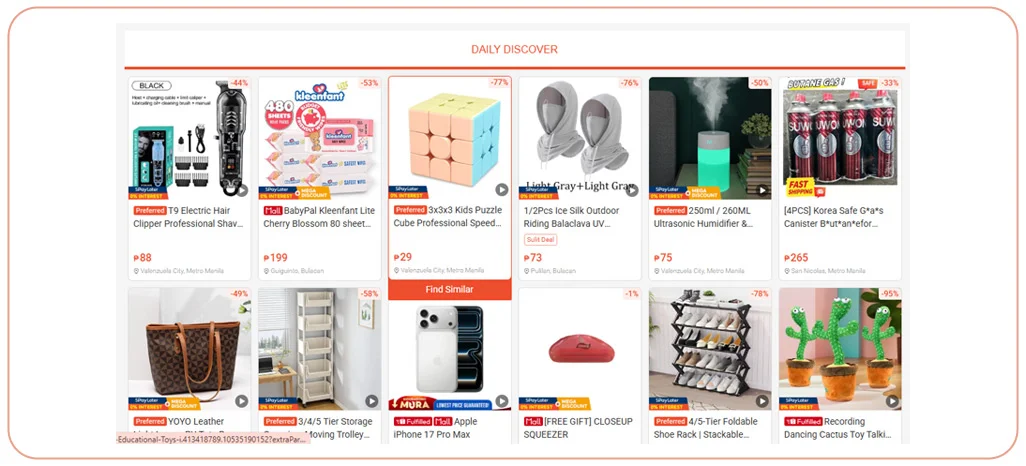
Shopee web scraping for seller data analysis can help ecommerce teams organize listing-level information to understand how competing sellers position similar products. The first step is to define a consistent set of fields: product title, seller identifier where available, brand, SKU or model number, listed price, discount information, stock status, shipping details, and observation timestamp. Field availability depends on the source and collection method.
Seller comparisons are useful only when the underlying products are comparable. Two listings may have similar titles but differ in model, size, bundle quantity, warranty, or included accessories. An automated process should therefore match products using stable identifiers where available and flag uncertain matches for review. Otherwise, a pricing dashboard may treat different products as direct competitors and recommend inappropriate price changes.
Historical business figures provide context for why marketplace intelligence matters. Sea Limited reported that Shopee's GMV reached US$62.5 billion in 2021, compared with US$35.4 billion in 2020, representing growth of approximately 76.8%. These figures describe marketplace transaction value, not the performance of individual sellers. Source: Sea Limited's 2021 results.
Seller-level analysis should translate observations into practical questions. Which sellers consistently offer the lowest comparable price? Which listings rely on visible discounts? How often does a competitor's price change? Does a seller frequently run out of stock? These questions help analysts distinguish durable competitive positioning from short-lived promotional activity.
A useful output is a seller comparison report showing matched products, observed prices, differences from the business's own offer, stock information, and the last observation time. This creates an auditable basis for pricing decisions instead of relying on isolated screenshots or unverified assumptions.
How can product price movements be measured consistently?
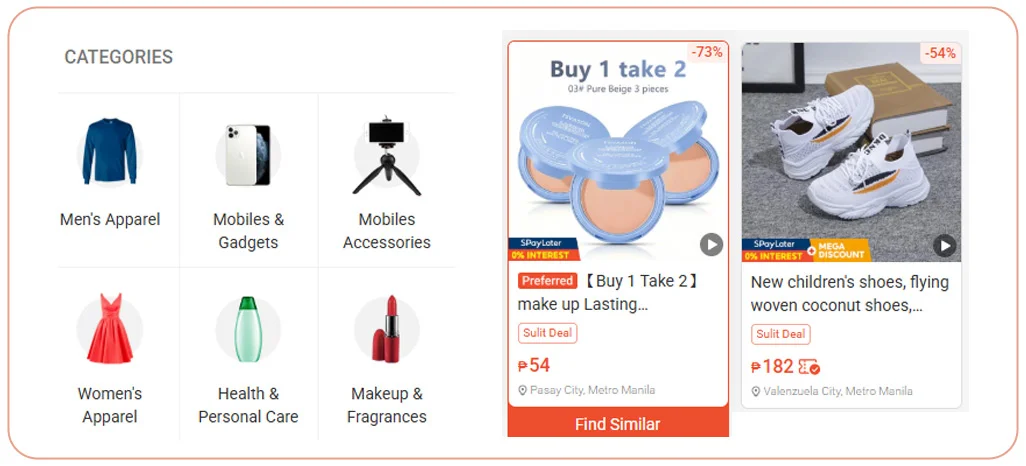
A Shopee web data scraper for product price tracking can support repeatable observations of comparable listings over time. Its value comes from collecting consistent fields at defined intervals and preserving historical records. A single price observation shows what was visible at one moment; a sequence of timestamped observations helps reveal price changes, promotional cycles, and recurring differences between sellers.
The data model should separate the displayed list price, discounted selling price, shipping cost where available, and other clearly identifiable charges. These amounts should not be combined indiscriminately. For example, a discount displayed on a listing may be conditional on a voucher, payment method, or minimum order value. Analysts should record such conditions when available rather than assuming every shopper can obtain the advertised final price.
A basic price history table could contain the following fields:
| Field | Analytical purpose |
|---|---|
| Product identifier | Helps match the same product across observations |
| Seller identifier | Distinguishes competing offers |
| Observed price | Records the displayed price at collection time |
| Discount details | Separates promotional pricing from standard pricing |
| Availability | Indicates whether the product appeared available |
| Shipping information | Adds context to total purchase cost |
| Timestamp | Establishes when the observation was collected |
| Match confidence | Flags uncertain product comparisons |
Teams can use this structure to calculate the median observed price, price range, percentage change, and difference between their own offer and a matched competitor. For a consistent comparison, percentage difference can be calculated as (competitor price − own price) ÷ own price × 100.
A positive result means the competitor's observed price is higher; a negative result means it is lower. The interpretation is valid only when both prices refer to comparable products and the same currency and pricing basis.
Collection frequency should reflect the category's pace of change, the business decision being supported, and the permitted access method. More frequent collection is not automatically better if it increases cost without improving decisions. Retaining timestamps, validation rules, and source records makes historical findings easier to audit.
How does timely monitoring support faster pricing decisions?
A Real-time Shopee API for product price monitoring can form part of a workflow that reduces the delay between collecting pricing information and reviewing a meaningful change. The phrase “real-time” should be used carefully: actual freshness depends on source access, request limits, collection frequency, processing delays, and the availability of current listing data. An API does not guarantee instantaneous or uninterrupted updates.
An effective monitoring process begins by establishing a baseline for each matched product. The baseline may include the current selling price, historical median, observed competitor range, minimum acceptable margin, and inventory position. New observations can then be compared with that baseline to flag material changes.
Consider three different alert conditions:
- A matched competitor reduces its price below the business's predefined threshold.
- A product's observed price changes significantly compared with its recent history.
- A previously available competing listing is no longer observed as available.
Each alert requires validation. A missing listing could reflect a temporary loading issue rather than a genuine stockout. A lower price could apply to a different product variant or depend on a voucher. The monitoring system should therefore distinguish confirmed changes from uncertain observations.
Sea Limited's reported results illustrate the scale of the marketplace being monitored. Shopee's GMV increased from US$78.5 billion in 2023 to US$100.5 billion in 2024, while reported gross orders rose from 8.2 billion to 10.9 billion. These are annual marketplace totals, not direct measurements of competitor price volatility. Source: Sea Limited's 2024 results.
The practical lesson is to connect monitoring to a defined action. An alert should explain what changed, which product is affected, how reliable the match is, and whether the change warrants review. Pricing managers can then prioritize significant events instead of manually examining every listing.
Want to build a more consistent marketplace monitoring workflow? Explore Real Data API to discuss your product data collection and pricing intelligence requirements!
Get Insights Now!How can automated collection improve data consistency?
Shopee API integration for automated data collection can connect permitted data retrieval with storage, validation, reporting, and internal analytics systems. Instead of copying product information into spreadsheets repeatedly, a structured workflow can standardize how records are collected, checked, and made available to analysts.
A typical implementation has five stages:
- Source configuration: Identify the permitted source, available fields, authentication requirements, and applicable request limits.
- Collection: Retrieve the required listing information through the authorized interface or other permitted method.
- Validation: Check mandatory fields, data types, timestamps, duplicate records, and suspicious price changes.
- Storage: Preserve raw observations and normalized records so historical comparisons remain reproducible.
- Reporting: Deliver validated information to dashboards, scheduled reports, or internal pricing tools.
The distinction between an official marketplace API and a third-party data service matters. Shopee publishes developer documentation through its official Open Platform. The available endpoints, fields, permissions, and access conditions depend on the particular API and account authorization. Access to a seller's own catalog does not automatically mean that all competitor listings or historical prices are available through the same interface.
Businesses should confirm endpoint availability before designing a workflow around specific data fields. They should also implement error handling, retry policies, monitoring, and secure credential storage. These measures help teams detect incomplete collection runs and prevent missing records from being mistaken for genuine market changes.
For price analytics, retain the original observation alongside normalized values. For example, keep the source price and currency before converting amounts into a common reporting currency. Record the conversion rate and date if currency normalization is required. This preserves traceability and makes it easier to investigate discrepancies.
Automation improves consistency when the workflow includes quality controls. Without validation, it can reproduce incorrect matches or outdated prices at scale. The goal is not simply to collect more data; it is to create dependable records that support repeatable analysis and defensible decisions.
How can marketplace research uncover useful competitive patterns?
Shopee Web Scraping for Ecommerce Research can support structured studies of product assortment, seller positioning, price dispersion, and promotional activity when the relevant information is lawfully and permissibly accessible. For researchers, the main advantage is the ability to examine a defined set of comparable listings repeatedly instead of relying on isolated observations.
A useful research project begins with a clear question. For example, a brand may want to understand whether the same product has materially different displayed prices across sellers. A retailer might investigate how promotional prices vary across product categories. A distributor may need to identify which listings require closer review because their product descriptions or advertised specifications differ from the official catalog.
The sampling method should match the question. A category-wide study needs a documented selection method, while a study of a limited set of priority products can follow those products over time. In both cases, researchers should record the market, observation date, search or collection method, inclusion criteria, and missing data.
The following measures can help interpret the collected information:
| Measure | What it helps explain |
|---|---|
| Median observed price | The middle price among valid matched offers |
| Price range | The difference between the highest and lowest comparable observations |
| Price dispersion | How widely comparable offers differ |
| Promotional share | The proportion of observed listings marked as promotional under the chosen definition |
| Observation coverage | How many planned products and sellers were successfully observed |
| Match confidence | How reliably listings represent the same product |
These are analytical measures, not published Shopee performance statistics. Their value depends on the quality and representativeness of the collected sample.
Researchers should also separate correlation from causation. A lower price does not, by itself, establish that a seller has higher sales, better conversion, or greater profitability. Those conclusions require additional evidence. Similarly, observed prices cannot establish a seller's costs or margins without reliable cost information.
A well-documented research process makes findings more useful to merchandising, category management, and pricing teams. It also helps other analysts reproduce the method, evaluate limitations, and determine whether the findings apply to their own products and markets.
What should a reliable marketplace dataset contain?
A Shopee E-Commerce Dataset intended for pricing analysis should contain consistent product records, seller or offer information where available, timestamps, and enough contextual fields to distinguish genuinely comparable offers. Its usefulness depends less on the raw number of records than on coverage, accuracy, freshness, and the ability to trace each observation to its source.
Start with a defined schema. Product identifiers, brand, model, variant, listing title, observed price, currency, seller reference, availability, and timestamp are useful core fields when accessible. Depending on the research purpose and permissions, teams may also record promotional labels, shipping details, category classifications, and product URLs.
The dataset should preserve both raw and normalized data. Raw records provide a reference for later investigation, while normalized records make cross-seller comparisons easier. Maintain a change history for important transformations, such as currency conversion, category mapping, product matching, and the removal of duplicate observations.
Historical records should not be treated as complete market history unless collection coverage supports that conclusion. A dataset that begins collecting prices in October cannot reliably establish what happened in January of the same year. Likewise, a product that disappears from collected results is not necessarily discontinued or out of stock. The reason could be a search change, source limitation, temporary collection failure, or a listing modification.
For an operational dataset, measure quality alongside commercial indicators:
- Completeness: The proportion of records containing required fields.
- Freshness: The time elapsed since the last successful observation.
- Validity: The proportion of records passing predefined checks.
- Match quality: The reliability of product-to-product comparisons.
- Coverage: The share of planned products or sellers successfully monitored.
- Traceability: Whether a result can be linked to its original observation.
These indicators make it easier to identify weaknesses before the dataset drives pricing decisions. Establishing quality thresholds and documenting exclusions also prevents teams from presenting partial evidence as a complete picture of the marketplace.
For businesses planning to scale, a dataset should support incremental updates rather than requiring every historical record to be rebuilt for each reporting cycle. Combined with clear retention policies, access controls, and compliance checks, this approach creates a stronger foundation for repeatable pricing research.
Why Choose Real Data API?
Choosing a marketplace data provider should begin with the business outcome, the required data fields, and the source's permitted access methods. Shopee API for competitive pricing optimization is a useful search and planning concept, but an effective implementation must be evaluated against practical technical requirements rather than the keyword alone.
Real Data API can be considered as a potential partner for businesses evaluating structured product data collection and pricing intelligence workflows. Before selecting any provider, confirm the following capabilities directly with the provider:
- Relevant coverage: Can it supply the specific marketplace, product fields, seller information, and regional coverage required?
- Data freshness: What update frequency is supported, and how are delays or missing observations reported?
- Product matching: Are identifiers, variants, and duplicate listings handled consistently?
- Historical access: Are prior observations available, or does collection begin only after setup?
- Integration options: Can the output fit the business's storage, reporting, and analytics systems?
- Reliability and support: Are service limits, error handling, documentation, and support arrangements clearly defined?
- Compliance: Are collection methods consistent with applicable laws, platform terms, permissions, and data protection obligations?
These are evaluation criteria, not claims that every feature is currently offered by Real Data API. Request a sample, review its field definitions, and test it against a small set of known listings before committing to a larger workflow.
The best provider is the one that meets the data requirements transparently and can demonstrate quality against an agreed test. This approach helps businesses avoid investing in a solution that collects a large volume of data but cannot reliably answer their pricing questions.
Conclusion
Shopee API for competitive pricing optimization can help ecommerce teams build a more disciplined approach to competitor monitoring, price comparison, and marketplace research. The strongest workflows combine consistent collection, reliable product matching, historical records, quality checks, and clearly defined rules for reviewing pricing changes.
Official marketplace figures demonstrate Shopee's scale, but individual sellers still need product-level evidence to understand their own competitive position. Accurate comparisons should account for product variants, promotions, shipping, availability, and observation timing. They should also distinguish measured facts from assumptions about demand, profitability, or competitor strategy.
For businesses seeking to move beyond manual price checks, the next step is to define priority products, identify the required fields, establish acceptable data freshness, and test the quality of the resulting observations.
Ready to strengthen your marketplace intelligence workflow? Contact Real Data API to discuss your data requirements and explore a practical approach to product price monitoring and competitive analysis!
Frequently Asked Questions
1. How can Shopee API for competitive pricing optimization help sellers?
It can support structured competitor comparisons, price-change alerts, and historical analysis when the required data is accessible through authorized sources and the collected listings are accurately matched.
2. What is a Shopee Scraper used for?
A Shopee Scraper collects accessible listing information for structured analysis, subject to applicable permissions and rules. The resulting records can support product comparisons, assortment research, and price monitoring.
3. How does Shopee web scraping for seller data analysis work?
It organizes permitted listing observations by seller and product, then compares prices, availability, and other available attributes. Reliable results require consistent collection, accurate matching, and timestamped records.
4. Why use a Shopee web data scraper for product price tracking?
It helps teams maintain repeatable price observations, calculate historical changes, and identify differences between comparable offers. Data freshness and product matching quality determine how dependable the conclusions are.
5. Can Real Data API support real-time Shopee API for product price monitoring?
Confirm the available data sources, supported fields, update frequency, and service limits with Real Data API. “Real-time” depends on actual collection and delivery latency, not the API label alone.
Latest posts
HungerStation Food Data Scraping for Restaurant Market Research - Key Benefits and Insights
Shopee API for Competitive Pricing Optimization - How Seller Data Analysis Improves Product Price Tracking
BigBasket scraper for competitor price analysis - How to Identify Price Gaps and Improve Pricing Decisions

How Carrefour API Solutions for Retail Data Integration Improve Business Intelligence



.png)


