.gif)
.png)

Introduction
Ecommerce marketplaces have become critical sources of commercial intelligence for brands, retailers, manufacturers, agencies, and research organizations. Product prices, seller activity, ratings, reviews, discounts, availability, product specifications, and category assortments can change continuously, making manual research difficult to maintain at scale. Shopee web scraping for ecommerce research enables businesses to systematically collect marketplace information and convert it into structured datasets for pricing analysis, product research, competitor monitoring, assortment intelligence, and market trend discovery.
Shopee's scale makes this type of research particularly valuable. Sea Limited reported that Shopee generated US$100.5 billion in gross merchandise value (GMV) and 10.9 billion gross orders in 2024. In 2025, Shopee GMV increased 27% year over year to US$127.4 billion, while gross orders reached 13.9 billion. Sea also reported that Shopee served approximately 400 million active buyers and 20 million sellers during 2025.
For businesses seeking structured marketplace intelligence, a Shopee Scraper can help collect product-level information repeatedly across selected categories, sellers, brands, and markets. When connected with Real Data API workflows, this information can become an analytical foundation for competitor benchmarking, price monitoring, customer sentiment analysis, product assortment tracking, and ecommerce strategy development.
The Expanding Commercial Value of Marketplace Intelligence
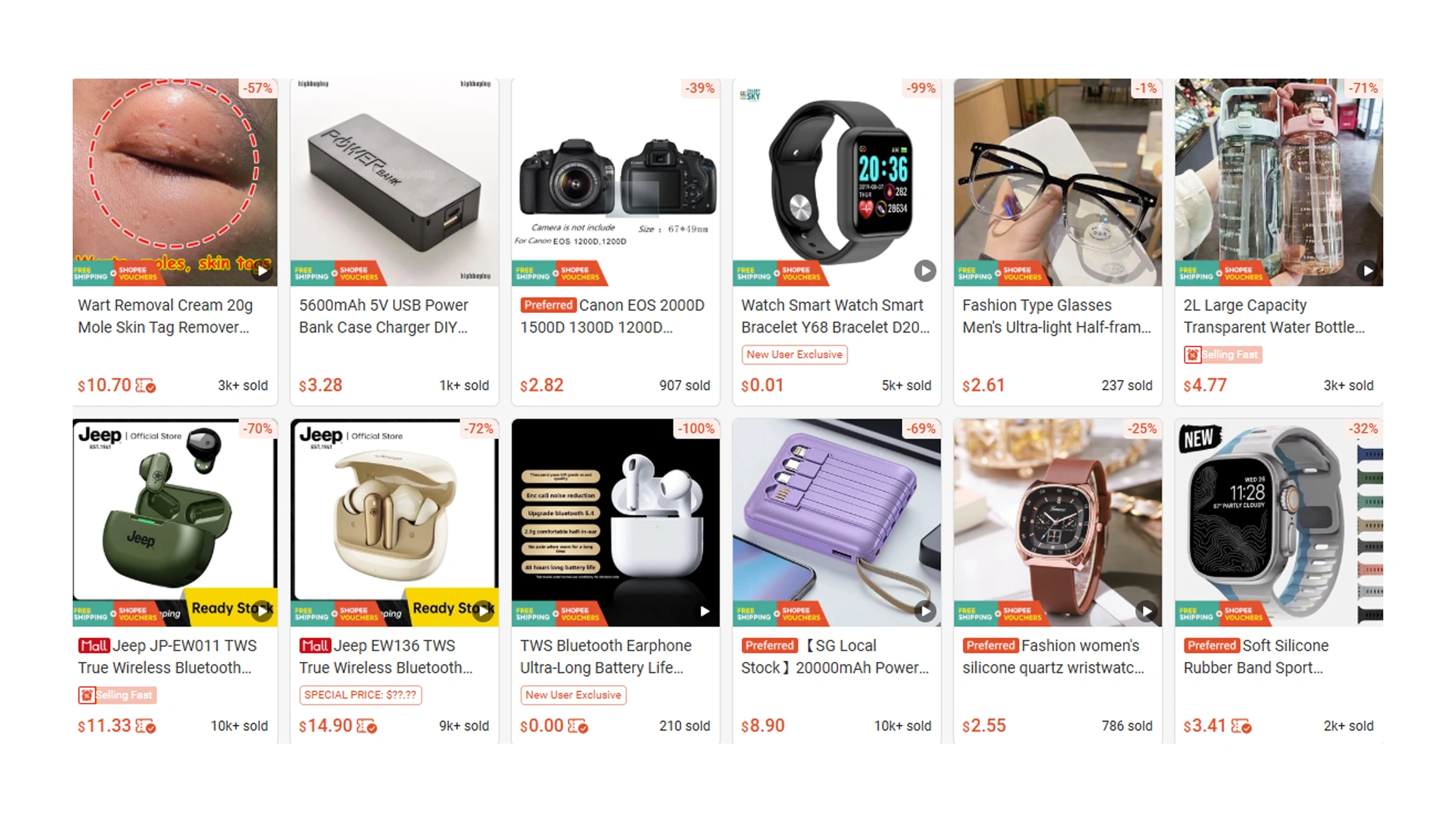
The growth of Shopee illustrates why ecommerce data has become increasingly important for market researchers. Shopee's GMV increased substantially between 2020 and 2025, reflecting greater online shopping activity, broader merchant participation, and stronger marketplace engagement. Sea's official results show GMV rising from US$35.4 billion in 2020 to US$127.4 billion in 2025. For 2026, Sea has guided for approximately 25% year-over-year Shopee GMV growth, which would imply roughly US$159.3 billion if achieved.
| Year | Shopee GMV, US$ Billion | Annual Change |
|---|---|---|
| 2020 | 35.4 | +101% |
| 2021 | 62.5 | +77% |
| 2022 | 73.5 | +18% |
| 2023 | 78.5 | +7% |
| 2024 | 100.5 | +28% |
| 2025 | 127.4 | +27% |
| 2026E | ~159.3 | ~25% |
2026E is an indicative calculation based on Sea Limited's approximately 25% 2026 Shopee GMV growth guidance, not reported full-year GMV.
This expansion creates a larger information environment for businesses to analyze. A growing marketplace means more products, sellers, price points, promotional events, and customer interactions. Research teams can use historical marketplace observations to identify category growth, competitive positioning, pricing gaps, and emerging product opportunities. The ability to collect and organize this information at scale can make ecommerce research more continuous and measurable rather than dependent on occasional manual observations.
Strengthening Market Research with Structured Marketplace Data
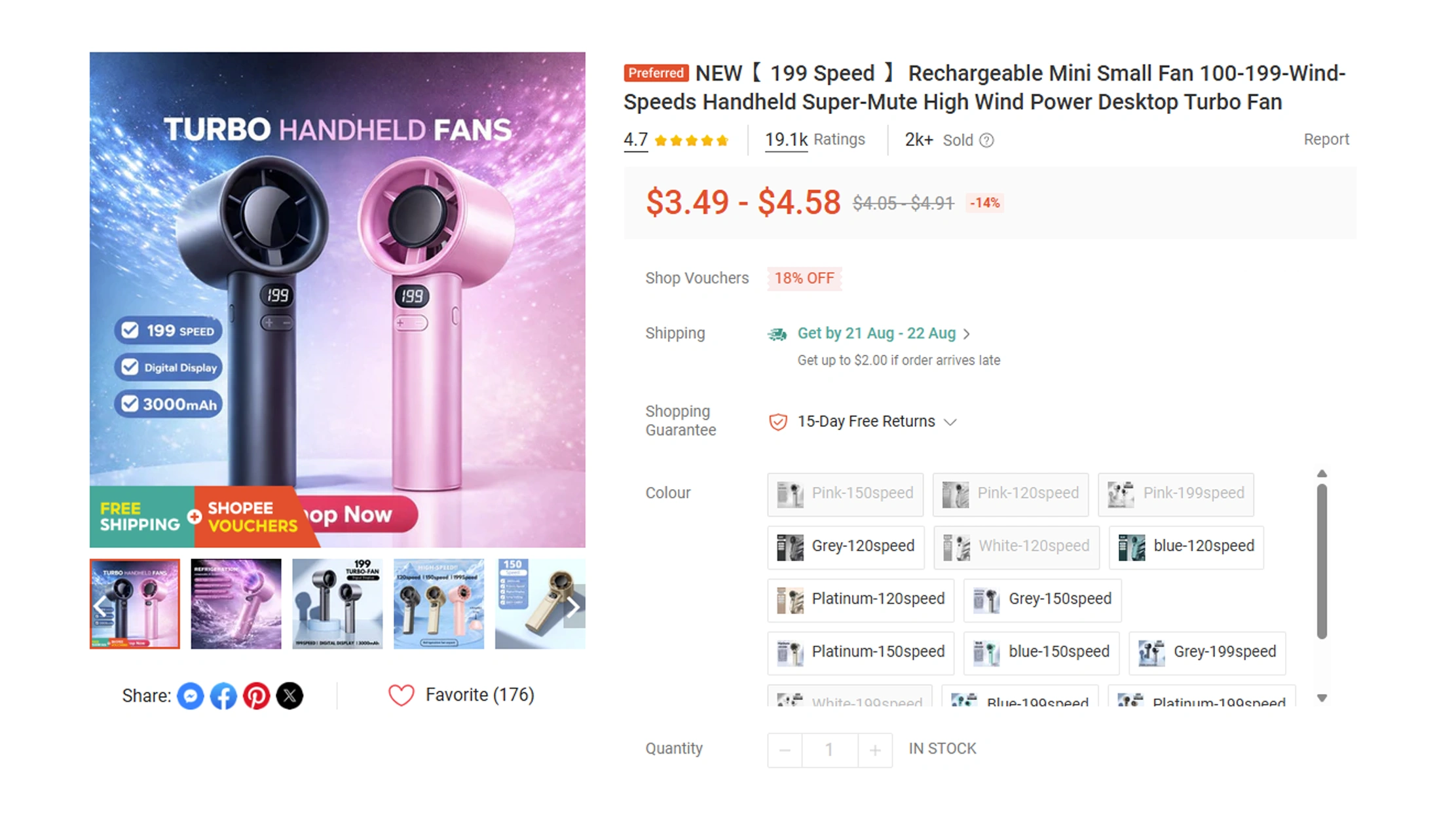
Shopee data extraction for market research can help organizations build a consistent view of products and sellers across ecommerce categories. Instead of researching individual listings manually, businesses can collect product names, prices, brands, seller information, ratings, review counts, discounts, product URLs, availability, and other relevant attributes into structured datasets.
This approach is useful for category-level research because businesses can compare hundreds or thousands of products using the same analytical framework. Researchers can calculate average prices, identify dominant brands, measure assortment breadth, detect highly rated products, and examine how sellers position similar products. Historical collection also allows teams to compare marketplace changes over time.
| Year | Shopee GMV, US$ Billion | Gross Orders, Billion | Approx. GMV Growth |
|---|---|---|---|
| 2020 | 35.4 | 2.8 | 101% |
| 2021 | 62.5 | 6.1 | 77% |
| 2022 | 73.5 | ~7.7 | 18% |
| 2023 | 78.5 | 8.2 | 7% |
| 2024 | 100.5 | 10.9 | 28% |
| 2025 | 127.4 | 13.9 | 27% |
| 2026E | ~159.3 | --- | ~25% |
Historical figures are from Sea Limited; 2026E is based on company guidance.
For market research teams, the commercial value comes from connecting product-level observations with broader market trends. Researchers can determine whether price increases are category-wide or limited to specific sellers, whether assortment is expanding, and which brands are gaining visibility. These insights can support product launches, market-entry strategies, competitive benchmarking, and portfolio decisions. A repeatable extraction pipeline also makes it easier to refresh research datasets as marketplace conditions change.
Capturing Changes in Ecommerce Conditions
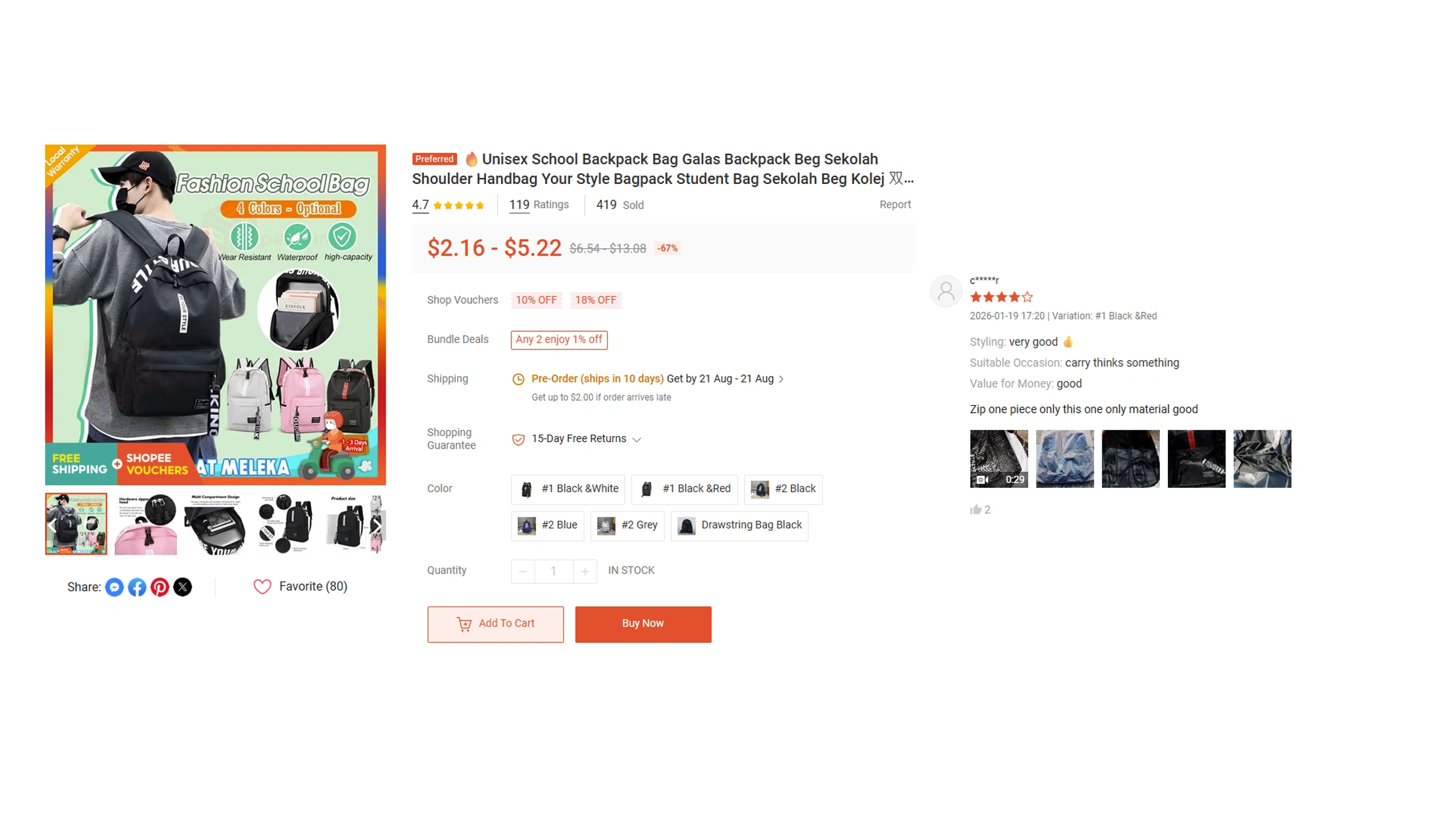
real-time Shopee product data extraction allows businesses to monitor marketplace conditions more frequently instead of relying solely on static research snapshots. This is especially relevant for categories where prices, discounts, inventory status, and seller activity can change quickly.
Real-time or scheduled collection can help identify significant changes in product prices and promotional activity. For example, an ecommerce brand may monitor competing products several times per day and compare current prices against historical records. If a competitor introduces a substantial discount, the business can identify the change quickly and evaluate its potential commercial impact.
| Year | GMV, US$ Billion | Gross Orders, Billion | Average Order Value, Approx. |
|---|---|---|---|
| 2020 | 35.4 | 2.8 | $12.6 |
| 2021 | 62.5 | 6.1 | $10.2 |
| 2022 | 73.5 | ~7.7 | ~$9.5 |
| 2023 | 78.5 | 8.2 | ~$9.6 |
| 2024 | 100.5 | 10.9 | ~$9.2 |
| 2025 | 127.4 | 13.9 | ~$9.2 |
| 2026E | ~159.3 | --- | --- |
Approximate AOV values are calculated from reported GMV and order volume where both metrics are available; 2026E is not a reported full-year result.
The importance of timely monitoring is reinforced by Shopee's continued growth. Sea reported that monthly active buyers increased 15% year over year in 2025, while average monthly purchase frequency increased 10%. Ad-paying sellers also increased more than 20% year over year in the fourth quarter, and average ad spend among those sellers increased more than 45%.
These changes demonstrate why ecommerce intelligence needs to capture both product-level and seller-level signals. Businesses can use regularly refreshed datasets to monitor price movements, promotional campaigns, seller participation, assortment changes, and category competition.
Building Comprehensive Product-Level Research Datasets
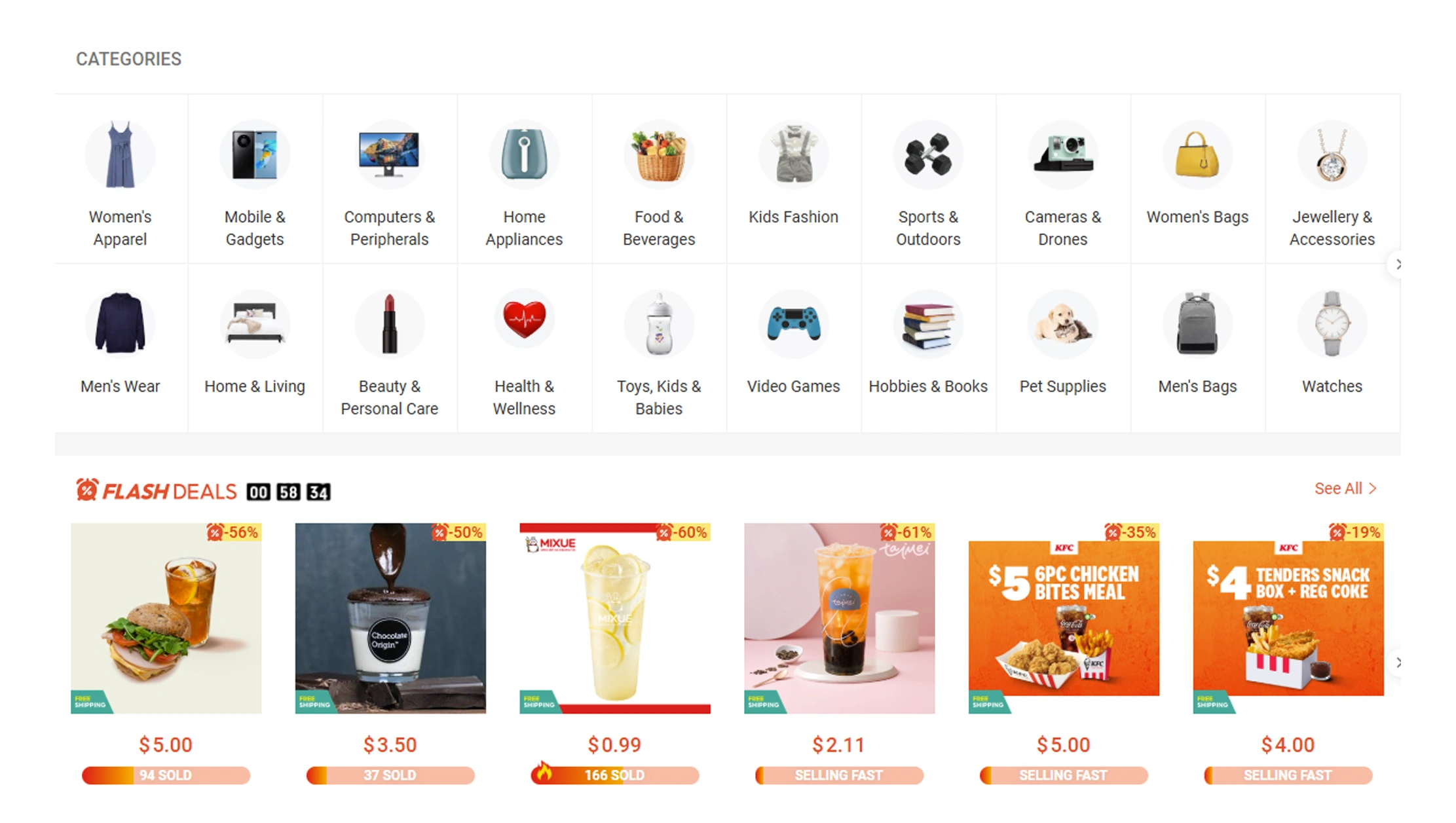
Businesses that extract Shopee product information for ecommerce research can create datasets designed around specific commercial questions. Product information can include titles, descriptions, specifications, brands, categories, prices, discounts, ratings, review counts, seller details, availability, shipping information, and product identifiers where available.
A structured dataset enables comparisons that are difficult to perform through manual browsing. For example, a consumer electronics brand can compare hundreds of competing products based on price, ratings, review volume, and specifications. A fashion company can study product assortment, discount depth, seller concentration, and category positioning. A market research organization can use historical product snapshots to identify emerging brands and changing consumer preferences.
| Year | Shopee GMV Growth | Shopee Orders Growth | Key Marketplace Indicator |
|---|---|---|---|
| 2020 | 101% | 133% | Rapid ecommerce adoption |
| 2021 | 77% | 117% | Strong marketplace expansion |
| 2022 | 18% | --- | Continued scale |
| 2023 | 7% | 6% | Moderating growth |
| 2024 | 28% | 33% | Strong rebound in scale |
| 2025 | 27% | 27.2% | Strong growth and higher engagement |
| 2026E | ~25% | --- | Continued growth target |
Growth figures are based on Sea Limited's reported Shopee metrics where available; 2026E reflects company GMV guidance.
The resulting dataset can support market sizing, assortment analysis, competitive benchmarking, price segmentation, product discovery, and category research. Historical snapshots are particularly valuable because they reveal how product portfolios change rather than showing only the current marketplace.
For research teams, the objective should be to maintain consistent fields and timestamps across collection cycles. This makes it possible to calculate price changes, monitor product availability, track seller movements, and identify newly introduced or removed products. When combined with analytics tools, structured product data can become a foundation for dashboards and automated market intelligence.
Improving Competitive Pricing Visibility
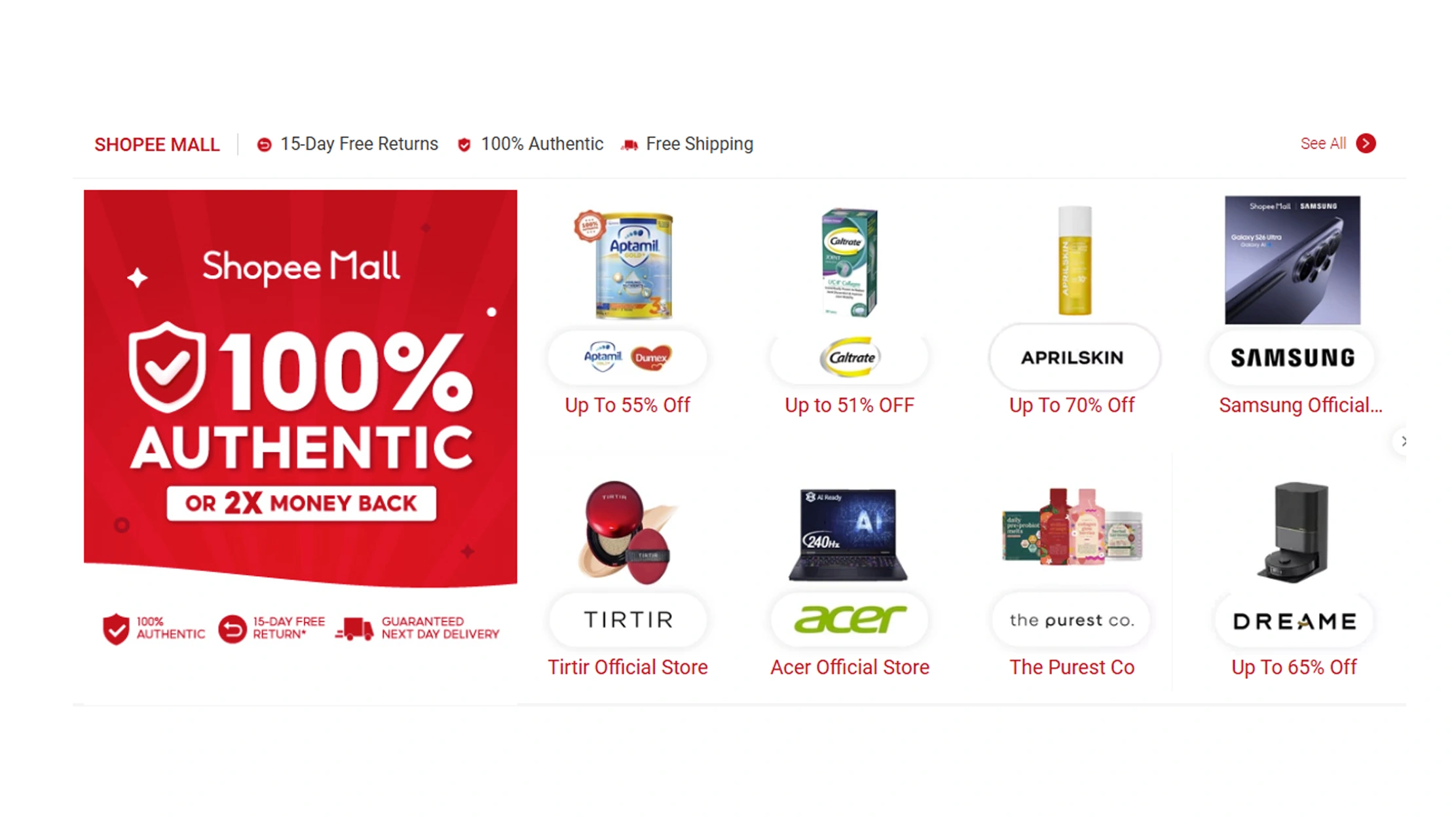
A Shopee web data scraper for competitor pricing can help businesses establish a systematic pricing intelligence workflow. Competitive pricing research requires more than identifying the cheapest listing; it requires comparing similar products, seller positioning, discount levels, ratings, promotional activity, and changes over time.
Historical pricing observations can reveal whether a competitor consistently maintains a lower price or whether discounts are temporary. Businesses can also calculate price indexes for selected product groups and compare their own pricing position against marketplace benchmarks.
| Year | Shopee GMV, US$ Billion | YoY Growth | Competitive Research Implication |
|---|---|---|---|
| 2020 | 35.4 | 101% | Rapidly expanding online competition |
| 2021 | 62.5 | 77% | More sellers and products entering digital channels |
| 2022 | 73.5 | 18% | Greater importance of differentiation |
| 2023 | 78.5 | 7% | Greater focus on efficiency and conversion |
| 2024 | 100.5 | 28% | Renewed marketplace expansion |
| 2025 | 127.4 | 27% | Stronger competition and monetization |
| 2026E | ~159.3 | ~25% | Continued pressure to optimize pricing |
2026E is based on Sea Limited's stated annual GMV growth target.
Price monitoring becomes particularly valuable during major promotional periods. A business can compare pre-promotion prices with campaign prices, assess competitor discount depth, and determine whether price reductions are isolated or market-wide. These observations can inform promotional planning, minimum advertised price monitoring, and pricing strategy.
Competitive intelligence can also extend beyond price. Seller ratings, review volume, fulfillment information, product availability, and assortment breadth provide additional context. A competitor offering a slightly higher price may still perform strongly because of better ratings, stronger reviews, faster fulfillment, or superior product specifications. Combining multiple attributes therefore produces a more complete view of competitive positioning.
Scaling Research Across Categories and Markets
Businesses can use Shopee Web Scraping workflows to collect structured marketplace information across selected categories, sellers, brands, and geographic markets. When applied consistently, Shopee web scraping for ecommerce research can support a broad range of analytical applications, including pricing intelligence, product discovery, seller benchmarking, assortment analysis, and category monitoring.
The scale of Shopee's marketplace makes automation increasingly important. Sea reported 13.9 billion gross orders in 2025, up 27.2% from 10.9 billion in 2024. Shopee also reported around 400 million active buyers and 20 million sellers during 2025.
| Year | GMV, US$ Billion | Gross Orders, Billion | Reported Growth |
|---|---|---|---|
| 2020 | 35.4 | 2.8 | GMV +101% |
| 2021 | 62.5 | 6.1 | GMV +77% |
| 2022 | 73.5 | --- | GMV +18% |
| 2023 | 78.5 | 8.2 | GMV +7% |
| 2024 | 100.5 | 10.9 | GMV +28%; orders +33% |
| 2025 | 127.4 | 13.9 | GMV +27%; orders +27.2% |
| 2026E | ~159.3 | --- | GMV target ~25% growth |
2026E is an indicative calculation based on Sea's 2026 guidance.
A scalable extraction system can help research teams standardize fields, schedule recurring collection, preserve historical snapshots, and feed information into analytical databases. This is useful for organizations monitoring hundreds or thousands of products rather than a small manually selected sample.
The resulting data can be segmented by category, brand, seller, price range, rating, discount level, or geographic market. Analysts can then identify category leaders, emerging products, price clusters, seller concentration, and changes in marketplace positioning. Such intelligence can help ecommerce businesses make faster decisions around assortment, pricing, product development, and market expansion.
Understanding Customers Through Marketplace Feedback
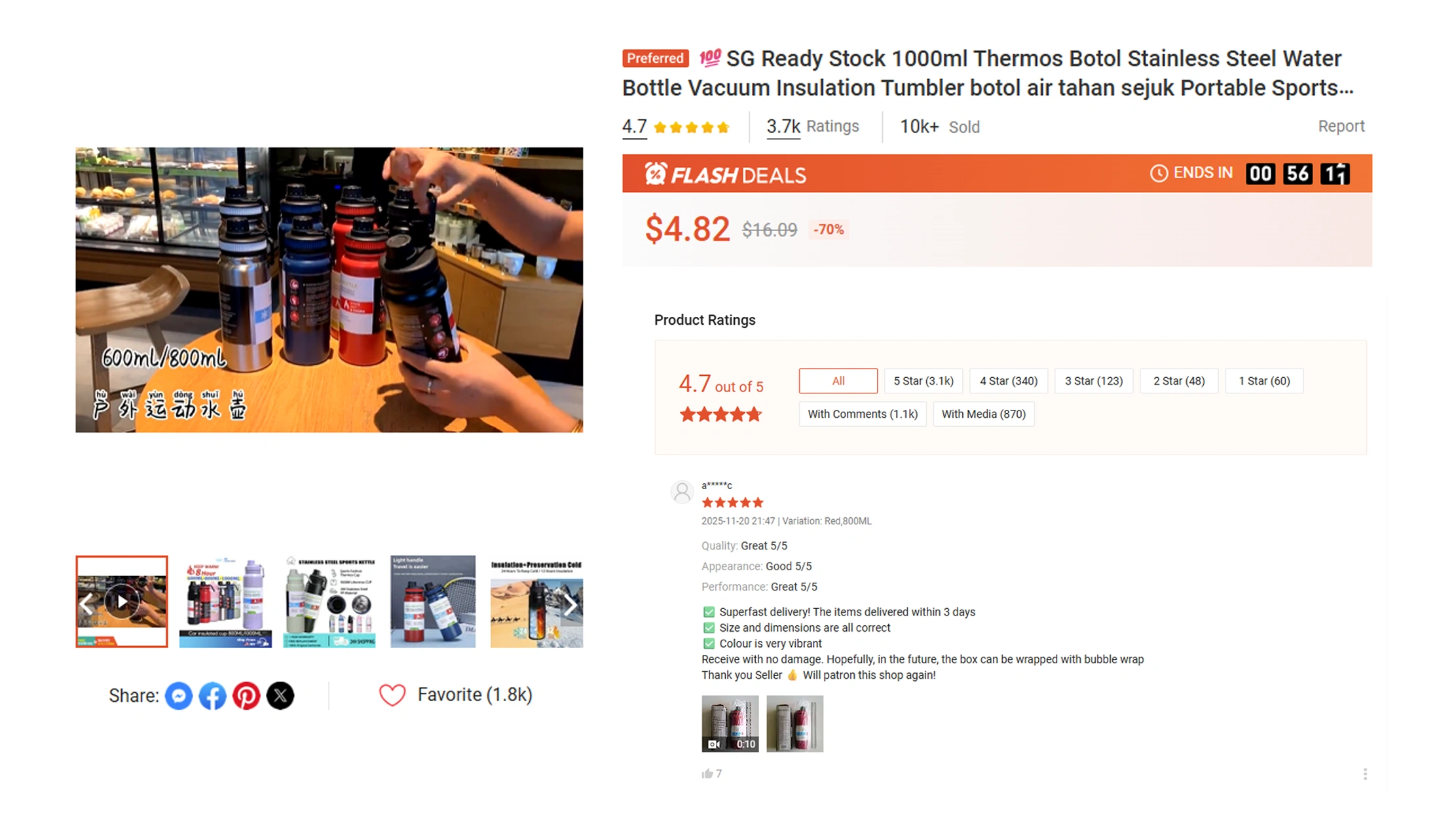
Shopee Product and Review Datasets can provide another important layer of ecommerce intelligence. Product attributes explain what businesses are selling, while reviews can provide signals about how customers perceive those products. Combining both datasets allows businesses to study the relationship between product characteristics, pricing, ratings, and customer sentiment.
A review dataset can contain available review text, ratings, review dates, product identifiers, seller information, and other relevant fields. Researchers can analyze recurring themes such as product quality, packaging, delivery experience, sizing, durability, functionality, or value for money. Aggregating these observations across products can reveal common customer concerns and areas where competitors may have an advantage.
| Year | Shopee GMV, US$ Billion | Active Buyer Trend | Marketplace Research Opportunity |
|---|---|---|---|
| 2020 | 35.4 | Rapid expansion | Identify emerging online categories |
| 2021 | 62.5 | Strong growth | Track new products and sellers |
| 2022 | 73.5 | Continued expansion | Benchmark category competition |
| 2023 | 78.5 | Broader adoption | Analyze product differentiation |
| 2024 | 100.5 | Strong growth | Expand pricing and review intelligence |
| 2025 | 127.4 | Buyers +15% YoY | Combine product, seller, and review signals |
| 2026E | ~159.3 | Continued growth expected | Build continuous marketplace intelligence |
2025 buyer growth is reported by Sea Limited; 2026E GMV is based on company guidance.
Review analytics can become especially valuable when combined with competitor pricing and product specifications. For instance, a product priced below the category average but receiving repeated complaints about durability may represent a different competitive proposition from a higher-priced product with consistently positive quality feedback.
This type of analysis can support product improvement, customer experience research, competitive benchmarking, and new-product planning. Historical review datasets can also help identify whether customer sentiment improves or deteriorates following product revisions, pricing changes, or seller changes.
Why Choose Real Data API?
Real Data API can help organizations build structured ecommerce data workflows around specific research requirements. Extract Shopee customer reviews can be part of a broader product and marketplace intelligence strategy, enabling businesses to analyze customer feedback alongside product attributes, pricing, ratings, seller information, and category data.
For companies investing in Shopee web scraping for ecommerce research, the main advantage is the ability to move from fragmented manual observations toward repeatable data collection. Real Data API can support structured extraction workflows designed for research, competitive intelligence, product monitoring, pricing analysis, and historical dataset creation.
A strong ecommerce data pipeline should preserve consistent fields, timestamps, product identifiers, seller information, and other relevant attributes so that datasets collected at different points can be compared. This creates a historical layer that can reveal product launches, price changes, assortment shifts, seller movements, and customer sentiment trends.
Real Data API can also help businesses transform marketplace information into analysis-ready datasets for dashboards, business intelligence platforms, research reports, and internal analytics systems. Instead of treating marketplace data as a one-time research exercise, businesses can develop recurring workflows that support ongoing commercial decision-making.
Conclusion
The continued expansion of marketplace commerce is creating a growing need for reliable, structured, and continuously refreshed ecommerce intelligence. Shopee's GMV reached US$127.4 billion in 2025, up 27% year over year, while gross orders reached 13.9 billion. Sea Limited has also targeted approximately 25% Shopee GMV growth for 2026, highlighting the continued scale and commercial importance of the platform.
For brands, retailers, manufacturers, researchers, and ecommerce technology companies, Shopee web scraping for ecommerce research can provide a practical framework for analyzing product assortments, prices, sellers, ratings, reviews, promotions, and competitive positioning. Historical datasets can reveal how these signals change over time, while regularly refreshed extraction can help organizations respond more quickly to marketplace developments.
Product-level data can support assortment optimization, pricing intelligence, competitor monitoring, category research, and product discovery. Review datasets can add customer sentiment and product-quality signals, creating a more comprehensive picture of marketplace performance.
Connect with Real Data API to build structured product, pricing, seller, and review datasets for competitive research and smarter business decisions!
Latest posts
HungerStation Food Data Scraping for Restaurant Market Research - Key Benefits and Insights
Shopee API for Competitive Pricing Optimization - How Seller Data Analysis Improves Product Price Tracking
BigBasket scraper for competitor price analysis - How to Identify Price Gaps and Improve Pricing Decisions

How Carrefour API Solutions for Retail Data Integration Improve Business Intelligence






.png)