TL;DR
- Harrods is a leading luxury retailer with a vast online catalog, making its data valuable for retail and market intelligence.
- A Harrods scraper can extract product details, pricing, categories, images, and availability.
- A Harrods API provides structured data for easier integration with analytics, dashboards, and e-commerce platforms.
- Harrods datasets offer ready-to-use data for market research, competitive analysis, pricing studies, and machine learning.
Introduction
Few retail names carry the same weight as Harrods. Sitting on Brompton Road in Knightsbridge, London, this iconic department store has spent more than 175 years building a reputation as the pinnacle of luxury retail. From its opulent Egyptian Hall to its sprawling food halls and designer boutiques, Harrods is more than a shopping destination — it's a cultural landmark that draws millions of visitors every year from across the globe.
For businesses, analysts, and researchers, Harrods also represents something else entirely: a goldmine of retail data. As e-commerce and competitive intelligence become central to how brands operate, interest in Harrods store data scraping, Harrods datasets, and Harrods API access has grown steadily among data teams, market researchers, and e-commerce platforms looking to understand luxury retail trends at scale.
This article explores what makes Harrods the world's leading luxury department store, and how businesses are increasingly turning to a Harrods scraper or structured Harrods API integration to extract valuable pricing, product, and inventory intelligence from its vast catalog.
A Brief History of Harrods: Why This Legacy Retailer Is Now a Prime Target for Data Scraping
Harrods was founded in 1834 by Charles Henry Harrod, initially as a small grocery business in London's East End. It wasn't until the store relocated to Knightsbridge that it began its transformation into the retail giant we recognize today. By the early 20th century, Harrods had already introduced innovations like England's first moving staircase (escalator) and had built a reputation for stocking virtually anything a customer could want — famously living up to its old motto, "Omnia Omnibus Ubique" (All Things for All People, Everywhere).
Today, Harrods spans over one million square feet across seven floors, housing more than 330 departments. It's owned by Qatar Holding LLC, having been acquired from Mohamed Al-Fayed in 2010, and continues to be regarded as a benchmark for luxury retail worldwide — and a benchmark for Harrods store data scraping among retail intelligence teams.
What Makes Harrods the World's Leading Luxury Department Store (And a Rich Source for Harrods Data Extraction)
1. Unmatched Product Range Fueling Demand for Harrods Scraper Tools
Harrods offers an extraordinary breadth of luxury goods — from haute couture fashion, fine jewelry, and Swiss watches to gourmet food, home décor, and rare collectibles. Its curated selection includes both heritage luxury houses and emerging designers, making it a trendsetter rather than a follower in the luxury retail space, and a prime candidate for Harrods store data scraping.
2. The Iconic Food Halls: A Category Ripe for Harrods Store Data Scraping
The Harrods Food Halls are legendary in their own right, featuring ornate Art Nouveau tiling and offering everything from fresh seafood and artisanal chocolates to rare teas and champagne. These halls alone attract food enthusiasts and tourists who come purely for the visual and culinary experience — and generate product data frequently pulled through Harrods store data scraping efforts.
3. Personalized Luxury Shopping Experience Behind the Data a Harrods API Can Reveal
Harrods has invested heavily in personal shopping services, private suites, and bespoke customer experiences tailored to high-net-worth individuals. This white-glove approach to retail has helped the brand maintain its exclusivity even as luxury shopping increasingly moves online.
4. Global Brand Recognition Reflected in Harrods Datasets
Harrods' iconic green shopping bags and gold signage are recognized worldwide, making it not just a store but a global luxury brand in its own right — one that extends into perfumes, homeware collections, and licensed products sold internationally, all trackable through structured Harrods datasets.
5. Digital Transformation: The Foundation for Harrods Scraper and Harrods API Solutions
In recent years, Harrods has significantly expanded its online presence, offering a comprehensive E-Commerce Datasets platform that mirrors the diversity of its physical store. This digital expansion has opened new doors for data analysts and businesses interested in tracking Harrods' online catalog, pricing structure, and product availability through tools like a dedicated Harrods scraper or third-party Harrods API solutions.
Why Businesses Are Interested in Harrods Store Data Scraping
As Harrods' digital footprint grows, so does the demand for structured, accurate, and up-to-date data from its website. Businesses across retail, market research, fashion analytics, and price intelligence sectors are increasingly exploring Harrods store data scraping to gain a competitive edge. Here's why:
Competitive Price Monitoring Through Harrods Store Data Scraping
Luxury retailers frequently adjust pricing based on seasonality, demand, and exclusivity. Competitors and market analysts use Harrods store data scraping techniques to monitor pricing trends across categories like fashion, beauty, and accessories, helping them benchmark their own strategies against a market leader.
Product Assortment Analysis Using a Harrods Scraper
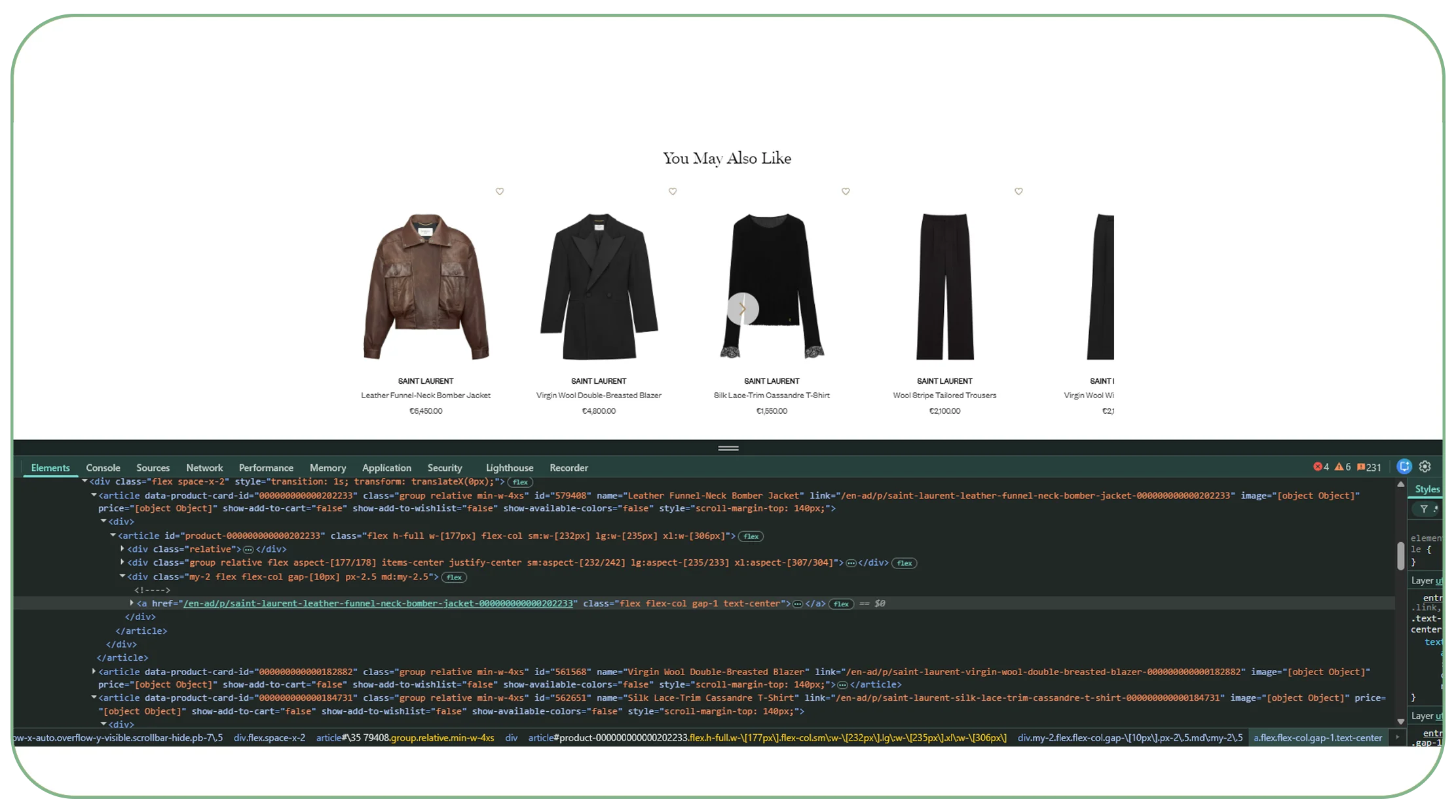
Understanding what Harrods stocks — and how frequently its catalog changes — offers valuable insight into luxury retail trends. A well-built Harrods scraper can extract details such as product names, categories, brand listings, descriptions, and images, giving analysts a clear view of assortment strategy.
Inventory and Availability Tracking via Harrods Luxury Department Store Data Extraction
For resellers, aggregators, and luxury marketplaces, knowing what's in stock (and what sells out quickly) is critical business intelligence. Harrods luxury department store data extraction can reveal patterns in demand, helping partners and competitors anticipate which products or brands are trending.
Brand and Designer Insights from Harrods Store Data Scraping
Harrods works with hundreds of luxury brands. Extracting structured data on which designers are featured, how their products are priced, and how they're positioned within the store's website can help brand managers and marketing teams understand positioning within the luxury retail hierarchy.
Building Harrods Datasets for Research
Academic researchers, retail consultants, and data science teams often seek pre-structured Harrods datasets for trend analysis, pricing studies, or machine learning applications related to luxury consumer behavior. Rather than manually collecting information, many turn to data providers who specialize in structured, ready-to-use retail datasets.
Harrods Scraper: How It Works
A Harrods scraper is typically a custom-built or configurable tool designed to systematically collect publicly available information from the Harrods website. This can include:
- Product titles and SKUs
- Pricing information (including discounts and currency variations)
- Category and subcategory listings
- Product descriptions and specifications
- Image URLs
- Stock availability status
- Customer ratings and reviews (where publicly displayed)
Modern Ecommerce Scraping API solutions are built to handle large-scale extraction while respecting rate limits and website structure changes. Because luxury retail sites like Harrods often update their layouts, pricing, and product listings frequently, an effective Harrods scraper needs to be adaptable, well-maintained, and capable of processing dynamic content rendered through JavaScript.
Businesses that don't want to build and maintain their own in-house solution often turn to professional data extraction services that specialize in Harrods store data scraping, ensuring consistent, accurate, and compliant data delivery.
Harrods API: A Structured Alternative to Manual Scraping
While scraping is a common method for extracting data, some businesses prefer working with a Harrods API — either an official integration (where available for specific partnership or affiliate purposes) or a third-party API layer built on top of scraped and structured data.
An API-based approach to accessing Harrods product and pricing data offers several advantages:
- Structured, consistent data format (typically JSON or XML)
- Easier integration into existing business intelligence tools, dashboards, or e-commerce platforms
- Scheduled updates for real-time or near-real-time pricing and inventory changes
- Reduced technical overhead compared to maintaining a custom scraper
- Scalability for businesses needing to pull large volumes of product data regularly
For companies building price comparison tools, luxury fashion aggregators, or retail analytics dashboards, a well-structured Harrods API integration can significantly reduce development time while ensuring data reliability.
Harrods Datasets: Ready-Made Retail Intelligence Without Building Your Own Scraper
For teams that don't need continuous, real-time data but instead want a snapshot of Harrods' catalog for analysis, pre-collected Harrods datasets offer a practical alternative. These datasets are often used for:
- Market research reports on luxury retail trends
- Academic studies on consumer behavior and luxury pricing
- Machine learning model training for fashion recommendation systems or price prediction algorithms
- Competitive benchmarking across multiple luxury retailers
- Historical trend analysis of pricing and assortment changes over time
Datasets can be customized based on category (e.g., fashion, beauty, home goods), time period, or specific data fields required, making them a flexible option for businesses that need structured Harrods data without building their own extraction pipeline.
Use Cases Across Industries for Harrods Scraper, API, and Dataset Solutions
E-Commerce and Retail: Harrods Luxury Department Store Data Extraction in Action
Online retailers and marketplaces use Harrods luxury department store data extraction to benchmark their own product offerings, identify gaps in their catalog, and adjust pricing strategy in response to luxury market movements.
Fashion Analytics Platforms Powered by Harrods Datasets
Companies specializing in fashion trend forecasting rely on structured data from leading retailers like Harrods to identify which brands, styles, and categories are gaining traction.
Price Comparison Tools Built on a Harrods Scraper or Harrods API
Platforms that help consumers compare luxury goods pricing across retailers depend on consistent, accurate data pulled via a Harrods scraper or Harrods API to keep their comparisons current.
Investment and Market Research Using Harrods Store Data Scraping Insights
Financial analysts and investment researchers studying the luxury retail sector often incorporate Harrods store data scraping insights into broader reports on consumer spending patterns and luxury market health.
Academic and Consumer Behavior Research Relying on Harrods Datasets
Universities and independent researchers studying luxury consumption, pricing psychology, or retail merchandising strategies frequently request structured Harrods datasets to support their studies.
Ethical and Compliant Harrods Store Data Scraping
It's worth noting that any Harrods store data scraping or data extraction effort should be conducted responsibly and in compliance with the website's terms of service, applicable data protection regulations, and general Web Scraping API best practices. Reputable data extraction providers prioritize:
- Respecting robots.txt and rate-limiting guidelines
- Extracting only publicly available information
- Avoiding personal or sensitive customer data
- Maintaining transparency in data usage for research or business purposes
Businesses looking to work with Harrods datasets or build a Harrods API integration are encouraged to work with experienced data partners who understand both the technical and compliance aspects of large-scale retail data extraction.
The Future of Harrods Scraper Technology, API Access, and Retail Data Intelligence
As Harrods continues to expand its digital footprint and refine its luxury e-commerce experience, the demand for reliable, structured data from its platform will likely continue to grow. Whether through a custom-built Harrods scraper, a dedicated Harrods API, or curated Harrods datasets, businesses across retail, research, and technology sectors will keep looking to this iconic store not just for luxury shopping inspiration — but for the valuable market intelligence hidden within its ever-evolving catalog.
Conclusion: Harrods Scraper, API, and Dataset Solutions for the Future of Luxury Retail Intelligence
Harrods has earned its title as the world's leading luxury department store through more than a century and a half of innovation, exclusivity, and an unwavering commitment to offering "all things for all people, everywhere." Beyond its physical grandeur and iconic status, Harrods has also become a significant source of retail data valuable to businesses worldwide.
From Harrods store data scraping and Harrods luxury department store data extraction to structured Harrods API access and curated Harrods datasets, Real Data API provides businesses with reliable ways to access and utilize the wealth of information this retail giant generates. As the luxury e-commerce landscape continues to evolve, those who can effectively harness this data will be well-positioned to understand — and compete within — the ever-shifting world of high-end retail.
FAQs
What is a Harrods scraper?
A tool that extracts publicly available product and catalog data from the Harrods website.
What data can a Harrods scraper collect?
Product names, SKUs, prices, categories, descriptions, images, and stock availability.
What is a Harrods API?
An API provides structured Harrods-related data that can be integrated into business tools, dashboards, and platforms.
What are Harrods datasets used for?
They can support market research, price analysis, competitive benchmarking, trend analysis, and machine learning.
Latest posts
How Target API Simplifies Product, Price, Category, Inventory & Retail Data Collection for Retail Intelligence
How Pull & Bear Fashion Dataset Solves Fashion Intelligence Challenges Across Products, Prices, Categories, and Apparel Trends?
How Levi's Fashion Dataset Improves Fashion Intelligence Across Products, Prices, Categories, and Denim Market Trends?
How Myntra Fashion Dataset Solves Fashion Intelligence Challenges Across Products, Prices, Brands, and Fashion Market Trends?






.png)