.gif)
.jpg)
Quick Summary
- Integrate Expedia API into a travel booking platform to connect supported travel inventory, accommodation searches, pricing, availability, and reservation workflows through authorized API access.
- Expedia Travel Data Scraping and structured travel data analysis can support market research when collection is permitted, while official APIs are the preferred route for live booking transactions.
- Expedia Group's annual gross bookings increased from $36.8 billion in 2020 to $119.6 billion in 2025. Its 2026 outlook provides further context for travel-platform planning, but does not guarantee individual business results.
Introduction
Travelers expect digital booking platforms to deliver relevant accommodation options, clear prices, current availability, and a straightforward reservation process. Integrate Expedia API into a travel booking platform to build an authorized connection with Expedia Group's travel inventory and supported booking functionality. Depending on the product and partnership agreement, developers can use Expedia Group's Rapid APIs to build lodging, car rental, flight, and activity experiences. The available endpoints and commercial permissions depend on the specific integration.
Expedia Travel Data Scraping represents a separate data-collection concept, generally associated with gathering travel-related information for analysis. It should not be confused with a booking API. Live rates, availability, payment options, and reservations require the appropriate authorized transactional access; automated collection from Expedia websites should not be assumed to be permitted.
Expedia Group's financial results provide useful context for understanding the scale of its travel marketplace. Gross bookings grew from $36.8 billion in 2020 to $119.6 billion in 2025, reflecting recovery and subsequent expansion across the company's business. These figures indicate the scale of transactions processed by Expedia Group, not the results a new travel platform can expect from an integration.
For Real Data API, an effective implementation strategy should focus on the right API product, reliable data mapping, accurate price confirmation, secure booking workflows, and clear error handling. The following sections examine the historical numbers, integration process, data quality, and implementation considerations that can help travel businesses plan responsibly.
How Has Expedia Group's Business Changed Between 2020 and 2026?
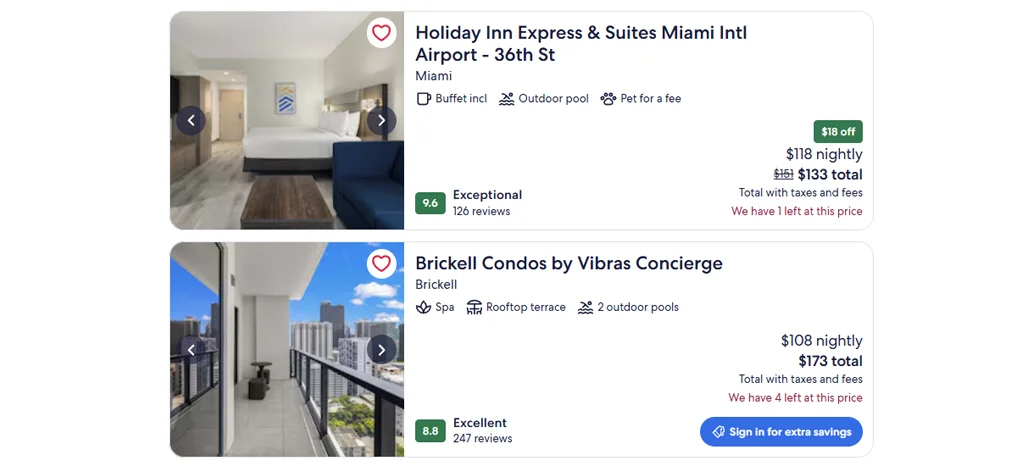
Travel platforms operate in a market where demand can change rapidly because of public-health events, economic conditions, consumer preferences, and international travel patterns. An Expedia web data scraper for hotel research may be considered for permitted market research, but authorized APIs, licensed datasets, and official financial reports are more appropriate sources for transactional or company-wide facts.
Expedia Group's financial reporting shows a sharp contraction in 2020 followed by several years of recovery. Gross bookings rose from $36.796 billion in 2020 to $72.425 billion in 2021 and $95.049 billion in 2022. Growth continued in 2023 and 2024, followed by another increase in 2025. The company reported 415.4 million booked room nights for 2025, compared with 383.9 million in 2024. These measures illustrate business scale and demand trends, rather than a direct measure of API efficiency.
| Year | Expedia Group gross bookings (US$ billions) | Status |
|---|---|---|
| 2020 | 36.8 | Reported actual |
| 2021 | 72.4 | Reported actual |
| 2022 | 95.0 | Reported actual |
| 2023 | 104.1 | Reported actual |
| 2024 | 110.9 | Reported actual |
| 2025 | 119.6 | Reported actual |
| 2026 | 127–129 | Company full-year outlook, not actual results |
Sources: Expedia Group's 2020 results, 2022 results, 2023 results, 2024 results, and 2025 results and 2026 outlook.
The 2026 range is management guidance published in February 2026, not a completed-year result. It should therefore be presented separately from historical actuals. For platform operators, this history supports planning for demand fluctuations, inventory changes, and seasonal search volumes. It does not establish that a particular integration will improve conversion rates or reduce costs by a specific percentage. Those outcomes must be measured through the platform's own performance data.
Which Integration Components Make the Booking Journey More Efficient?
Expedia API integration for travel booking starts with selecting the correct API product and mapping its capabilities to the customer journey. Expedia Group's Rapid Lodging API documentation describes a modular workflow covering property content, geography, shopping, price checking, booking, and itinerary retrieval. Other Rapid products support additional travel categories, depending on access and availability.
The first stage is property discovery. A platform can use supported content and geography endpoints to match search destinations with relevant properties. Expedia Group states that property catalog content requires daily refreshes, making scheduled content synchronization an important part of implementation. During shopping, the platform submits stay dates, occupancy, and relevant property identifiers to obtain available room options, rates, fees, and cancellation terms.
Before confirming a reservation, the workflow must validate the selected price. The Lodging API uses a price-check process to confirm whether the rate still matches the shopping result. If the price has changed, the platform should display the updated information and allow the traveler to make an informed decision.
| Integration component | Main responsibility | Efficiency consideration |
|---|---|---|
| Property content | Retrieve property names, addresses, and supported attributes | Keep static content refreshed |
| Geography | Match destinations to supported regions and properties | Improve destination-search accuracy |
| Shopping | Request available rooms and rates for travel dates | Use relevant search criteria |
| Price check | Confirm the selected rate before booking | Reduce price-mismatch surprises |
| Booking | Submit a valid reservation request | Handle errors and retries safely |
| Itinerary retrieval | Confirm reservation details and status | Support customer service and post-booking tasks |
Source: Expedia Group Rapid Lodging API overview.
A modular implementation helps teams test each stage independently and identify where errors occur. It can also reduce unnecessary calls when the platform reuses valid content or follows documented request flows. However, performance depends on API response times, network reliability, application design, partner configuration, and the complexity of the booking journey. The platform should benchmark its own search latency, price-check success, booking completion, and error rates instead of assuming an improvement in advance.
How Can Travel Data Be Collected and Managed Responsibly?
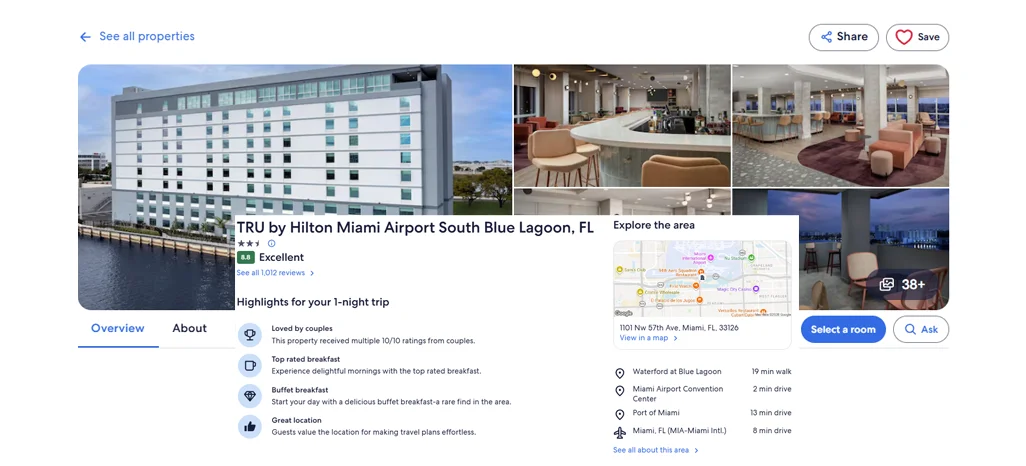
Expedia travel data scraping services may be relevant when a business needs permitted information for market research, such as analyzing destination coverage, property attributes, or changes in publicly available travel content. However, scraping a website is not interchangeable with using an authorized API, and automated access must comply with Expedia's applicable terms, permissions, and legal requirements.
For transactional workflows, an approved API is the appropriate way to request current availability, rates, and reservation actions. For research and benchmarking, teams should first determine whether the required fields are available through an authorized API, licensed provider, or another permitted source. They should not assume that public visibility means automated collection or reuse is unrestricted.
A well-managed travel data process should define the scope before collection. Important fields may include property identifiers, destination mappings, accommodation attributes, currency, retrieval timestamps, and source details where permitted. For live booking flows, rate conditions and cancellation policies should be handled according to the API documentation rather than reconstructed from old snapshots.
| Data-management requirement | Recommended practice | Business value |
|---|---|---|
| Source authorization | Verify access rights and intended use | Reduces compliance uncertainty |
| Data freshness | Schedule refreshes according to field requirements | Limits outdated content |
| Currency and fees | Preserve currency and applicable rate conditions | Makes price presentation clearer |
| Data validation | Check missing fields and inconsistent identifiers | Improves reliability |
| Retention | Store only information needed for the agreed purpose | Limits unnecessary data exposure |
| Documentation | Record source, timestamps, and transformation rules | Supports traceability |
Travel prices and availability are dynamic. A stored rate can become stale after a short period, so a research dataset should not be used as the source of truth for an active booking. For an actual reservation, the platform must follow the official shopping, price-check, and booking sequence.
Real Data API projects should establish a clear boundary between permitted market research and live transactional operations. That distinction helps ensure that data is used for its intended purpose and that customers receive accurate booking information.
Explore a structured travel-data workflow for research, inventory discovery, and authorized booking integration.
Get Insights Now!What Should Developers Test Before Releasing a Booking Platform?
An Expedia web data scraper for hotel research and an Expedia API integration serve different functions, so testing should match the actual product being delivered. A research workflow needs checks for source permissions, data coverage, duplicate records, and freshness. A booking integration requires additional end-to-end tests for rate validation, guest details, payment handling, reservation status, cancellations, and retrieval.
One of the most important engineering considerations is handling uncertain booking responses. Expedia's official guidance warns that a missing response does not necessarily mean a booking failed: a network interruption or gateway timeout can occur after the reservation request has reached the supplier. Blindly retrying such a request may risk duplicate actions or confusion about the reservation's status.
Developers should therefore implement documented error-handling logic and use the API's supported retrieval or recovery mechanisms. A booking should not be marked failed solely because the client did not receive an immediate response. The platform should reconcile the transaction using the appropriate itinerary and status information.
| Test area | What to verify | Expected result |
|---|---|---|
| Search | Valid dates, occupancy, and destination | Relevant results returned or a clear empty state |
| Rate changes | Price-check response differs from shopping result | Updated price shown before confirmation |
| Timeouts | Request completes but response is interrupted | Status reconciled before any retry |
| Payment | Supported payment method and validation | Clear, secure payment flow |
| Reservation | Booking response and itinerary retrieval | Accurate confirmation details |
| Cancellation | Applicable policy and supported action | Correct status and user communication |
| Content updates | Property information refreshed as required | Fewer outdated details |
Source: Expedia Group guidance on handling booking requests.
Testing should include normal cases and failure scenarios. For example, the team should test unavailable rooms, changed prices, invalid guest details, rate limits, interrupted network connections, and booking responses that arrive later than expected. Observability tools should record request identifiers, response categories, timing, and relevant errors without unnecessarily logging payment details or sensitive guest information.
A release should be judged by measurable results: search response time, successful price checks, booking completion, error frequency, and customer-support incidents. These metrics provide a defensible way to assess whether the integration improves the actual booking experience.
How Can a Structured Travel Dataset Support Better Search and Decisions?
An Expedia Travel Dataset can organize permitted property information into a consistent format for destination research, content management, and analytical reporting. Depending on the access route and applicable terms, a dataset may include property identifiers, names, locations, accommodation attributes, supported amenities, and timestamps. Transactional information such as current room availability and rates should be retrieved through the appropriate authorized API workflow.
Structured records make it easier to compare properties, identify missing attributes, and map destinations consistently. A travel platform can use normalized location fields to improve filtering and reduce duplicate property listings. Analysts can also examine coverage by region or accommodation type, provided that the dataset's scope is clearly documented.
| Dataset field | Example purpose | Data-quality check |
|---|---|---|
| Property ID | Link records across permitted updates | Check identifier consistency |
| Property name | Display and search | Normalize formatting without changing meaning |
| Destination or region | Filter accommodation options | Validate geography mappings |
| Property attributes | Support user filters | Check supported values and missing fields |
| Content timestamp | Identify last refresh | Track stale records |
| Rate and availability references | Connect to live shopping workflows where authorized | Recheck through the official API before booking |
A dataset should distinguish static content from dynamic information. Property descriptions and identifiers may be refreshed on a scheduled basis, while room rates, availability, fees, and cancellation terms require the appropriate live shopping and price-check process. Mixing these categories without clear timestamps can lead to inaccurate search results and customer frustration.
For analysis, businesses should define coverage, collection dates, source permissions, and missing-data treatment. If the dataset covers only a subset of destinations or properties, findings should not be generalized to the entire travel market. Similarly, a change in the number of records may result from updated query scope or source coverage rather than an actual increase in accommodation supply.
A structured dataset is most useful when it is designed around a clear business question, validated consistently, and maintained under documented access and retention rules.
What Does a Reliable Integration Workflow Look Like in Practice?
An Expedia Scraper is not a substitute for a booking integration. For a platform that needs to sell travel, the core workflow should use authorized Expedia Group APIs and follow the documented sequence for discovery, shopping, price checking, booking, and itinerary management. Data collection for research should remain a separate process with its own permissions and validation rules.
A practical implementation can be divided into several phases. First, define the travel products, destinations, customer journey, and required features. Next, confirm partnership access, API credentials, documentation, and permitted use. Build a small proof of concept that covers one end-to-end booking journey before expanding to more inventory or products.
Then create shared data models for properties, search criteria, prices, cancellation policies, guests, and itinerary states. Preserve the source currency and rate conditions. Use documented API links and status responses instead of constructing undocumented requests or assuming that an earlier search result remains valid.
| Phase | Core activity | Completion check |
|---|---|---|
| Discovery | Define products and customer requirements | Approved scope and access route |
| Design | Map API responses to platform data models | Field mapping and error cases documented |
| Development | Build search and reservation workflows | Successful test-environment journey |
| Validation | Test rate changes, failures, and recovery | Edge cases handled safely |
| Launch | Monitor latency and booking outcomes | Operational dashboards and alerts available |
| Optimization | Review real usage and support incidents | Changes supported by measured evidence |
Expedia Group provides an official Rapid API developer hub, documentation, and testing resources. Developers should use the current documentation for their approved product, as endpoints, limits, requirements, and supported features can differ by API.
The platform should also plan for maintenance. API versions, field availability, partner requirements, and business needs can change. Regular testing and clear ownership of integration monitoring help prevent small data or workflow issues from becoming booking failures. A staged rollout allows teams to review real-world results before extending the integration to additional customer segments.
Why Choose Real Data API?
Real Data API can help businesses plan structured travel-data workflows based on the project's permitted sources, required fields, and intended use. A clear scope should be agreed before implementation, including the distinction between research datasets and live booking transactions.
Expedia Web Scraping Services should only be considered where the collection method is expressly permitted and complies with applicable terms and law. Where a platform needs current room availability, rates, price confirmation, or reservations, the appropriate authorized Expedia Group API should be used instead of relying on scraped website snapshots.
A well-scoped project can include:
- Requirements mapping: Define the destinations, travel products, and user journey that the platform needs.
- Data structuring: Normalize permitted property and destination fields for consistent use.
- Quality validation: Check duplicates, missing values, timestamps, and mapping errors.
- Workflow design: Separate research data from live booking and price-check processes.
- Monitoring: Track response times, error categories, data freshness, and booking outcomes.
- Documentation: Maintain clear records of access permissions, field definitions, and limitations.
The exact deliverables depend on available access, the approved integration scope, and the data provider's terms. No specific improvement in conversion, booking speed, or revenue should be promised before a baseline and measurable acceptance criteria have been established.
Conclusion
Travel booking platforms need accurate property content, relevant search results, current rates, reliable reservation handling, and clear communication when prices or availability change. Integrate Expedia API into a travel booking platform through the appropriate authorized access route and use documented workflows for shopping, price checks, booking, and post-booking management.
Expedia Group's reported gross bookings rose from $36.8 billion in 2020 to $119.6 billion in 2025, while its published 2026 outlook indicates continued expected growth. These figures provide market context, but individual platforms must measure their own integration results rather than infer performance gains from Expedia Group's scale.
For Real Data API, the practical priority is to confirm access and scope, structure permitted data, validate responses, handle uncertain booking states safely, and monitor performance after launch. Separating research datasets from live transactional data helps maintain accuracy and compliance.
Define your travel platform's requirements and explore a compliant, measurable data integration strategy for better booking workflows!
Frequently Asked Questions
1. How do you Integrate Expedia API into a travel booking platform?
Start by securing the appropriate Expedia Group access, selecting supported APIs, and implementing property search, shopping, price checks, booking, and itinerary retrieval with documented error handling.
2. What does Expedia Travel Data Scraping mean?
Expedia Travel Data Scraping refers to collecting travel-related information for research where permitted. It is not a substitute for authorized APIs that provide live availability, rates, and booking operations.
3. Is an Expedia web data scraper for hotel research suitable for live bookings?
An Expedia web data scraper for hotel research should not be treated as a live booking source. Use authorized API responses for current prices, room availability, and reservation confirmation.
4. What does Expedia API integration for travel booking require?
Expedia API integration for travel booking requires approved access, secure credentials, correct data mapping, price validation, payment and booking logic, error recovery, and testing against the current API documentation.
5. How can Expedia travel data scraping services support market research?
Expedia travel data scraping services may support permitted research into property content and destination coverage. Real Data API projects should confirm source permissions, required fields, data quality, and retention rules first.
Latest posts

How to Use Amazon API integration for e-commerce analytics to Track Competitor Prices and Improve Product Performance

How IKEA API for retail market intelligence Helps Retailers Solve Product Data Inconsistency and Pricing Challenges

How Instagram API integration for business analytics Helps Brands Track Engagement and Measure Social Media Performance
How OTT Dataset Updates for Entertainment Analytics Help Streaming Platforms Fix Outdated Content Insights




.png)


