Quick Summary
- Meituan API can support structured access to restaurant, menu, pricing, availability, and local-service information for market intelligence and competitive research.
- Meituan Scraper solutions can help businesses organize large volumes of restaurant and delivery information into analytics-ready datasets for monitoring, benchmarking, and trend analysis.
Introduction
Meituan API has become a relevant data-access concept for businesses studying China's restaurant, local-services, food-delivery, and instant-retail ecosystems. Meituan's scale provides a broad source of information around restaurants, merchants, products, menus, prices, ratings, locations, delivery services, and consumer-facing offers. The company's operating metrics illustrate the scale of the ecosystem: annual transacting users increased from 510.6 million in 2020 to 690.5 million in 2021, while annual active merchants increased from 6.8 million to 8.8 million over the same period. (HKEX News)
A Meituan Scraper can be used as part of a structured data-collection workflow in which publicly accessible information is gathered, normalized, validated, and prepared for analysis. Depending on the permitted source and implementation method, datasets may contain restaurant names, addresses, categories, menus, item prices, discounts, ratings, review counts, operating status, delivery information, and other available attributes. The growing scale of Meituan's ecosystem makes structured collection useful for businesses that need historical comparisons rather than isolated manual observations.
Building a Structured View of Restaurant Supply
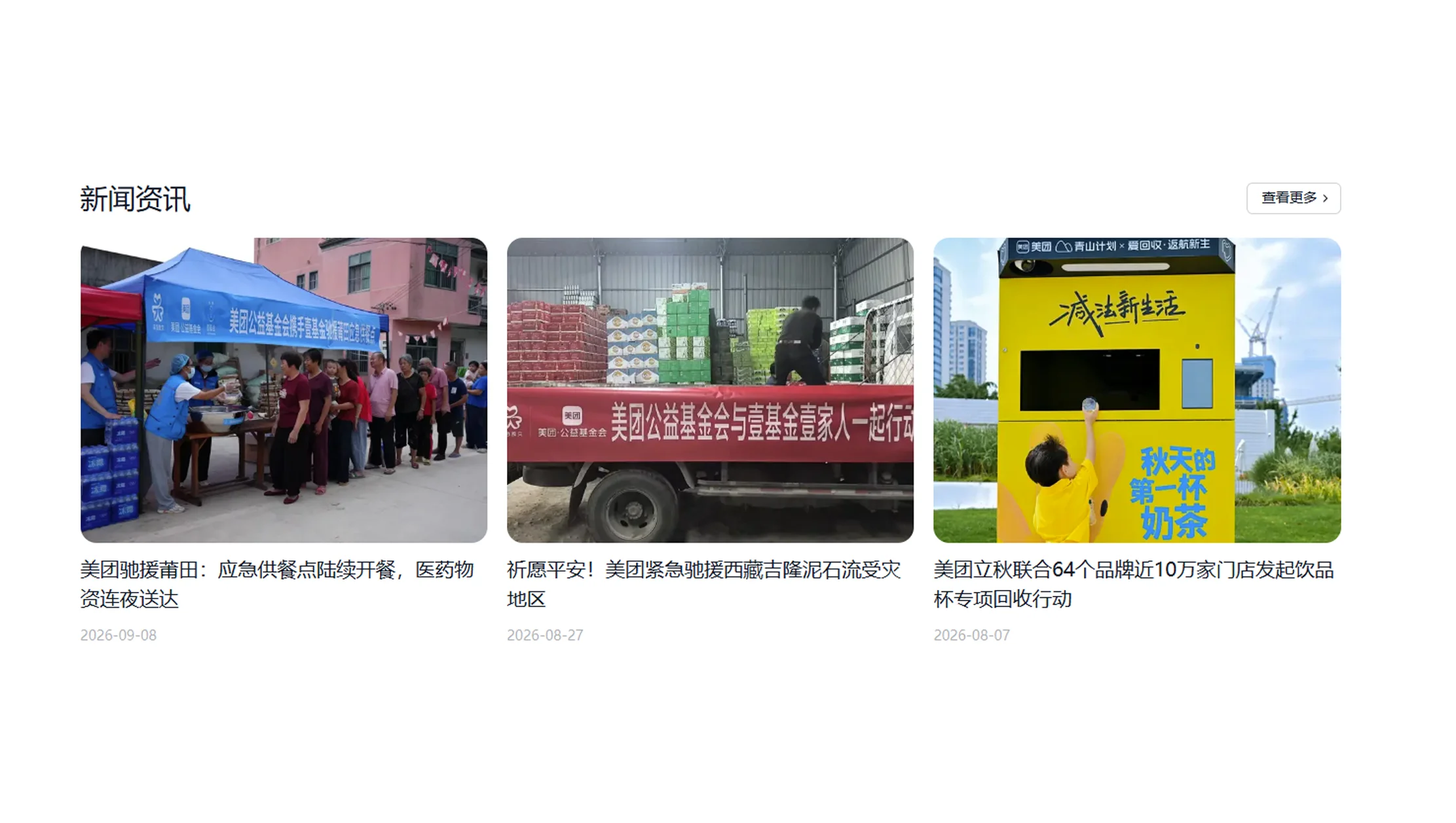
Meituan restaurant data web scraping can help organizations convert dispersed restaurant information into structured datasets for market research, location intelligence, competitive monitoring, and category analysis. A typical dataset can include restaurant name, cuisine type, address, city, neighborhood, rating, review count, opening status, menu items, prices, promotions, delivery availability, and other publicly available fields.
The importance of restaurant-level data has increased as digital platforms have expanded the visibility of local businesses. Meituan reported 6.8 million active merchants in 2020 and 8.8 million in 2021, while annual transacting users increased from 510.6 million to 690.5 million. These figures demonstrate the breadth of the merchant-consumer network from which market-level signals can emerge. (HKEX News)
Key Data Indicators
| Year | Annual Transacting Users | Active Merchants / Related Indicator | Notable Metric |
|---|---|---|---|
| 2020 | 510.6 million | 6.8 million | Food-delivery transactions: 10.15 billion |
| 2021 | 690.5 million | 8.8 million | Food-delivery transactions: 14.37 billion |
| 2022 | 687 million by Q3 | 9.3 million by Q3 | Q3 revenue: RMB 62.6 billion |
| 2023 | Growing annually | Annual active merchants at record high | 21.9 billion instant-delivery orders |
| 2024 | 770+ million | 14.5 million | Peak daily instant-delivery orders: 98 million |
| 2025 | 800+ million | — | Annual revenue: RMB 364.9 billion |
| 2026 | Current-year reporting | — | Q2 revenue: RMB 104.6 billion |
Sources: Meituan annual reports and financial announcements. (HKEX News)
From 2020 to 2026, the data environment has moved from basic restaurant discovery toward broader local-commerce intelligence. In 2020, food delivery transactions reached 10.15 billion for the year. By 2021, that figure increased to 14.37 billion. In 2022, annual transaction frequency per user reached 40.8, while the platform reported a peak of more than 60 million food-delivery orders in a single day. (HKEX News)
The trend continued in 2023, when Meituan reported 21.9 billion instant-delivery orders, up 24% year over year. In 2024, peak daily instant-delivery volume reached 98 million orders. By 2025, annual transacting users exceeded 800 million, while 2026 reporting showed continued investment in technology and local-commerce infrastructure. (Meituan)
For businesses, this historical progression shows why restaurant datasets need consistent fields and timestamps. A single snapshot may show today's price or menu, but recurring collection can reveal changes in pricing, assortment, restaurant availability, ratings, and competitive positioning.
Mapping Local Businesses and Market Coverage
Meituan local business data extraction can help companies study how restaurants and other local-service providers are distributed across cities, districts, neighborhoods, and categories. Geographic data can support territory planning, competitor mapping, location research, market-entry analysis, and local supply-demand studies.
The growth of merchant coverage is especially relevant for geographic intelligence. In 2021, Meituan reported 8.8 million annual active merchants and operations across more than 2,800 cities and counties in China. By 2024, the company reported 14.5 million annual active merchants and more than 770 million annual transacting users. (HKEX News)
Geographic and Merchant Scale
| Period | Reported Indicator | Business Intelligence Relevance |
|---|---|---|
| 2020 | 6.8 million active merchants | Establishes broad merchant coverage |
| 2021 | 8.8 million active merchants | Expanding local-service supply |
| 2022 Q3 | 9.3 million active merchants | Continued merchant growth |
| 2023 | Active merchants reached a record high | Wider local-service coverage |
| 2024 | 14.5 million active merchants | Significant expansion of merchant ecosystem |
| 2025 | 370+ cities covered in reported operating data | Broad national footprint |
| 2026 Q2 | Core local business revenue: RMB 71.5 billion | Continued scale of local commerce |
Sources: Meituan annual and quarterly disclosures. (HKEX News)
Between 2020 and 2026, local business intelligence has become increasingly multidimensional. Instead of looking only at restaurant counts, companies can examine category density, average pricing, ratings, review volume, business hours, delivery availability, promotional activity, and competitor concentration.
For example, a restaurant brand entering a new city can compare the number of competing restaurants by cuisine type and neighborhood. A food-delivery business can monitor the assortment of competing merchants. A consumer research company can analyze how ratings and review volumes differ between districts.
Historical data can also help identify structural changes. Meituan's 2022 reporting showed that the number of convenience stores and small supermarkets involved in instant retail was close to 300,000, more than twice the 2019 level. Their sales volume was reported as more than four times 2019 levels. (Meituan)
From 2023 onward, the expansion of instant retail further connected local merchants with digital demand. Meituan reported that its instant-retail service connected millions of local retailers and brands with hundreds of millions of consumers in 2023. In 2024, the company reported partnerships with more than 560,000 large-chain retail stores, 410,000 local small businesses, and more than 570 brands through Meituan Flash Purchase. (Meituan)
These developments make geographic datasets useful for understanding not only restaurant competition but also the broader local-commerce environment.
Connecting Delivery Data With Market Signals

scrape Meituan food deliverydata API workflows can help organizations collect and organize available delivery-related information for research and analytics. Depending on the permitted data source and technical implementation, useful fields may include restaurant details, menu items, product prices, delivery availability, estimated delivery information, ratings, review counts, promotions, and category classifications.
Food delivery has become one of the largest measurable components of Meituan's ecosystem. In 2020, the platform recorded approximately 10.15 billion food-delivery transactions for the year. That increased to approximately 14.37 billion in 2021. Meituan subsequently reported 17.7 billion instant-delivery orders in 2022 and 21.9 billion in 2023. (HKEX News)
Delivery-Scale Development
| Year | Food / Instant Delivery Indicator |
|---|---|
| 2020 | 10.15 billion food-delivery transactions |
| 2021 | 14.37 billion food-delivery transactions |
| 2022 | 17.7 billion instant-delivery orders |
| 2023 | 21.9 billion instant-delivery orders |
| 2024 | Peak daily instant-delivery volume: 98 million |
| 2025 | July instant-retail daily peak exceeded 150 million |
| 2026 | Q2 revenue reached RMB 104.6 billion |
Sources: Meituan annual and quarterly disclosures. (HKEX News)
From 2020 to 2022, delivery data became particularly valuable for understanding changing consumer behavior. Meituan reported that average annual transactions per transacting user reached 28.1 in 2020 and 35.8 in 2021. In 2022, the figure increased to 40.8 transactions per user. (HKEX News)
In 2023, instant delivery volume reached 21.9 billion orders, while Meituan Flash Purchase orders increased by more than 40%. During 2024, the company reported a peak of 98 million instant-delivery orders in a single day. By July 2025, instant-retail daily orders reached a peak above 150 million. (Meituan)
For data users, these developments mean that delivery information can provide signals beyond individual restaurant performance. Researchers can analyze assortment changes, price movements, promotions, category expansion, geographic availability, and delivery-service patterns.
The key requirement is consistency. Data should be captured using stable identifiers where available, standardized categories, normalized prices, location fields, timestamps, and validation rules. This allows businesses to compare the same restaurant or product over multiple collection cycles.
Tracking Changes in Prices and Promotions
real-time Meituan pricing data can support dynamic price monitoring across restaurants, food categories, products, and local markets. Pricing datasets can capture menu prices, promotional prices, discounts, bundle offers, delivery charges, and other visible commercial attributes when available.
Price monitoring is increasingly important because online marketplaces can change offers based on location, demand, time, product availability, promotions, and merchant strategy. A historical database allows businesses to distinguish temporary price movements from recurring pricing patterns.
Relevant Market Indicators
| Year | Pricing / Commerce Context |
|---|---|
| 2020 | Food-delivery GTV reached RMB 488.9 billion |
| 2021 | Food-delivery GTV increased 43.6% to RMB 702.1 billion |
| 2022 | Average annual transactions per user reached 40.8 |
| 2023 | Meituan Flash Purchase order volume grew more than 40% |
| 2024 | Annual revenue reached RMB 337.6 billion |
| 2025 | Annual revenue reached RMB 364.9 billion |
| 2026 Q2 | Revenue reached RMB 104.6 billion |
Sources: Meituan annual and quarterly disclosures. (HKEX News)
The 2020–2026 period illustrates how transaction scale and local-commerce complexity have increased. In 2020, food-delivery GTV was approximately RMB 488.9 billion. In 2021, it grew 43.6% to RMB 702.1 billion. (HKEX News)
During 2022, Meituan reported strong growth in instant retail, including food, medicine, flowers, daily necessities, cosmetics, and smartphones. The company reported that convenience stores and small supermarkets participating in instant retail had grown to nearly 300,000. (Meituan)
By 2023 and 2024, the expansion of instant retail broadened the pricing landscape beyond restaurant menus. In 2024, Meituan reported partnerships across hundreds of thousands of local and chain retailers, while its instant-delivery network recorded a peak of 98 million daily orders. (Meituan)
A pricing dataset can therefore support several analytical applications: competitor price benchmarking, discount tracking, menu-price history, price-position analysis, promotional monitoring, and category-level comparisons. Businesses can also calculate average prices by city, cuisine, product type, restaurant tier, or time period.
For accurate monitoring, timestamps are essential. A price without a collection date cannot reliably represent historical market conditions. Combining timestamped records with restaurant IDs, product IDs, geographic attributes, and promotional fields creates a stronger foundation for longitudinal analysis.
Monitoring the Expansion of Rapid Commerce
Meituan Quick Commerce Data Scraping can help organizations understand the fast-changing ecosystem of groceries, medicines, consumer goods, electronics, beauty products, household products, and other items delivered through local fulfillment networks.
The development of quick commerce is visible in Meituan's reported operating data. In 2022, the company said its Flash Purchase service reached a peak of more than 11 million orders in a single day. In 2023, Flash Purchase order volume grew by more than 40%. In 2024, Meituan emphasized its "30-minute everything" delivery model and reported partnerships with more than 560,000 large-chain retail stores and 410,000 local small businesses. (Meituan)
Quick-Commerce Development
| Year | Reported Development |
|---|---|
| 2020 | Retail businesses expanded as consumer needs shifted |
| 2021 | New initiatives and retail businesses supported revenue growth |
| 2022 | Flash Purchase peak exceeded 11 million daily orders |
| 2023 | Flash Purchase orders grew more than 40% |
| 2024 | Partnerships included 560,000+ large-chain retail stores |
| 2025 | Instant-retail daily order peak exceeded 150 million in July |
| 2026 | Quick-commerce operations continued expanding within the local-commerce ecosystem |
Sources: Meituan disclosures. (HKEX News)
Between 2020 and 2026, quick commerce shifted from an emerging retail model toward a large-scale component of local commerce. The 2022 data already showed rapid adoption across categories such as medicine, flowers, daily necessities, cosmetics, and smartphones. The number of participating convenience stores and small supermarkets was nearly 300,000, more than twice the 2019 level. (Meituan)
In 2023, Meituan reported that Flash Purchase connected millions of local retailers and brands with hundreds of millions of consumers. The company also reported that more than 80,000 physical stores participated in its Double 11 campaign that year, with the number of participating products increasing 123% year over year on November 11. (Meituan)
The 2024 figures demonstrate the increasing depth of the supply network. Meituan reported partnerships with more than 560,000 large-chain retail stores, 410,000 local small businesses, and more than 570 brands. (Meituan)
For businesses, this creates opportunities to monitor assortment, product availability, pricing, discounts, brand presence, seller coverage, and geographic availability. Retailers can benchmark their digital shelf position, while manufacturers can monitor how products are distributed across local markets.
A recurring dataset also enables analysis of product availability by time and location. When combined with price and promotion fields, it can reveal how quickly assortments change and where competitive gaps may exist.
Creating Scalable Data Pipelines for Analysis
Food Scraping API solutions can provide a structured layer between large-scale food-market data collection and downstream analytics. A well-designed pipeline can collect permitted information, normalize fields, remove duplicates, validate records, attach timestamps, and deliver structured outputs through APIs, databases, cloud storage, or analytics platforms.
The need for scalable infrastructure becomes clearer when viewed against Meituan's growth. Annual revenue increased from RMB 114.8 billion in 2020 to RMB 179.1 billion in 2021, RMB 220.0 billion in 2022, RMB 276.7 billion in 2023, and RMB 337.6 billion in 2024. In 2025, annual revenue reached RMB 364.9 billion. (PR Newswire)
Business Scale From 2020–2026
| Year | Reported Revenue / Period |
|---|---|
| 2020 | RMB 114.8 billion |
| 2021 | RMB 179.1 billion |
| 2022 | RMB 220.0 billion |
| 2023 | RMB 276.7 billion |
| 2024 | RMB 337.6 billion |
| 2025 | RMB 364.9 billion |
| 2026 Q2 | RMB 104.6 billion quarterly revenue |
Sources: Meituan financial disclosures. (PR Newswire)
From 2020 onward, the platform's expanding business footprint has increased the potential volume and variety of data points available for analysis. A modern pipeline therefore needs more than simple extraction. It should incorporate schema design, pagination management, deduplication, validation, error handling, timestamping, historical storage, and monitoring.
Data normalization is particularly important when analyzing restaurants across multiple cities. Restaurant names can vary in formatting, addresses can contain different representations, and menu categories can change. Standardized fields make comparisons more reliable.
The same applies to products and prices. A dataset can maintain separate fields for original price, promotional price, discount, delivery fee, product unit, package size, and collection timestamp. This structure makes it easier to calculate price changes and identify promotional patterns.
Real Data API can help businesses organize such data workflows into repeatable processes rather than relying on one-time manual collection. A scalable architecture can also separate collection from analytics, allowing raw data to be retained while cleaned datasets are delivered to business teams.
By 2026, Meituan continued to invest heavily in technology. Its Q2 2026 results reported RMB 77 billion in quarterly research and development spending, up 22.5% year over year, while quarterly revenue reached RMB 104.6 billion. (Meituan)
For data users, this reinforces the importance of technology infrastructure, data freshness, and scalable processing when building market-intelligence systems.
Why Choose Real Data API?
Meituan API can be incorporated into a broader data strategy when businesses require structured, repeatable access to marketplace information. The value of a data solution depends not only on collection but also on data quality, consistency, scalability, delivery format, and the ability to support downstream analytics.
Real Data API can help businesses develop workflows around structured datasets, automated collection schedules, field normalization, validation, historical storage, and analytics-ready delivery. Depending on the project, datasets can be designed around restaurant intelligence, pricing, menu information, local business coverage, delivery attributes, or quick-commerce products.
A scalable approach also makes it easier to customize datasets according to business objectives. Instead of collecting every available field, organizations can define the attributes that matter most for their research, such as restaurant category, location, price, rating, review count, menu structure, availability, promotion, or delivery information.
Conclusion
Meituan API represents an important data-access concept for businesses studying restaurant, food delivery, local business, pricing, and quick-commerce markets. From 2020 to 2026, Meituan's reported scale expanded substantially, with annual revenue rising from RMB 114.8 billion in 2020 to RMB 364.9 billion in 2025, while annual transacting users surpassed 800 million in 2025. (PR Newswire)
The development of food delivery and instant retail also demonstrates why structured, timestamped datasets are increasingly useful. Businesses can use historical records to study pricing movements, merchant coverage, product assortment, promotional activity, restaurant competition, and local market changes.
For organizations looking to convert marketplace information into practical business intelligence, the combination of automated collection, normalization, validation, historical storage, and API-based delivery can create a more sustainable data workflow.
Connect with Real Data API to build scalable restaurant, pricing, delivery, and local-commerce datasets tailored to your business intelligence requirements!
FAQs
1. What is the role of Meituan API in restaurant data research?
Meituan API can support structured access to available restaurant information such as menus, prices, locations, ratings, and other attributes for research and analytics.
2. How does a Meituan Scraper support market analysis?
A Meituan Scraper can organize permitted restaurant and marketplace information into structured datasets that support competitive monitoring, pricing analysis, and historical research.
3. Why is Meituan restaurant data web scraping useful?
Meituan restaurant data web scraping can help businesses compare restaurant categories, prices, ratings, menus, locations, availability, and other market indicators across multiple cities.
4. What can Meituan local business data extraction provide?
Meituan local business data extraction can create structured records containing business names, locations, categories, ratings, reviews, operating details, and other publicly available information.
5. Can Real Data API support Meituan data projects?
Yes. Real Data API can support structured data workflows involving collection, normalization, validation, historical storage, and delivery of analytics-ready marketplace datasets.
Latest posts

How Real Estate Data Scraping Help Maximize Investment Opportunities with Real-Time Property Listings and Investment Insights
How Instacart API for grocery availability data Helps Retailers Solve Real-Time Stock Visibility Challenges
Why Swiggy API for real-time food delivery data Matters for Tracking Menus, Offers, Availability, and Competitor Trends

How ecommerce scraping API for real-time product data Helps Businesses Track Prices, Inventory, and Competitor Changes







.png)