
Quick Summary
- Mercado Libre API helps brands access structured marketplace information for product monitoring, pricing analysis, seller research, and competitive intelligence.
- Mercado Libre Product Data Scraping can organize product listings, prices, categories, availability, and seller information into datasets for recurring analysis.
- Automated marketplace intelligence helps e-commerce teams identify pricing movements, assortment changes, competitive gaps, and regional opportunities faster.
Introduction
Mercado Libre API helps brands overcome product monitoring, pricing, and marketplace visibility challenges by making structured marketplace information available for analysis and recurring intelligence workflows. Mercado Libre Product Data Scraping can complement this approach by organizing product, seller, pricing, category, and availability observations into standardized datasets. The core benefit is simple: instead of manually checking thousands of marketplace listings, brands can build repeatable processes for identifying meaningful changes.
Mercado Libre operates across 18 countries in Latin America and has built a marketplace containing products from millions of sellers, including small businesses and major brands. As of Q2 2026, the company reported 131 million unique buyers over the last twelve months, 2.9 billion items delivered over the same period, and 88 million monthly active users.
For brands selling on or competing with marketplace listings, scale creates a visibility problem. Product catalogs change, sellers adjust prices, promotions appear and disappear, and product availability can vary across markets. E-Commerce Datasets allow teams to convert these changes into measurable signals.
The buyer persona is clear: e-commerce managers need competitive pricing visibility, marketplace teams need catalog monitoring, brands need seller intelligence, and market researchers need reliable historical observations.
How Can Brands Monitor a Large Marketplace More Efficiently?
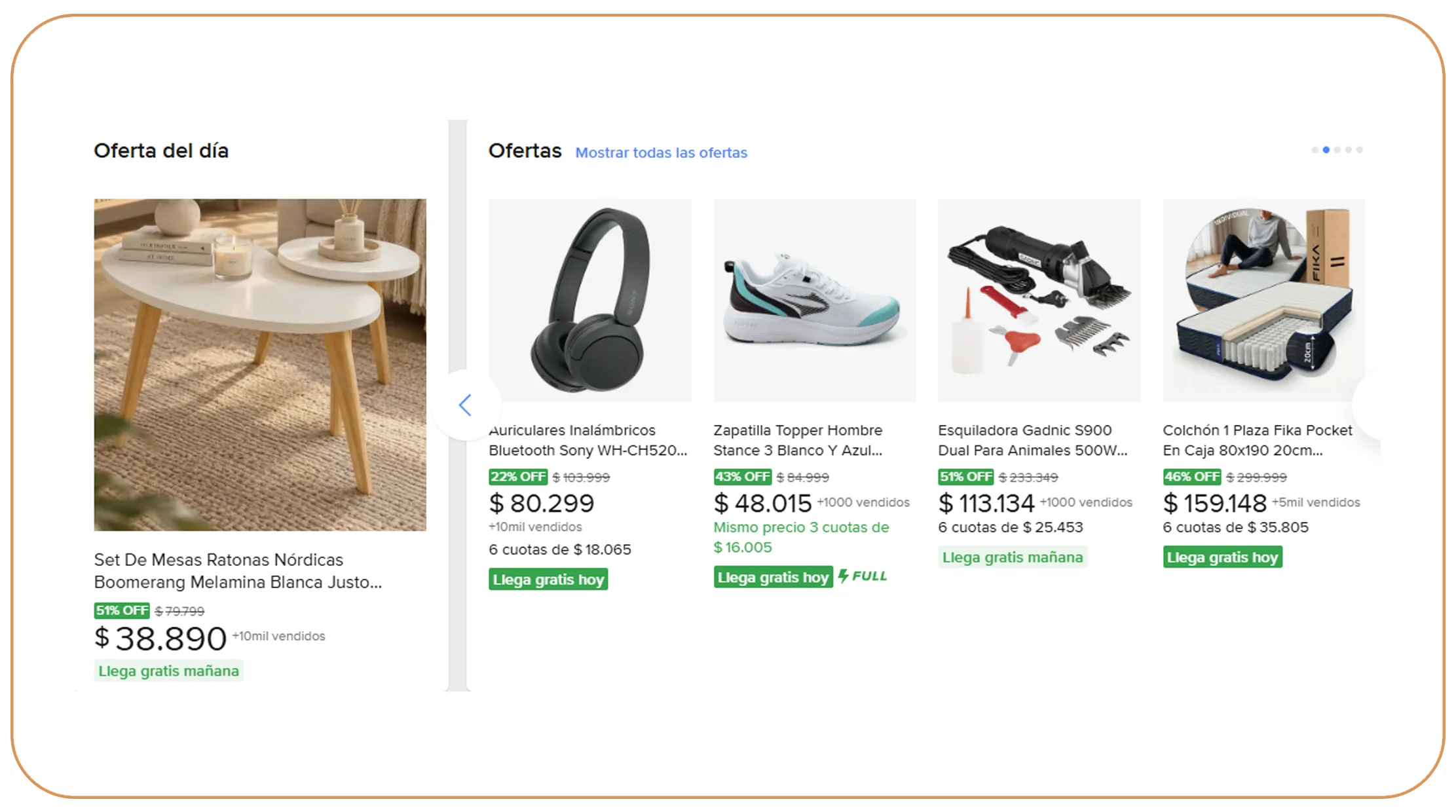
A Mercado Libre ecommerce data scraper can support recurring collection of publicly accessible marketplace information, subject to applicable terms, technical restrictions, and data-use requirements. The objective is to create structured records that can be compared over time rather than collecting isolated pages.
A practical dataset may contain product titles, brands, categories, product identifiers, prices, discounts, seller information, ratings, review counts, availability indicators, shipping information, URLs, and timestamps. Businesses can then normalize product names and attributes to compare equivalent or competing items.
The scale of the marketplace makes structured monitoring valuable. Mercado Libre reported $51.5 billion in full-year 2024 GMV and 1.787 billion items sold. In Q2 2025, GMV reached $15.3 billion and items sold reached 550.1 million for the quarter.
| Marketplace Indicator | Reported Figure | Intelligence Value |
|---|---|---|
| 2024 GMV | $51.5B | Marketplace scale |
| 2024 items sold | 1.787B | Product activity |
| Q2 2025 GMV | $15.3B | Current transaction scale |
| Q2 2025 items sold | 550.1M | Demand indicator |
| Q2 2026 unique buyers LTM | 131M | Buyer reach |
2020–2026 trend: Between 2020 and 2022, the acceleration of online commerce increased the importance of marketplace monitoring as more brands competed for digital visibility. In 2023, businesses increasingly needed structured information to compare sellers, prices, product assortments, and customer-facing listings. During 2024, Mercado Libre reported 100 million unique active buyers, $51.5 billion in GMV, and 1.787 billion items sold, demonstrating the scale of marketplace activity. In 2025, quarterly GMV and item volumes continued growing strongly, while advertising and logistics capabilities expanded. By 2026, marketplace monitoring has shifted from occasional competitor checks toward recurring product-level intelligence. Brands can use historical records to identify pricing patterns, listing changes, seller movements, and category opportunities.
How Does Structured Product Extraction Improve Catalog Visibility?
A Mercado Libre API for product data extraction can help organizations structure product information for catalog intelligence, product matching, competitive benchmarking, and analytics. The key is to define a consistent schema before collection begins.
A useful schema can include product ID, title, brand, category, seller, price, discount, condition, listing status, ratings, reviews, shipping details, location, and timestamp. These fields can then be transformed into a unified product intelligence layer.
Mercado Libre's developer ecosystem provides country-specific developer resources, reflecting the marketplace's presence across multiple Latin American markets. This geographic breadth makes consistent schemas especially important when organizations compare marketplace information across countries.
| Catalog Field | Why It Matters |
|---|---|
| Product ID | Record matching |
| Product title | Catalog identification |
| Brand | Brand benchmarking |
| Category | Category intelligence |
| Seller | Seller monitoring |
| Price | Pricing analysis |
| Discount | Promotion tracking |
| Rating/reviews | Customer perception |
| Location | Regional analysis |
| Timestamp | Historical tracking |
2020–2026 trend: In 2020, many marketplace teams relied on spreadsheets and manual product checks. During 2021 and 2022, increasing online shopping activity made product catalog monitoring more important, particularly for brands managing large assortments. In 2023, structured product records became more valuable for competitive benchmarking and catalog normalization. In 2024, Mercado Libre's marketplace generated $51.5 billion in GMV and 1.787 billion items sold, highlighting the volume of information available for analysis. In 2025, quarterly item sales continued to expand, reaching 550.1 million in Q2. In 2026, brands can use standardized product records to detect assortment changes, identify competing products, and connect marketplace information with internal catalog systems.
How Can Brands Track Marketplace Prices More Effectively?
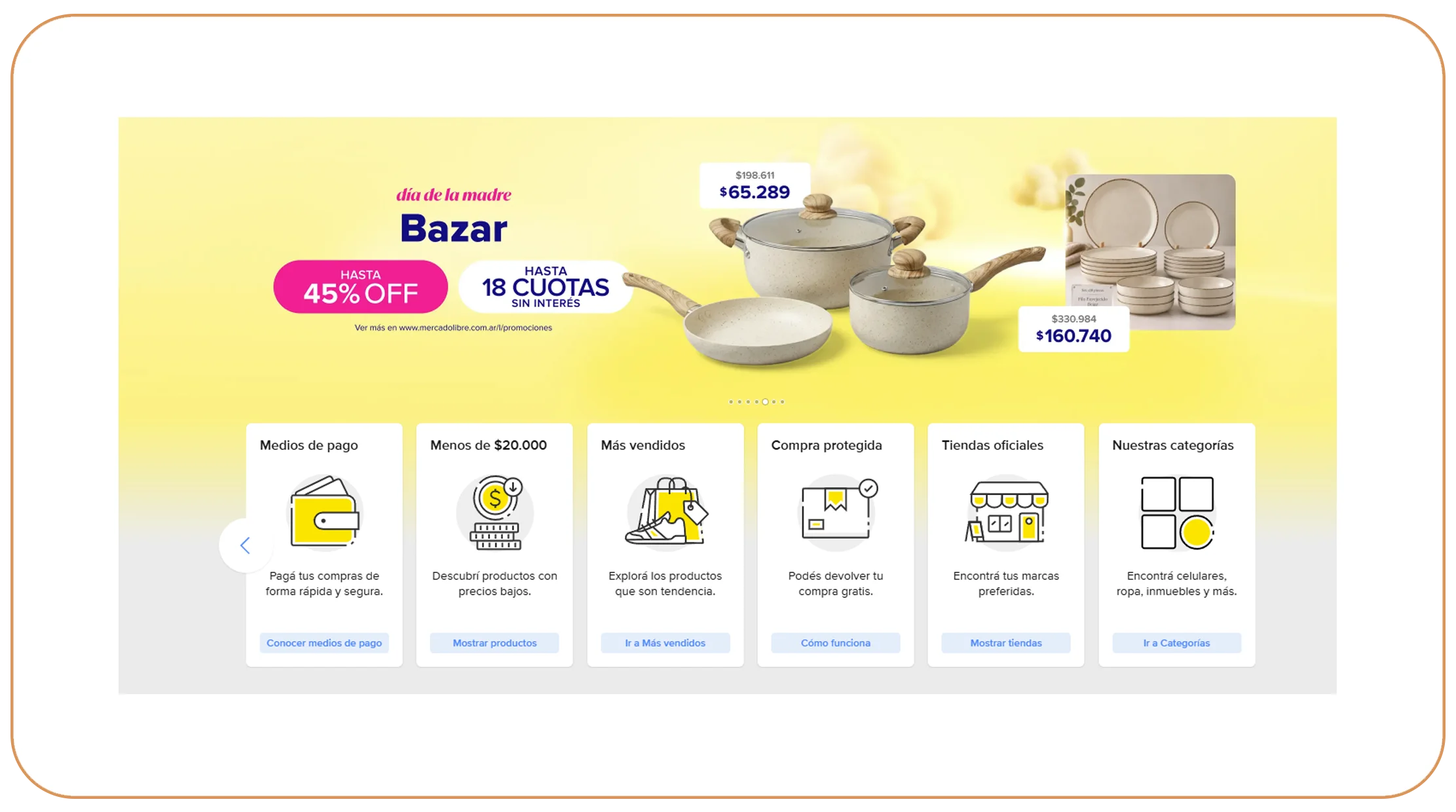
Businesses that need to extract product prices from Mercado Libre can build recurring price-monitoring workflows that record product-level observations at defined intervals. Historical pricing is more valuable than a single price snapshot because it reveals how competitors change their positioning over time.
A pricing dataset can include current price, previous price, discount percentage, list price where available, seller, product ID, location, collection timestamp, and product category. Analytical rules can then identify price increases, price decreases, newly discounted products, and unchanged listings.
Mercado Libre's growing transaction volume makes price intelligence particularly useful for brands operating in highly competitive categories. In Q1 2025, the platform reported $13.3 billion in GMV, almost 67 million unique buyers, and 492 million items sold.
| Pricing Signal | Business Application |
|---|---|
| Current price | Competitive benchmarking |
| Previous price | Change detection |
| Discount | Promotion monitoring |
| Price history | Trend analysis |
| Seller price | Seller comparison |
| Category average | Market benchmarking |
| Price position | Competitive strategy |
2020–2026 trend: From 2020 onward, online marketplace competition made price transparency increasingly important. In 2021 and 2022, brands faced rapidly changing demand and supply conditions, increasing the need for frequent price observation. During 2023, historical price data became more valuable for identifying competitive positioning and promotional patterns. In 2024, Mercado Libre's $51.5 billion GMV provided a strong indication of the platform's commercial scale. During 2025, GMV and item volumes continued to grow, creating more opportunities for category-level price analysis. By 2026, automated price-change detection can help pricing teams focus on meaningful competitor movements rather than manually reviewing thousands of listings.
Build a recurring marketplace price-monitoring workflow to identify competitor changes before they become significant pricing risks!
Get Insights Now!What Marketplace Signals Should Brands Track Beyond Price?
A Mercado Libre API for marketplace data can support a broader intelligence framework that goes beyond product pricing. Brands can monitor seller activity, product assortment, ratings, reviews, availability, category positioning, shipping information, and listing changes.
This broader view matters because price alone does not determine marketplace competitiveness. A competitor may offer a lower price but have weaker ratings, limited availability, slower delivery, or fewer product variants. Combining these signals provides a more complete view of marketplace positioning.
Mercado Libre describes its ecosystem as including commerce, advertising, logistics, and fintech capabilities. Its logistics network handled more than 1.8 billion items per year according to the company's current investor information.
| Signal | Intelligence Question |
|---|---|
| Seller count | How crowded is the category? |
| Ratings | How is customer perception changing? |
| Reviews | What concerns appear repeatedly? |
| Availability | Which products are accessible? |
| Shipping | How competitive is fulfillment? |
| Assortment | Which brands dominate? |
| Listings | Are competitors expanding? |
2020–2026 trend: Between 2020 and 2022, marketplace analysis focused heavily on products, prices, and availability. In 2023, seller-level information and customer feedback became increasingly useful for understanding competitive positioning. During 2024, Mercado Libre's scale—100 million unique active buyers and 1.787 billion items sold—made multi-dimensional marketplace intelligence more relevant. In 2025, the company's expanding logistics and advertising ecosystem created additional signals that brands could evaluate alongside product data. By 2026, effective marketplace intelligence combines price, assortment, seller, customer, availability, and fulfillment signals to provide a more complete view of digital competition.
How Can an API-Based Workflow Make Marketplace Monitoring Scalable?
A Mercado Libre API workflow can provide a structured connection between marketplace information and a company's analytical environment. Instead of repeatedly collecting raw information and manually preparing spreadsheets, teams can establish standardized data pipelines for recurring analysis.
The workflow can include collection, validation, normalization, deduplication, timestamping, storage, and delivery. Businesses can then connect the resulting information to databases, BI platforms, dashboards, pricing systems, or research applications.
The importance of automation increases as marketplace activity grows. Mercado Libre reported 131 million unique buyers over the last twelve months and 2.9 billion items delivered as of Q2 2026. These figures demonstrate why manual monitoring becomes increasingly difficult at scale.
| Workflow Stage | Purpose |
|---|---|
| Collection | Gather marketplace observations |
| Validation | Detect incomplete records |
| Normalization | Standardize fields |
| Matching | Connect equivalent products |
| Timestamping | Preserve historical state |
| Storage | Build longitudinal datasets |
| Delivery | Feed analytics systems |
2020–2026 trend: In 2020, marketplace research frequently depended on manual searches and spreadsheet-based tracking. During 2021 and 2022, increasing product volumes made automated collection more attractive. In 2023 and 2024, organizations increasingly connected marketplace datasets with analytics and business intelligence platforms. By 2025, continuous monitoring became more useful as Mercado Libre's marketplace expanded in GMV, buyers, and item volume. In 2026, an API-driven architecture can help brands maintain standardized records, automate refreshes, detect changes, and deliver marketplace intelligence directly to downstream systems.
How Can E-Commerce Teams Turn Marketplace Data Into Actionable Intelligence?
An Ecommerce Scraping API can help e-commerce teams create recurring datasets that support pricing, catalog, seller, and competitive intelligence. The objective should be decision support rather than collecting data simply for volume.
For example, a consumer electronics brand could monitor 5,000 priority products across selected categories. Each record could contain product identity, price, seller, discount, rating, review count, availability, and timestamp. Automated rules could then flag products with major price changes, newly appearing sellers, declining availability, or significant assortment changes.
The resulting intelligence can be presented through dashboards or scheduled reports. Pricing managers can focus on price movements, category managers can review assortment changes, and marketplace managers can investigate seller activity.
| Business Need | Useful Output |
|---|---|
| Pricing | Competitor price index |
| Catalog | Assortment comparison |
| Seller research | Seller activity trends |
| Customer intelligence | Rating/review trends |
| Availability | Product availability alerts |
| Market research | Category benchmarks |
| Strategy | Historical competitive trends |
2020–2026 trend: The evolution from 2020 to 2026 shows a clear movement from basic marketplace monitoring toward integrated intelligence. In 2020 and 2021, teams primarily sought visibility into products and prices. In 2022, availability and assortment became more important. During 2023 and 2024, organizations increasingly combined product, seller, pricing, and customer signals. In 2025, the growing scale of Mercado Libre's marketplace reinforced the value of automation, with Q2 2025 GMV reaching $15.3 billion and items sold reaching 550.1 million. By 2026, the strongest workflows connect marketplace data with alerts, dashboards, historical analysis, and business decisions.
Why Choose Real Data API?
Real Data API can help brands and e-commerce teams build structured marketplace data workflows around their specific business requirements. Instead of using a one-size-fits-all dataset, organizations can define the products, categories, sellers, locations, fields, and monitoring frequency that matter to their operations.
A practical workflow can support:
- Product catalog monitoring
- Competitor price tracking
- Seller intelligence
- Category-level benchmarking
- Product availability monitoring
- Ratings and review analysis
- Discount and promotion tracking
- Historical marketplace analysis
- Regional comparisons
- Analytics-ready data delivery
The quality of marketplace intelligence depends on more than collection. Data should be normalized, validated, deduplicated, timestamped, and matched correctly before it enters an analytics environment.
For brands managing large digital assortments, this approach can reduce manual research and help teams identify high-value changes faster. It can also provide a historical record that supports trend analysis rather than relying exclusively on current marketplace snapshots.
The final dataset can be delivered in formats aligned with the organization's existing data infrastructure, including structured files, databases, dashboards, or API-connected workflows.
Conclusion
Mercado Libre API can help brands overcome one of the biggest challenges in marketplace intelligence: maintaining timely visibility across large and continuously changing product catalogs. By combining product information, pricing, seller signals, availability, customer feedback, and historical observations, businesses can move from manual marketplace checking toward structured competitive intelligence.
The opportunity is significant because Mercado Libre continues to operate at substantial scale. As of Q2 2026, the company reported 131 million unique buyers over the last twelve months and 2.9 billion items delivered, while its investor materials describe millions of sellers and a broad Latin American commerce ecosystem.
For brands, the practical goal is not simply to collect more marketplace data. It is to identify the signals that affect pricing, assortment, seller competition, product visibility, and market positioning.
Ready to turn Mercado Libre marketplace activity into actionable e-commerce intelligence? Partner with Real Data API to build a scalable, structured, and business-focused data workflow tailored to your product monitoring, pricing, and competitive research needs!
FAQs
1. What does Mercado Libre API help businesses monitor?
Mercado Libre API can support structured monitoring of products, prices, sellers, categories, availability, and marketplace signals, helping brands build recurring competitive intelligence workflows.
2. What is the benefit of Mercado Libre Product Data Scraping?
Mercado Libre Product Data Scraping helps organize product listings, attributes, pricing, seller information, and availability into structured records for catalog analysis and competitive benchmarking.
3. How can brands automate product monitoring?
A Mercado Libre ecommerce data scraper can collect permitted marketplace observations on a recurring schedule, helping brands identify listing changes, assortment movements, pricing shifts, and seller activity.
4. Can businesses compare competitor prices automatically?
Yes. Mercado Libre API for product data extraction can support structured price records that enable businesses to compare products, sellers, discounts, and historical pricing movements across selected categories.
5. Why use Real Data API for marketplace intelligence?
Real Data API can help businesses create customized data workflows for product, pricing, seller, and availability monitoring, with structured delivery designed for analytics, dashboards, and competitive research.
Latest posts
How Mercado Libre API Helps Brands Overcome Product Monitoring, Pricing, and Market Visibility Challenges
How Shipt API for grocery data extraction Enables Real-Time Grocery Product, Pricing, and Inventory Intelligence
How real-time food data scraping services Help Food Brands Track Products, Prices, and Market Trends
Why Sainsbury's grocery data web scraper Is Essential for Smarter Grocery Pricing and Product Intelligence






.png)