.gif)
.gif)
Introduction
Many of the most valuable scraping projects start with a short and vague request: we need e-commerce data from several countries across many categories. The request is real, but it hides dozens of decisions. Which countries? Which retailers? Which categories and how deep? What fields? How often? In what format? Without answers, projects drift, budgets grow and results disappoint. A clear plan turns a vague wish into a working data pipeline. This guide shows how to plan a multi-country, multi-category e-commerce scraping project from the first conversation to the final delivery.
Step 1: Define The Business Question
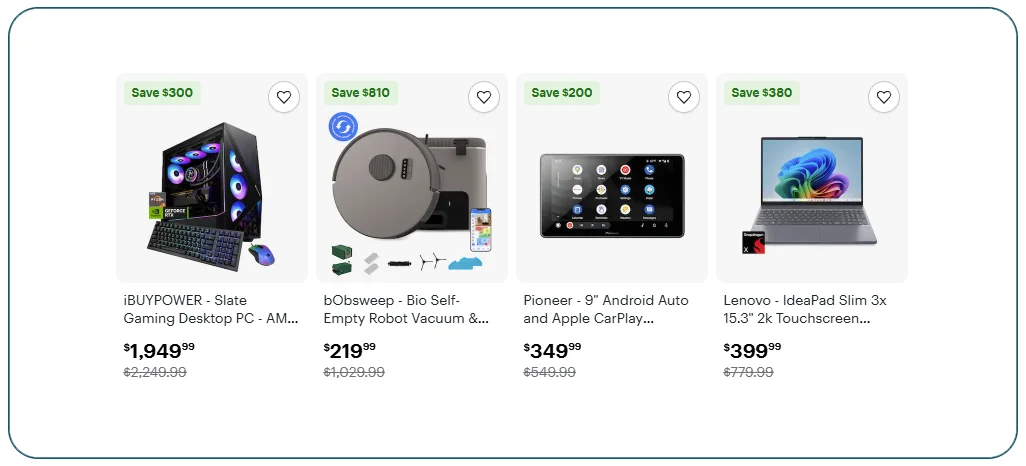
Start with the decision the data will support, not with the data itself. Examples:
- Should we enter a new country, and at what price level?
- Where are our competitors cheaper than us, and by how much?
- Which categories are growing fastest in each market?
- How wide is our assortment compared with leading retailers?
- Are our authorised sellers keeping to price guidelines?
The question determines the countries, categories, fields and frequency. A project without a question tends to collect too much of the wrong data.
Step 2: Choose Countries And Sources
For each country, identify the platforms that matter to your question:
For projects spanning many marketplaces, an ecommerce scraping API can centralize extraction while keeping source-specific handling behind the collection layer.
- Dominant marketplaces: the large general platforms where most consumers search
- Category specialists: retailers that lead in fashion, electronics, grocery, home or beauty
- Brand and D2C sites: official stores that show list prices and full ranges
- Quick-commerce and delivery apps: for grocery and fast-moving goods in markets where they matter
- Price-comparison sites: useful for market-wide price views, although they add a layer between you and the source
Prefer a smaller set of high-impact sources over a long list. Ten well-covered sources usually beat fifty thin ones.
Step 3: Define Categories And Depth
Categories must be defined clearly and consistently across countries. Decide:
- Which categories? For example, mobile phones, laptops, sneakers, skincare and packaged snacks.
- How deep? Top-level only, or down to sub-categories and individual SKUs.
- Which brands? All brands, or a defined list of your brand and competitors.
- Which product types to exclude? Accessories, refurbished goods or marketplace third-party sellers.
Build a standard taxonomy in advance. Each source's own categories are then mapped to it.
Step 4: Decide On Fields And The Schema
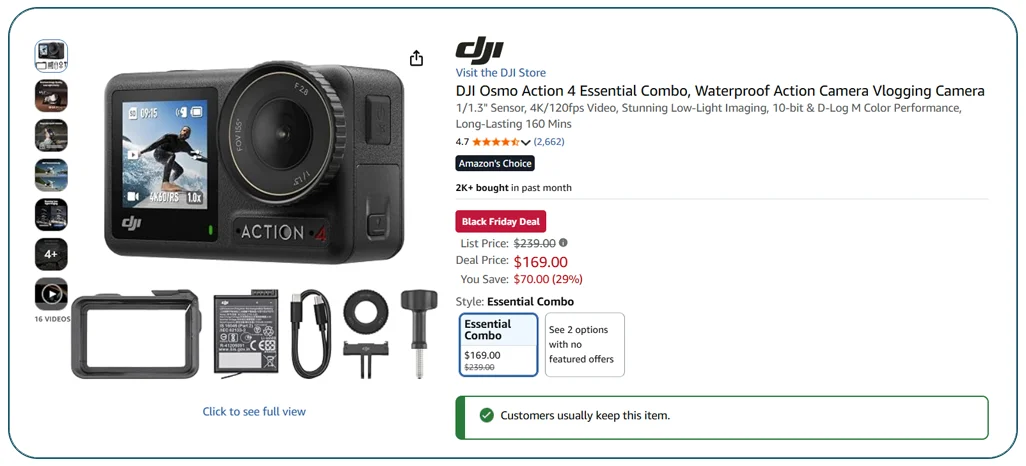
A common mistake is to ask for every field on a page. Instead, define must-have, nice-to-have and optional fields.
Must-have fields often include source, country, product ID, title, brand, category, price, currency, availability, product URL and timestamp.
Nice-to-have fields include list price and discount, ratings and review counts, seller, delivery time, rank, images and specifications.
Optional fields include full descriptions, reviews text and Q&A.
Fix the schema early. All sources should output the same column names and types, with source-specific extras stored separately.
Step 5: Plan For Languages, Currencies And Units
Multi-country projects add layers of normalisation:
- Language: keep original text and add a standard English title or attributes where needed. Handle non-Latin scripts such as Arabic, Cyrillic, Chinese, Japanese and Hindi with correct encoding.
- Currency: store local currency and a converted value with a stated exchange rate and date.
- Tax: record whether displayed prices include tax, since this varies by country.
- Units and sizes: convert measurements, such as inches to centimetres, and map clothing and shoe sizes.
- Date and number formats: handle decimal commas and different date styles.
Step 6: Decide On Matching Strategy
Comparing across sources and countries requires matching products. Choose a strategy per category:
- Identifier-based: use EAN, UPC, GTIN, ASIN or manufacturer part numbers. Highly accurate where available, common in electronics and branded goods.
- Attribute-based: match using brand, model, size and specifications. Common in grocery and consumer goods.
- Similarity-based: use title and image similarity for fashion and unbranded goods, accepting lower precision.
Matching quality should be measured and reported, for example the share of products matched with high confidence.
Step 7: Set Frequency And Freshness
Match the refresh rate to how fast the data moves and what decisions need it:
- Daily or several times a day: prices of competitive products, stock of fast-selling items, quick commerce and promotions.
- Weekly: assortment and catalogue changes, rank tracking and seller changes.
- Monthly or quarterly: market mapping, category sizing and seller databases.
- One-time: feasibility studies and market entry research.
More frequent collection costs more, so use it only where it pays back.
Step 8: Design The Pipeline
A reliable multi-country pipeline typically includes:
- Scrapers per source, each isolated so that one failure does not stop others
- Location and session handling for country, city, ZIP code or pincode contexts
- Scheduling and queueing to spread load and respect rate limits
- Raw storage that keeps original pages or responses for audit and reprocessing
- Parsing and normalisation into the standard schema
- Matching and enrichment with taxonomy, brand dictionaries and exchange rates
- Quality checks and monitoring with alerts for drops in volume or changes in layout
- Delivery layer that serves files, APIs or warehouse tables
Step 9: Build Quality Assurance In
Quality problems grow with scale, so define checks from the start:
- Coverage checks: number of products per source and category versus the previous run
- Completeness checks: share of rows with missing price, title or category
- Validity checks: price ranges, currency formats and date formats
- Consistency checks: the same product should not change identity between runs
- Manual sampling: periodic comparison of a sample against the live site
- Change logs: record when a scraper or schema changes
Share quality metrics with stakeholders, so trust in the data is earned rather than assumed.
Step 10: Address Compliance And Ethics Early
Compliance should be part of the plan, not an afterthought:
- Public data only: collect information that is visible to ordinary visitors, and do not bypass logins, paywalls or technical access controls.
- Terms of use: review the terms of each source. Some restrict automated access. Seek legal advice where terms are strict or the use is commercial and large scale.
- Personal data: avoid collecting personal data. If it is unavoidable, follow privacy laws such as GDPR, India's DPDP Act and equivalent rules in each country.
- Copyright and database rights: images, descriptions and reviews may be protected. Use data for analysis rather than republishing, unless you have permission.
- Rate limits and load: keep request volumes modest so as not to harm the source.
- Official alternatives: where a source offers an API, affiliate feed or data partnership, evaluate it.
Step 11: Estimate Effort And Cost
Costs in a scraping project depend on a few drivers:
- Number of sources: each needs its own scraper and maintenance.
- Difficulty of sources: heavily protected or app-based sources cost more.
- Volume: number of products, locations and runs.
- Frequency: daily runs cost more than weekly.
- Complexity of processing: matching, translation and specification parsing add effort.
- Delivery needs: API, dashboards and alerts add work compared with simple files.
A good plan separates one-time build effort from recurring run and maintenance costs.
Step 12: Start With A Pilot
A pilot proves feasibility cheaply. Choose two or three countries, a few sources and one or two categories. Run the full pipeline end to end, measure coverage and quality, and review the output with the people who will use it. The pilot reveals which sources are easy or hard, how well matching works and what the real cost will be. Only then scale to more countries and categories.
For marketplace-specific monitoring, an Amazon data API can provide structured product, price, availability and review data for supported Amazon storefronts.
Example: A Consumer Electronics Brand Planning A Global Programme
A consumer electronics brand sells in ten countries and wants to monitor prices and availability of 200 SKUs across the leading marketplaces and retailers in each country. The plan defines the business question (price compliance and competitiveness), selects three sources per country, fixes a schema with EAN-based matching, converts prices into euros and sets daily collection for the top 50 SKUs and weekly for the rest. A pilot in three countries confirms coverage above the target, flags two hard-to-scrape sources for alternative approaches and sets the budget. The programme then scales country by country.
Example: A Market-Entry Study
A retailer considering entry into three new countries wants a one-time view of price levels and assortment in home goods and small appliances. The plan uses one-time collection from the top four platforms in each country, standard categories and a short analysis report. No daily feeds are needed, which keeps cost low.
Common Mistakes To Avoid
- Starting with too many countries and sources at once
- Defining categories differently in each country
- Ignoring tax and currency differences when comparing prices
- Collecting every field without a purpose
- Skipping quality checks until the end
- Forgetting maintenance, since sites change often
- Treating compliance as a final step instead of part of the design
Delivery Formats
Options include CSV or Excel for small projects, Parquet or JSON files in cloud storage for larger ones, REST APIs for applications and direct loading into data warehouses and BI tools. Dashboards and alerts can be layered on top.
Why Choose Real Data API For Global E-Commerce Data Projects
Real Data API helps teams scope a project, build source-specific scrapers, design a common schema and run quality checks across countries. We start with a pilot so that coverage, quality and cost are clear before you commit to a larger programme.
Conclusion
A successful multi-country, multi-category e-commerce scraping project starts with a clear business question and a disciplined plan: focused sources, a common schema, careful normalisation, built-in quality checks and early attention to compliance. With a pilot to prove the approach, you can scale confidently and turn scattered web data into a reliable, global view of your market.
Planning a global e-commerce data project? Real Data API can help you scope it and deliver a pilot.
FAQs
How do I decide how many countries to start with?
Start with two or three that matter most to your business question. Add more after the pilot.
Can all sources be scraped?
Not all. Some sources are heavily protected or restrict automated access. A feasibility check during the pilot identifies them, and alternatives such as official feeds can be considered.
How do you compare prices across currencies?
Local prices are stored along with a converted price at a stated exchange rate and date, plus a note on whether tax is included.
How long does a multi-country project take?
A pilot can often be completed in a few weeks. A full programme takes longer, depending on the number of sources and complexity.
What do I need to provide?
The business question, a list of countries and categories, any product or brand lists, the fields you need and your preferred delivery format.
Latest posts
Multi-Country, Multi-Category E-commerce Data: How to Plan a Global Scraping Project
Walmart Real-Time Product & Price API by ZIP Code: From Jersey City to Nationwide
Hotel Price Comparison Data Scraping: Daily Rate Tracking Across MakeMyTrip, Goibibo, Booking.com & Agoda
How Restaurants Use Competitor Offers Data to Optimize Pricing in India (2026) and Improve Profit Margins Through Smarter Promotions




.png)


