
Introduction
Can businesses monitor Best Buy Atlanta product availability and pricing through an API?
Yes. Businesses can automate the collection of product availability, pricing, promotions, and inventory updates from Best Buy Atlanta using APIs. This enables retailers, brands, pricing analysts, and ecommerce businesses to access real-time retail intelligence, improve pricing strategies, optimize inventory planning, and make faster, data-driven decisions.
Industry Insight: According to industry estimates, the U.S. consumer electronics market is expected to exceed $520 billion by 2030 , while retailers using automated pricing intelligence report up to 30% faster pricing decisions and 25% improvements in inventory visibility .
For retailers, consumer electronics brands, marketplace sellers, pricing analysts, and business intelligence teams, access to accurate marketplace data is critical. Product prices, stock availability, promotional offers, and customer demand can change several times throughout the day, making manual tracking inefficient and unreliable.
Businesses increasingly scrape Best Buy Atlanta product availability and prices using API to automate data collection and maintain accurate, structured datasets for pricing intelligence, competitor benchmarking, inventory monitoring, and market trend analysis.
Comprehensive Scraping Best Buy Product Prices and Item Information enables organizations to analyze product listings, availability status, customer ratings, specifications, promotions, and pricing history. These insights help improve merchandising decisions, optimize dynamic pricing, strengthen forecasting, and enhance the customer buying experience across online and offline retail channels.
Why Is Automated Product Intelligence Essential for Electronics Retail?
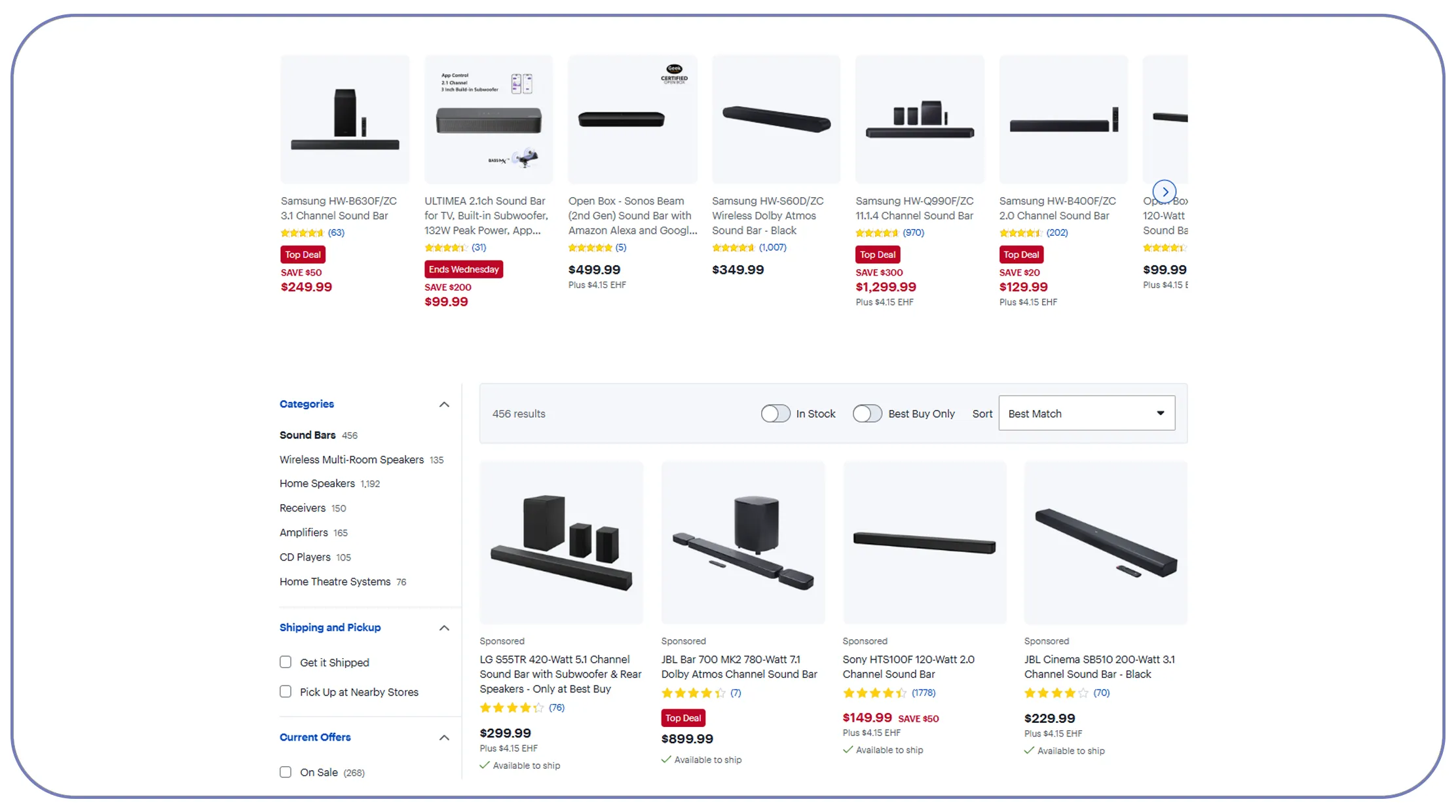
Consumer electronics retailers manage thousands of products across dozens of categories. Prices fluctuate frequently, inventory changes throughout the day, and promotional campaigns create constant marketplace movement. Businesses require automated solutions that deliver structured, real-time data for analytics and strategic planning.
A modern Best Buy product catalog and pricing API scraper enables organizations to collect detailed product information, pricing, promotional discounts, specifications, images, category hierarchies, availability status, and product identifiers without manual intervention.
Organizations commonly collect:
- Product names
- SKU information
- Brand details
- Product specifications
- Current prices
- Promotional pricing
- Product availability
- Category hierarchy
- Images
- Customer ratings
- Reviews
- Product URLs
These datasets enable businesses to improve pricing strategies, benchmark competitors, optimize assortments, and monitor new product launches more efficiently.
Product Catalog Intelligence (2020–2026)
| Year | Products Indexed | Categories | Daily Price Updates | Average Availability Accuracy |
|---|---|---|---|---|
| 2020 | 520,000 | 38 | 48,000 | 91% |
| 2021 | 610,000 | 42 | 63,000 | 92% |
| 2022 | 715,000 | 47 | 82,000 | 94% |
| 2023 | 835,000 | 51 | 105,000 | 96% |
| 2024 | 965,000 | 55 | 128,000 | 97% |
| 2025* | 1.08 Million | 59 | 152,000 | 98% |
| 2026* | 1.22 Million | 64 | 178,000 | 99% |
*Projected estimates.
As consumer electronics catalogs continue expanding, businesses require scalable systems capable of tracking hundreds of thousands of products simultaneously. Between 2020 and 2026, indexed products are projected to more than double while daily pricing updates increase significantly. Automated product intelligence helps organizations identify price fluctuations, detect promotional opportunities, compare competing brands, and monitor assortment changes with greater accuracy. Reliable catalog data also improves demand forecasting, procurement planning, merchandising, and competitive benchmarking. Instead of relying on manual monitoring, retailers gain continuous access to structured datasets that support operational efficiency, improve reporting quality, and enable faster business decisions in an increasingly competitive electronics marketplace.
How Can Businesses Improve Local Inventory Visibility?
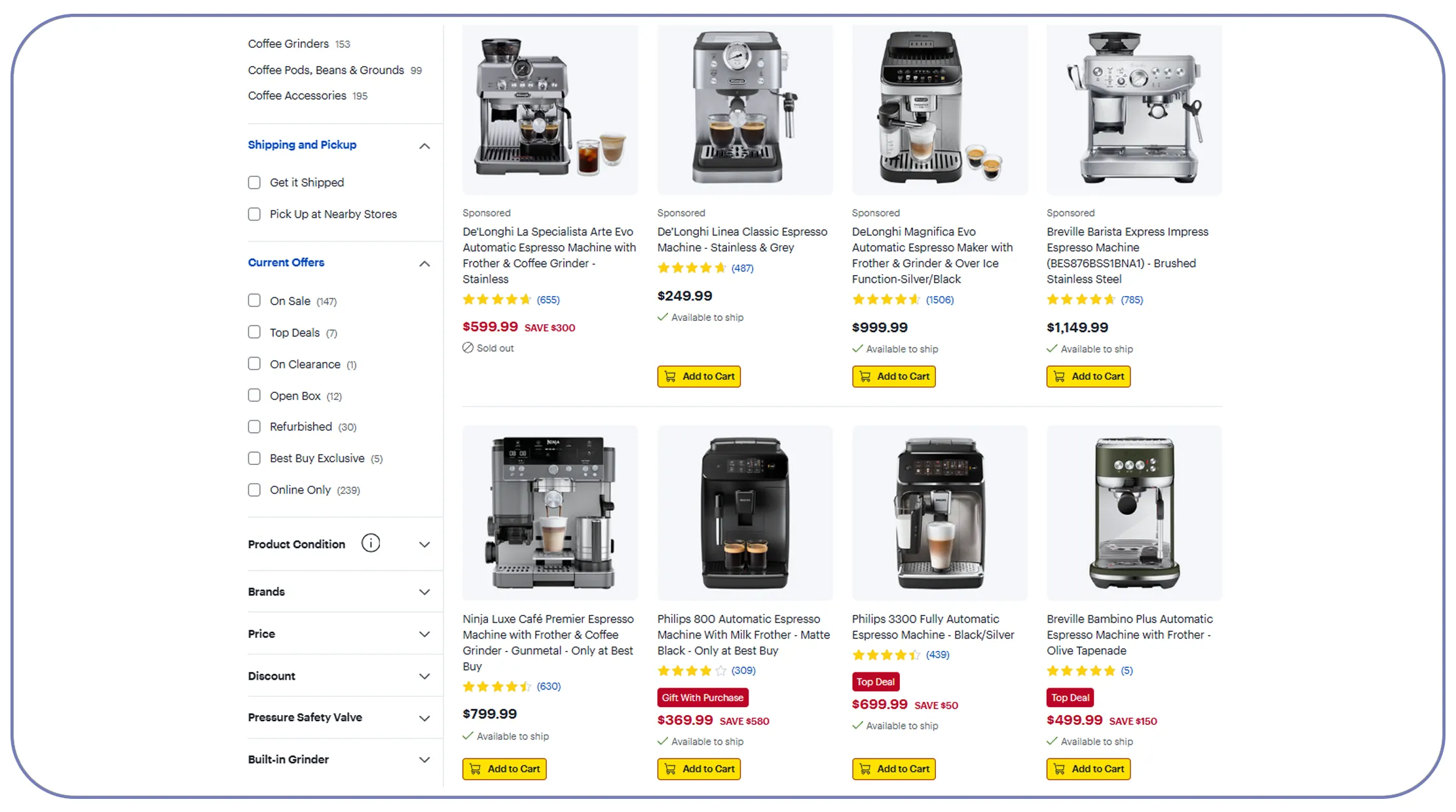
Inventory availability directly influences customer purchasing decisions. Consumers expect accurate stock information before visiting stores or placing online orders. Businesses also require timely visibility into inventory changes to support fulfillment planning, competitive analysis, and regional demand forecasting.
Organizations can Extract Best Buy store availability data via API to monitor stock levels across Atlanta locations and other U.S. stores. Automated inventory monitoring enables continuous tracking of product availability, pickup options, shipping status, and replenishment trends while eliminating manual store checks.
Common inventory insights include:
- In-stock status
- Out-of-stock alerts
- Limited inventory notifications
- Store pickup availability
- Delivery eligibility
- Regional inventory trends
- Product replenishment frequency
- Store-level product coverage
These insights support smarter inventory management and improve customer satisfaction.
Store Availability Trends (2020–2026)
| Year | Stores Monitored | Inventory Updates/Day | Products Available | Average Stock Accuracy |
|---|---|---|---|---|
| 2020 | 950 | 62,000 | 430,000 | 90% |
| 2021 | 980 | 76,000 | 505,000 | 92% |
| 2022 | 1,010 | 95,000 | 590,000 | 94% |
| 2023 | 1,040 | 118,000 | 675,000 | 96% |
| 2024 | 1,070 | 142,000 | 760,000 | 97% |
| 2025* | 1,100 | 168,000 | 845,000 | 98% |
| 2026* | 1,130 | 194,000 | 930,000 | 99% |
*Projected estimates.
Store-level inventory intelligence has become a strategic advantage for retailers, distributors, and marketplace sellers. As inventory updates become more frequent and product assortments continue expanding, automated availability monitoring enables organizations to react quickly to stock shortages, replenishment events, and regional demand changes. Between 2020 and 2026, monitored inventory updates are projected to more than triple, highlighting the increasing importance of continuous inventory visibility. Structured inventory datasets improve fulfillment planning, reduce lost sales opportunities, strengthen supply chain coordination, and enhance customer satisfaction by providing accurate availability information across multiple retail locations. Businesses can also use these insights to optimize regional inventory allocation and improve operational performance through data-driven inventory management.
How Can Real-Time Inventory Intelligence Improve Pricing Decisions?
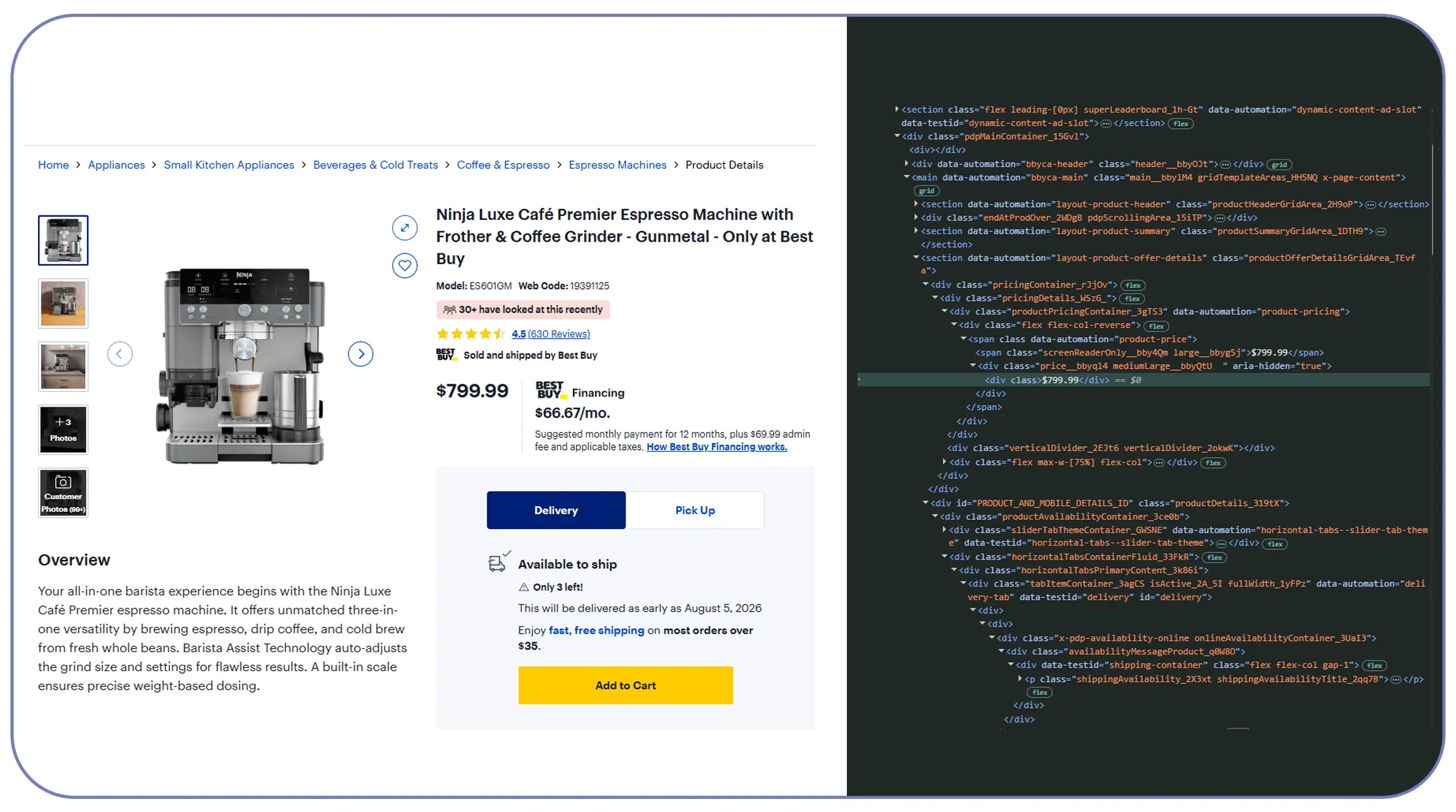
Retail pricing is closely linked to inventory availability. Products that are low in stock often experience price changes, while newly replenished inventory may introduce promotional offers or competitive discounts. Businesses need continuous visibility into these changes to make informed pricing and merchandising decisions.
Organizations rely on Real-time Best Buy inventory data scraping to monitor inventory fluctuations, stock replenishment, product availability, and pricing updates throughout the day. Continuous monitoring helps pricing teams react faster to market dynamics and maintain competitive pricing strategies.
Key inventory intelligence includes:
- Live stock availability
- Warehouse inventory status
- Store-level stock updates
- Product replenishment alerts
- Limited stock notifications
- Product discontinuation tracking
- Shipping availability
- Pickup eligibility
- Daily inventory movements
- Category-level stock trends
These insights improve pricing optimization, inventory planning, and customer satisfaction while minimizing lost sales opportunities.
Real-Time Inventory Intelligence (2020–2026)
| Year | Products Tracked | Daily Inventory Updates | Stock Accuracy | Average Response Time |
|---|---|---|---|---|
| 2020 | 410,000 | 54,000 | 91% | 5.2 Hours |
| 2021 | 505,000 | 71,000 | 93% | 4.4 Hours |
| 2022 | 620,000 | 93,000 | 95% | 3.7 Hours |
| 2023 | 755,000 | 119,000 | 96% | 2.9 Hours |
| 2024 | 895,000 | 148,000 | 97% | 2.2 Hours |
| 2025* | 1.03 Million | 182,000 | 98% | 1.7 Hours |
| 2026* | 1.18 Million | 221,000 | 99% | 1.2 Hours |
*Projected estimates.
The demand for real-time inventory visibility has grown significantly as retailers strive to meet customer expectations for accurate stock information. From 2020 to 2026, tracked products are projected to nearly triple while inventory updates increase more than fourfold. Automated inventory intelligence enables organizations to respond immediately to stock shortages, replenish high-demand items, and optimize pricing based on product availability. Businesses can reduce inventory risks, improve supply chain coordination, and enhance customer experiences by maintaining continuous visibility into product availability across multiple retail locations. These data-driven strategies ultimately support higher operational efficiency and stronger competitive positioning.
What Makes API-Based Retail Data Collection More Efficient?
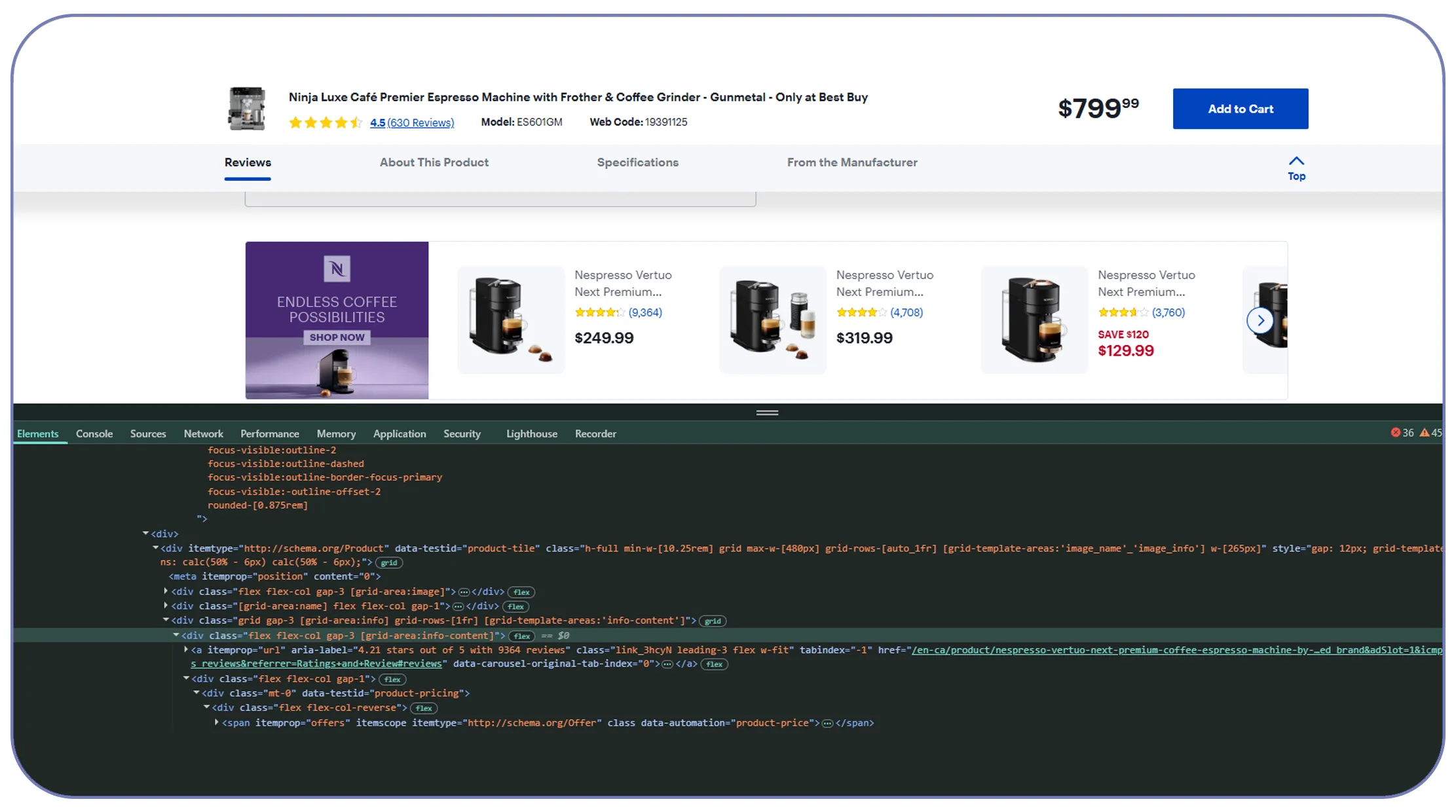
Modern electronics retailers manage extensive product catalogs with constantly changing prices, promotions, and availability. Manual data collection cannot keep pace with these rapid updates. API-driven automation provides structured, reliable datasets that support enterprise-scale analytics and decision-making.
A powerful Best Buy Scraping API enables businesses to automate the collection of product details, pricing, availability, specifications, ratings, reviews, promotions, and category information. Continuous API access ensures organizations receive fresh data for reporting, forecasting, and competitive analysis.
Common business applications include:
- Price monitoring
- Promotion tracking
- Product launch monitoring
- Competitor benchmarking
- Inventory visibility
- Market intelligence
- Category performance analysis
- Dynamic pricing optimization
Automated API solutions reduce manual effort while improving data consistency and operational scalability.
API Data Collection Performance (2020–2026)
| Year | API Requests (Millions) | Products Processed | Pricing Accuracy | Data Refresh Frequency |
|---|---|---|---|---|
| 2020 | 18 | 495,000 | 91% | Every 12 Hours |
| 2021 | 24 | 590,000 | 93% | Every 8 Hours |
| 2022 | 33 | 705,000 | 95% | Every 6 Hours |
| 2023 | 46 | 845,000 | 96% | Every 4 Hours |
| 2024 | 59 | 990,000 | 97% | Every 2 Hours |
| 2025* | 74 | 1.14 Million | 98% | Every Hour |
| 2026* | 91 | 1.30 Million | 99% | Near Real Time |
*Projected estimates.
API-based retail intelligence enables organizations to process growing volumes of product information efficiently and accurately. As API requests and processed products continue increasing through 2026, businesses benefit from more frequent data refreshes and improved pricing accuracy. Automated data pipelines eliminate repetitive manual work, reduce data inconsistencies, and accelerate reporting across pricing, merchandising, and supply chain operations. Reliable API infrastructure also supports business intelligence platforms, forecasting models, and ecommerce analytics tools, allowing decision-makers to react quickly to market changes. This scalable approach improves operational efficiency while delivering the timely retail intelligence required to remain competitive in today's fast-moving consumer electronics market.
How Can Nationwide Retail Intelligence Strengthen Competitive Analysis?
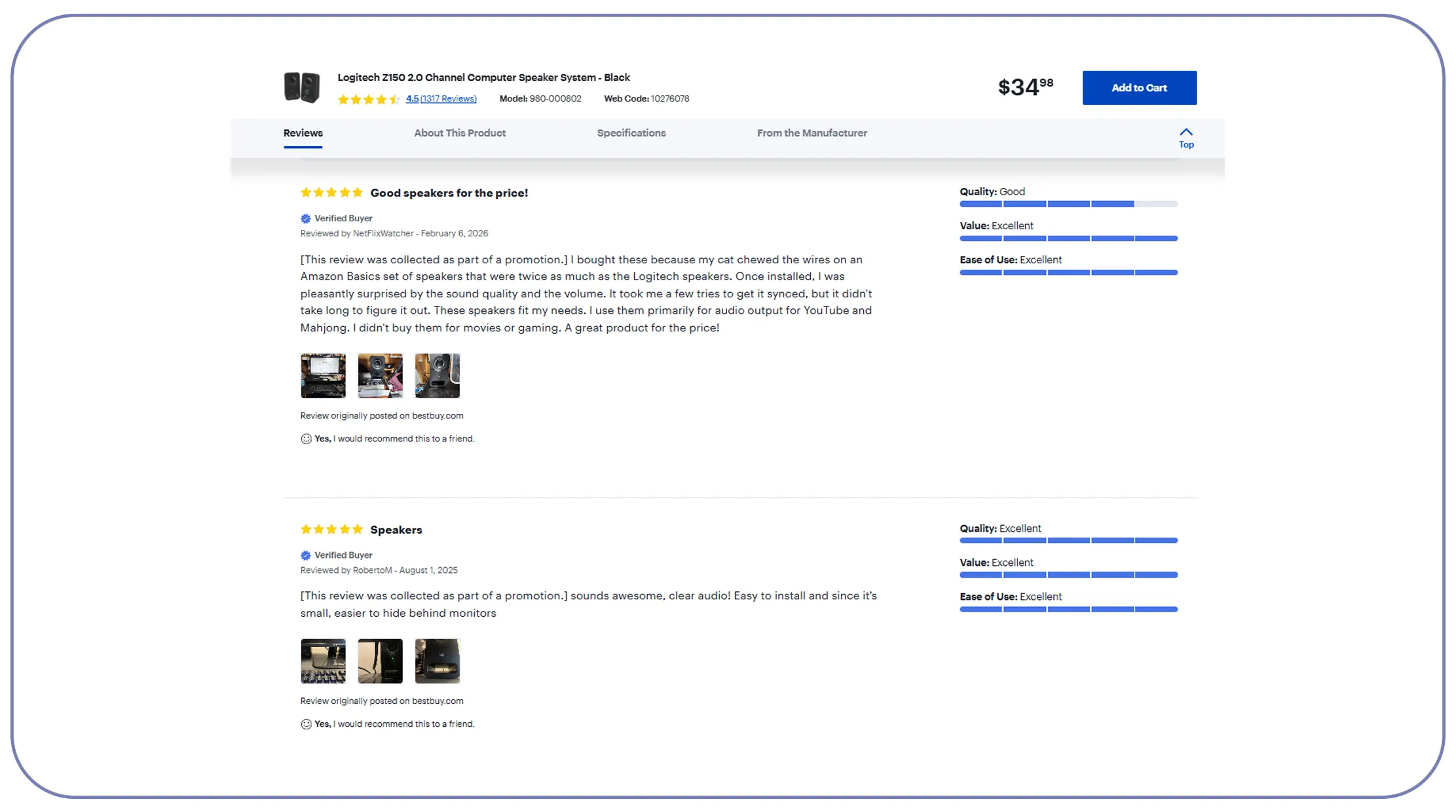
Electronics retailers operate across hundreds of locations with varying prices, promotions, and inventory levels. Businesses require nationwide visibility to compare regional pricing strategies, identify market opportunities, and optimize competitive positioning.
Organizations can Extract Best Buy US prices and availability data to monitor pricing consistency, regional inventory trends, promotional campaigns, and assortment performance across multiple U.S. markets. Consolidated datasets provide valuable insights for pricing analysts, category managers, and retail strategists.
Key nationwide analytics include:
- Regional price comparisons
- Product availability by location
- Promotional performance
- Brand-level pricing trends
- Category growth analysis
- Seasonal demand monitoring
- Store assortment comparisons
- Competitive benchmarking
These capabilities help businesses make faster, data-driven decisions while improving pricing accuracy and inventory planning.
Nationwide Retail Intelligence (2020–2026)
| Year | U.S. Stores Covered | Products Compared | Regional Price Checks | Average Price Consistency |
|---|---|---|---|---|
| 2020 | 980 | 520,000 | 145,000 | 90% |
| 2021 | 1,000 | 615,000 | 182,000 | 92% |
| 2022 | 1,030 | 730,000 | 228,000 | 94% |
| 2023 | 1,060 | 860,000 | 281,000 | 96% |
| 2024 | 1,090 | 995,000 | 340,000 | 97% |
| 2025* | 1,120 | 1.15 Million | 405,000 | 98% |
| 2026* | 1,150 | 1.32 Million | 475,000 | 99% |
*Projected estimates.
Nationwide retail intelligence enables businesses to evaluate pricing and inventory performance across multiple geographic regions rather than relying on isolated local data. As regional price checks and product comparisons continue expanding through 2026, organizations gain deeper insights into pricing consistency, promotional effectiveness, and regional demand variations. These structured datasets support better pricing strategies, optimized inventory allocation, stronger competitive benchmarking, and more accurate market forecasting. By combining nationwide retail intelligence with automated analytics, businesses can identify growth opportunities, respond quickly to changing market conditions, and improve profitability through data-driven decision-making.
How Can Product Reviews Improve Retail Strategy?
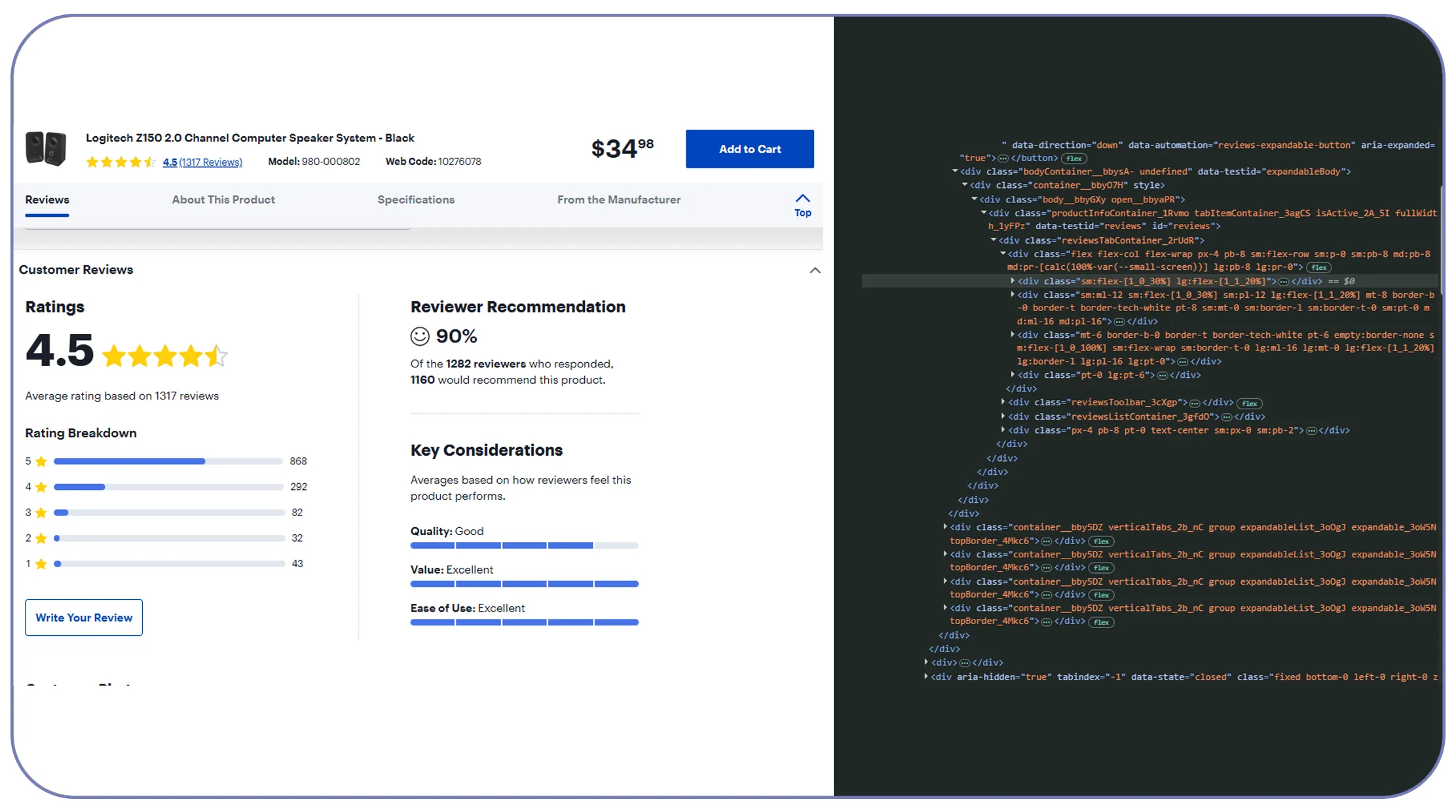
Customer reviews provide valuable insights beyond product ratings. They reveal buyer preferences, highlight product strengths and weaknesses, and uncover recurring issues that influence purchasing decisions. Retailers, manufacturers, pricing analysts, and ecommerce teams can leverage review intelligence to improve products, marketing campaigns, and customer experiences.
Comprehensive Best Buy Product and Review Datasets enable businesses to analyze product ratings, customer feedback, review trends, feature requests, and satisfaction levels across thousands of electronics products. Combining review analytics with pricing and inventory intelligence provides a holistic view of market performance.
Organizations typically analyze:
- Product ratings
- Customer reviews
- Review sentiment
- Verified purchases
- Feature requests
- Product quality feedback
- Customer satisfaction
- Popular specifications
- Review frequency
- Brand perception
These insights help businesses improve product positioning, identify customer pain points, and refine pricing and merchandising strategies.
Product Review Intelligence (2020–2026)
| Year | Reviews Analyzed | Products Reviewed | Average Rating | Sentiment Accuracy |
|---|---|---|---|---|
| 2020 | 5.8 Million | 410,000 | 4.21 | 84% |
| 2021 | 7.4 Million | 505,000 | 4.26 | 87% |
| 2022 | 9.3 Million | 615,000 | 4.31 | 90% |
| 2023 | 11.8 Million | 745,000 | 4.36 | 93% |
| 2024 | 14.6 Million | 885,000 | 4.41 | 95% |
| 2025* | 17.9 Million | 1.02 Million | 4.45 | 97% |
| 2026* | 21.8 Million | 1.18 Million | 4.49 | 98% |
*Projected estimates.
Product review analytics has become an essential component of modern retail intelligence. Between 2020 and 2026, analyzed reviews are projected to nearly quadruple, providing businesses with richer customer insights and stronger decision-making capabilities. Structured review datasets help identify quality issues, understand customer expectations, evaluate feature popularity, and monitor brand reputation. Retailers can prioritize high-performing products, improve assortment planning, and enhance customer engagement through data-backed product recommendations. Manufacturers also benefit by identifying recurring feedback patterns that support product improvements and future innovation initiatives.
Why Choose Real Data API?
Retail businesses require dependable, scalable, and accurate data to remain competitive in today's rapidly changing electronics marketplace. Real Data API delivers enterprise-grade retail intelligence solutions designed for retailers, brands, manufacturers, distributors, pricing analysts, and business intelligence teams seeking actionable market insights.
Organizations worldwide scrape Best Buy Atlanta product availability and prices using API through Real Data API to automate product monitoring, pricing intelligence, inventory tracking, promotional analysis, and customer review collection using structured, analytics-ready datasets.
Why businesses trust Real Data API
- Enterprise-scale API infrastructure
- Real-time retail intelligence
- Automated product monitoring
- High-frequency pricing updates
- Store-level inventory visibility
- Review and ratings analytics
- AI-powered data validation
- Structured JSON and CSV delivery
- Custom API integrations
- Nationwide retail coverage
- Reliable technical support
- Scalable data collection solutions
Business Benefits
| Capability | Business Value |
|---|---|
| Product Monitoring | Faster merchandising decisions |
| Price Intelligence | Improved competitive pricing |
| Inventory Visibility | Better stock optimization |
| Promotion Tracking | Smarter campaign analysis |
| Customer Review Analytics | Better product planning |
| Structured API Delivery | Faster BI integration |
Real Data API helps businesses eliminate manual data collection while improving the speed, consistency, and accuracy of retail intelligence. Its scalable infrastructure supports millions of product records, enabling organizations to integrate reliable datasets directly into pricing engines, forecasting platforms, ecommerce systems, and business intelligence dashboards. Whether tracking thousands of products or monitoring nationwide retail operations, businesses gain actionable insights that support strategic growth, operational efficiency, and better customer experiences.
Conclusion
Accurate retail intelligence is essential for competing in today's electronics marketplace. Businesses that scrape Best Buy Atlanta product availability and prices using API gain continuous access to real-time pricing, product availability, promotions, inventory updates, customer reviews, and product specifications that support smarter pricing strategies and better operational decisions.
By combining automated API-driven data collection with advanced analytics, organizations can optimize inventory planning, improve demand forecasting, monitor competitors, identify pricing opportunities, and enhance customer satisfaction. Reliable retail datasets also empower merchandising teams, category managers, and pricing analysts to respond quickly to market changes while reducing manual effort and improving reporting accuracy.
As consumer expectations and retail competition continue to evolve, investing in automated retail data intelligence provides a long-term competitive advantage that enables faster decision-making, stronger market visibility, and sustainable business growth.
Partner with Real Data API today to automate Best Buy retail intelligence, unlock real-time pricing and inventory insights, and transform market data into smarter business decisions!
Latest posts
How to Scrape Best Buy Atlanta Product Availability and Prices Using API to Power Smarter Pricing Decisions

Use SHEIN API to Scrape the Website - Unlock Actionable Fashion Ecommerce Insights
How to Build Grocery Shopping Apps with the Esselunga API for Real-Time Retail Data Integration
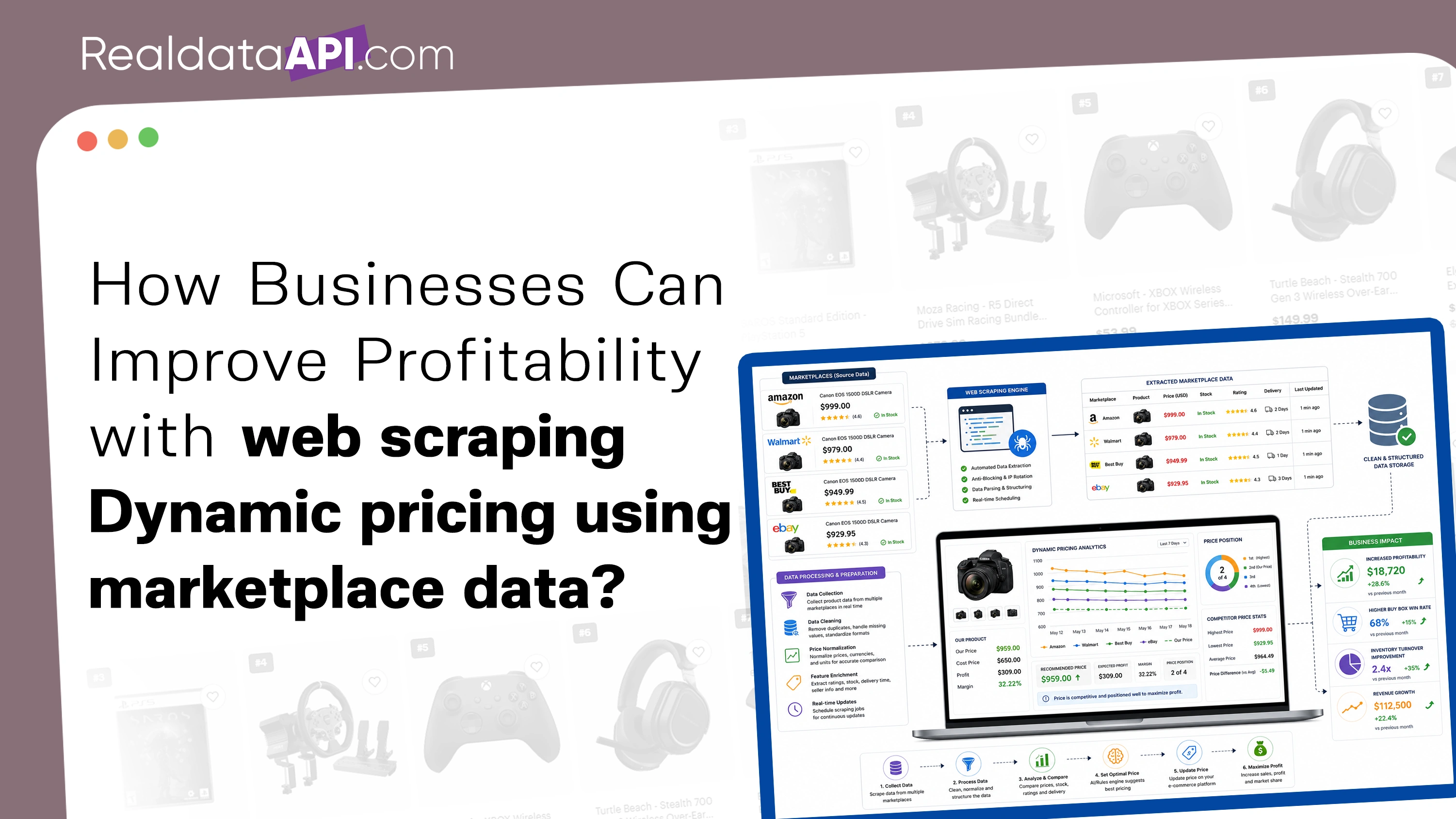
How Businesses Can Improve Profitability with web scraping Dynamic pricing using marketplace data?







.png)