
Introduction
Fantasy sports businesses can automate player statistics, match updates, and performance analytics by using APIs and web data extraction techniques. Scrape fantasy sports data using Dream11 API to reduce manual effort, improve data accuracy, and deliver real-time insights for fantasy platforms, sports analysts, betting intelligence providers, and market researchers.
Industry Insight (2026): The global fantasy sports market is projected to exceed USD 85 billion by 2026, driven by growing smartphone adoption, live sports engagement, AI-powered analytics, and real-time data solutions. Organizations that automate sports data collection can significantly improve operational efficiency, user engagement, and decision-making.
Fantasy sports have evolved from simple gaming platforms into sophisticated ecosystems powered by live data and predictive analytics. Users expect instant updates on player performance, match scores, injury reports, rankings, and team statistics. Collecting this information manually is time-consuming, expensive, and prone to errors.
Businesses looking to automate this process can Scrape fantasy sports data using Dream11 API to gather structured information for dashboards, research, machine learning models, and fantasy applications. Combined with Dream11 API Web Scraping, organizations can capture player profiles, contest details, live score updates, team combinations, and historical statistics in near real time.
This guide is designed for fantasy sports startups, sports analytics firms, gaming companies, market researchers, and developers seeking scalable data solutions. You'll learn how automated data extraction improves analytics, reduces operational costs, and supports better business decisions through reliable sports intelligence.
Why Is Manual Fantasy Sports Data Collection No Longer Sustainable?
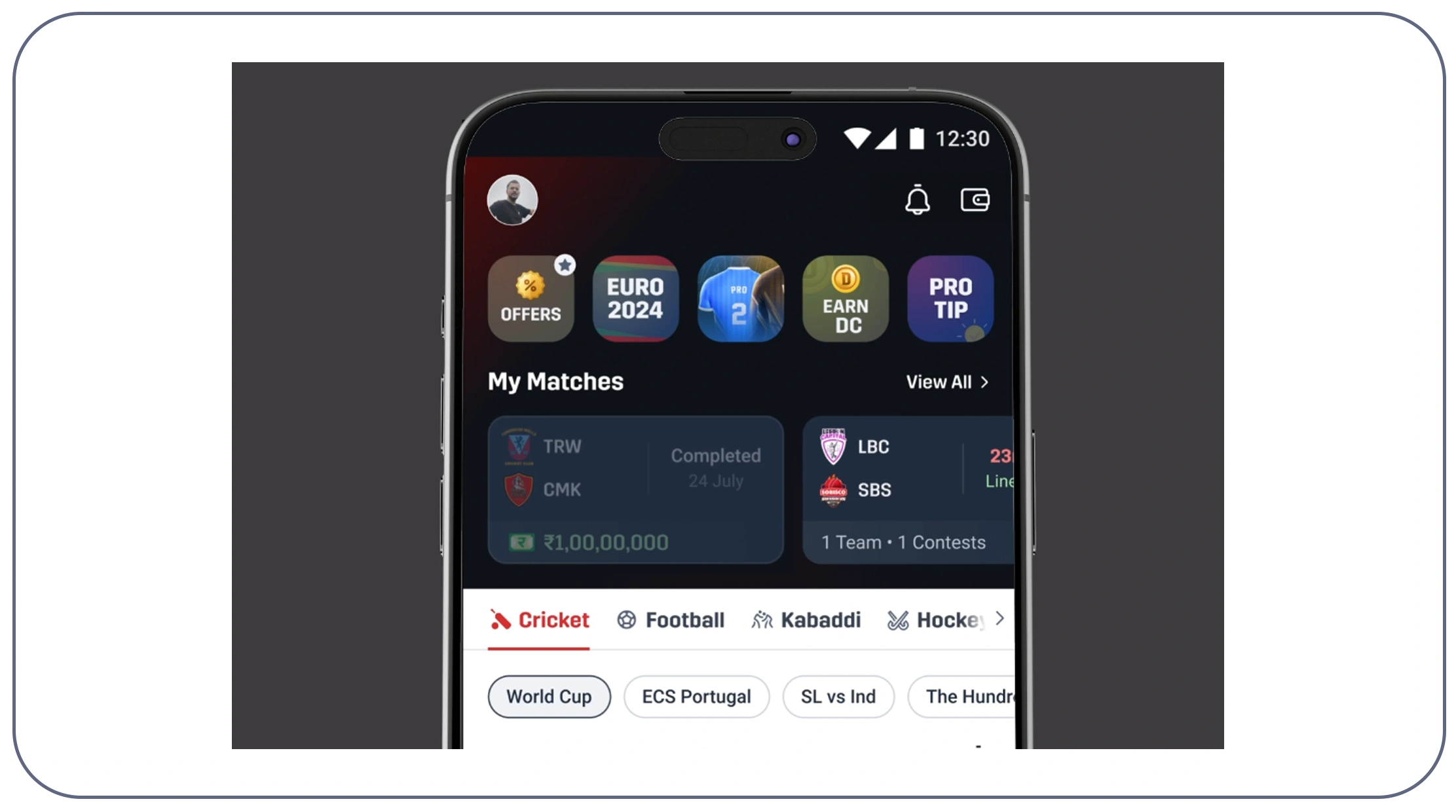
Manual data collection cannot keep pace with today's fast-moving fantasy sports ecosystem. Modern applications require thousands of player records, live score updates, and contest changes every hour. Automation ensures that businesses always have fresh and reliable datasets.
Organizations implementing Dream11 Fantasy sports player data collection strategies through automated scraping benefit from greater efficiency and faster decision-making.
Major Challenges of Manual Collection
- Delayed player updates
- Human data entry errors
- High operational costs
- Limited scalability
- Difficulty monitoring multiple tournaments
- Inconsistent historical records
Business Benefits of Automation
Automated workflows help organizations:
- Collect structured player information automatically.
- Track performance metrics continuously.
- Build accurate fantasy recommendations.
- Support AI and predictive analytics.
- Improve customer engagement.
- Reduce manual workload.
Industry Growth Statistics (2020-2026)
| Year | Fantasy Sports Users (Millions) | Estimated Data Volume Growth |
|---|---|---|
| 2020 | 58 | 18% |
| 2021 | 64 | 22% |
| 2022 | 71 | 26% |
| 2023 | 79 | 31% |
| 2024 | 88 | 36% |
| 2025* | 96 | 41% |
| 2026* | 105 | 47% |
*Projected industry estimates.
As user participation grows every year, automated sports data extraction becomes essential for maintaining accuracy, scalability, and competitive advantage. Companies investing in structured data pipelines can launch new fantasy features faster while minimizing operational overhead.
How Can Real-Time Sports Intelligence Improve Fantasy Platform Performance?
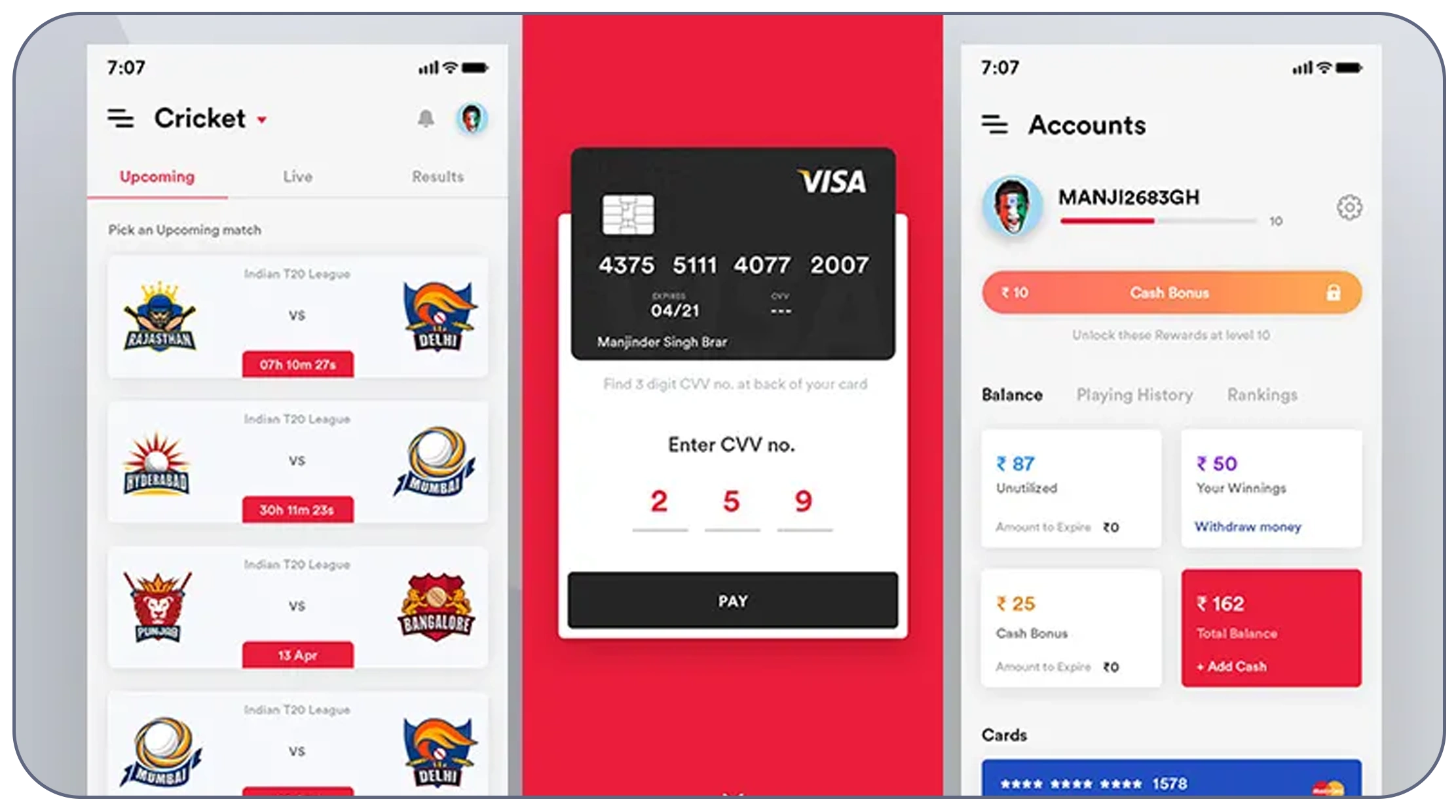
Real-time information is one of the biggest competitive advantages in fantasy sports. Users expect immediate updates whenever player performance changes during a live match. Even a short delay can reduce user engagement and impact analytical accuracy.
Implementing Real-time Dream11 fantasy sports data scraping enables organizations to capture fresh match information as events unfold.
Why Real-Time Data Matters
Modern fantasy platforms rely on live information for:
- Dynamic player rankings
- AI-powered recommendations
- Contest monitoring
- Score prediction
- Team optimization
- Performance tracking
Key Business Advantages
Real-time sports intelligence helps businesses:
- Improve prediction accuracy.
- Deliver live dashboards.
- Enhance customer satisfaction.
- Increase application engagement.
- Support personalized recommendations.
- Reduce latency in reporting.
Typical Data Pipeline
A modern sports analytics workflow generally includes:
- Data extraction
- Data validation
- Data normalization
- Analytics engine
- Visualization dashboard
- API integration
Industry Statistics (2020-2026)
| Year | Organizations Using Automated Sports Data | Average Analytics Accuracy Improvement |
|---|---|---|
| 2020 | 30% | 12% |
| 2021 | 36% | 16% |
| 2022 | 43% | 21% |
| 2023 | 51% | 26% |
| 2024 | 59% | 31% |
| 2025* | 67% | 35% |
| 2026* | 75% | 40% |
*Projected industry estimates.
Organizations that adopt automated real-time sports intelligence can react faster to changing match conditions, generate richer insights, and provide a superior fantasy sports experience. These capabilities also support advanced analytics, machine learning, and personalized user engagement strategies, helping businesses remain competitive in an increasingly data-driven fantasy sports industry.
How Can Businesses Build Better Match Intelligence with Automated Sports Data?
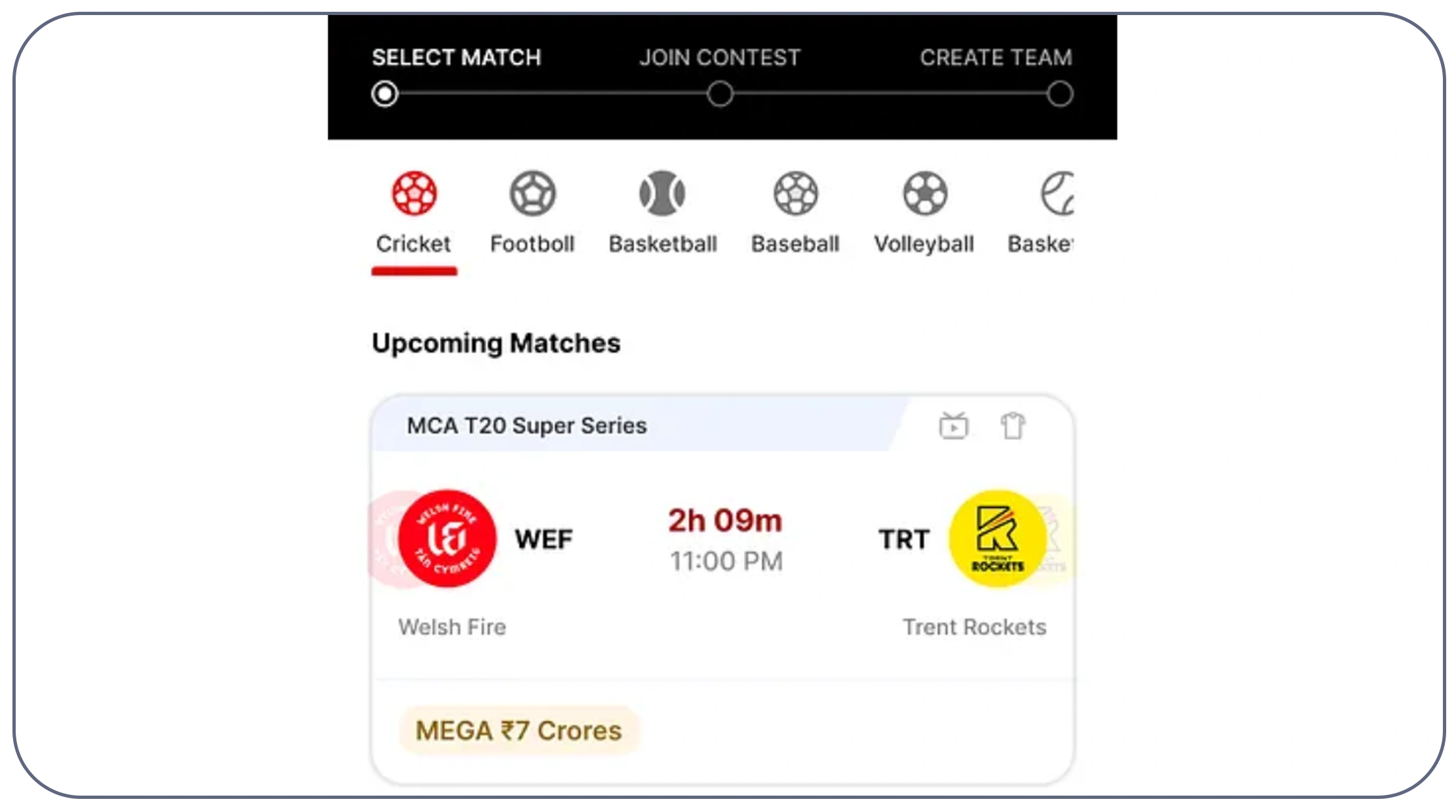
Fantasy sports platforms thrive on accurate and timely match information. Live scores, player performance, team lineups, venue details, and match events continuously influence fantasy contests. Businesses that rely on outdated or manually collected information often struggle to deliver reliable insights. Automated data extraction solves this challenge by collecting structured information at scale.
Organizations can scrape Dream11 Sports Match data via API to automate the collection of live match statistics, player scores, team combinations, contest information, and historical records. This approach minimizes manual intervention while ensuring that analytics dashboards remain current throughout every tournament.
Modern fantasy sports companies use automated match intelligence to:
- Monitor live player performance.
- Track batting, bowling, or other sport-specific statistics.
- Compare historical match outcomes.
- Generate predictive insights using AI.
- Update fantasy recommendations in real time.
- Improve user engagement with fresh content.
A robust data pipeline also enables businesses to integrate sports intelligence into mobile applications, reporting systems, CRM platforms, and business intelligence dashboards. This creates a unified ecosystem where decision-makers always have access to trusted information.
Match Data Automation Trends (2020-2026)
| Year | Live Data Adoption | Organizations Using Automated Match Analytics |
|---|---|---|
| 2020 | 28% | 22% |
| 2021 | 35% | 29% |
| 2022 | 44% | 37% |
| 2023 | 55% | 47% |
| 2024 | 66% | 58% |
| 2025* | 74% | 67% |
| 2026* | 82% | 76% |
*Projected industry estimates.
As the fantasy sports ecosystem expands, businesses increasingly depend on automated match intelligence to improve prediction accuracy, reduce operational delays, and enhance customer experiences. Reliable data collection also supports machine learning models, advanced reporting, fraud detection, and personalized fantasy recommendations that keep users engaged throughout every sporting season.
Why Should Companies Invest in Professional Data Extraction Solutions?
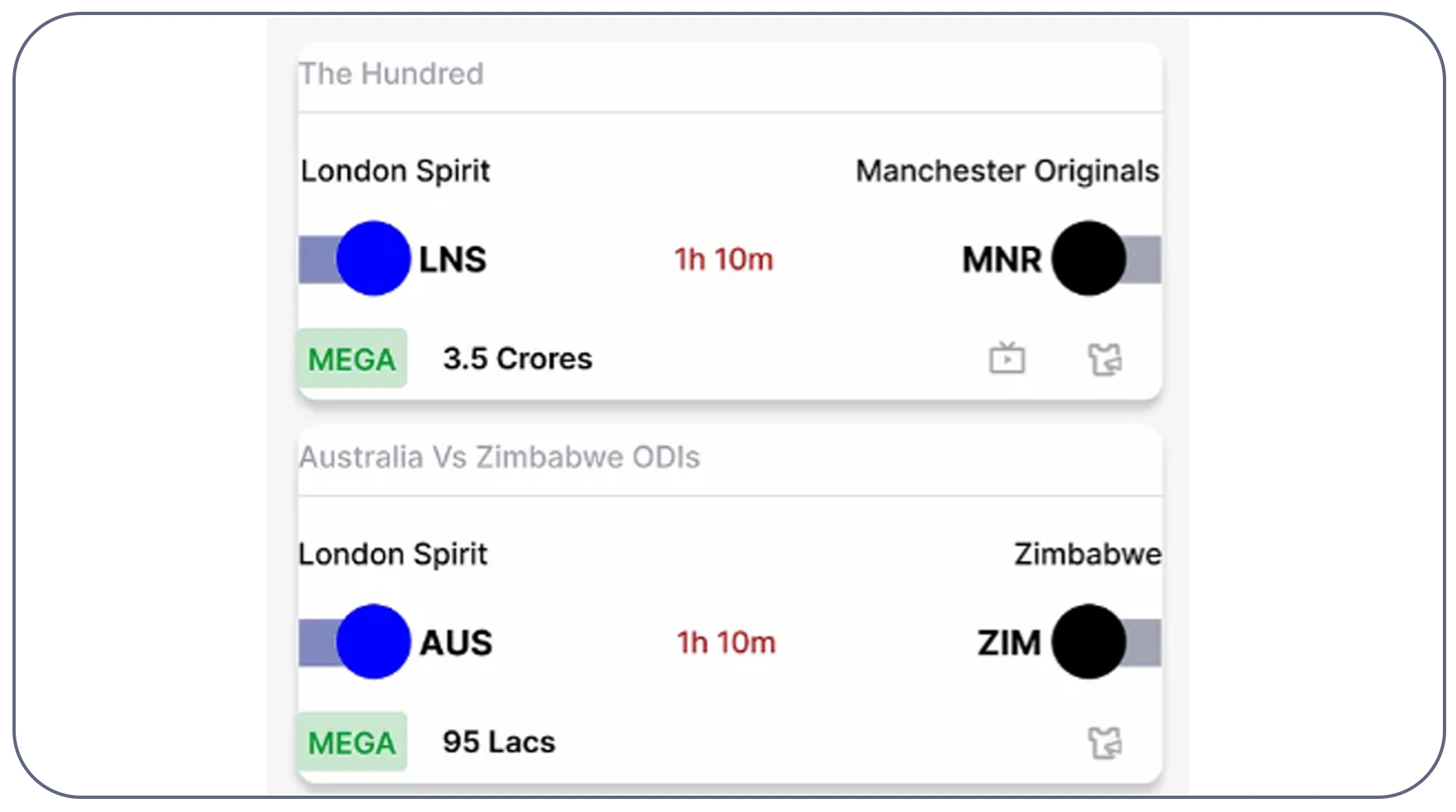
Reliable sports analytics depend on accurate, scalable, and uninterrupted data collection. While businesses may initially rely on manual extraction or basic automation tools, these methods often fail when websites update frequently or traffic volumes increase. Professional Web Scraping Services provide the infrastructure needed to collect large-scale sports datasets consistently and efficiently.
Experienced data providers build customized extraction pipelines capable of handling dynamic websites, pagination, changing layouts, CAPTCHA challenges, and structured data delivery. This allows organizations to focus on analytics and product development rather than maintaining complex scraping infrastructure.
Professional scraping solutions help businesses:
- Automate repetitive data collection.
- Improve overall data quality.
- Reduce operational costs.
- Scale with growing business requirements.
- Deliver standardized datasets.
- Support API integrations.
- Maintain historical sports databases.
- Accelerate business intelligence initiatives.
These services also include automated scheduling, continuous monitoring, data validation, and multiple export formats such as JSON, CSV, XML, or direct database integration. This flexibility makes it easier for fantasy sports companies to integrate data into existing workflows.
Market Adoption Statistics (2020-2026)
| Year | Businesses Using Managed Scraping Solutions | Average Operational Cost Reduction |
|---|---|---|
| 2020 | 24% | 11% |
| 2021 | 31% | 15% |
| 2022 | 39% | 19% |
| 2023 | 49% | 24% |
| 2024 | 58% | 29% |
| 2025* | 67% | 34% |
| 2026* | 76% | 39% |
*Projected industry estimates.
As demand for real-time fantasy sports intelligence continues to grow, organizations are increasingly partnering with experienced data providers to ensure uninterrupted access to accurate datasets. Professional scraping solutions improve scalability, simplify maintenance, and provide dependable data pipelines that support advanced analytics, AI applications, customer engagement, and long-term business growth.
How Can APIs Simplify Large-Scale Fantasy Sports Data Integration?
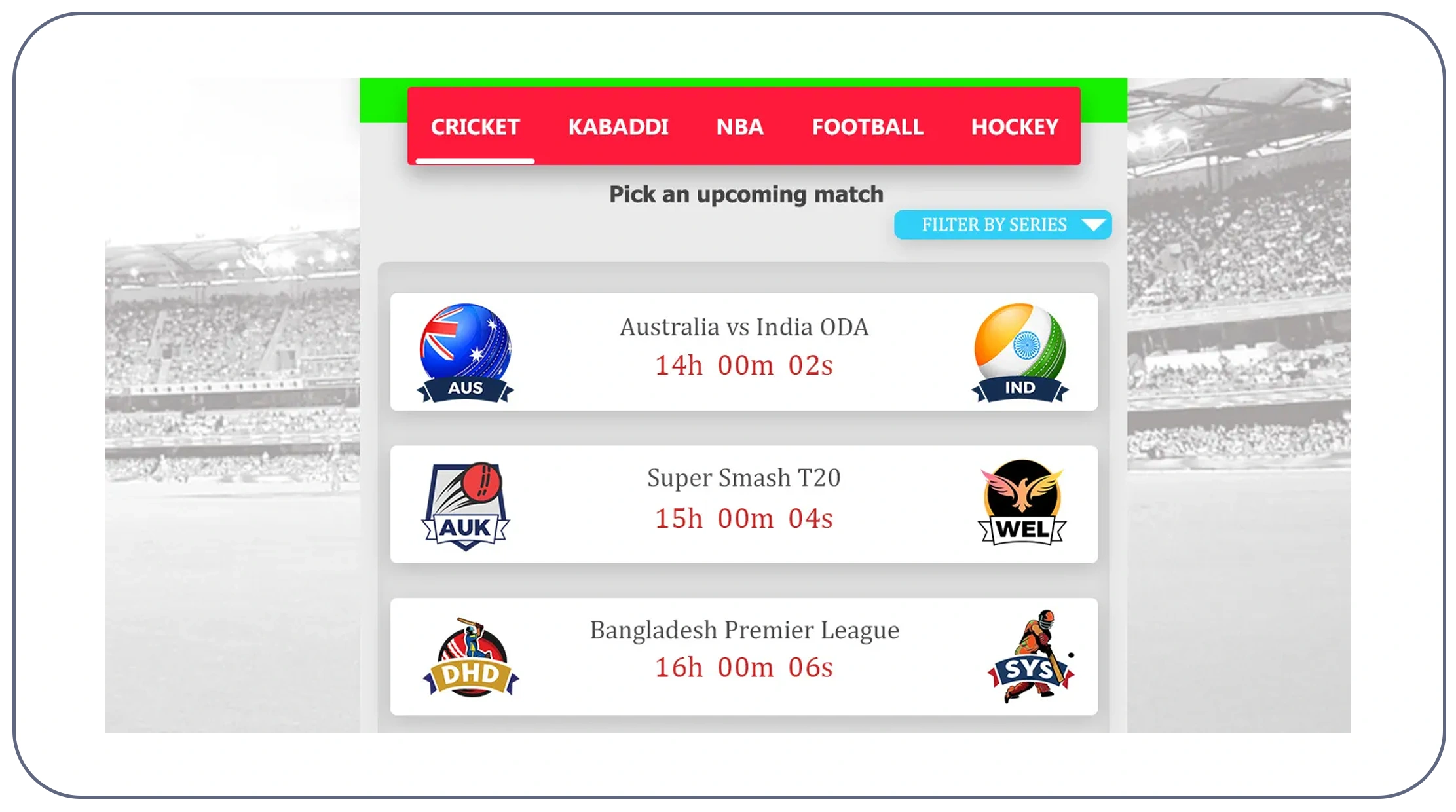
As fantasy sports platforms grow, they need faster and more reliable ways to access structured information. Manual exports and isolated scraping scripts can slow development and create inconsistent datasets. A centralized Web Scraping API solves this challenge by providing standardized access to player statistics, contest details, match schedules, rankings, and historical records.
Instead of building separate extraction workflows for every data source, businesses can integrate a single API into their applications. This reduces maintenance, accelerates product development, and enables engineering teams to focus on analytics and user experience.
A scalable scraping API supports numerous business functions, including:
- Automated player statistics updates
- Live match monitoring
- Historical sports data collection
- AI model training
- Predictive analytics
- Personalized fantasy recommendations
- Business intelligence dashboards
- Multi-platform integrations
The biggest advantage is consistency. Structured API responses make it easier to connect data with CRM platforms, visualization tools, machine learning pipelines, and reporting systems without extensive data cleaning.
Industry Adoption (2020-2026)
| Year | Businesses Using Data APIs | Productivity Improvement |
|---|---|---|
| 2020 | 27% | 13% |
| 2021 | 35% | 17% |
| 2022 | 44% | 22% |
| 2023 | 54% | 28% |
| 2024 | 63% | 33% |
| 2025* | 72% | 38% |
| 2026* | 81% | 44% |
*Projected industry estimates.
As organizations expand their digital products, API-first data delivery continues to replace traditional manual workflows. Businesses gain faster access to trusted datasets while reducing engineering effort, operational costs, and infrastructure complexity.
Why Is Mobile Data Becoming Essential for Fantasy Sports Innovation?
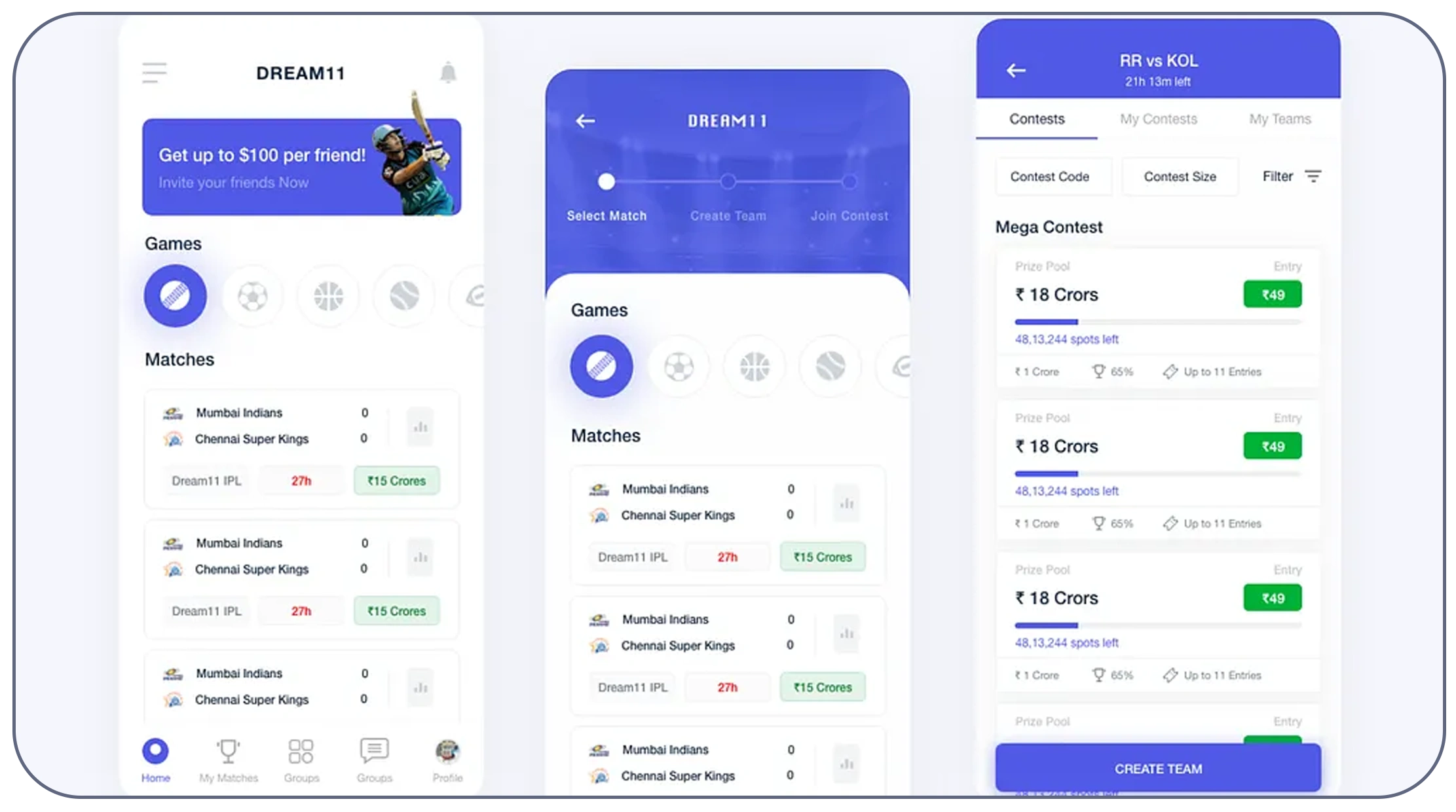
Fantasy sports users increasingly access contests through mobile applications. These apps contain valuable information that may not always be available through public web pages. Businesses that monitor mobile-first experiences gain deeper insights into user engagement, contest updates, notifications, and application performance.
A Mobile App Scraping API enables organizations to automate the extraction of publicly accessible mobile application data for analytics, market research, competitive intelligence, and product benchmarking. This helps businesses understand user behavior while supporting better strategic decisions.
Mobile application data can support:
- Competitive analysis
- Player trend monitoring
- Contest tracking
- User engagement analysis
- Market research
- Product improvement
- Performance benchmarking
- Feature comparison
Businesses combining mobile and web datasets develop a more complete understanding of the fantasy sports ecosystem. This enables richer dashboards, more accurate forecasting, and better customer experiences.
Mobile Analytics Growth (2020-2026)
| Year | Mobile Fantasy Users | Mobile Data Analytics Adoption |
|---|---|---|
| 2020 | 54% | 24% |
| 2021 | 60% | 31% |
| 2022 | 66% | 39% |
| 2023 | 72% | 48% |
| 2024 | 78% | 58% |
| 2025* | 84% | 67% |
| 2026* | 89% | 76% |
*Projected industry estimates.
The continued growth of mobile gaming makes app-based intelligence an important component of fantasy sports analytics. Organizations that integrate mobile insights alongside web data can respond faster to market changes, identify emerging trends, and improve customer engagement strategies.
Why Choose Real Data API?
Real Data API provides scalable, enterprise-grade sports data extraction solutions designed for businesses that need reliable, structured, and real-time information. Whether you are building a fantasy sports platform, conducting player performance analysis, or developing AI-powered sports applications, our solutions simplify data acquisition while maintaining accuracy and scalability.
Our platform helps businesses Scrape fantasy sports data using Dream11 API efficiently through automated workflows, structured datasets, and customizable delivery options. We focus on providing high-quality data that integrates seamlessly with analytics platforms, machine learning models, business intelligence tools, and internal applications.
What Makes Real Data API Different?
- Automated and scalable data extraction
- Real-time and historical sports datasets
- High-quality structured data delivery
- Flexible API integration
- Custom data collection solutions
- Enterprise-grade scalability
- Reliable technical support
- Secure and efficient data pipelines
With years of experience in web data extraction, Real Data API enables organizations to transform raw sports information into actionable business intelligence that drives growth, innovation, and competitive advantage.
Conclusion
Fantasy sports businesses rely on accurate, real-time information to deliver engaging user experiences and make informed decisions. Automation eliminates the limitations of manual data collection while improving speed, accuracy, and scalability. Organizations that Scrape fantasy sports data using Dream11 API can streamline player analytics, monitor live matches, build predictive models, and enhance fantasy platforms with reliable datasets.
As the fantasy sports industry continues to grow through 2026 and beyond, investing in automated data extraction and API-driven intelligence will become a critical competitive advantage. Businesses that adopt scalable data solutions today will be better positioned to improve operational efficiency, accelerate product innovation, and deliver richer customer experiences.
Ready to transform your fantasy sports analytics? Contact Real Data API today to implement customized data scraping and API solutions that help your business stay ahead with accurate, real-time sports intelligence!
Latest posts
How Foodpanda Food Dataset Helps Businesses Track Restaurants, Menus, Prices, Ratings, and Food Delivery Trends?

How IKEA E-commerce Dataset Helps Businesses Solve Product, Pricing, Category, and Retail Trend Challenges?
How Target e-commerce dataset Helps Brands Track Products, Prices, Availability, and Retail Market Trends for Smarter Insights?

How Dior fashion dataset Helps Brands Track Luxury Products, Prices, Collections, and Fashion Trends for Smarter Insights?






.png)