.gif)
.gif)

Quick Summary
- Shopee AI-Powered E-Commerce Analytics helps brands interpret marketplace data to understand pricing movements, product demand, customer feedback, and competitor positioning.
- Structured product, review, and seller data collected through an authorized Shopee Scraper workflow can support better benchmarking, assortment planning, and pricing decisions.
- Shopee's reported GMV growth provides useful market context, while product-level analysis is needed to identify actual price trends.
Introduction
Brands selling through Shopee need more than occasional price checks to understand their competitive position. They need consistent information about product prices, discounts, listings, reviews, seller activity, and changes in marketplace demand. Shopee AI-Powered E-Commerce Analytics brings these signals together so e-commerce teams can compare competitors, recognize pricing patterns, and make more informed decisions. Sea Limited reported that Shopee's gross merchandise value (GMV) reached US$39.7 billion in the third quarter of 2026, up 23.3% year over year. This scale makes structured marketplace intelligence valuable for sellers, retailers, distributors, and consumer brands.
A Shopee Scraper may be used in an authorized data-collection workflow to organize accessible marketplace information into a consistent format. Before collecting data, businesses should check Shopee's applicable terms, permissions, and approved access methods. Shopee's terms in several markets restrict automated monitoring or copying without prior written consent.
How can marketplace data reveal pricing opportunities?
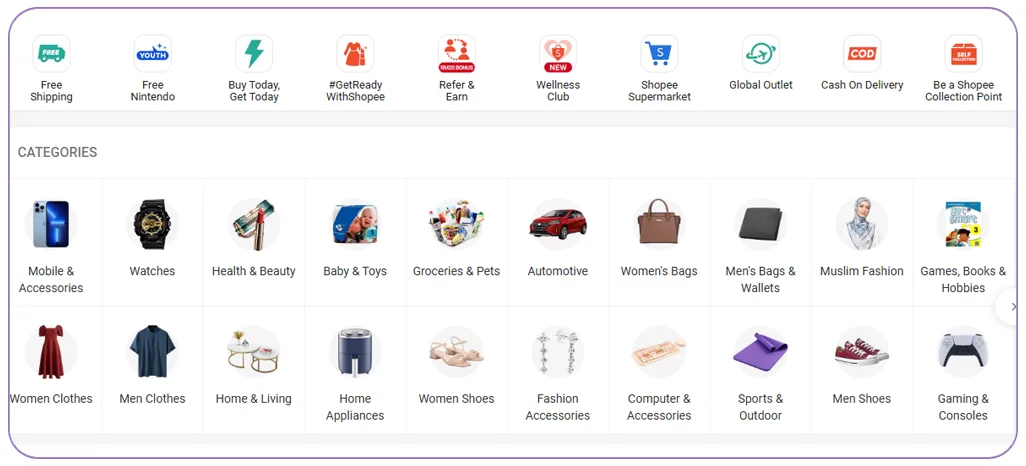
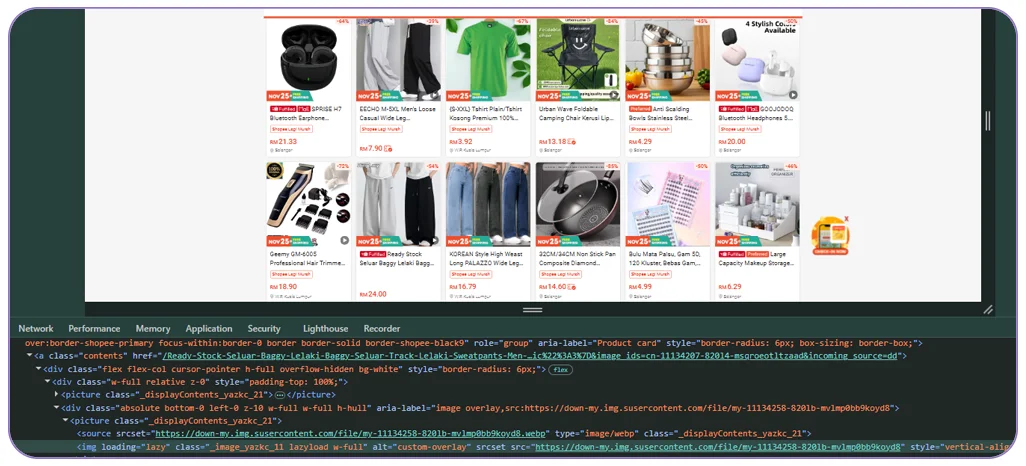
Shopee e-commerce website scraping is a term commonly used for collecting product-listing information from an e-commerce marketplace. Where collection is permitted, the resulting dataset can include product titles, item identifiers, listed prices, promotional prices, product categories, variants, seller identifiers, and availability indicators. These fields help brands compare equivalent products across sellers and identify differences in price positioning.
The key is to compare like with like. A lower listed price does not always mean a better offer: product size, bundle quantity, shipping charges, vouchers, seller fulfillment, and variant selection can change the actual value. Analytics teams should normalize these attributes before calculating price gaps. They can then segment competitors by product category, brand, price tier, or seller type.
Shopee AI-Powered E-Commerce Analytics can help teams combine historical price observations with product attributes and marketplace context. AI-supported classification can group similar listings, flag unusual price changes, and summarize competitor movements for human review. It should not treat every price difference as a genuine market trend; product matching and data-quality checks remain essential.
Shopee marketplace scale: reported GMV
| Period | Shopee GMV (US$ billions) | Context |
|---|---|---|
| 2020 | 35.4 | Full-year reported GMV |
| 2021 | 62.5 | Full-year reported GMV |
| 2022 | 73.5 | Full-year reported GMV |
| 2023 | 78.5 | Full-year reported GMV |
| 2024 | 100.5 | Full-year reported GMV |
| 2025 | 127.4 | Full-year reported GMV |
| 2026 | 39.7 | Q3 only; not a full-year figure |
Sources: Sea Limited's full-year results for 2020–2025 and Q3 2026 results. The 2026 figure is for one quarter and should not be compared directly with full-year totals.
What brands should do: Build a price index for matched products, record the observation date, and distinguish regular prices from vouchers or temporary promotions. This creates a more dependable basis for competitive pricing decisions.
How do customer reviews help explain competitor performance?
Price alone rarely explains why one listing attracts more attention than another. Customer feedback can reveal product satisfaction, recurring quality concerns, packaging issues, delivery experiences, and perceived value. When collected and analyzed with appropriate permission, review text and rating information can help brands understand how shoppers evaluate competing products.
Shopee product review data scraping describes the collection of review-related information from marketplace listings where access is authorized. Useful fields may include rating values, review dates, review text, product variants, and publicly displayed review counts. The analysis should separate product feedback from seller or delivery feedback wherever the source makes that distinction clear. Otherwise, a logistics complaint could be incorrectly interpreted as a product-quality problem.
AI-assisted text analysis can categorize feedback into themes such as durability, fit, ingredients, packaging, usability, or value for money. Sentiment classification can help prioritize large volumes of comments, but it should be treated as an aid rather than a definitive judgment. Local languages, slang, sarcasm, short comments, and mixed sentiment can reduce classification accuracy. Human review of samples is therefore important.
What should brands measure?
| Review signal | Business interpretation | Suggested action |
|---|---|---|
| Average rating | Overall customer feedback | Compare matched products and variants |
| Review volume | Level of visible customer feedback | Track changes over time |
| Repeated product complaints | Potential quality or expectation gap | Investigate product specifications |
| Positive feature mentions | Attributes customers appreciate | Inform product messaging |
| Recent negative feedback | Emerging customer concern | Review recent comments and listing changes |
These are analytical categories, not claims about Shopee-wide review performance. A useful review dashboard should show the source, collection date, language, product match confidence, and the number of records analyzed. This prevents teams from treating incomplete review samples as representative of all buyers.
For brands, the practical benefit is a better explanation of competitor performance. If a competing product sells at a higher price but receives consistently positive feedback about a specific feature, that information may help explain its positioning. If lower-priced products attract complaints about durability or sizing, brands can use the insight to review their own product specifications and customer communication.
How can seller-level information improve competitor analysis?
Product comparisons become more useful when businesses understand the sellers behind the listings. Seller-level attributes can help distinguish established stores from newer competitors, identify which merchants carry particular brands, and examine how seller activity relates to product pricing and availability.
Shopee seller information collection refers to organizing seller-related information that is publicly displayed or otherwise made available through an authorized channel. Depending on permissions and source availability, relevant fields may include shop name, seller identifier, store category, listed products, visible ratings, and other non-sensitive business attributes. Personal information about account holders should not be harvested or repurposed.
Seller analysis should focus on business questions rather than simply ranking stores. For example, a brand may want to know whether the same product is listed by multiple sellers, whether authorized retailers maintain consistent pricing, or whether a competitor's assortment is expanding. Seller-product relationships can also help identify duplicate listings and reduce the risk of comparing different products as if they were identical.
Shopee AI-Powered E-Commerce Analytics can support seller segmentation by grouping records using permitted business attributes. It can also flag changes in a seller's product assortment or highlight price differences between sellers offering matched items. These outputs should be checked against listing identifiers and collection timestamps.
A practical seller analysis framework
- Seller coverage: Count distinct sellers offering matched products.
- Price dispersion: Compare the minimum, median, and maximum observed price for equivalent listings.
- Assortment overlap: Identify products shared by multiple sellers.
- Listing continuity: Track whether matched listings remain available across observation periods.
- Data confidence: Record missing fields and uncertain product or seller matches.
Sea Limited reported 4.5 billion Shopee gross orders in Q3 2026, up 25.5% year over year. That figure describes marketplace-wide order volume, not the performance of any individual seller. Brands should use it as scale context, not as a substitute for seller-level evidence.
Want to understand how competing sellers position their products? Build an authorized, structured marketplace dataset with Real Data API and turn seller and listing information into actionable analysis!
Get Insights Now!What should brands extract from marketplace listings?
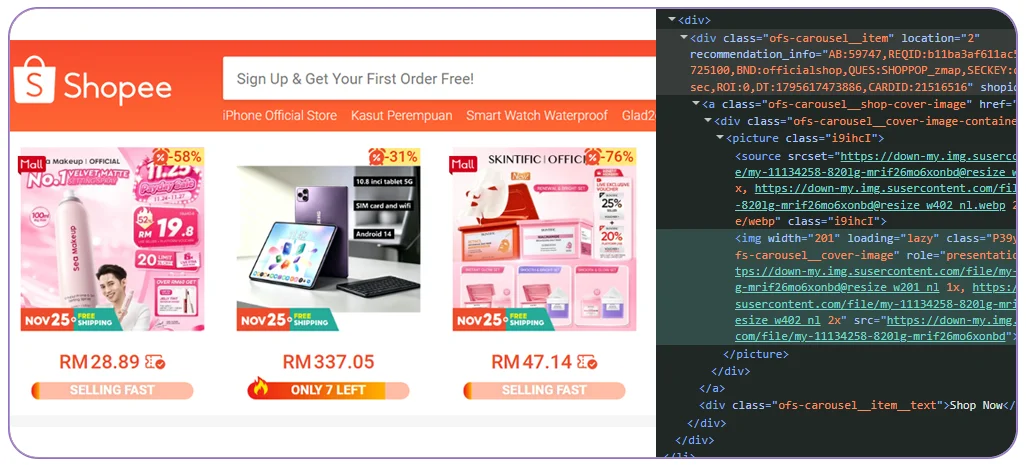
Marketplace listing analysis works best when product records are complete, consistently formatted, and tied to a clear observation date. Extract Shopee marketplace listings is a useful description of the task, but businesses should first establish which data sources and collection methods they are permitted to use. Shopee's terms in the Philippines and Singapore state restrictions on automated devices or manual processes used to monitor or copy site content without prior written consent. Businesses should obtain the required authorization or use approved access routes before collecting information.
For permitted datasets, the listing schema should capture fields that directly support the intended analysis. Common examples include product title, category, brand, product identifier, variant, listed price, promotional price, currency, availability, seller identifier, listing URL, and timestamp. Not every field will be available for every market or source, so missing values should remain explicit rather than being filled with guesses.
Recommended listing fields
| Data field | Why it matters |
|---|---|
| Product ID or listing ID | Helps identify and revisit the same listing |
| Product title and brand | Supports categorization and matching |
| Category and variant | Enables like-for-like comparisons |
| Regular and promotional price | Separates base price from discounts |
| Currency and market | Prevents invalid cross-market comparisons |
| Seller ID | Connects listings to seller-level analysis |
| Availability status | Adds stock context to price observations |
| URL and timestamp | Supports traceability and historical review |
Product matching is one of the most important steps. A product title may contain abbreviations, spelling differences, or promotional wording. Matching should therefore use several attributes, such as brand, model, size, variant, and product identifier, rather than relying on title similarity alone.
After collection, teams should validate currency formats, remove duplicate records, check missing identifiers, and retain source timestamps. A listing with an expired discount or unavailable variant should not be treated as a current offer. Clear validation rules help analysts distinguish genuine market movements from data errors.
How can AI turn marketplace research into competitive strategy?
Marketplace research becomes more valuable when teams can move from raw records to repeatable business decisions. Shopee Web Scraping for Ecommerce Research is often used to describe the gathering of marketplace data for analysis. For Shopee, any automated collection must be based on an authorized method and must respect the platform's applicable terms and restrictions.
Once the business has a permitted and validated dataset, AI can help with several analytical tasks. Product classification can assign listings to consistent categories. Entity resolution can identify likely duplicates. Anomaly detection can flag sudden price changes or unexpected availability shifts. Text analytics can summarize themes in customer feedback, while forecasting models can estimate future demand when sufficient historical observations and suitable explanatory variables exist.
Shopee AI-Powered E-Commerce Analytics should combine these capabilities with clear business rules. A pricing recommendation, for example, should account for the product's variant, seller, shipping costs, discount conditions, and competitor set. A model that compares only headline prices may recommend an inappropriate price change.
Useful AI-enabled analyses
- Price movement alerts: Identify meaningful changes in matched product prices and route them to an analyst.
- Competitor clustering: Group sellers or products by category, price tier, and other permitted attributes.
- Review theme detection: Summarize recurring customer concerns and positive product attributes.
- Assortment gap analysis: Identify relevant products or variants missing from a brand's monitored catalog.
- Demand signals: Compare historical listing observations with sales or order data that the business is authorized to use.
The market context reinforces the value of disciplined analysis. Shopee's GMV reached US$39.7 billion in Q3 2026, compared with US$32.2 billion in Q3 2025, an increase of 23.3%. Gross orders rose from 3.6 billion to 4.5 billion over the same quarterly comparison. These figures show marketplace growth, but they do not prove that individual product prices rose or fell. Product-level observations are still required to identify pricing trends.
For decision-makers, the strongest approach is a human-reviewed analytics loop: collect authorized data, validate it, generate model-supported findings, check the underlying listings, and then decide whether a pricing or assortment change is justified.
What should a reliable marketplace dataset include?
A marketplace dataset should be designed around the decisions it needs to support. A pricing team may prioritize product identifiers, prices, discount details, variants, and timestamps. A category manager may need assortment coverage and seller relationships. A customer experience team may focus on review themes and product ratings. Combining all these requirements into one unstructured file can make analysis difficult.
A well-designed Shopee E-Commerce Dataset should use consistent field definitions and preserve source context. Each record should identify the marketplace or authorized source, country or market, collection date, currency, and product-matching status. Historical snapshots are particularly important because a current listing alone cannot show whether a price is stable, seasonal, or part of a short-term promotion.
Recommended data-quality checks
| Check | What it prevents |
|---|---|
| Unique listing identifiers | Duplicate records |
| Standardized currency | Incorrect price comparisons |
| Variant-level matching | Comparing different sizes or models |
| Timestamp validation | Treating old prices as current |
| Missing-field reporting | Hiding incomplete records |
| Source and permission tracking | Unclear data provenance |
| Review-language tagging | Misreading multilingual feedback |
The dataset should also distinguish observed facts from calculated metrics. A displayed price is an observed value; a price index, median competitor price, or discount percentage is a derived metric. Keeping the two separate makes the analysis easier to audit and update.
For 2026, Sea Limited's latest Q3 report available as of November 25, 2026, records Shopee GMV of US$39.7 billion and 4.5 billion gross orders for the quarter. This is a quarterly snapshot, not a complete 2026 annual total.
A useful dataset is not simply large. It is relevant, traceable, consistently structured, and collected under appropriate permissions. Those characteristics make it possible for analysts to compare competitors fairly and explain the evidence behind a pricing recommendation.
Why Choose Real Data API?
E-commerce businesses need dependable data workflows that connect marketplace information with practical business decisions. Real Data API can support this process through structured data delivery, flexible field selection, and solutions designed around specific research requirements.
- 1. Structured data for business analysis
A consistent schema makes it easier to compare product listings, seller information, prices, and customer feedback. Businesses can define the fields they need and organize records for reporting and analytics.
- 2. Flexible research requirements
Different teams need different datasets. Pricing analysts may require historical price observations, while category managers may prioritize product variants and assortment coverage. Data requirements should reflect those business objectives.
- 3. Data quality and traceability
Reliable analysis depends on timestamps, source references, consistent identifiers, and validation checks. These elements help analysts investigate unusual records and understand how a metric was calculated.
- 4. Actionable marketplace intelligence
With Scrape Product Data From Shopee as a research objective, businesses should prioritize authorized access, accurate product matching, and clear data definitions. Shopee AI-Powered E-Commerce Analytics can then help transform validated records into pricing comparisons, competitor summaries, and category insights.
Real Data API can help businesses plan a structured data workflow around their requirements. The emphasis should remain on relevant fields, responsible collection, and usable outputs rather than simply collecting the largest possible volume of records.
Conclusion
Shopee's marketplace growth creates opportunities for brands to strengthen competitor research, but effective pricing decisions require accurate product-level evidence. By combining authorized listing information, seller context, customer feedback, and AI-supported analysis, businesses can identify pricing differences and understand competitive positioning more clearly. Shopee AI-Powered E-Commerce Analytics helps connect these data points with practical retail decisions. If your business wants to improve marketplace research, organize product intelligence, and build a more consistent competitive analysis process, connect with Real Data API to discuss a structured data solution aligned with your requirements!
FAQs
1. How does AI support Shopee pricing analysis?
Shopee AI-Powered E-Commerce Analytics can identify price changes, compare matched products, detect anomalies, and summarize competitor movements for analyst review and informed pricing decisions.
2. What information can a Shopee Scraper collect?
A Shopee Scraper may organize permitted listing fields such as product titles, prices, variants, seller identifiers, and availability, subject to platform permissions and applicable terms.
3. Why is product-level data important?
Shopee e-commerce website scraping describes listing research that helps brands compare equivalent products, track price differences, and avoid misleading comparisons between different variants or bundles.
4. Can reviews improve competitor research?
Shopee product review data scraping can support authorized analysis of ratings and feedback themes, helping businesses understand customer concerns, product strengths, and perceived value.
5. Why analyze seller information?
Shopee seller information collection helps businesses examine seller-product relationships, assortment overlap, and pricing differences while respecting privacy requirements and platform restrictions.
Latest posts
Amazon.ae Multi-SKU Price Tracking for the UAE Market
Mercado Livre Brazil Data Scraping: Daily Hair Dryer Data and How to Handle Rounded sold_quantity Values

Real Estate Data Scraping Across the Middle East and Turkey: A Managed Service for 26 Portals and 22 Million Records a Month
How Real-Time Product Data Scraping Helps Retailers Track Prom.ua Market Trends in 2026?



.png)


