TL;DR
- Snapdeal E-commerce Dataset helps brands analyze product assortments, prices, seller activity, ratings, availability, and marketplace movements from structured e-commerce information.
- Snapdeal Product Data Scraping supports recurring collection of catalog information for competitive research, pricing intelligence, assortment planning, and seller monitoring.
- Historical marketplace data helps retailers identify category changes, pricing patterns, seller behavior, and emerging opportunities for better e-commerce decisions.
Introduction
Marketplace competition changes quickly. Products are added or removed, prices fluctuate, sellers adjust their offers, discounts appear, and customer feedback changes continuously. For retailers, brands, marketplace teams, and market researchers, manually tracking these signals can be difficult and time-consuming.
A Snapdeal E-commerce Dataset can provide a historical foundation for analyzing these marketplace signals. Product names, categories, prices, discounts, sellers, ratings, reviews, availability, and product URLs can be organized into consistent records that support historical comparison and business intelligence.
Snapdeal Product Data Scraping can help businesses collect marketplace information at scale and at recurring intervals. Instead of relying on occasional manual checks, organizations can establish a repeatable data pipeline that captures changes and delivers analytics-ready information.
This matters particularly for buyer personas such as e-commerce managers, pricing analysts, category managers, competitive-intelligence teams, marketplace sellers, and consumer-research organizations. Their challenge is not simply finding information; it is converting continuously changing marketplace information into reliable business signals.
India's e-commerce market provides an important backdrop. According to IBEF, India's e-commerce industry was valued at approximately US$125 billion in 2024 and is projected to reach US$345 billion by 2030.
The opportunity is therefore clear: structured marketplace data can help businesses understand what is selling, how products are priced, who is competing, and how marketplace conditions are evolving.
How Can Product-Level Marketplace Data Improve Market Research?
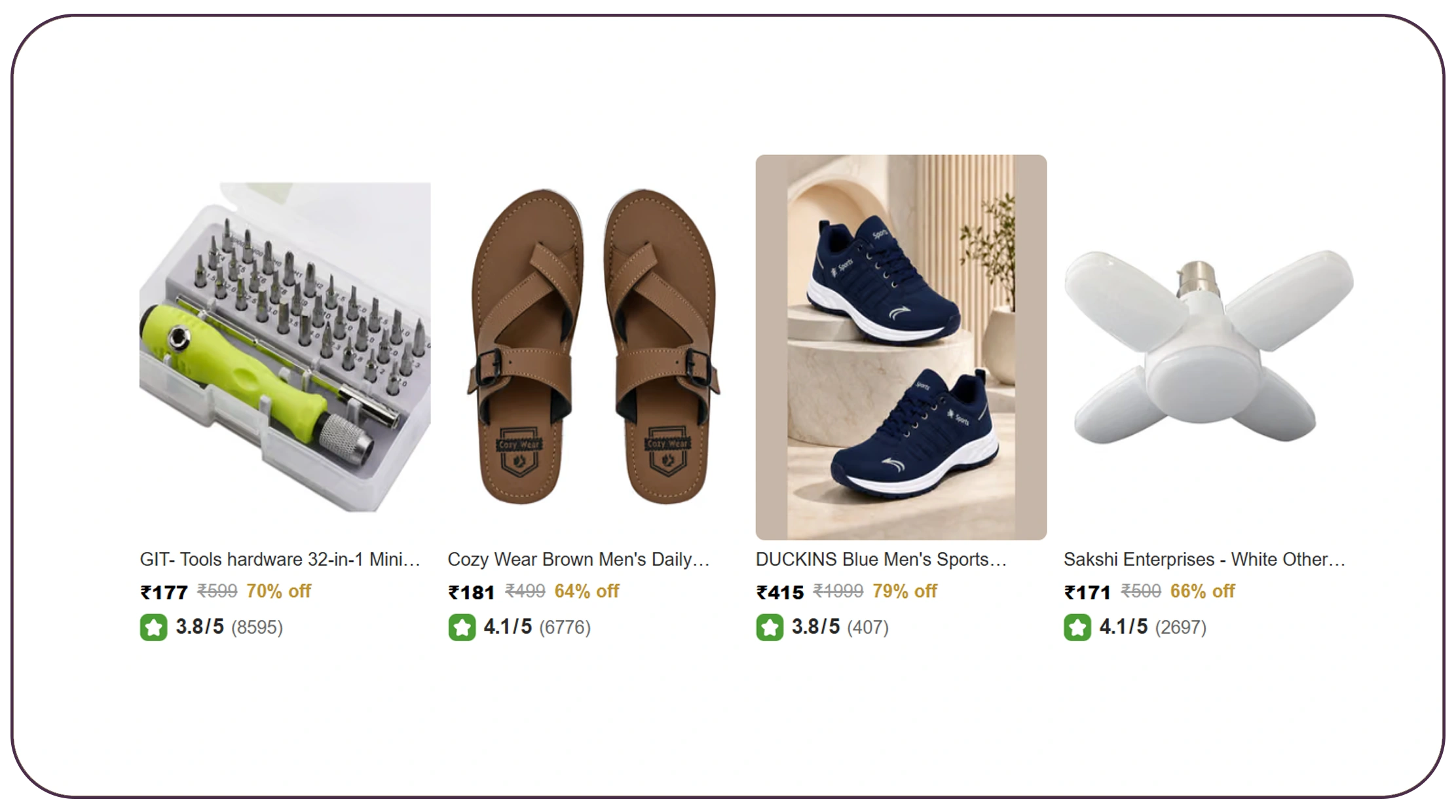
Scrape Snapdeal product data for market research workflows can help organizations transform marketplace listings into structured research datasets.
A product record can contain much more than a product name and price. Depending on what is publicly accessible, businesses can capture category, subcategory, brand, seller, MRP, selling price, discount, rating, review count, availability, specifications, and product URL.
This creates a common analytical structure for comparing hundreds or thousands of marketplace listings.
Product Information That Can Be Analyzed
| Data Attribute | Research Application |
|---|---|
| Product Name | Product identification |
| Brand | Brand comparison |
| Category | Category intelligence |
| Selling Price | Price benchmarking |
| MRP | Discount calculation |
| Discount | Promotion analysis |
| Seller | Seller competition |
| Rating | Customer perception |
| Review Count | Product engagement |
| Availability | Stock visibility |
| Product URL | Listing verification |
The biggest advantage is consistency. When product records follow the same schema, analysts can calculate category-level metrics instead of manually reviewing individual listings.
2020–2026: How Marketplace Research Became More Data-Driven
From 2020 through 2026, online shopping became an increasingly important channel for Indian consumers, increasing the value of digital marketplace intelligence. India's e-commerce ecosystem expanded beyond traditional metropolitan audiences, while mobile commerce, digital payments, logistics networks, and marketplace platforms contributed to broader online retail adoption.
IBEF reported that India's e-commerce sector was expected to reach US$111.4 billion in 2025, compared with US$87.5 billion in 2024.
For researchers, this expansion creates a larger volume of marketplace observations. A product catalog is no longer just a place where consumers purchase products. It can also act as a source of competitive information.
Historical collection makes that information more useful. Analysts can compare category depth across periods, identify price changes, monitor product availability, and examine how brands position themselves within particular segments.
For example, a category manager could compare the number of competing products within a category and calculate median price points. A market researcher could identify which brands appear most frequently. A pricing team could monitor changes in discounts and selling prices.
The actionable insight is to build research around business questions rather than simply collecting every available field. A pricing project needs reliable price history. A category project needs consistent product and category attributes. A seller study needs seller-level information and listing relationships. That approach keeps datasets focused, useful, and easier to analyze.
How Can Price and Seller Information Strengthen Competitive Analysis?
A Snapdeal API for product price and seller data can support structured delivery of marketplace information to businesses that already use databases, dashboards, analytics platforms, or internal applications.
Price intelligence becomes more meaningful when it is combined with seller information. Two products can have similar prices but very different seller profiles, ratings, availability, or promotional positioning.
Price and Seller Metrics
| Metric | What It Can Reveal |
|---|---|
| Selling Price | Current market positioning |
| MRP | Listed price reference |
| Discount | Promotional intensity |
| Seller Name | Marketplace competition |
| Seller Rating | Seller reputation |
| Product Rating | Customer perception |
| Review Count | Customer engagement |
| Availability | Stock visibility |
| Price History | Pricing movement |
A structured API workflow can help businesses integrate these observations into their existing technology stack.
For example, a retailer could store daily price observations in a data warehouse and calculate:
Price Change % = (Current Price − Previous Price) ÷ Previous Price × 100
This simple metric can identify products experiencing meaningful pricing movements.
2020–2026: Why Price Intelligence Became More Important
Between 2020 and 2026, online consumers gained greater access to price comparisons. This increased competitive pressure for retailers and marketplace sellers. Buyers can often compare multiple products and offers before purchasing, making price positioning an important component of marketplace strategy.
The broader Indian digital-commerce environment also became more sophisticated. IBEF reported that India's digital payments and online retail ecosystem continued expanding, supporting the growth of digital commerce and consumer access.
For businesses, price monitoring should therefore move beyond collecting today's price. Historical records provide the context required to understand whether a change is temporary or part of a longer pattern.
Seller data adds another dimension. A category may have many sellers but limited price differentiation. Another category may have fewer sellers but intense discount competition. These differences can influence marketplace strategy.
Pricing teams can use seller-level observations to identify competitive pressure. Category managers can detect categories with increasing seller participation. Marketplace teams can evaluate whether product availability and seller presence are changing together.
A reliable data pipeline should also retain timestamps. Without dates and times, analysts cannot reconstruct historical marketplace conditions accurately. The result is a more complete view of marketplace competition: product + price + seller + availability + time.
How Does Online Marketplace Monitoring Support Product Research?
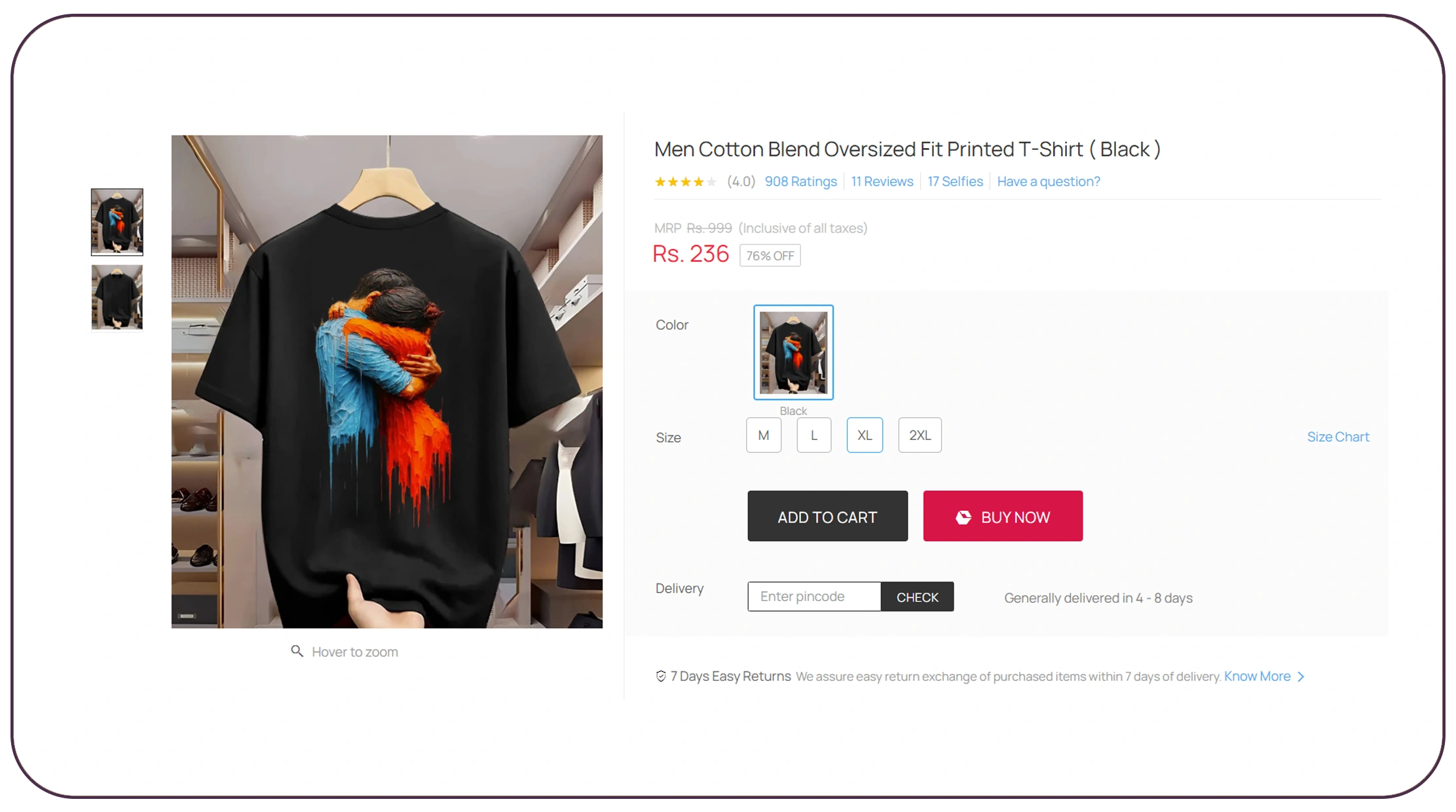
A Snapdeal web data scraper for marketplace product research can help organizations collect structured listing information repeatedly and convert it into historical marketplace intelligence.
This is valuable when businesses need to monitor large product catalogs. Manual research becomes increasingly difficult when thousands of listings, multiple categories, and frequent price changes are involved.
Research Workflow
| Step | Activity | Result |
|---|---|---|
| Discovery | Identify relevant products/categories | Product universe |
| Collection | Capture marketplace information | Raw records |
| Cleaning | Standardize fields | Consistent dataset |
| Validation | Check data quality | Reliable records |
| Storage | Preserve historical snapshots | Trend dataset |
| Analysis | Calculate metrics | Business insights |
| Reporting | Build dashboards/reports | Actionable intelligence |
2020–2026: From Manual Checks to Continuous Monitoring
The shift toward digital-first shopping between 2020 and 2026 increased the importance of continuous marketplace observation. A manual researcher may check a handful of products and record prices in a spreadsheet. That method becomes inefficient when the research scope expands to hundreds of categories or thousands of listings.
Automation can solve the scale problem, but successful marketplace intelligence requires more than extraction. Businesses need a stable data model that allows records from different dates to be compared.
For example, a product can change price without changing its product name. A seller can disappear from a listing. A product can become unavailable and later return. A new competing product can enter the category. A historical data pipeline can capture each of these events.
For market researchers, this creates opportunities to identify category expansion, pricing patterns, competitive entry, and changes in product positioning. For brands, it can provide visibility into how their products appear relative to competing listings.
The best workflows also define a monitoring frequency based on business need. Fast-changing pricing categories may require frequent collection, while slower-moving categories may only require periodic snapshots. The objective should always be proportional monitoring: collect often enough to capture meaningful changes without creating unnecessary data volume.
Want to turn marketplace listings into structured competitive intelligence? Talk to Real Data API about building a scalable e-commerce data workflow.
Get Insights Now!How Can Seller Intelligence Reveal Marketplace Competition?
Businesses that Extract Snapdeal seller data for marketplace intelligence can examine how seller participation influences pricing, availability, product visibility, and competition.
Seller-level information can help answer questions that product-only datasets cannot answer. For example:
- Which sellers offer products within a category?
- How many sellers compete for similar products?
- Which sellers consistently appear across categories?
- How do seller ratings compare?
- Are multiple sellers offering similar prices?
- Which listings show changing availability?
- Does seller competition increase during promotional periods?
Seller Intelligence Framework
| Seller Metric | Business Question |
|---|---|
| Seller Count | How competitive is the category? |
| Seller Rating | Which sellers have stronger reputations? |
| Seller Product Count | Which sellers have broader assortments? |
| Seller Price | Who is price-competitive? |
| Availability | Who maintains stock? |
| Review Activity | How much customer engagement exists? |
2020–2026: Growing Importance of Marketplace Sellers
Marketplace sellers became increasingly important to digital retail between 2020 and 2026 because marketplaces bring together large numbers of merchants, brands, distributors, and specialized sellers.
This creates a complex competitive environment. A product may have multiple offers, and the competitive situation can change even when the underlying product remains the same.
Seller-level historical data provides a way to study these changes. A marketplace intelligence team could calculate seller participation by category and identify categories where competition is increasing. A brand could identify recurring sellers associated with competing products. A pricing team could compare price distributions across seller groups.
The important point is that seller intelligence should be connected to product intelligence. Seller data alone may show who is present, but combining seller and product records reveals what those sellers are offering and at what price.
This combined approach can also help marketplace businesses identify opportunities. Categories with high demand indicators but limited seller participation may deserve additional research. Categories with many sellers and narrow price differences may require a different competitive strategy. Historical seller observations make the analysis stronger because they reveal movement rather than a static snapshot.
What Can a Structured Marketplace Dataset Reveal Over Time?
snapdeal-e-commerce-dataset.php can provide a historical foundation for studying products, prices, sellers, categories, discounts, availability, ratings, and reviews.
The dataset becomes particularly useful when records are collected at regular intervals and stored with timestamps.
Example Marketplace KPI Dashboard
| KPI | Purpose |
|---|---|
| Total Products | Measure catalog size |
| Average Price | Track pricing levels |
| Median Price | Reduce impact of outliers |
| Average Discount | Monitor promotions |
| Seller Count | Measure competition |
| Average Rating | Understand customer perception |
| Review Count | Measure engagement |
| Availability Rate | Monitor stock visibility |
| New Product Count | Track catalog expansion |
Businesses should distinguish between observed marketplace data and calculated metrics. Raw observations might include a product's listed price and rating. Calculated indicators could include average category price, discount percentage, seller concentration, or week-over-week price movement.
2020–2026: Why Historical Data Creates More Value
The 2020–2026 period highlights the importance of longitudinal marketplace analysis. A single data point answers "what is happening now?" A historical dataset can answer "what has changed?" That difference matters to business decision-makers.
Suppose a category's average price decreases by 8%. Without historical information, an analyst may not know whether that movement is unusual. With six months of observations, the analyst can identify whether the change is part of a recurring promotional pattern or a broader market shift.
Similarly, seller participation can be monitored over time. If the number of sellers rises consistently, competition may be intensifying. If seller participation falls while prices increase, supply or competitive conditions may have changed.
Product availability can also be studied historically. Repeated unavailability may indicate supply constraints, while short-term changes may correspond to promotional events.
This makes historical data valuable for forecasting, planning, and strategy.
For buyers, the most useful dataset is therefore not necessarily the largest dataset. It is the dataset that captures the right attributes, maintains consistent definitions, preserves historical observations, and supports the decisions the business needs to make.
How Can Automated Marketplace Collection Support Scalable Intelligence?
A Snapdeal Scraper, Snapdeal E-commerce Dataset workflow can support businesses that need recurring marketplace observations rather than one-time research.
The technology should be viewed as one component of a broader data pipeline. Collection, cleaning, normalization, validation, storage, and delivery all influence the final usefulness of the information.
Scalable Data Architecture
| Component | Role |
|---|---|
| Data Collection | Capture marketplace information |
| Parsing | Extract required attributes |
| Normalization | Standardize formats |
| Validation | Identify incomplete records |
| Historical Storage | Preserve changes |
| Analytics | Generate KPIs |
| Delivery | Send structured data to users/systems |
2020–2026: Why Scalability Became a Core Requirement
From 2020 to 2026, the growth of online commerce increased the volume and frequency of marketplace information that businesses wanted to monitor. More products, sellers, categories, and price points create more data to process.
Manual collection does not scale linearly. Adding another category can mean hundreds of additional product pages. Adding another marketplace or region can multiply the workload again.
A scalable architecture addresses this challenge by separating data collection from analysis. The collection layer gathers observations, while downstream systems clean, store, analyze, and visualize them.
This also makes historical comparison easier. Instead of replacing yesterday's information with today's values, businesses can preserve snapshots and calculate changes over time.
For an e-commerce manager, this can mean faster competitive reporting. For a category manager, it can mean clearer assortment visibility. For a pricing analyst, it can provide a stronger basis for benchmarking. For a market researcher, it can create a repeatable source of structured observations.
The ultimate goal is not simply automation. It is repeatable intelligence at scale.
Why Choose Real Data API?
Real Data API can help businesses convert online marketplace information into structured, analytics-ready datasets designed around specific business requirements.
The right solution begins with the use case. A pricing team may need frequent price observations. A market-research team may prioritize categories and product attributes. A seller-intelligence team may require seller names, ratings, and offer relationships.
Key Benefits of a Structured Data Solution
- Scalable product data collection
- Historical price monitoring
- Seller intelligence
- Category-level analysis
- Product availability tracking
- Review and rating analysis
- Structured data delivery
- Recurring data collection
- Analytics-ready formats
- Custom data fields based on business requirements
Collect Snapdeal Product Reviews via Real Data API
Collect Snapdeal Product Reviews via Real Data API to combine customer feedback with product, price, and seller data, adding a customer-response layer to marketplace intelligence.
Review-related analysis can include:
- Review counts
- Ratings
- Review trends
- Product-level feedback
- Category-level sentiment signals
- Changes in customer perception
When review information is combined with product and pricing observations, businesses can investigate relationships between product positioning and customer response.
For example, analysts can compare highly rated products against lower-rated alternatives within the same category. They can also monitor whether review volumes increase after a product becomes more visible or heavily promoted.
Real Data API can help businesses build a workflow in which marketplace information is collected, structured, validated, and delivered for downstream analytics. The focus remains on business usability. A clean, consistent dataset is more valuable than a large volume of poorly structured records.
Conclusion
A structured approach to marketplace data can help businesses understand products, prices, sellers, customer feedback, and category movements in a single analytical framework.
The Snapdeal E-commerce Dataset can support product research, competitive pricing analysis, seller intelligence, assortment planning, and marketplace trend monitoring when the underlying information is collected consistently and preserved historically.
The most effective strategy is to connect raw marketplace observations to specific business questions. Pricing teams should track price movements. Category managers should monitor assortment and product counts. Marketplace teams should analyze seller participation. Customer-insights teams should combine ratings and reviews with product information.
Historical data adds another layer of value because it allows businesses to identify changes instead of merely observing current conditions.
For organizations operating in India's growing digital-commerce ecosystem, this approach can create a stronger foundation for data-driven decisions.
Ready to build a scalable marketplace intelligence workflow? Contact Real Data API to create structured Snapdeal data solutions tailored to your product, pricing, seller, review, and competitive-analysis requirements!
FAQs
What is a Snapdeal dataset used for?
A Snapdeal E-commerce Dataset can help businesses analyze products, categories, prices, sellers, discounts, ratings, availability, and marketplace changes for competitive and market research.
Why collect marketplace product information regularly?
Snapdeal Product Data Scraping enables recurring product monitoring, helping businesses identify price changes, new listings, availability shifts, category movements, and competitive assortment changes.
How does seller information improve marketplace research?
A Snapdeal E-commerce Dataset containing seller information can reveal seller participation, pricing differences, ratings, product coverage, and competitive patterns across marketplace categories.
What is the purpose of a Snapdeal Scraper?
A Snapdeal Scraper can automate the collection of publicly available marketplace information, helping analysts build structured datasets for recurring product, price, seller, and category research.
Can reviews be included in marketplace intelligence?
Collect Snapdeal Product Reviews via Real Data API to combine customer ratings and review information with product and pricing observations for deeper product and marketplace analysis.
Latest posts

How Prada Fashion Dataset Helps Businesses Track Luxury Products, Prices, Categories, and Fashion Trends for Better Market Insights
How Snapdeal E-commerce Dataset Helps Analyze Products, Prices, Sellers, and Marketplace Trends?
.webp)
How Uniqlo Fashion Dataset Helps Analyze Products, Prices, Categories, and Apparel Trends?

How Travel Dataset Solves Destination Intelligence Gaps with Flights, Hotels, Prices, Destinations, and Travel Market Trends







.png)