
Introduction
India’s real estate sector is becoming increasingly data-driven as developers, brokers, and property technology companies focus on automation and transparency. The growing adoption of CRM platforms has created strong demand for verified property information, builder records, project approvals, and compliance tracking. This is where top use cases of RERA data APIs for real estate CRM platforms are transforming operational efficiency across the industry.
With rising property registrations and digital adoption between 2020 and 2026, real estate firms are looking for scalable ways to automate workflows, improve customer engagement, and streamline sales pipelines. Modern CRM systems integrated with RERA APIs can instantly validate project details, monitor developer compliance, and provide verified insights to buyers and investors.
Businesses also use APIs to Extract RERA Project and Builder Data from multiple state portals for analytics, lead qualification, fraud prevention, and market intelligence. By integrating structured RERA datasets directly into CRMs, organizations can reduce manual verification efforts while improving data accuracy and operational speed.
As competition increases across residential and commercial markets, companies that leverage automated data extraction and real-time insights gain a measurable advantage in customer trust, sales conversion, and market positioning.
Streamlining Property Verification and CRM Automation
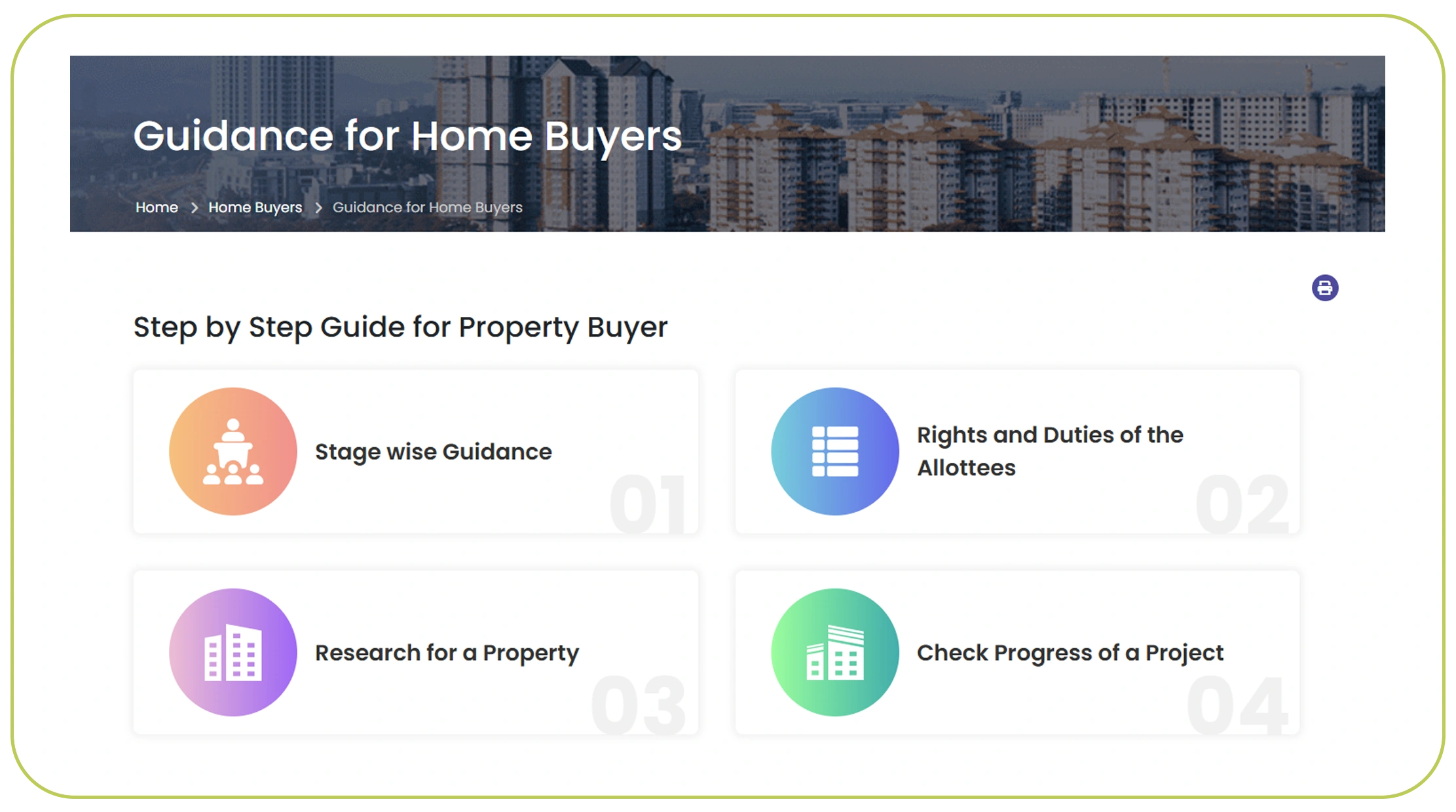
Modern real estate CRM platforms require real-time verified property information to improve lead quality and reduce sales delays. Developers and brokers often struggle with fragmented project details across multiple state RERA portals. Automated API integration solves this issue by enabling businesses to Extract RERA project data into CRM systems efficiently and accurately.
Between 2020 and 2026, India witnessed significant digital growth in property registration systems. Real estate companies increasingly adopted API-driven CRM integrations to automate project validation and builder verification.
RERA CRM Automation Trends (2020–2026)
| Year | CRM Adoption in Real Estate | API-Based Verification Usage |
|---|---|---|
| 2020 | 28% | 14% |
| 2021 | 35% | 21% |
| 2022 | 42% | 29% |
| 2023 | 51% | 37% |
| 2024 | 59% | 45% |
| 2025 | 66% | 53% |
| 2026 | 73% | 61% |
Automated RERA integration helps CRM platforms verify project approvals, registration numbers, builder history, and compliance status instantly. This reduces the need for manual checks and enables sales teams to focus on qualified leads instead of administrative tasks.
Companies also use these integrations to trigger automated workflows inside CRMs. For example, a project marked as “approved” can automatically move into the active sales pipeline, while expired registrations can trigger compliance alerts.
This level of automation improves operational efficiency, enhances transparency, and strengthens customer confidence throughout the property buying journey.
Building Smarter Decision-Making Platforms

Real estate firms increasingly rely on data visualization tools to improve investment decisions and market monitoring. CRM systems integrated with analytics engines can now deliver advanced insights through property analytics dashboards powered by RERA scraper APIs.
These dashboards help brokers, developers, and investors analyze regional trends, builder activity, project completion rates, and pricing movements. Instead of relying on scattered spreadsheets, businesses can access centralized dashboards with real-time RERA insights.
Dashboard Usage Growth in Real Estate Firms
| Year | Firms Using Analytics Dashboards | Data-Driven Investment Decisions |
|---|---|---|
| 2020 | 22% | 19% |
| 2021 | 31% | 27% |
| 2022 | 40% | 35% |
| 2023 | 49% | 44% |
| 2024 | 58% | 53% |
| 2025 | 67% | 61% |
| 2026 | 75% | 70% |
Advanced dashboards allow CRM users to compare builder performance, track project delays, and identify high-demand regions. Sales managers can analyze buyer behavior patterns, while investors can monitor project registrations and market expansion activities.
RERA-powered analytics also improve forecasting capabilities. Businesses can estimate future inventory trends, evaluate project risk factors, and identify emerging investment hotspots based on verified government-approved records.
As competition increases in the property sector, companies that use predictive dashboards gain stronger market visibility and improved strategic planning capabilities.
Enhancing Competitive Intelligence Across Markets
Real estate companies require accurate intelligence to stay ahead in highly competitive urban and regional markets. CRM systems integrated with automated RERA APIs provide businesses with real estate market data intelligence through RERA data scraping for smarter strategic planning.
From project launches to builder registrations and compliance updates, automated data collection helps firms monitor competitor activity in real time. This enables organizations to identify new market opportunities and respond faster to changing industry trends.
Market Intelligence Adoption Trends
| Year | Companies Using Market Intelligence | Competitive Tracking Efficiency |
|---|---|---|
| 2020 | 18% | 24% |
| 2021 | 27% | 33% |
| 2022 | 39% | 42% |
| 2023 | 48% | 51% |
| 2024 | 57% | 61% |
| 2025 | 65% | 69% |
| 2026 | 74% | 77% |
Using scraped RERA datasets, businesses can evaluate builder credibility, monitor registration volumes, and analyze project concentration by location. CRM platforms can automatically segment markets based on pricing trends, approval timelines, and developer activity.
This intelligence also helps property consultants improve advisory services for clients. By leveraging verified market data, consultants can recommend safer investment options and identify high-growth regions with stronger confidence.
Companies using advanced market intelligence tools consistently outperform competitors by making faster, more informed decisions.
Improving Lead Qualification and Sales Efficiency
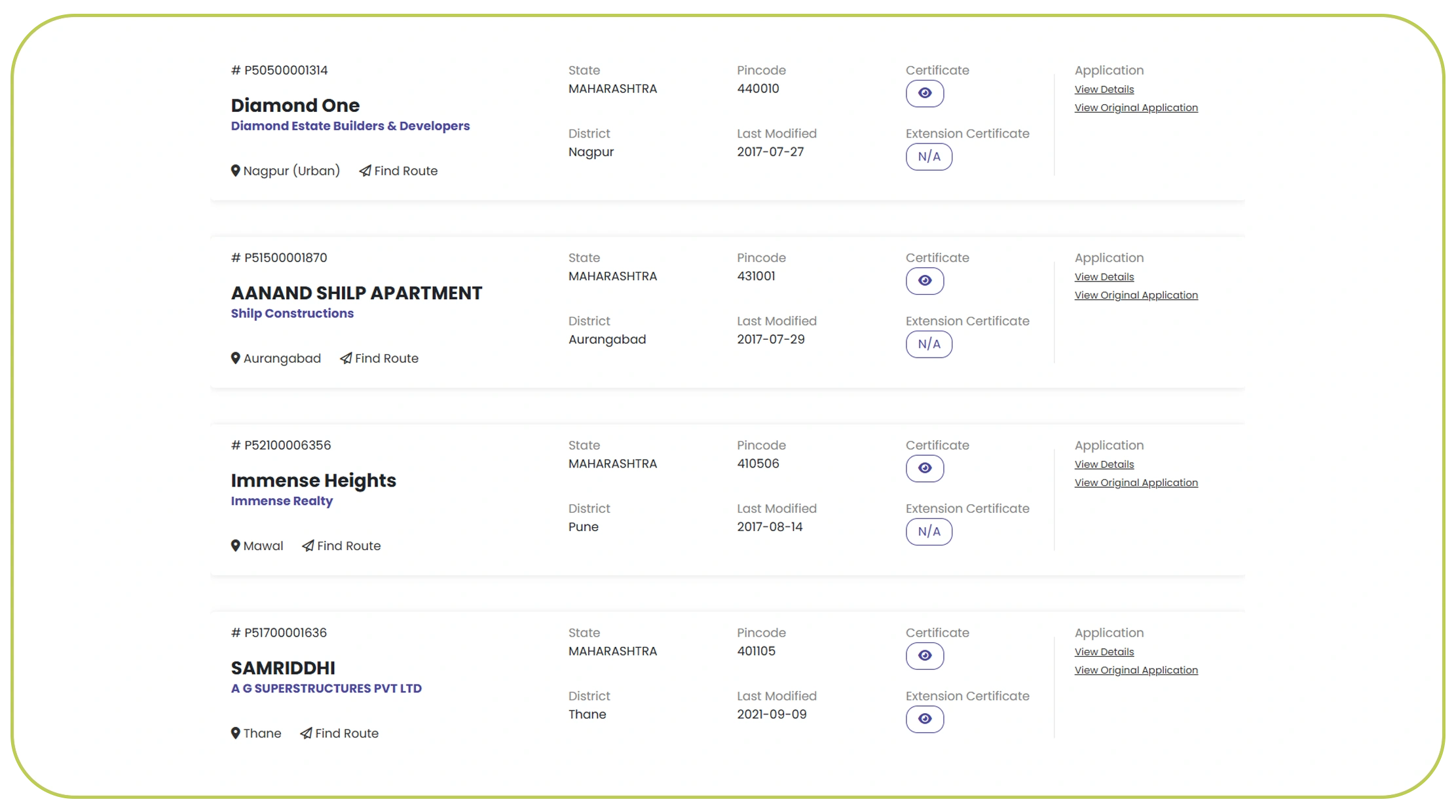
Lead quality is one of the biggest challenges for real estate businesses. Many CRM platforms now use automated APIs to Scrape real estate market data using RERA datasets for enhanced customer profiling and sales optimization.
Verified RERA information helps companies validate project authenticity before engaging buyers. Sales teams gain instant access to accurate project timelines, builder credentials, and legal approvals, reducing misinformation and improving customer trust.
Lead Conversion Improvements Through RERA APIs
| Year | Average Lead Conversion Rate | CRM Automation Efficiency |
|---|---|---|
| 2020 | 11% | 20% |
| 2021 | 14% | 28% |
| 2022 | 18% | 35% |
| 2023 | 22% | 44% |
| 2024 | 27% | 52% |
| 2025 | 31% | 61% |
| 2026 | 36% | 69% |
Automated lead qualification allows CRMs to categorize prospects based on project preferences, budget ranges, and location interests. Businesses can also prioritize leads linked to verified projects with higher completion rates.
This process significantly improves sales productivity by reducing time spent on unverified listings. Marketing teams can launch targeted campaigns based on location-specific project activity and buyer behavior trends.
As a result, companies experience higher conversion rates, stronger customer engagement, and reduced operational costs.
Supporting Investment Research and Forecasting
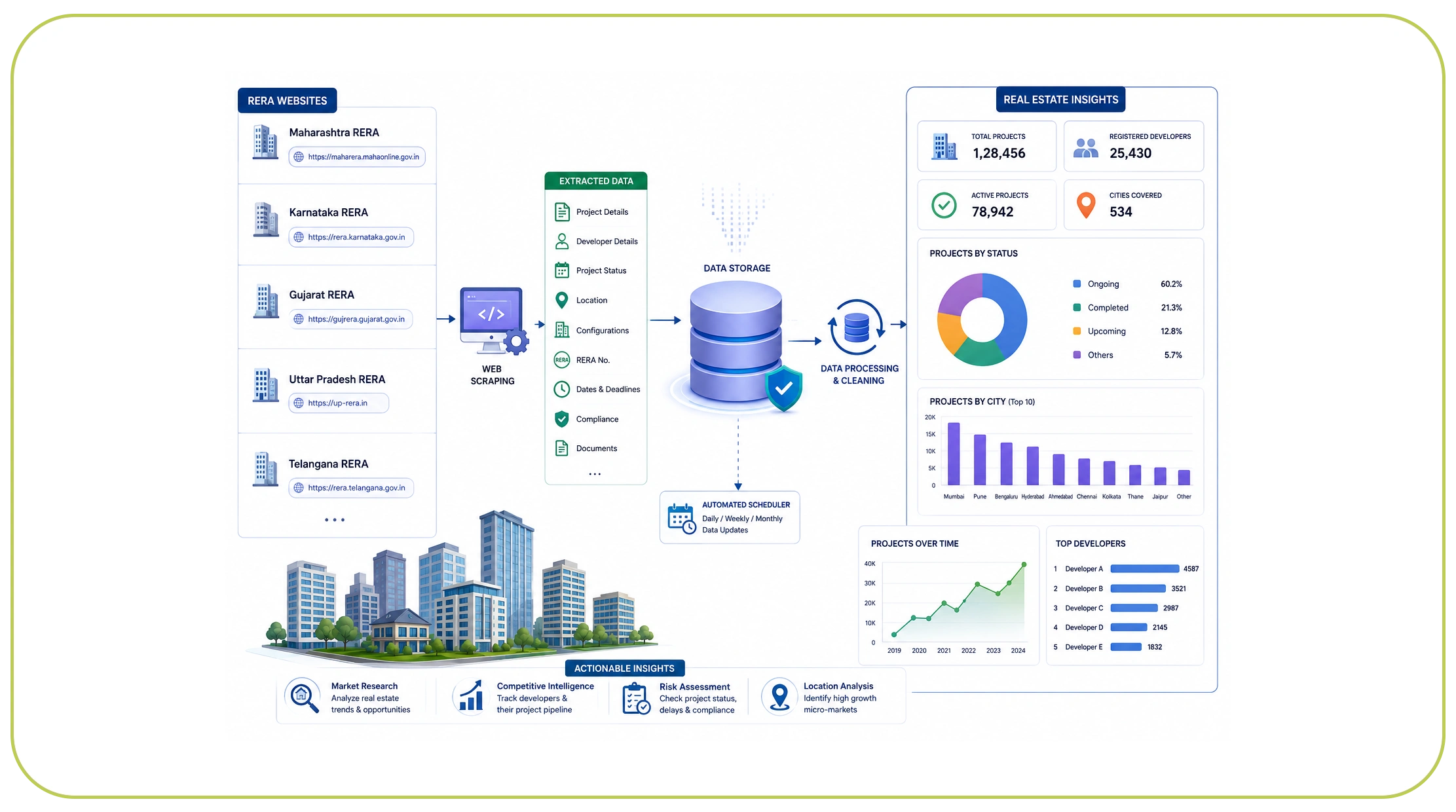
The growing demand for data-backed investment strategies has increased the importance of RERA Data Scraping for Real Estate Insights across CRM platforms and property intelligence systems.
Investors and developers use RERA-powered data to evaluate market conditions, monitor project completion timelines, and analyze pricing patterns across cities. Access to structured datasets improves forecasting accuracy and supports long-term planning.
Real Estate Data Usage for Investment Research
| Year | Investors Using Data Analytics | Forecasting Accuracy Improvement |
|---|---|---|
| 2020 | 16% | 18% |
| 2021 | 24% | 27% |
| 2022 | 33% | 36% |
| 2023 | 45% | 48% |
| 2024 | 56% | 57% |
| 2025 | 67% | 66% |
| 2026 | 78% | 74% |
CRM systems integrated with RERA datasets can track historical registration trends and compare project growth across regions. Developers can identify profitable micro-markets while investors can assess builder reliability and delivery consistency.
Data scraping also supports risk management by identifying delayed projects, inactive developers, and compliance issues before investment decisions are finalized.
Organizations using advanced forecasting models based on verified RERA data are better equipped to navigate market fluctuations and maximize investment returns.
Enabling Scalable Digital Transformation
The real estate industry is rapidly moving toward automation, cloud-based infrastructure, and AI-driven workflows. Businesses are increasingly exploring Real Estate Scraping API Use Cases to build scalable CRM ecosystems that support digital transformation initiatives.
Automated APIs help organizations centralize property records, synchronize data across departments, and eliminate repetitive manual processes. This creates a more connected operational environment for brokers, developers, and marketing teams.
Digital Transformation in Real Estate CRM Systems
| Year | Firms Using API Integrations | Workflow Automation Adoption |
|---|---|---|
| 2020 | 21% | 17% |
| 2021 | 30% | 25% |
| 2022 | 41% | 34% |
| 2023 | 52% | 45% |
| 2024 | 63% | 56% |
| 2025 | 72% | 66% |
| 2026 | 81% | 75% |
Real estate companies use APIs to automate listing updates, synchronize project records, and generate customer alerts in real time. CRM systems can also integrate AI-powered recommendations using historical RERA datasets.
Digital transformation improves scalability by allowing businesses to manage larger property inventories without increasing operational complexity. It also enhances collaboration between sales, legal, compliance, and marketing departments.
As automation continues to reshape the real estate sector, companies leveraging advanced APIs will remain better positioned for long-term growth and customer satisfaction.
Why Choose Real Data API?
Real Data API provides advanced real estate data extraction and API integration solutions designed specifically for modern CRM platforms and property intelligence systems. Businesses can access verified Real Estate Dataset solutions with scalable APIs tailored for developers, brokers, aggregators, and proptech companies.
Our platform helps organizations automate property verification, extract builder records, monitor project registrations, and generate actionable market insights in real time. We specialize in delivering reliable and structured datasets that improve CRM performance and operational efficiency.
Companies using Real Data API benefit from high-speed extraction, automated updates, scalable infrastructure, and seamless integration support. Whether you need market intelligence, investment analytics, or CRM automation, our APIs help businesses unlock the top use cases of RERA data APIs for real estate CRM platforms with greater accuracy and efficiency.
Conclusion
The real estate industry is entering a new era of automation, transparency, and data-driven decision-making. CRM platforms powered by RERA APIs enable businesses to streamline verification, improve lead management, enhance analytics, and scale operations efficiently.
From project validation and investment forecasting to workflow automation and market intelligence, the top use cases of RERA data APIs for real estate CRM platforms continue to reshape how modern real estate companies operate in competitive markets.
Ready to transform your CRM platform with reliable RERA data solutions? Contact Real Data API today to access scalable real estate datasets, automation tools, and advanced API integrations tailored for your business growth!
Latest posts

How Restaurant, Menu, Price, Rating, and Delivery Data Helps Businesses Track Food Delivery Markets

How Businesses Solve Restaurant Market Intelligence Challenges with Rating, Review, and Location Data

How Businesses Use Grocery, Product, Pricing, and Retail Food Data for Competitive Analysis

How Etsy API Solves Marketplace Intelligence Challenges with Product, Price, and Seller Data







.png)



