Introduction
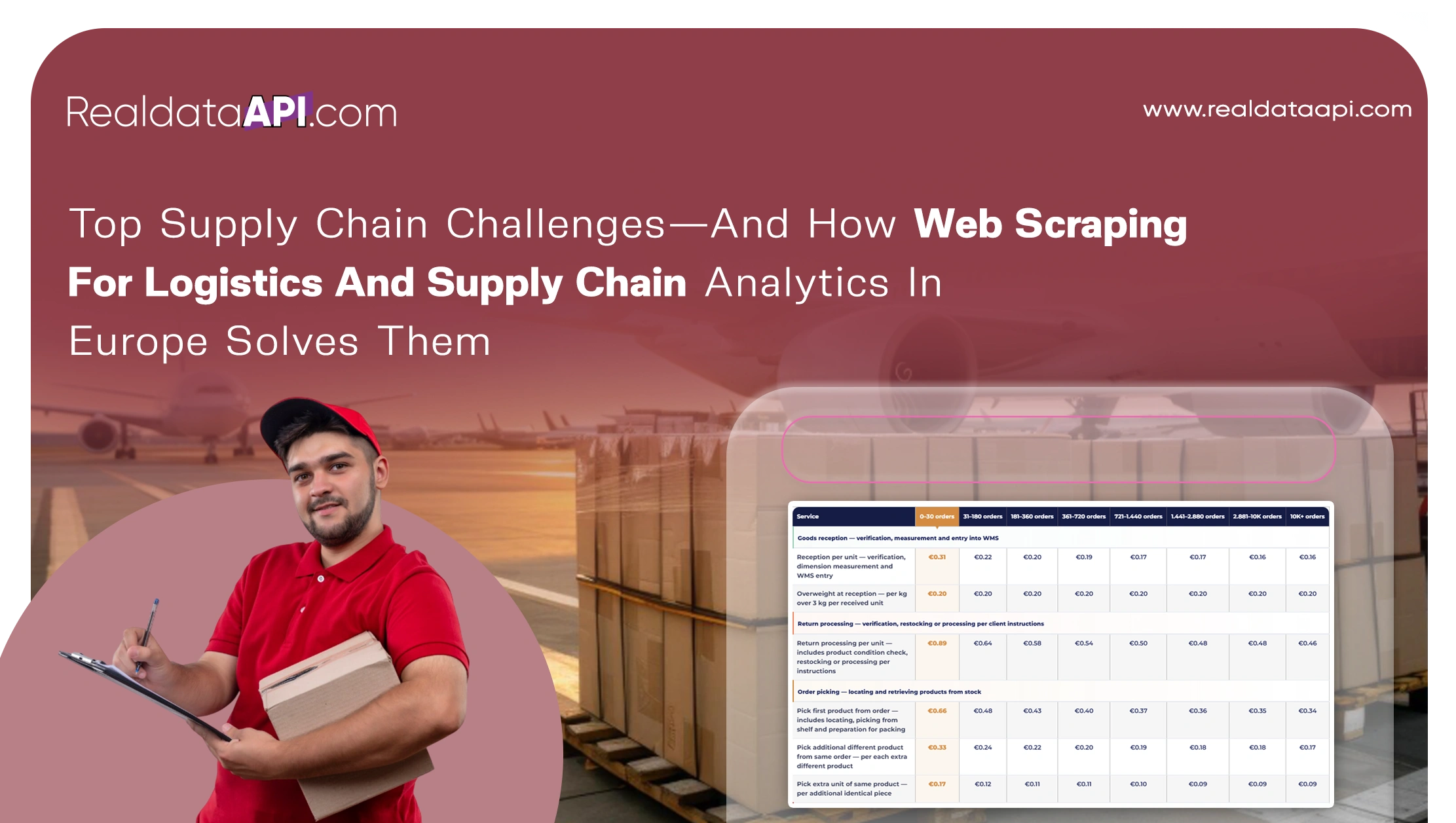
Supply chains across Europe are facing unprecedented challenges—from fluctuating freight costs to demand volatility and limited data visibility. Businesses must adapt quickly to remain competitive, and this is where web scraping for logistics and supply chain analytics in Europe becomes a critical enabler. By capturing real-time logistics, pricing, and supplier data, organizations can make informed decisions and reduce operational risks.
Traditional approaches to supply chain management often rely on delayed or incomplete data, making it difficult to respond to disruptions effectively. With advanced tools that Scrape Freight Charges for Supply Chain Optimization, companies can access accurate and timely insights into freight rates, shipping routes, and cost variations.
This blog explores the top challenges in supply chain management and how data-driven solutions help overcome them. Backed by statistical insights from 2020–2026, we highlight how modern scraping technologies empower businesses to optimize logistics, improve forecasting, and build resilient supply chain networks.
Rising Cost Pressures and the Need for Data Transparency
One of the most pressing challenges in supply chains is the rising cost of logistics and transportation. Businesses increasingly recognize the benefits to scrape supply chain pricing data intelligence to gain visibility into pricing trends and optimize costs.
Freight Cost Trends (2020–2026)
| Year | Road (€ per km) | Air (€ per kg) | Sea (€ per container) |
|---|---|---|---|
| 2020 | 1.20 | 2.50 | 900 |
| 2021 | 1.30 | 2.80 | 1100 |
| 2022 | 1.45 | 3.20 | 1400 |
| 2023 | 1.50 | 3.10 | 1350 |
| 2024 | 1.60 | 3.30 | 1500 |
| 2025 | 1.70 | 3.50 | 1600 |
| 2026 | 1.80 | 3.70 | 1700 |
The steady increase in freight costs highlights the importance of data-driven decision-making. By scraping pricing data, businesses can identify cost patterns, negotiate better contracts, and reduce inefficiencies.
Data transparency also improves budgeting and forecasting. With access to real-time insights, companies can adjust their strategies proactively, ensuring better cost control and improved profitability.
Real-Time Visibility for Faster Decision-Making
Supply chain disruptions often occur suddenly, requiring immediate action. Businesses are adopting solutions like a real-time supply chain data scraper in Europe to monitor logistics operations and respond quickly.
Real-Time Pricing Variability
| Mode | Daily Change (%) | Weekly Change (%) |
|---|---|---|
| Road | 2–5% | 5–10% |
| Air | 5–10% | 10–20% |
| Sea | 3–7% | 8–15% |
Freight rates can fluctuate significantly within short periods. Real-time data scraping ensures that businesses always have access to the latest information.
This capability enables companies to optimize routes, adjust pricing strategies, and improve customer service. Real-time visibility also reduces delays and enhances operational efficiency, making it a key factor in overcoming supply chain challenges.
Unlocking Insights Through Data Analysis
Understanding long-term trends is essential for strategic planning. Companies use advanced tools to Extract freight and logistics data European trend analysis to gain insights into market dynamics.
Freight Growth Rate (2020–2026)
| Year | Growth Rate (%) |
|---|---|
| 2020 | 5% |
| 2021 | 8% |
| 2022 | 12% |
| 2023 | 9% |
| 2024 | 10% |
| 2025 | 11% |
| 2026 | 12% |
The data shows consistent growth, with peaks during periods of disruption. By analyzing these trends, businesses can forecast demand, optimize inventory, and plan shipments more effectively.
Data analysis also helps identify seasonal patterns and regional variations. This enables companies to make informed decisions and improve overall supply chain performance.
Staying Ahead with Competitive Intelligence
Competition in the logistics industry is intense, making it essential to monitor market activity continuously. Businesses rely on European Supply Chain competitor analysis to track competitor strategies and identify opportunities.
Competitive Benchmarking Metrics
| Metric | Improvement (%) |
|---|---|
| Pricing Accuracy | 20–30% |
| Market Visibility | 25–35% |
| Decision Speed | 30–40% |
By analyzing competitor data, companies can benchmark their performance and refine their strategies. This includes optimizing pricing, improving service quality, and identifying gaps in the market.
Competitive intelligence also supports innovation, enabling businesses to adapt to changing market conditions and maintain a strong market position.
Expanding Insights Beyond Regional Markets
Global supply chains require a broader perspective. Companies are leveraging Supply Chain Data Scraping for Logistics Analytics in USA to compare trends across regions and gain deeper insights.
Cross-Regional Data Comparison
| Region | Avg Freight Cost Growth (%) |
|---|---|
| Europe | 10% |
| USA | 9% |
| Asia | 11% |
Comparing data across regions helps businesses identify global trends and optimize their strategies. It also enables better resource allocation and improved risk management.
By integrating data from multiple markets, companies can gain a comprehensive view of the supply chain landscape. This supports strategic decision-making and enhances overall performance.
Leveraging Advanced Data Solutions for Scalability
Modern supply chains require scalable solutions to handle large volumes of data. Many organizations are turning to Web Scraping Services USA to access structured data and improve analytics capabilities.
Data Source Expansion (2020–2026)
| Year | Sources Monitored |
|---|---|
| 2020 | 50 |
| 2021 | 75 |
| 2022 | 100 |
| 2023 | 150 |
| 2024 | 200 |
| 2025 | 250 |
| 2026 | 300 |
As data sources increase, businesses gain a more comprehensive view of the supply chain ecosystem. This enables better forecasting, improved decision-making, and enhanced operational efficiency.
Scalable data solutions also support integration with existing systems, ensuring seamless data flow and analysis. By leveraging these technologies, companies can stay competitive in a rapidly evolving market.
Why Choose Real Data API?
Real Data API provides cutting-edge solutions for supply chain data extraction and analysis. With advanced capabilities in Dynamic Pricing, businesses can monitor pricing changes in real time and optimize their strategies effectively.
Our platform supports web scraping for logistics and supply chain analytics in Europe, enabling organizations to access accurate and actionable data. By leveraging scalable infrastructure and advanced technologies, we ensure seamless data collection and integration.
From real-time monitoring to historical analysis, Real Data API empowers businesses to transform raw data into valuable insights, driving growth and efficiency.
Conclusion
Supply chain challenges are inevitable, but they can be effectively managed with the right data-driven approach. By leveraging advanced scraping technologies, businesses can gain real-time visibility, improve forecasting, and optimize logistics strategies.
The ability to implement web scraping for logistics and supply chain analytics in Europe enables organizations to stay ahead of market changes and respond proactively to disruptions. With accurate data and actionable insights, companies can build resilient and efficient supply chains.
Ready to transform your supply chain strategy? Start leveraging Real Data API today and unlock the full potential of data-driven logistics intelligence.
Latest posts
Truthsocial Data Scraping For Real-Time Social Media Insights

Zara Web Data Scraper For Fashion Trend Analysis - How Retailers Overcome Fast-Changing Fashion Demand & Inventory Challenges
How Real Estate Web Scraping Using Bayut API Solves Rental Pricing and Property Tracking Problems?
How Trendyol Data Collection for Ecommerce Market Research Solves Assortment, Pricing, and Market Intelligence Challenges?






.png)