TL;DR
- A WooCommerce scraper API for product data can turn publicly accessible product information into structured datasets for pricing, availability, catalog, and competitive analysis.
- Web Scraping Services help retailers and analysts monitor large product catalogs consistently, compare market movements, and integrate refreshed data into dashboards, databases, and analytics workflows.
Introduction
Businesses can overcome pricing, product-availability, and market-intelligence challenges by collecting structured product information, standardizing it, and monitoring changes over time. A WooCommerce scraper API for product data provides a scalable way to organize product names, SKUs, prices, categories, availability, descriptions, and other publicly visible attributes for analysis.
This matters because WooCommerce remains one of the largest ecommerce technologies worldwide. WooCommerce reported in 2024 that it powered 35% of online stores and 9.2% of the entire internet. More recent W3Techs data shows WooCommerce accounting for 48.1% of websites using a monitored ecommerce system as of September 2026.
The ecommerce opportunity has expanded considerably since 2020. U.S. seasonally adjusted ecommerce sales increased from $156.9 billion in Q1 2020 to $340.2 billion in Q2 2026, demonstrating the scale and persistence of digital commerce.
For retailers, brands, marketplaces, distributors, and market-research teams, Web Scraping Services can therefore support a repeatable data pipeline rather than one-time manual collection.
The objective is not simply to collect more information. The objective is to identify meaningful changes: a competitor reducing prices, a product disappearing from a catalog, a new SKU appearing, a discount ending, or an assortment expanding into a new category.
How Can Real-Time Collection Improve Ecommerce Monitoring?
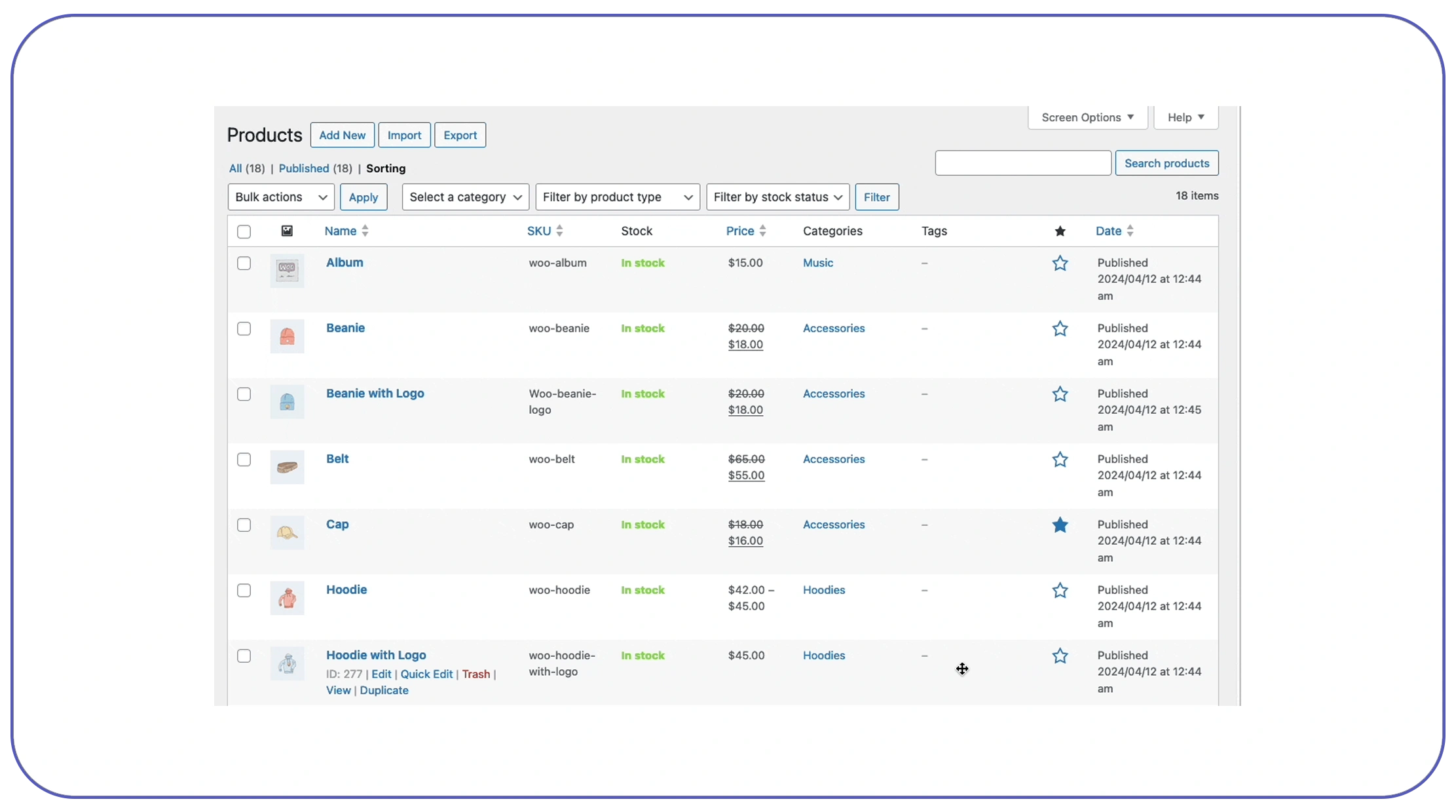
WooCommerce web scraping API for real-time data can help businesses capture frequently changing product signals and transform them into structured records. Product information is rarely static. Prices change, stock status changes, descriptions are updated, new variants appear, and products can disappear without notice.
For a pricing team, this means a weekly spreadsheet may already be outdated when it reaches decision-makers. A more effective approach is to collect observations at defined intervals and compare each new snapshot with historical records.
The importance of this capability has grown alongside ecommerce adoption. U.S. ecommerce sales accelerated sharply during 2020 and remained at elevated levels afterward. Seasonally adjusted quarterly sales reached $156.9 billion in Q1 2020, $208.1 billion in Q2 2020, and $340.2 billion in Q2 2026.
| Year | U.S. ecommerce signal | Intelligence implication |
|---|---|---|
| 2020 | Q2: $208.1B | Rapid digital-shopping acceleration |
| 2021 | Q4: $239.8B | Higher sustained online demand |
| 2022 | Q4: $252.7B | Continued ecommerce normalization |
| 2023 | Q4: $276.8B | Expanding digital sales base |
| 2024 | Q4: $300.3B | Online retail reaches new scale |
| 2025 | Q4: $318.0B | Continued year-over-year expansion |
| 2026 | Q2: $340.2B | 12.2% YoY Q2 growth |
The data above is from the U.S. Census Bureau's seasonally adjusted ecommerce series.
A practical monitoring system should capture:
- Product title and URL
- SKU or product identifier
- Brand
- Category and subcategory
- Current price
- Previous price
- Discount percentage
- Availability status
- Variant information
- Product description
- Images or image URLs where permitted
- Timestamp
- Store or domain
This creates a historical product timeline. Instead of asking, "What is the competitor's price today?" an analyst can answer, "How frequently has the competitor changed its price during the last 90 days, and how did those changes correspond with promotions or availability?"
That distinction turns basic collection into decision-support intelligence.
How Does Structured Product Extraction Improve Catalog Intelligence?
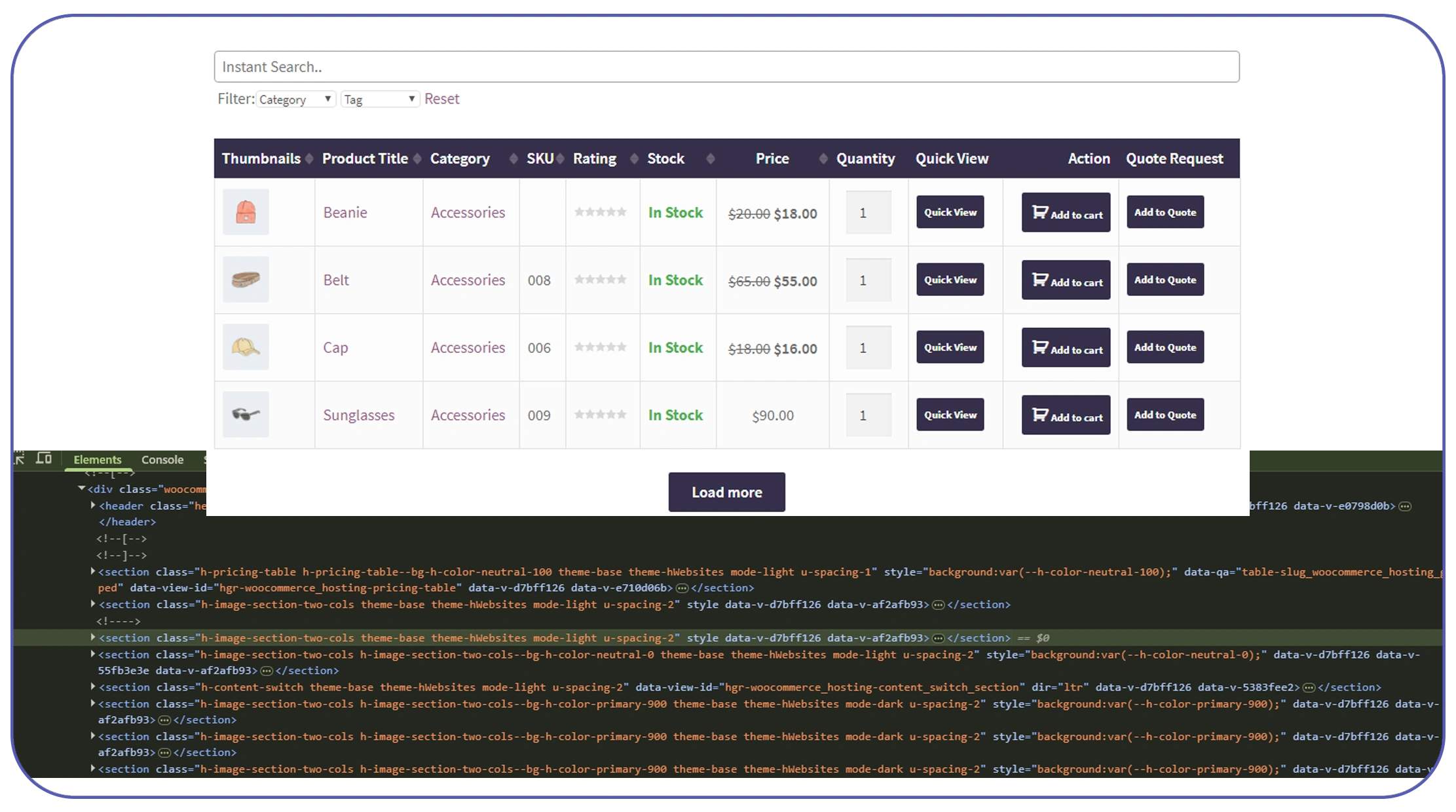
WooCommerce data extraction for product data can help organizations transform inconsistent ecommerce pages into standardized datasets. This is particularly useful when a business monitors hundreds or thousands of products across multiple stores.
The biggest challenge is often not finding a product. It is making information comparable.
One retailer might describe a product as "500ml Organic Shampoo," while another uses "Organic Shampoo — 0.5 L." Without normalization, automated analysis may incorrectly treat them as separate products.
A robust workflow can standardize product names, units, brands, categories, SKUs, variants, pricing fields, and availability indicators.
| Year | Ecommerce development | Data-management requirement |
|---|---|---|
| 2020 | Digital adoption accelerates | Build reliable product baselines |
| 2021 | Online purchasing becomes habitual | Expand catalog coverage |
| 2022 | Ecommerce normalizes | Improve historical comparisons |
| 2023 | Competitive catalogs expand | Standardize product attributes |
| 2024 | Omnichannel strategies mature | Connect product and market data |
| 2025 | Data-driven pricing expands | Increase monitoring frequency |
| 2026 | AI-led commerce grows | Deliver clean machine-readable datasets |
WooCommerce itself provides merchants with structured analytics around orders, products, customers, revenue, countries, and other dimensions. Its current analytics capabilities include date filtering, country-level analysis, product reports, and CSV exports.
For external market intelligence, the same principle applies: data becomes more useful when it is consistent, historical, and queryable.
A normalized product dataset can help answer questions such as:
- Which brands have expanded their assortment?
- Which categories are experiencing the highest SKU growth?
- Which products are repeatedly unavailable?
- Which competitor has the largest price range?
- Which products are newly introduced?
- Which SKUs have disappeared?
- Which brands are increasing promotional activity?
This information can support category managers, procurement teams, ecommerce strategists, pricing analysts, and competitive-intelligence professionals.
How Can Businesses Track Competitive Prices More Effectively?
A WooCommerce web data scraper for price monitoring can help businesses create a consistent view of competitive pricing across selected products and categories.
Price monitoring is particularly valuable in markets where customers can compare alternatives within seconds. A competitor does not necessarily need to make a major price change to influence purchasing behavior. Small adjustments, temporary promotions, bundle offers, or free-shipping thresholds can alter perceived value.
Historical monitoring allows analysts to distinguish between temporary promotions and longer-term pricing strategies.
For example, a product that falls from $49.99 to $39.99 for two days may represent a short promotional campaign. If the price remains at $39.99 for six weeks, the change may represent a broader repositioning.
| Year | U.S. ecommerce sales benchmark | Strategic relevance |
|---|---|---|
| 2020 | $200.9B Q2 | Price visibility becomes critical |
| 2021 | $228.9B Q2 | Competitive online shopping expands |
| 2022 | $240.5B Q2 | Pricing comparisons mature |
| 2023 | $260.9B Q2 | More categories compete digitally |
| 2024 | $278.3B Q2 | Greater price transparency |
| 2025 | $303.3B Q2 | Increased monitoring opportunity |
| 2026 | $340.2B Q2 | 12.2% YoY ecommerce growth |
Figures represent U.S. seasonally adjusted quarterly ecommerce sales.
A useful price-monitoring model should store both the current observation and historical observations.
For each product, businesses can calculate:
Price change = Current price − Previous price
Discount rate = (Original price − Current price) ÷ Original price × 100
Price volatility = Standard deviation of observed prices over a selected period
These calculations can reveal products with unstable pricing, competitors that frequently discount, and categories where pricing is relatively stable.
The analysis becomes more valuable when pricing is connected to product availability. A lower price combined with strong availability may create a very different competitive situation from a lower price attached to a product that is frequently unavailable.
Want to turn changing ecommerce prices into actionable intelligence? Build a structured monitoring workflow that connects product, pricing, availability, and historical data.
Get Insights Now!How Can Businesses Extract Pricing Data for Better Market Decisions?
extract WooCommerce pricing data workflows can help businesses build historical price datasets instead of relying on isolated observations.
For pricing teams, the most useful dataset is rarely just a list of current prices. It is a timeline showing how prices move.
A historical record can identify the date and time of each observation, the product involved, the listed price, promotional price, availability, and relevant product attributes. This enables businesses to study price movements by brand, category, product, market, or competitor.
The broader ecommerce market provides a strong reason for this type of intelligence. U.S. ecommerce sales reached an estimated $1.234 trillion in 2025, representing 16.4% of total U.S. retail sales. In Q2 2026, ecommerce accounted for 17.1% of total retail sales on a seasonally adjusted basis.
| Year | Key ecommerce benchmark | What pricing teams can analyze |
|---|---|---|
| 2020 | Pandemic-driven online shift | Emergency pricing changes |
| 2021 | $239.8B Q4 SA sales | Competitive price normalization |
| 2022 | $252.7B Q4 SA sales | Promotional patterns |
| 2023 | $276.8B Q4 SA sales | Category price differences |
| 2024 | $300.3B Q4 SA sales | Price positioning |
| 2025 | $1.234T annual U.S. sales | Large-scale price intelligence |
| 2026 | $340.2B Q2 SA sales | Current competitive movements |
The 2020-2026 trend also shows why historical context matters. A price change observed today may have a very different meaning depending on whether it follows a long period of stability, repeated discounting, or an assortment expansion.
Pricing intelligence can support:
- Competitor benchmarking
- MAP monitoring where legally and commercially appropriate
- Promotional analysis
- Category-level pricing studies
- Dynamic pricing research
- Product positioning
- Market-entry analysis
- Retailer benchmarking
For decision-makers, the benefit is speed. Instead of manually checking dozens of product pages, analysts can work from structured datasets and focus their time on interpreting the changes.
What Role Does Automated Store Monitoring Play in Ecommerce Intelligence?
A WooCommerce Scraper can support recurring product intelligence by collecting permitted publicly available information from multiple ecommerce stores and organizing it into a consistent schema.
The most effective workflows are designed around specific business questions rather than indiscriminate collection.
For example, a retailer may want to monitor 500 competitor SKUs every six hours. A brand may only need daily monitoring of its top 100 products. A market researcher could require weekly category snapshots across thousands of products.
The collection frequency should therefore depend on the volatility of the information.
| Year | Ecommerce environment | Suitable monitoring approach |
|---|---|---|
| 2020 | Rapid digital transition | Frequent baseline collection |
| 2021 | Continued adoption | Daily product monitoring |
| 2022 | Market normalization | Historical benchmarking |
| 2023 | Increasing competition | Category-level monitoring |
| 2024 | Mature ecommerce operations | Automated recurring collection |
| 2025 | Data-driven commerce | Near-real-time priority monitoring |
| 2026 | AI-supported decision-making | Machine-readable data pipelines |
Current market measurements reinforce the scale of the opportunity. W3Techs reported WooCommerce at 48.1% of the ecommerce-system market in September 2026, while WooCommerce itself states that the platform powers more than 4 million stores based on third-party StoreLeads data.
A monitoring architecture can typically contain four layers:
- Collection — Retrieve permitted product information.
- Normalization — Standardize fields and values.
- Historical storage — Preserve previous observations.
- Analytics — Identify price, assortment, and availability changes.
This architecture makes it possible to generate alerts such as:
- Competitor price dropped by more than 10%.
- A top-selling product disappeared.
- A new brand entered a monitored category.
- A competitor added 50 new SKUs.
- A promotional price expired.
- A product returned to stock.
- A category's assortment changed materially.
The value is therefore not the scraper alone. It is the complete data pipeline surrounding collection.
Businesses should also establish responsible-use rules covering website terms, applicable laws, robots directives where relevant, rate limits, personal-data avoidance, and respect for access controls.
How Can Product Data Scraping Support Long-Term Market Intelligence?
WooCommerce Product Data Scraping becomes particularly powerful when data is collected continuously rather than as a one-time project.
A one-time catalog snapshot can answer what is available today. A historical dataset can answer what changed, when it changed, how often it changed, and which competitors changed first.
That difference is central to market intelligence.
For example, a category manager could analyze six months of product observations and identify that one competitor consistently introduces new products before other retailers. A pricing team could discover that discounts cluster around specific periods. An assortment team could identify products that repeatedly disappear from competitors' catalogs.
| Year | Ecommerce sales signal | Long-term intelligence opportunity |
|---|---|---|
| 2020 | Q2 U.S. ecommerce: $208.1B | Establish pandemic-era baseline |
| 2021 | Q4: $239.8B | Identify structural online shifts |
| 2022 | Q4: $252.7B | Track category normalization |
| 2023 | Q4: $276.8B | Measure competitive expansion |
| 2024 | Q4: $300.3B | Compare mature online assortments |
| 2025 | Annual: $1.234T | Develop robust historical benchmarks |
| 2026 | Q2: $340.2B | Apply current market intelligence |
Longitudinal product datasets can support more advanced applications, including:
- Assortment intelligence: Identify category expansion, product launches, discontinued items, and SKU turnover.
- Competitive pricing: Track price changes and promotional behavior across comparable products.
- Availability intelligence: Identify recurring stock-outs and availability gaps.
- Product lifecycle analysis: Monitor how products move from launch to maturity or disappearance.
- Market forecasting: Use historical observations to identify recurring patterns.
- AI-ready datasets: Provide structured historical records that can be used as inputs for analytics and machine-learning workflows.
The strongest approach is to define a clear data model before collection begins. Fields should be designed around the decisions the business expects to make.
For example, if the objective is competitive pricing, product ID, brand, category, regular price, promotional price, currency, availability, timestamp, and retailer should be mandatory fields.
If assortment analysis is the priority, additional fields such as product type, variant, size, pack quantity, attributes, and category hierarchy become more important.
This business-first approach keeps the dataset useful, manageable, and scalable.
Why Choose Real Data API?
Businesses need more than raw pages when building ecommerce intelligence. They need structured, consistent, reusable information that can feed analytics systems and decision-making workflows.
A WooCommerce API Data Provider can help organizations build scalable product-data pipelines around use cases such as competitive pricing, catalog intelligence, assortment tracking, product availability, and market research.
The ideal solution should support structured output, historical collection, scalable processing, data normalization, and integration with existing analytics infrastructure.
For example, an enterprise could combine product records with its internal sales data to compare its own assortment against external market signals. A market-research company could transform collected records into category dashboards. A pricing team could feed historical observations into pricing-analysis models.
A strong data provider should also make the output practical for downstream systems. Depending on business requirements, data may need to be delivered through APIs, databases, CSV files, JSON feeds, dashboards, or cloud-based pipelines.
Data quality is equally important. Duplicate products, inconsistent product names, missing prices, incorrect availability values, and inconsistent category structures can undermine analysis even when collection volume is high.
The goal should therefore be decision-ready data, not maximum scraping volume.
With the right architecture, businesses can move from manual product checking toward automated market monitoring, allowing analysts to spend more time interpreting competitive movements and less time collecting information.
Conclusion
Ecommerce businesses face a simple but increasingly difficult challenge: product information changes continuously, while business decisions still need reliable historical context.
Structured product monitoring can solve this by turning product pages into organized datasets containing prices, SKUs, categories, availability, variants, descriptions, and timestamps.
WooCommerce's continued scale makes this particularly relevant. W3Techs reported that WooCommerce represented 48.1% of monitored ecommerce systems in September 2026, while WooCommerce says its ecosystem supports more than 4 million stores.
The broader ecommerce market is also expanding. U.S. ecommerce sales reached $1.234 trillion in 2025, and Q2 2026 seasonally adjusted ecommerce sales reached $340.2 billion, up 12.2% year over year.
This creates an ongoing need for reliable competitive intelligence.
Businesses can use structured monitoring to identify price changes, discover assortment movements, track availability, benchmark competitors, and build historical datasets for forecasting.
The most valuable strategy is not collecting everything. It is collecting the right fields, at the right frequency, for a clearly defined business decision.
The most valuable strategy is not collecting everything. It is collecting the right fields, at the right frequency, for a clearly defined business decision. Connect with Real Data API to build a scalable, structured product-data pipeline tailored to your pricing, catalog, availability, and competitive-analysis needs!
FAQs
What is a WooCommerce scraper API for product data?
It is a data-collection interface designed to retrieve permitted product information such as titles, SKUs, prices, categories, variants, and availability for structured ecommerce analysis.
How can Web Scraping Services help ecommerce businesses?
Web Scraping Services can automate recurring collection of publicly accessible product information, helping businesses monitor competitors, pricing, assortment, availability, and market changes at scale.
What is a WooCommerce Scraper used for?
A WooCommerce Scraper can collect structured product information from permitted sources, enabling businesses to compare catalogs, prices, product attributes, promotions, and availability across online stores.
Why is WooCommerce Product Data Scraping useful?
WooCommerce Product Data Scraping helps create historical product datasets that businesses can analyze for competitive pricing, assortment changes, availability patterns, product launches, and market intelligence.
Why work with a WooCommerce API Data Provider?
A WooCommerce API Data Provider can help businesses obtain structured, scalable datasets suitable for dashboards, databases, analytics platforms, pricing systems, and automated market-research workflows. Real Data API can support such data requirements.
Latest posts
How WooCommerce scraper API for product data Helps Businesses Overcome Pricing, Product Availability, and Market Intelligence Challenges?
How Fandango API data extraction for movie market intelligence Helps Track Box Office Demand and Audience Trends
How A Flipkart Scraper For Product Data Extraction Tracks Product Reviews, Ratings, Prices, And Availability
How Amazon API for real-time ecommerce data Solves Pricing, Availability, and Competitor Monitoring Challenges?






.png)